
First Peoples First Farmers Chapter 1 Most of



- Slides: 30
First Peoples; First Farmers Chapter 1 – Most of History in a Single Chapter to 4, 000 B. C. E.
Hunting and Gathering �Characterized human existence until 12, 000 years ago. � 95% of human history, life was gathering and hunting. �The Paleolithic (Old Stone Age) People: - Settled the planet over 200, 000 years ago. - Created the first societies. - First to reflect on issues of life and death.
Hominids and Homo Sapiens �Hominid – humanlike creature. australopiticus – 1. 8 million years ago (Lucy) �Homo sapiens emerged in eastern and southern Africa around 250, 000 years ago. - Stone and bone tools. - Hunting and fishing, not just scavenging. - Settlements around fish and game. - Trade amongst bands. - Planned burials.
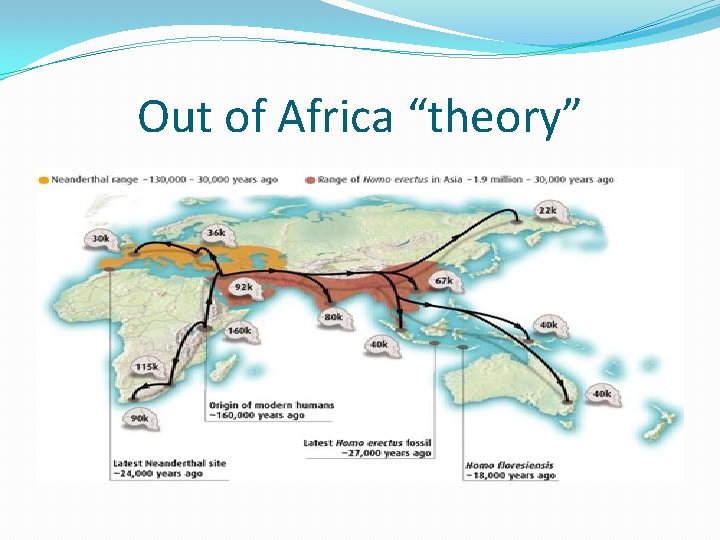
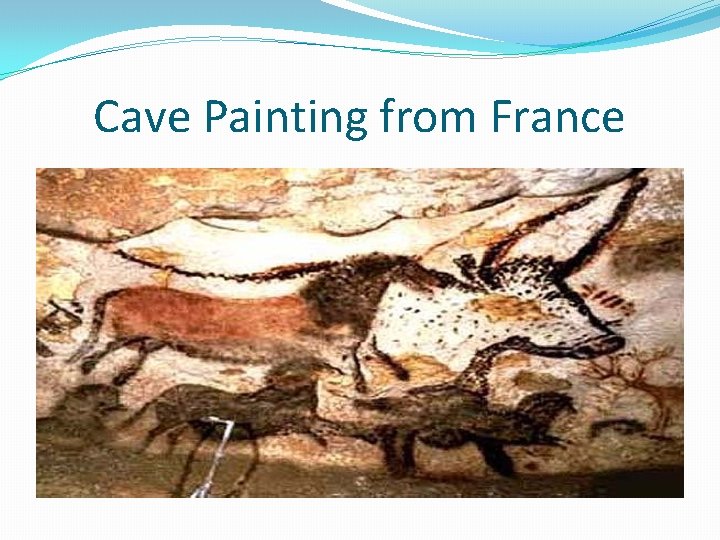
Out of Africa “theory” � 100, 000 years ago – migrations out of Africa. - Ice age created land bridges. � 45, 000 years ago – into Middle East and Europe. - New hunting habits (bow and arrow) and tools. � 20, 000 years ago – Northern Europe peoples go south. - Cave paintings and various abstract designs. �Russia and the Ukraine: - Bone needles, multilayered clothing, weaving, nets, baskets, pottery, etc.
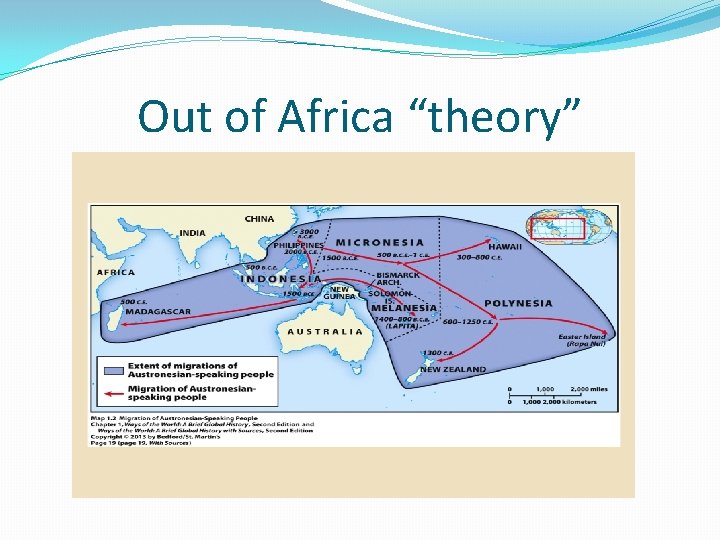
Out of Africa “theory” � 60, 000 years ago – into Australia from Indonesia. - First use of boats. - “Dreamtime” stories of ancestors, ceremonies; religion. �Between 30, 000 and 15, 000 years ago – into the Americas. - Bering Strait land bridge or west North American sea? - Clovis People – first widespread culture of the Americas. - Hunted large mammals (mammoths, bison). - 11, 000 years ago – extinction of large mammals. �Other Characteristics of Paleolithic People: - Major communication and exchange networks. - Complex views of the world.
Out of Africa “theory”
Out of Africa “theory”
The Ways We Were �Small bands of 25– 50 people by kinship. �Very low population growth and density – lack of technology. �Paleolithic bands were seasonally mobile or nomadic. �Societies were highly egalitarian (lack of unequal wealth and power). - There were clearly defined roles, but more gender equality. �Women were primary food gatherers (70% plants).
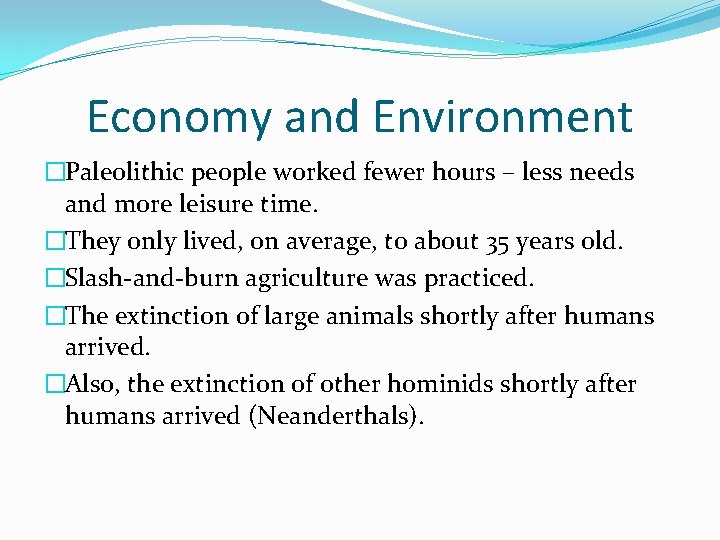
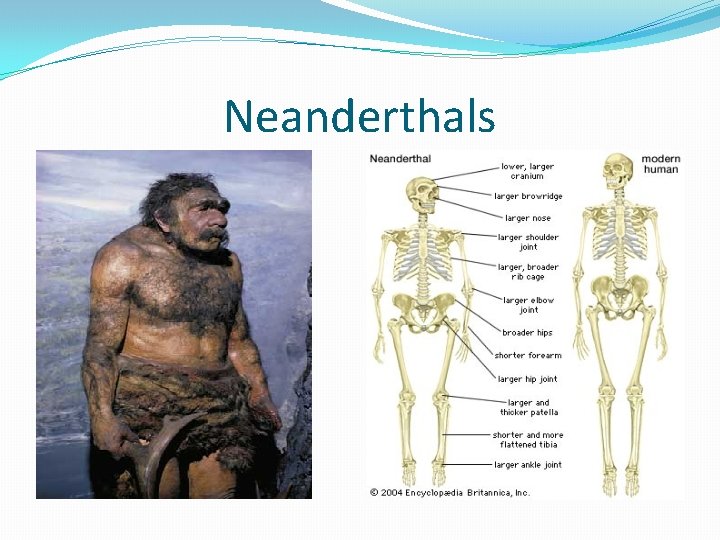
Economy and Environment �Paleolithic people worked fewer hours – less needs and more leisure time. �They only lived, on average, to about 35 years old. �Slash-and-burn agriculture was practiced. �The extinction of large animals shortly after humans arrived. �Also, the extinction of other hominids shortly after humans arrived (Neanderthals).
Neanderthals
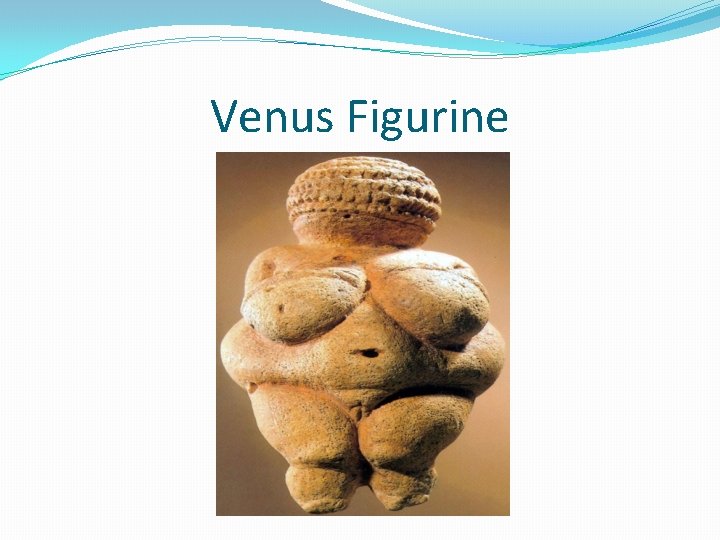
The Spiritual Realm �Difficult to understand in the Paleolithic culture – no written sources. �Rich ceremonial rituals. �No full-time religious specialists – part-time shamans. �Frequent psychoactive drug use to contact spirits. �Mostly polytheistic, but some seem monotheistic.
Cave Painting from France
Venus Figurine
Settling Down �Last Ice Age ended 16, 000– 10, 000 years ago. - Warmer climate, more plants; population growth. �Larger, more complex societies emerged. - These societies emerge in different areas of the world. �Settling down allowed for storage of goods, and placed a greater demand on the environment and agriculture.
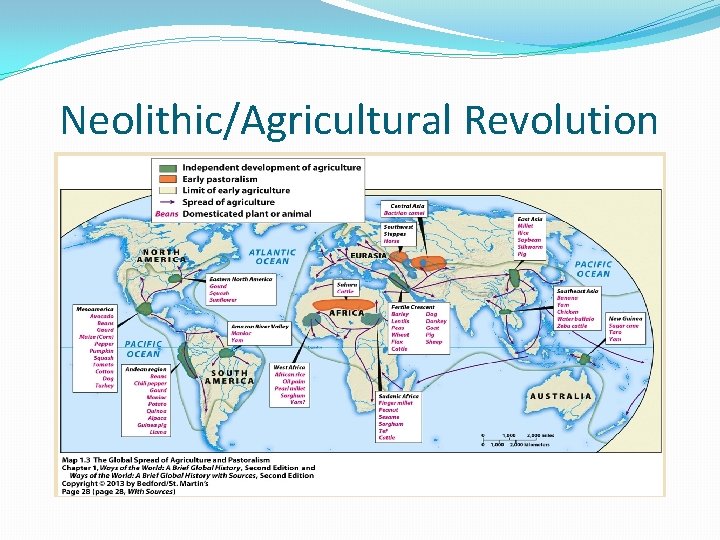
Neolithic/Agricultural Revolution �It began about 12, 000 years ago – the New Stone Age. �The deliberate cultivation of particular plants. �Domestication of animals: - deliberate taming and breeding of animals. �Too many people for hunting and gathering.
Neolithic/Agricultural Revolution
Common Patterns �It happened independently in several regions. �All transpired 12, 000 -4, 000 years ago. �Scholars still debate today as “why” did this occur so late… �Women likely began agriculture while men domesticated animals. �Population increase created a need for innovation: new technology – sickles, baskets, traps, etc.
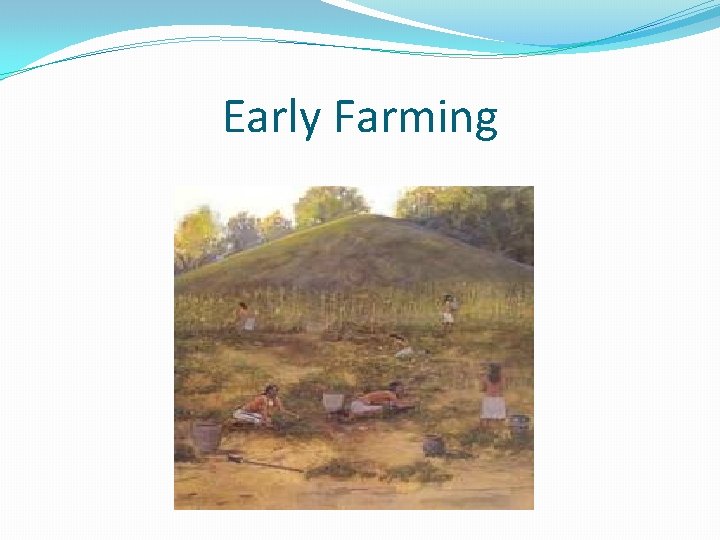
Early Farming
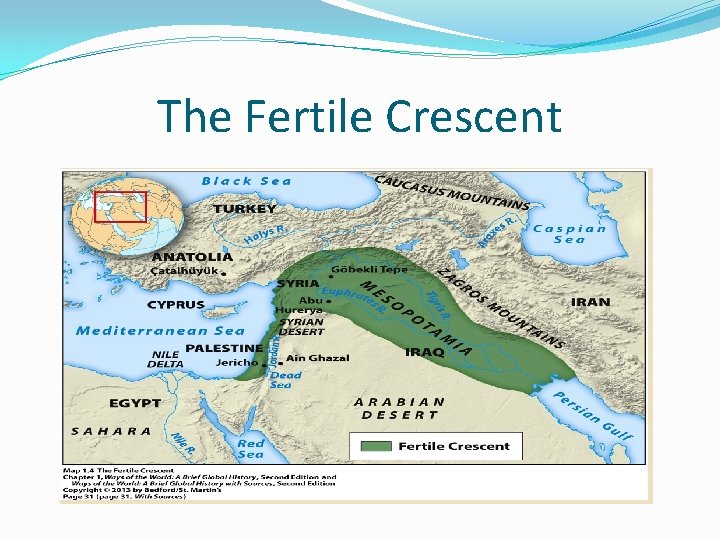
The Fertile Crescent �First area to have a “full” agricultural revolution. - Several plants and animals domesticated (beginning around 9, 400 B. C. E. ). - Larger settled population. �New Technology: - sun-dried mud bricks, monuments and shrines, more elaborate burials, and more sophisticated tools such as sickles and polished axes.
The Fertile Crescent
Eastern Sahara (Sudan) �More hospitable climate (10, 000 -5, 000 years ago). �The first domestication of cattle. �Africa was the only place to domesticate animals before plants. �Less production of agriculture compared to Middle East: - yams, oil palm trees, okra, and the kola nut in West Africa.
The Americas �The absence of animals available for domestication. - Only animal domesticated - llama/alpaca. - Lack of protein, manure; power of large animals. �A greater reliance on hunting and fishing. �Agricultural revolution in Mesoamerica took 3, 500 years. �Cultural diffusion was more difficult in the Americas due to distinct climate and vegetation zones. It was North/South as opposed to East/West travel.
The Globalization of Agriculture �Diffusion and migration: - Spread of agricultural techniques. - Slow colonization as growing populations. �This took place between 6, 500 -4, 000 B. C. E. �Some resisted agriculture for environmental reasons. �Settled agricultural communities were often incompatible with gathering and hunting groups, leading to violent displacement.
The Culture of Agriculture �Increased Populations: - 10, 000 years ago: around 6 million. - 5, 000 years ago: around 50 million. - Year 1 C. E. : around 250 million. - 2017: estimated 7. 5 billion. �Did not improve the quality of life for most people. - Harder work and longer hours. - Epidemics: living close to animals. - Famine: dependence on fewer crops and animals.
The Culture of Agriculture �Technology: pots, textiles, cotton, wool, and metallurgy for weapons and jewelry. �Secondary Products Revolution around 4, 000 B. C. E. - Milk animals. - Ride various animals. - Creation of alcohol: wine and beer. - Drunken debauchery and carousing among the aristocracy.
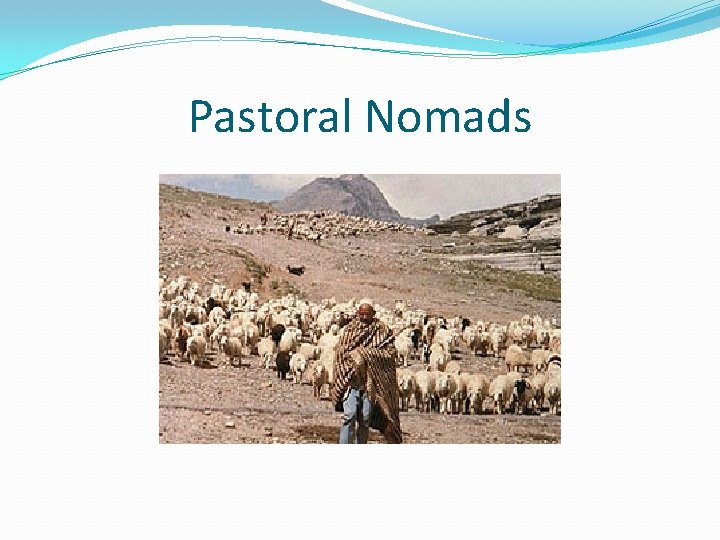
Pastoral Societies �Agriculture was difficult; more reliance on animals. �Pastoral Nomads: - Central Asia, Saharan Africa; Arabian Peninsula. �Horses domesticated in Central Asia by 4, 000 B. C. E. �Camels allowed pastoralism in remote areas of Asia and Africa. �No pastoral societies emerged in the Americas. �Complex relationship between nomadic herders and agrarian societies.
Pastoral Nomads
Agricultural Village Societies �Çatalhüyük, southern Turkey: - Dead buried under houses with items. - No streets; people moved on roof tops. - Few signs of inequality: men hunted and women worked in agriculture and textiles. �Usually organized by kinship groups; no formal government apparatus. �Sometimes modest social inequality.
Chiefdoms �Inherit positions of power and privilege. �They seldom used force to maintain rule. �Tribute was collected and redistributed to the people. �Chiefs had religious and secular power: - led rituals, organized for war, economic controls, and solved internal disputes.
Reflections �“Progress? ”: Some might point to these various changes as a sign of life getting better. �Paleolithic values: Other might find aspects of early human life as a model or lesson for contemporary society. �Objectivity: Condemning or romanticizing a historical era violates the historian’s need to be objective.