
FIRST PARTY SYSTEM DEMOC RATS WHIGS REPUBLI CANS
FIRST PARTY SYSTEM DEMOC RATS WHIGS REPUBLI CANS AP GOV REVIEW: VIDEO #13: THE DEVELOPMENT OF POLITICAL PARTIES
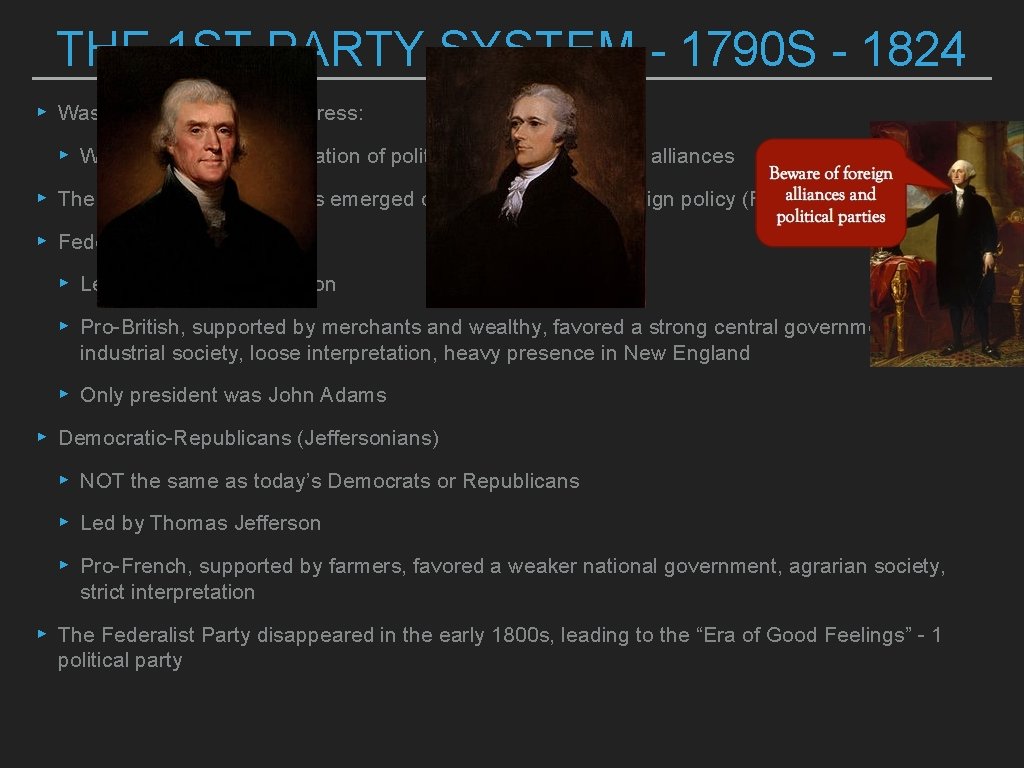
THE 1 ST PARTY SYSTEM - 1790 S - 1824 ▸ Washington’s Farewell Address: ▸ Warned against the formation of political parties and foreign alliances ▸ The nation’s first two parties emerged out of debates over foreign policy (French Revolution) ▸ Federalists: ▸ Led by Alexander Hamilton ▸ Pro-British, supported by merchants and wealthy, favored a strong central government, industrial society, loose interpretation, heavy presence in New England ▸ Only president was John Adams ▸ Democratic-Republicans (Jeffersonians) ▸ NOT the same as today’s Democrats or Republicans ▸ Led by Thomas Jefferson ▸ Pro-French, supported by farmers, favored a weaker national government, agrarian society, strict interpretation ▸ The Federalist Party disappeared in the early 1800 s, leading to the “Era of Good Feelings” - 1 political party
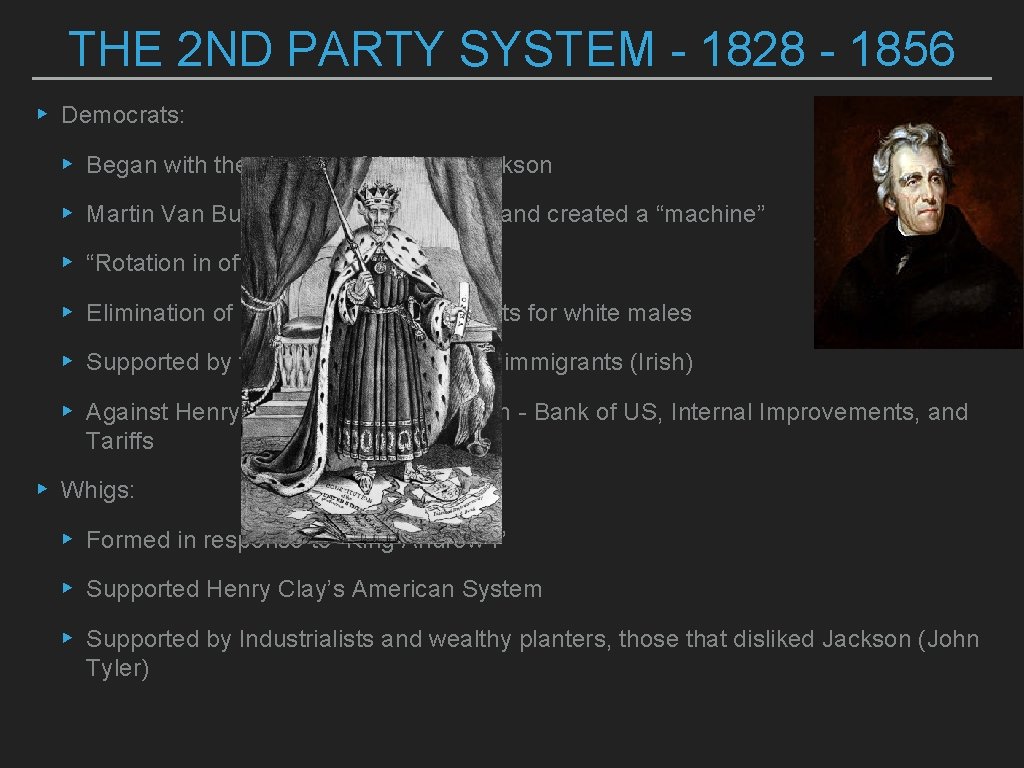
THE 2 ND PARTY SYSTEM - 1828 - 1856 ▸ Democrats: ▸ Began with the election of Andrew Jackson ▸ Martin Van Buren organized the party and created a “machine” ▸ “Rotation in office” or “Spoils System” ▸ Elimination of many voting requirements for white males ▸ Supported by farmers, urban workers, immigrants (Irish) ▸ Against Henry Clay’s American System - Bank of US, Internal Improvements, and Tariffs ▸ Whigs: ▸ Formed in response to “King Andrew I” ▸ Supported Henry Clay’s American System ▸ Supported by Industrialists and wealthy planters, those that disliked Jackson (John Tyler)
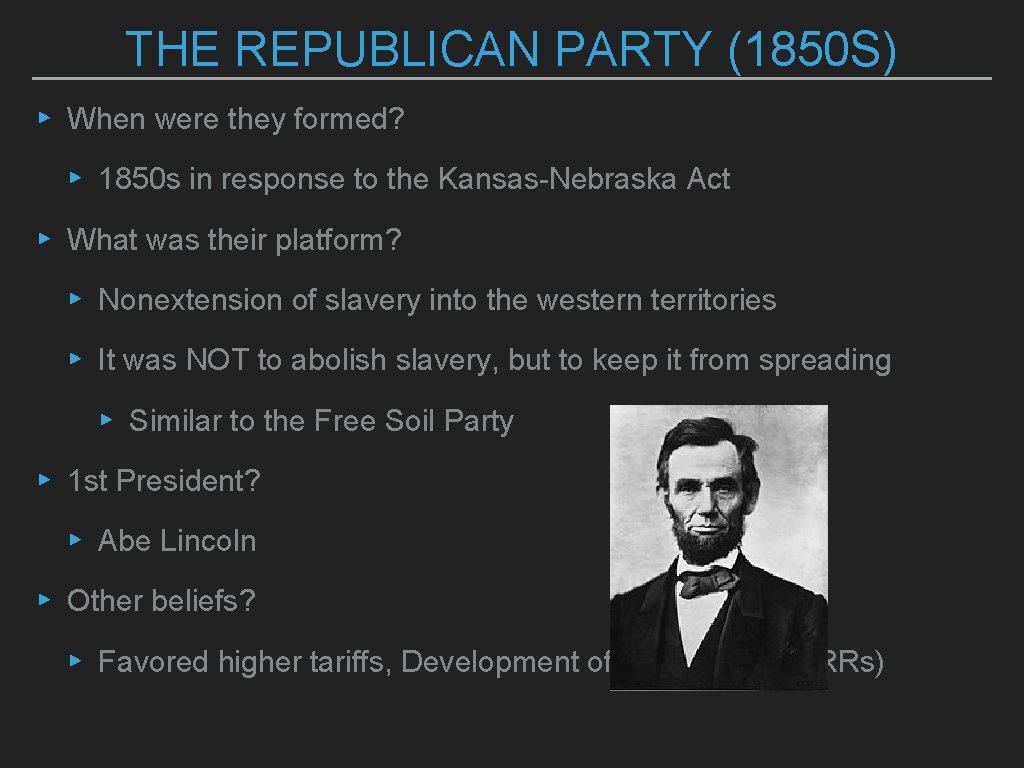
THE REPUBLICAN PARTY (1850 S) ▸ When were they formed? ▸ 1850 s in response to the Kansas-Nebraska Act ▸ What was their platform? ▸ Nonextension of slavery into the western territories ▸ It was NOT to abolish slavery, but to keep it from spreading ▸ Similar to the Free Soil Party ▸ 1 st President? ▸ Abe Lincoln ▸ Other beliefs? ▸ Favored higher tariffs, Development of infrastructure (RRs)
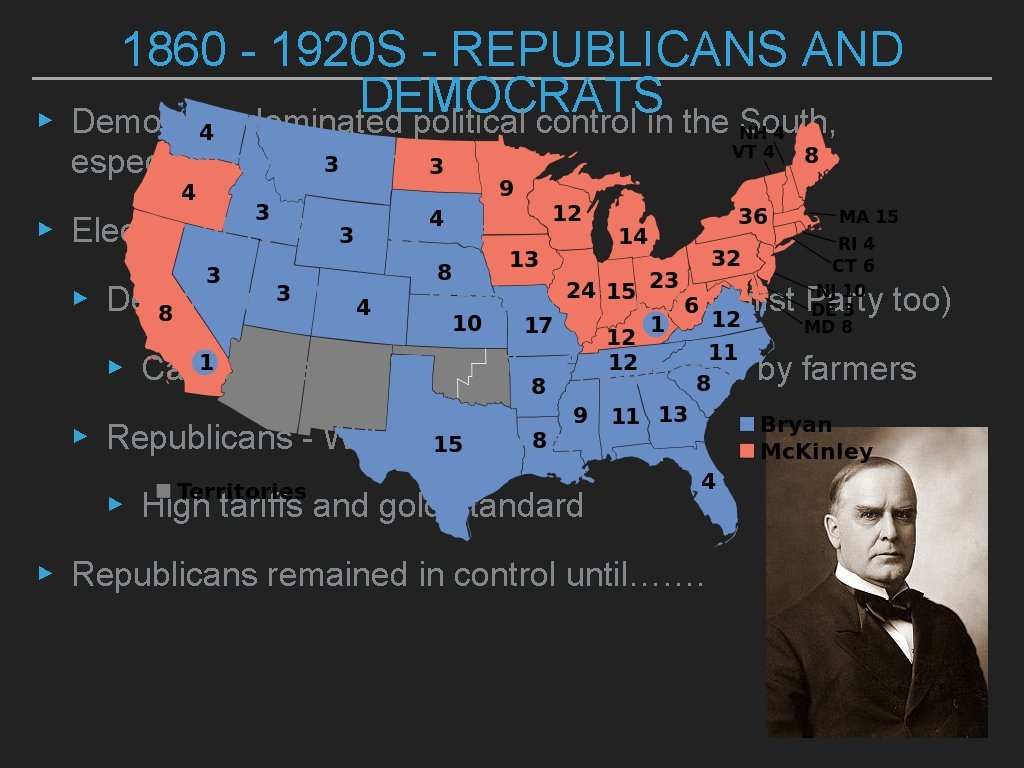
▸ 1860 - 1920 S - REPUBLICANS AND DEMOCRATS Democrats dominated political control in the South, especially post-Reconstruction ▸ Election of 1896 - milestone ▸ Democrats - William Jennings Bryan (Populist Party too) ▸ Campaigned on “Free Silver”, supported by farmers ▸ Republicans - William Mc. Kinley ▸ High tariffs and gold standard ▸ Republicans remained in control until…….
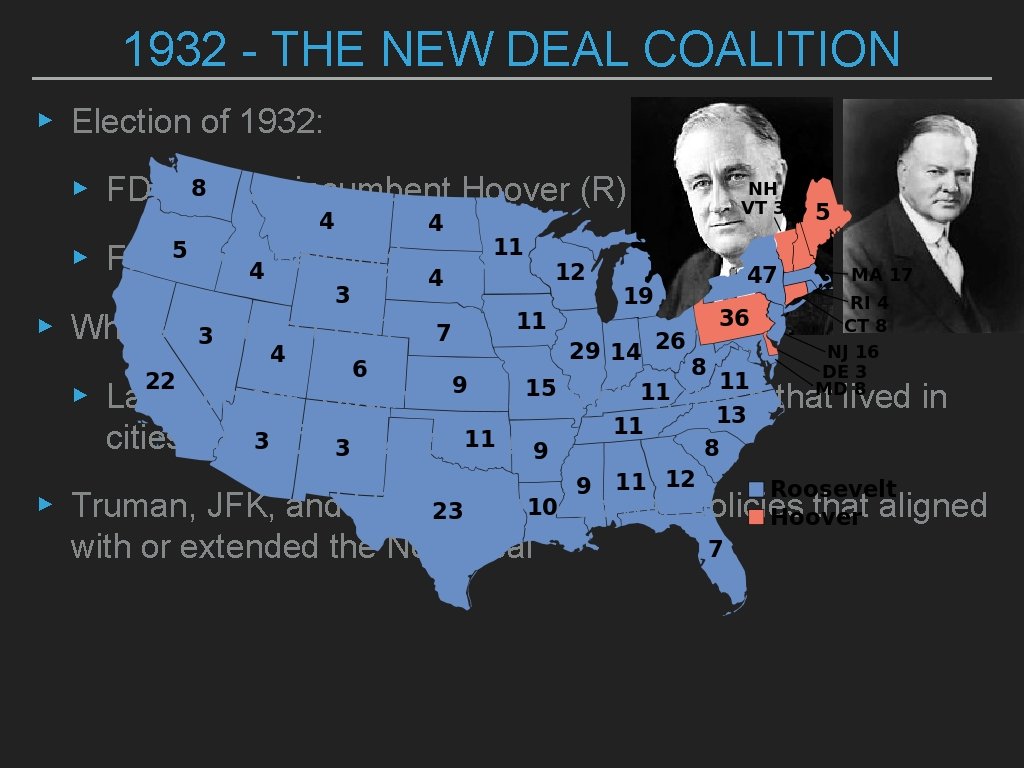
1932 - THE NEW DEAL COALITION ▸ Election of 1932: ▸ FDR (D) vs. incumbent Hoover (R) ▸ FDR overwhelmingly wins ▸ Who supported FDR? ▸ Labor unions, Southerners, Catholics, those that lived in cities, and African Americans ▸ Truman, JFK, and LBJ all continued with policies that aligned with or extended the New Deal
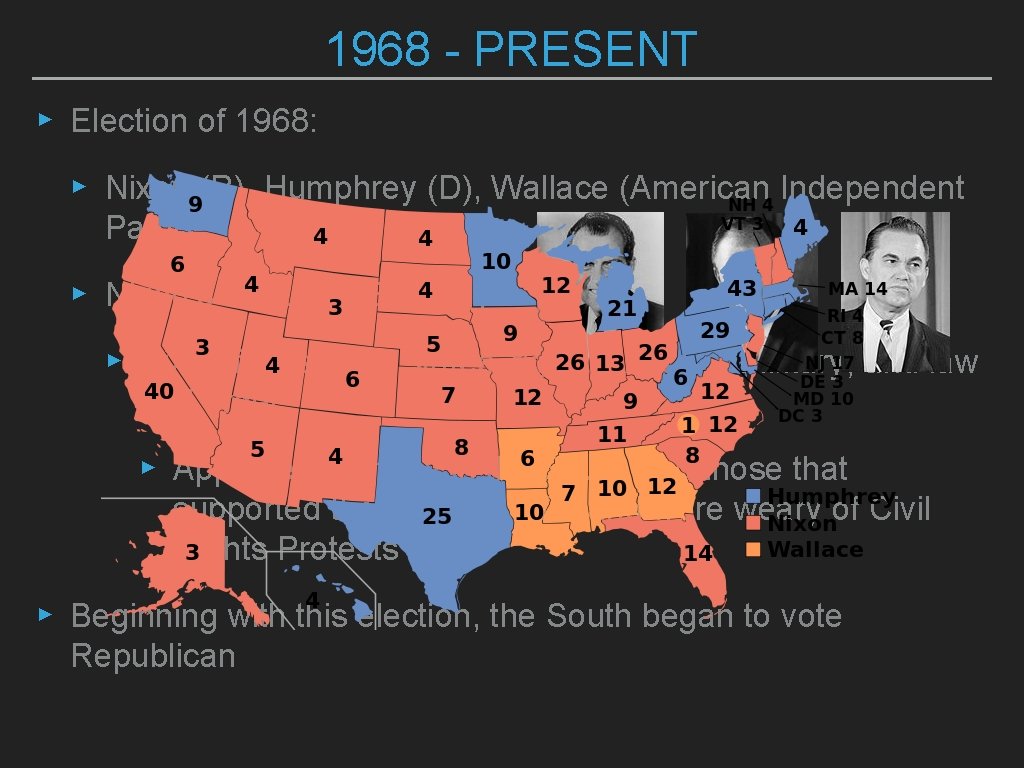
1968 - PRESENT ▸ Election of 1968: ▸ Nixon (R), Humphrey (D), Wallace (American Independent Party) ▸ Nixon’s Southern Strategy: ▸ Nixon focused on states’ rights, a strong military, and law and order ▸ Appealed to many in the South and those that supported the Vietnam War and were weary of Civil Rights Protests ▸ Beginning with this election, the South began to vote Republican
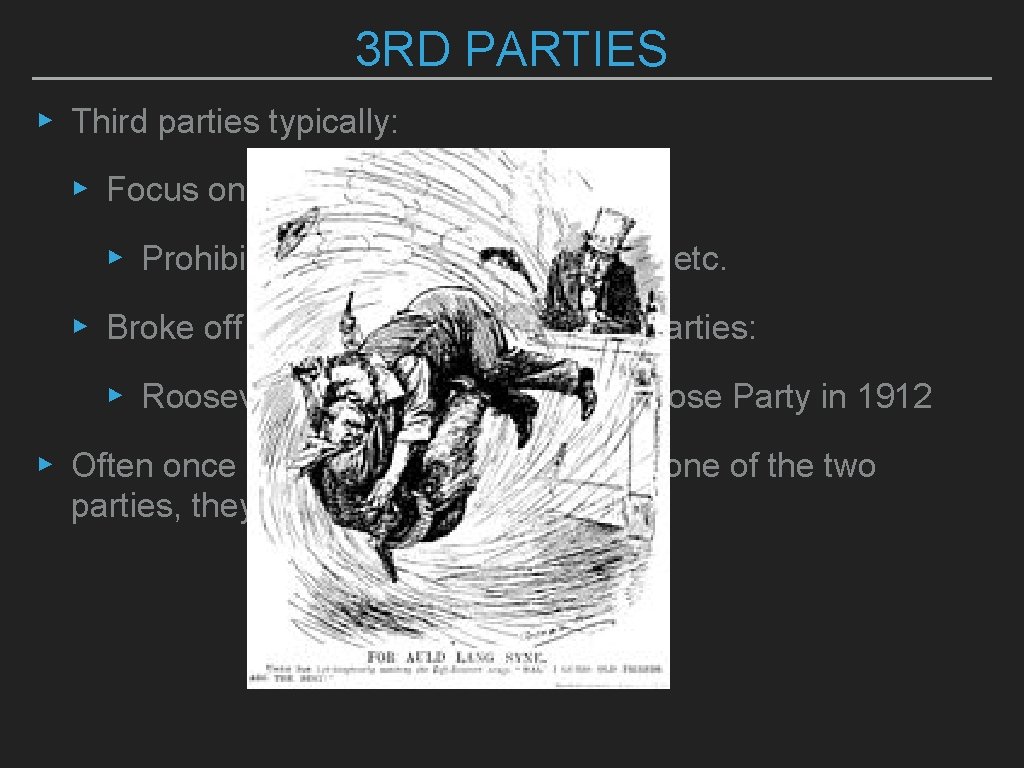
3 RD PARTIES ▸ Third parties typically: ▸ Focus on single issues: ▸ Prohibition, Marijuana, Economics, etc. ▸ Broke off from one of the major two parties: ▸ Roosevelt’s Progressive or Bull Moose Party in 1912 ▸ Often once their issues are adopted by one of the two parties, they decline
QUICK RECAP • Characteristics of Federalists • Characteristics of Jeffersonians • Democrats beginning with Jackson • Whigs • Republican Party Platform • Election of 1896 as a turning point • Election of 1932 as a turning point • • Who supported the New Deal? Election of 1968 as a turning point
TEST TIPS ▸ Multiple-Choice ▸ Characteristics of different parties - including supporters ▸ Elections of 1896, ***1932***, and ***1968*** as turning points ▸ Free Response: ▸ Supporters of both parties over time (2010)
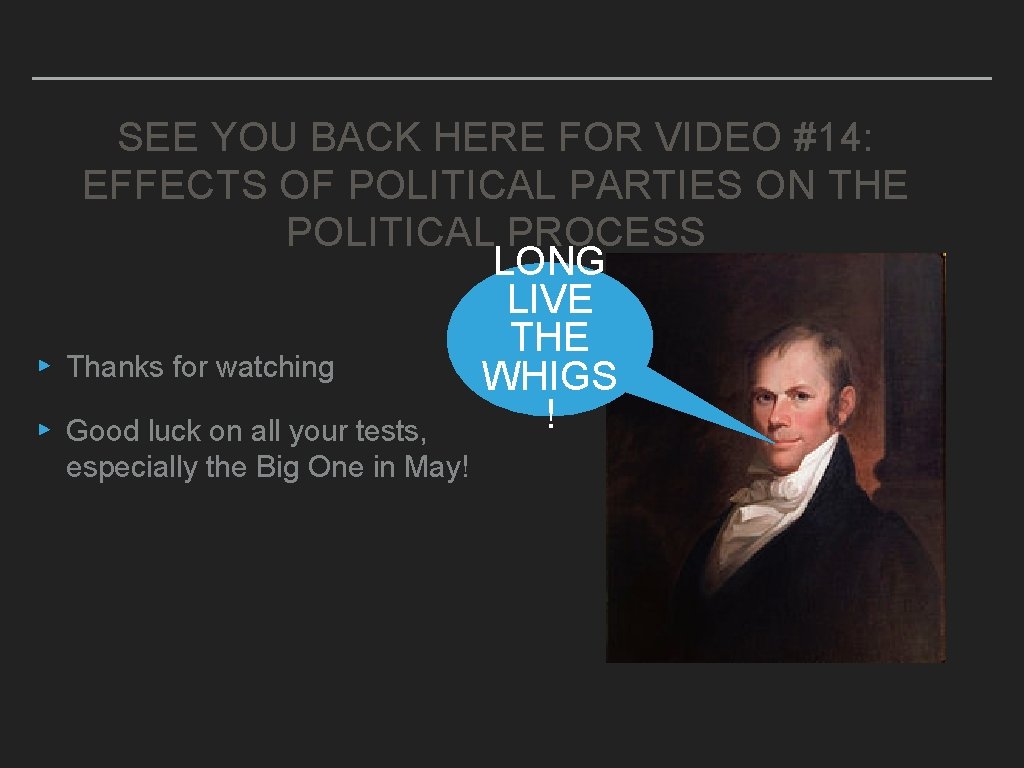
SEE YOU BACK HERE FOR VIDEO #14: EFFECTS OF POLITICAL PARTIES ON THE POLITICAL PROCESS LONG LIVE THE ▸ Thanks for watching WHIGS ! ▸ Good luck on all your tests, especially the Big One in May!
- Slides: 11