
First fundamental theorem of calculus In section 5
- Slides: 17
First fundamental theorem of calculus
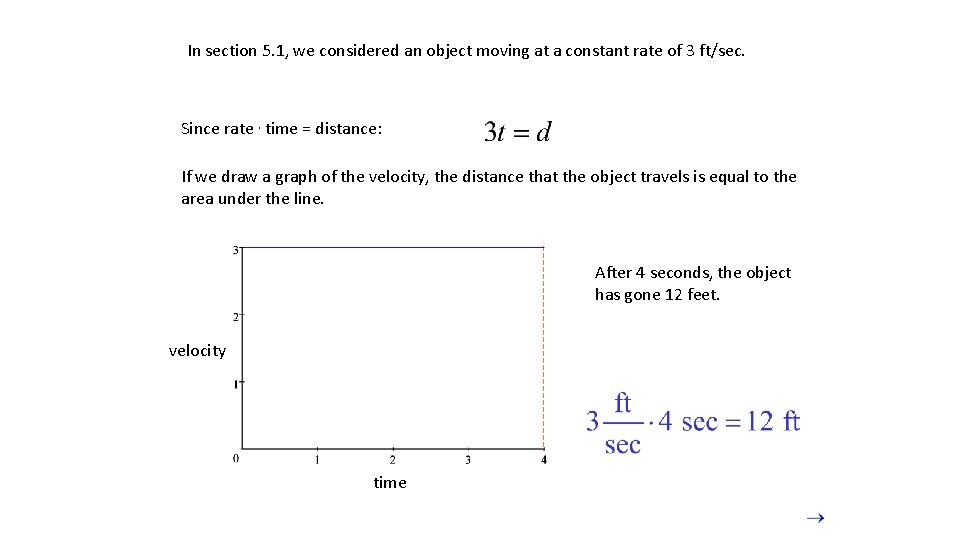
In section 5. 1, we considered an object moving at a constant rate of 3 ft/sec. Since rate. time = distance: If we draw a graph of the velocity, the distance that the object travels is equal to the area under the line. After 4 seconds, the object has gone 12 feet. velocity time
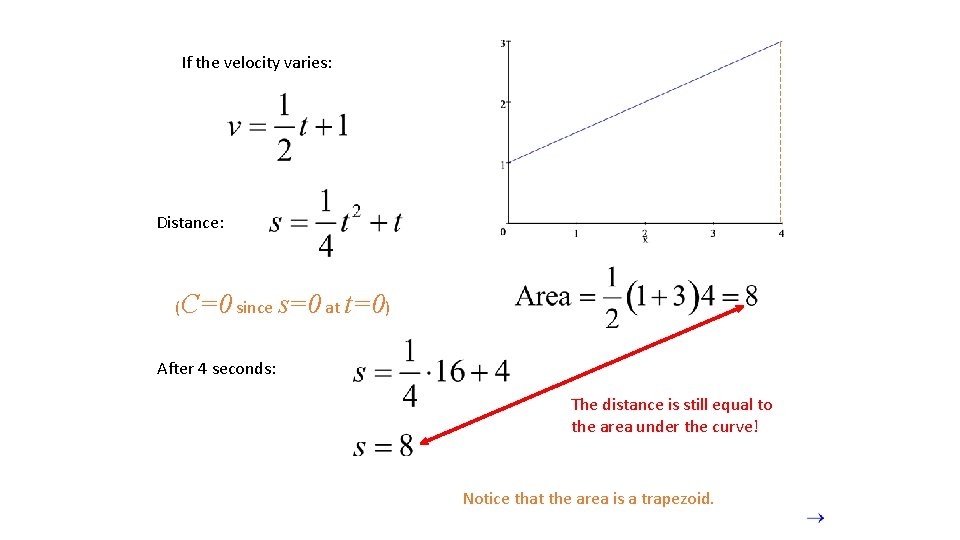
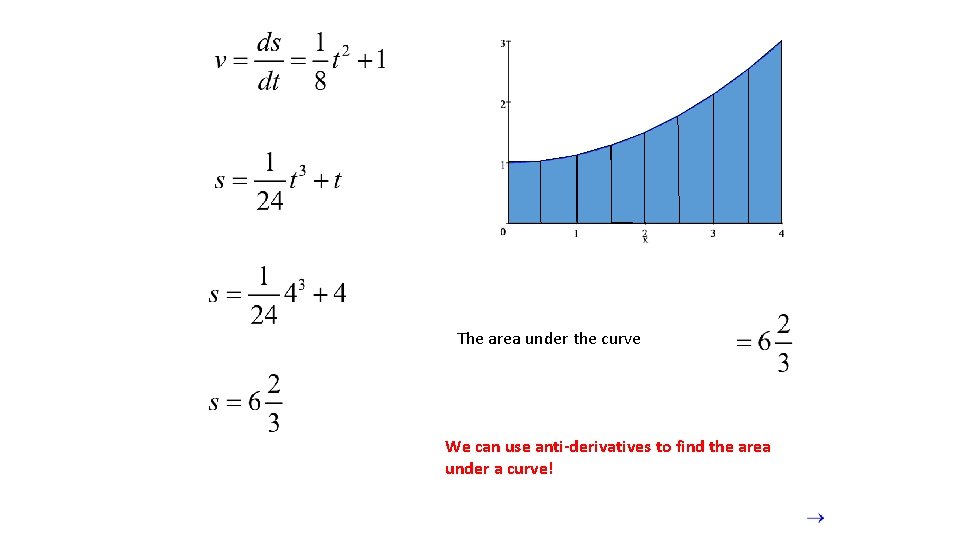
If the velocity varies: Distance: (C=0 since s=0 at t=0) After 4 seconds: The distance is still equal to the area under the curve! Notice that the area is a trapezoid.
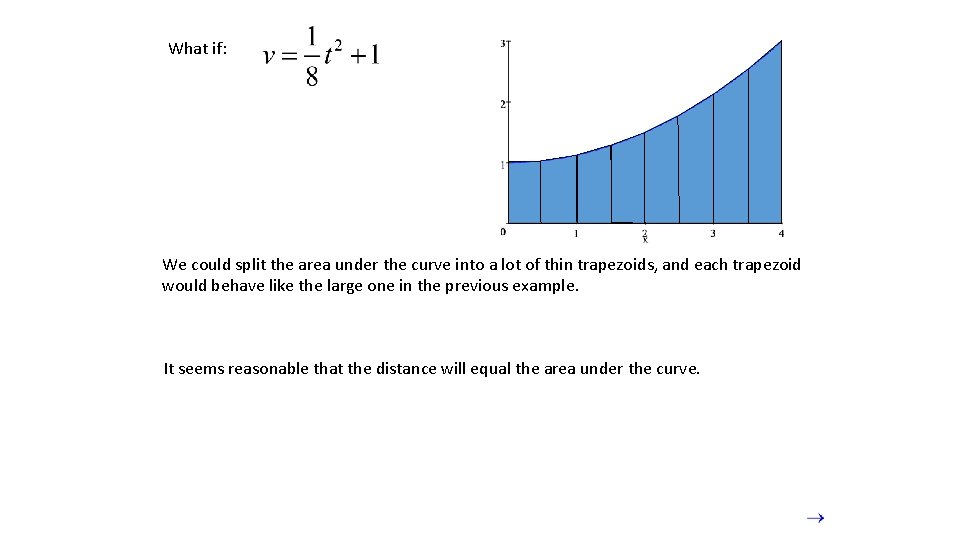
What if: We could split the area under the curve into a lot of thin trapezoids, and each trapezoid would behave like the large one in the previous example. It seems reasonable that the distance will equal the area under the curve.
The area under the curve We can use anti-derivatives to find the area under a curve!
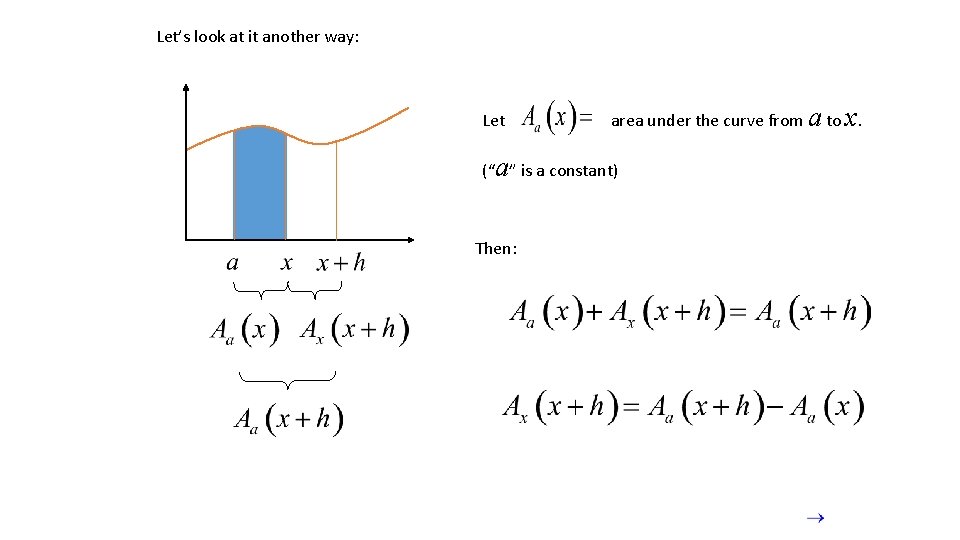
Let’s look at it another way: Let area under the curve from a to x. (“a” is a constant) Then:
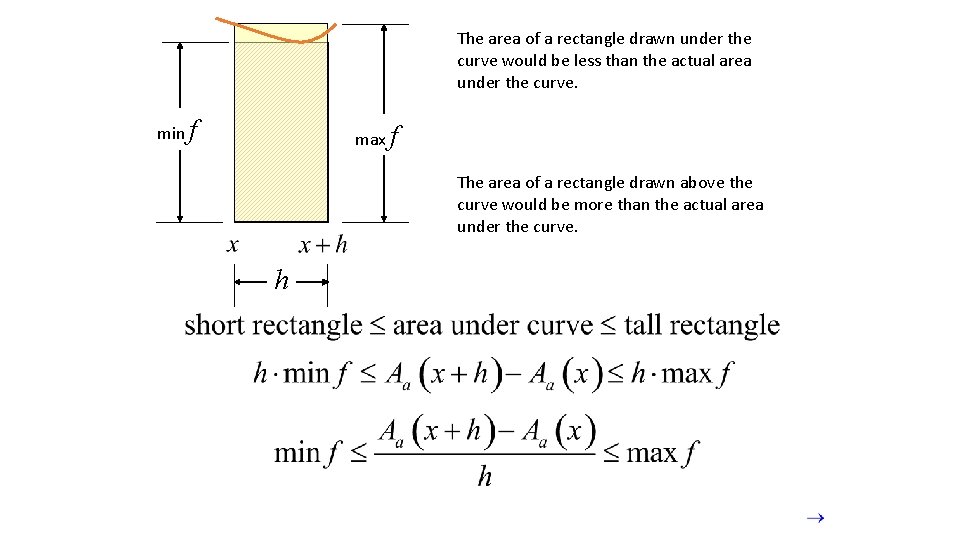
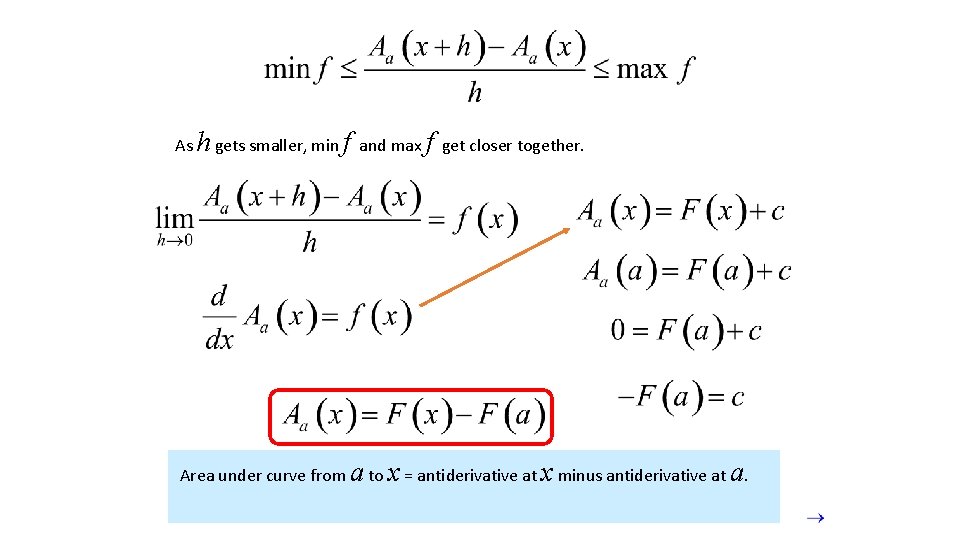
The area of a rectangle drawn under the curve would be less than the actual area under the curve. min f max f The area of a rectangle drawn above the curve would be more than the actual area under the curve. h
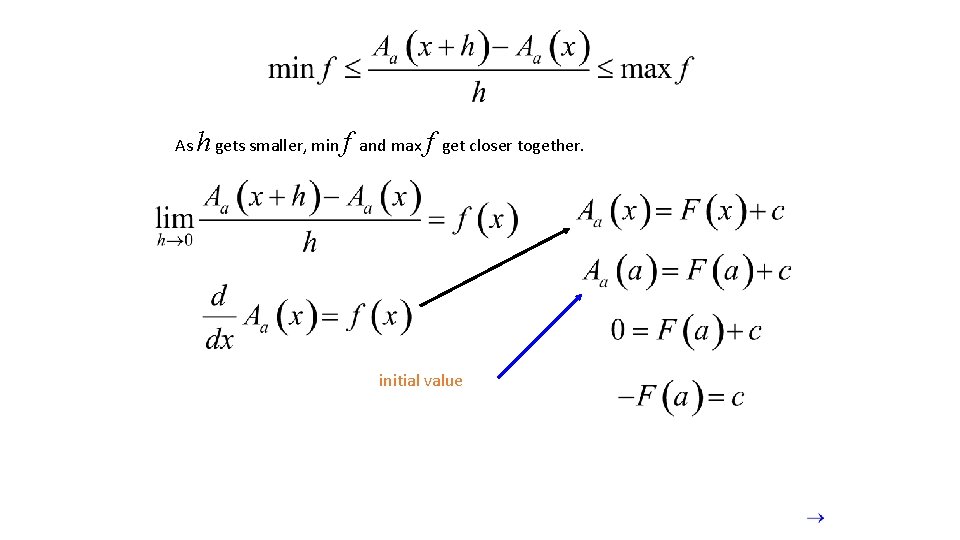
As h gets smaller, min f and max f get closer together. This is the definition of derivative! initial value Take the anti-derivative of both sides to find an explicit formula for area.
As h gets smaller, min f and max f get closer together. Area under curve from a to x = antiderivative at x minus antiderivative at a.
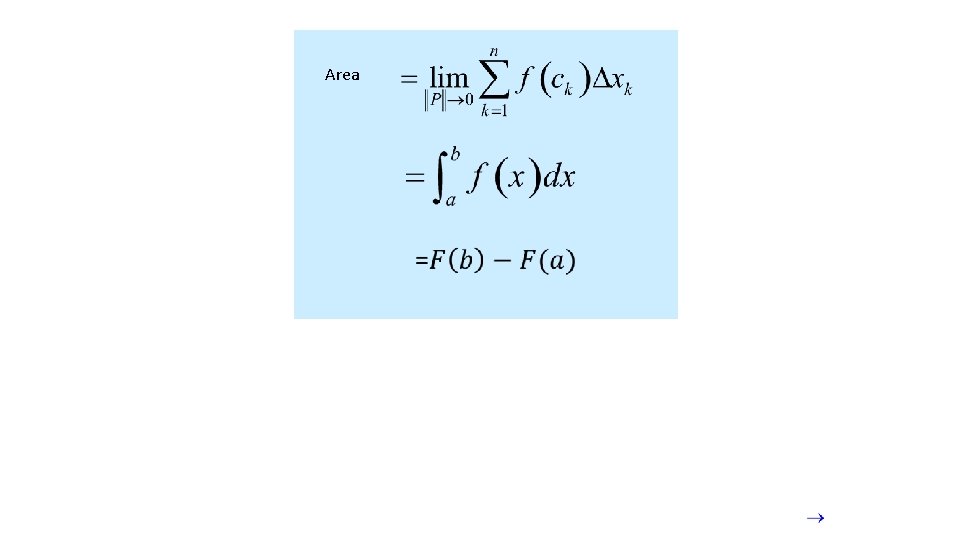
Area
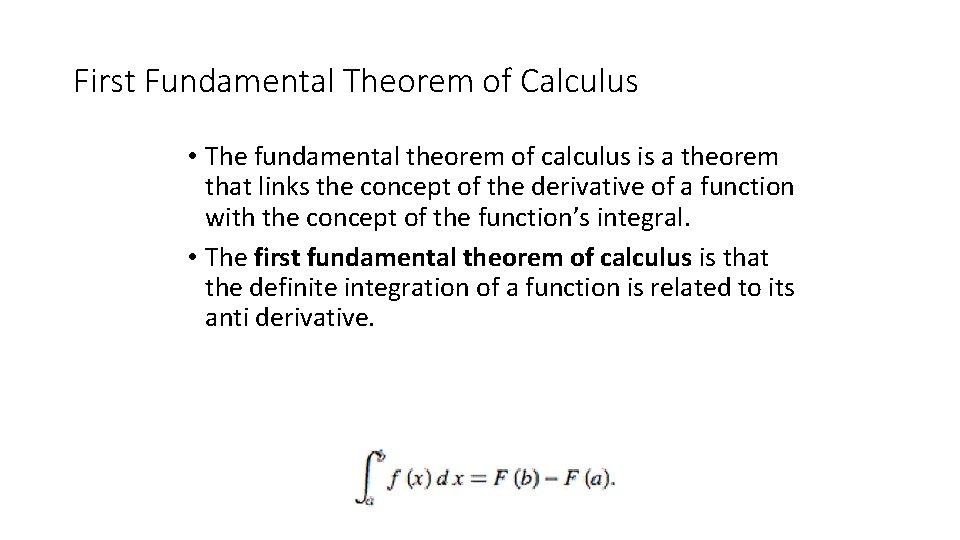
First Fundamental Theorem of Calculus • The fundamental theorem of calculus is a theorem that links the concept of the derivative of a function with the concept of the function’s integral. • The first fundamental theorem of calculus is that the definite integration of a function is related to its anti derivative.
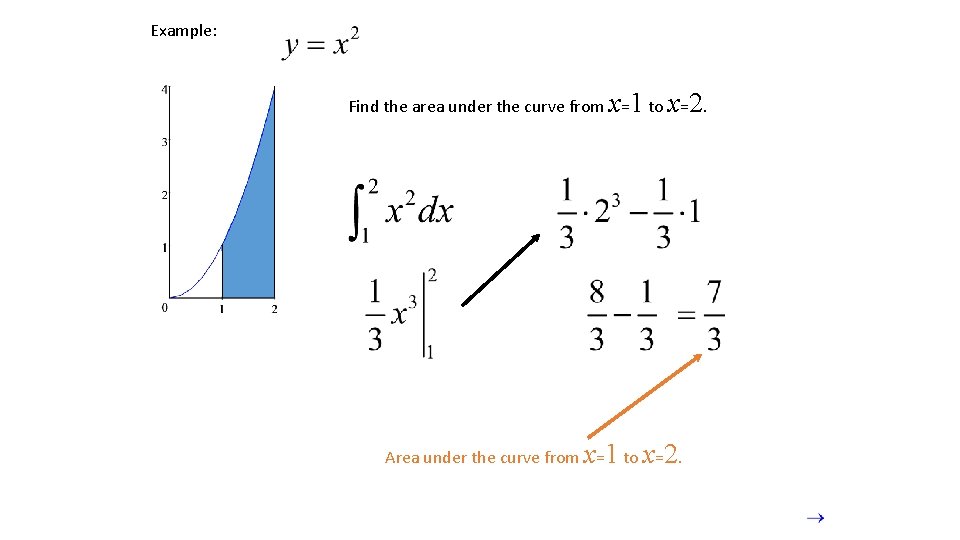
Example: Find the area under the curve from x=1 to x=2. Area from x=0 Area under the curve from x=1 to x=2 to x=1
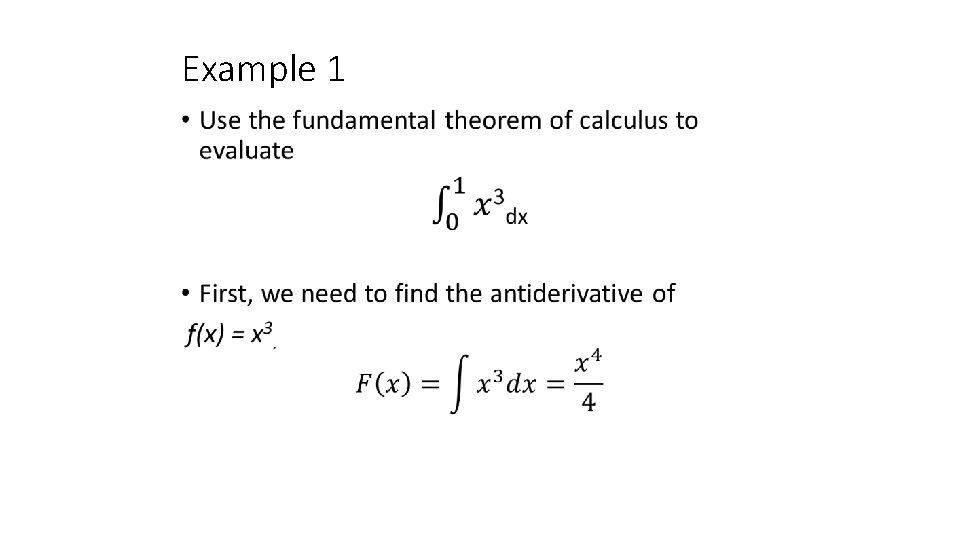
Example 1 •
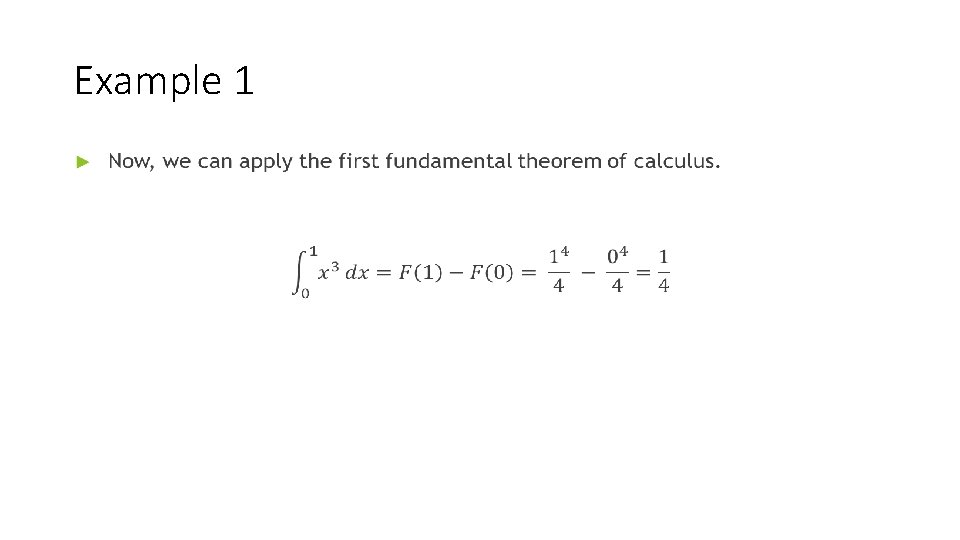
Example 1 •
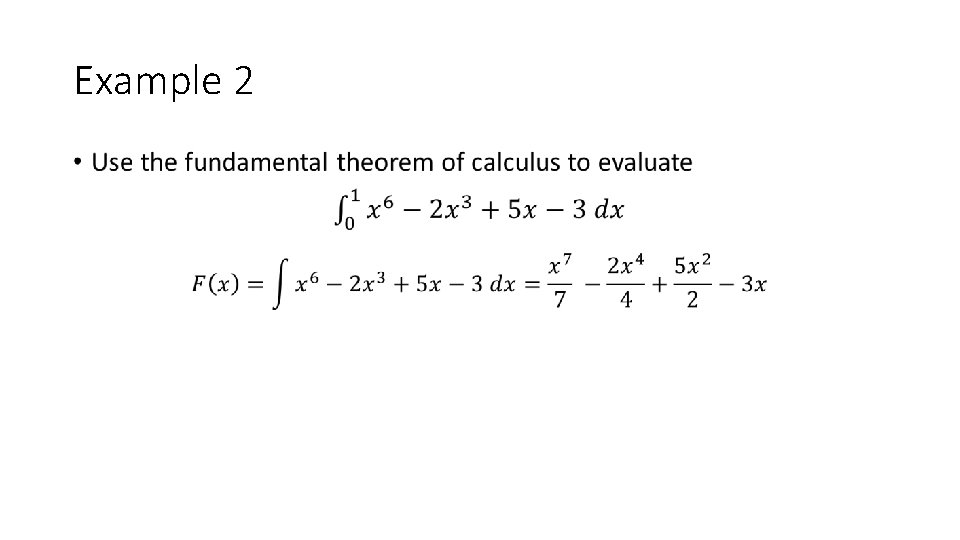
Example 2 •
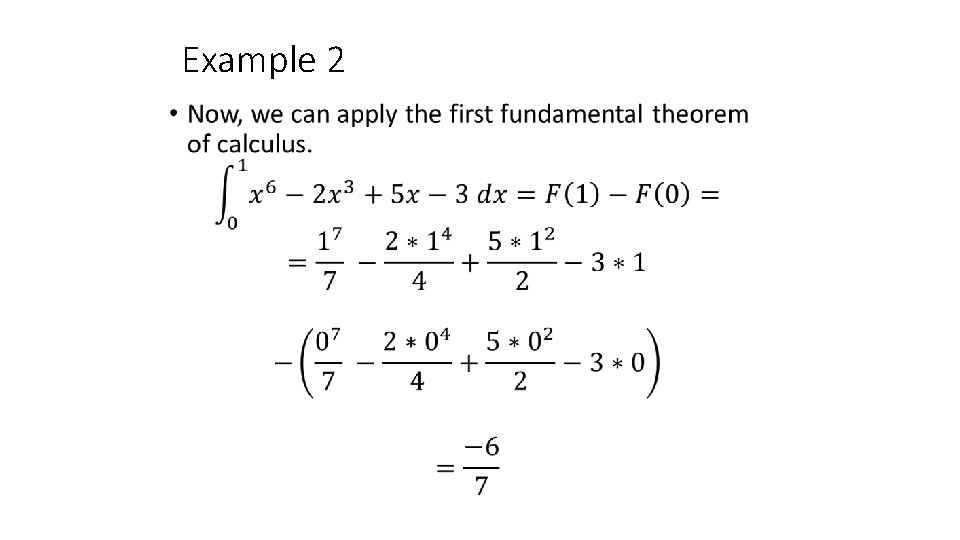
Example 2 •
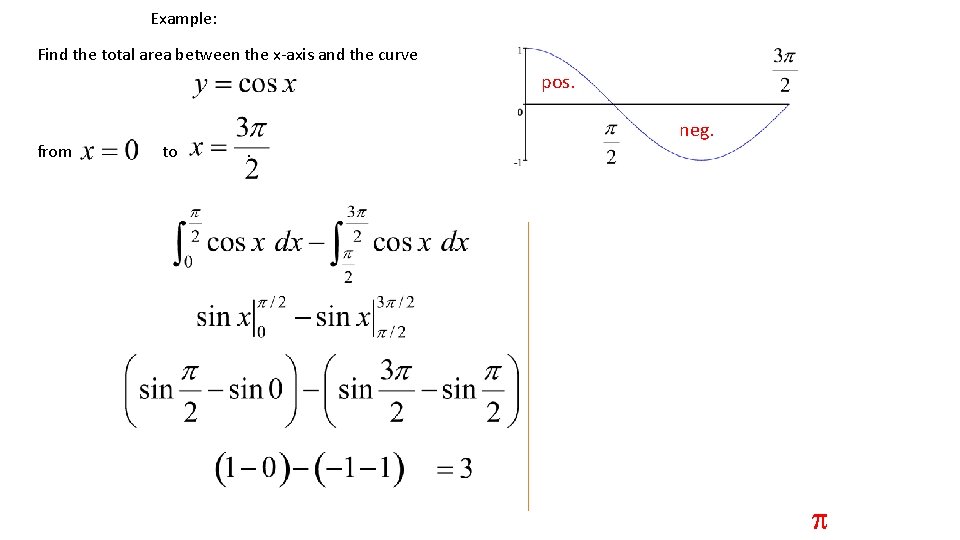
Example: Find the total area between the x-axis and the curve pos. from to . neg. p