
First Estate Religious Official Second Estate Rich Noble
• First Estate: Religious Official • Second Estate: Rich Noble • Second Estate: Rich Royalty
• Third Estate: Poor Peasant • • Third Estate: Poor Peasant • Third Estate: Middle Class businessperson
Today’s Activity (teacher’s notes) • Randomly assign roles as students walk in door. • Students will create name tags (warm-up) • Have first and second estate people sit in special areas and wear fancy something (wig? ) • While making name tags, hand out fake money, with first and second estate getting the most • Then hand out a script to the appropriate students • Then prompt groups to act out various aspects…
Warm-Up: Tuesday 1. Write your title on your warm-up sheet! (write what’s on your popsicle stick) 2. What do you know about the French Revolution?

French Revolution “A Reenactment”
Who are the “players”? • First Estate: Religious Officials (. 5% of population) • Second Estate: Rich Royalty and Nobles (1. 5% of population) • Third Estate: mostly peasants; also merchants, artisans, professionals (98% of population)
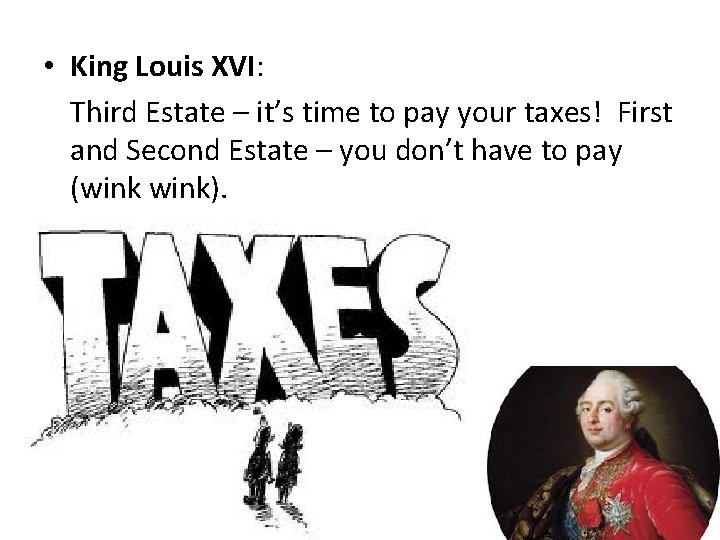
• King Louis XVI: Third Estate – it’s time to pay your taxes! First and Second Estate – you don’t have to pay (wink).
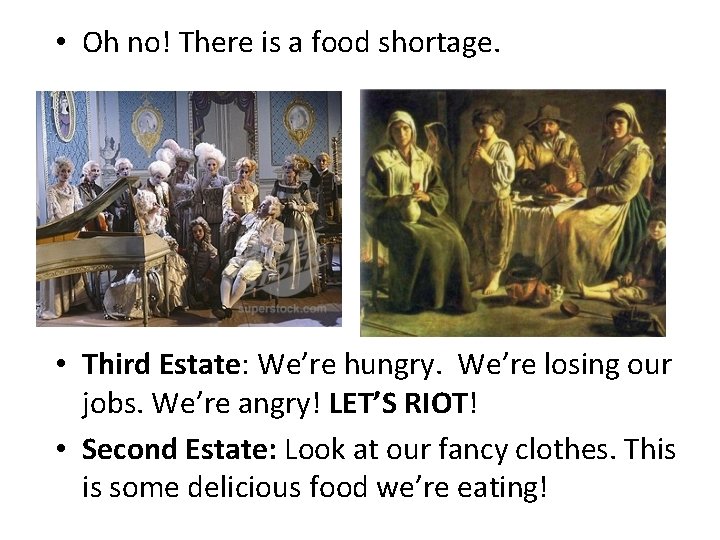
• Oh no! There is a food shortage. • Third Estate: We’re hungry. We’re losing our jobs. We’re angry! LET’S RIOT! • Second Estate: Look at our fancy clothes. This is some delicious food we’re eating!
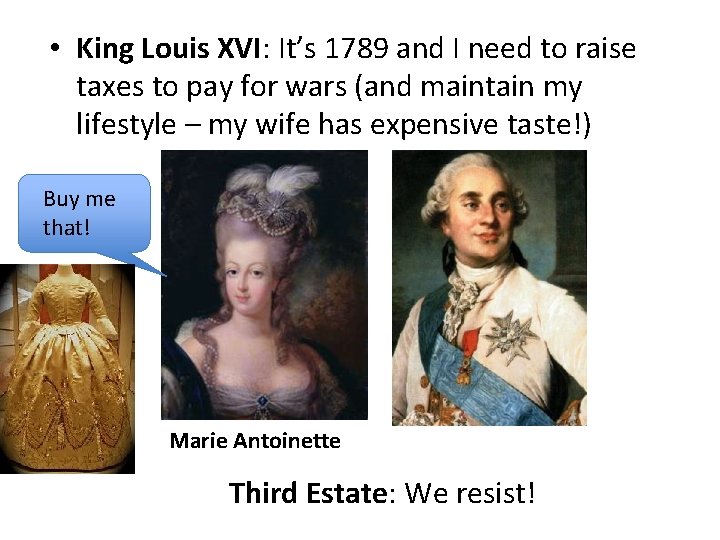
• King Louis XVI: It’s 1789 and I need to raise taxes to pay for wars (and maintain my lifestyle – my wife has expensive taste!) Buy me that! Marie Antoinette Third Estate: We resist!
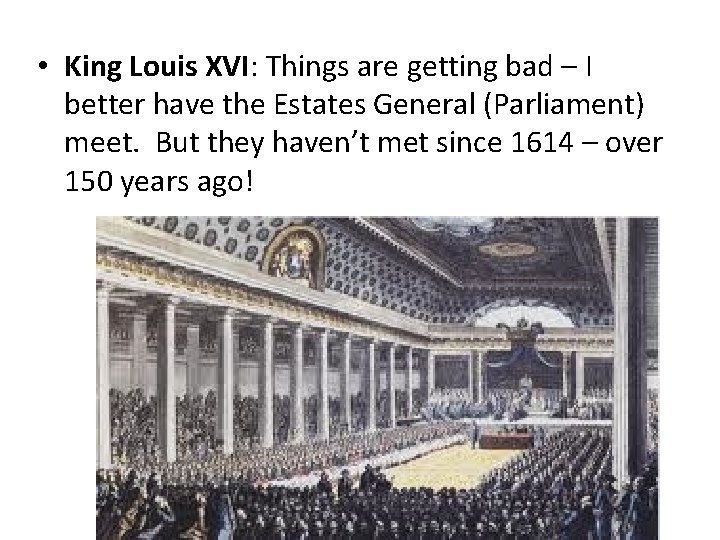
• King Louis XVI: Things are getting bad – I better have the Estates General (Parliament) meet. But they haven’t met since 1614 – over 150 years ago!
• Third Estate (Middle Class Only): We represent the majority, so our vote should count more! • First and Second Estate: Let’s lock ‘em out.

• Third Estate (Middle Class Only): What! We’re locked out! That’s it. • Look at what America did! They rid of an unjust monarchy. We can do the same! • Listen to Rousseau, Voltaire, and Montesquieu. We are tired of this outdated monarchy. We should have rights!

• Second Estate: What do they think they’re doing? We need to use force to put a stop to this. • Third Estate (Peasants): Let’s storm the Bastille! (The big armory and prison)
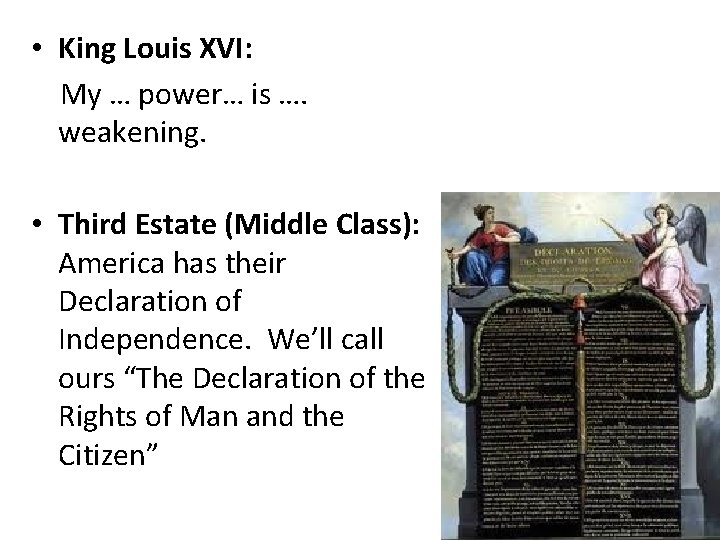
• King Louis XVI: My … power… is …. weakening. • Third Estate (Middle Class): America has their Declaration of Independence. We’ll call ours “The Declaration of the Rights of Man and the Citizen”
To be continued… Day 2: Things get a little crazy.
Let’s Review: Causes of the French Revolution – Unfair taxes – Rigid social structure – Poor harvest – Absolute Monarchy – Spread of Enlightenment ideas – American Revolution – Rise of the Middle Class
Declaration of the Rights of Man - 1789 • What are the similarities and differences between this declaration and the Declaration of Independence?
Your next task • Your next task: Document Based Questions – Use the primary source documents to answer the questions. You may work with a partner.

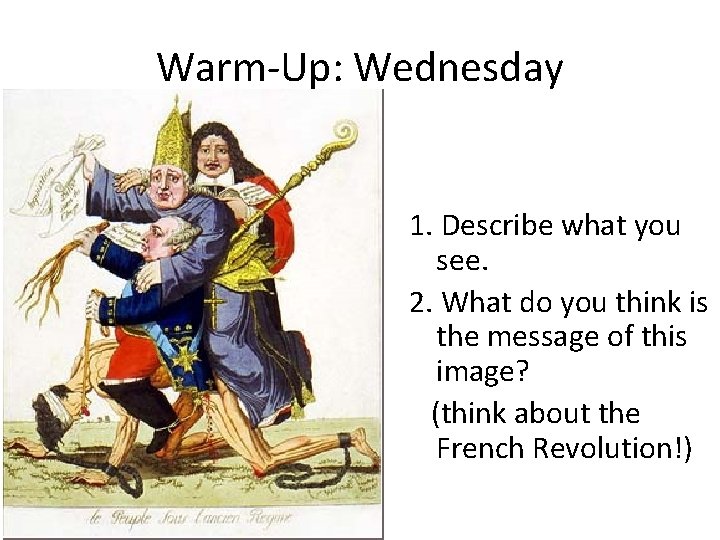
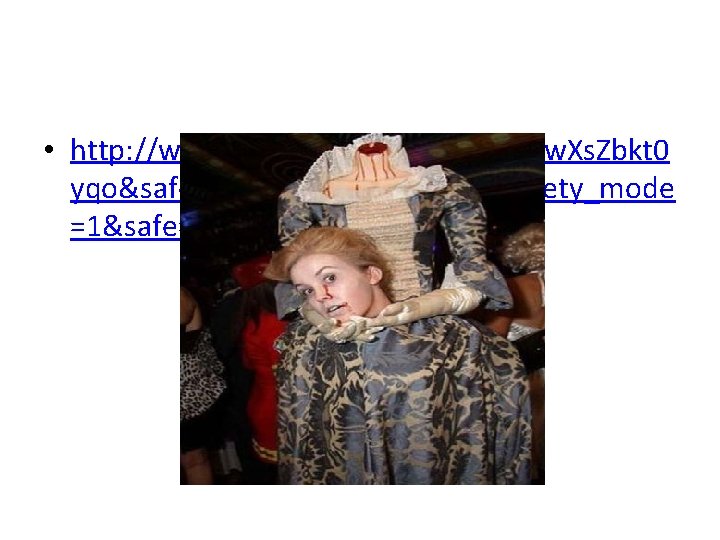
Warm-Up: Wednesday 1. Describe what you see. 2. What do you think is the message of this image? (think about the French Revolution!)
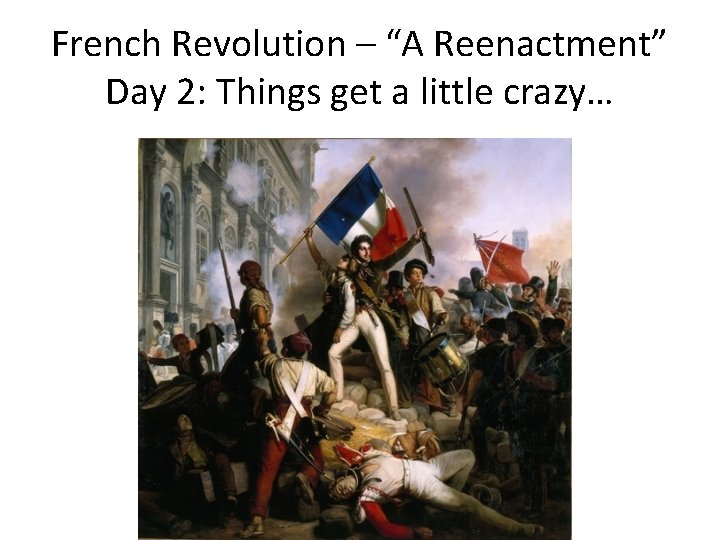
French Revolution – “A Reenactment” Day 2: Things get a little crazy…
Let’s recap… (1789) • The Third Estate forms the National Assembly, which creates the Declaration of the Rights of Man – Equal rights for all man – Class distinctions abolished – Increased Freedom for the press
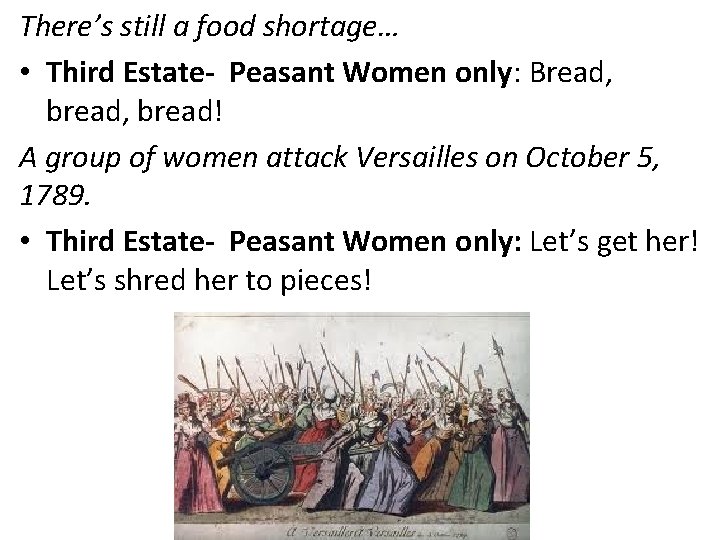
There’s still a food shortage… • Third Estate- Peasant Women only: Bread, bread! A group of women attack Versailles on October 5, 1789. • Third Estate- Peasant Women only: Let’s get her! Let’s shred her to pieces!
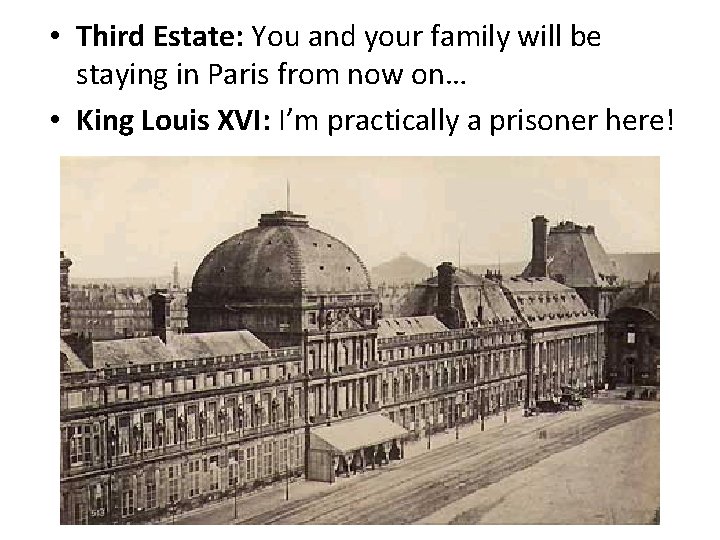
• Third Estate: You and your family will be staying in Paris from now on… • King Louis XVI: I’m practically a prisoner here!
Meanwhile … • First Estate (Church officials): The Civil Constitution of the Clergy is terrible! Now the Church is under state control. We’ve lost our land, our monasteries.
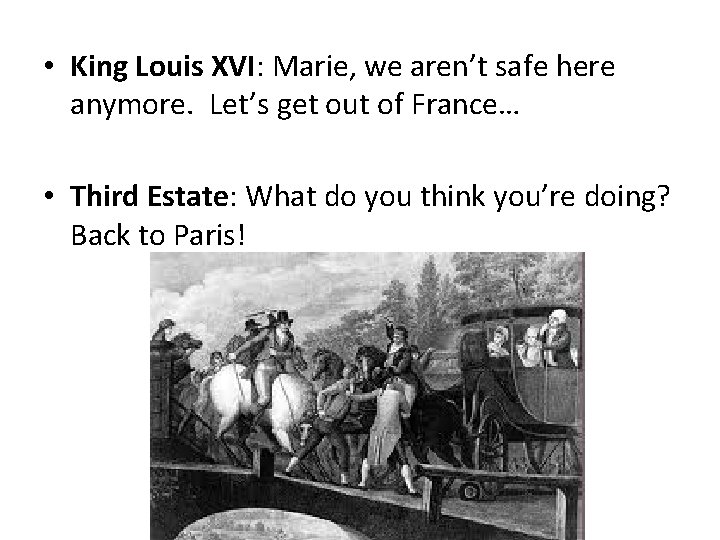
• King Louis XVI: Marie, we aren’t safe here anymore. Let’s get out of France… • Third Estate: What do you think you’re doing? Back to Paris!
• The National Assembly drafted the Constitution of 1791, which set up a limited monarchy. • To moderate reformers, this constitution seemed to complete the revolution. • This is not the case, however.
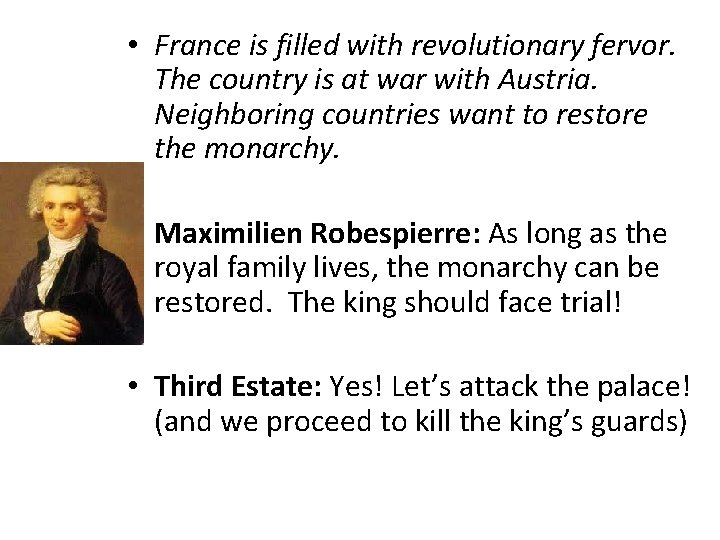
• France is filled with revolutionary fervor. The country is at war with Austria. Neighboring countries want to restore the monarchy. • Maximilien Robespierre: As long as the royal family lives, the monarchy can be restored. The king should face trial! • Third Estate: Yes! Let’s attack the palace! (and we proceed to kill the king’s guards)
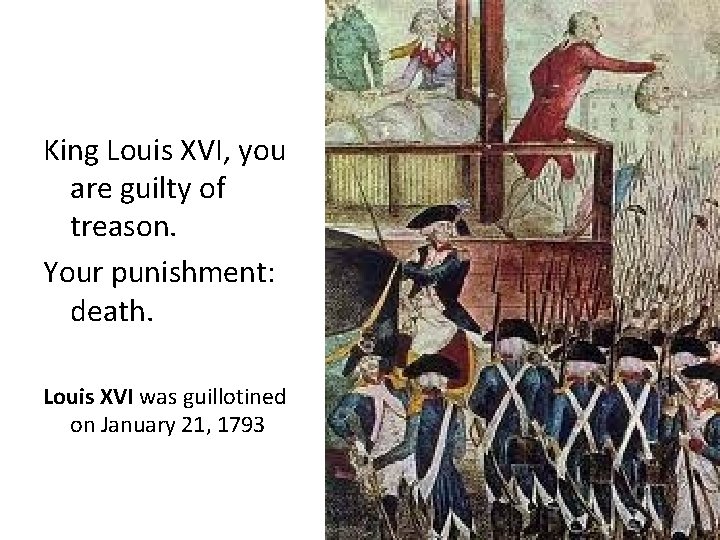
King Louis XVI, you are guilty of treason. Your punishment: death. Louis XVI was guillotined on January 21, 1793
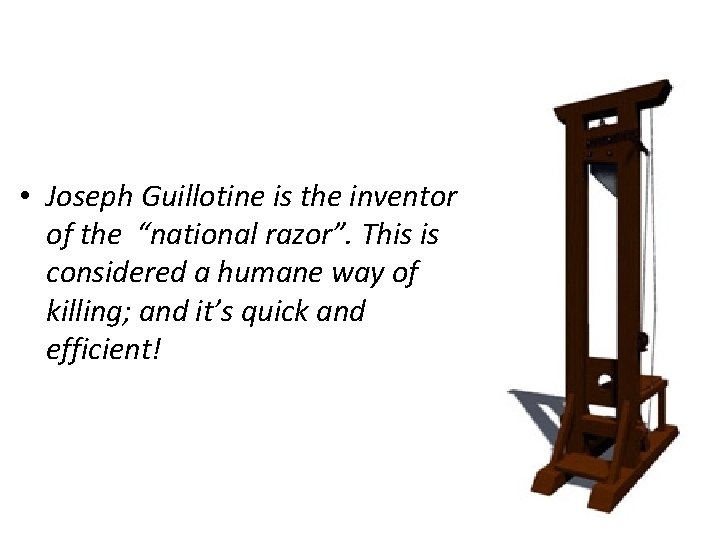
• Joseph Guillotine is the inventor of the “national razor”. This is considered a humane way of killing; and it’s quick and efficient!
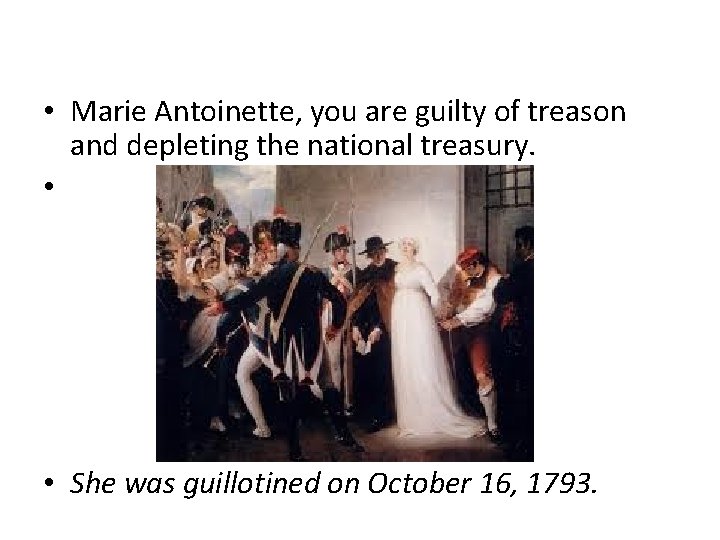
• Marie Antoinette, you are guilty of treason and depleting the national treasury. • • She was guillotined on October 16, 1793.
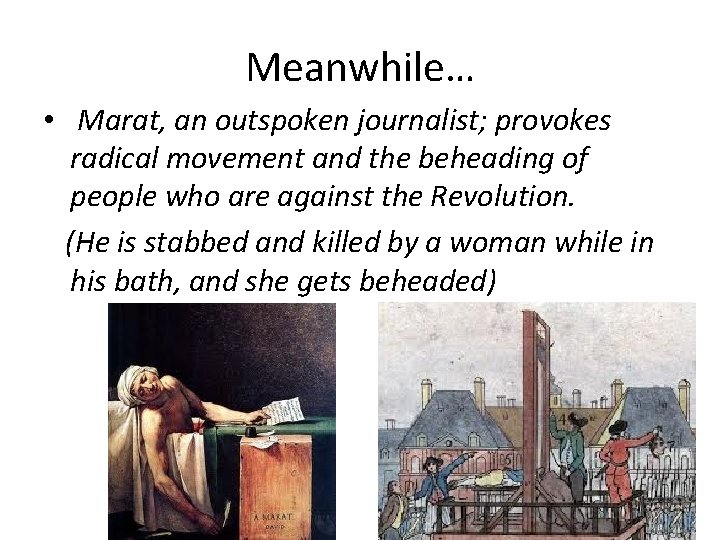
Meanwhile… • Marat, an outspoken journalist; provokes radical movement and the beheading of people who are against the Revolution. (He is stabbed and killed by a woman while in his bath, and she gets beheaded)
Different political parties emerge in France: moderates and radicals. • Robespierre: I’m stepping up. I’m the man to lead the Revolution. • Robespierre and the revolutionaries: • Those rights in the Declaration of the Rights of Man…. We’re gonna suspend those rights for now.
Other changes going on in France… • “De-Christianization” – Streets with the name “saint” were renamed – No longer a Christian calendar • Years numbered with Sept 1792 Year 1 • Months renamed • 10 day week = no Sundays!
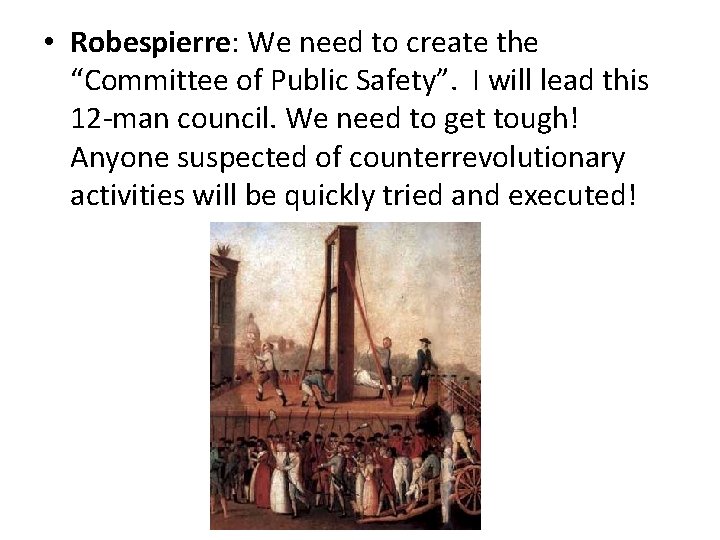
• Robespierre: We need to create the “Committee of Public Safety”. I will lead this 12 -man council. We need to get tough! Anyone suspected of counterrevolutionary activities will be quickly tried and executed!
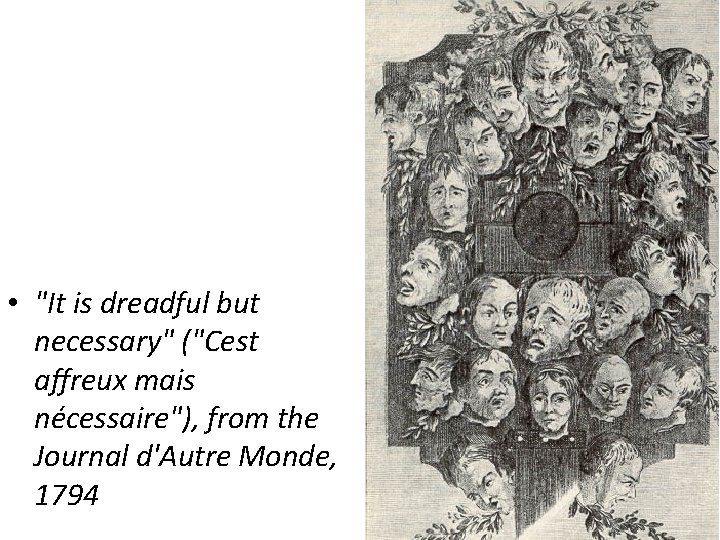
• "It is dreadful but necessary" ("Cest affreux mais nécessaire"), from the Journal d'Autre Monde, 1794

Police spies: We heard what you said.
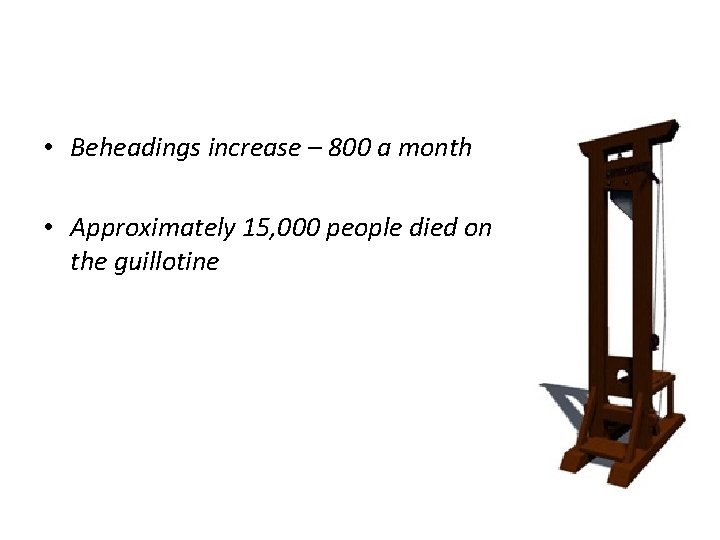
• Beheadings increase – 800 a month • Approximately 15, 000 people died on the guillotine
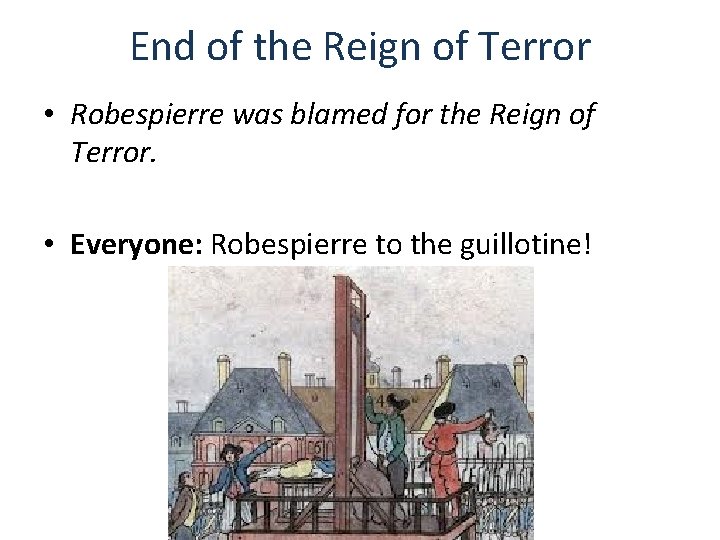
End of the Reign of Terror • Robespierre was blamed for the Reign of Terror. • Everyone: Robespierre to the guillotine!
• 1795 – France adopts a new constitution • By the late 1790 s, the Directory (France’s governing body), relied on the military to maintain its power.
End of the Revolution • What do you think is the outcome of the French Revolution? • Napoleon Bonaparte crowns himself Emperor in 1804. The Revolution was over, the empire had begun.
• http: //www. youtube. com/watch? v=w. Xs. Zbkt 0 yqo&safety_mode=true&persist_safety_mode =1&safe=active
Warm-up: Thursday 1. Describe months, weeks, and days in the Revolutionary calendar. 2. Why do you think the leaders of the French Revolution would create a new calendar?

• https: //www. youtube. com/watch? v=5 p. Xxoyk 5 w. Oo
Warm-up: Random Fact Friday! 1. What is the driest, coldest, windiest, and highest continent on earth? 2. No piece of paper can be folded more than ____ times. 3. What is a female kangaroo called? TURN IN YOUR WARM-UP SHEET!
• You were overheard using the formal “madame” rather than the new word “citizen”.
• You complained about the price of bread.
• Your neighbor said you were a traitor.
• You said that you miss the King and wish he was still alive.
• You are an enemy of the Revolution.
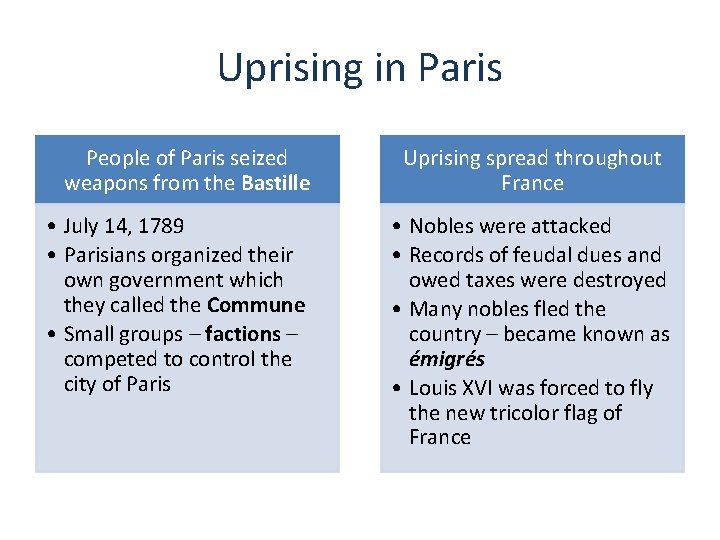
Uprising in Paris People of Paris seized weapons from the Bastille • July 14, 1789 • Parisians organized their own government which they called the Commune • Small groups – factions – competed to control the city of Paris Uprising spread throughout France • Nobles were attacked • Records of feudal dues and owed taxes were destroyed • Many nobles fled the country – became known as émigrés • Louis XVI was forced to fly the new tricolor flag of France
End of Special Privileges • Church lands were seized, divided, and sold to peasants • Civil Constitution of the Clergy required that Church officials be elected by the people, with salaries paid by the government – 2/3 of Church officials fled the country rather than swear allegiance to this • All feudal dues and tithes were eradicated • All special privileges of the First and Second Estates were abolished
Constitution of 1791 • Democratic features – France became a limited monarchy • King became merely the head of state – All laws were created by the Legislative Assembly – Feudalism was abolished • Undemocratic features – Voting was limited to taxpayers – Offices were reserved for property owners • This new government became known as the Legislative Assembly
It would be a military leader – Napoleon Bonaparte, coming to power through a coup d’état – who would end the ten-year period (17891799) known as the French Revolution.
- Slides: 54