
First Empires of India Mauryan and Gupta Empires
- Slides: 17
First Empires of India Mauryan and Gupta Empires
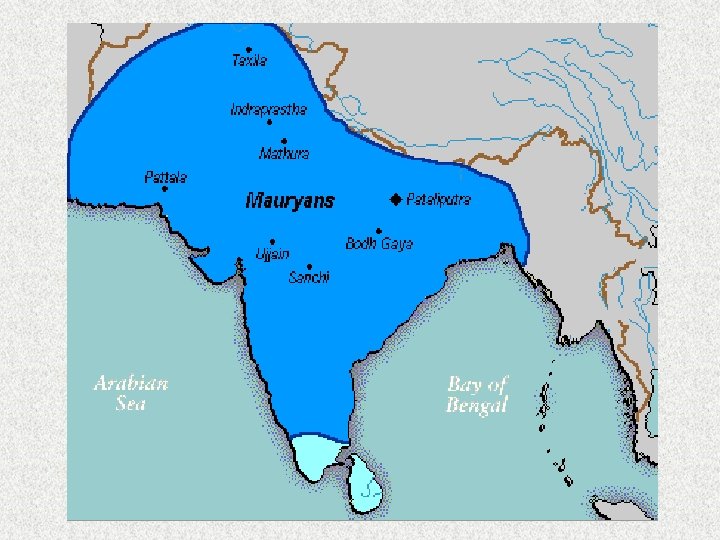
Mauryan Empire • Chandragupta Maurya conquered the remains of Alexander the Great’s kingdom and controlled most of present-day India • Forced people to pay high taxes, sometimes up to 50%
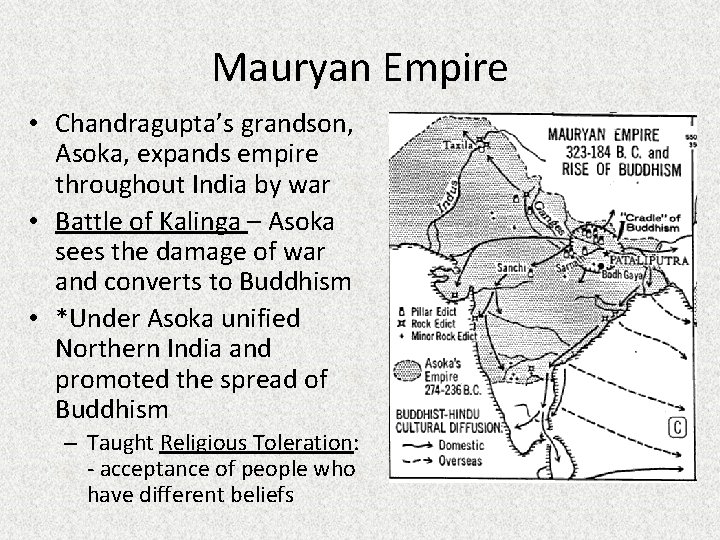
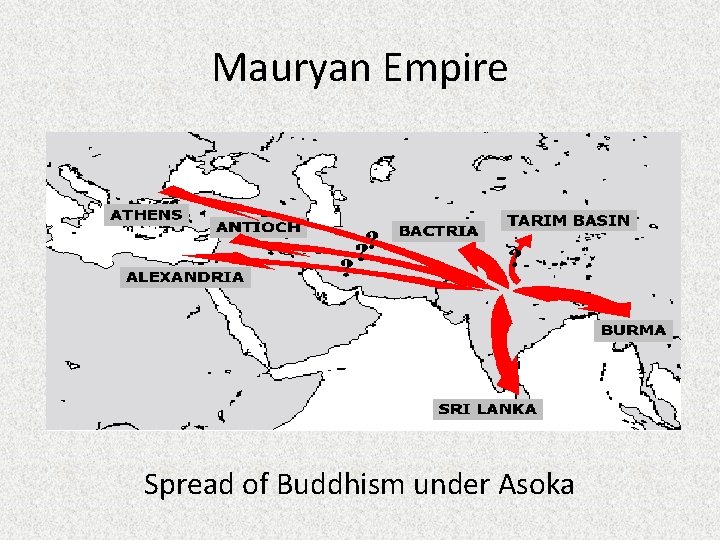
Mauryan Empire • Chandragupta’s grandson, Asoka, expands empire throughout India by war • Battle of Kalinga – Asoka sees the damage of war and converts to Buddhism • *Under Asoka unified Northern India and promoted the spread of Buddhism – Taught Religious Toleration: - acceptance of people who have different beliefs
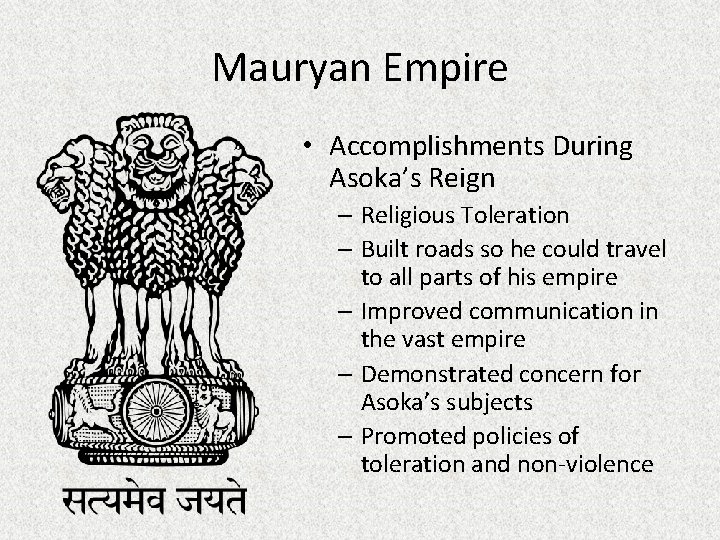
Mauryan Empire • Accomplishments During Asoka’s Reign – Religious Toleration – Built roads so he could travel to all parts of his empire – Improved communication in the vast empire – Demonstrated concern for Asoka’s subjects – Promoted policies of toleration and non-violence
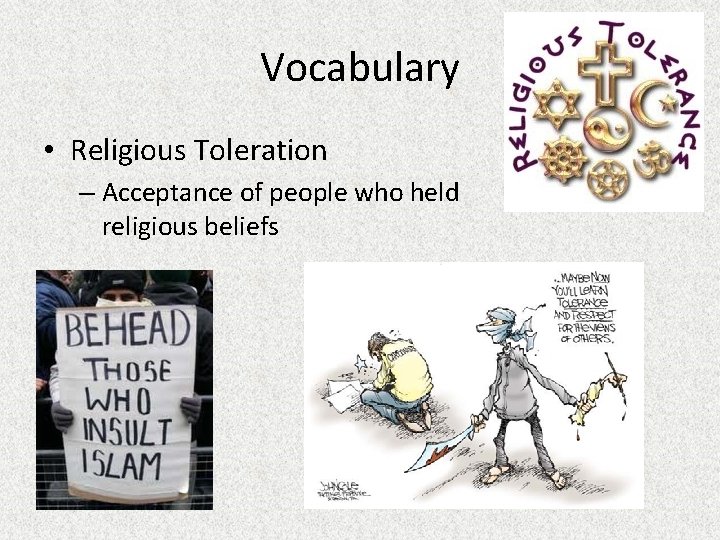
Vocabulary • Religious Toleration – Acceptance of people who held religious beliefs different
Mauryan Empire Spread of Buddhism under Asoka
Tamil Family Groups • • Broke away after Asoka’s death Primarily in southern India *Matriarchal culture based on the mother Divided into three kingdoms – Always at war with each other and other groups
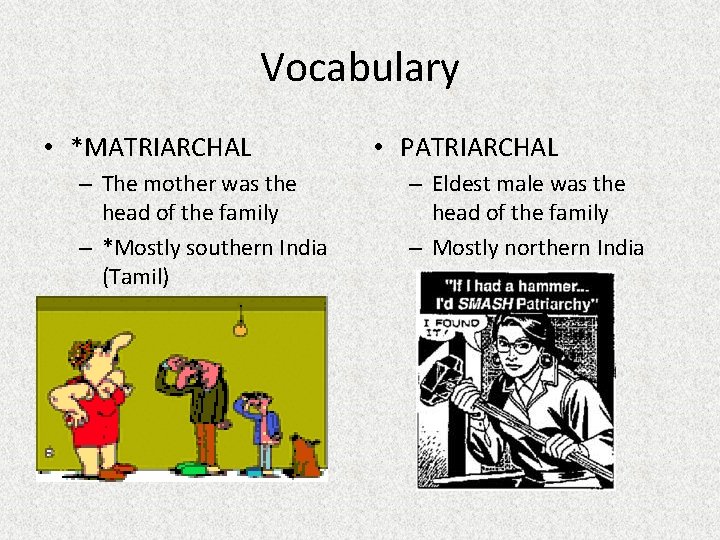
Vocabulary • *MATRIARCHAL – The mother was the head of the family – *Mostly southern India (Tamil) • PATRIARCHAL – Eldest male was the head of the family – Mostly northern India
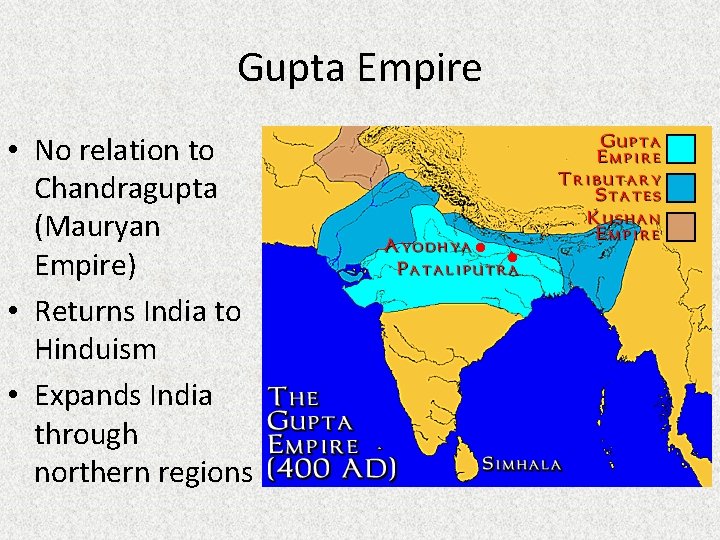
Gupta Empire • No relation to Chandragupta (Mauryan Empire) • Returns India to Hinduism • Expands India through northern regions
Gupta Empire • First Indian Empire that historians have information about daily life • Traded with cities throughout Mediterranean and along the Silk Road • Used marriage to keep alliances and spread the empire • *Indians experienced great advances in art, literature, science and mathematics
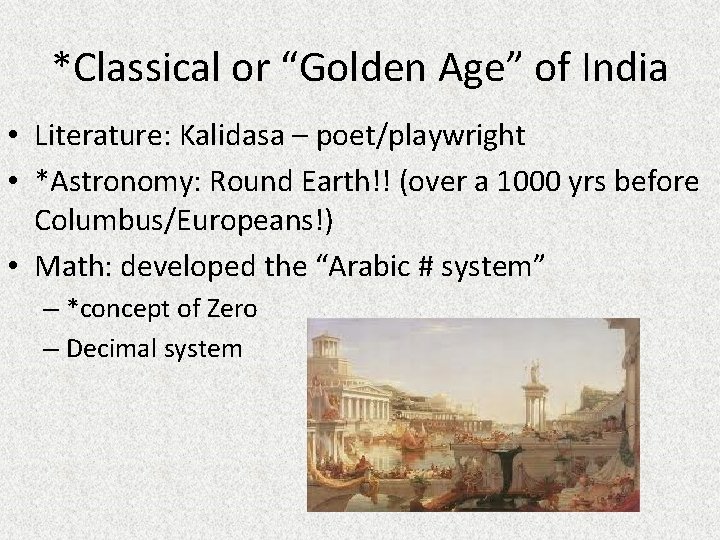
*Classical or “Golden Age” of India • Literature: Kalidasa – poet/playwright • *Astronomy: Round Earth!! (over a 1000 yrs before Columbus/Europeans!) • Math: developed the “Arabic # system” – *concept of Zero – Decimal system
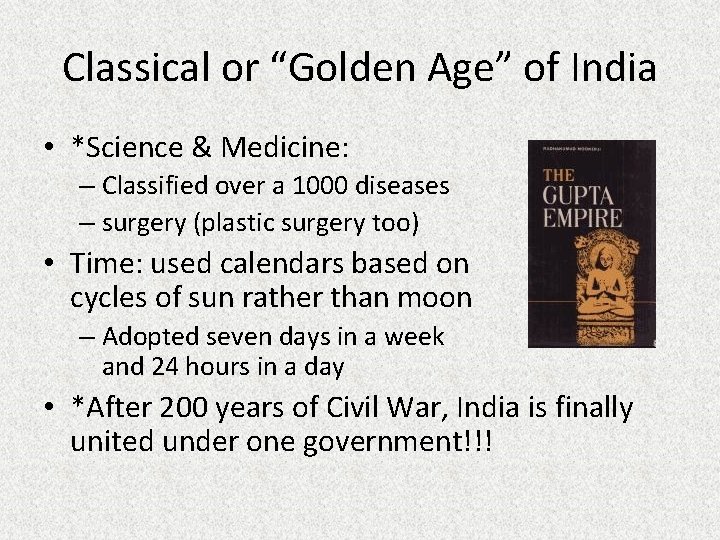
Classical or “Golden Age” of India • *Science & Medicine: – Classified over a 1000 diseases – surgery (plastic surgery too) • Time: used calendars based on cycles of sun rather than moon – Adopted seven days in a week and 24 hours in a day • *After 200 years of Civil War, India is finally united under one government!!!
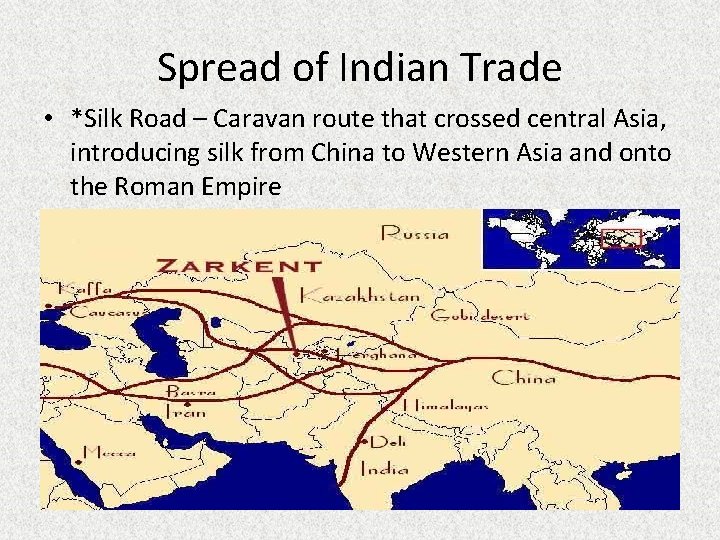
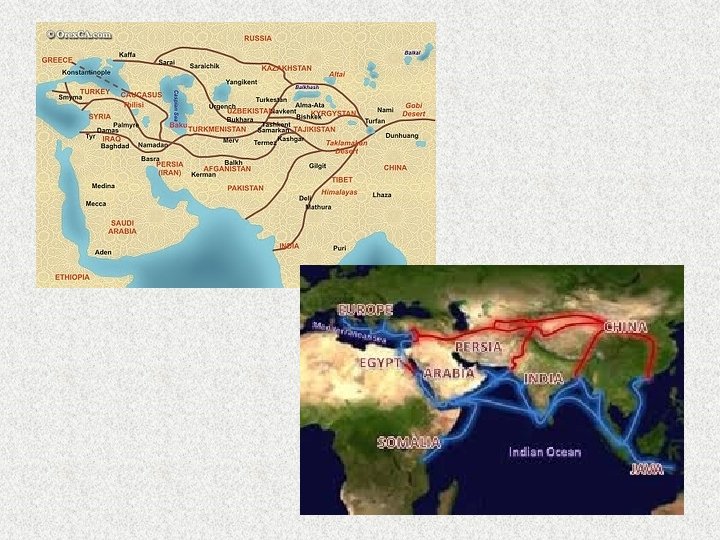
Spread of Indian Trade • *Silk Road – Caravan route that crossed central Asia, introducing silk from China to Western Asia and onto the Roman Empire
Spread of Indian Trade • *Silk Road was used to trade silk from China to western Asia and on to Rome • *Indians made huge profits by acting as middlemen on the Silk Road • Indians would buy goods like Silk from the Chinese then sell the good to traders that were traveling to Rome
Spread of Indian Trade • *Increased trade along the Silk Road also increased banking system. – Bankers would lend money to merchants & charge high interest rates • Trade items such as spices, cotton cloth, ivory, gems, timber, and eventually silk • *Indian styles of art, architecture, dance and religion were impacted by Indian traders on Southeast Asia.