
FIRST AND SECOND LINES OF DEFENCE DECEMBER 7

FIRST AND SECOND LINES OF DEFENCE DECEMBER 7, 2009
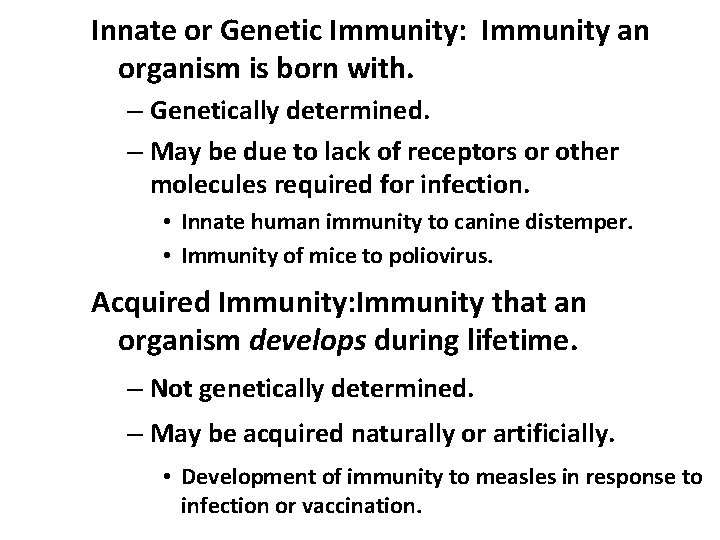
Innate or Genetic Immunity: Immunity an organism is born with. – Genetically determined. – May be due to lack of receptors or other molecules required for infection. • Innate human immunity to canine distemper. • Immunity of mice to poliovirus. Acquired Immunity: Immunity that an organism develops during lifetime. – Not genetically determined. – May be acquired naturally or artificially. • Development of immunity to measles in response to infection or vaccination.
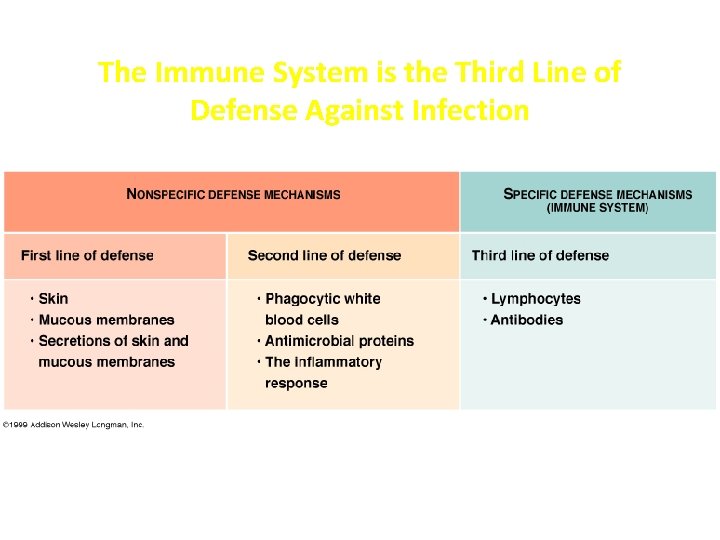
The Immune System is the Third Line of Defense Against Infection
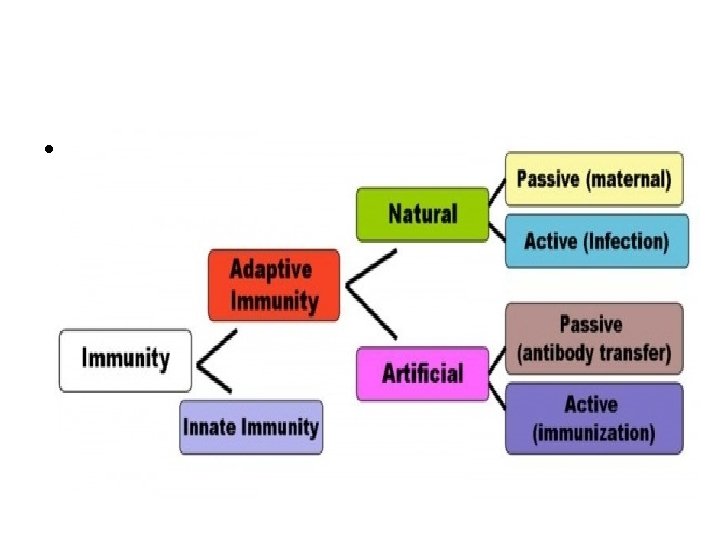
• Adaptive vs. Innate Immunity
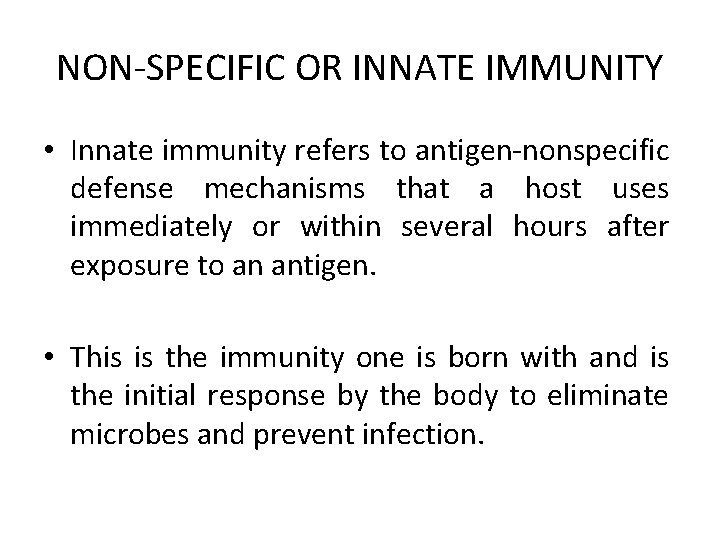
NON-SPECIFIC OR INNATE IMMUNITY • Innate immunity refers to antigen-nonspecific defense mechanisms that a host uses immediately or within several hours after exposure to an antigen. • This is the immunity one is born with and is the initial response by the body to eliminate microbes and prevent infection.
NON-SPECIFIC DEFENSE: FIRST LINE • The skin, is dry, acidic, and has a temperature lower than 37 degrees Celcius (body temperature) conditions which are not favorable to bacterial growth. • Resident normal flora of the skin also inhibit potentially harmful microbes. • In addition, the dead, keratinized cells that make up the surface of the skin are continously being sloughed off so that microbes that do colonize these cells are constantly being removed. • Hair follicles and sweat glands produce lysozyme (def) and toxic lipids that can kill bacteria.
NON-SPECIFIC DEFENSE: FIRST LINE • The mucous membranes line body cavities that open to the exterior, such as the respiratory tract, the gastrointestinal tract, and the genitourinary tract. • Mucous membranes are composed of an epithelial layer that secretes mucus, and a connective tissue layer. • The mucus is a physical barrier that traps microbes. • Mucus also contains lysozyme to degrade bacterial cell walls. • Resident normal flora of the mucosa also inhibit potentially harmful microbes. In addition, the mucous membrane, like the skin, is constantly sloughing cells to remove microbes that have attached to the mucous membranes.
NON-SPECIFIC DEFENSE: FIRST LINE • a. Cilia on the surface of the epithelial cells propel mucus and trapped microbes upwards towards the throat where it is swallowed and the microbes are killed in the stomach. This is sometimes called the tracheal toilet. • b. the cough and sneeze reflex • Coughing and sneezing removes mucus and trapped microbes. • c. vomiting and diarrhea • These processes remove pathogens and toxins in the gastrointestinal tract. • d. the physical flushing action of body fluids • Fluids such as urine, tears, saliva, perspiration, and blood from injured blood vessels also flush microbes from the body.
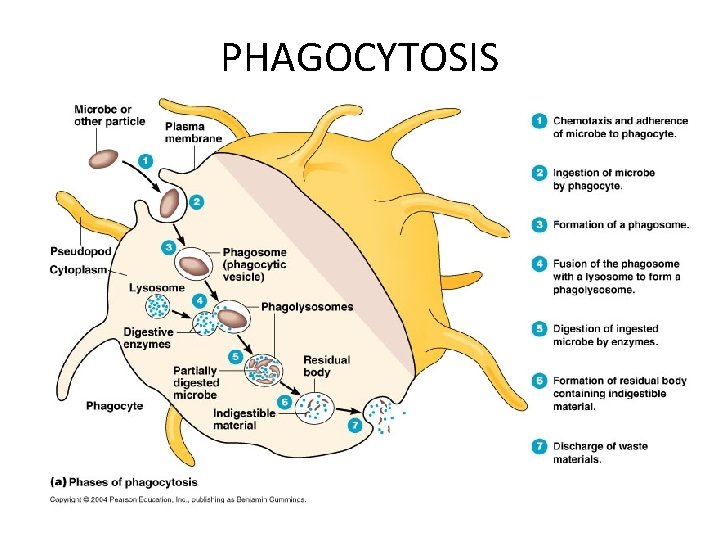
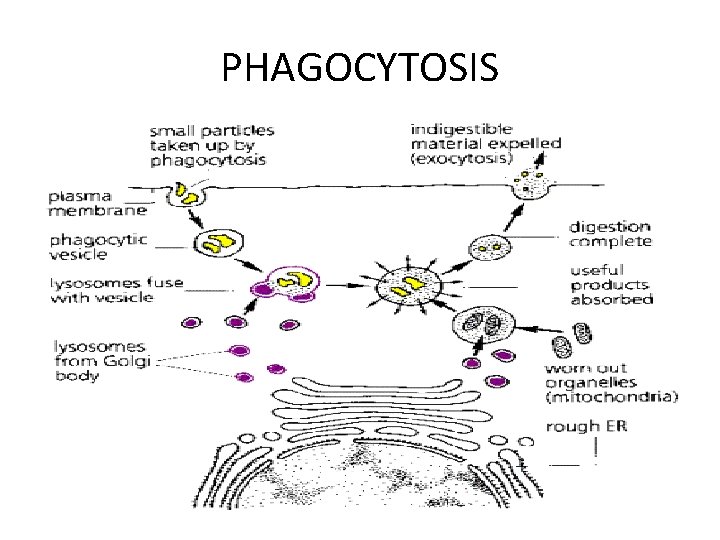
NON-SPECIFIC DEFENSE: SECOND LINE • Phagocytosis is the cellular process of phagocytes engulfing solid particles by the cell membrane to form an internal phagosome. • Phagocytosis is a specific form of endocytosis involving the vesicular internalization of solid particles, such as bacteria. • In the immune system it is a major mechanism used to remove pathogens and cell debris. Bacteria and dead tissue cells are also removed in this way.
PHAGOCYTOSIS
PHAGOCYTOSIS
NON-SPECIFIC DEFENSE: SECOND LINE • The complement system is a biochemical cascade of the immune system that helps, or “complements”, the ability of antibodies to clear pathogens or mark them for destruction by other cells. The cascade is composed of many plasma proteins, synthesized in the liver. The proteins work together to: • trigger the recruitment of inflammatory cells. • "tag" pathogens for destruction by other cells by opsonizing, or coating, the surface of the pathogen. • disrupt the plasma membrane of an infected cell, resulting in cytolysis of the infected cell, causing the death of the pathogen. • rid the body of neutralized antigen-antibody complexes.
NON-SPECIFIC DEFENSE: SECOND LINE • • • Inflammation is brought about by reaction to Burns, chemical irritants, frostbite, toxins Infection by pathogens, physical injury, blunt or penetrating objects Foreign bodies, including splinters and dirt • The inflammatory response is an attempt by the body to restore and maintain homeostasis after injury and is an integral part of body defense. • Most of the body defense elements are located in the blood and inflammation is the means by which body defense cells and defense chemicals leave the blood and enter the tissue around the injured or infected site. • Inflammation is essentially beneficial, however, excess or prolonged inflammation cause harm.
• Three occurrences make up the inflammatory mechanism: • a. Smooth muscles contract to slow the flow of blood through the capillary beds at the infected or injured site giving leukocytes time to adhere to the walls of the capillary and squeeze out into the surrounding tissue. • b. The endothelial cells that make up the wall of the smaller blood vessels contract increasing the space between the endothelial cells resulting in increased capillary permeability (vasodilation). • Adhesion molecules are activated on the surface of the endothelial cells on the inner wall of the capillaries. Corresponding molecules on the surface of leukocytes called integrins attach to these adhesion molecules allowing the leukocytes to flatten and squeeze through the space between the endothelial cells. This process is called diapedesis or extravasation. • Inflammation plays out in the phases redness (rubor), heat (calor), swelling (tumor), pain (dolor) and loss of tissue function (functio laesa).
NON-SPECIFIC DEFENSE: SECOND LINE • Fever • Activated macrophages and other leukocytes release inflammatory cytokines that stimulate the anterior hypothalamus of the brain that regulates body temperature, to produce prostaglandins that lead to an increase in body temperature. Up to a certain point, fever is beneficial: • 1. Fever increases the environmental temperature above the optimum growth temperature for many microorganisms, slowing them down. • 2. Fever leads to the production of heat shock proteins that are recognized by some intraepithelial T-lymphocytes called delta gamma T-cells, resulting in the production of inflammationpromoting cytokines.
• 3. Fever elevates the temperature of the body increasing the rate of enzyme reactions, and speeding up metabolism within the body. • An elevation in the rate of metabolism can increase the production and activity of phagocytes, speed up the multiplication of lymphocytes, increase the rate of antibody and cytokine production, increase the rate at which leukocytes are released from the bone marrow into the bloodstream, and speed up tissue repair. • Too high of a body temperature, however, may cause damage by denaturing the body's enzymes.
- Slides: 16