
First AidSafety Awareness South County Little League Goal
- Slides: 29
First Aid/Safety Awareness South County Little League
Goal • To instruct Volunteer managers and coaches in basic first aid techniques to protect the players under your guidance.
LEGAL PROTECTIONN Good Samaritan Law RCW 4. 24. 300 Qualified Immunity from liability for certain types of medical care. Any person, including but not limited to a volunteer provider of emergency or medical services, who without compensation or the expectation of compensation renders emergency care at the scene of an emergency or who participates in transporting, not for compensation, there from an injured person or persons for emergency medical treatment shall not be liable for civil damages resulting from any act or omission in the rendering of such emergency care or in transporting such persons, other than acts or omissions constituting gross negligence or willful or wanton misconduct
Facts • Each year, more than 100, 000 children ages 5 to 14 are treated in hospital emergency rooms for baseball or softball related injuries. Three to four children die from baseball injuries each year. • Baseball and softball related injuries involve the head more than any other part of the body. Protective equipment, safe playing environments and playing by the rules help to prevent injuries from occurring while teaching your child safe ways to have fun.
Protection and Health Awareness • Each manager is provided with a First Aid Kit • Familiarize yourself with contents of Kit. • Replenish Kits if supplies run low by contacting the league safety officer. • Remind players/parents to complete health forms and return them to you – Review forms and note players with special conditions. • All coaches must submit Volunteer Application for background check before than can have any contact with players
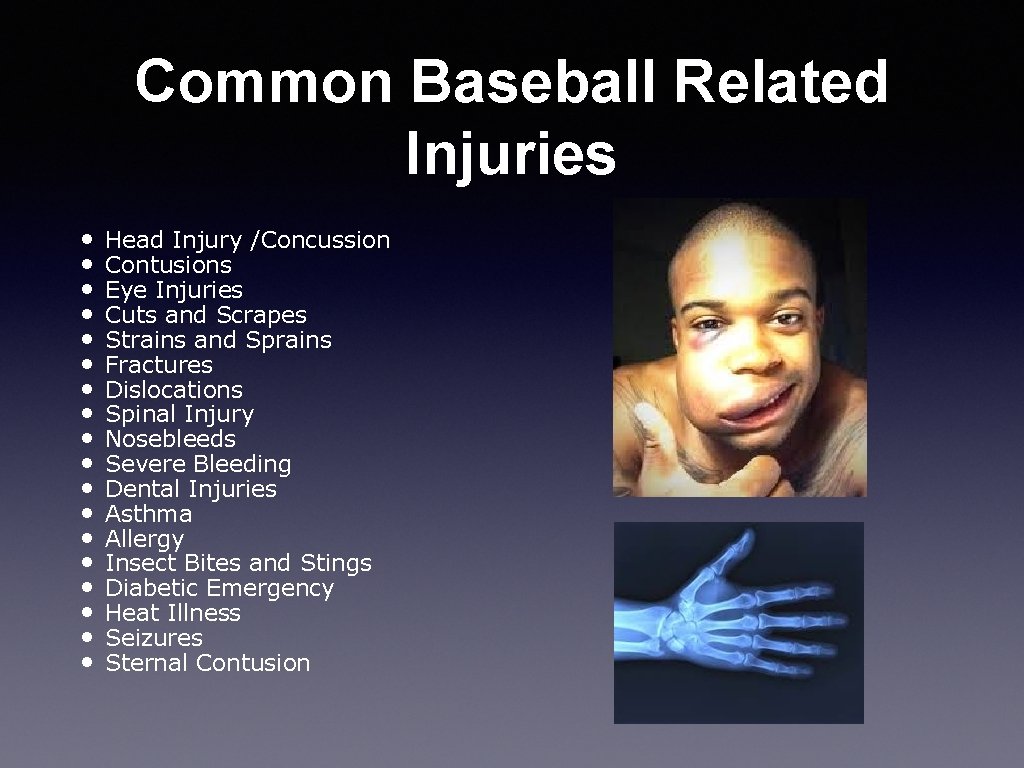
Common Baseball Related Injuries • • • • • Head Injury /Concussion Contusions Eye Injuries Cuts and Scrapes Strains and Sprains Fractures Dislocations Spinal Injury Nosebleeds Severe Bleeding Dental Injuries Asthma Allergy Insect Bites and Stings Diabetic Emergency Heat Illness Seizures Sternal Contusion
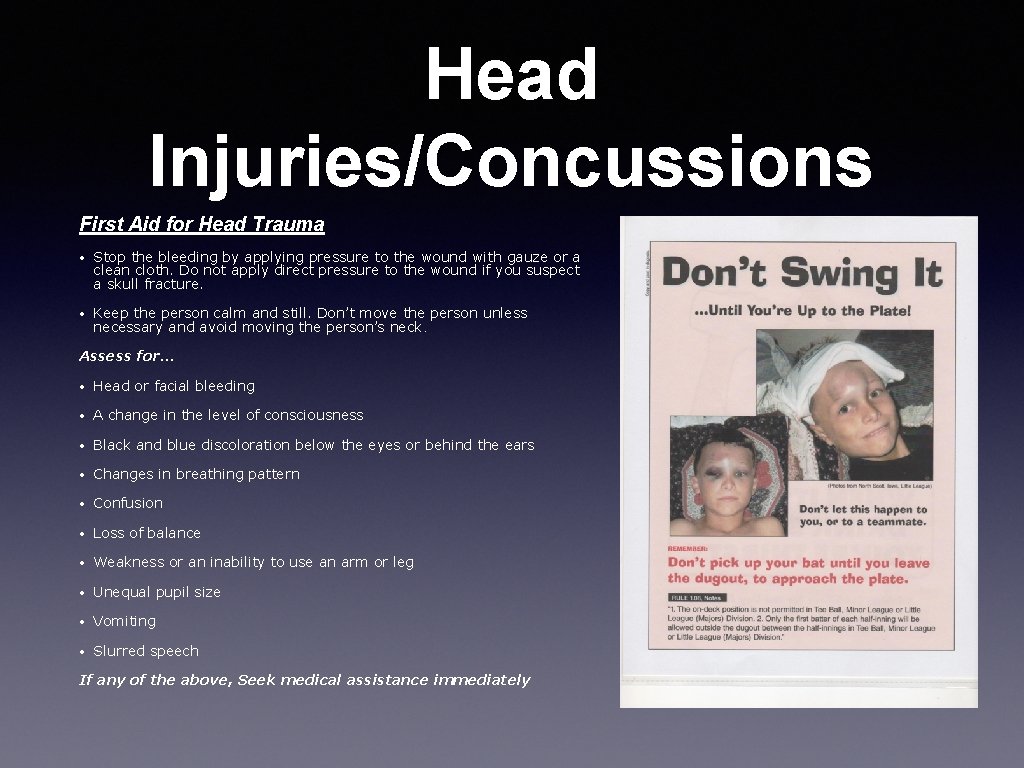
Head Injuries/Concussions First Aid for Head Trauma • Stop the bleeding by applying pressure to the wound with gauze or a clean cloth. Do not apply direct pressure to the wound if you suspect a skull fracture. • Keep the person calm and still. Don’t move the person unless necessary and avoid moving the person’s neck. Assess for… • Head or facial bleeding • A change in the level of consciousness • Black and blue discoloration below the eyes or behind the ears • Changes in breathing pattern • Confusion • Loss of balance • Weakness or an inability to use an arm or leg • Unequal pupil size • Vomiting • Slurred speech If any of the above, Seek medical assistance immediately
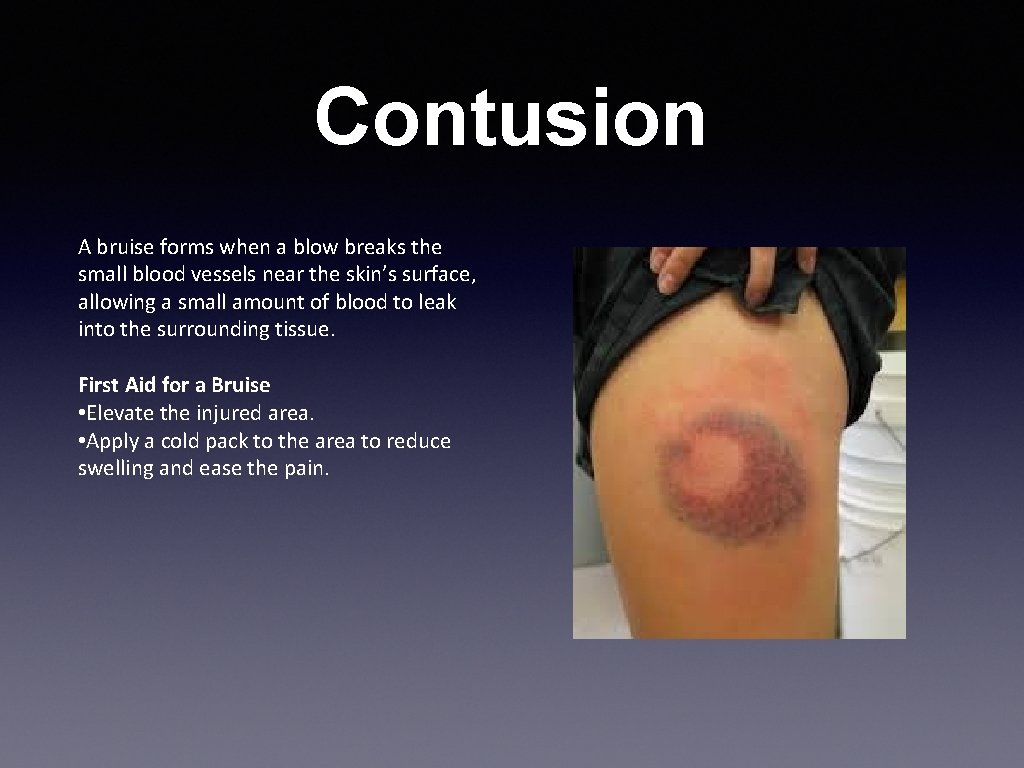
Contusion A bruise forms when a blow breaks the small blood vessels near the skin’s surface, allowing a small amount of blood to leak into the surrounding tissue. First Aid for a Bruise • Elevate the injured area. • Apply a cold pack to the area to reduce swelling and ease the pain.
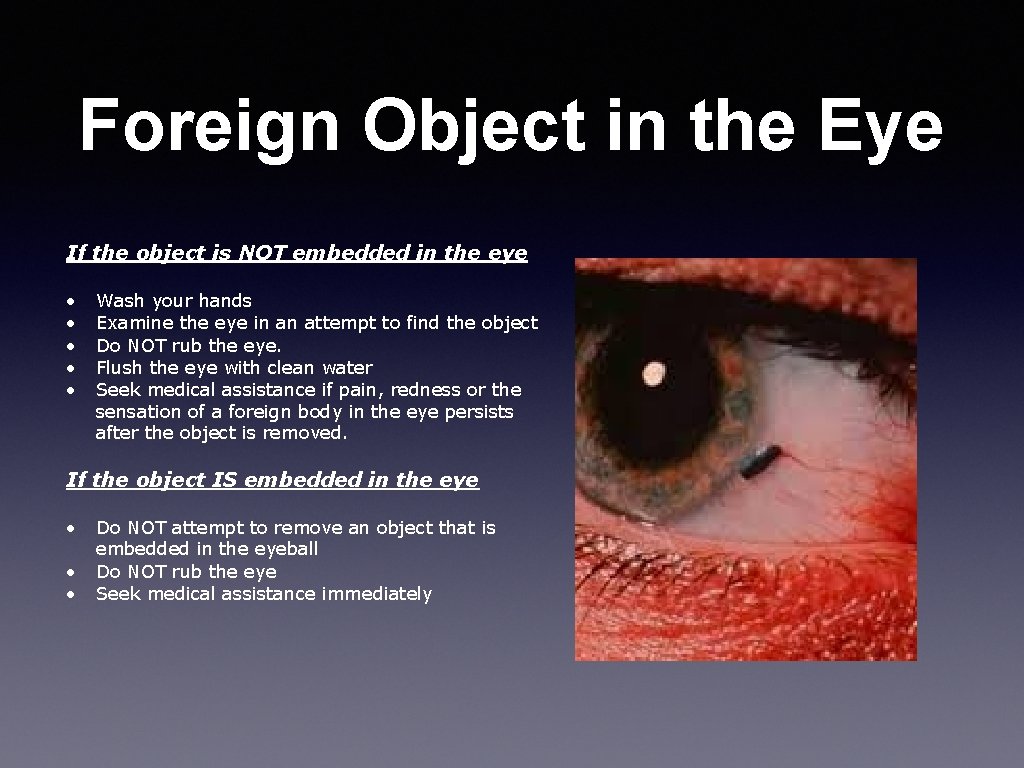
Foreign Object in the Eye If the object is NOT embedded in the eye • • • Wash your hands Examine the eye in an attempt to find the object Do NOT rub the eye. Flush the eye with clean water Seek medical assistance if pain, redness or the sensation of a foreign body in the eye persists after the object is removed. If the object IS embedded in the eye • • • Do NOT attempt to remove an object that is embedded in the eyeball Do NOT rub the eye Seek medical assistance immediately
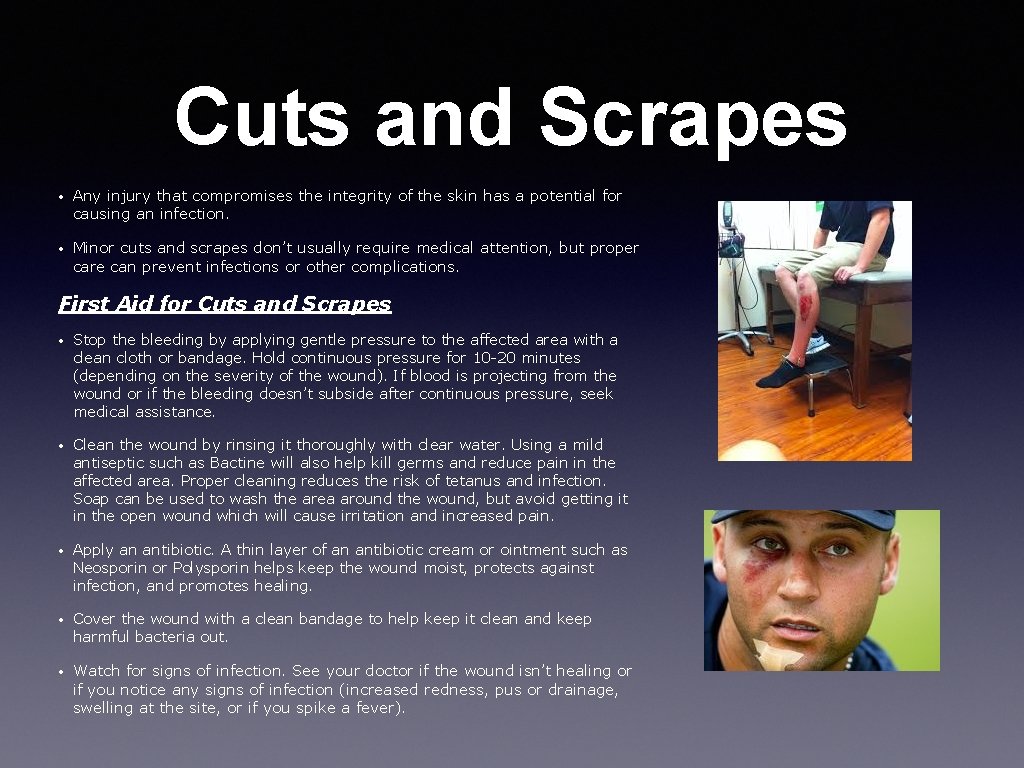
Cuts and Scrapes • Any injury that compromises the integrity of the skin has a potential for causing an infection. • Minor cuts and scrapes don’t usually require medical attention, but proper care can prevent infections or other complications. First Aid for Cuts and Scrapes • Stop the bleeding by applying gentle pressure to the affected area with a clean cloth or bandage. Hold continuous pressure for 10 -20 minutes (depending on the severity of the wound). If blood is projecting from the wound or if the bleeding doesn’t subside after continuous pressure, seek medical assistance. • Clean the wound by rinsing it thoroughly with clear water. Using a mild antiseptic such as Bactine will also help kill germs and reduce pain in the affected area. Proper cleaning reduces the risk of tetanus and infection. Soap can be used to wash the area around the wound, but avoid getting it in the open wound which will cause irritation and increased pain. • Apply an antibiotic. A thin layer of an antibiotic cream or ointment such as Neosporin or Polysporin helps keep the wound moist, protects against infection, and promotes healing. • Cover the wound with a clean bandage to help keep it clean and keep harmful bacteria out. • Watch for signs of infection. See your doctor if the wound isn’t healing or if you notice any signs of infection (increased redness, pus or drainage, swelling at the site, or if you spike a fever).
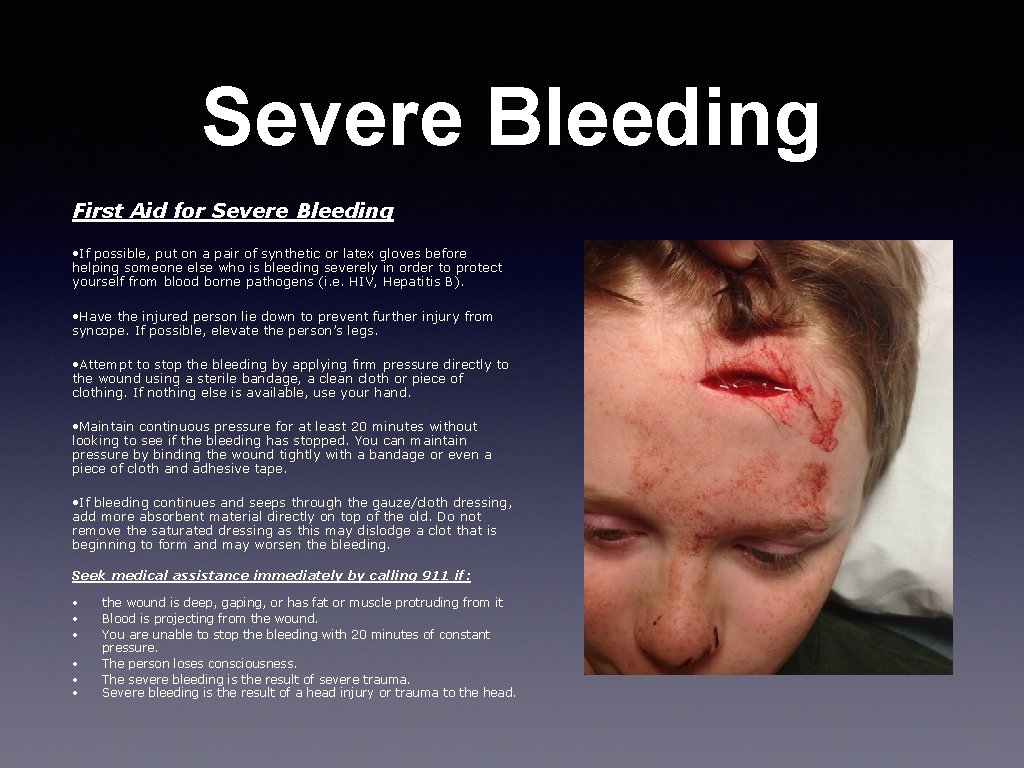
Severe Bleeding First Aid for Severe Bleeding • If possible, put on a pair of synthetic or latex gloves before helping someone else who is bleeding severely in order to protect yourself from blood borne pathogens (i. e. HIV, Hepatitis B). • Have the injured person lie down to prevent further injury from syncope. If possible, elevate the person’s legs. • Attempt to stop the bleeding by applying firm pressure directly to the wound using a sterile bandage, a clean cloth or piece of clothing. If nothing else is available, use your hand. • Maintain continuous pressure for at least 20 minutes without looking to see if the bleeding has stopped. You can maintain pressure by binding the wound tightly with a bandage or even a piece of cloth and adhesive tape. • If bleeding continues and seeps through the gauze/cloth dressing, add more absorbent material directly on top of the old. Do not remove the saturated dressing as this may dislodge a clot that is beginning to form and may worsen the bleeding. Seek medical assistance immediately by calling 911 if: • • • the wound is deep, gaping, or has fat or muscle protruding from it Blood is projecting from the wound. You are unable to stop the bleeding with 20 minutes of constant pressure. The person loses consciousness. The severe bleeding is the result of severe trauma. Severe bleeding is the result of a head injury or trauma to the head.
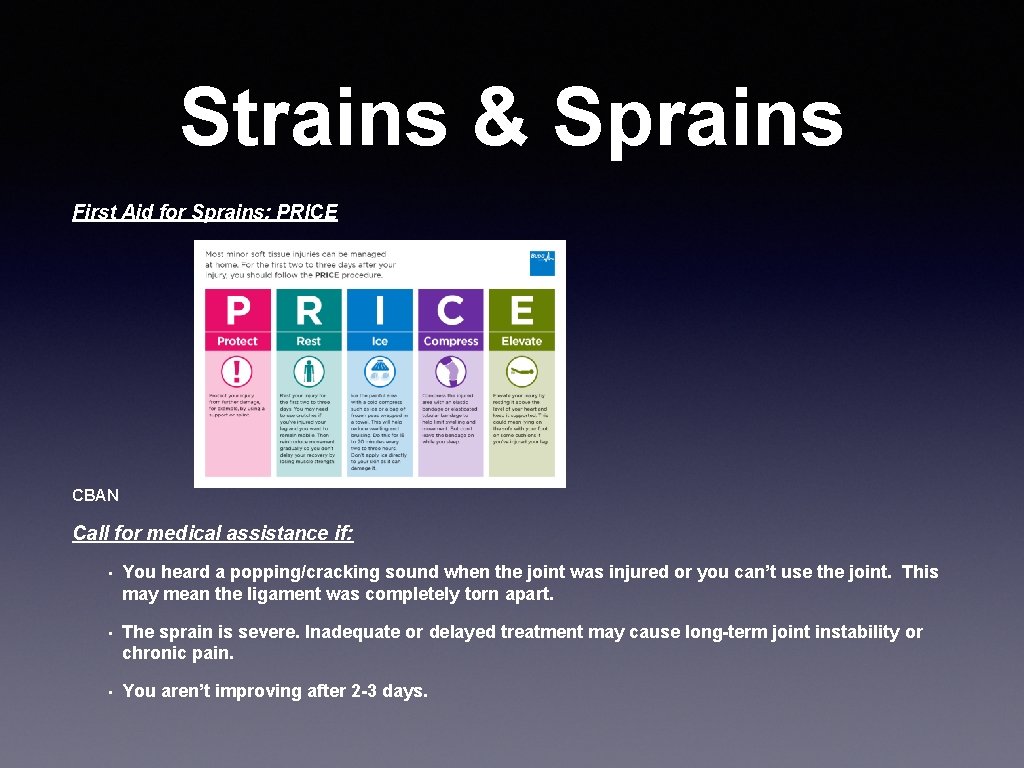
Strains & Sprains First Aid for Sprains: PRICE CBAN Call for medical assistance if: • You heard a popping/cracking sound when the joint was injured or you can’t use the joint. This may mean the ligament was completely torn apart. • The sprain is severe. Inadequate or delayed treatment may cause long-term joint instability or chronic pain. • You aren’t improving after 2 -3 days.
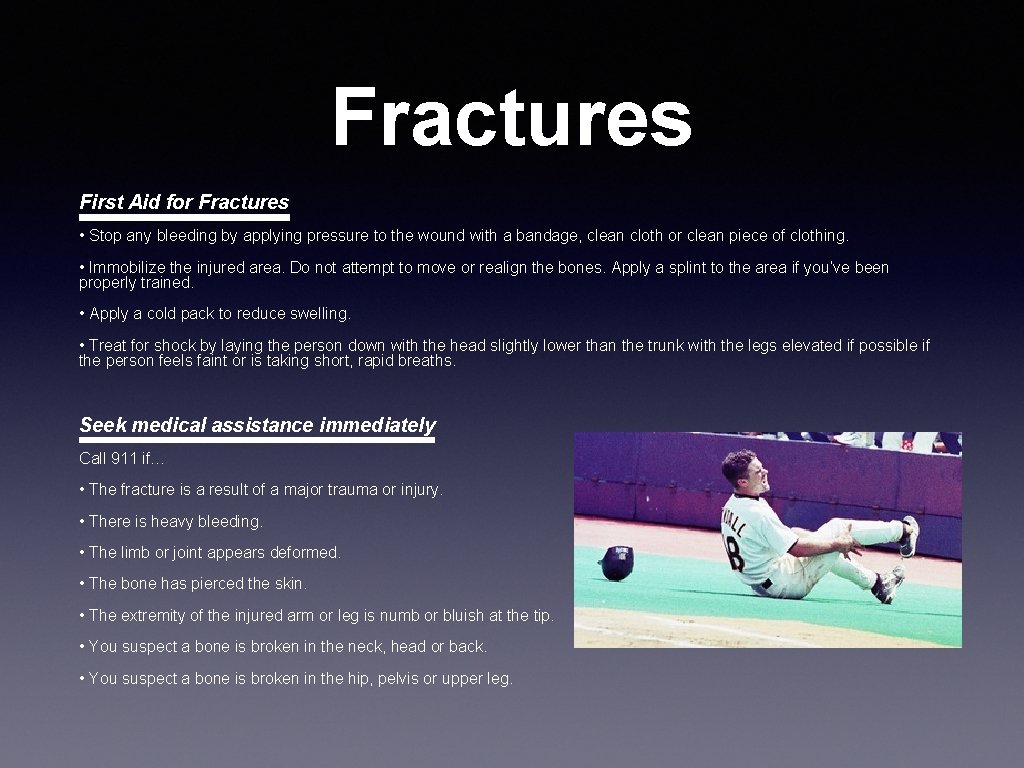
Fractures First Aid for Fractures • Stop any bleeding by applying pressure to the wound with a bandage, clean cloth or clean piece of clothing. • Immobilize the injured area. Do not attempt to move or realign the bones. Apply a splint to the area if you’ve been properly trained. • Apply a cold pack to reduce swelling. • Treat for shock by laying the person down with the head slightly lower than the trunk with the legs elevated if possible if the person feels faint or is taking short, rapid breaths. Seek medical assistance immediately Call 911 if… • The fracture is a result of a major trauma or injury. • There is heavy bleeding. • The limb or joint appears deformed. • The bone has pierced the skin. • The extremity of the injured arm or leg is numb or bluish at the tip. • You suspect a bone is broken in the neck, head or back. • You suspect a bone is broken in the hip, pelvis or upper leg.
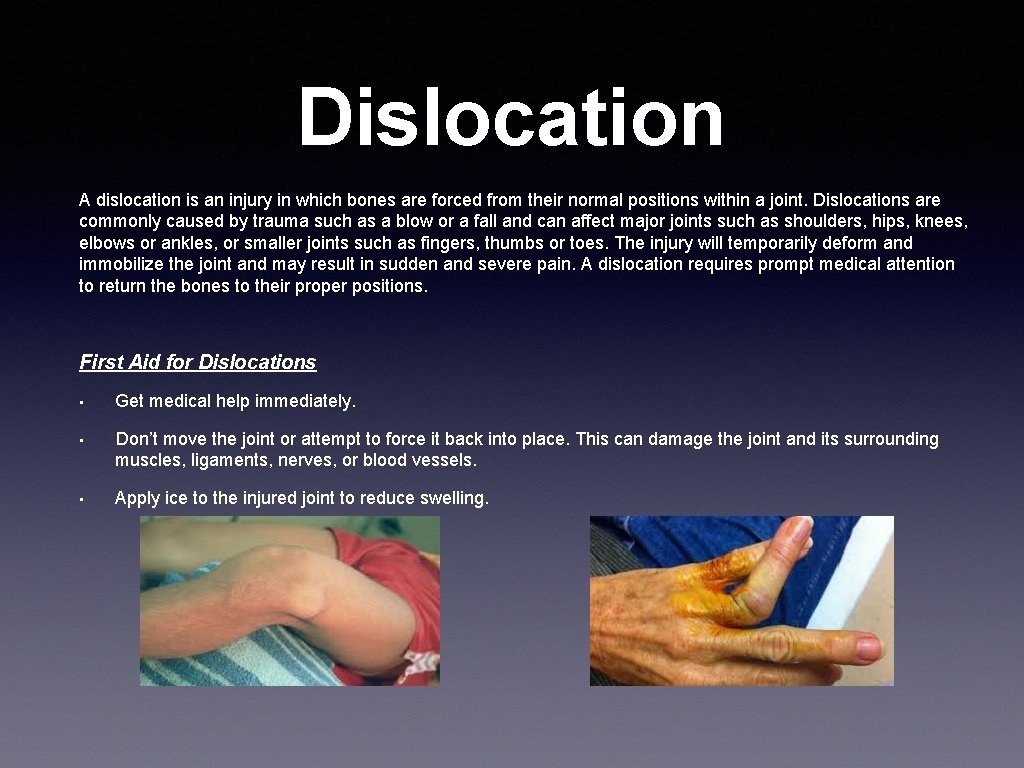
Dislocation A dislocation is an injury in which bones are forced from their normal positions within a joint. Dislocations are commonly caused by trauma such as a blow or a fall and can affect major joints such as shoulders, hips, knees, elbows or ankles, or smaller joints such as fingers, thumbs or toes. The injury will temporarily deform and immobilize the joint and may result in sudden and severe pain. A dislocation requires prompt medical attention to return the bones to their proper positions. First Aid for Dislocations • Get medical help immediately. • Don’t move the joint or attempt to force it back into place. This can damage the joint and its surrounding muscles, ligaments, nerves, or blood vessels. • Apply ice to the injured joint to reduce swelling.
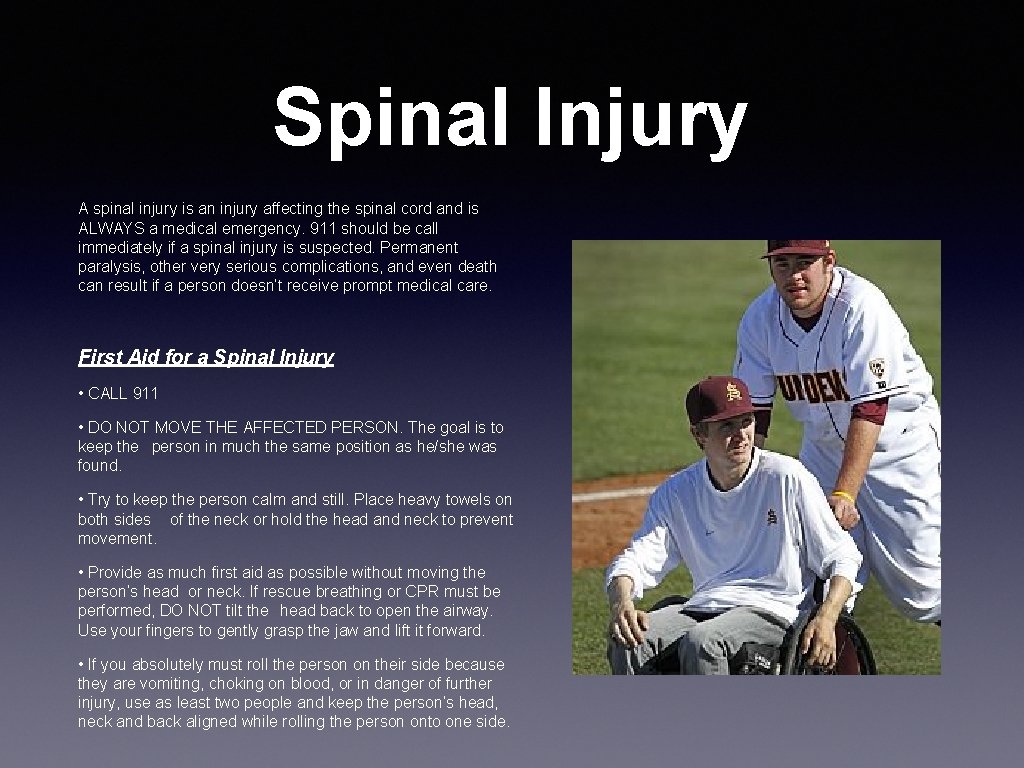
Spinal Injury A spinal injury is an injury affecting the spinal cord and is ALWAYS a medical emergency. 911 should be call immediately if a spinal injury is suspected. Permanent paralysis, other very serious complications, and even death can result if a person doesn’t receive prompt medical care. First Aid for a Spinal Injury • CALL 911 • DO NOT MOVE THE AFFECTED PERSON. The goal is to keep the person in much the same position as he/she was found. • Try to keep the person calm and still. Place heavy towels on both sides of the neck or hold the head and neck to prevent movement. • Provide as much first aid as possible without moving the person’s head or neck. If rescue breathing or CPR must be performed, DO NOT tilt the head back to open the airway. Use your fingers to gently grasp the jaw and lift it forward. • If you absolutely must roll the person on their side because they are vomiting, choking on blood, or in danger of further injury, use as least two people and keep the person’s head, neck and back aligned while rolling the person onto one side.
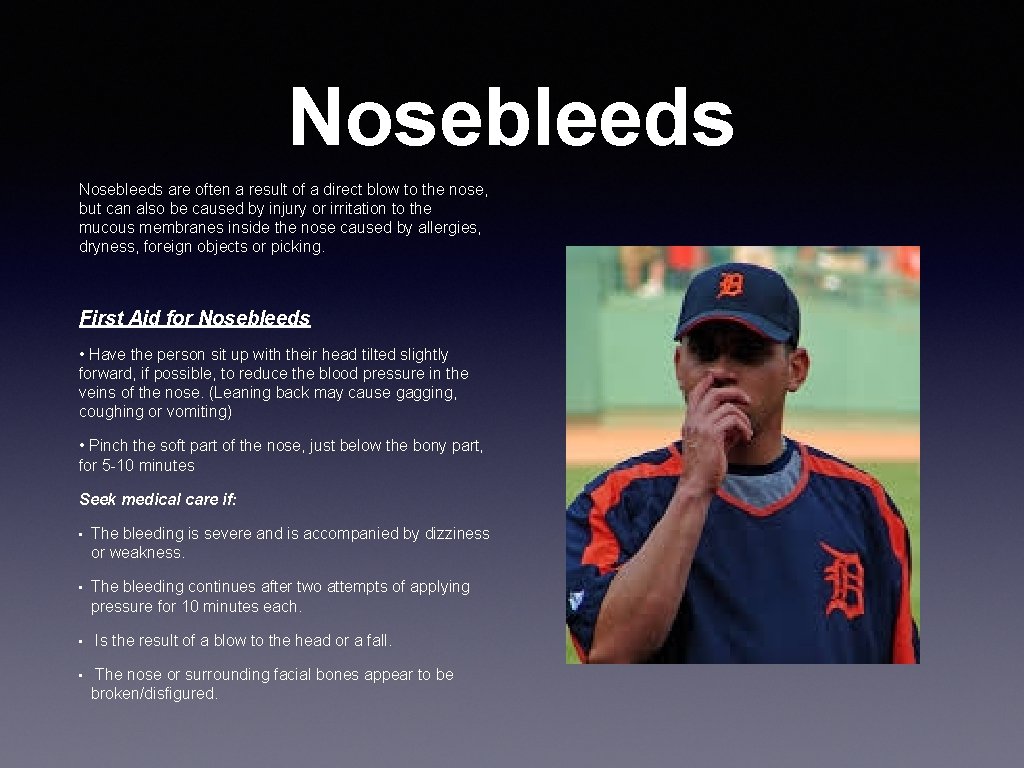
Nosebleeds are often a result of a direct blow to the nose, but can also be caused by injury or irritation to the mucous membranes inside the nose caused by allergies, dryness, foreign objects or picking. First Aid for Nosebleeds • Have the person sit up with their head tilted slightly forward, if possible, to reduce the blood pressure in the veins of the nose. (Leaning back may cause gagging, coughing or vomiting) • Pinch the soft part of the nose, just below the bony part, for 5 -10 minutes Seek medical care if: • The bleeding is severe and is accompanied by dizziness or weakness. • The bleeding continues after two attempts of applying pressure for 10 minutes each. • • Is the result of a blow to the head or a fall. The nose or surrounding facial bones appear to be broken/disfigured.
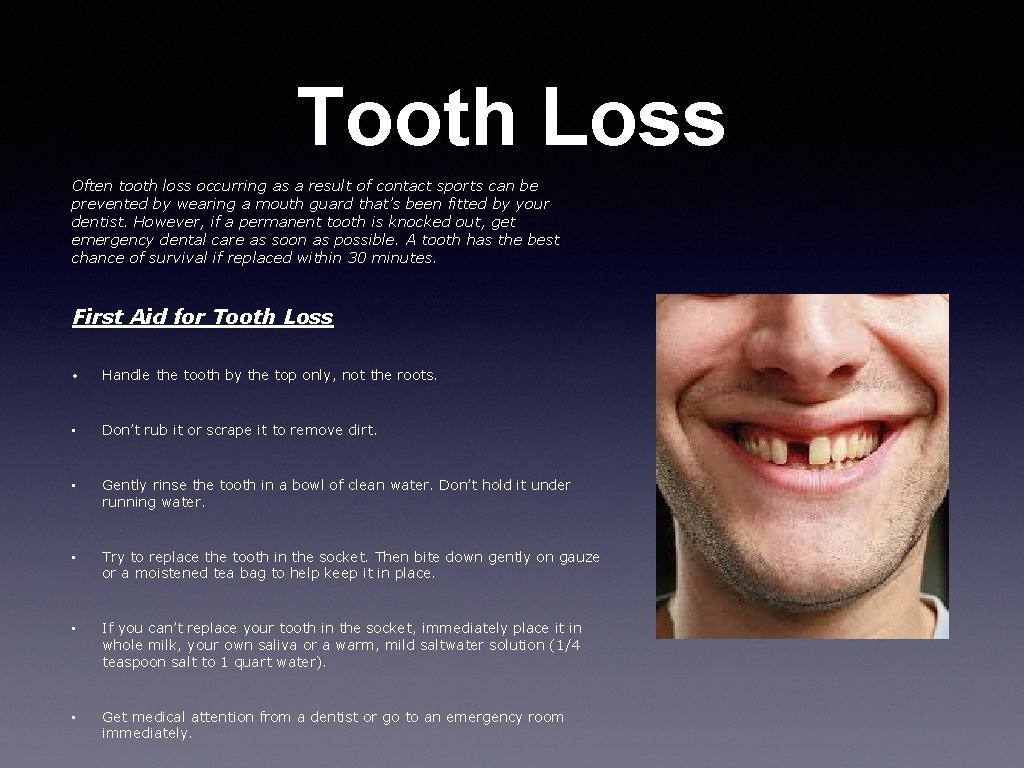
Tooth Loss Often tooth loss occurring as a result of contact sports can be prevented by wearing a mouth guard that’s been fitted by your dentist. However, if a permanent tooth is knocked out, get emergency dental care as soon as possible. A tooth has the best chance of survival if replaced within 30 minutes. First Aid for Tooth Loss • Handle the tooth by the top only, not the roots. • Don’t rub it or scrape it to remove dirt. • Gently rinse the tooth in a bowl of clean water. Don’t hold it under running water. • Try to replace the tooth in the socket. Then bite down gently on gauze or a moistened tea bag to help keep it in place. • If you can’t replace your tooth in the socket, immediately place it in whole milk, your own saliva or a warm, mild saltwater solution (1/4 teaspoon salt to 1 quart water). • Get medical attention from a dentist or go to an emergency room immediately.
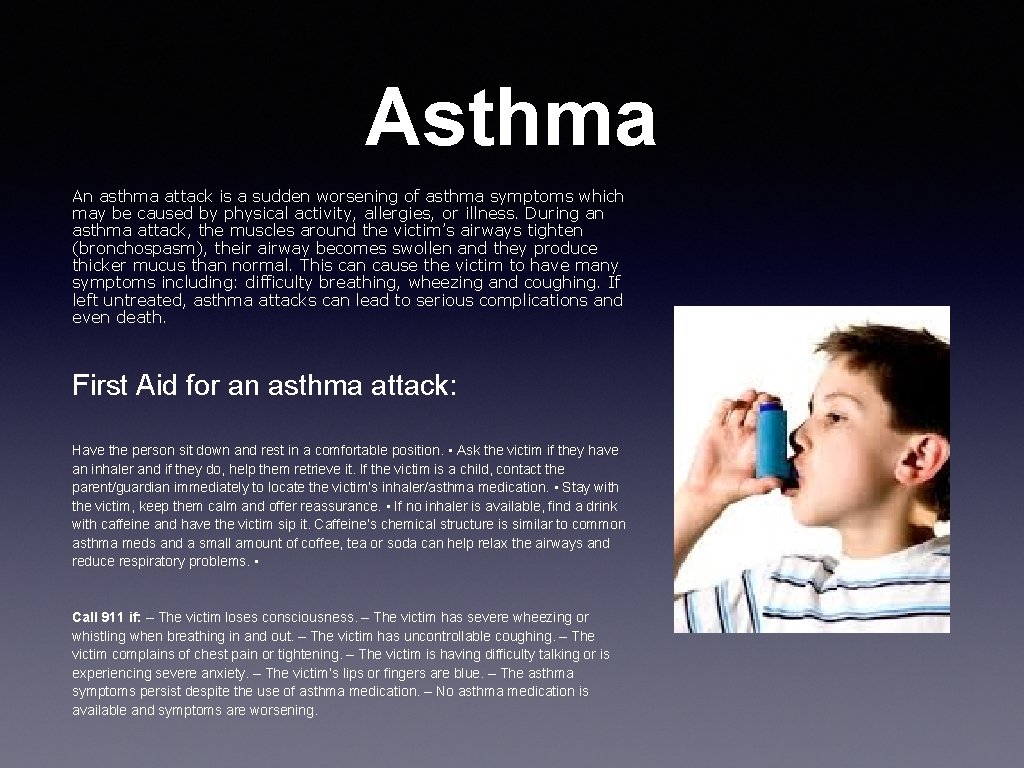
Asthma An asthma attack is a sudden worsening of asthma symptoms which may be caused by physical activity, allergies, or illness. During an asthma attack, the muscles around the victim’s airways tighten (bronchospasm), their airway becomes swollen and they produce thicker mucus than normal. This can cause the victim to have many symptoms including: difficulty breathing, wheezing and coughing. If left untreated, asthma attacks can lead to serious complications and even death. First Aid for an asthma attack: Have the person sit down and rest in a comfortable position. • Ask the victim if they have an inhaler and if they do, help them retrieve it. If the victim is a child, contact the parent/guardian immediately to locate the victim’s inhaler/asthma medication. • Stay with the victim, keep them calm and offer reassurance. • If no inhaler is available, find a drink with caffeine and have the victim sip it. Caffeine’s chemical structure is similar to common asthma meds and a small amount of coffee, tea or soda can help relax the airways and reduce respiratory problems. • Call 911 if: – The victim loses consciousness. – The victim has severe wheezing or whistling when breathing in and out. – The victim has uncontrollable coughing. – The victim complains of chest pain or tightening. – The victim is having difficulty talking or is experiencing severe anxiety. – The victim’s lips or fingers are blue. – The asthma symptoms persist despite the use of asthma medication. – No asthma medication is available and symptoms are worsening.
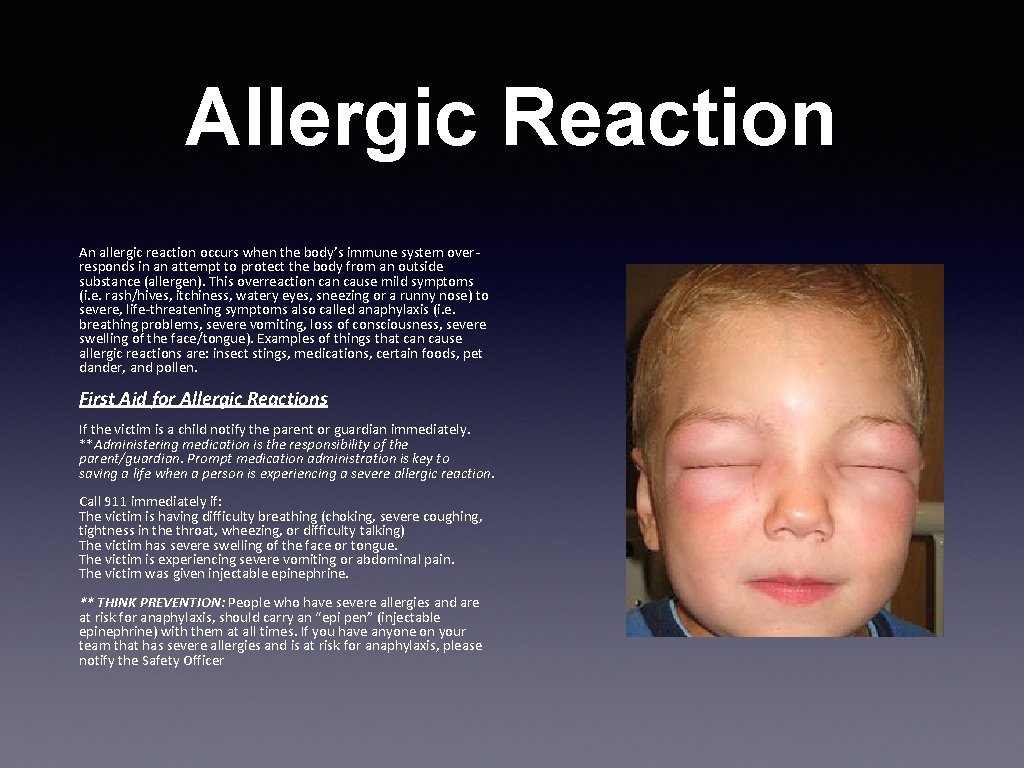
Allergic Reaction An allergic reaction occurs when the body’s immune system overresponds in an attempt to protect the body from an outside substance (allergen). This overreaction cause mild symptoms (i. e. rash/hives, itchiness, watery eyes, sneezing or a runny nose) to severe, life-threatening symptoms also called anaphylaxis (i. e. breathing problems, severe vomiting, loss of consciousness, severe swelling of the face/tongue). Examples of things that can cause allergic reactions are: insect stings, medications, certain foods, pet dander, and pollen. First Aid for Allergic Reactions If the victim is a child notify the parent or guardian immediately. **Administering medication is the responsibility of the parent/guardian. Prompt medication administration is key to saving a life when a person is experiencing a severe allergic reaction. Call 911 immediately if: The victim is having difficulty breathing (choking, severe coughing, tightness in the throat, wheezing, or difficulty talking) The victim has severe swelling of the face or tongue. The victim is experiencing severe vomiting or abdominal pain. The victim was given injectable epinephrine. ** THINK PREVENTION: People who have severe allergies and are at risk for anaphylaxis, should carry an “epi pen” (injectable epinephrine) with them at all times. If you have anyone on your team that has severe allergies and is at risk for anaphylaxis, please notify the Safety Officer
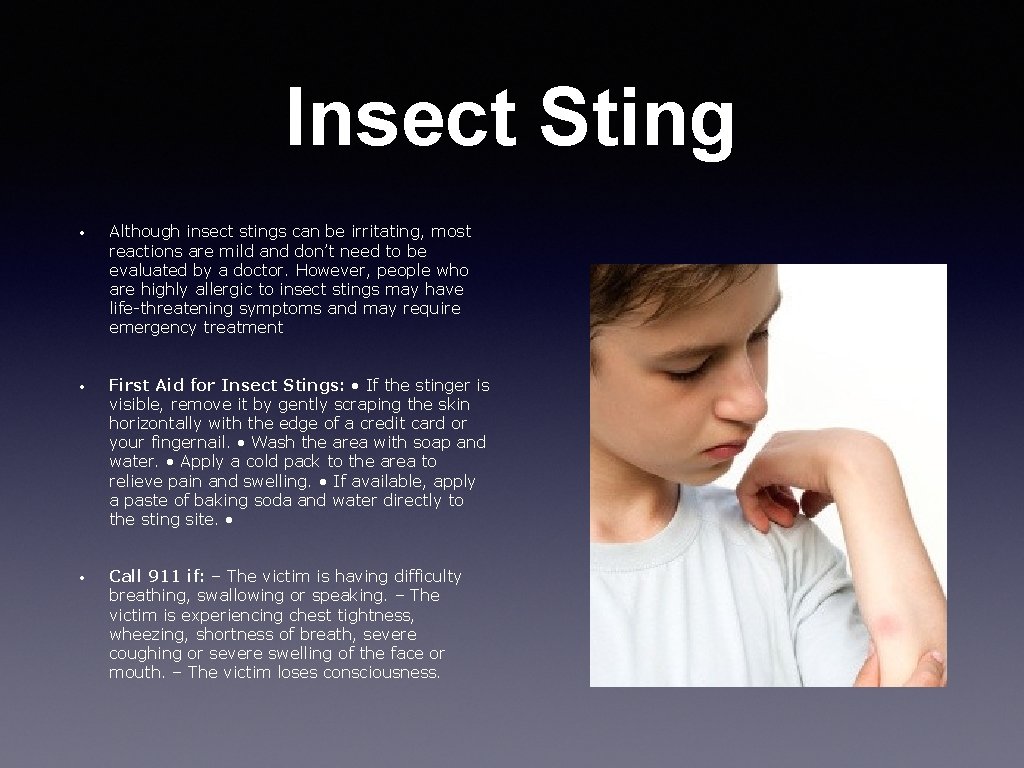
Insect Sting • Although insect stings can be irritating, most reactions are mild and don’t need to be evaluated by a doctor. However, people who are highly allergic to insect stings may have life-threatening symptoms and may require emergency treatment • First Aid for Insect Stings: • If the stinger is visible, remove it by gently scraping the skin horizontally with the edge of a credit card or your fingernail. • Wash the area with soap and water. • Apply a cold pack to the area to relieve pain and swelling. • If available, apply a paste of baking soda and water directly to the sting site. • • Call 911 if: – The victim is having difficulty breathing, swallowing or speaking. – The victim is experiencing chest tightness, wheezing, shortness of breath, severe coughing or severe swelling of the face or mouth. – The victim loses consciousness.
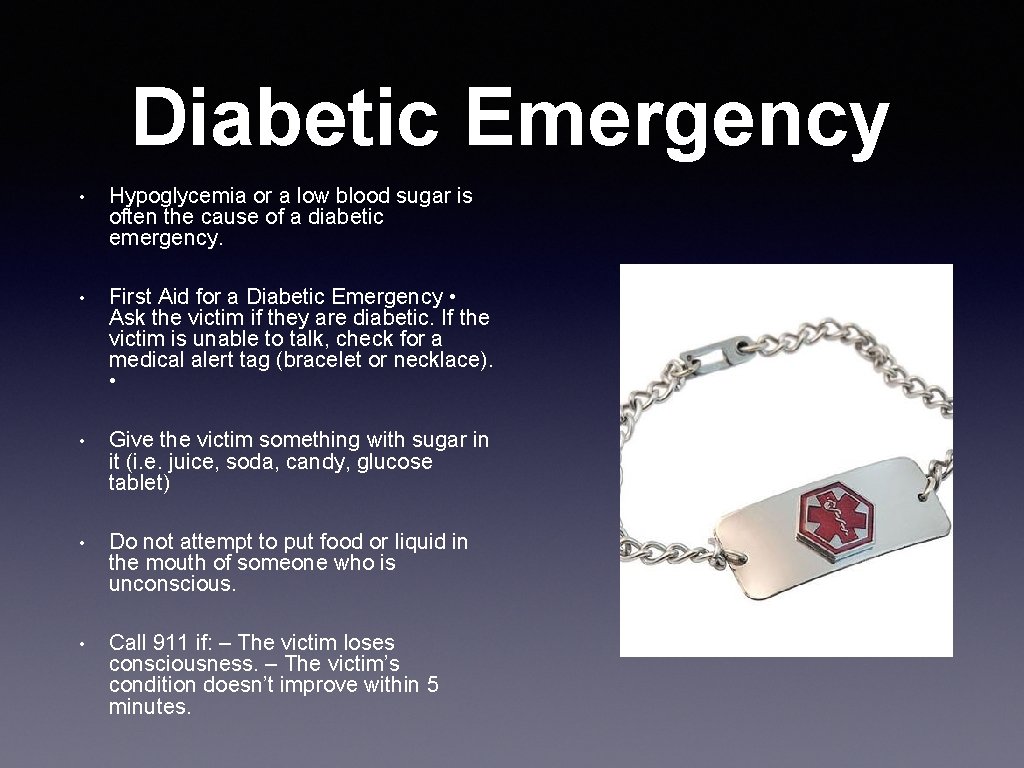
Diabetic Emergency • Hypoglycemia or a low blood sugar is often the cause of a diabetic emergency. • First Aid for a Diabetic Emergency • Ask the victim if they are diabetic. If the victim is unable to talk, check for a medical alert tag (bracelet or necklace). • • Give the victim something with sugar in it (i. e. juice, soda, candy, glucose tablet) • Do not attempt to put food or liquid in the mouth of someone who is unconscious. • Call 911 if: – The victim loses consciousness. – The victim’s condition doesn’t improve within 5 minutes.
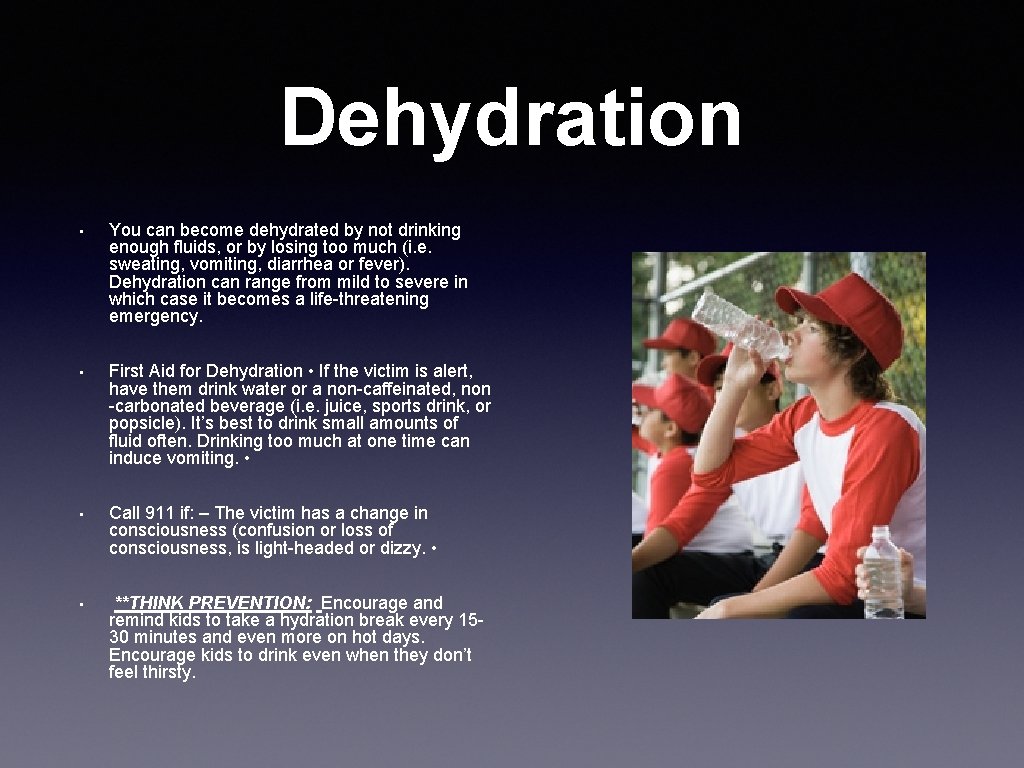
Dehydration • You can become dehydrated by not drinking enough fluids, or by losing too much (i. e. sweating, vomiting, diarrhea or fever). Dehydration can range from mild to severe in which case it becomes a life-threatening emergency. • First Aid for Dehydration • If the victim is alert, have them drink water or a non-caffeinated, non -carbonated beverage (i. e. juice, sports drink, or popsicle). It’s best to drink small amounts of fluid often. Drinking too much at one time can induce vomiting. • • Call 911 if: – The victim has a change in consciousness (confusion or loss of consciousness, is light-headed or dizzy. • • **THINK PREVENTION: Encourage and remind kids to take a hydration break every 1530 minutes and even more on hot days. Encourage kids to drink even when they don’t feel thirsty.
Heat Emergency • Signs and Symptoms of HEAT EXHAUSTION: • Extreme fatigue • Irritability • Headache • Faintness • Muscle weakness • Rapid Pulse • Fast, shallow breathing • Cool, clammy skin • Profuse sweating • Severe thirst • Nausea and sometimes vomiting • Signs and Symptoms of HEATSTROKE: • Extremely high body temperature (104 degrees F or higher) • Hot, red, dry skin • Absence of sweating • Rapid pulse • Difficulty breathing • Convulsions (seizures) • Decreased responsiveness or loss of consciousness • Weakness, dizziness or confusion • Severe, throbbing headache • First Aid for Heat Exhaustion and Heatstroke : Move the person into the shade or inside immediately. • Remove as much clothing as possible including shoes, socks, hat, gloves etc. • Have the person lay down with their feet slightly elevated. • Attempt to lower the person’s body temperature by: Wrapping the victim in cold wet towels, placing the conscious victim in a tub of cool water, sponging the victim’s body with cool water, placing ice packs in the victims armpits, groin, and behind their neck. • If the victim is alert, give frequent sips of cool, clear fluids (i. e. water, clear juice, sports drinks). Avoid drinks that contain stimulants (i. e. coffee, tea or soda). • Call 911 if: – The victim loses consciousness, is exhibiting signs and symptoms of Heatstroke, or has a temperature of 104 degrees F or higher.
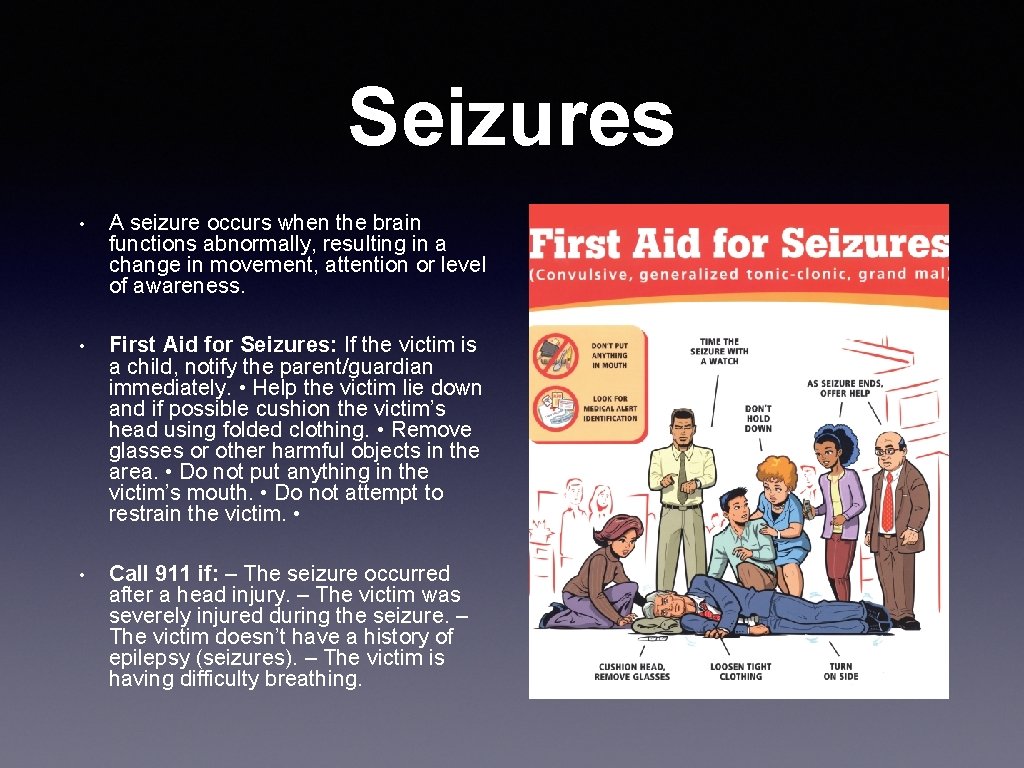
Seizures • A seizure occurs when the brain functions abnormally, resulting in a change in movement, attention or level of awareness. • First Aid for Seizures: If the victim is a child, notify the parent/guardian immediately. • Help the victim lie down and if possible cushion the victim’s head using folded clothing. • Remove glasses or other harmful objects in the area. • Do not put anything in the victim’s mouth. • Do not attempt to restrain the victim. • • Call 911 if: – The seizure occurred after a head injury. – The victim was severely injured during the seizure. – The victim doesn’t have a history of epilepsy (seizures). – The victim is having difficulty breathing.
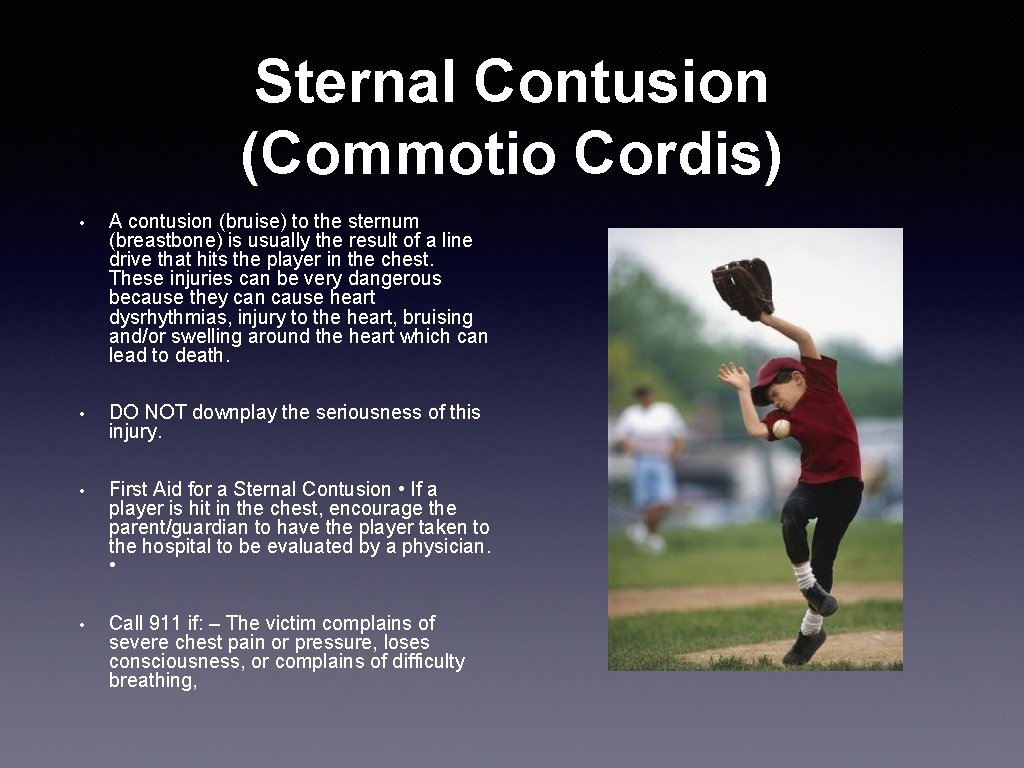
Sternal Contusion (Commotio Cordis) • A contusion (bruise) to the sternum (breastbone) is usually the result of a line drive that hits the player in the chest. These injuries can be very dangerous because they can cause heart dysrhythmias, injury to the heart, bruising and/or swelling around the heart which can lead to death. • DO NOT downplay the seriousness of this injury. • First Aid for a Sternal Contusion • If a player is hit in the chest, encourage the parent/guardian to have the player taken to the hospital to be evaluated by a physician. • • Call 911 if: – The victim complains of severe chest pain or pressure, loses consciousness, or complains of difficulty breathing,
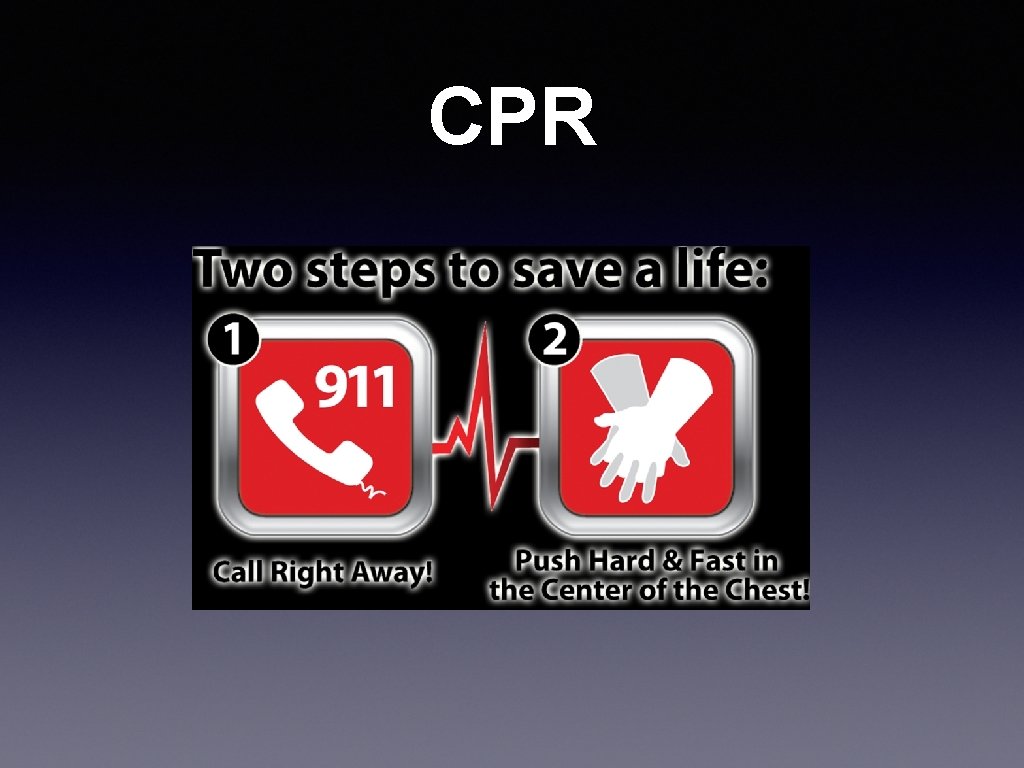
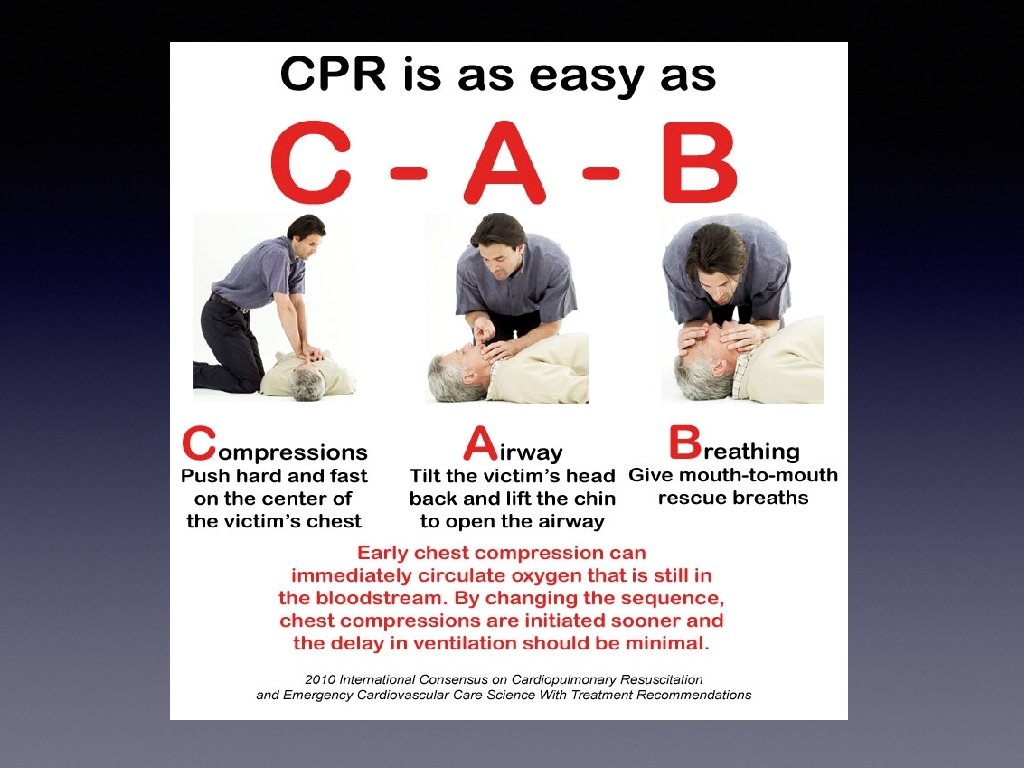
CPR
IMPORTANT PRINCIPLES WHILE COACHING First - DO-NO-HARM • • • The short person under your care is a child Do not treat them as professional athletes Having fun is the primary priority Kids get injured • • • The LOUDER a child cries the less injury they sustained The QUIET ones are the one that should worry you Most injuries are minor and can be treated with simple measures It will be highly UNLIKELY that you will encounter a life threatening injury
Be Safe and Have Fun! South County Little League