
First Aid What The is first aid history

- Slides: 13
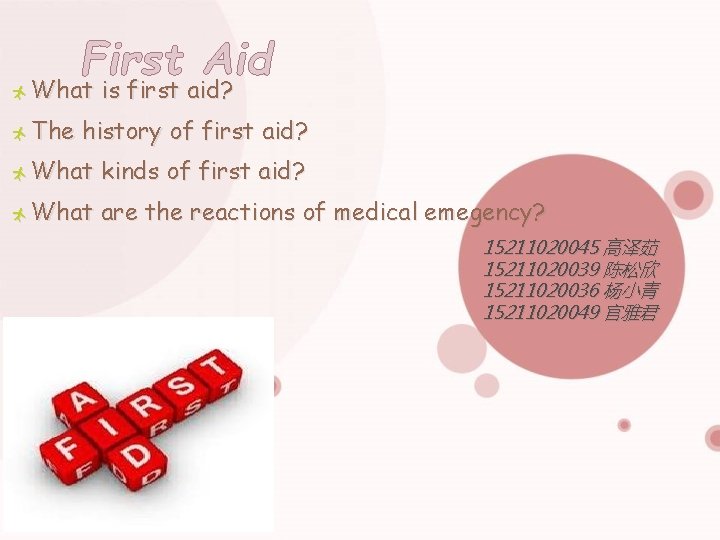
First Aid What The is first aid? history of first aid? What kinds of first aid? What are the reactions of medical emegency? 15211020045 高泽茹 15211020039 陈松欣 15211020036 杨小青 15211020049 官雅君
¤ ligaments n. 韧带 tendons n. 肌腱 sprain v. 扭伤 strain v. 拉伤 swell v. 肿胀 bruise n. 淤青 inflammatory a. 发炎的 Fibroblastic n. 成纤维细胞 ¤ Adhesive Bandage n. 粘合绷带 ¤ allergic a. 过敏的 ¤ dengue fever n. 登革热 ¤ malaria n. 疟疾 ¤ nausea n. 呕吐 ¤ ¤ ¤ ¤ Pneumonia n. 肺炎 ¤ vulnerable a. 脆弱的 ¤ venom n. 毒液 ¤ Anaphylaxis n. 过敏反应 ¤ bandage v. 用绷带包扎 ¤ combat medic n. 军医 ¤ pottery n. 陶器
What is first aid? • • First aid is the assistance given to any person suffering a sudden illness or injury, with care provided to preserve life, prevent the condition from worsening, and/or promote recovery. It includes initial intervention in a serious condition prior to professional medical help being available, such as performing CPR while awaiting an ambulance, as well as the complete treatment of minor conditions, such as applying a plaster to a cut.
The history of first aid • Skills of what is now known as first aid have been recorded throughout history, especially in relation to warfare, where the care of both traumatic and medical cases is required in particularly large numbers. The bandaging of battle wounds is shown on Classical Greek pottery from circa 500 BCE, whilst the parable of the Good Samaritan includes references to binding or dressing wounds. [3] There are numerous references to first aid performed within the Roman army, with a system of first aid supported by surgeons, field ambulances, and hospitals. [4] Roman legions had the specific role of capsarii, who were responsible for first aid such as bandaging, and are the forerunners of the modern combat medic. [5]
Watch the video • Now answer few questions What is the react about head injury? What is the react about nose bleed? What is the react about choking?
The few emergencies: ¤ Soft Tissue Injuries ¤ Bites and Stings ¤ Breathing Emergencies ¤ Allergies and Anaphylaxis ¤ Infections
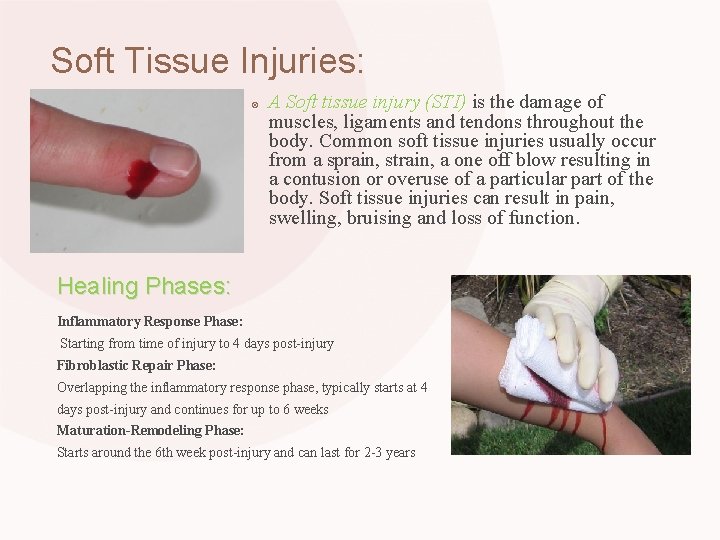
Soft Tissue Injuries: ¤ A Soft tissue injury (STI) is the damage of muscles, ligaments and tendons throughout the body. Common soft tissue injuries usually occur from a sprain, strain, a one off blow resulting in a contusion or overuse of a particular part of the body. Soft tissue injuries can result in pain, swelling, bruising and loss of function. Healing Phases: Inflammatory Response Phase: Starting from time of injury to 4 days post-injury Fibroblastic Repair Phase: Overlapping the inflammatory response phase, typically starts at 4 days post-injury and continues for up to 6 weeks Maturation-Remodeling Phase: Starts around the 6 th week post-injury and can last for 2 -3 years
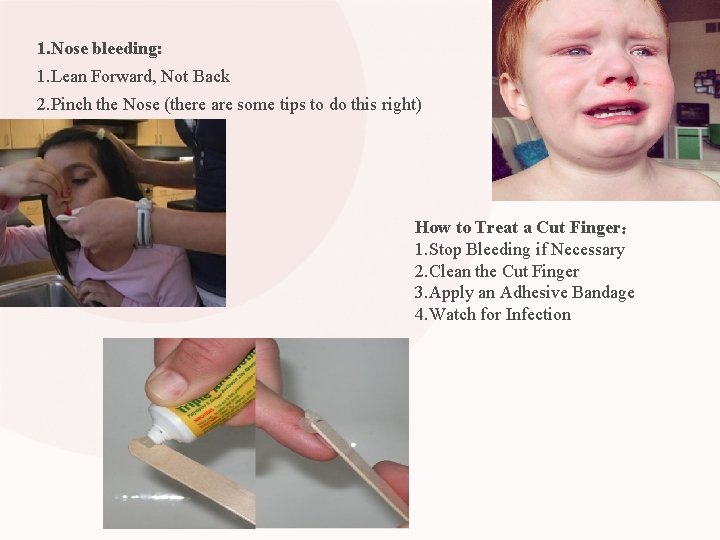
1. Nose bleeding: 1. Lean Forward, Not Back 2. Pinch the Nose (there are some tips to do this right) How to Treat a Cut Finger: 1. Stop Bleeding if Necessary 2. Clean the Cut Finger 3. Apply an Adhesive Bandage 4. Watch for Infection
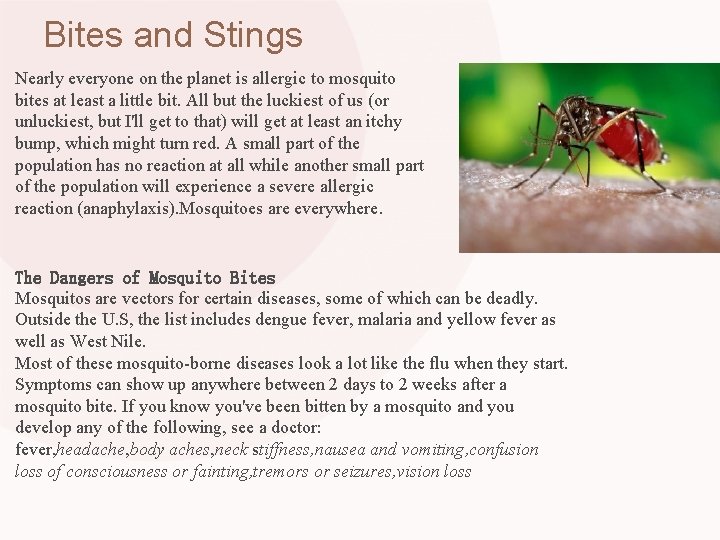
Bites and Stings Nearly everyone on the planet is allergic to mosquito bites at least a little bit. All but the luckiest of us (or unluckiest, but I'll get to that) will get at least an itchy bump, which might turn red. A small part of the population has no reaction at all while another small part of the population will experience a severe allergic reaction (anaphylaxis). Mosquitoes are everywhere. The Dangers of Mosquito Bites Mosquitos are vectors for certain diseases, some of which can be deadly. Outside the U. S, the list includes dengue fever, malaria and yellow fever as well as West Nile. Most of these mosquito-borne diseases look a lot like the flu when they start. Symptoms can show up anywhere between 2 days to 2 weeks after a mosquito bite. If you know you've been bitten by a mosquito and you develop any of the following, see a doctor: fever, headache, body aches, neck stiffness, nausea and vomiting, confusion loss of consciousness or fainting, tremors or seizures, vision loss
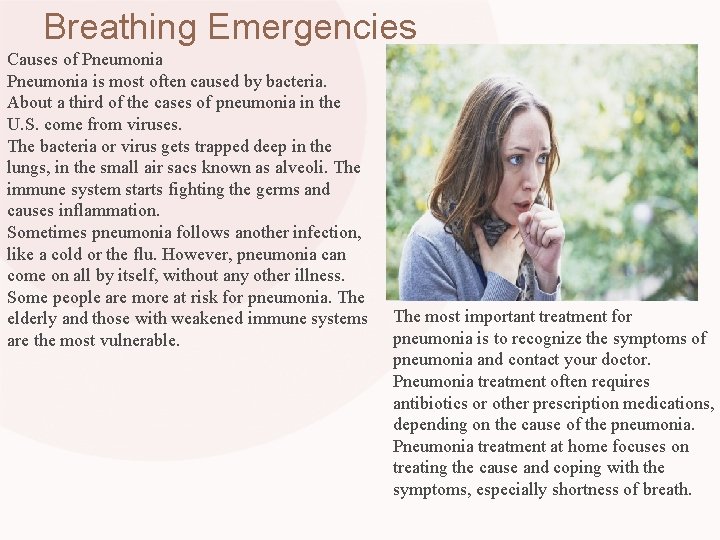
Breathing Emergencies Causes of Pneumonia is most often caused by bacteria. About a third of the cases of pneumonia in the U. S. come from viruses. The bacteria or virus gets trapped deep in the lungs, in the small air sacs known as alveoli. The immune system starts fighting the germs and causes inflammation. Sometimes pneumonia follows another infection, like a cold or the flu. However, pneumonia can come on all by itself, without any other illness. Some people are more at risk for pneumonia. The elderly and those with weakened immune systems are the most vulnerable. The most important treatment for pneumonia is to recognize the symptoms of pneumonia and contact your doctor. Pneumonia treatment often requires antibiotics or other prescription medications, depending on the cause of the pneumonia. Pneumonia treatment at home focuses on treating the cause and coping with the symptoms, especially shortness of breath.
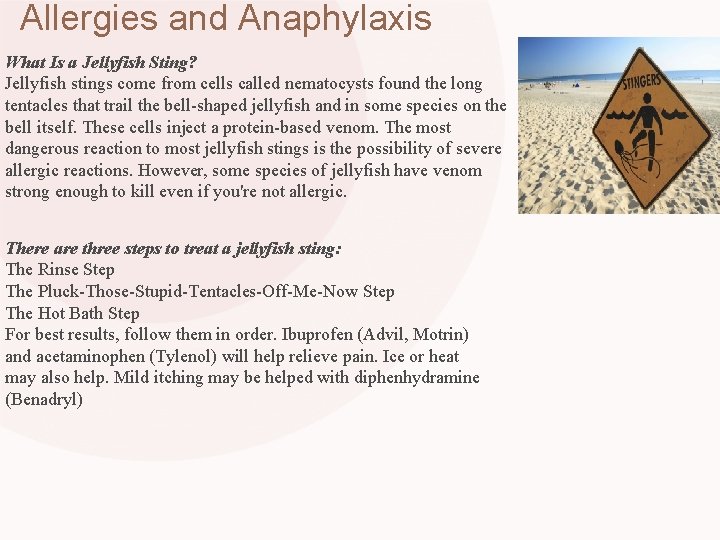
Allergies and Anaphylaxis What Is a Jellyfish Sting? Jellyfish stings come from cells called nematocysts found the long tentacles that trail the bell-shaped jellyfish and in some species on the bell itself. These cells inject a protein-based venom. The most dangerous reaction to most jellyfish stings is the possibility of severe allergic reactions. However, some species of jellyfish have venom strong enough to kill even if you're not allergic. There are three steps to treat a jellyfish sting: The Rinse Step The Pluck-Those-Stupid-Tentacles-Off-Me-Now Step The Hot Bath Step For best results, follow them in order. Ibuprofen (Advil, Motrin) and acetaminophen (Tylenol) will help relieve pain. Ice or heat may also help. Mild itching may be helped with diphenhydramine (Benadryl)
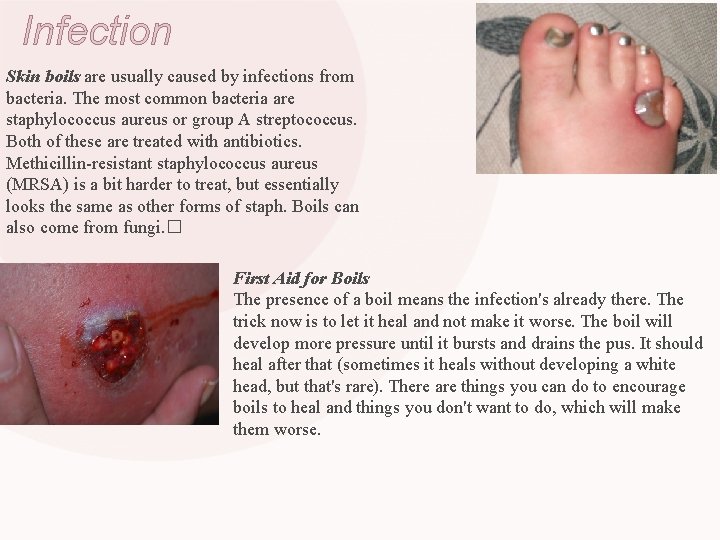
Infection Skin boils are usually caused by infections from bacteria. The most common bacteria are staphylococcus aureus or group A streptococcus. Both of these are treated with antibiotics. Methicillin-resistant staphylococcus aureus (MRSA) is a bit harder to treat, but essentially looks the same as other forms of staph. Boils can also come from fungi. � First Aid for Boils The presence of a boil means the infection's already there. The trick now is to let it heal and not make it worse. The boil will develop more pressure until it bursts and drains the pus. It should heal after that (sometimes it heals without developing a white head, but that's rare). There are things you can do to encourage boils to heal and things you don't want to do, which will make them worse.
Thank you