
First Aid Safety Training Responding to a health
- Slides: 38
First Aid Safety Training
Responding to a health emergency Injury and acute illness Interactions with local emergency medical services 1 a
Responding to a health emergency Principles of triage Legal aspects of providing first aid ◦ Only provide care you have been trained on ◦ Protected under Good Summaritin Law 1 b
Surveying the accident scene Assess the scene ◦ ◦ General scene safety Likely event sequence - what happened? Rapid estimate of persons injured Identify others to help at scene 2 a
Surveying the accident scene Perform primary survey of each victim ◦ Airway ◦ Breathing ◦ Circulation Obtain victim’s medical history ◦ Use acronym SAMPLE Signs and Symptoms, Allergies, Medications, Previous Problems, Last food or drink, Events 2 b
Surveying the accident scene Perform secondary survey ◦ ◦ Vital signs Skin appearance Head, neck, chest, abdomen, extremities Medical alert symbols/tags 2 c
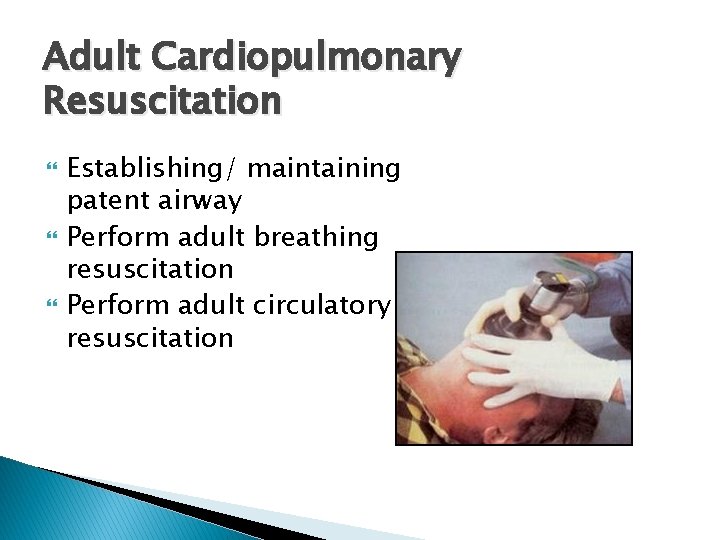
Adult Cardiopulmonary Resuscitation Establishing/ maintaining patent airway Perform adult breathing resuscitation Perform adult circulatory resuscitation 3 a
Adult Cardiopulmonary Resuscitation Perform choking assessment/first aid interventions Resuscitate drowning victims 3 b
Adult CPR Hand Position- Two hands in the center of the chest Compress: 2 inches Cycle: 30 compressions, 2 breaths Breathe: Until the chest rises (about 1 second) Cycle: 30 compressions, 2 breaths Rate: 30 compressions in about 18 seconds (100 compressions per minute)
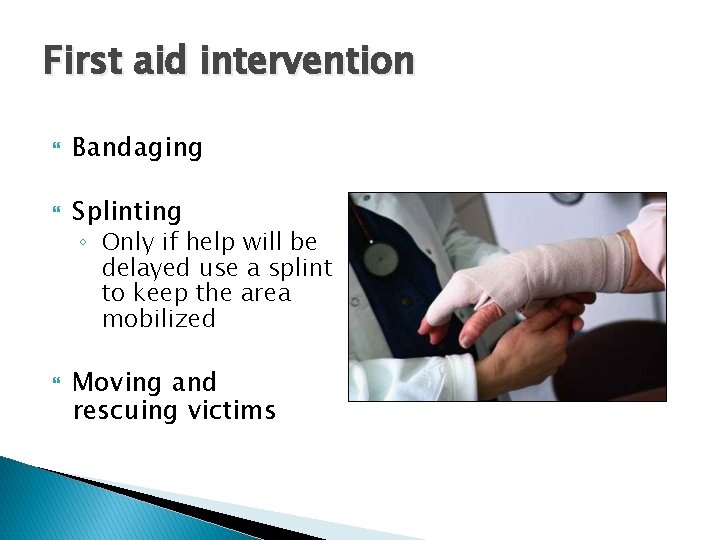
First aid intervention Bandaging Splinting ◦ Only if help will be delayed use a splint to keep the area mobilized Moving and rescuing victims 4 a
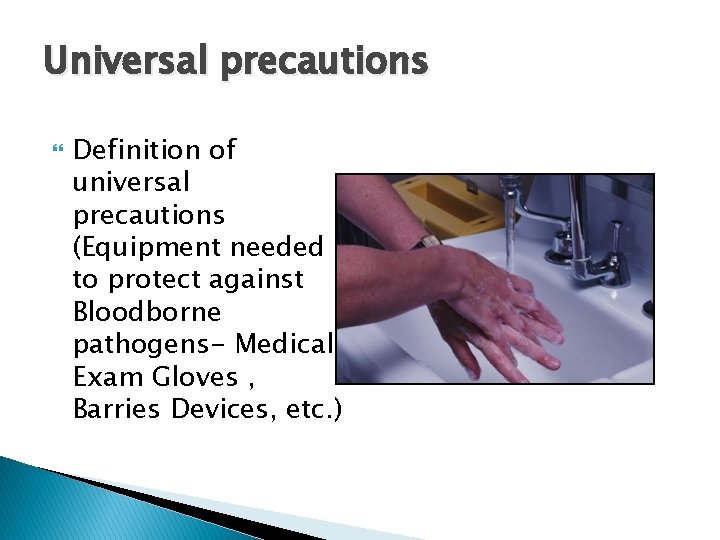
Universal precautions Definition of universal precautions (Equipment needed to protect against Bloodborne pathogens- Medical Exam Gloves , Barries Devices, etc. ) 5 a
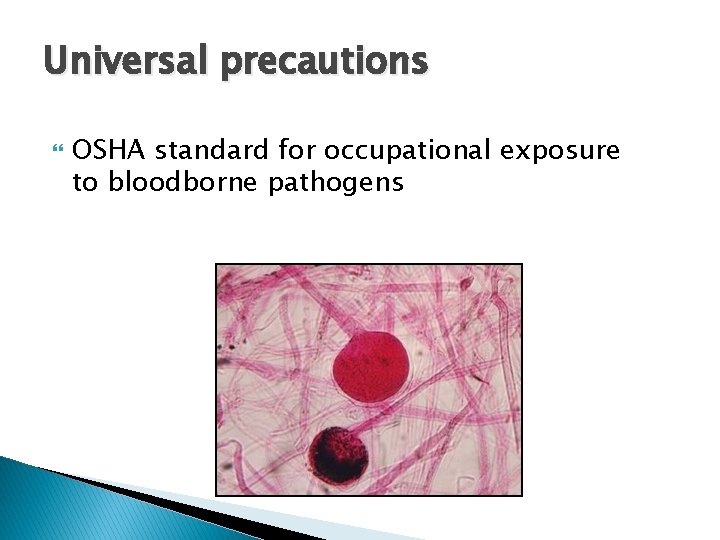
Universal precautions OSHA standard for occupational exposure to bloodborne pathogens 5 b
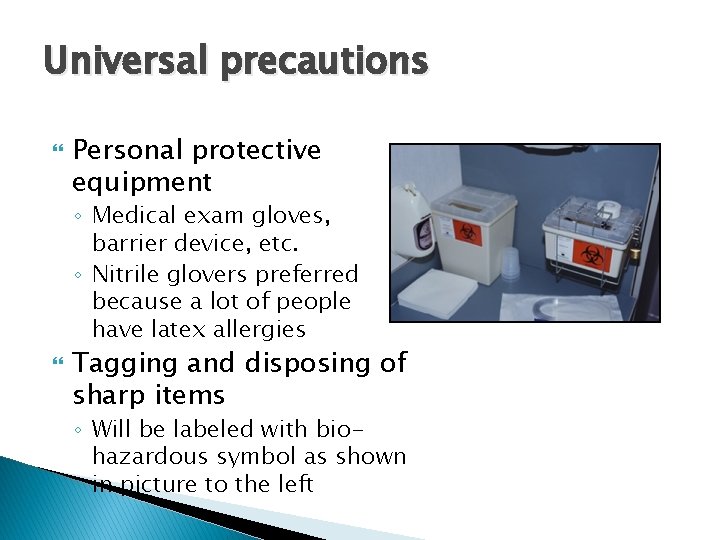
Universal precautions Personal protective equipment ◦ Medical exam gloves, barrier device, etc. ◦ Nitrile glovers preferred because a lot of people have latex allergies Tagging and disposing of sharp items ◦ Will be labeled with biohazardous symbol as shown in picture to the left 5 c
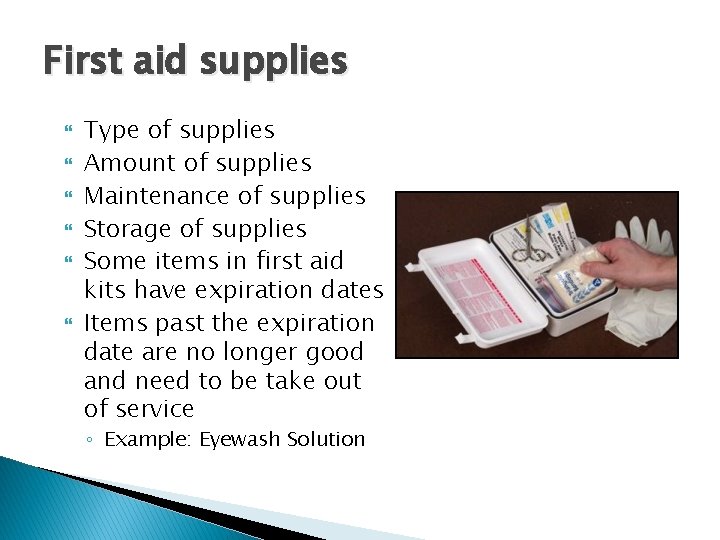
First aid supplies Type of supplies Amount of supplies Maintenance of supplies Storage of supplies Some items in first aid kits have expiration dates Items past the expiration date are no longer good and need to be take out of service ◦ Example: Eyewash Solution 6 a
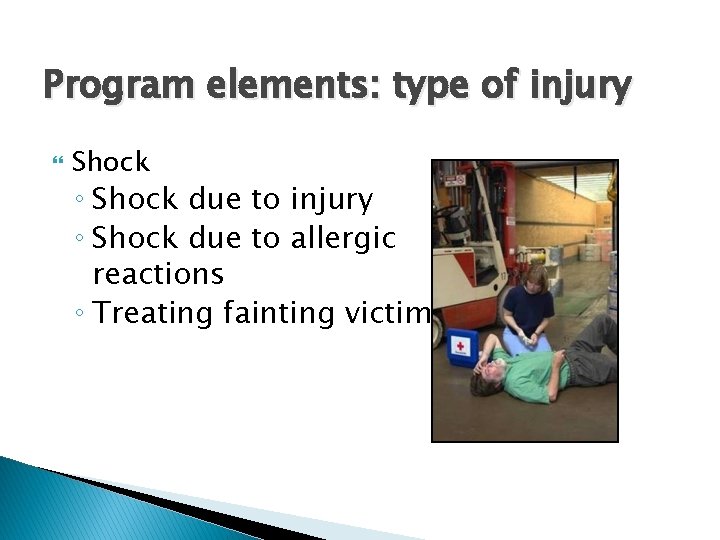
Program elements: type of injury Shock ◦ Shock due to injury ◦ Shock due to allergic reactions ◦ Treating fainting victims 7 a
Signs and Symptoms of Shock Anxiety, confusion, agitation, or restlessness Dizziness, light-headiness Cool, clammy, or sweating skin that is pale, bluish, or ashen in color Rapid, shallow breathing Thirst Nausea, vomiting Changing responsiveness If someone is going into shock get medical help as soon as possible
First Aid for Shock Check for normal breathing and for injuries. Call 911 Have victim lie on back and raise legs 8 -12 inches if possible (spinal injury). Loosen tight clothing. Prepare for possible vomiting turn the victim’s head to the side Try to maintain victim body temperature- Cover with a blanket Do not let a shock victim each or drink anything Stay with the victim and offer reassurance and comfort Put an unresponsive victim ( if no suspected spinal injury) in the recovery position.
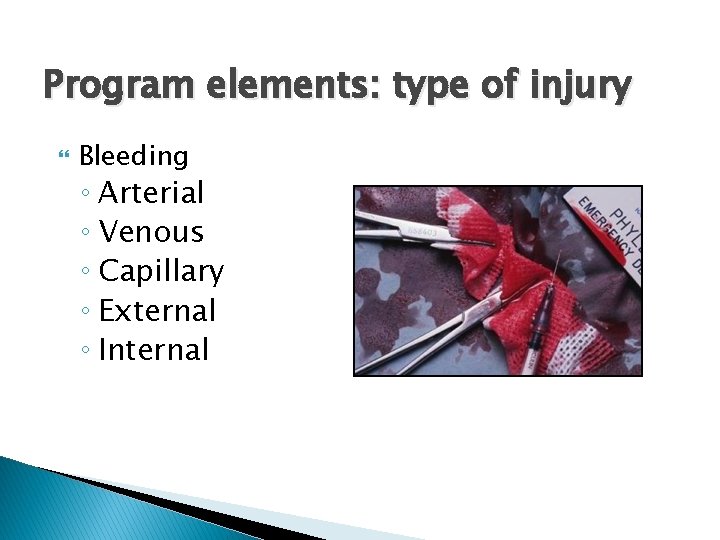
Program elements: type of injury Bleeding ◦ Arterial ◦ Venous ◦ Capillary ◦ External ◦ Internal 7 b
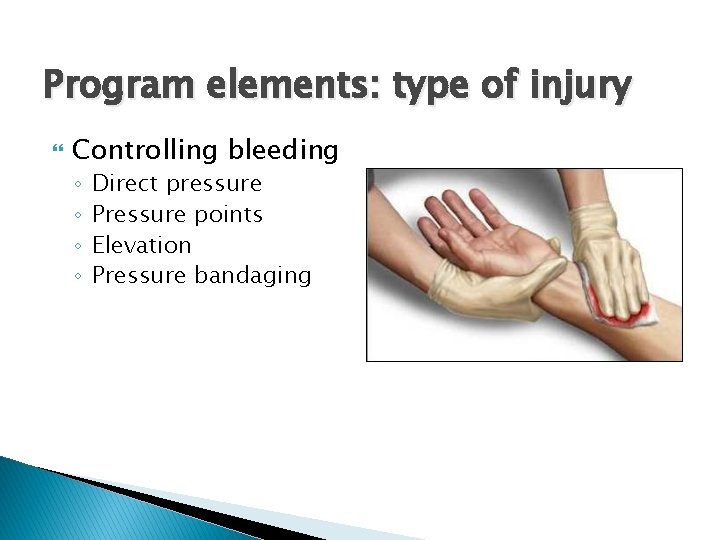
Program elements: type of injury Controlling bleeding ◦ ◦ Direct pressure Pressure points Elevation Pressure bandaging 7 c
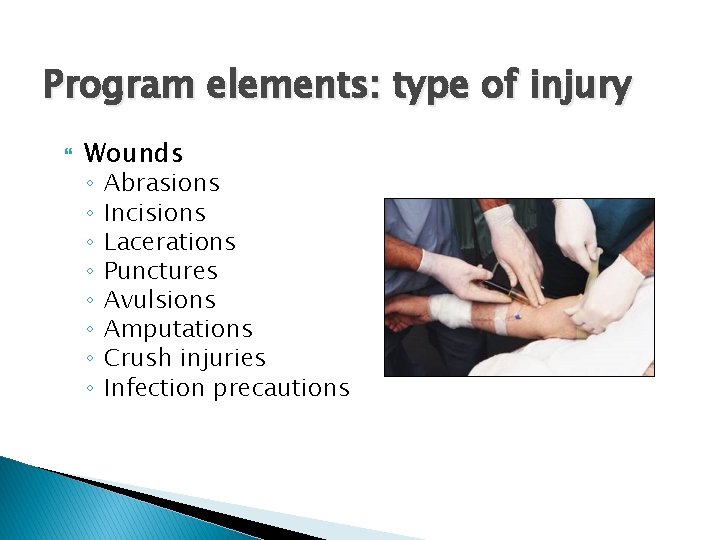
Program elements: type of injury Wounds ◦ ◦ ◦ ◦ Abrasions Incisions Lacerations Punctures Avulsions Amputations Crush injuries Infection precautions 7 d
Cold Emergencies Hypothermia ◦ Signs and symptoms- uncontrollable shivering, irrational behavior clumsy movements, pale skin, slow breathing ◦ First Aid- Call 911 Get out of the cold, remove wet clothing Warm victim with blanks or clothing Don’t warm person to fast or it can cause heart problems i. e. - putting into a hot bath or using direct heat Do not rub the skin of victim-Handle with care Give hot drinks to victim- No caffeine of alcohol Frost Bite ◦ First Aid Move the victim out of the cold Remove constricting items Protect between fingers with dry gauze and fluffy cloth Seek medical as soon as possible Warm with lukewarm water only if help is delayed Protect and elevate the area
Warm Emergencies Heat Exhaustion ◦ Signs and symptoms Heavy sweating, thirst fatigue, heat cramps Later headache, dizziness, nausea, or vomiting-May develop into heatstroke ◦ First Aid Move victim out of heat and rest in a cool place, loosen restrictive clothing Give water Raise legs 8 -12 inches Cool victim with water Heat Stroke ◦ Signs and symptoms-fast breathing, sweating may have stopped, fast breathing, headache, confusion, convulsions or unresponsiveness ◦ First Aid Call 911 Move victim to cool place Cool victim as quickly possible Do not give victim drinks with alcohol or caffeine- If metal status is diminished do not give fluids Monitor breathing and give CPR if necessary
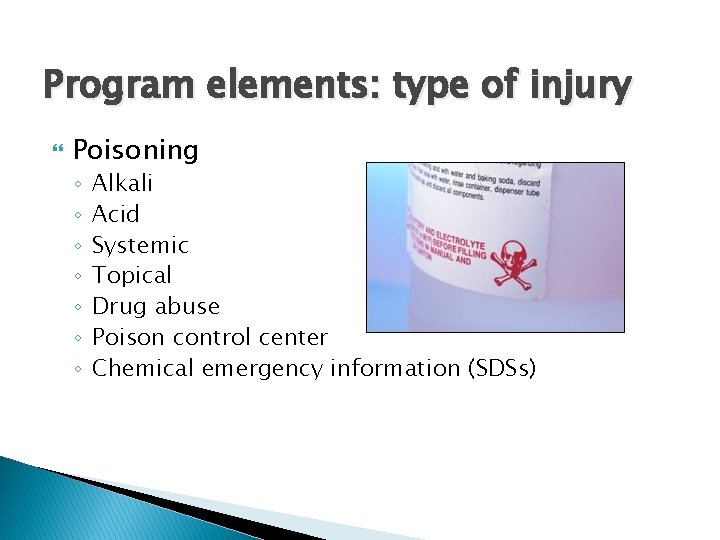
Program elements: type of injury Poisoning ◦ ◦ ◦ ◦ Alkali Acid Systemic Topical Drug abuse Poison control center Chemical emergency information (SDSs) 7 e
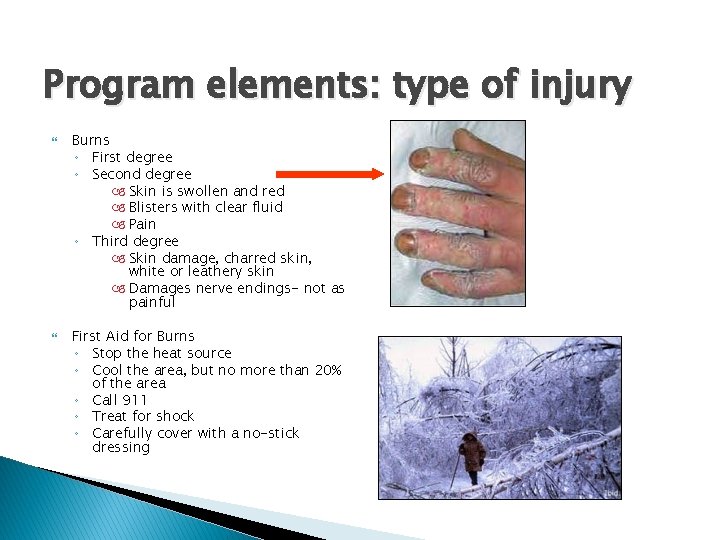
Program elements: type of injury Burns ◦ First degree ◦ Second degree Skin is swollen and red Blisters with clear fluid Pain ◦ Third degree Skin damage, charred skin, white or leathery skin Damages nerve endings- not as painful First Aid for Burns ◦ Stop the heat source ◦ Cool the area, but no more than 20% of the area ◦ Call 911 ◦ Treat for shock ◦ Carefully cover with a no-stick dressing 7 f
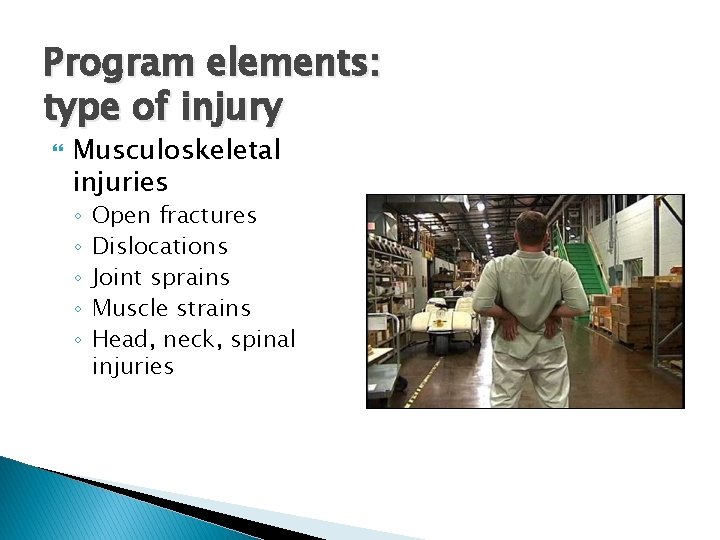
Program elements: type of injury Musculoskeletal injuries ◦ ◦ ◦ Open fractures Dislocations Joint sprains Muscle strains Head, neck, spinal injuries 7 g
Program elements: type of injury Bites and stings ◦ Human and animal ◦ Insects ◦ Call 911 for any poisonous bites or stings 7 h
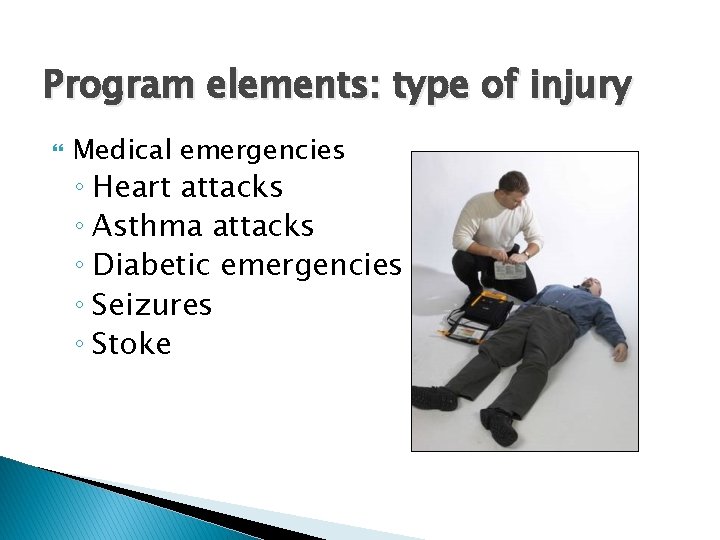
Program elements: type of injury Medical emergencies ◦ Heart attacks ◦ Asthma attacks ◦ Diabetic emergencies ◦ Seizures ◦ Stoke 7 i
Heart Attack Signs and symptoms First Aid ◦ Persistent Chest Pain that last longer than 3 to 5 minutes and or goes away and comes back ◦ Chest Pain spreading to the shoulders, neck, jaw, stomach or arms ◦ Shortness of breathe, dizziness, nausea or vomiting and fainting, pale skin, sweating, and denial of signals ◦ Call 911 ◦ Rest victim in comfortable position. Loosen constricting clothing. ◦ Ask the victim if he or she is taking heart medication, and help obtain the medication for the victim ◦ If at home, allow the victim to take or chew one aspirin unless he or she is allergic ◦ Be assuring to the victim to keep the calm- Do not let victim eat or drink anything
Asthma Attacks Signs and symptoms First Aid ◦ ◦ ◦ Wheezing and difficulty breathing and speaking Dry, persistent cough Fear, anxiety Gray-blue skin Changing levels of responsiveness ◦ Call 911 if the victim is not known to have asthma or if the person condition get worse ◦ Help the victim use his or her medication ◦ Help the victim rest and sit in a position for easiest breathing.
Diabetic Hypoglycemia ◦ Not enough sugar ◦ Sudden dizziness, shakiness, mood change , headache, confusion, pale skin, sweating and hunger Hyperglycemia ◦ To much insulin Frequent urination, drowsiness, dry mouth, thirst, shortness of breath, rapid breathing, nausea/ vomiting, fruity smelling breath
Diabetic Hypoglycemia Give sugar to a victim experiencing either low or high blood sugar Call 911 if the victim becomes unresponsive or continues to have significant sings and symptoms Remember to ask: ◦ Ask the person if they are diabetic ◦ Look for a medical alert bracelet ◦ Look for sugar to give the victim
Seizures Protect a person having seizure by: ◦ Removing near by objects that could injure the victim ◦ Placing a thin cushion under the victim’s to protect it ◦ Roll victim on side so that body fluids can drain out of the mouth if needed After Seizure ◦ Check to see if victim was injured ◦ Be reassuring and comforting ◦ Stay until help arrives
Stroke Signs and symptoms ◦ ◦ Trouble speaking Blurred of dimmed vision Sudden, severe headache, dizziness; or confusion Numbness in one arm Call 911 as soon as possible for stroke victims
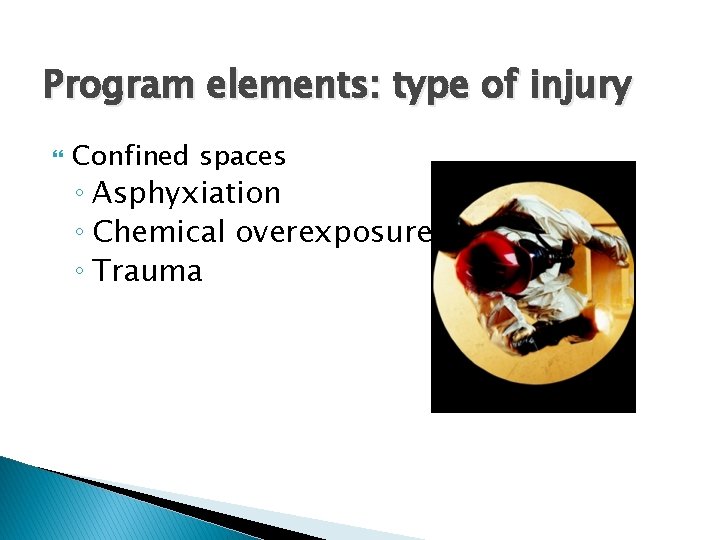
Program elements: type of injury Confined spaces ◦ Asphyxiation ◦ Chemical overexposure ◦ Trauma 7 j
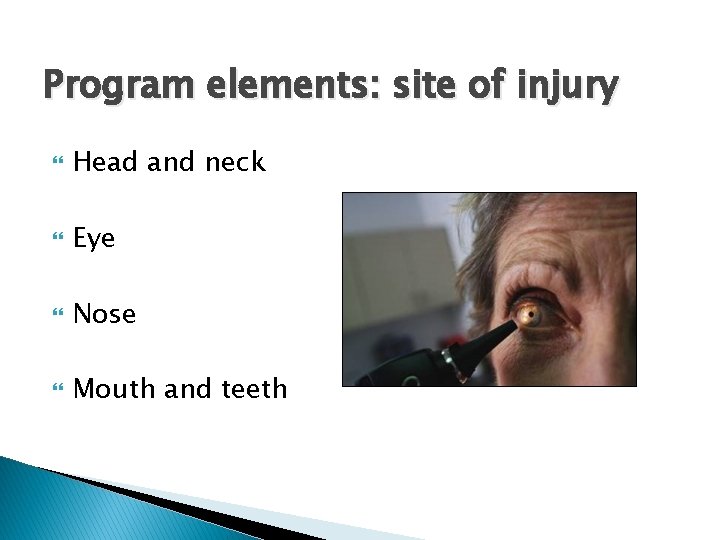
Program elements: site of injury Head and neck Eye Nose Mouth and teeth 7 k
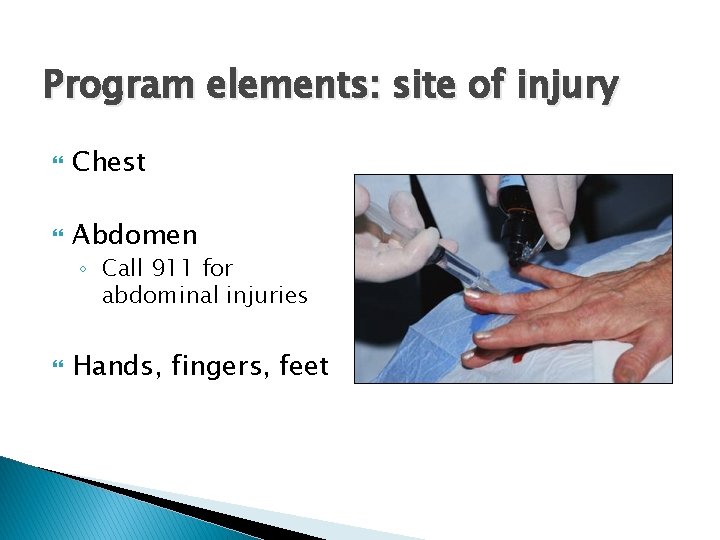
Program elements: site of injury Chest Abdomen ◦ Call 911 for abdominal injuries Hands, fingers, feet 7 l
Summary of main points First-aid response Qualified persons Reporting accidents and injuries 8 a
References National Safety Council-First Aid/CPR Training http: //www. nsc. org/pages/home. aspx