
First aid of Respiration failure and Cardiac arrest

- Slides: 26
First aid of Respiration failure and Cardiac arrest Definition of artificial respiration Any of various methods of restarting breathing after it has stopped, by manual rhythmic pressure on the chest, mouth-tomouth breathing, etc.
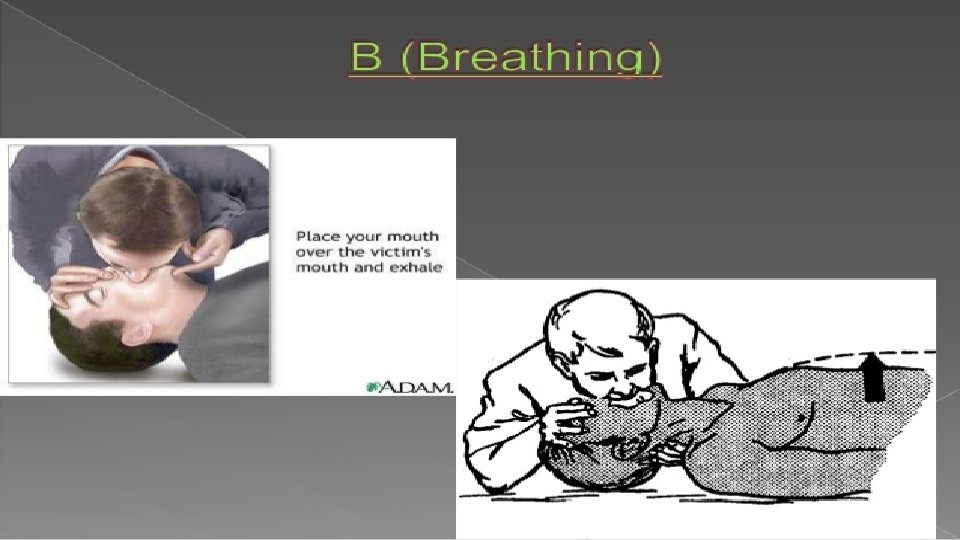
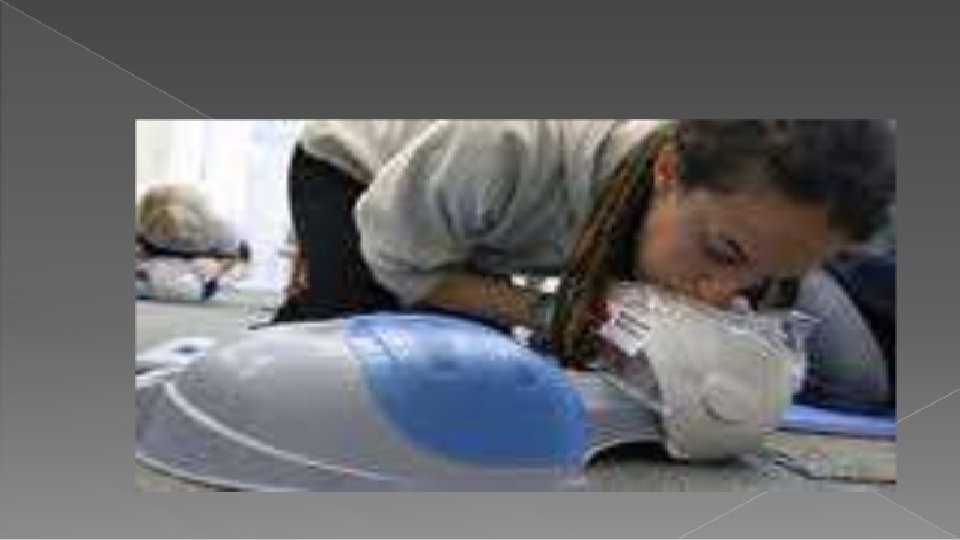
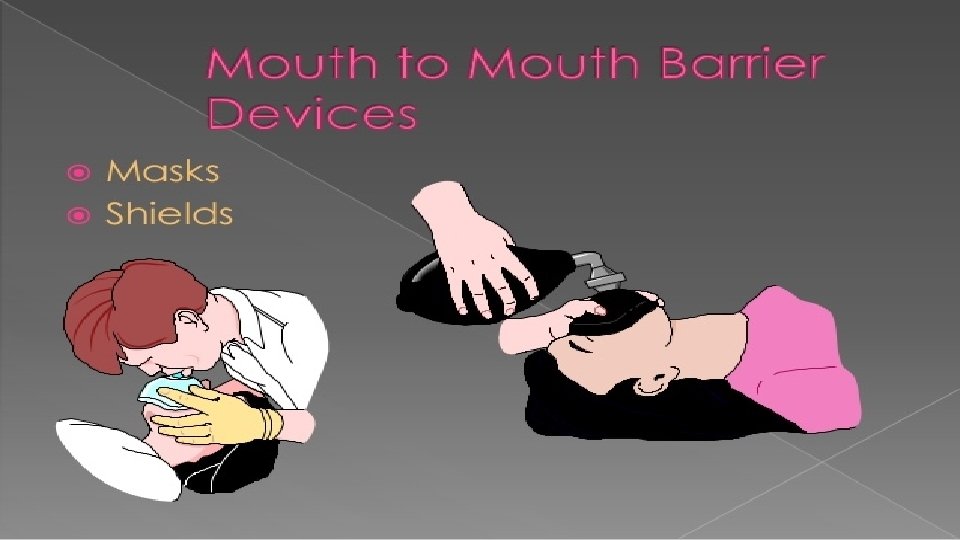
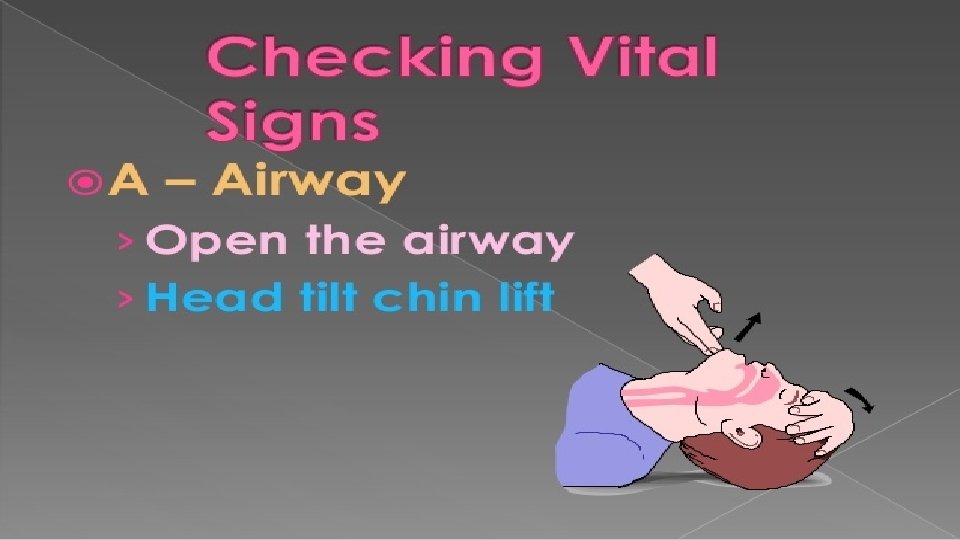
Type of artificial respiration All methods require good airway management to perform, which ensures that the method is effective. These methods include: 1. Mouth to mouth - This involves the rescuer making a seal between their mouth and the patient's mouth and 'blowing', to pass air into the patient's body.
2. Mouth to nose – 2. In some instances, the rescuer may need or wish to form a seal with the patient's nose. Typical reasons for this include maxillofacial injuries, performing the procedure in water or the remains of vomit in the mouth
3. Mouth to mouth and nose - Used on infants (usually up to around 1 year old), as this forms the most effective seal. 4. Mouth to mask – Most organizations recommend the use of some risk. One popular type is the 'pocket mask'. This may be able to provide higher tidal volumes than a Bag Valve Mask.
5. Bag valve mask (BVM) - This is a simple device manually operated by the rescuer, which involves squeezing a bag to expel air into the patient. 6. Mechanical resuscitator - An electric unit designed to breathe for the patient.
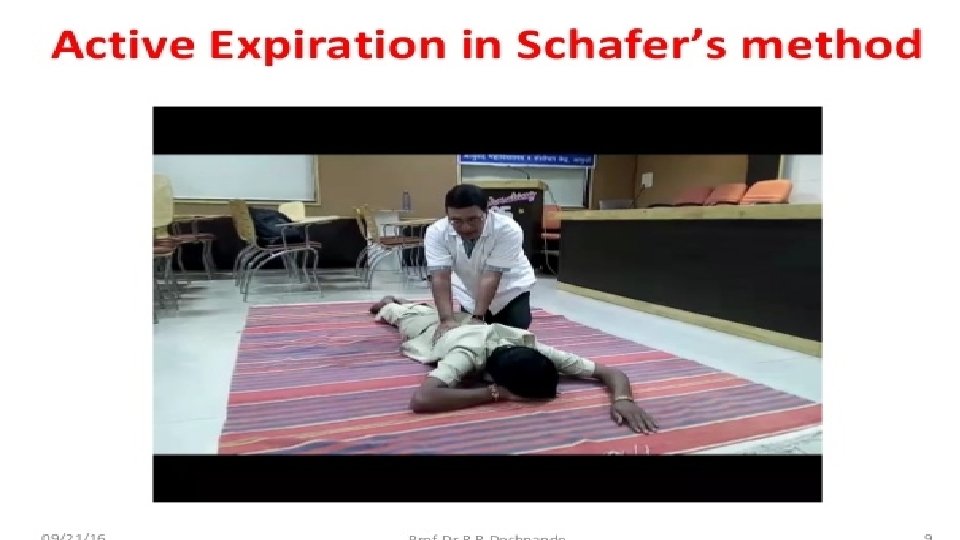
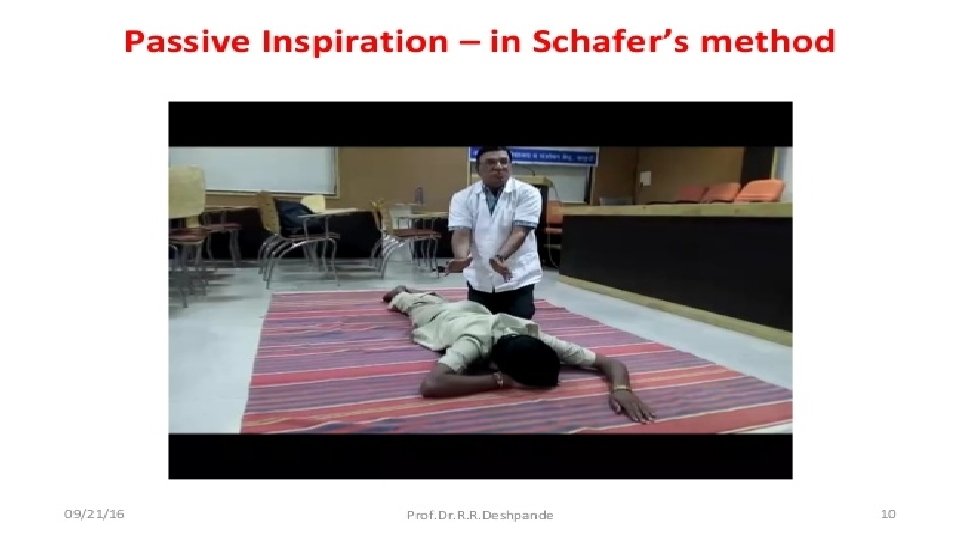
Schafer's method is the simplest method of artificial respiration. It can be performed without assistance and encourages the removal of fluid from the air passages by gravity. 1 -The patient is placed on his face with his shoulders raised a little so that the mouth is unobstructed.
2 - Pressure is exerted on the patient's loins and lower ribs, thus compressing the abdominal contents and forcing the diaphragm upwards. 3 -As the weight is taken off the patient's loins, the abdomen and thorax re -expands and inspiration occurs.
Cardiac Arrest Cardiac arrest occurs when the heart stops beating or beats too irregularly or too weakly to circulate blood effectively. Breathing soon stops. Cardiac arrest is a life-threatening emergency because vital organs live only a few minutes without oxygen-rich blood.
Causes of Cardiac Arrest 1 -Cardiovascular disease is the most common cause of cardiac arrest. 2 - Drowning, suffocation, and certain drugs can cause breathing to stop, which then causes cardiac arrest. 3 - Severe chest injuries or severe blood loss can also cause the heart to beat ineffectively. 4 - Electrocution disrupts the heart's own electrical activity and causes the heart to stop.
Signs and Symptoms of Cardiac Arrest Although cardiac arrest can result from a heart attack, cardiac arrest can occur suddenly without any signs and symptoms of a heart attack first. This occurrence is called sudden death. There are the signs and symptoms of cardiac arrest: -
1. Unresponsiveness. 2. Absence of movement by the casualty. 3. Absence of effective breathing. 4. Presence of cyanosis or blue coloring of the skin. 5. Absence of a carotid pulse.
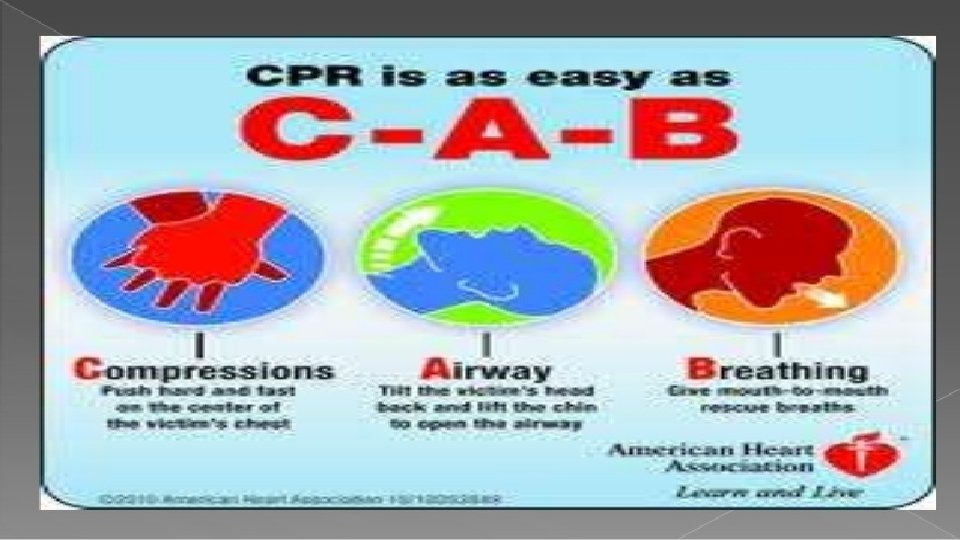
First Aid for Cardiac Arrest Because the brain and other vital organs live only for a few minutes after the heart stops, the casualty needs Cardiopulmonary resuscitation (CPR), defibrillation, and advanced emergency medical care. CPR combines rescue breathing and chest compressions.
Chest compressions make the blood flow when the heart is not beating. Rescue breathing and chest compressions make the lungs and heart function to some extent. However, even with CPR, the chance of survival is very slim unless defibrillation can be applied and advanced medical care arrives within 5
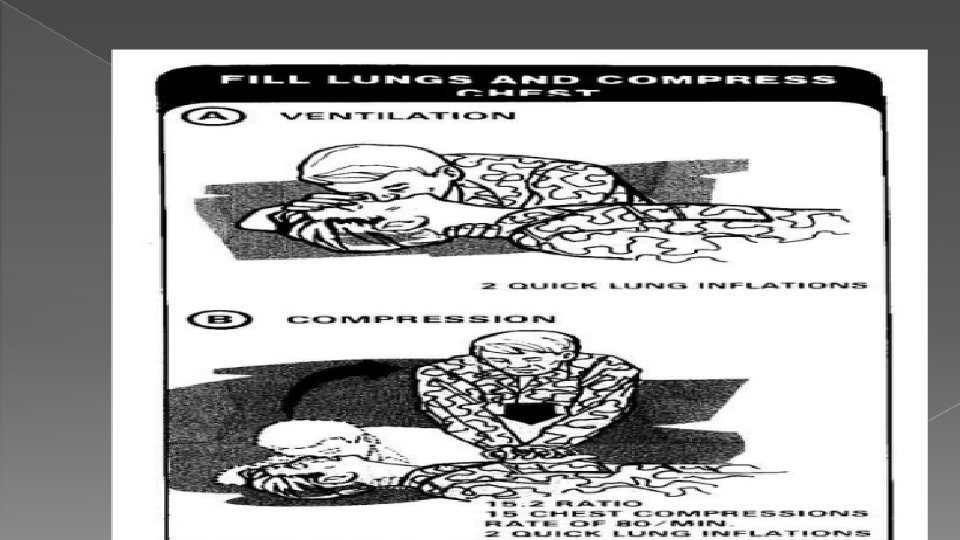
Anyone with a minimum of training can provide defibrillation with an automated external defibrillator (AED). Cardiopulmonary resuscitation (CPR) combines artificial respiration (mouth-to-mouth resuscitation, rescue breathing), which supplies oxygen to the lungs, with chest compressions, which circulate oxygen to the brain
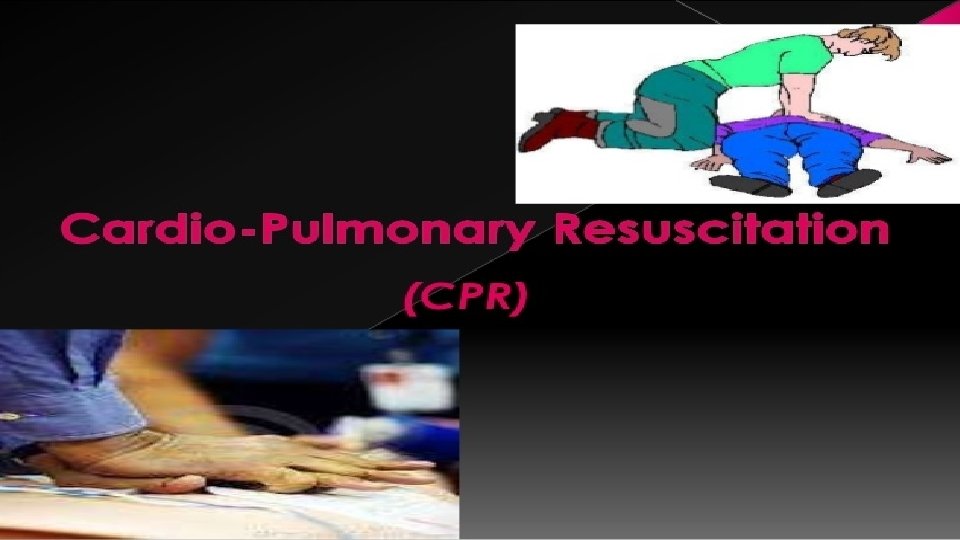
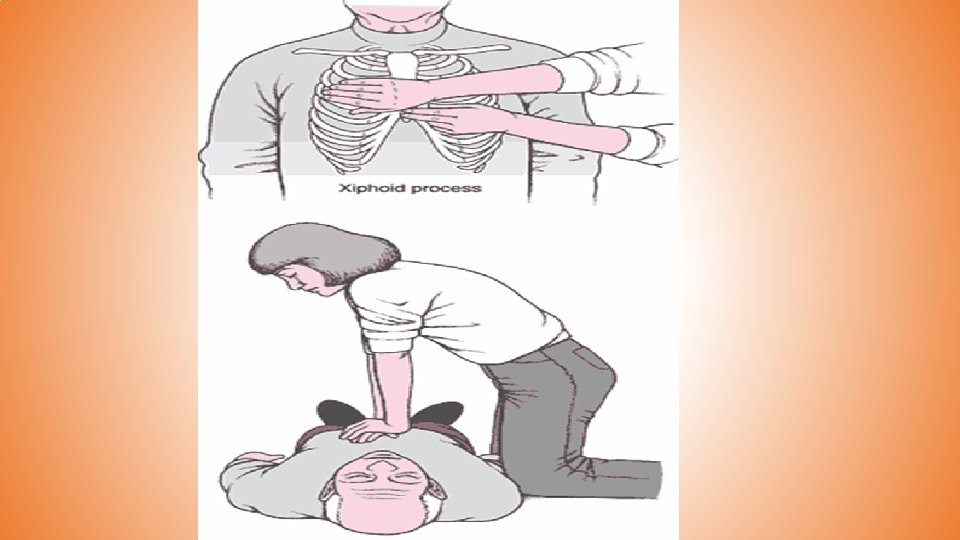
To perform chest compressions for cardiac pulmonary resuscitation (CPR), a rescuer kneels to one side and, with the arms held straight, leans over the person and places both hands, one on top of the other just above (about two finger widths) the lowest part of the breastbone (called the xiphoid process). The rescuer compresses the chest about 1½ to 2 inches (4 to 5 centimeters) in adults. The chest is compressed about 100 times per minute.