
FIRST AID FOR ELECTRICIANS Version 1 First Aid
- Slides: 69
FIRST AID FOR ELECTRICIANS Version 1
First Aid Emergency care of the SICK and INJURED to maintain life until medical aid § Benefits of First Aid − Saves lives - by knowing what to do − Reduces pain and disability − Increases safety awareness at home, work and on road − Reduces accidents by increasing your awareness − Reduces compensation - awareness of safety procedures September 2011 2
The Aims of First Aid § PRESERVE life § PREVENT further injury § PROMOTE recovery § PROTECT the unconscious 3
Duty of Care § A duty of care exists wherever there is a relationship between two persons § Once you commence giving first aid, you automatically take on a duty of care § When giving first aid stay within the scope of your training September 2011 4
Consent § Obtain consent, where possible before applying first aid § Treatment given without the person’s consent may constitute an assault § Unconscious casualty = implied consent § Casualty under 18 yrs? – where possible obtain consent of a parent or legal guardian September 2011 5
Documentation § Record details of any treatment you provide § Records may be used as evidence in a court of law § Ensure details are accurately recorded in ink, not pencil § Record facts not opinions § Sign and date the record § Confidentiality of records and information must be maintained § Store in a secure locked cabinet September 2011 6
Infection Control Infectious Diseases: § Spread from one person to another eg: colds, hepatitis Transmission: § May be passed on to first aider by: − Droplets eg: nasal, throat or airway secretions − Blood and other body fluids − Infected needles or sharp objects Infection is unlikely September 2011 7
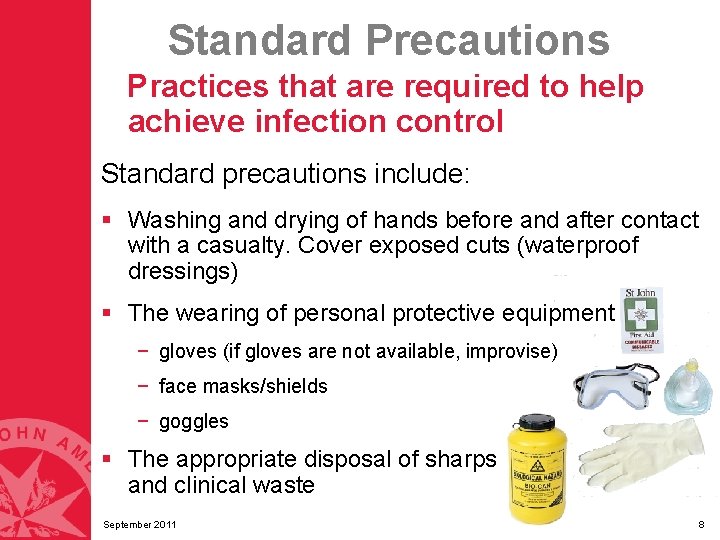
Standard Precautions Practices that are required to help achieve infection control Standard precautions include: § Washing and drying of hands before and after contact with a casualty. Cover exposed cuts (waterproof dressings) § The wearing of personal protective equipment − gloves (if gloves are not available, improvise) − face masks/shields − goggles § The appropriate disposal of sharps and clinical waste September 2011 8
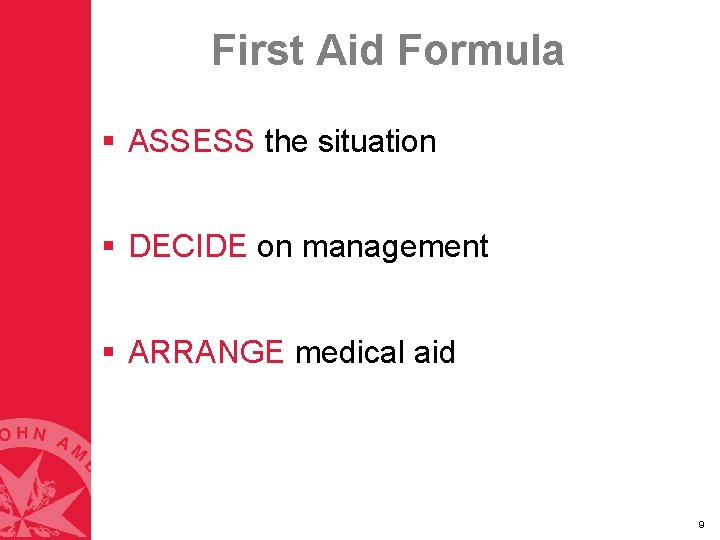
First Aid Formula § ASSESS the situation § DECIDE on management § ARRANGE medical aid 9
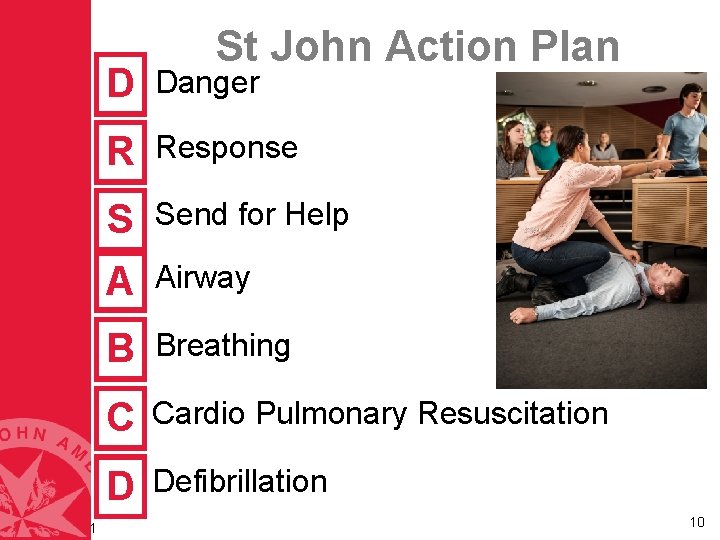
1 St John Action Plan D Danger R Response S Send for Help A Airway B Breathing C Cardio Pulmonary Resuscitation D Defibrillation 10
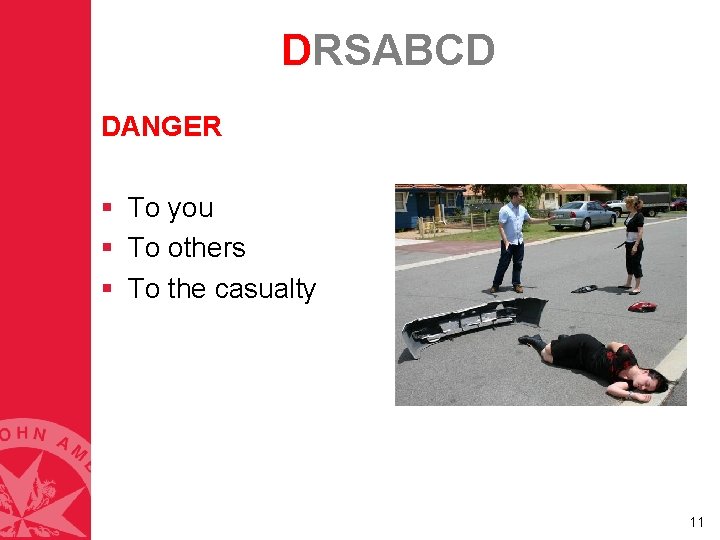
DRSABCD DANGER § To you § To others § To the casualty 11
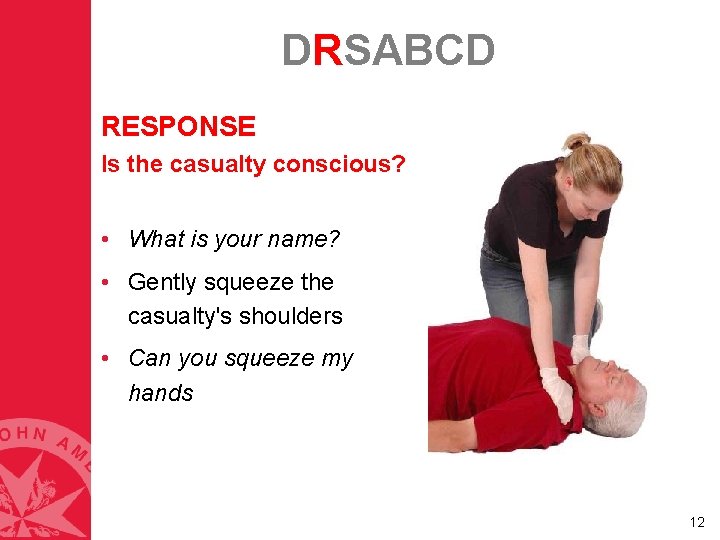
DRSABCD RESPONSE Is the casualty conscious? • What is your name? • Gently squeeze the casualty's shoulders • Can you squeeze my hands 12
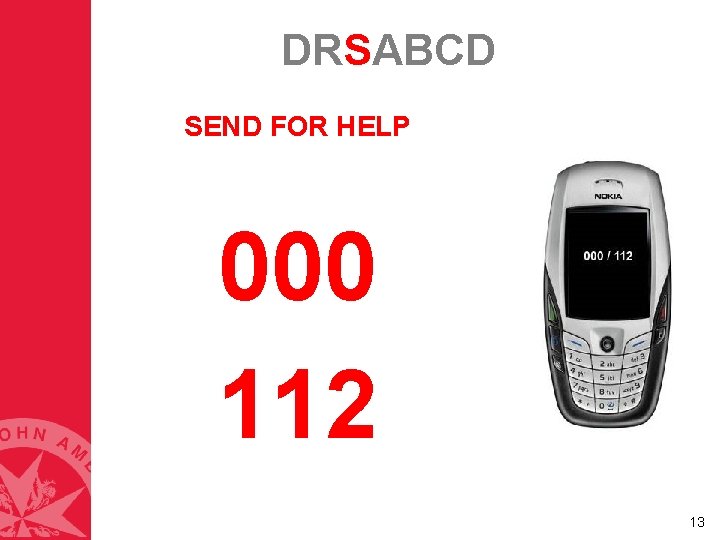
DRSABCD SEND FOR HELP 000 112 13
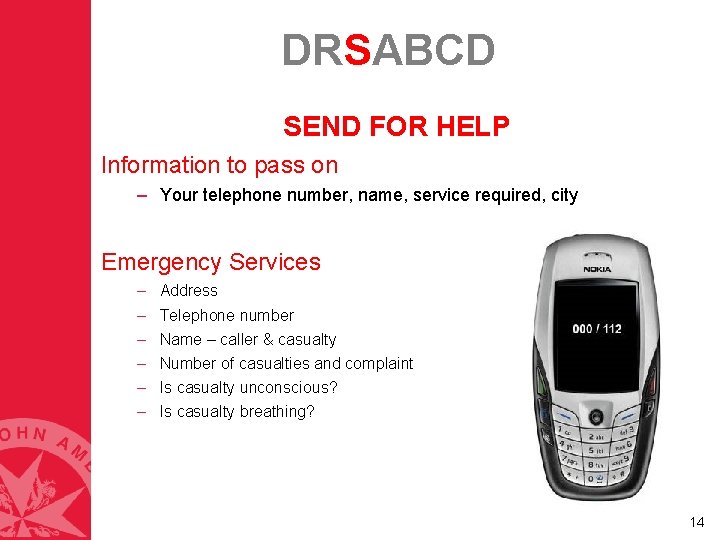
DRSABCD SEND FOR HELP Information to pass on – Your telephone number, name, service required, city Emergency Services – – – Address Telephone number Name – caller & casualty Number of casualties and complaint Is casualty unconscious? Is casualty breathing? 14
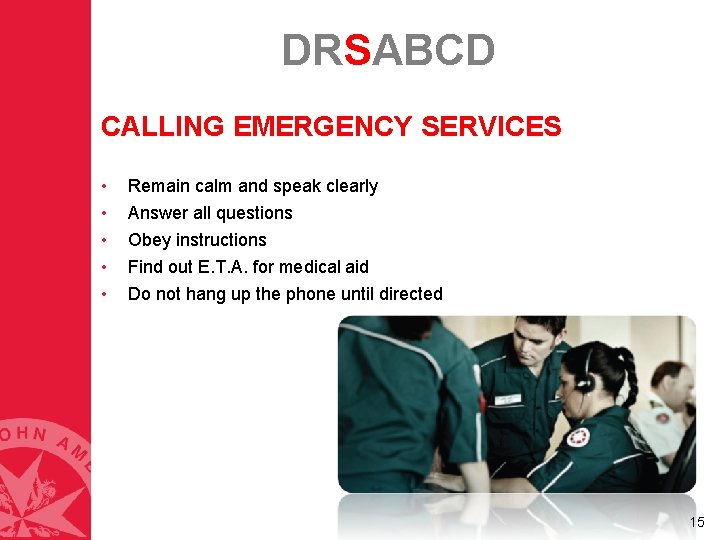
DRSABCD CALLING EMERGENCY SERVICES • • • Remain calm and speak clearly Answer all questions Obey instructions Find out E. T. A. for medical aid Do not hang up the phone until directed 15
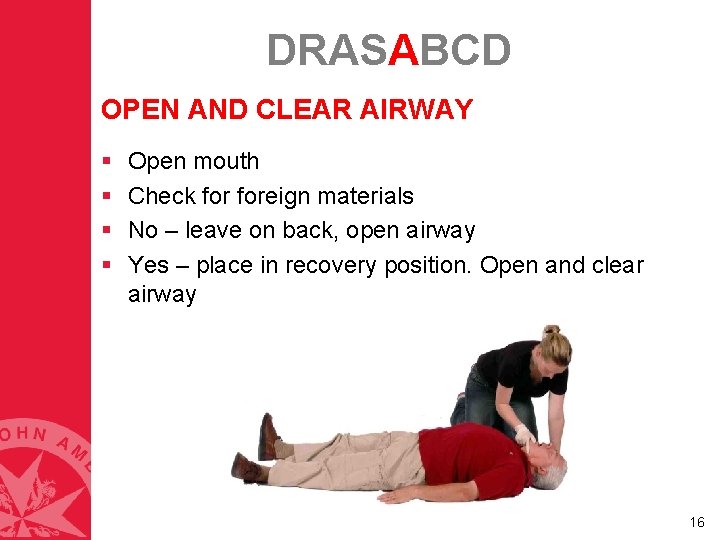
DRASABCD OPEN AND CLEAR AIRWAY § § Open mouth Check foreign materials No – leave on back, open airway Yes – place in recovery position. Open and clear airway 16
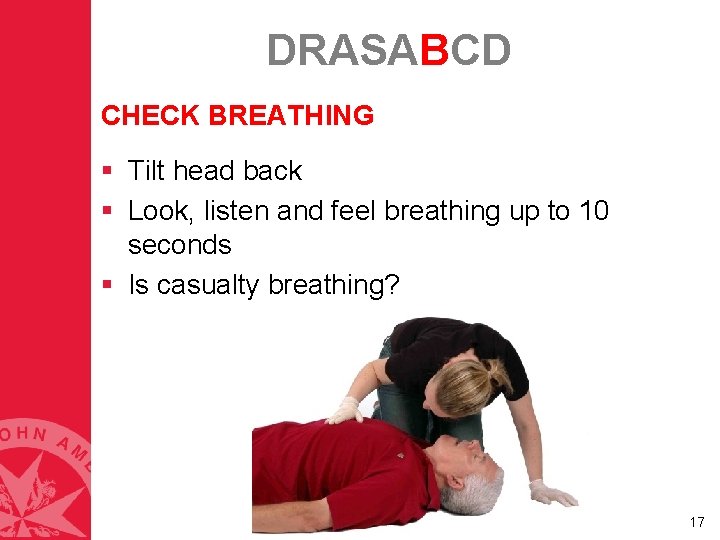
DRASABCD CHECK BREATHING § Tilt head back § Look, listen and feel breathing up to 10 seconds § Is casualty breathing? 17
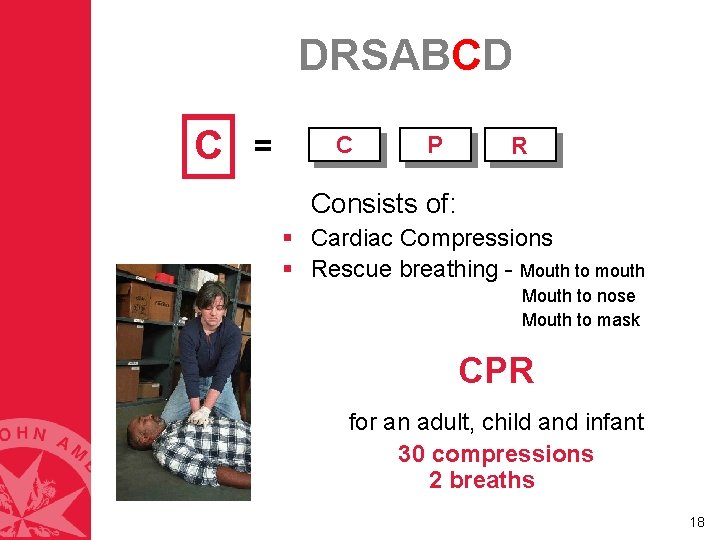
DRSABCD C = C P R Consists of: § Cardiac Compressions § Rescue breathing - Mouth to mouth Mouth to nose Mouth to mask CPR for an adult, child and infant 30 compressions 2 breaths 18
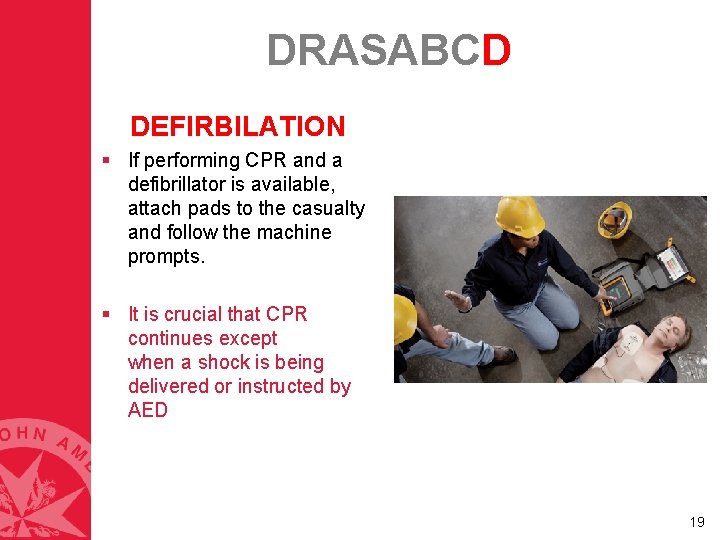
DRASABCD DEFIRBILATION § If performing CPR and a defibrillator is available, attach pads to the casualty and follow the machine prompts. § It is crucial that CPR continues except when a shock is being delivered or instructed by AED 19
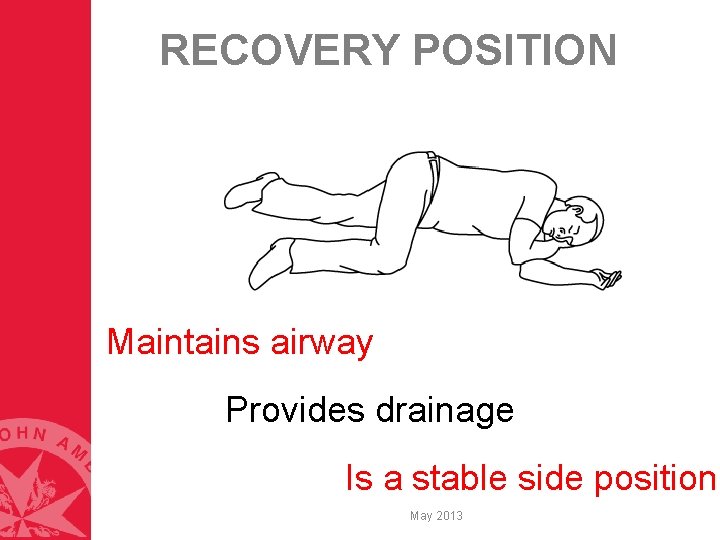
RECOVERY POSITION Maintains airway Provides drainage Is a stable side position May 2013
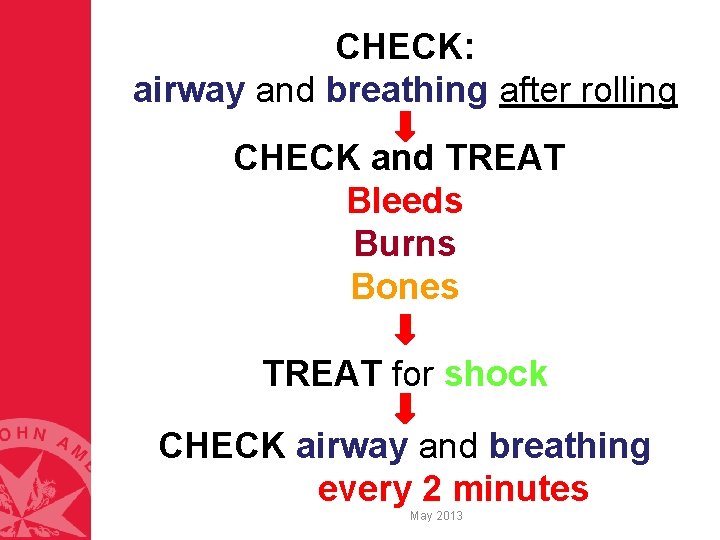
CHECK: airway and breathing after rolling CHECK and TREAT: Bleeds Burns Bones TREAT for shock CHECK airway and breathing again every 2 minutes May 2013
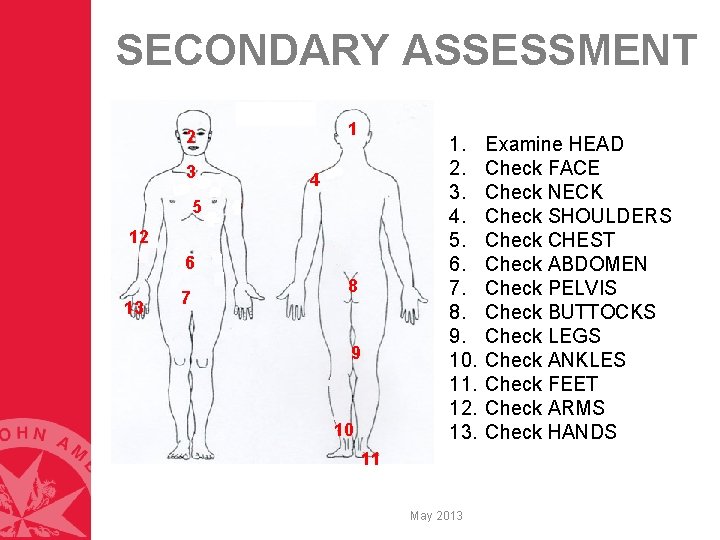
SECONDARY ASSESSMENT 1 2 3 4 5 12 6 13 7 8 9 10 1. 2. 3. 4. 5. 6. 7. 8. 9. 10. 11. 12. 13. 11 May 2013 Examine HEAD Check FACE Check NECK Check SHOULDERS Check CHEST Check ABDOMEN Check PELVIS Check BUTTOCKS Check LEGS Check ANKLES Check FEET Check ARMS Check HANDS
Demonstration Recovery Position Version 1
The Respiratory System Version 1
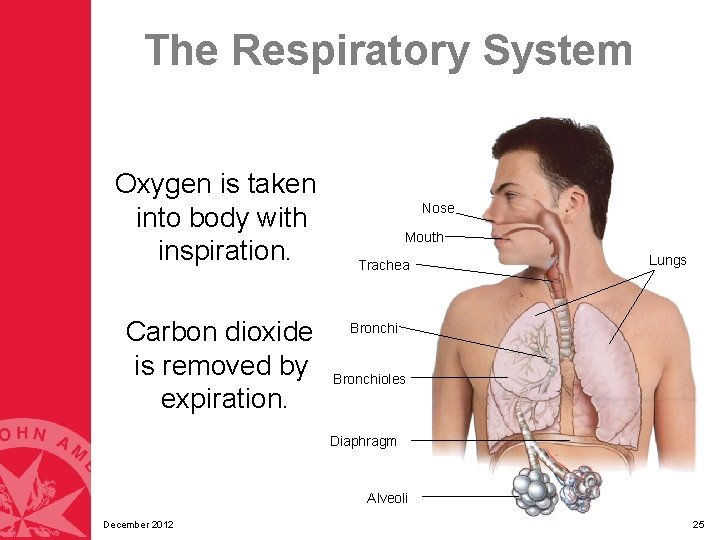
The Respiratory System Oxygen is taken into body with inspiration. Carbon dioxide is removed by expiration. Nose Mouth Trachea Lungs Bronchioles Diaphragm Alveoli December 2012 25
Asphyxia Version 1
Asphyxia Lack of Oxygen to body cells leads to: 1. Loss of Consciousness 2. Respiratory Arrest 3. Cardiac Arrest December 2012 27
Asphyxia - General Causes § Airway obstructions § Head injuries § Heart conditions § Chest conditions § Non-air situations December 2012 28
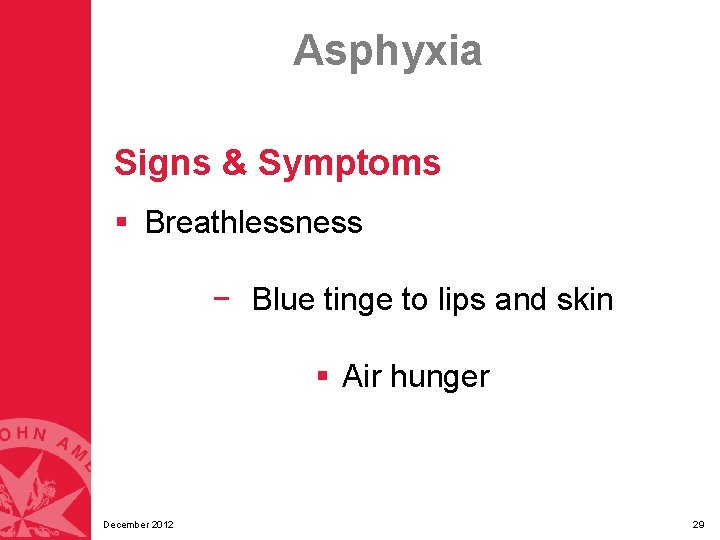
Asphyxia Signs & Symptoms § Breathlessness − Blue tinge to lips and skin § Air hunger December 2012 29
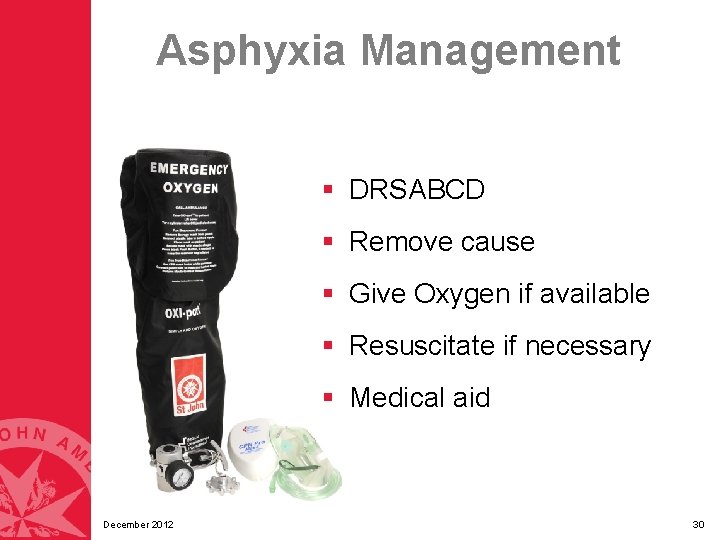
Asphyxia Management § DRSABCD § Remove cause § Give Oxygen if available § Resuscitate if necessary § Medical aid December 2012 30
Asphyxia - Specific Causes § Choking § Asthma § Drowning § Chest Injuries December 2012 31
Asphyxia Management If Unconscious: § DRSABCD § Remove cause § Recovery Position § Give Oxygen if available § Resuscitate if necessary § Urgent medical aid December 2012 32
Choking Version 1
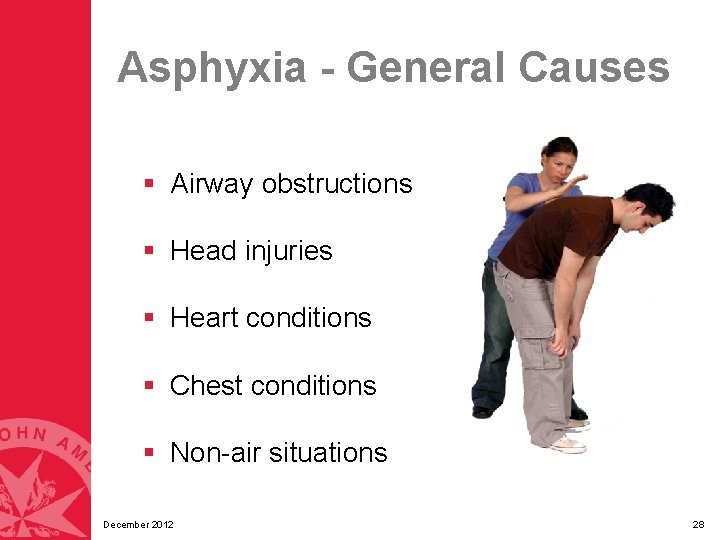
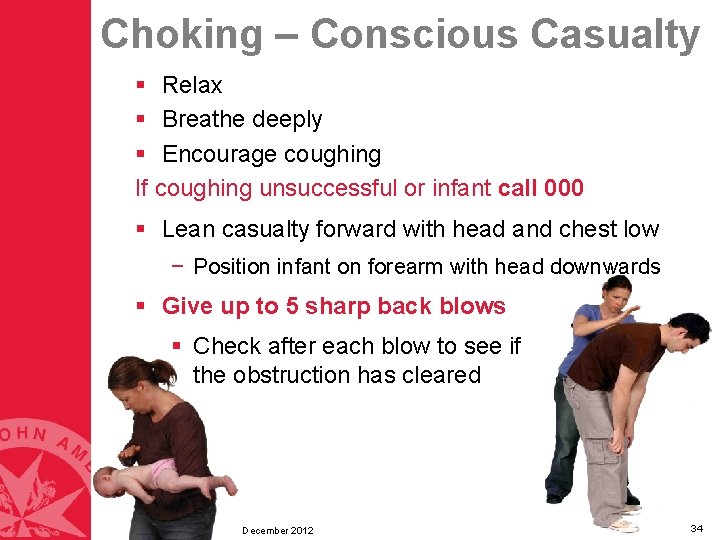
Choking – Conscious Casualty § Relax § Breathe deeply § Encourage coughing If coughing unsuccessful or infant call 000 § Lean casualty forward with head and chest low − Position infant on forearm with head downwards § Give up to 5 sharp back blows § Check after each blow to see if the obstruction has cleared December 2012 34
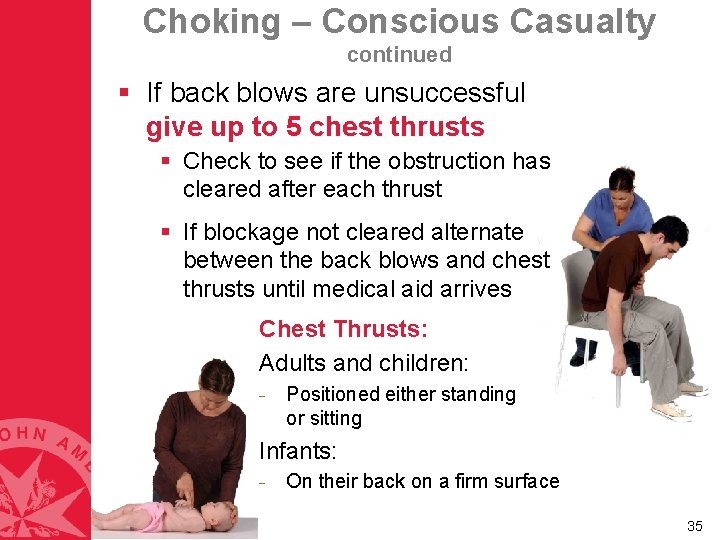
Choking – Conscious Casualty continued § If back blows are unsuccessful give up to 5 chest thrusts § Check to see if the obstruction has cleared after each thrust § If blockage not cleared alternate between the back blows and chest thrusts until medical aid arrives Chest Thrusts: Adults and children: − Positioned either standing or sitting Infants: − On their back on a firm surface 35
Demonstration Oxygen Version 1
The Circulatory System Version 1
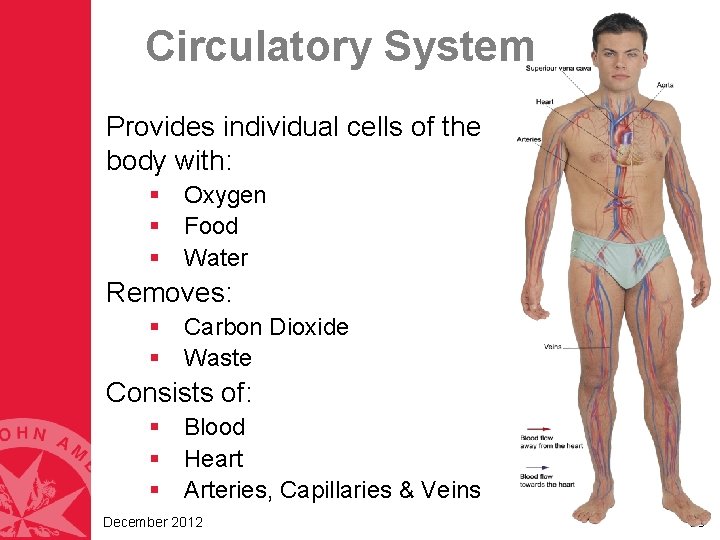
Circulatory System Provides individual cells of the body with: § Oxygen § Food § Water Removes: § Carbon Dioxide § Waste Consists of: § Blood § Heart § Arteries, Capillaries & Veins December 2012 38
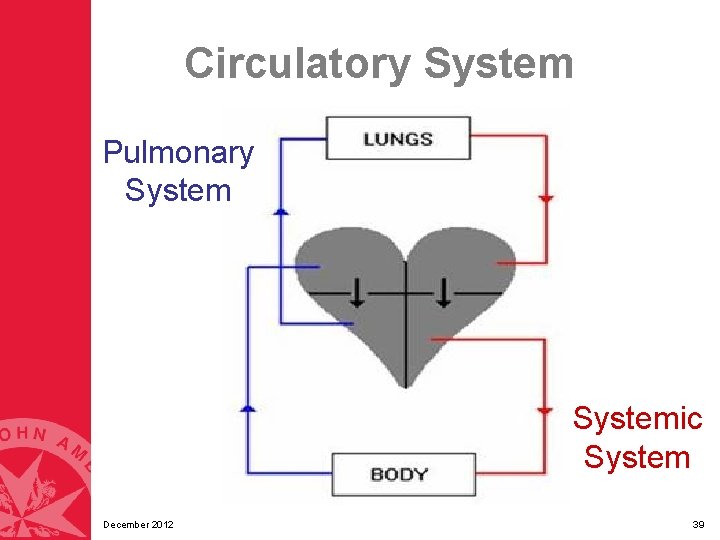
Circulatory System Pulmonary Systemic System December 2012 39
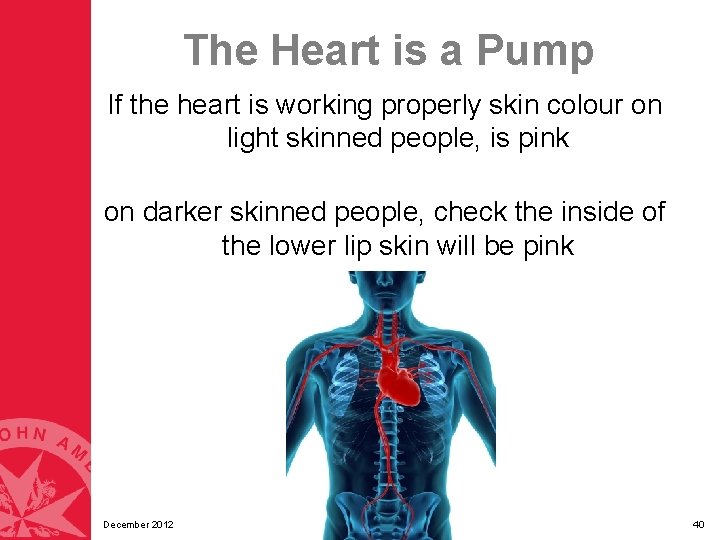
The Heart is a Pump If the heart is working properly skin colour on light skinned people, is pink on darker skinned people, check the inside of the lower lip skin will be pink December 2012 40
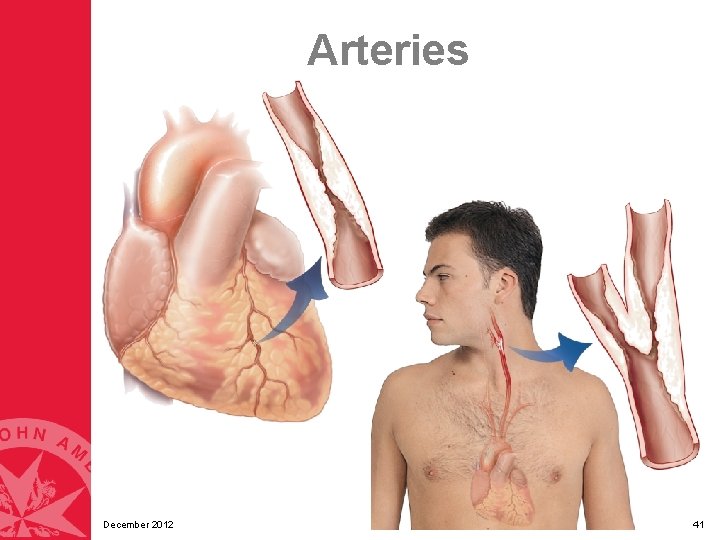
Arteries December 2012 41
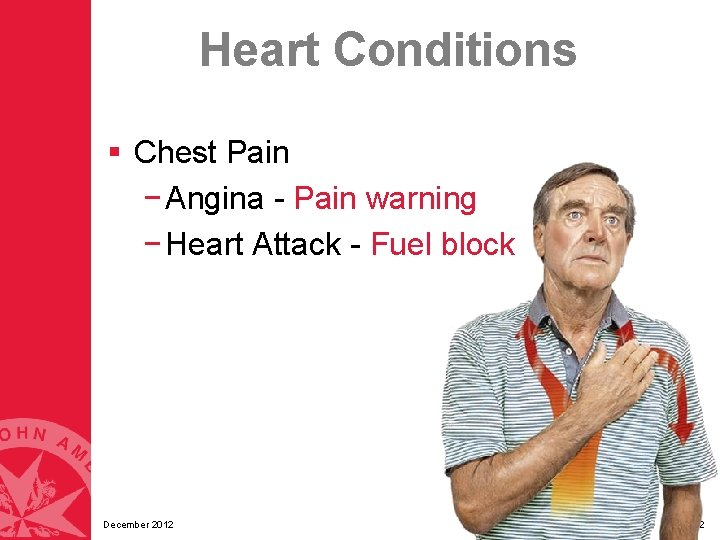
Heart Conditions § Chest Pain − Angina - Pain warning − Heart Attack - Fuel block December 2012 42
Chest Pain Version 1
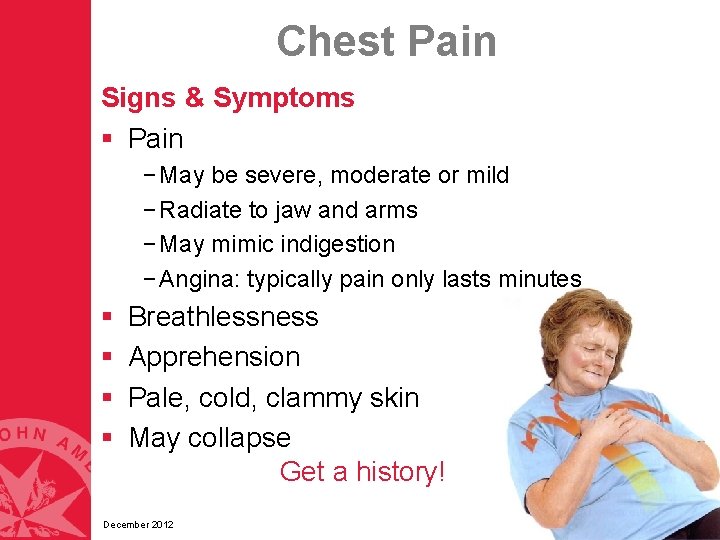
Chest Pain Signs & Symptoms § Pain − May be severe, moderate or mild − Radiate to jaw and arms − May mimic indigestion − Angina: typically pain only lasts minutes § § Breathlessness Apprehension Pale, cold, clammy skin May collapse Get a history! December 2012 44
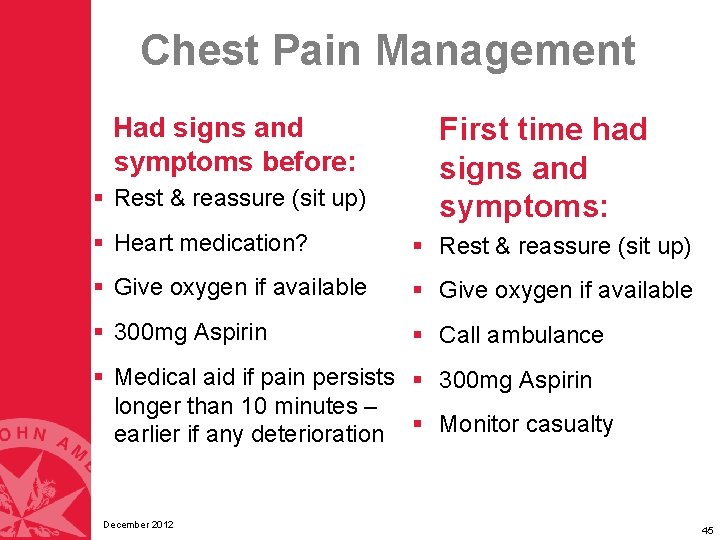
Chest Pain Management Had signs and symptoms before: § Rest & reassure (sit up) First time had signs and symptoms: § Heart medication? § Rest & reassure (sit up) § Give oxygen if available § 300 mg Aspirin § Call ambulance § Medical aid if pain persists § 300 mg Aspirin longer than 10 minutes – earlier if any deterioration § Monitor casualty December 2012 45
Cardiac Arrest Version 1
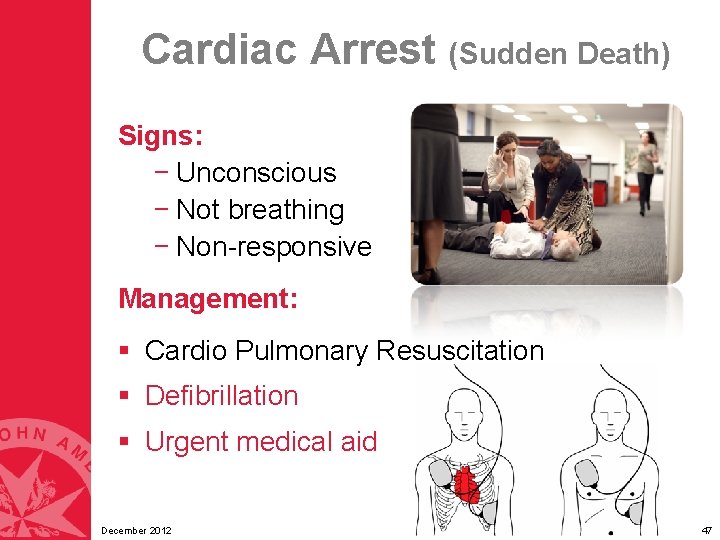
Cardiac Arrest (Sudden Death) Signs: − Unconscious − Not breathing − Non-responsive Management: § Cardio Pulmonary Resuscitation § Defibrillation § Urgent medical aid December 2012 47
CPR Version 1
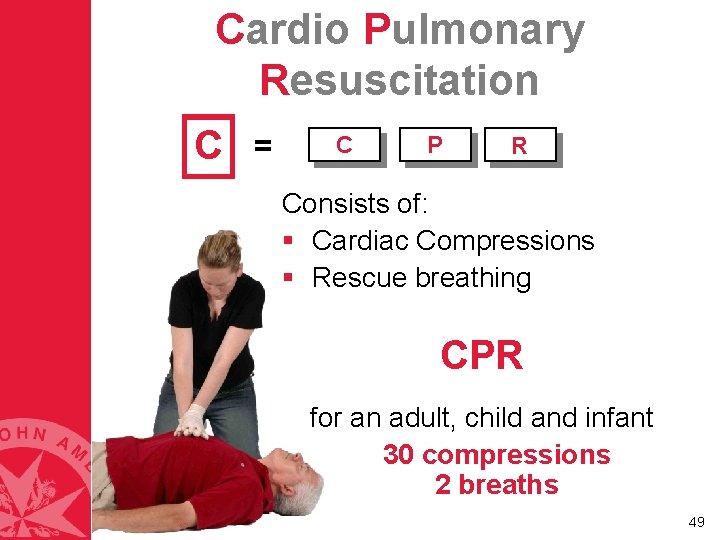
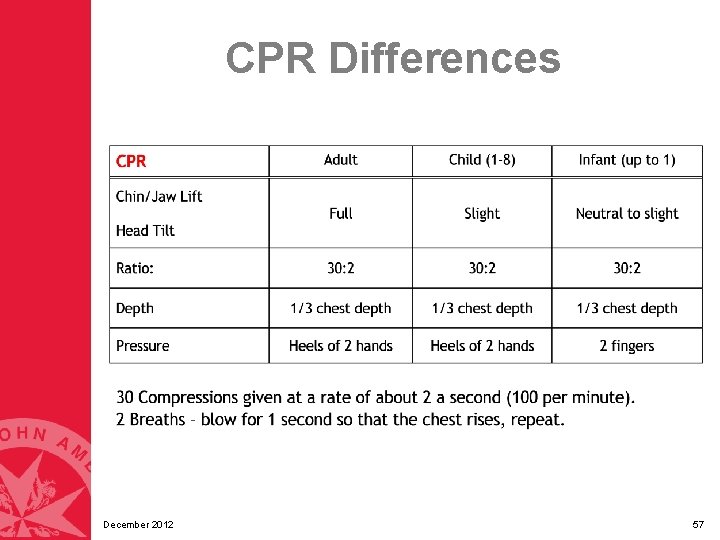
Cardio Pulmonary Resuscitation C = C P R Consists of: § Cardiac Compressions § Rescue breathing CPR for an adult, child and infant 30 compressions 2 breaths December 2012 49
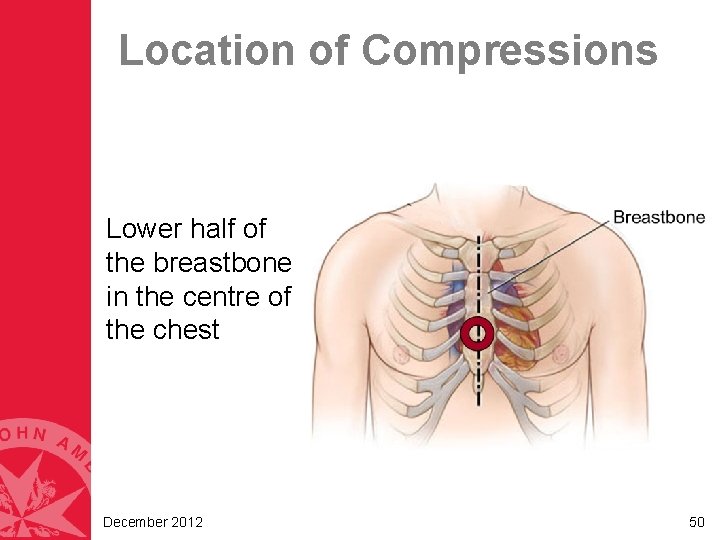
Location of Compressions Lower half of the breastbone in the centre of the chest December 2012 50
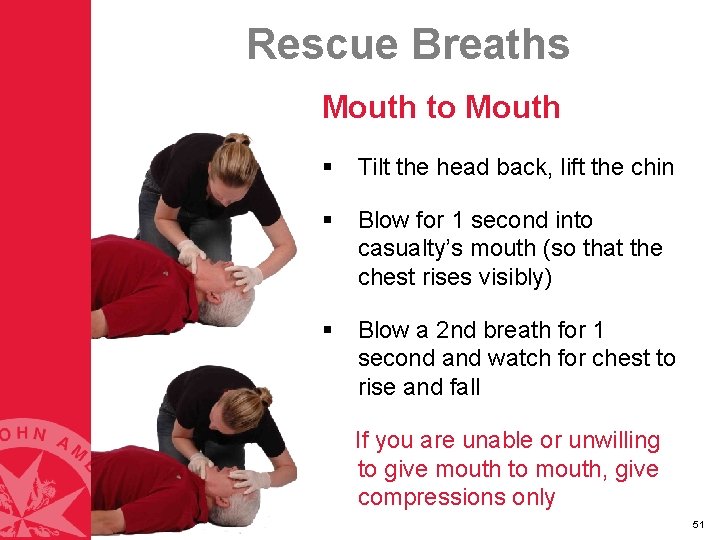
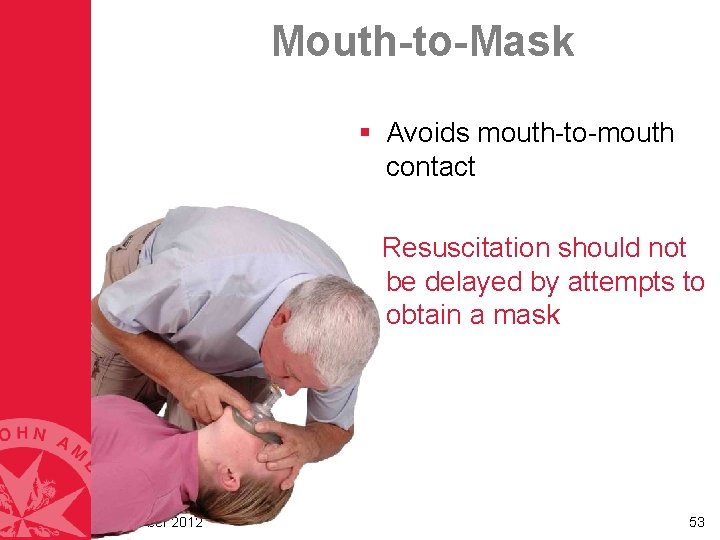
Rescue Breaths Mouth to Mouth § Tilt the head back, lift the chin § Blow for 1 second into casualty’s mouth (so that the chest rises visibly) § Blow a 2 nd breath for 1 second and watch for chest to rise and fall If you are unable or unwilling to give mouth to mouth, give compressions only December 2012 51
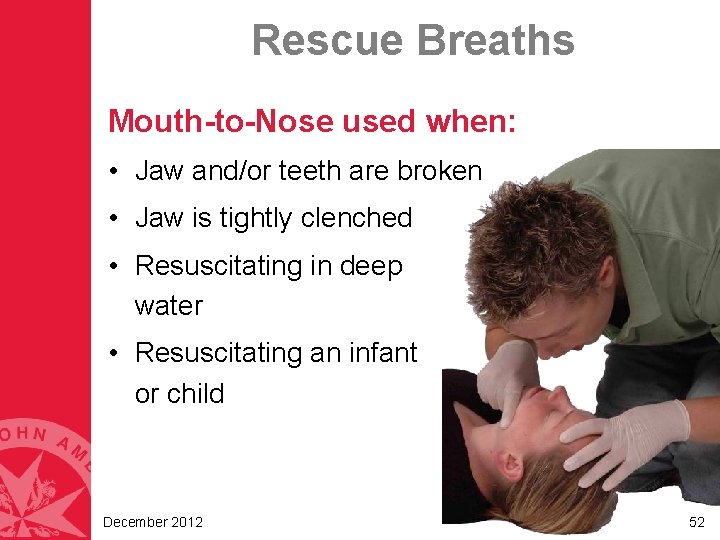
Rescue Breaths Mouth-to-Nose used when: • Jaw and/or teeth are broken • Jaw is tightly clenched • Resuscitating in deep water • Resuscitating an infant or child December 2012 52
Mouth-to-Mask § Avoids mouth-to-mouth contact Resuscitation should not be delayed by attempts to obtain a mask December 2012 53
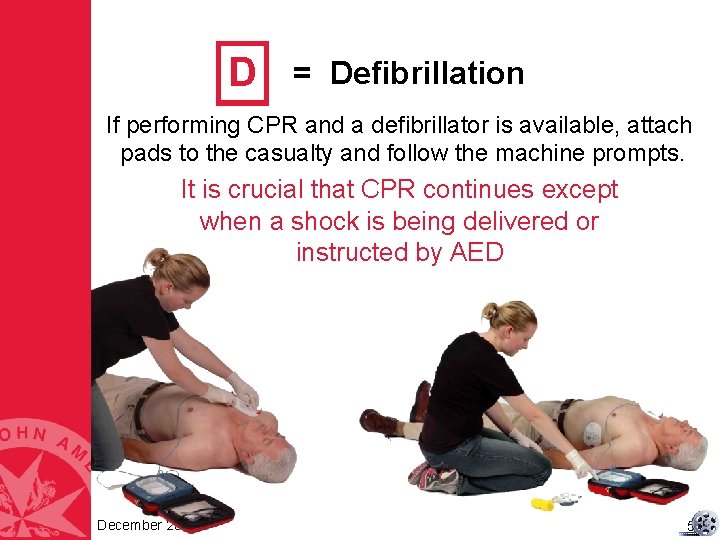
D = Defibrillation If performing CPR and a defibrillator is available, attach pads to the casualty and follow the machine prompts. It is crucial that CPR continues except when a shock is being delivered or instructed by AED December 2012 54
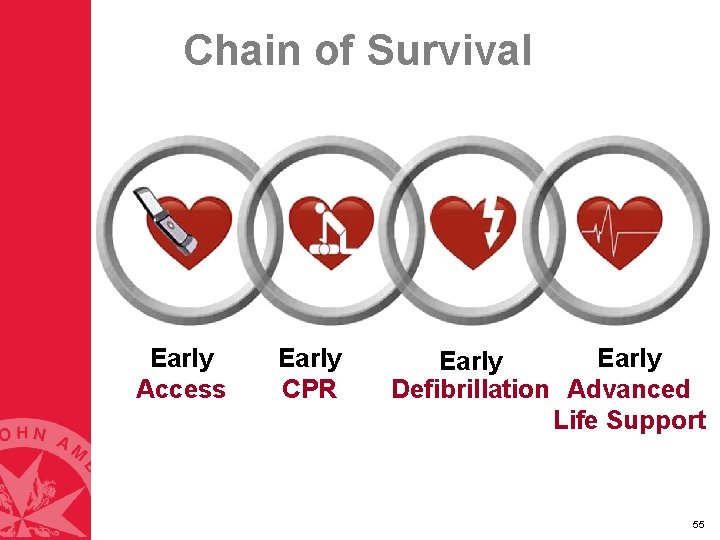
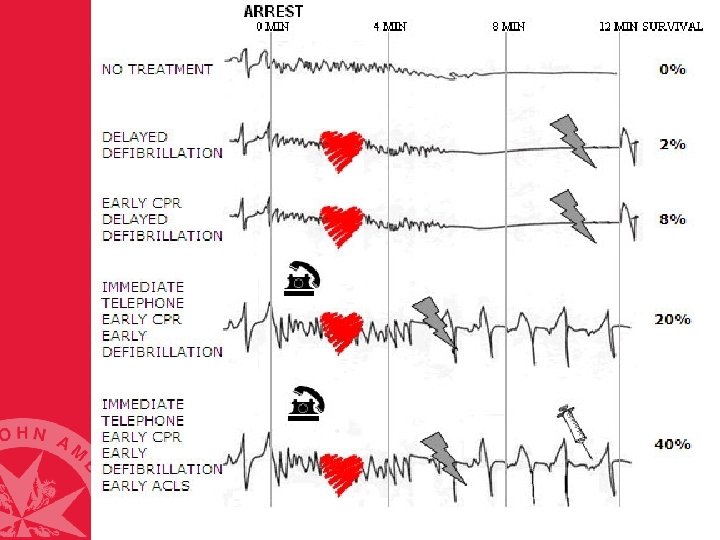
Chain of Survival Early Access Early CPR Early Defibrillation Advanced Life Support 55
56
CPR Differences December 2012 57
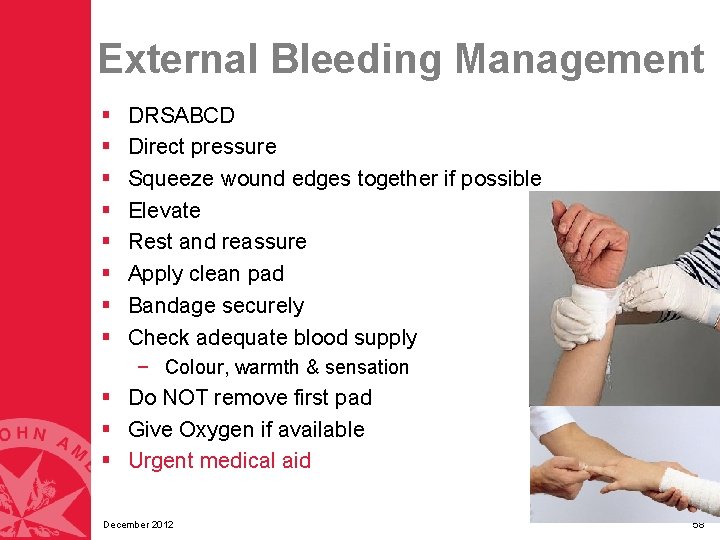
External Bleeding Management § § § § DRSABCD Direct pressure Squeeze wound edges together if possible Elevate Rest and reassure Apply clean pad Bandage securely Check adequate blood supply − Colour, warmth & sensation § Do NOT remove first pad § Give Oxygen if available § Urgent medical aid December 2012 58
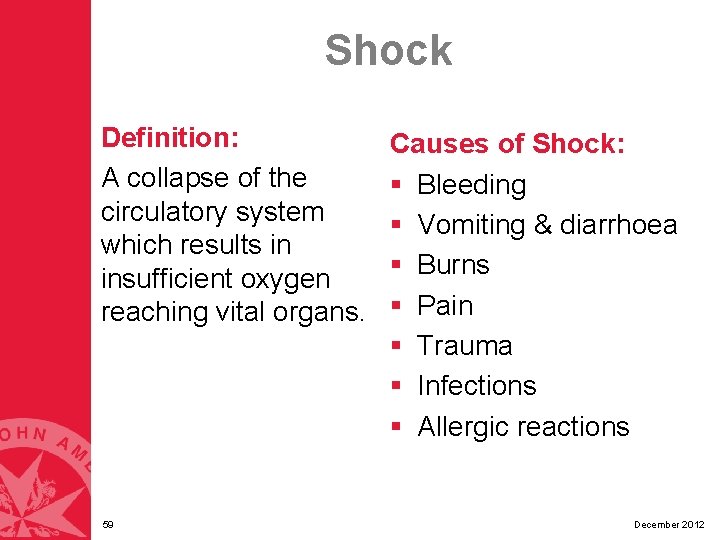
Shock Definition: A collapse of the circulatory system which results in insufficient oxygen reaching vital organs. 59 Causes of Shock: § Bleeding § Vomiting & diarrhoea § Burns § Pain § Trauma § Infections § Allergic reactions December 2012
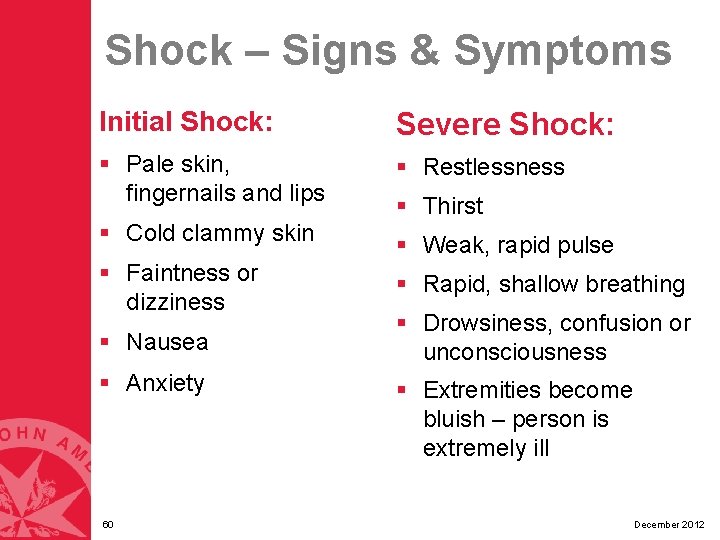
Shock – Signs & Symptoms Initial Shock: Severe Shock: § Pale skin, fingernails and lips § Restlessness § Cold clammy skin § Weak, rapid pulse § Faintness or dizziness § Nausea § Anxiety 60 § Thirst § Rapid, shallow breathing § Drowsiness, confusion or unconsciousness § Extremities become bluish – person is extremely ill December 2012
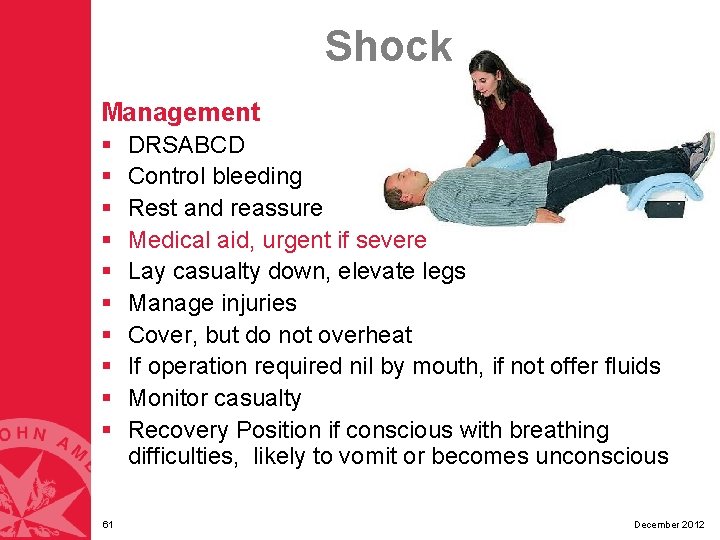
Shock Management § § § § § 61 DRSABCD Control bleeding Rest and reassure Medical aid, urgent if severe Lay casualty down, elevate legs Manage injuries Cover, but do not overheat If operation required nil by mouth, if not offer fluids Monitor casualty Recovery Position if conscious with breathing difficulties, likely to vomit or becomes unconscious December 2012
Burns Version 1
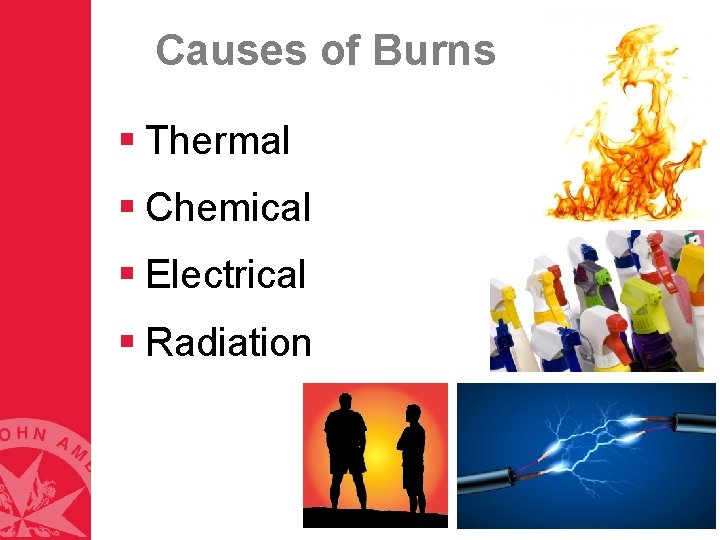
Causes of Burns § Thermal § Chemical § Electrical § Radiation
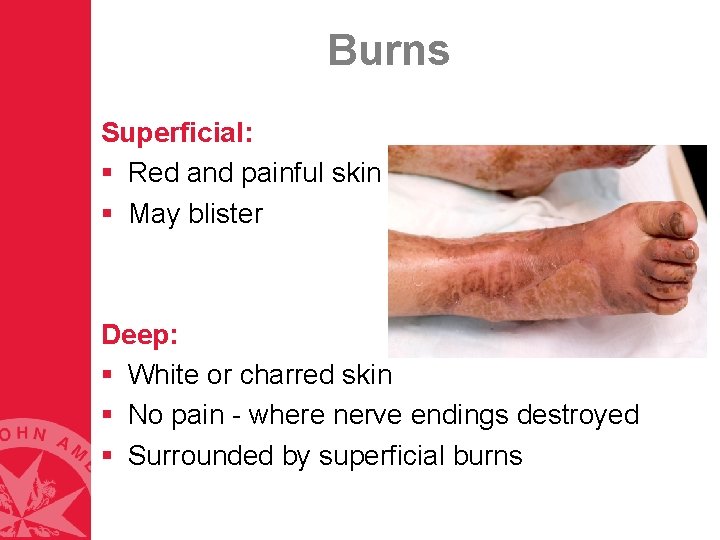
Burns Superficial: § Red and painful skin § May blister Deep: § White or charred skin § No pain - where nerve endings destroyed § Surrounded by superficial burns
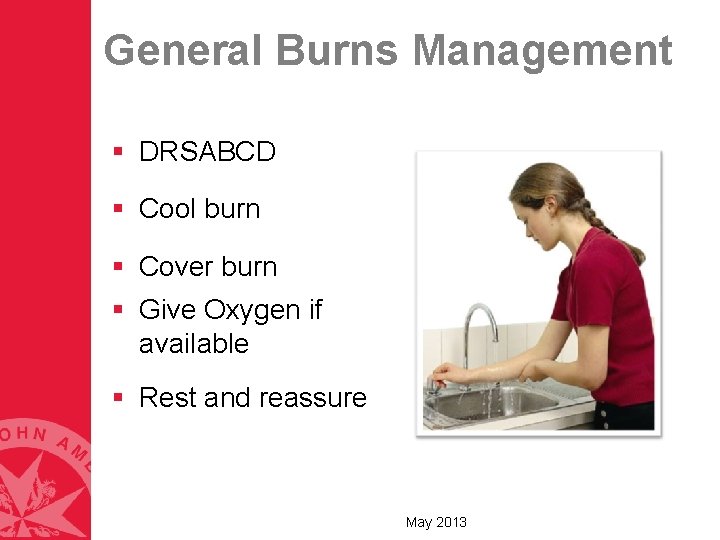
General Burns Management § DRSABCD § Cool burn § Cover burn § Give Oxygen if available § Rest and reassure May 2013
General Burns Management continued Urgent medical aid if: § Deep burn § Superficial burn larger than 20 cent piece for adults or 10 cent piece for children § Burns involving airway, hands, face or genitals § In doubt
Specific Burns Management § Scald − Remove wet clothing from affected area § Thermal − Do not remove clothing stuck to the skin − Remove jewellery § Chemical − Remove contaminated clothing and footwear − Avoid contaminating yourself
Specific Burns Management Electrical § DRSABCD − Danger - ensure the power is turned off if possible § If possible remove casualty from electrical supply − Do not directly touch the casualty § As per general management § Urgent medical aid Sunburn § § Cool area with running water Stay out of the sun Give cool fluids Medical aid for infants and casualties with blisters
Knowledge Assessment Version 1