
First Aid CUTS SCRAPES BURNS and BRUISES WOUNDS

First Aid CUTS, SCRAPES, BURNS and BRUISES
WOUNDS An injury to the soft tissue is called a wound.
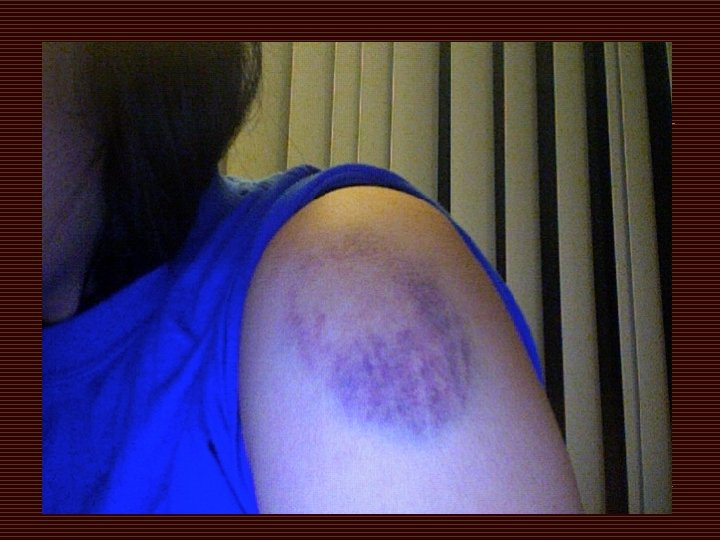
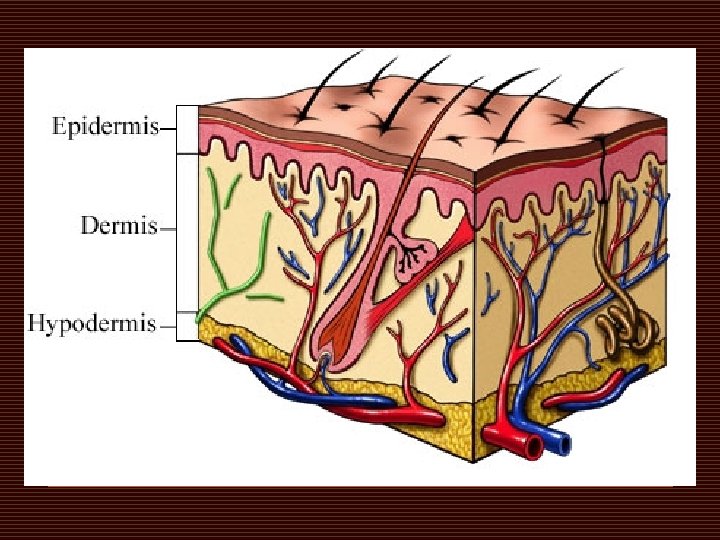
CLOSED WOUNDS o BRUISES n Develops when the body is bumped or hit. n Force of the blow damages the soft tissue layers beneath the skin, causing internal bleeding. n Blood and other fluids seep into the surrounding tissues, causing the area to change color and swell.
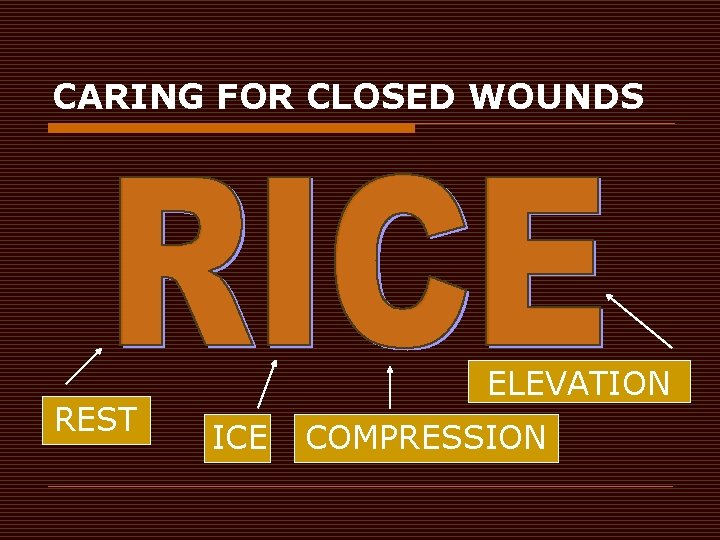
CARING FOR CLOSED WOUNDS REST ELEVATION ICE COMPRESSION
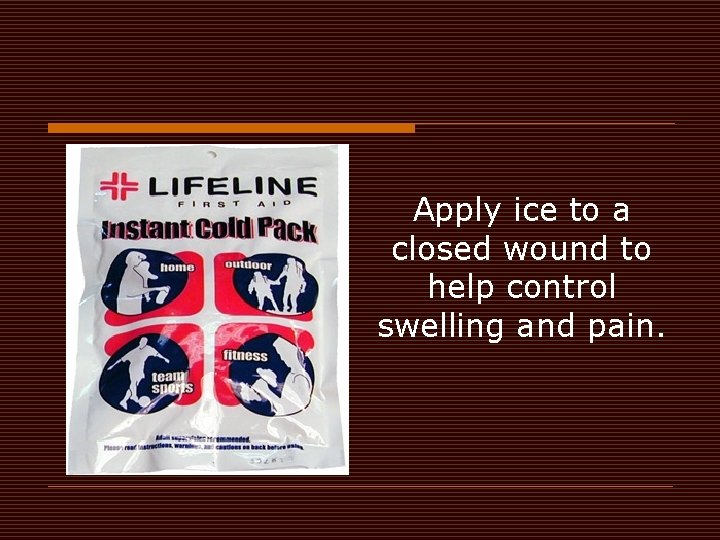
Apply ice to a closed wound to help control swelling and pain.
OPEN WOUNDS o In an open wound, the break in the skin can be as minor as a scrape of the surface layers, or as severe as a deep penetration. o The amount of bleeding depends on the location and severity of the injury. o There are 4 types.
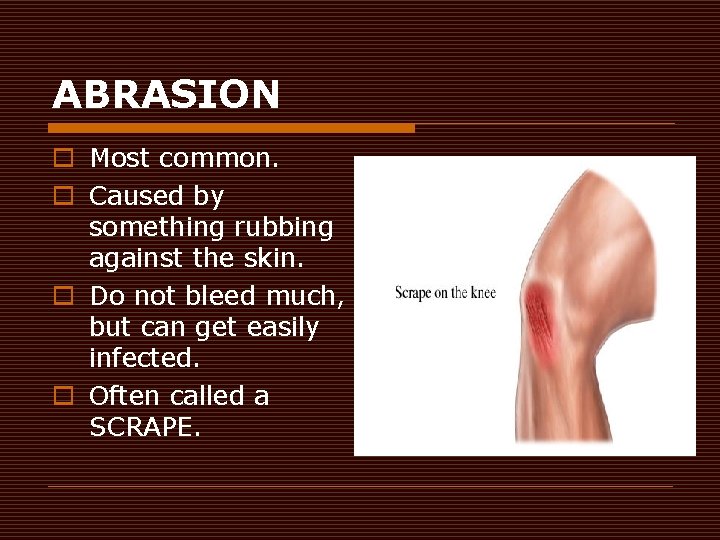
ABRASION o Most common. o Caused by something rubbing against the skin. o Do not bleed much, but can get easily infected. o Often called a SCRAPE.
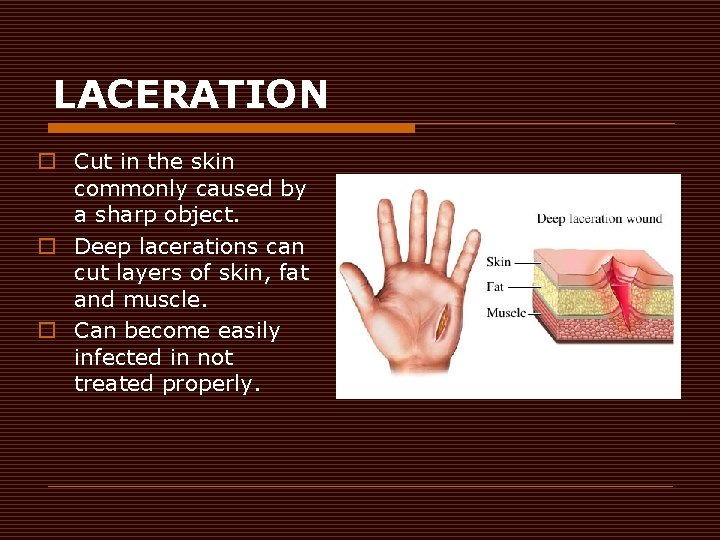
LACERATION o Cut in the skin commonly caused by a sharp object. o Deep lacerations can cut layers of skin, fat and muscle. o Can become easily infected in not treated properly.
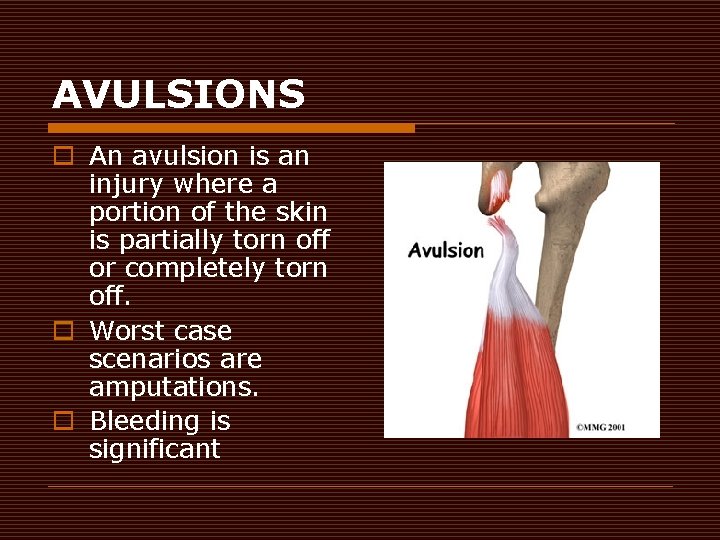
AVULSIONS o An avulsion is an injury where a portion of the skin is partially torn off or completely torn off. o Worst case scenarios are amputations. o Bleeding is significant
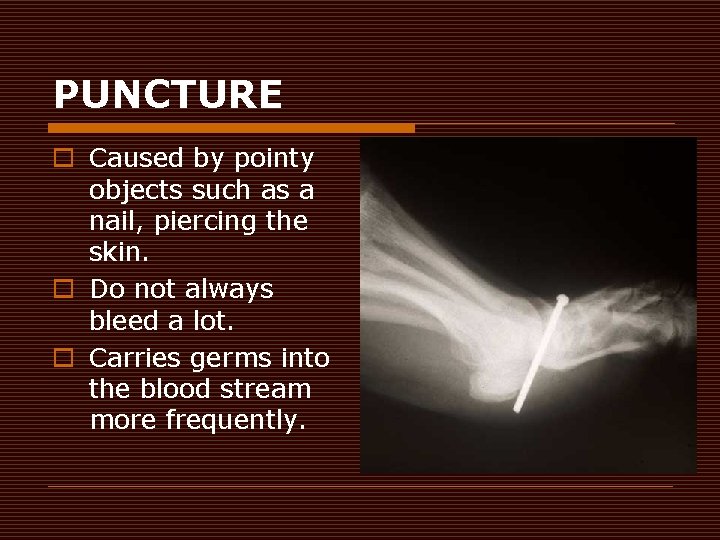
PUNCTURE o Caused by pointy objects such as a nail, piercing the skin. o Do not always bleed a lot. o Carries germs into the blood stream more frequently.
6 Steps to Controlling External Bleeding Check the scene, check the person. Obtain consent (put gloves on) Cover with a sterile dressing Apply direct pressure until bleeding stops. o Cover dressing with a bandage o If bleeding does not stop, apply more dressing, call 9 -1 -1. o o
SIGNALS OF INTERAL BLEEDING o Tender, swollen, bruised or hard area of the body. o Rapid, weak pulse o Skin that feels cool or moist or looks bluish. o Vomiting or coughing up blood. o Excessive thirst o Becoming confused, faint, drowsy or unconscious.

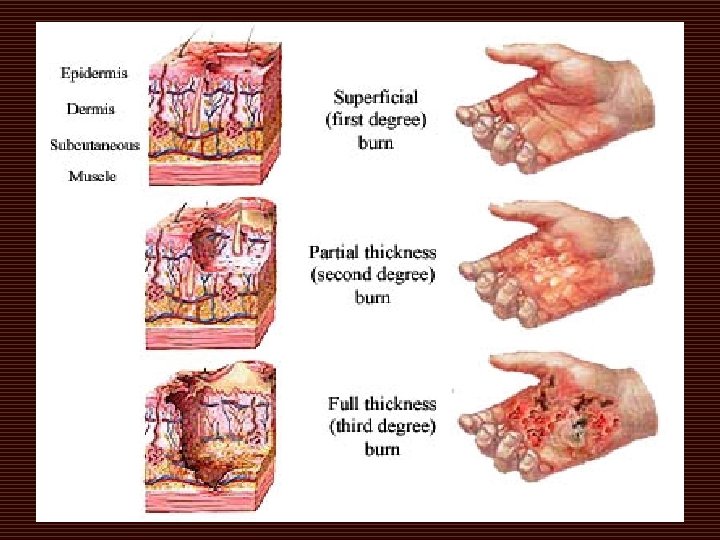
BURNS o Burns are classified by their sources: n Heat, chemicals, electricity, radiation o Also classified by depth: n Deeper the burn, worse it is. o Superficial (1 st Degree) o Partial Thickness (2 nd Degree) o Full Thickness (3 rd Degree)
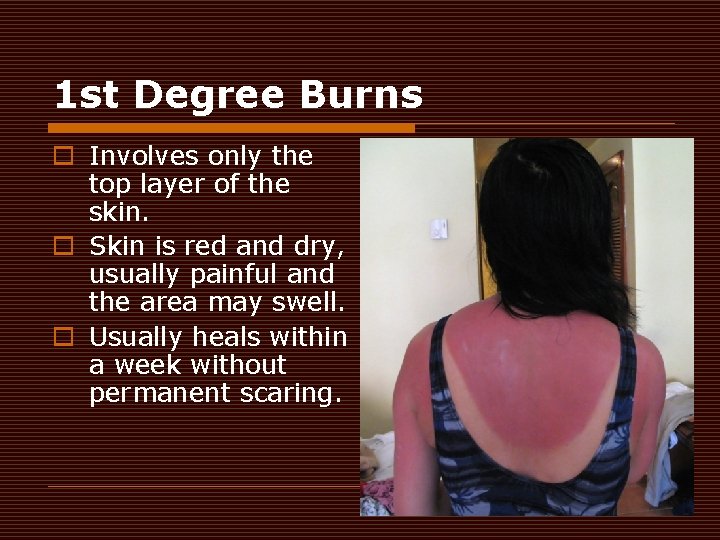
1 st Degree Burns o Involves only the top layer of the skin. o Skin is red and dry, usually painful and the area may swell. o Usually heals within a week without permanent scaring.
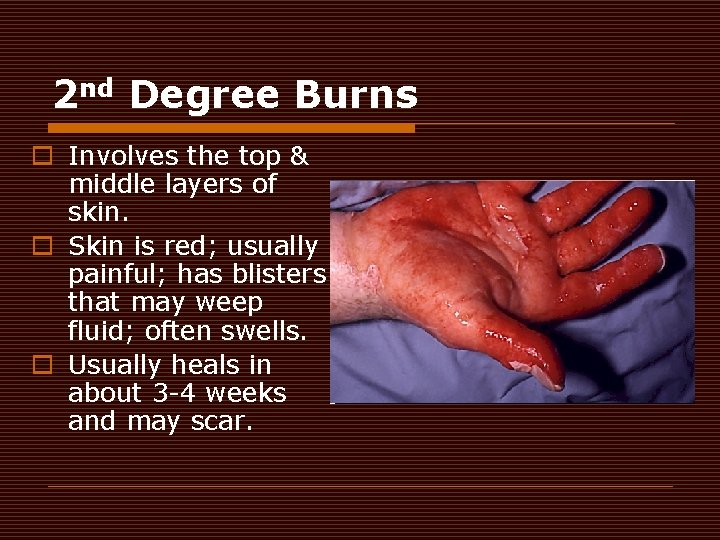
2 nd Degree Burns o Involves the top & middle layers of skin. o Skin is red; usually painful; has blisters that may weep fluid; often swells. o Usually heals in about 3 -4 weeks and may scar.
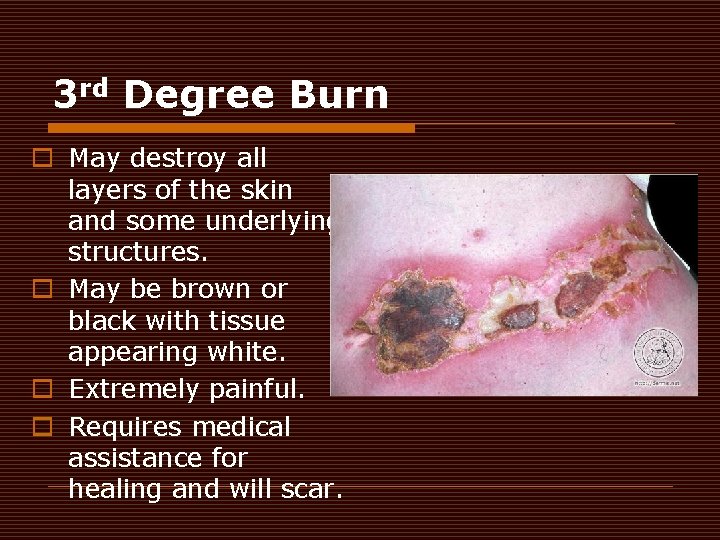
3 rd Degree Burn o May destroy all layers of the skin and some underlying structures. o May be brown or black with tissue appearing white. o Extremely painful. o Requires medical assistance for healing and will scar.
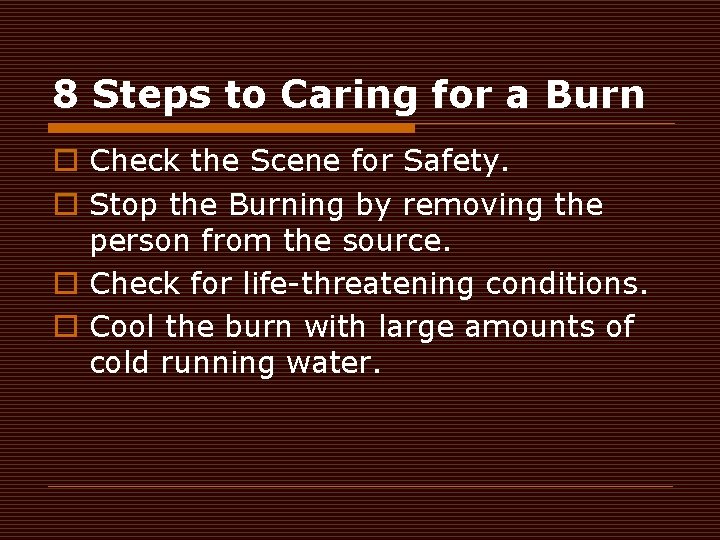
8 Steps to Caring for a Burn o Check the Scene for Safety. o Stop the Burning by removing the person from the source. o Check for life-threatening conditions. o Cool the burn with large amounts of cold running water.
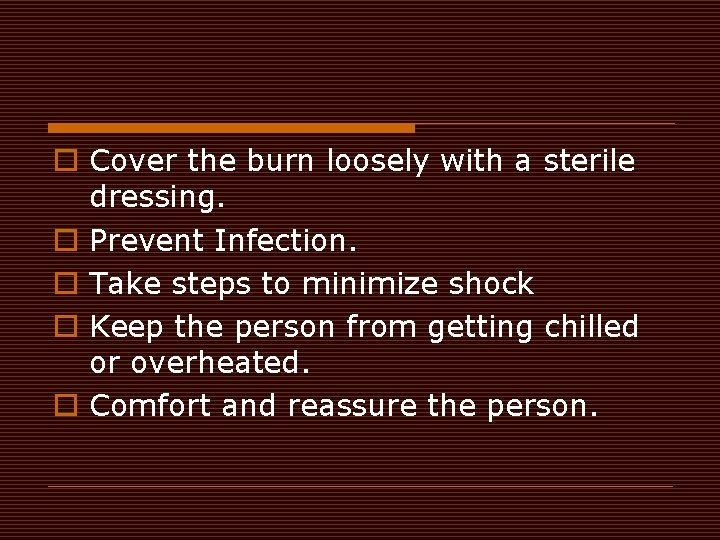
o Cover the burn loosely with a sterile dressing. o Prevent Infection. o Take steps to minimize shock o Keep the person from getting chilled or overheated. o Comfort and reassure the person.
- Slides: 21