
First Aid C P R Primary Assessment Check
- Slides: 22
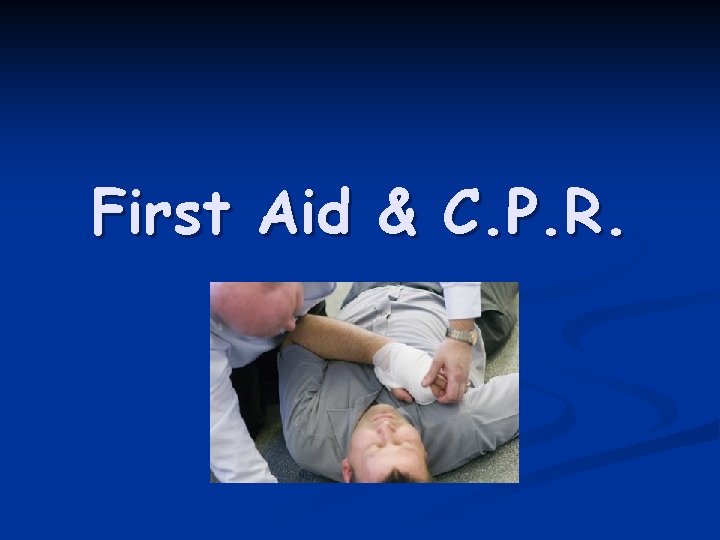
First Aid & C. P. R.
Primary Assessment Check for Immediate, Life Threatening Conditions. n Determine the condition of the victim and gather as much information as possible. n Check- the victim’s condition, Call- 911 or local EMS number, Care- for the victim. n
Check State of Consciousness Talk or shout to the victim. “Are you ok? ” n Ask the victim questions about how they are feeling. n Find out about painful areas. n Determine level of consciousness. Unconscious, semi-conscious, or alert and responsive. n
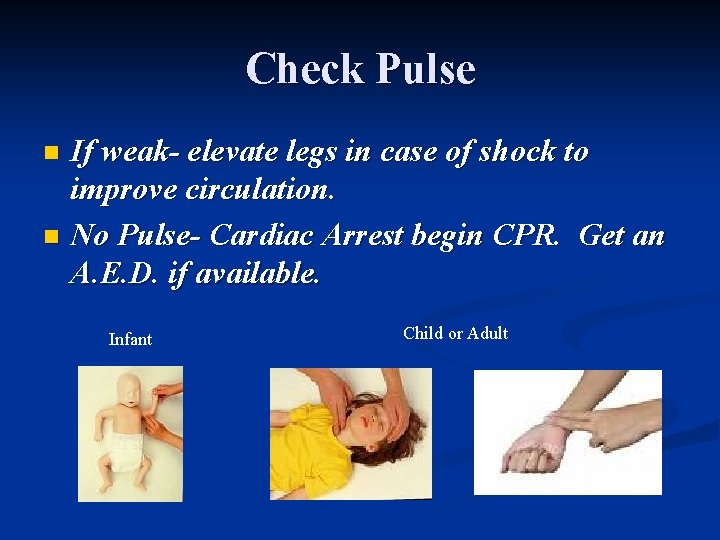
Check Pulse If weak- elevate legs in case of shock to improve circulation. n No Pulse- Cardiac Arrest begin CPR. Get an A. E. D. if available. n Infant Child or Adult
What does A. E. D. stand for? Automatic External Defibrillator When do you use an A. E. D. ? When the victim does not have a pulse.
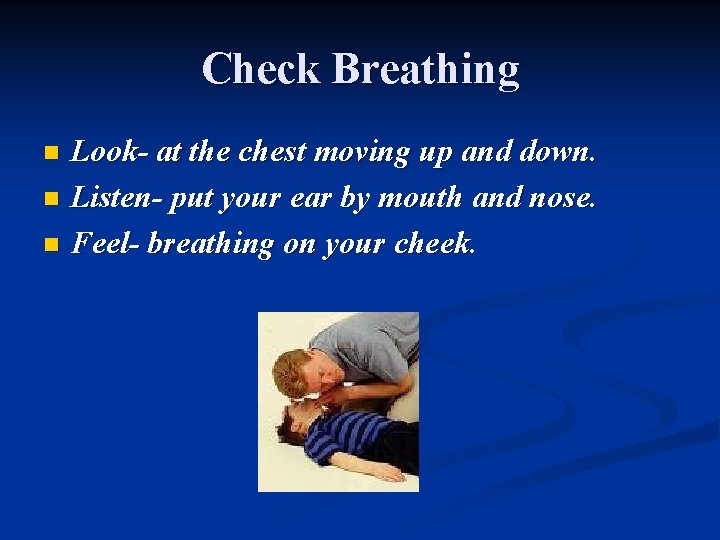
Check Breathing Look- at the chest moving up and down. n Listen- put your ear by mouth and nose. n Feel- breathing on your cheek. n
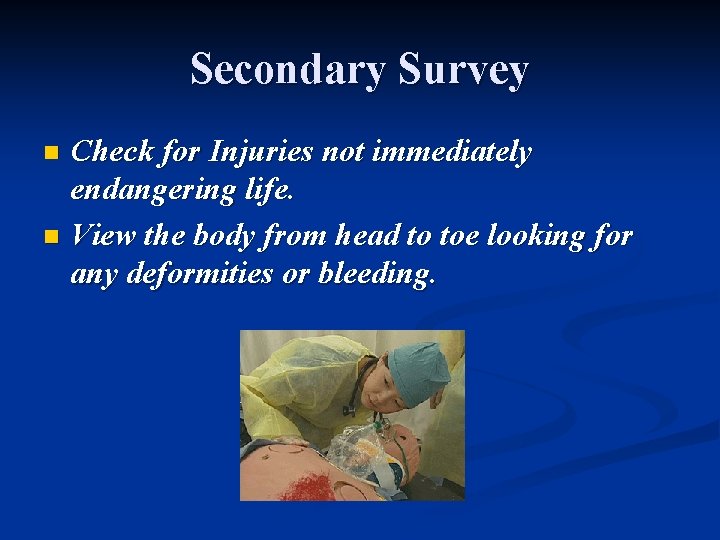
Secondary Survey Check for Injuries not immediately endangering life. n View the body from head to toe looking for any deformities or bleeding. n
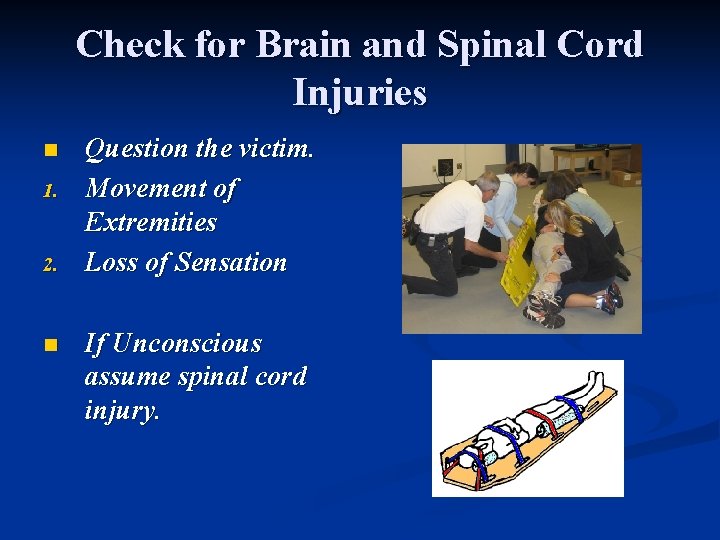
Check for Brain and Spinal Cord Injuries n 1. 2. n Question the victim. Movement of Extremities Loss of Sensation If Unconscious assume spinal cord injury.
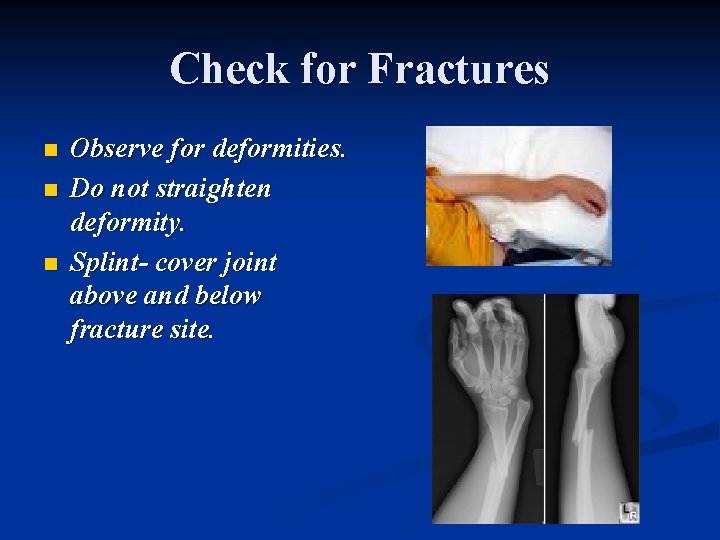
Check for Fractures n n n Observe for deformities. Do not straighten deformity. Splint- cover joint above and below fracture site.
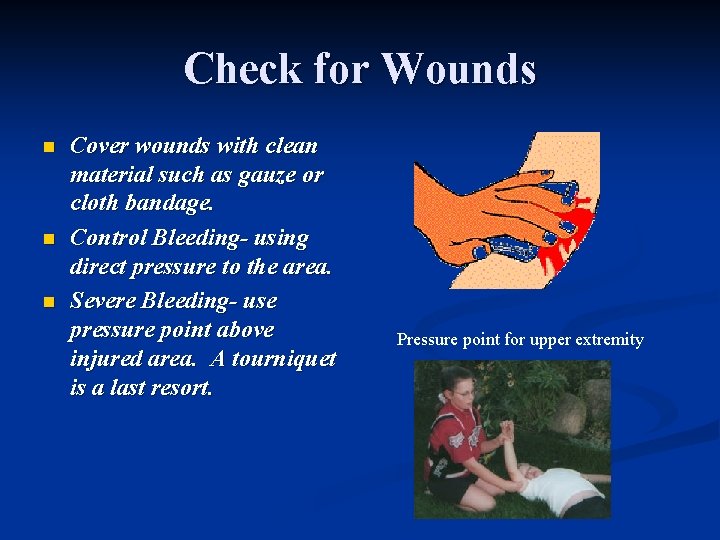
Check for Wounds n n n Cover wounds with clean material such as gauze or cloth bandage. Control Bleeding- using direct pressure to the area. Severe Bleeding- use pressure point above injured area. A tourniquet is a last resort. Pressure point for upper extremity
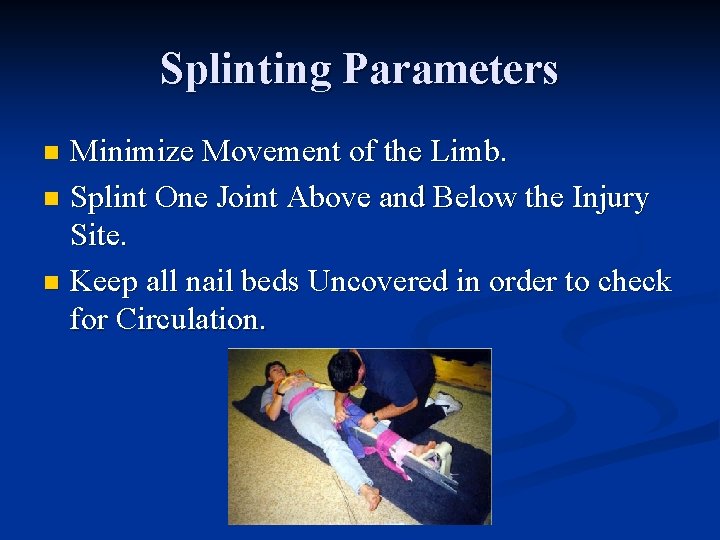
Splinting Parameters Minimize Movement of the Limb. n Splint One Joint Above and Below the Injury Site. n Keep all nail beds Uncovered in order to check for Circulation. n
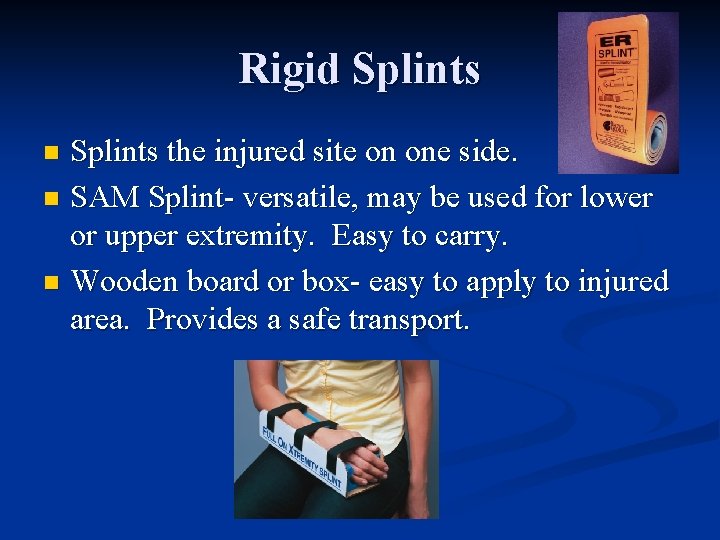
Rigid Splints the injured site on one side. n SAM Splint- versatile, may be used for lower or upper extremity. Easy to carry. n Wooden board or box- easy to apply to injured area. Provides a safe transport. n
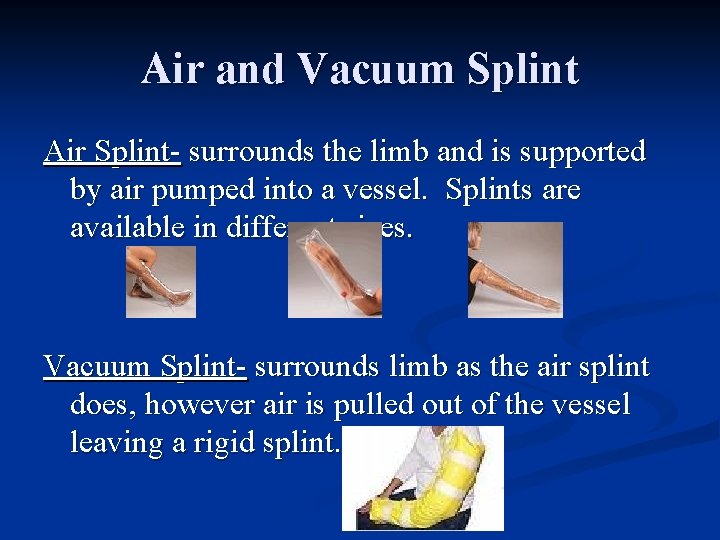
Air and Vacuum Splint Air Splint- surrounds the limb and is supported by air pumped into a vessel. Splints are available in different sizes. Vacuum Splint- surrounds limb as the air splint does, however air is pulled out of the vessel leaving a rigid splint.
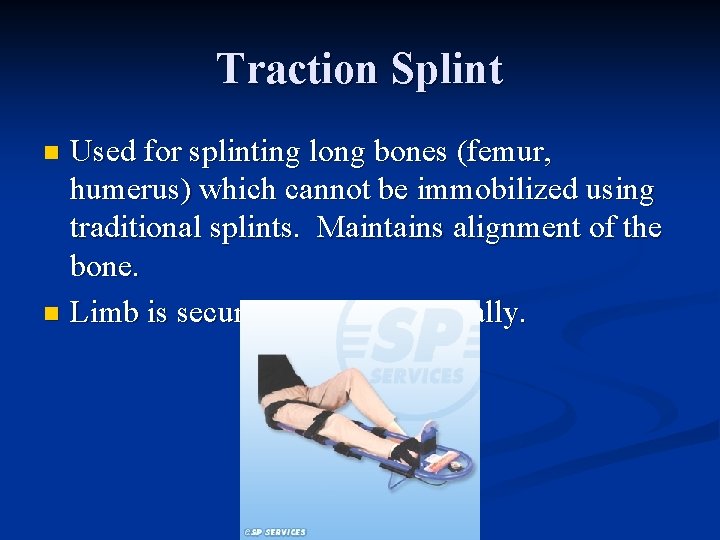
Traction Splint Used for splinting long bones (femur, humerus) which cannot be immobilized using traditional splints. Maintains alignment of the bone. n Limb is secured and pulled distally. n
Choking Emergency Universal sign of choking. Hands covering throat. n Ask “Are you choking? ” n If unconscious: Head tilt, chin lift, check for breathing and try to see the object inside throat. n If you can see the object use index finger and thumb to remove object. No finger sweep!! n
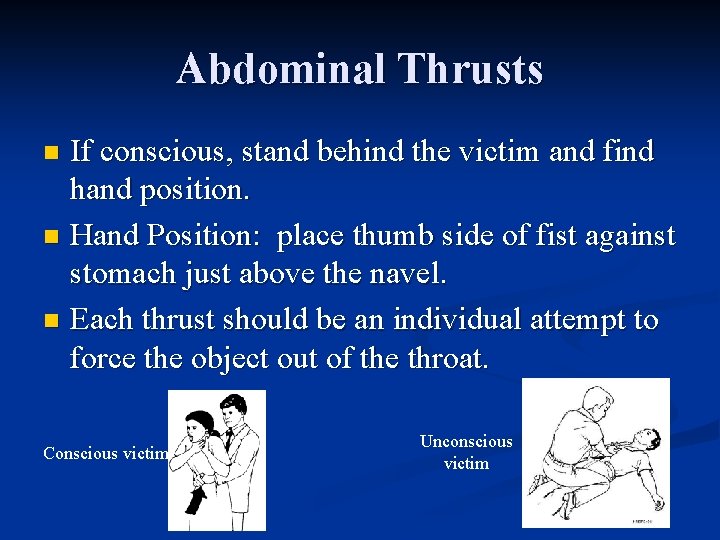
Abdominal Thrusts If conscious, stand behind the victim and find hand position. n Hand Position: place thumb side of fist against stomach just above the navel. n Each thrust should be an individual attempt to force the object out of the throat. n Conscious victim Unconscious victim
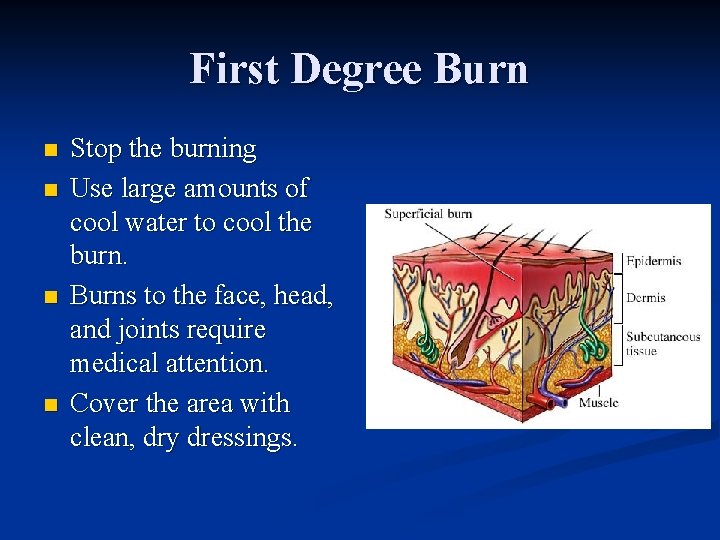
First Degree Burn n n Stop the burning Use large amounts of cool water to cool the burn. Burns to the face, head, and joints require medical attention. Cover the area with clean, dry dressings.
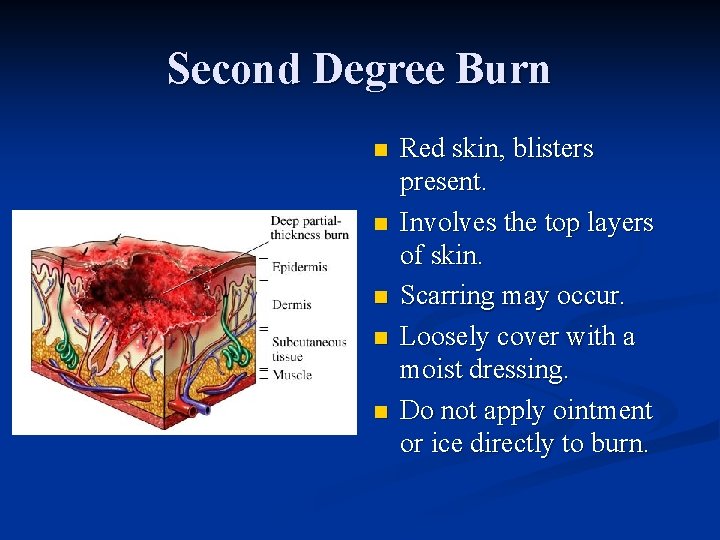
Second Degree Burn n n Red skin, blisters present. Involves the top layers of skin. Scarring may occur. Loosely cover with a moist dressing. Do not apply ointment or ice directly to burn.
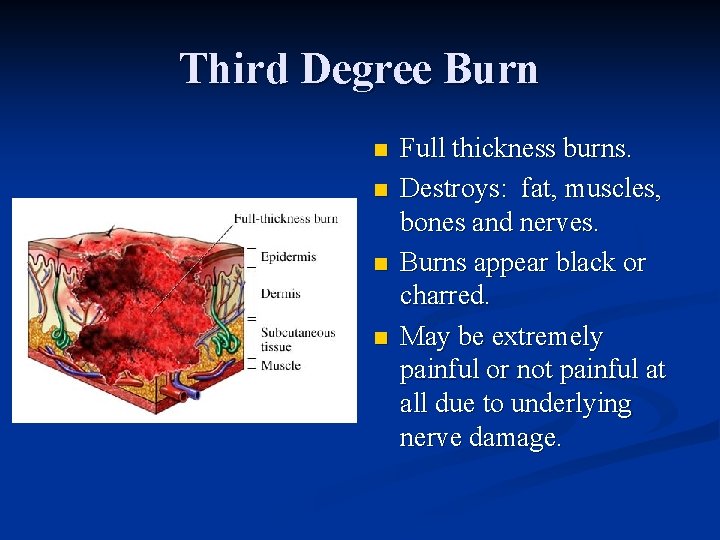
Third Degree Burn n n Full thickness burns. Destroys: fat, muscles, bones and nerves. Burns appear black or charred. May be extremely painful or not painful at all due to underlying nerve damage.
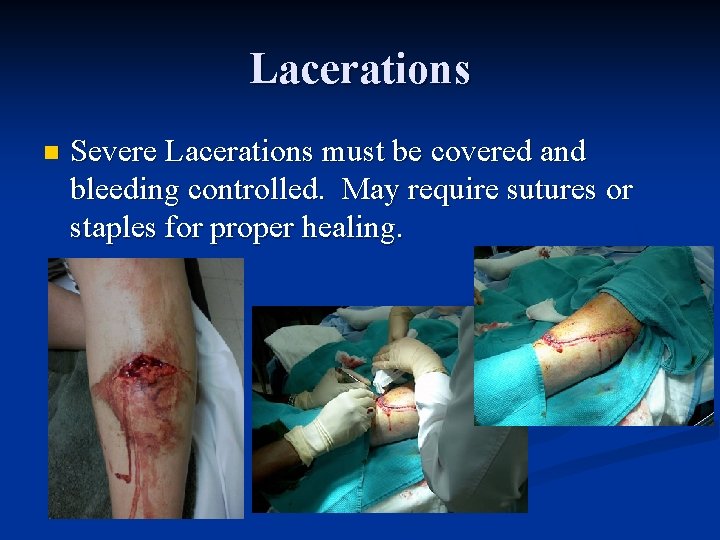
Lacerations n Severe Lacerations must be covered and bleeding controlled. May require sutures or staples for proper healing.
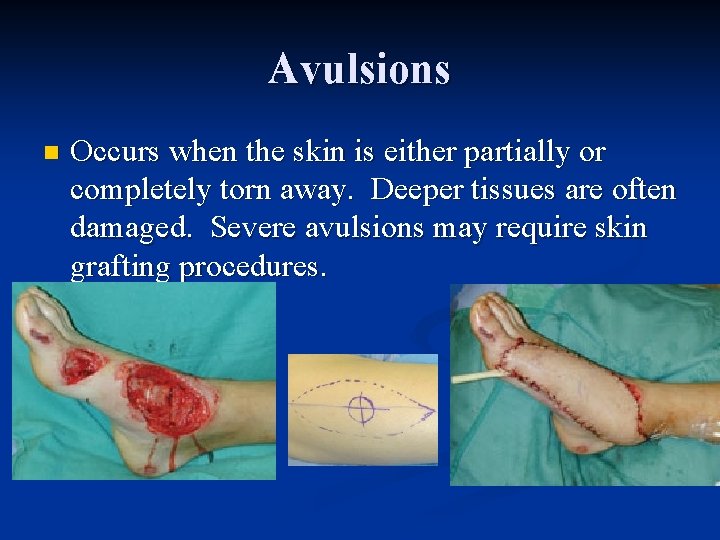
Avulsions n Occurs when the skin is either partially or completely torn away. Deeper tissues are often damaged. Severe avulsions may require skin grafting procedures.
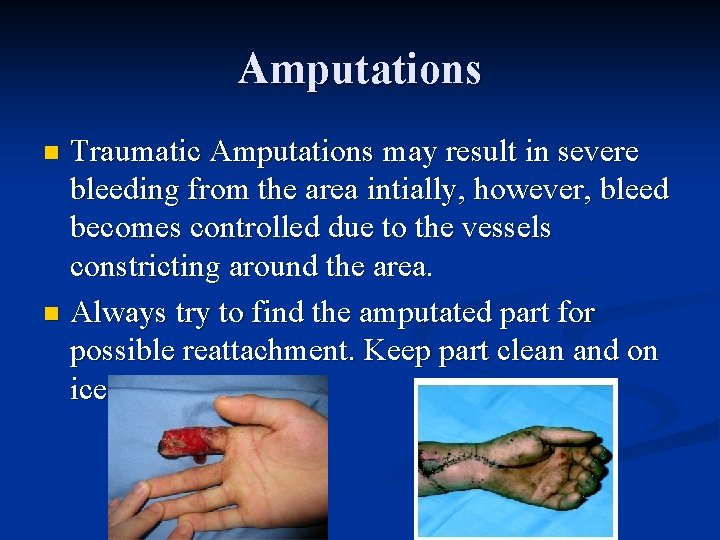
Amputations Traumatic Amputations may result in severe bleeding from the area intially, however, bleed becomes controlled due to the vessels constricting around the area. n Always try to find the amputated part for possible reattachment. Keep part clean and on ice n