
First 1000 Days of Life Window of Opportunity


- Slides: 19
First 1000 Days of Life – Window of Opportunity for Brain Development Sept 10, 2018 Karakoram International University, Gilgit – Baltistan Dr. Ghazala Rafique Aga Khan University
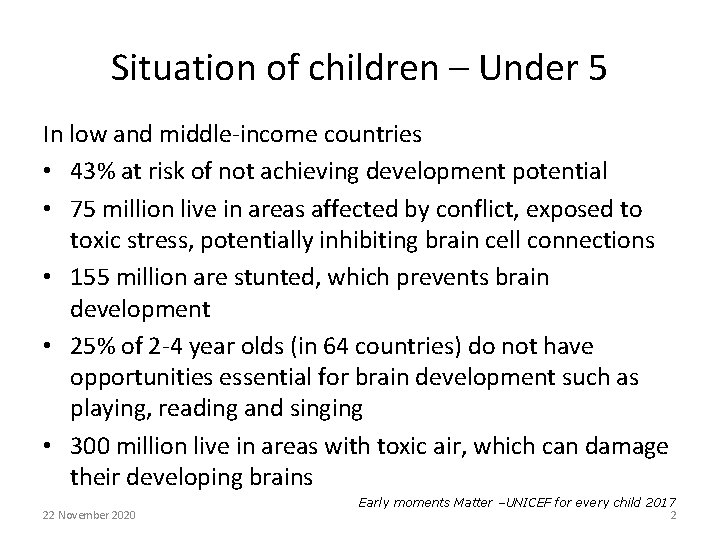
Situation of children – Under 5 In low and middle-income countries • 43% at risk of not achieving development potential • 75 million live in areas affected by conflict, exposed to toxic stress, potentially inhibiting brain cell connections • 155 million are stunted, which prevents brain development • 25% of 2 -4 year olds (in 64 countries) do not have opportunities essential for brain development such as playing, reading and singing • 300 million live in areas with toxic air, which can damage their developing brains 22 November 2020 Early moments Matter –UNICEF for every child 2017 2
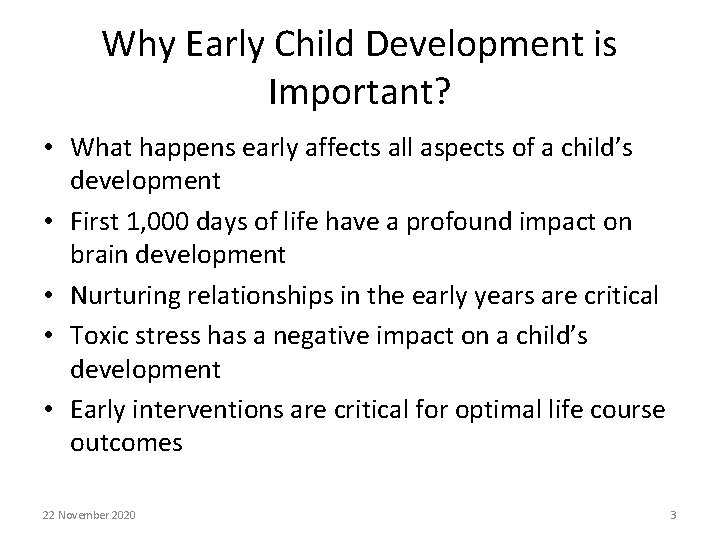
Why Early Child Development is Important? • What happens early affects all aspects of a child’s development • First 1, 000 days of life have a profound impact on brain development • Nurturing relationships in the early years are critical • Toxic stress has a negative impact on a child’s development • Early interventions are critical for optimal life course outcomes 22 November 2020 3
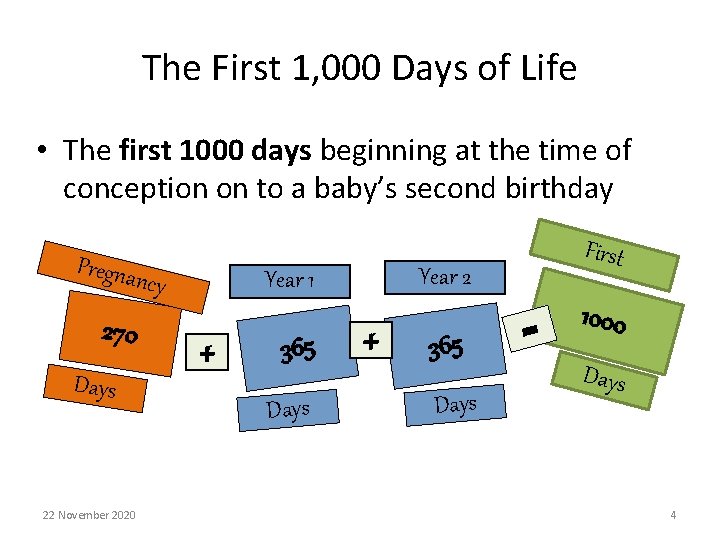
The First 1, 000 Days of Life • The first 1000 days beginning at the time of conception on to a baby’s second birthday Pregna n 270 Days 22 November 2020 Year 2 Year 1 cy + 365 Days First + 365 Days = 1000 Days 4
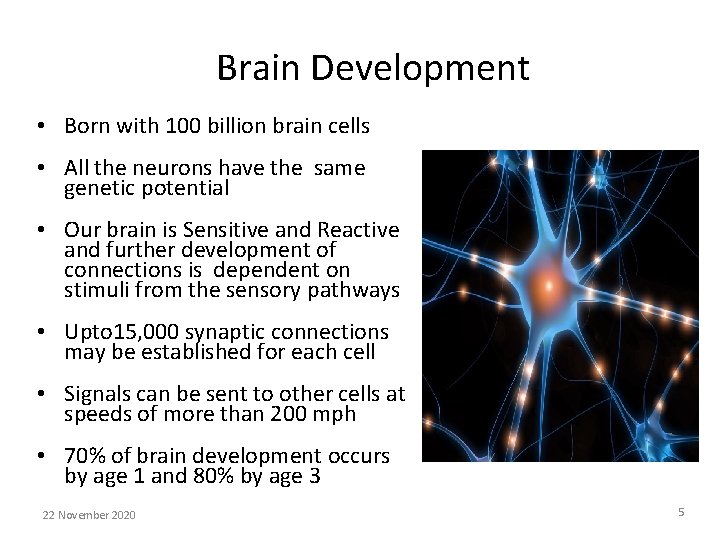
Brain Development • Born with 100 billion brain cells • All the neurons have the same genetic potential • Our brain is Sensitive and Reactive and further development of connections is dependent on stimuli from the sensory pathways • Upto 15, 000 synaptic connections may be established for each cell • Signals can be sent to other cells at speeds of more than 200 mph • 70% of brain development occurs by age 1 and 80% by age 3 22 November 2020 5
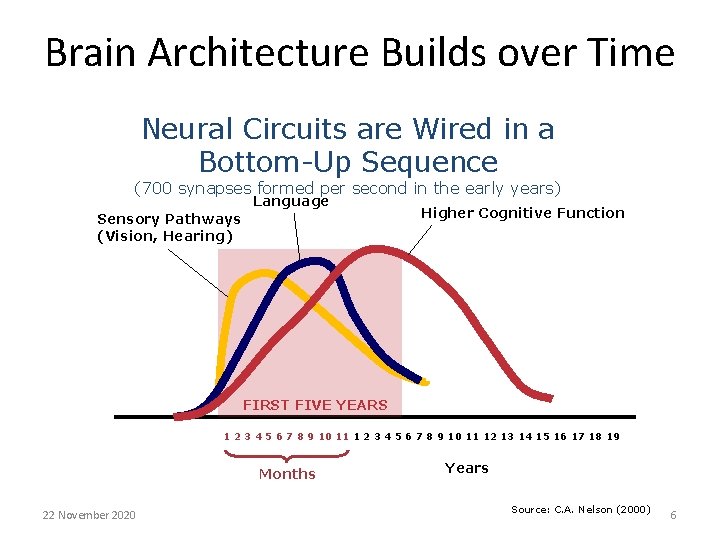
Brain Architecture Builds over Time Neural Circuits are Wired in a Bottom-Up Sequence (700 synapses formed per second in the early years) Language Sensory Pathways (Vision, Hearing) Higher Cognitive Function FIRST FIVE YEARS 1 2 3 4 5 6 7 8 9 10 11 12 13 14 15 16 17 18 19 Months 22 November 2020 Years Source: C. A. Nelson (2000) 6
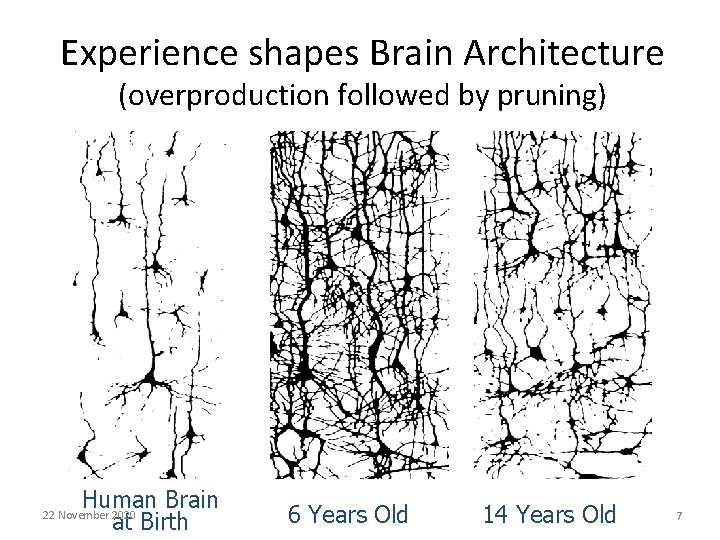
Experience shapes Brain Architecture (overproduction followed by pruning) Human Brain at Birth 22 November 2020 6 Years Old 14 Years Old 7
Experiences shape Brain Architecture Video. Experiences. Build. Brain. Architecture. m p 4 22 November 2020 8
‘Serve and Return’ Relationship • The interactive influences of genes and experience shape the developing brain • Brain development occurs through the brain’s active engagement in everyday experience • Major ingredient in the developmental process is the ‘Serve and Return’ interactions 22 November 2020 9
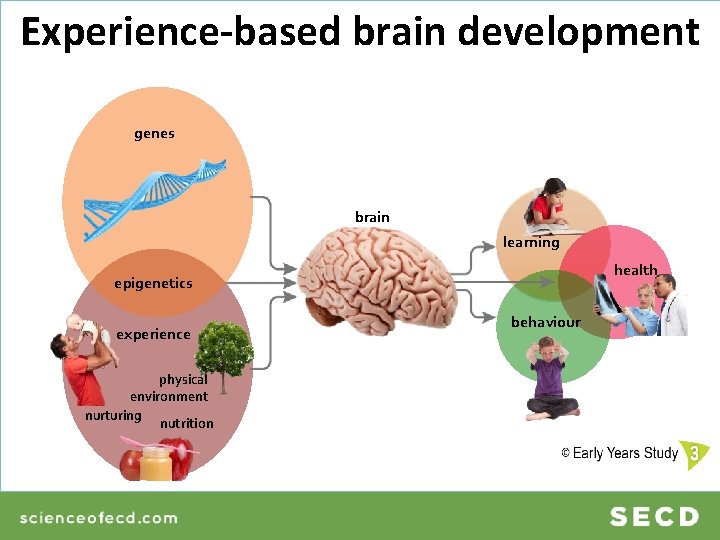
Experience-based brain development genes brain learning health epigenetics experience physical environment nurturing nutrition behaviour
The Plasticity of Brain Architecture Decreases over Time • Brain has more plasticity in early years and its capacity for change decreases with age • Accommodates a wide range of environments and interaction during early years • Early Plasticity makes the brain both more vulnerable to harm and more capable of recovery • Window of opportunity for different type of skills 22 November 2020 11
`Sensitive Periods’ in Early Brain Development School years “Pre-school” years High Sensitivity `Numbers’ Peer social skills Symbol Language Habitual ways of responding Emotional control Vision Hearing Adapted from Nash, 1997; Early Years Study, 1999; Shonkoff, 2000 Low 0 1 2 3 4 Years 5 6 7
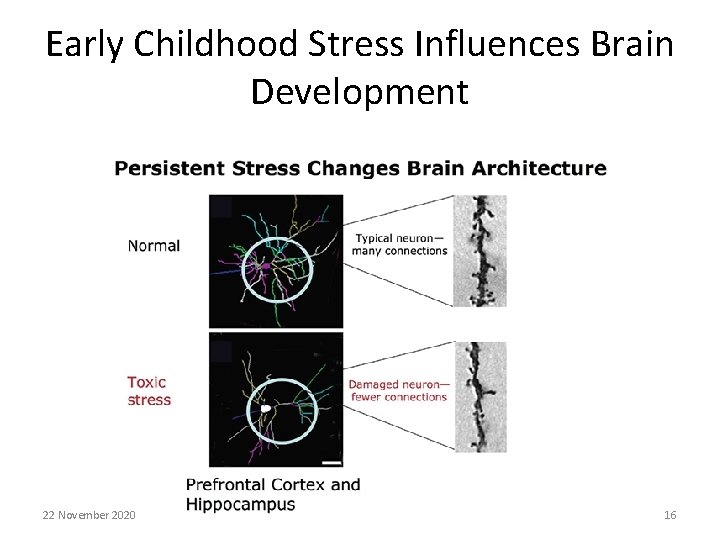
Neglect Impedes Brain Development • Limited exposure to language, touch or social interactions • Emotional or cognitive neglect • Physical Threat • Early, frequent and intense threat • Structural Changes – Lack of brain growth beyond effects of poor nutrition – Neuronal death beyond “pruning” 22 November 2020 13
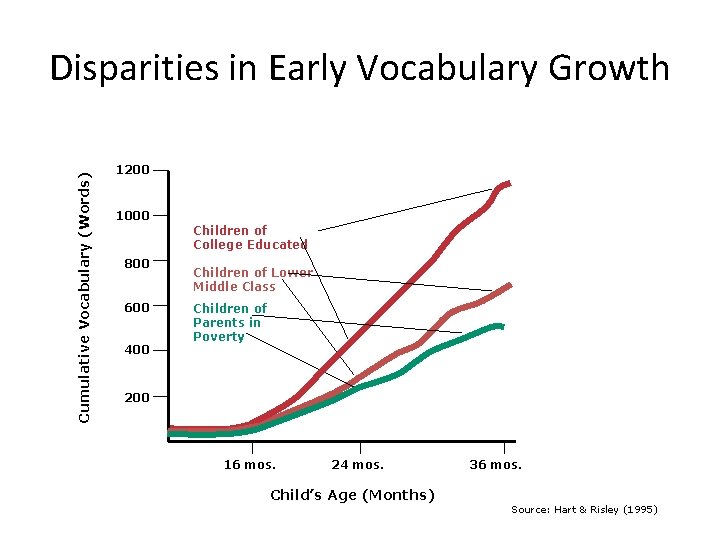
Cumulative Vocabulary (Words) Disparities in Early Vocabulary Growth 1200 1000 Children of College Educated 800 600 400 Children of Lower Middle Class Children of Parents in Poverty 200 16 mos. 24 mos. Child’s Age (Months) 36 mos. Source: Hart & Risley (1995)
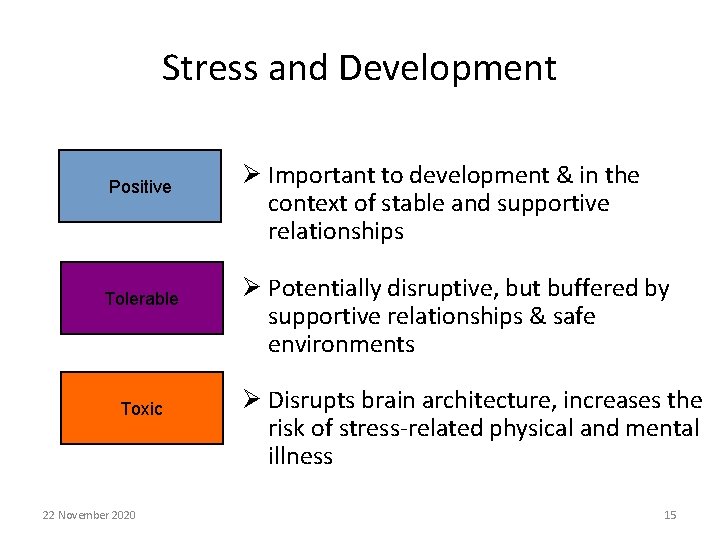
Stress and Development Positive Tolerable Toxic 22 November 2020 Ø Important to development & in the context of stable and supportive relationships Ø Potentially disruptive, but buffered by supportive relationships & safe environments Ø Disrupts brain architecture, increases the risk of stress-related physical and mental illness 15
Early Childhood Stress Influences Brain Development 22 November 2020 16
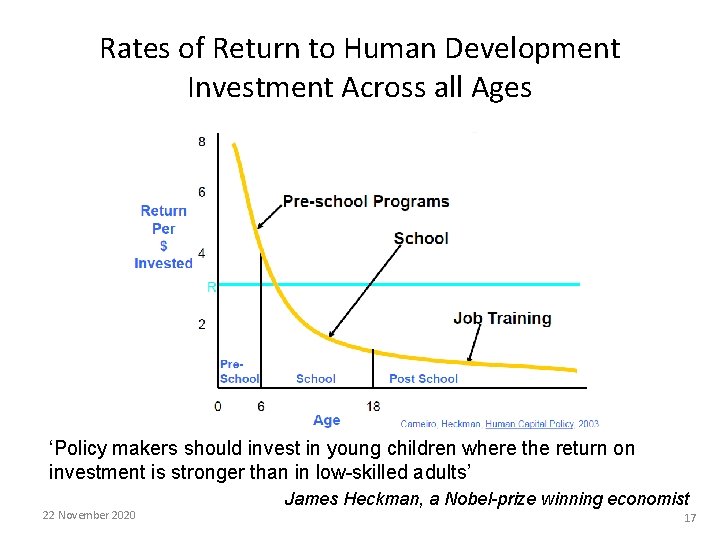
Rates of Return to Human Development Investment Across all Ages ‘Policy makers should invest in young children where the return on investment is stronger than in low-skilled adults’ 22 November 2020 James Heckman, a Nobel-prize winning economist 17
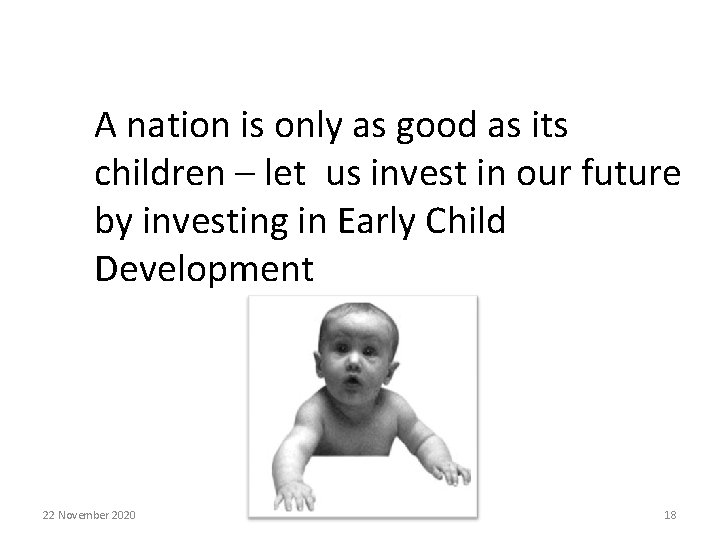
A nation is only as good as its children – let us invest in our future by investing in Early Child Development 22 November 2020 18
Thank you 22 November 2020 19