
FIRM BUT FLEXIBLE Components of Bone Powerpoint Adapted
FIRM BUT FLEXIBLE Components of Bone Powerpoint Adapted from materials provided by The University of Texas Health Science Center at San Antonio http: //teachhealthk-12. uthscsa. edu/curriculum/bones/bone 03 c-chickenbone. asp
OBJECTIVES By the end of this lab you should be able to: � Determine structure and function of skeleton and bones � Analyze the gross anatomy of bone and bone tissue
WHAT IS BONE? Bone is a LIVING TISSUE made up of three main components
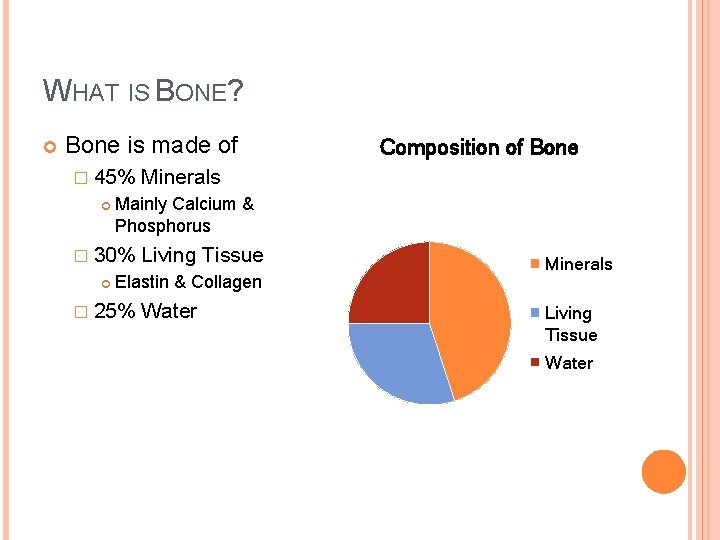
WHAT IS BONE? Bone is made of � 45% Minerals Mainly Calcium & Phosphorus � 30% Composition of Bone Living Tissue Elastin & Collagen � 25% Water Minerals Living Tissue Water
MINERALS The main minerals found in bone are CALCIUM and PHOSPHORUS There function is to provide RIGIDITY to the bones, or (make them HARD)

LIVING TISSUES The living tissues in the bone include � BLOOD VESSELS: which carry new blood cells, nutrients and wastes through the bones � Elastin: stretchy component of BONE and CARTILIDGE which allows the bone to BEND without breaking � COLLAGEN: new bone GROWTH, hardens with minerals
HOW BONES CHANGE. . . In young animals, bones are made of more PROTEIN As the animal ages, the collagen PROTEIN is hardened with MINERALS like calcium
WHAT WOULD HAPPEN. . . If an animal had a calcium deficiency when they were young?
WHAT WOULD HAPPEN. . . If an animal had a calcium deficiency when they were young? Their bones wouldn’t have enough calcium to harden (or maintain hardness) as they age
LAB MATERIALS Chicken Leg Bones Vinegar Bleach Scale Ruler Lab Worksheet
TEST #1: IDENTIFYING LIVING TISSUE We will be using a substance (VINEGAR) that will breakdown the MINERAL portions of the bone This process will result in only the LIVING TISSUES remaining The bone will become ________?

TEST #2: IDENTIFYING BONE MINERALS We will be using a substance (BLEACH) that will breakdown the SOFT TISSUE portions of the bone This process will result in only the MINERALS remaining The bone will become ________?
PROCEDURE Step 1: Take two chicken bones Step 2: Remove all fat and remaining meat Step 3: Weigh and measure each bone, record your findings on the lab worksheet Step 4: Label one jar VINEGAR and one jar BLEACH Step 5: Put one bone in each jar Step 6: Pour enough liquid in each respective jar to cover the bones

- Slides: 14