
Firefighter Life Safety Resource Kit Firefighter Life Safety

- Slides: 19
Firefighter Life Safety Resource Kit Firefighter Life Safety Initiatives Part II Make Everyday a Training Day…So that Everyone Goes Home c. 2006 NFFF
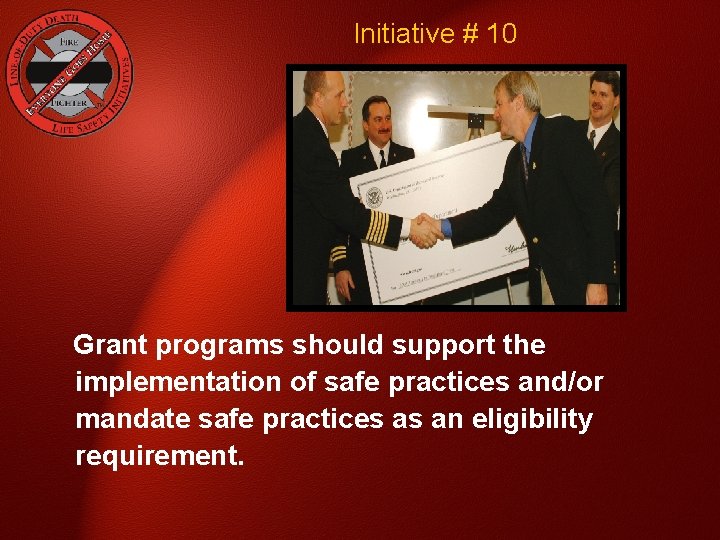
Initiative # 10 Grant programs should support the implementation of safe practices and/or mandate safe practices as an eligibility requirement.
What Initiative #10 Means There is grant money available for you to begin implementing the initiatives. Grants should, however, be tied to increasing safety measures. No safe practices/no grant. n If you ask for a grant to improve health and wellness, for example, recommendations should be made and implemented as a condition of future grants. n Take time to learn how to write grants professionally — beginning with the identification of granting sources.
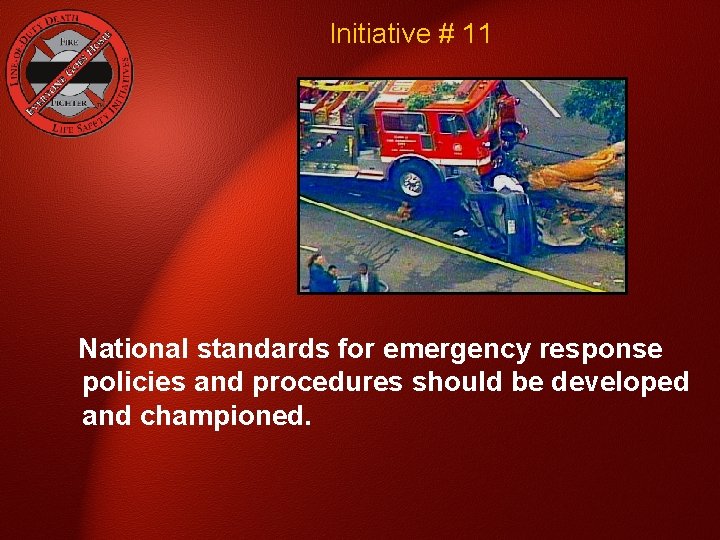
Initiative # 11 National standards for emergency response policies and procedures should be developed and championed.
What Initiative #11 Means National Standards for emergency response policies and procedures should be developed. At the local level, departments may have to increase response times to “arrive alive. ” n Help to adopt safe driving rules and enforce them. n Secure loose objects in cabs and on vehicles. n Respond to emergencies using emergency response SOPs; no red lights and sirens to routine calls. n Make sure all vehicles meet current safety standards. n MOST IMPORTANT: MANDATE SEAT BELT USE!
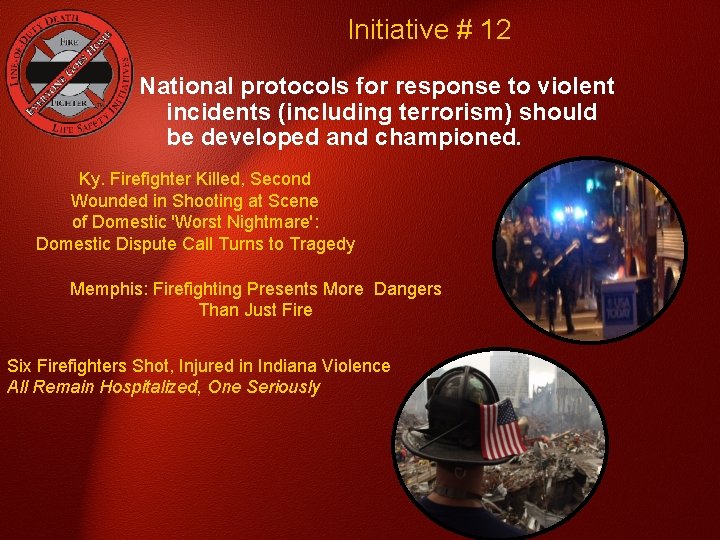
Initiative # 12 National protocols for response to violent incidents (including terrorism) should be developed and championed. Ky. Firefighter Killed, Second Wounded in Shooting at Scene of Domestic 'Worst Nightmare': Domestic Dispute Call Turns to Tragedy Memphis: Firefighting Presents More Dangers Than Just Fire Six Firefighters Shot, Injured in Indiana Violence All Remain Hospitalized, One Seriously
What Initiative #12 Means Fire and EMS workers deserve to have policies which will reduce their exposure to all threats of violence. n Promote policies to “stage” violence incident responses, removing the pressure to react immediately. SOPs should include “GO” and “No. GO” criteria. n Learn all you can about responding to terrorist incidents, regardless of your department’s size or proximity to predicted targets.
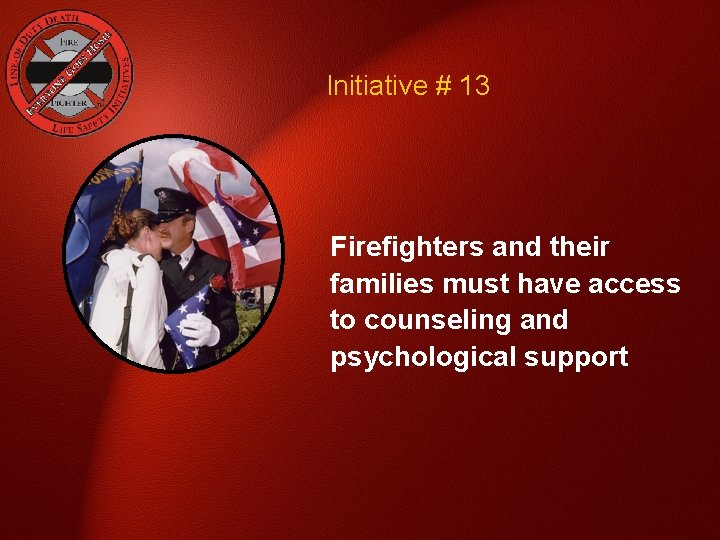
Initiative # 13 Firefighters and their families must have access to counseling and psychological support
What Initiative #13 Means Firefighting is a high-risk occupation which, from time to time, can put the employee and his or her family under extreme stress. They deserve access to mental health care. n If you are feeling stress (depression/anxiety or physical symptoms) seek help from physician, EAP counselors, religious or other sources. n Don’t “tough it out”; this could lead to bad results for you and your family. n Stress-awareness should be part of firefighter training at all levels. n Help a buddy you see struggling with stress-related problems.
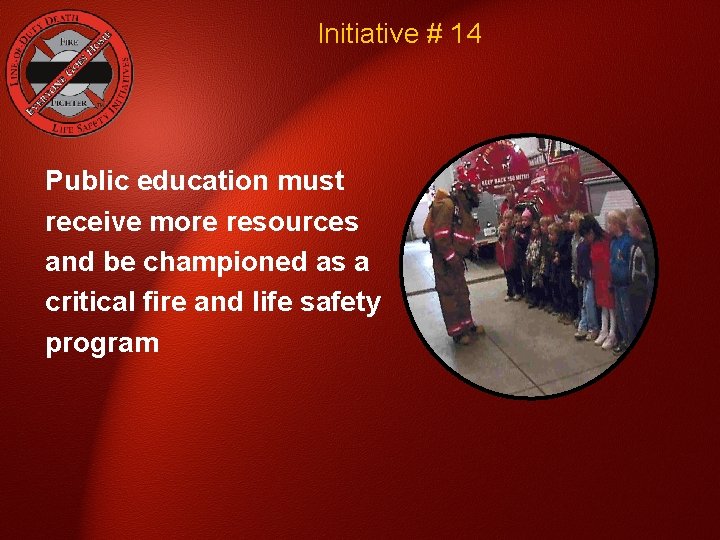
Initiative # 14 Public education must receive more resources and be championed as a critical fire and life safety program
What Initiative #14 Means Public Education is a responsibility of all fire service personnel. It should not be reserved for one week on October. Increased civilian awareness will decrease firefighter risks. n Make communicating the fire prevention message to the community a priority. n Utilize USFA resources and materials—they are free and excellent. n Become an ambassador for community safety in your church, children's’ schools, volunteer groups, etc. n Become an advocate for code adoption & enforcement.
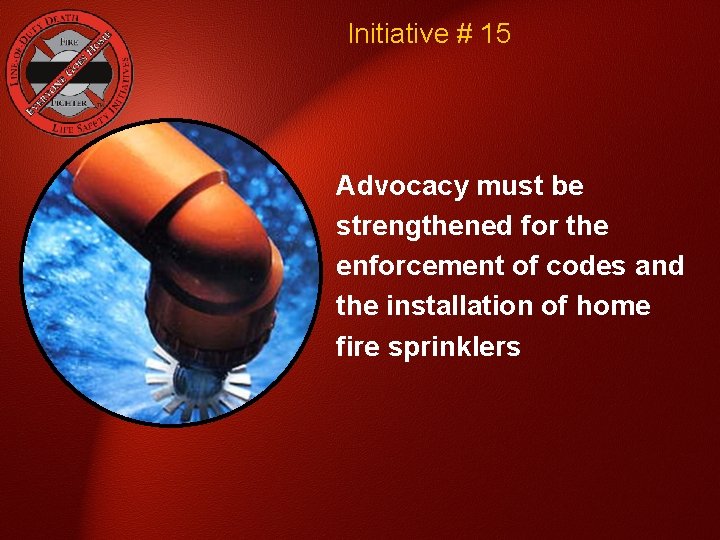
Initiative # 15 Advocacy must be strengthened for the enforcement of codes and the installation of home fire sprinklers
What Initiative #15 Means The widespread use of residential sprinklers will improve outcomes for civilians and decrease firefighter injuries and LODDs. n Ensure all firefighters understand how sprinkler systems operate and the value they bring to reducing Line of Duty Death’s. n Actively advocate for residential sprinkler laws and widespread adoption. n If you build a home, consider the installation of a sprinkler system—lead by example.
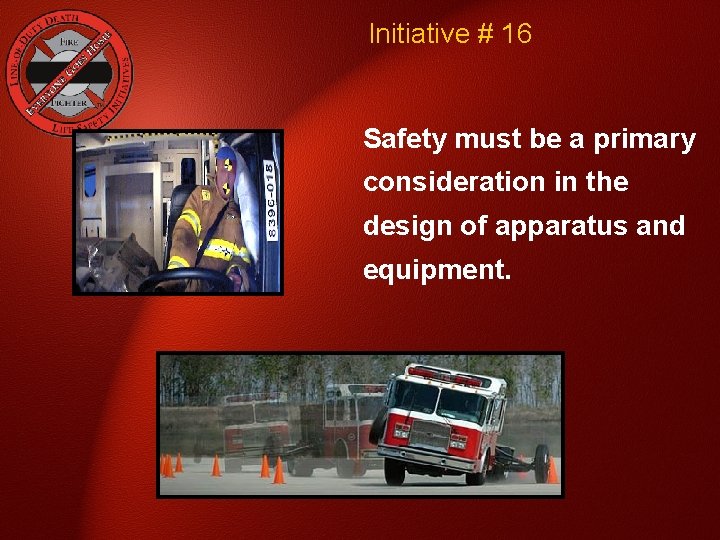
Initiative # 16 Safety must be a primary consideration in the design of apparatus and equipment.
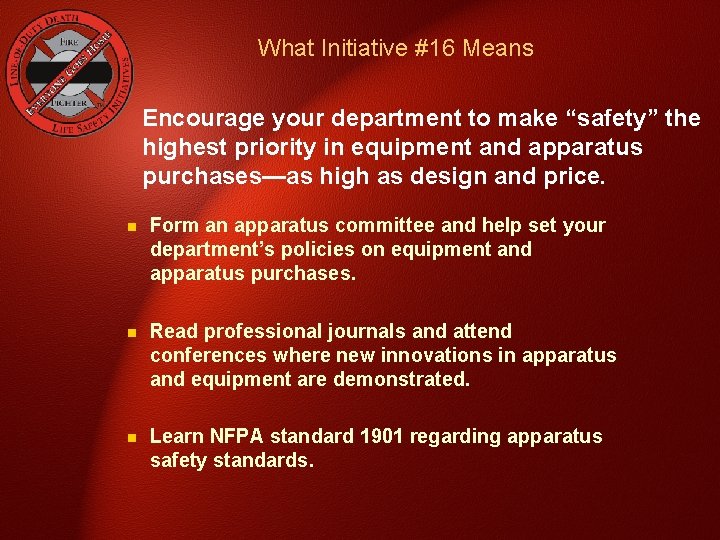
What Initiative #16 Means Encourage your department to make “safety” the highest priority in equipment and apparatus purchases—as high as design and price. n Form an apparatus committee and help set your department’s policies on equipment and apparatus purchases. n Read professional journals and attend conferences where new innovations in apparatus and equipment are demonstrated. n Learn NFPA standard 1901 regarding apparatus safety standards.
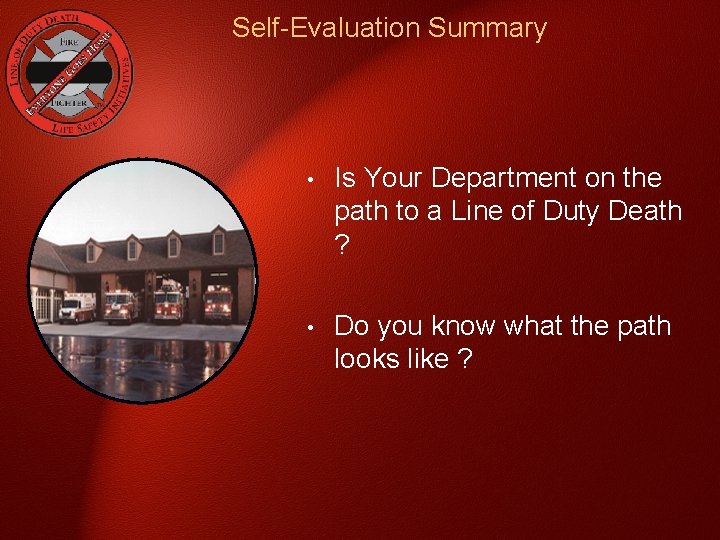
Self-Evaluation Summary • Is Your Department on the path to a Line of Duty Death ? • Do you know what the path looks like ?
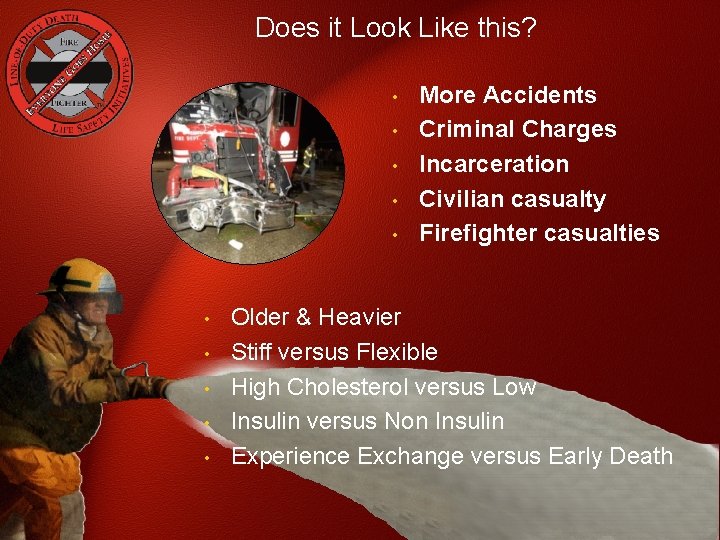
Does it Look Like this? • • • More Accidents Criminal Charges Incarceration Civilian casualty Firefighter casualties Older & Heavier Stiff versus Flexible High Cholesterol versus Low Insulin versus Non Insulin Experience Exchange versus Early Death
IF YOUR DEPARTMENT IS ON THE ROAD TO A LINE OF DUTY DEATH YOU CAN BEGIN TODAY TO CHANGE THE ROAD YOU’RE ON: n Watch the videos in the Firefighter Life Safety Resource Kit n Conduct an organizational assessment and implement changes n Encourage and reward positive changes toward safety
Make a Commitment TODAY… Become an ADVOCATE for the 16 FIREFIGHTER LIFE SAFETY INITIATIVES For more information on the Courage To Be Safe…So Everyone Goes Home program www. everyonegoeshome. com