
Firefighter II VENTILATION OBJECTIVES 2 11 1 Identify
Firefighter II VENTILATION

OBJECTIVES 2 -11. 1 Identify the definition and principles of ventilation and the considerations of proper ventilation (33. 10) 2 -11. 2 Identify the safety considerations and precautions to be taken while ventilating a structure. (33. 10, 3 -3. 11)
OBJECTIVES 2 -11. 3 Identify the advantages and disadvantages of the following types of ventilation: 2 -11. 3. 1 2 -11. 3. 2 2 -11. 3. 3 2 -11. 3. 4 2 -11. 3. 5 Vertical (3 -3. 11) Horizontal (3 -3. 10) Trench/strip (3 -3. 11) Mechanical (3 -3. 10) Mechanical pressurization/positive pressure ventilation (33. 10) 2 -11. 3. 6 Hydraulic (3 -3. 10)

OBJECTIVES 2 -11. 4 Identify the signs, causes and effects of backdraft explosions. (3 -3. 10) 2 -11. 5 Identify methods of preventing a backdraft explosion. (3 -3. 10) 2 -11. 6 Identify the characteristics of the following roof types: (3 -3. 10, 3 -3. 11)
OBJECTIVES 2 -11. 6. 1 2 -11. 6. 2 2 -11. 6. 3 2 -11. 6. 4 Flat Shed Pitched Arched 2 -11. 7 Identify the types of tools used during ventilation. (3 -3. 10)
OBJECTIVES 2 -11. 8 Identify the necessary precautions when ventilating the following roof types: 2 -11. 8. 1 2 -11. 8. 2 2 -11. 8. 3 2 -11. 8. 4 Flat Shed Pitched Arched
OBJECTIVES 2 -11. 9 Identify the procedures for the types of ventilation referred to in 2 -11. 3 (33. 10, 3 -3. 11) 2 -11. 9. 1 2 -11. 9. 2 2 -11. 9. 3 2 -11. 9. 4 2 -11. 9. 5 Vertical (3 -3. 11) Horizontal (3 -3. 10) Trench/strip (3 -3. 11) Mechanical (3 -3. 10) Mechanical pressurization/positive pressure ventilation (33. 10) 2 -11. 9. 6 Hydraulic (3 -3. 10)
OBJECTIVES 2 -11. 10 Identify how the following factors are used to determine the integrity of a roof system: (3 -3. 10, 3 -3. 11) 2 -11. 10. 1 2 -11. 10. 2 2 -11. 10. 3 Construction Visual observation Elapsed time of fire Identify the procedures for opening various types of windows from inside and outside with the use of tools. (3 -3. 10)
OBJECTIVES 2 -11. 12 Identify the procedures for opening various types of windows from inside and outside without the use of tools. (3 -3. 10) 2 -11. 13 Identify the procedures for breaking window or door glass and removing obstructions. (3 -3. 10) 2 -11. 14 Identify ventilation using water fog. (3 -3. 10, 3 -3. 11)
OBJECTIVES 2 -11. 15 Demonstrate opening various types of windows from inside and outside with the use of tools. (3 -3. 10(b)) 2 -11. 16 Demonstrate opening various types of windows from inside and outside without the use of tools (33. 10(b))
OBJECTIVES 2 -11. 17 Demonstrate breaking window or door glass and removing obstructions. (3 -3. 10(b)) 2 -11. 18 Demonstrate the removal of skylights, scuttle covers, and other roof openings. (3 -3. 10(b)) 2 -11. 19 Demonstrate ventilation using water fog. (3 -3. 10(b)), (3 -3. 11(b))
OBJECTIVES 2 -11. 20 Demonstrate determining the integrity of a roof system by sounding. (33. 11(b)) 2 -11. 21 Demonstrate the ventilation of a flat roof using both hand tools and power tools. (3 -3. 11(b)) 2 -11. 22 Demonstrate the ventilation of a pitched roof using both hand tools and power tools.
OBJECTIVES 2 -11. 23 Demonstrate floor ventilation procedures. (3 -3. 11(b)) 2 -11. 24 Demonstrate the use of positive pressure ventilation. (3 -3. 11(b)) - Ifsta, Essentials, 4 th ed, Chapter 10 - Delmar, Firefighter’s Handbook, copyright 2000, Chapter 18
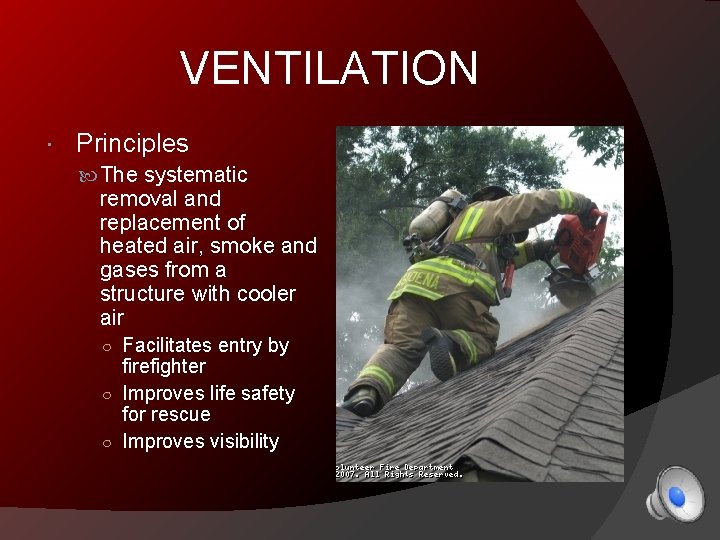
VENTILATION Principles The systematic removal and replacement of heated air, smoke and gases from a structure with cooler air ○ Facilitates entry by firefighter ○ Improves life safety for rescue ○ Improves visibility

VENTILATION Considerations Roof type ○ Flat ○ Arched ○ Pitched Type of building involved Location of the fire Duration of the fire Extent of the fire Existing roof openings

VENTILATION Safety of personnel ○ Wear full protective clothing with SCBA ○ Charged hoseline in place Possibility of fire spread

TYPES Vertical Horizontal
SAFETY CONSIDERATIONS Vertical ventilation Observe the wind direction in relation to exposures. Work with the wind to your back or side. Note the existence of obstructions or excessive weight on the roof. Provide a secondary means of escape. Exercise care in making the opening so the main structural supports are not cut. Guard the opening to prevent personnel from falling into the building.
SAFETY CONSIDERATIONS Evacuate the roof when ventilation work is complete. Use lifelines, roof ladders, or other means to protect personnel from sliding and falling off the roof. Exercise caution in working around electric wires or guy wires. Ensure that all personnel working on the roof are wearing complete protective clothing, including SCBA.

SAFETY CONSIDERATIONS Keep other firefighters out of the range of the axe. Caution axe users to beware of overhead obstructions. Start power tools on the ground to ensure operation. Shut power tools off before carrying them up a ladder. Make sure the angle of the cut is not toward you.
SAFETY CONSIDERATIONS Extend ladders at least five rungs above the roof line. “Sound” the roof for structural integrity before stepping on it. Use supporting members of the structure for travel. When using a roof ladder, make sure it is firmly secured to the peak of the roof before using it. Work in groups of two, with no more people than absolutely necessary.
SAFETY CONSIDERATIONS Be aware of the following warning signs of an unsafe roof condition: ○ Melting asphalt ○ “Spongy” roof ○ Smoke coming from the roof ○ Fire coming from the roof Horizontal ventilation Open the door or window on the leeward side of the building first. Do not obstruct the ventilation openings. Watch for fire extension.
SAFETY CONSIDERATIONS Mechanical Forced ○ Prevents smoke from churning in the opening. ○ Avoid blockage of the intake side of the ejector. Mechanical pressurization/positive pressure Caution: Improper application of positive pressure ventilation may increase fire spread and the safety hazards. Do not block openings For greatest efficiency, exhaust opening should be 75% to 150% intake opening.
SAFETY CONSIDERATIONS Negative Place to exhaust is in same direction as the natural wind Watch for churning action at the exhaust opening Remove all obstacles to the airflow; i. e. screens Keep airflow in as straight a line as possible
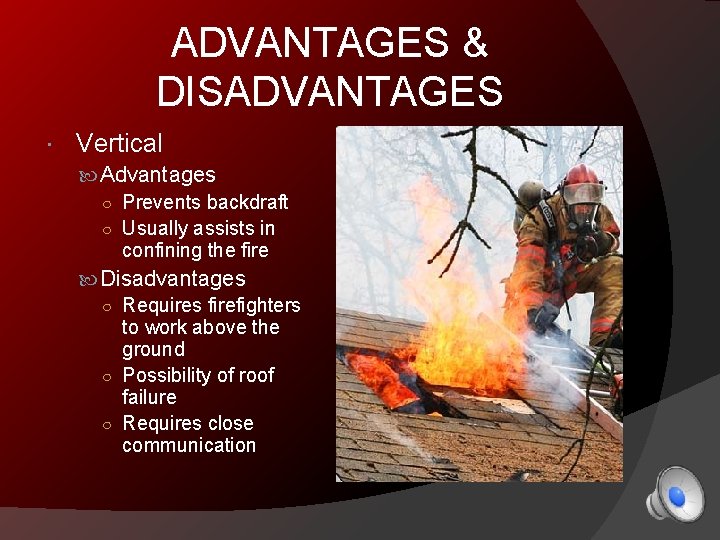
ADVANTAGES & DISADVANTAGES Vertical Advantages ○ Prevents backdraft ○ Usually assists in confining the fire Disadvantages ○ Requires firefighters to work above the ground ○ Possibility of roof failure ○ Requires close communication
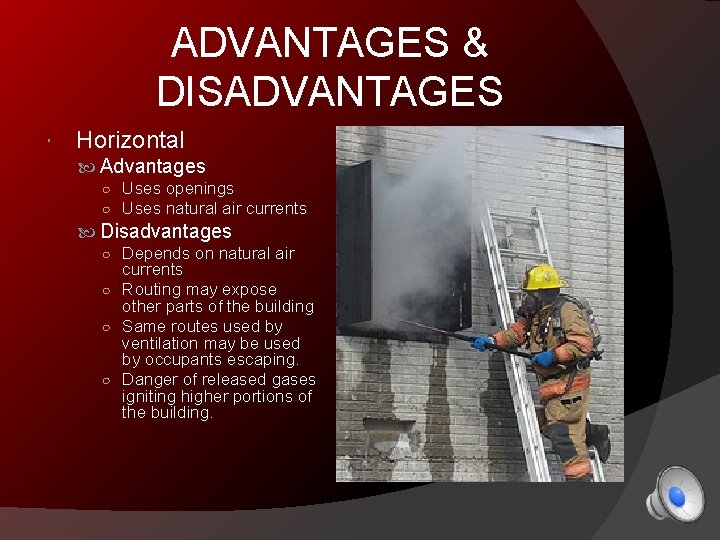
ADVANTAGES & DISADVANTAGES Horizontal Advantages ○ Uses openings ○ Uses natural air currents Disadvantages ○ Depends on natural air currents ○ Routing may expose other parts of the building ○ Same routes used by ventilation may be used by occupants escaping. ○ Danger of released gases igniting higher portions of the building.
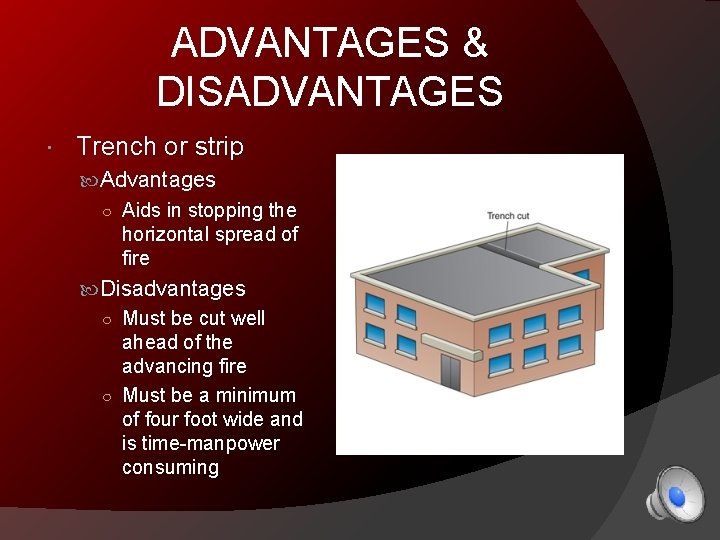
ADVANTAGES & DISADVANTAGES Trench or strip Advantages ○ Aids in stopping the horizontal spread of fire Disadvantages ○ Must be cut well ahead of the advancing fire ○ Must be a minimum of four foot wide and is time-manpower consuming
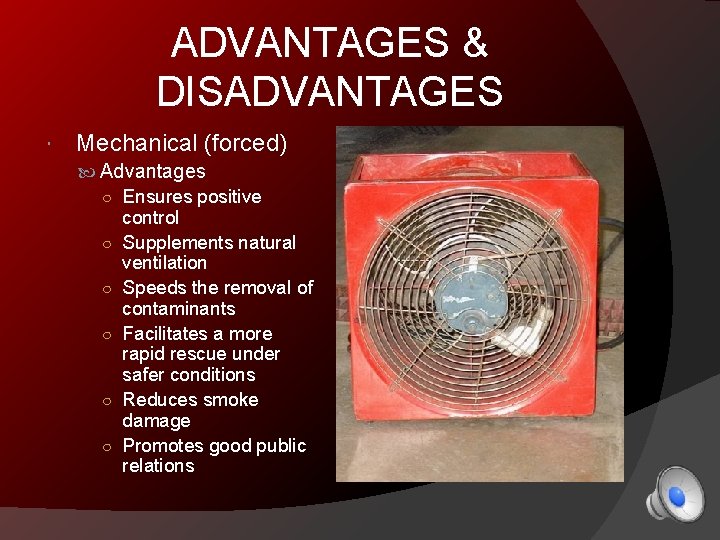
ADVANTAGES & DISADVANTAGES Mechanical (forced) Advantages ○ Ensures positive control ○ Supplements natural ventilation ○ Speeds the removal of contaminants ○ Facilitates a more rapid rescue under safer conditions ○ Reduces smoke damage ○ Promotes good public relations
ADVANTAGES & DISADVANTAGES Disadvantages ○ Introduction of air can cause the fire to intensify and spread ○ Dependent upon a power source ○ Requires special equipment
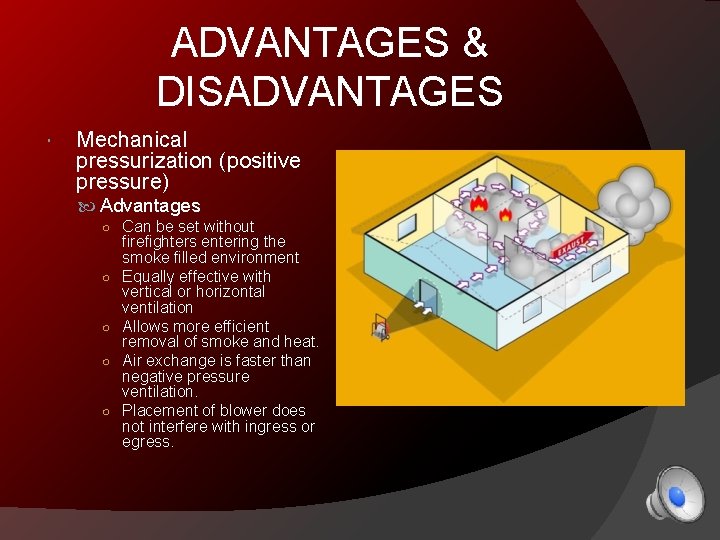
ADVANTAGES & DISADVANTAGES Mechanical pressurization (positive pressure) Advantages ○ Can be set without ○ ○ firefighters entering the smoke filled environment Equally effective with vertical or horizontal ventilation Allows more efficient removal of smoke and heat. Air exchange is faster than negative pressure ventilation. Placement of blower does not interfere with ingress or egress.
ADVANTAGES & DISADVANTAGES ○ Cleaning and maintenance of blowers usually reduced. ○ System applicable to all types of structures. ○ Heat and smoke may be directed away from unburned areas or paths of exit Disadvantages ○ May intensify and spread hidden fire. ○ Gas power may increase CO 2 levels in building. ○ Noise affects communications. ○ Control of openings and pressure leaks. Caution: Prior to using PPV, firefighters must be property trained and aware that if used improperly, it can intensify and spread fire conditions. Refer to the PPV fan manufacturer; s training program.
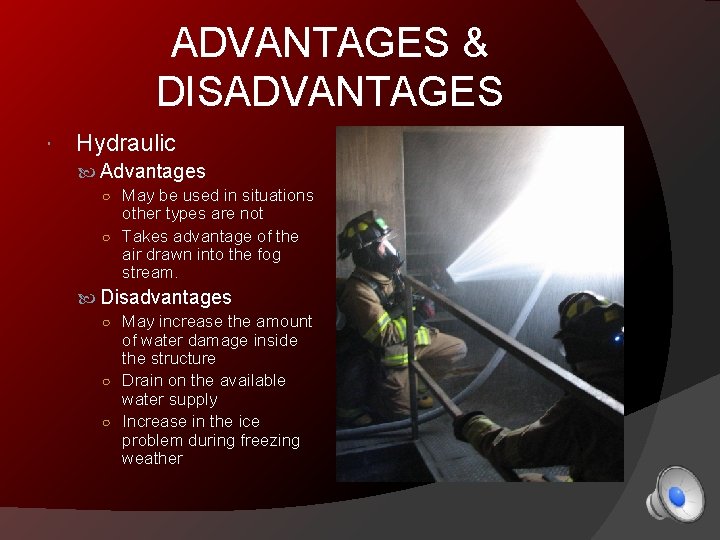
ADVANTAGES & DISADVANTAGES Hydraulic Advantages ○ May be used in situations other types are not ○ Takes advantage of the air drawn into the fog stream. Disadvantages ○ May increase the amount of water damage inside the structure ○ Drain on the available water supply ○ Increase in the ice problem during freezing weather
ADVANTAGES & DISADVANTAGES ○ Firefighters operating the nozzle must remain in the heated, contaminated area Remain aware of conditions around you; can intensify fire in surrounding area ○ Operation may be interrupted when crew goes for fresh SCBA bottles
SIGNS, CAUSES, & EFFECTS OF BACKDRAFT EXPLOSIONS Definition: The explosive change of superheated gases in an oxygen deficient atmosphere to an inferno with the addition of oxygen. Signs Smoke stained windows Smoke puffing (breathing) at intervals from building Pressurized smoke coming from small cracks Little or no visible flame from the exterior Color of smoke changes Inward movement of smoke.
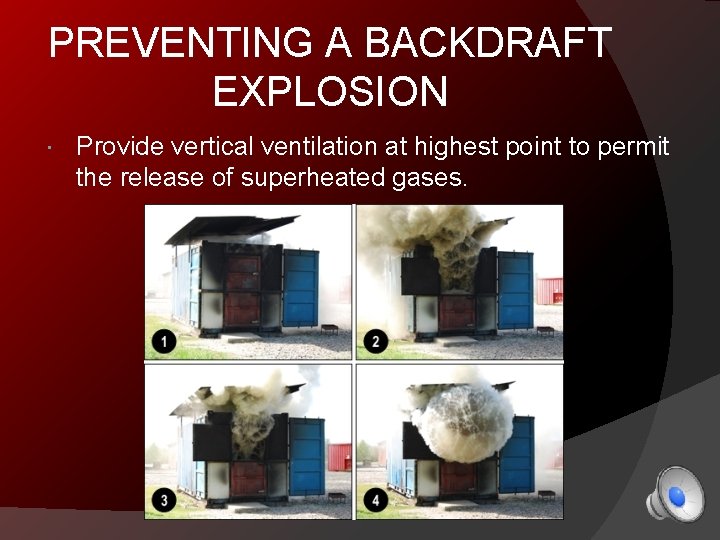
PREVENTING A BACKDRAFT EXPLOSION Provide vertical ventilation at highest point to permit the release of superheated gases.
CHARACTERISTICS OF ROOF TYPES Flat Commonly found on commercial, industrial and apartment buildings May have a slight slope to it Roof may be surrounded or divided by parapets May support: ○ Water tanks ○ Air conditioning units ○ Equipment ○ Antennas ○ Other obstructions Structural part similar to floor construction
CHARACTERISTICS OF ROOF TYPES Shed Similar to flat except slopes from front to back Slope may be gradual or steep Pitched Elevated in the center Construction ○ Rafters Run from ridge to top plate Made of wood, metal or combination
CHARACTERISTICS OF ROOF TYPES Sheathing Roofing materials Shingles ○ Wood ○ Metal ○ Asbestos ○ Composition ○ Tile ○ Slate Pitch of roof may be gradual or steep
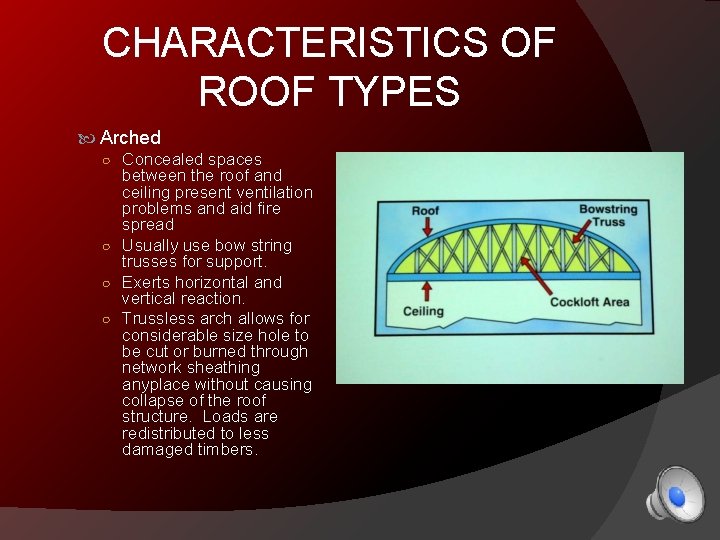
CHARACTERISTICS OF ROOF TYPES Arched ○ Concealed spaces between the roof and ceiling present ventilation problems and aid fire spread ○ Usually use bow string trusses for support. ○ Exerts horizontal and vertical reaction. ○ Trussless arch allows for considerable size hole to be cut or burned through network sheathing anyplace without causing collapse of the roof structure. Loads are redistributed to less damaged timbers.
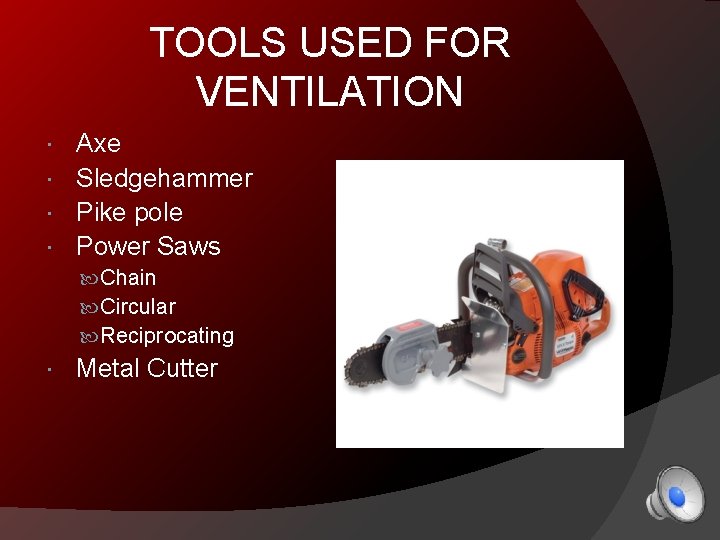
TOOLS USED FOR VENTILATION Axe Sledgehammer Pike pole Power Saws Chain Circular Reciprocating Metal Cutter
PRECAUTIONS WHEN VENTILATING All Roof Systems Use roof ladder. Look for hot spots or sagging of the roof area PRIOR to walking on surface and continually during ventilation. Always sound roof PRIOR to walking on surface and continually during ventilation.
PRECAUTIONS WHEN VENTILATING Look for roof additions or changes, such as overhangs, inverted flat roofs, security measures, parapet walls. Look for obstacles and excess weights on roof, such as HVAC systems, skylights, vent pipes, other openings. Provide two means of escape from the roof remote from each other. For arched roofs ○ Be aware of void spaces ○ Always suspect full roof collapse ○ Roof ladder will be useless – consider aerial
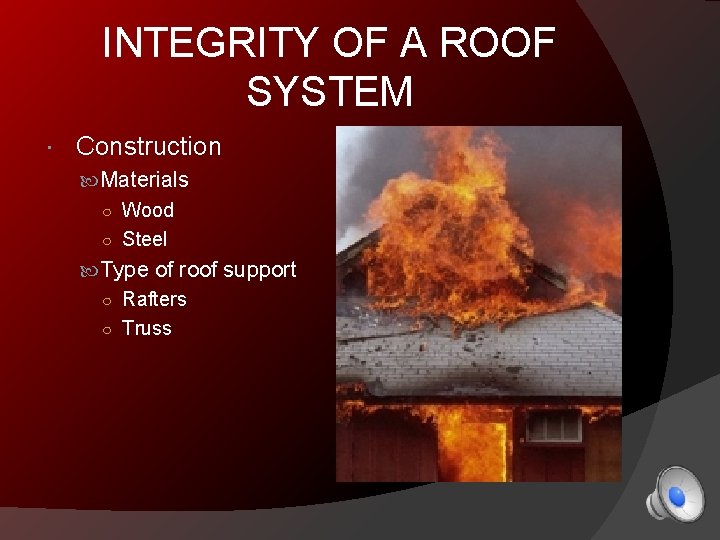
INTEGRITY OF A ROOF SYSTEM Construction Materials ○ Wood ○ Steel Type of roof support ○ Rafters ○ Truss
INTEGRITY OF A ROOF SYSTEM Visual observation/warning signs “Spongy” roof Melting asphalt Smoke coming from roof Fire coming from roof Excess weight (ex. HVAC) Elapsed time of fire The longer the fire, the less the roof integrity.
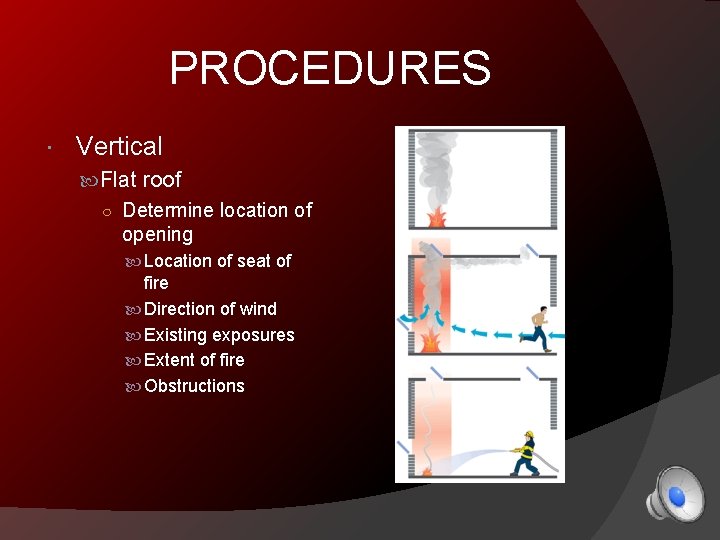
PROCEDURES Vertical Flat roof ○ Determine location of opening Location of seat of fire Direction of wind Existing exposures Extent of fire Obstructions
PROCEDURES ○ Locate supports by sounding with an axe. ○ Mark the location for opening by scratching a line on the ○ ○ roof with the pick head. Remove the built up material or metal by cutting the materials and using the pick head to pull the materials out of the way. Cut the wood decking diagonally alongside the joist towards the hole. Pry up the roof boards with the pick end of the axe. After opening the roof, push the blunt end of a pike pole or plaster hook through the opening to penetrate the ceiling below.
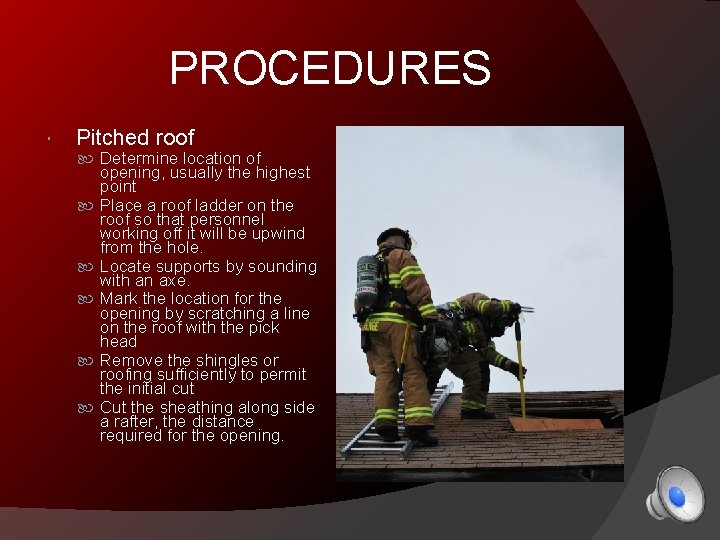
PROCEDURES Pitched roof Determine location of opening, usually the highest point Place a roof ladder on the roof so that personnel working off it will be upwind from the hole. Locate supports by sounding with an axe. Mark the location for the opening by scratching a line on the roof with the pick head Remove the shingles or roofing sufficiently to permit the initial cut Cut the sheathing along side a rafter, the distance required for the opening.
PROCEDURES Opposite side is then cut in a like manner. Remove sheathing boards with the pick of the axe After opening the roof, push the blunt end of a pike pole or plaster hood through the opening to penetrate the ceiling below. Horizontal Open building on leeward side Remove any obstructions Open building on windward side Remove any obstructions
PROCEDURES Mechanical/mechanical pressurization (forced ventilation) Negative pressure ○ Place ejector in opening to exhaust in the same way as the wind direction ○ Cover the area around the ejector to prevent churning ○ Establish and maintain desired draft path ○ Remove all obstacles ○ Avoid blockage of the intake side of the ejector
PROCEDURES Negative pressure ○ Place ejector in opening to exhaust in the same way as the wind direction. ○ Cover the area around the ejector to prevent churning ○ Establish and maintain desired draft path ○ Remove all obstacles ○ Avoid blockage of the intake side of the ejector
PROCEDURES Positive Pressure ○ Place blower several feet outside the point of entry ○ Check to make sure air cone completely covers the opening ○ Open the exit opening (75% to 150% of the entrance opening) ○ Systematically open and close doors within the structure to exhaust the products of combustion.
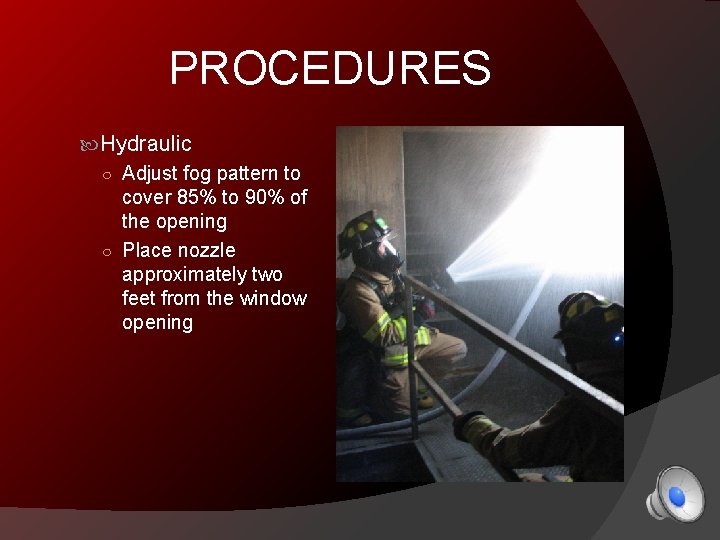
PROCEDURES Hydraulic ○ Adjust fog pattern to cover 85% to 90% of the opening ○ Place nozzle approximately two feet from the window opening
OPENING WINDOWS WITH TOOLS Use tool to force and locking mechanisms If unable to open window, breaking will be necessary Stand on the windward side of openning Notify anyone nearby Strike at the top of the window first, working your way down Make sure hands are away for the point of impact Clear opening of jagged pieces with axe or tool If window has bars or wire mess covering, use prying tool or saw to remove obstruction Always remove screens
- Slides: 53