
FIREFIGHTER II LESSON 12 TS 12 1 TYPES


- Slides: 24
FIREFIGHTER II • LESSON 12
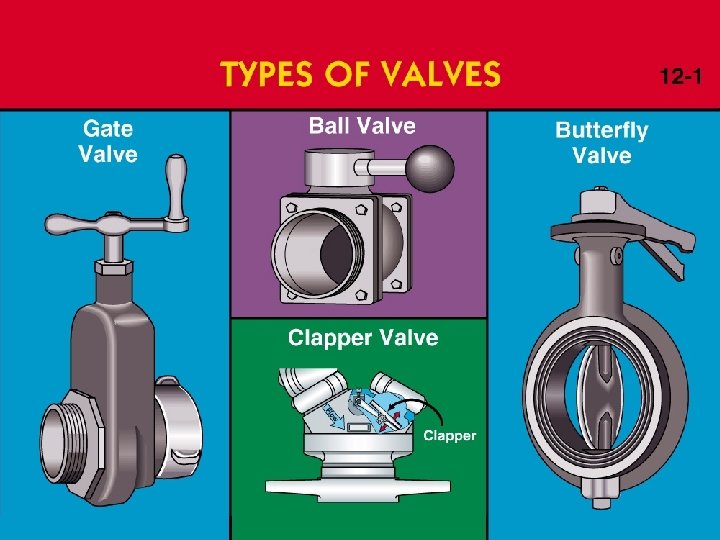
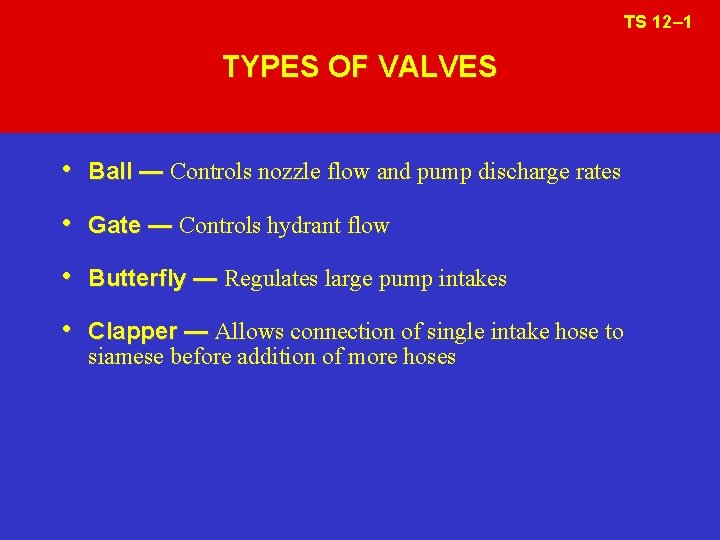
TS 12– 1 TYPES OF VALVES • Ball — Controls nozzle flow and pump discharge rates • Gate — Controls hydrant flow • Butterfly — Regulates large pump intakes • Clapper — Allows connection of single intake hose to siamese before addition of more hoses
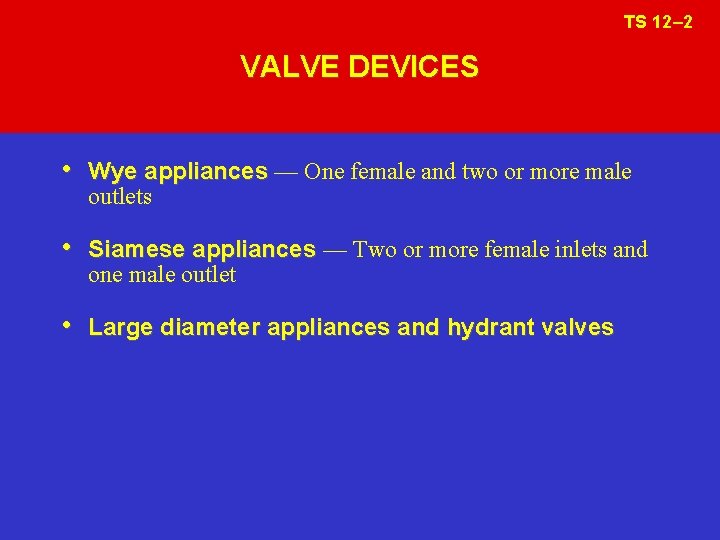
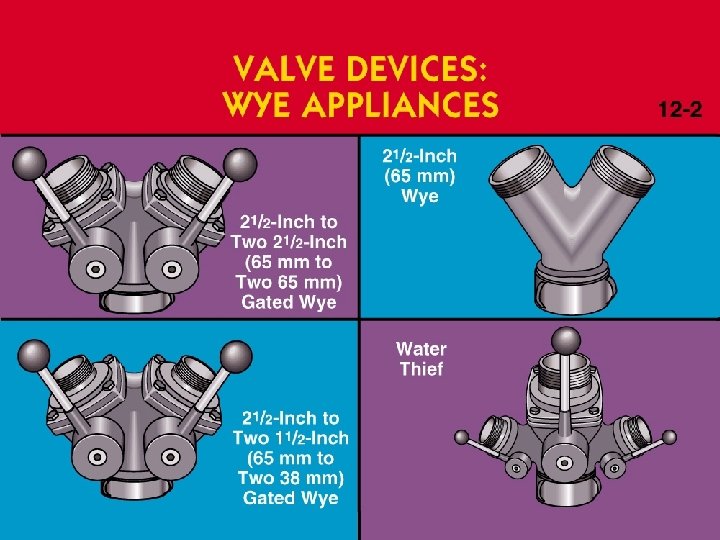
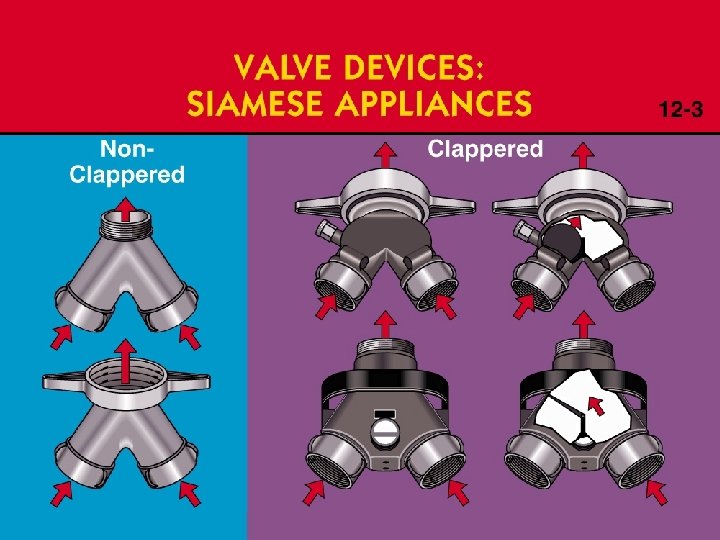
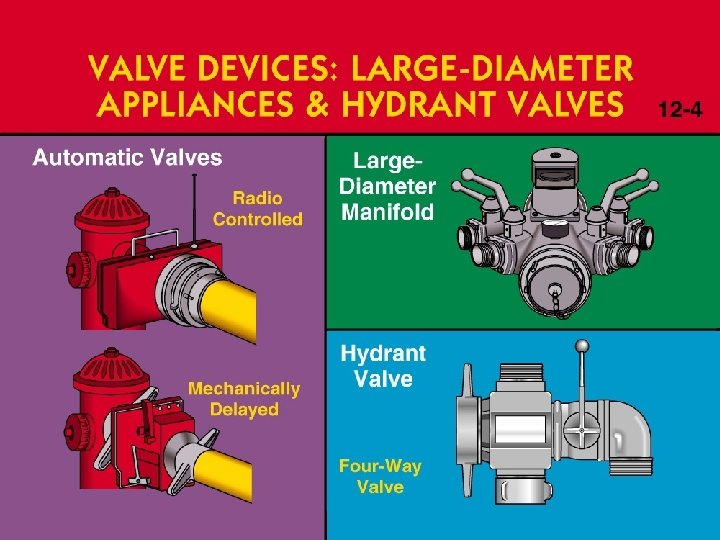
TS 12– 2 VALVE DEVICES • Wye appliances — One female and two or more male outlets • Siamese appliances — Two or more female inlets and one male outlet • Large diameter appliances and hydrant valves
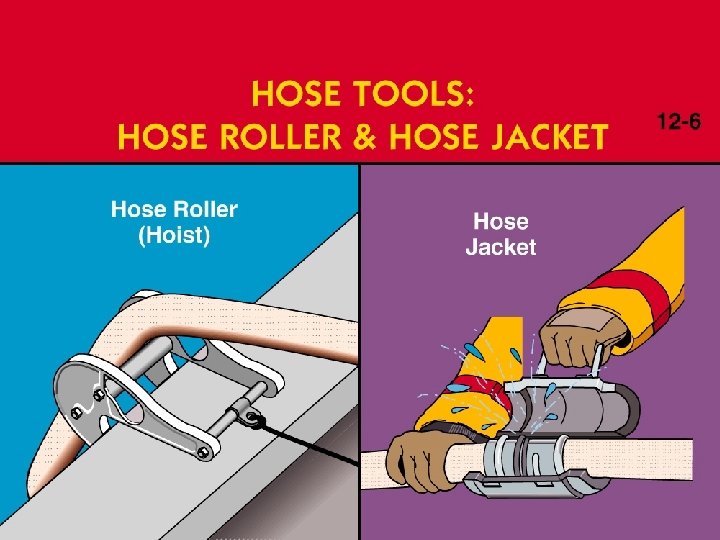
FUNCTIONS OF HOSE ROLLERS & JACKETS TS 12– 3 • Rollers § To prevent damage to hose when it is dragged over sharp surfaces such as window ledges and roof edges § To facilitate movement of the hose or rope • Jackets § To temporarily restore ruptured hoselines § To temporarily repair a leaking coupling § To connect hose with mismatched or damaged screwthread couplings
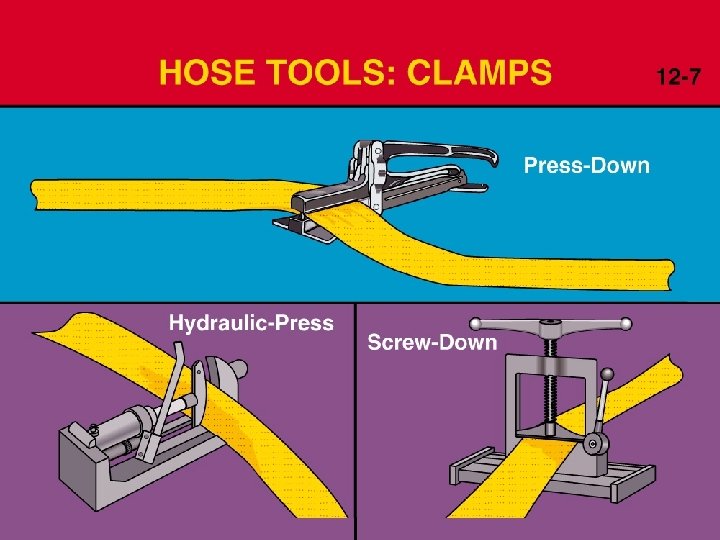
TS 12– 4 HOSE CLAMP USES • To prevent charging the hose bed during hose-lay operations • To allow replacement of a burst section of hose without shutting down the water supply • To allow extension of a hoseline without shutting down the water supply • To allow advancement of a charged hoseline up stairs
TS 12– 5 HOSE CLAMP GUIDELINES • Apply hose clamp at least 20 feet (6 m) behind apparatus. • Apply hose clamp approximately 5 feet (1. 5 m) from coupling on incoming water side. • Stand to one side when applying or releasing the press-down type hose clamp. • Center hose evenly in jaws to avoid pinching the hose. • Close and open the hose clamp slowly to avoid water hammer.
SERVICE TESTING VS. ACCEPTANCE TESTING TS 12– 6 • Service testing is done on in-service hose by fire department personnel. • Acceptance testing is performed on unused hose at the request of the purchasing agency and is done by the hose manufacturer before the hose is shipped.
REASON & STANDARD FOR SERVICE TESTING TS 12– 7 • Reason for service testing — To ensure that in- service hose is being maintained in optimum condition • Service testing standard — NFPA 1962, Standard for the Care, Use, and Service Testing of Fire Hose, Including Couplings and Nozzles
TS 12– 8 SERVICE TESTING SCHEDULE • Once every five years from date of purchase, again at eighth year, and every two years thereafter • After being repaired • After being run over by vehicle
TS 12– 9 INSPECTION BEFORE SERVICE TESTING • Jacket defects • Coupling damage • Worn or defective gaskets
ITEMS NEEDED FOR SERVICE TEST SITE PREPARATION TS 12– 10 • Hose testing machine, portable pump, or fire department pumper equipped with gauges certified as accurate within one year before testing • Means of recording the hose numbers and test results • • • Tags or other means to identify sections that fail Nozzles with shutoff valves Means of marking each length with the year of the test to easily identify which lengths have been tested and which have not without looking in the hose records
SAFETY GUIDELINES FOR HOSE SERVICE TESTING TS 12– 11 a • Examine hose before testing; remove from service hose that cannot be repaired. • Use hose test gate valve to prevent the hose from whipping back and forth in the event of a break. • Stand or walk near the pressurized hose only as necessary. • Ensure that all personnel in the area wear helmets as a safety precaution.
SAFETY GUIDELINES FOR HOSE SERVICE TESTING (cont. ) TS 12– 11 b • When charging the hose, stand away from the discharge connection because of the danger of the coupling pulling loose. • To aid in detecting minor leaks and to prevent slipping falls, keep testing area free of spills when filling hoses and when discharging air from them.