
FIREFIGHTER ARSON Problem Profile Prevention Presented By Thomas
FIREFIGHTER ARSON: Problem, Profile, & Prevention Presented By: Thomas W. Aurnhammer, EFO, IAAI-CFI® Deputy Fire Chief, Los Pinos Fire District Ignacio, Colorado
THANK YOU • • • Tim Huff, FBI (Retired) Gus Gary, ATF (Retired) Lieutenant Chuck Dorenwend, Suffolk County (NY) Police Department • Supervising Detective George Wendt, Morris County (NJ) Prosecutor’s Office (Retired) 2006 IAAI Annual Training Conference
THANK YOU • South Carolina Chapter of the IAAI – C. Benjamin Norris, CFI – Franklin R. Burke, Jr. , CFI – Edward A. Pumphrey • All Photos Except Noted Provided By Nancy L. Ford, Observer Dispatch, Utica, New York and the National Fire Academy 2006 IAAI Annual Training Conference
OBJECTIVES • Understand The Firefighter Arson Problem • Know The Motives Of Fire Setting • Know Why Some Firefighters Commit Arson 2006 IAAI Annual Training Conference

OBJECTIVES • Know What Effect Firefighter Arson Has On The Community And The Fire Service • Understand Arson Law 2006 IAAI Annual Training Conference

OBJECTIVES • Know The Basic Profile Of The Firefighter Arsonist • Know The Fire Service’s Responsibilities In Preventing Firefighter Arson • Know What Action To Take When A Problem Is Suspected 2006 IAAI Annual Training Conference

INTRODUCTION • In Recent Years The Frequency Of Firefighters Being Charged And Arrested For The Crime Of Arson Has Increased Dramatically 2006 IAAI Annual Training Conference
THE GOOD NEWS • Looking At The Number Of Volunteer And Career Firefighters In America (Over 1 Million) – The Number Of Firefighter Arsonists Is Relatively Small 2006 IAAI Annual Training Conference
INTRODUCTION • This Is A Problem The Fire Service Does Not Need Or Want - We, The Members Of The Fire Service Must Find A Solution To This Problem As It Hurts The Entire Fire Service Family, Not Just The Fire Departments Involved 2006 IAAI Annual Training Conference
INTRODUCTION • What Can We Do To Prevent And Correct The Problem Of Firefighter Arson? 2006 IAAI Annual Training Conference
INTRODUCTION • What We Hope To Accomplish Today Is To Provide You With A Basic Overview Of The Problem Of Firefighter Arson, Its Effects, And What Can Be Done To Fix The Problem 2006 IAAI Annual Training Conference
WHY DON’T WE TALK ABOUT IT? • • • Because It Is Not Fun Stuff It Makes Us Uncomfortable It Is An Issue That The Fire Service As A Whole Has Been “Practicing Avoidance” With 2006 IAAI Annual Training Conference
FROM THE JANUARY 21 st, 2002 FREDERICK NEWS-POST • EMMITSBURG, MD - Despite numerous arson incidents linked to firefighters, the U. S. Fire Administration keeps no statistics and offers no training on the problem for the 50, 000 fire officials who take classes at its National Fire Academy each year. 2006 IAAI Annual Training Conference
FROM THE JANUARY 21 st, 2002 FREDERICK NEWS-POST • With no central database, the magnitude of the problem is hard to pin down. But a recent case in Frederick County — where a volunteer firefighter has been charged with setting more than 20 fires in Maryland West Virginia… 2006 IAAI Annual Training Conference

FROM THE JANUARY 21 st, 2002 FREDERICK NEWS-POST • …exposes a potential oversight by the agency charged with disseminating fire data and prevention education to the more than 30, 000 departments nationwide. 2006 IAAI Annual Training Conference
FROM THE JANUARY 21 st, 2002 FREDERICK NEWS-POST • "It's a local issue, " said Marko Bourne, spokesman for the USFA in response to questions about firefighters who commit arson. 2006 IAAI Annual Training Conference
FROM THE JANUARY 21 st, 2002 FREDERICK NEWS-POST • Yet a 1997 Arson Report published by the USFA identified firefighter arson as a problem. 2006 IAAI Annual Training Conference
FROM THE JANUARY 21 st, 2002 FREDERICK NEWS-POST • Calling it an "egregious" situation when "a firefighter betrays the public trust, " the report said "better information is needed in order to more precisely define the arson problem in the U. S. " Part of the recommendation called for collecting data on fire setters, their motives and histories. 2006 IAAI Annual Training Conference

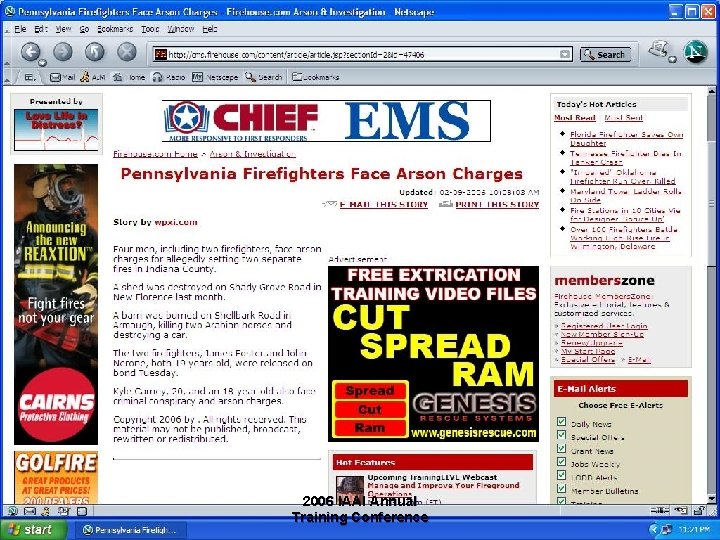
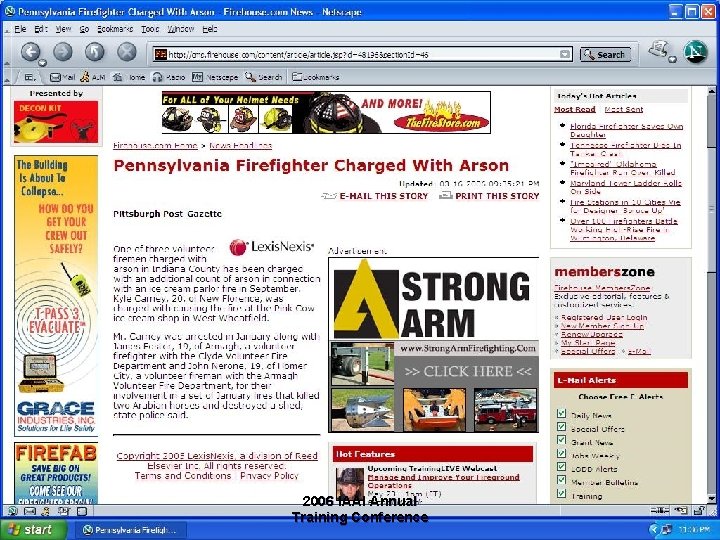
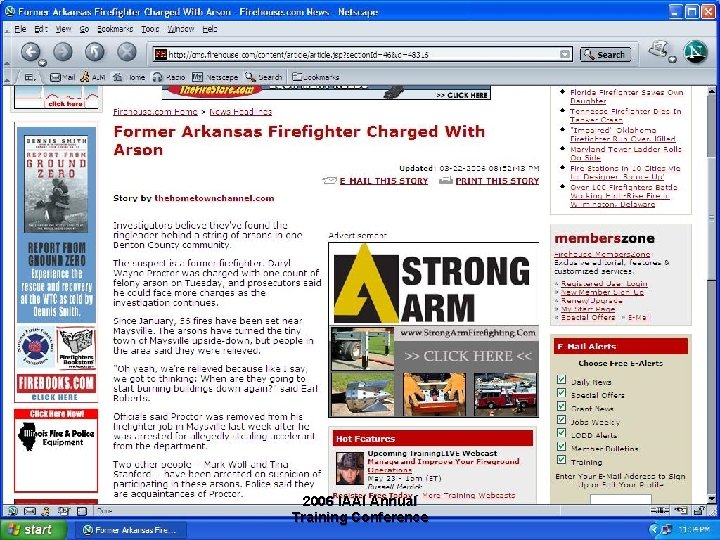
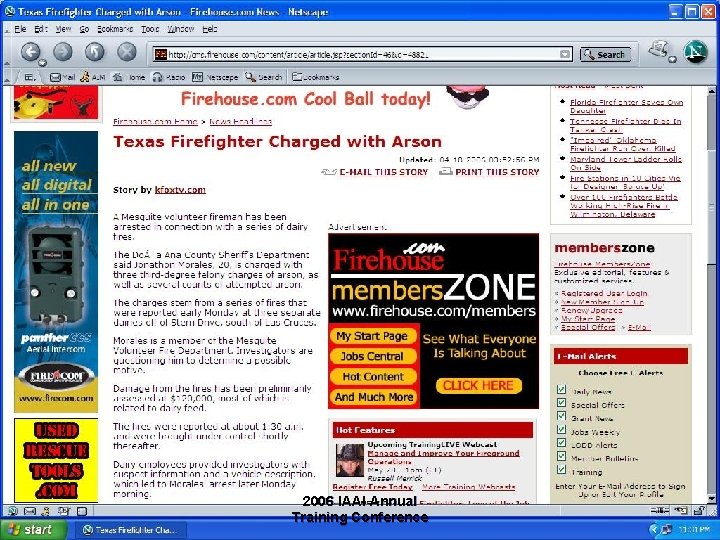
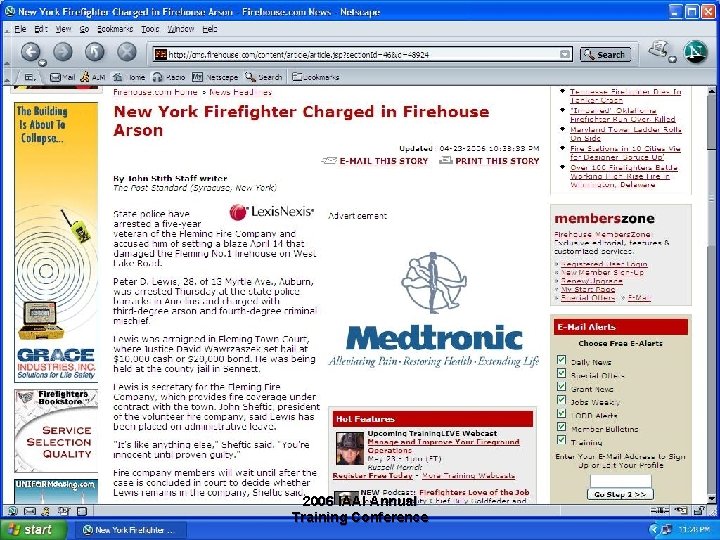
HEADLINES 2006 IAAI Annual Training Conference
Where This Started April 15 th, 2001 • Murder charges were filed against the man who confessed to starting a blaze in Platte County, MO that contributed to the death of a fellow firefighter. • Jason Hendrix, 26, of Dearborn, MO, was charged with second-degree murder. 2006 IAAI Annual Training Conference
Where This Started April 15 th, 2001 • Travis Brown, 30, of Edgerton, MO, a member of the Dearborn Fire Department, was killed June 2 responding to the fire when the tanker truck overturned. 2006 IAAI Annual Training Conference
Where This Started April 15 th, 2001 • The fire at a barn in rural Platte County was allegedly set by Hendrix. • Hendrix was a volunteer with the Edgerton Trimble Fire Department. 2006 IAAI Annual Training Conference
Where This Started April 15 th, 2001 • September 24 th, 2002 - Another five months will pass before a Platte County jury hears the case of a firefighter charged with the murder of another firefighter. 2006 IAAI Annual Training Conference
Where This Started April 15 th, 2001 • Hendrix also is charged with seconddegree arson, first-degree property damage and five counts of negligently setting fire to a woodland, cropland or grassland. 2006 IAAI Annual Training Conference
Where This Started April 15 th, 2001 • The defense argued the felony murder rule doesn’t apply because Firefighter Brown’s death happened away from the scene of the arson that Hendrix allegedly committed. 2006 IAAI Annual Training Conference
Where This Started April 15 th, 2001 • Prosecutors countered by saying that Firefighter Brown wouldn’t have been on the road to fight the fire if Hendrix hadn’t allegedly started the blaze. 2006 IAAI Annual Training Conference
Where This Started April 15 th, 2001 • On February 13 th, 2003 Jason Hendrix, former firefighter, is given 12 year sentence for arson and property damage after reaching a plea agreement with the special prosecutor. • He did not stand trial for murder. 2006 IAAI Annual Training Conference
2006 IAAI Annual Training Conference
2006 IAAI Annual Training Conference
2006 IAAI Annual Training Conference
2006 IAAI Annual Training Conference
2006 IAAI Annual Training Conference
2006 IAAI Annual Training Conference
2006 IAAI Annual Training Conference
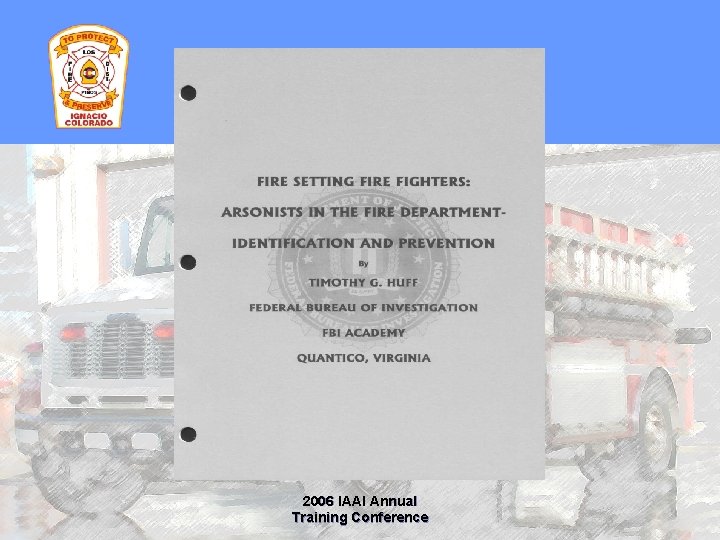
THE PROBLEM • It Is A Complex One • Arson In The United States (NFPA Stats) – Incidents Down, Property Damage Up • While A Comprehensive Study Is Not Available – We Do Have Some Data – Study Conducted By Tim Huff And Gus Gary 2006 IAAI Annual Training Conference
THE PROBLEM • The Problem Is Not New To The Fire Service • The Problem Occurs On A National Level 2006 IAAI Annual Training Conference
TWISTED CULTURE • One investigator had a fire in a department where, 20 -30 years before, it had been an initiation rite that if you wanted to join the FD, you had to set a structure fire • While there was no such "official" initiation anymore, this "culture" was still prevalent 2006 IAAI Annual Training Conference
TWISTED CULTURE • They ended up locking up three Firefighters • The Fire Department was generally uncooperative • The Chief told the investigator that he didn't know “what the big deal was” 2006 IAAI Annual Training Conference
TRAINING? • A Fire Chief applied for a permit to conduct live burn training, but was turned down by the Environment Department • However, since he was the Fire Chief, he felt that he had sole discretion over this matter 2006 IAAI Annual Training Conference
TRAINING? • He and his Assistant Chief traveled to the building (an abandoned house) on the originally scheduled date for the drill and set the fire anyway • They called it a “surprise drill” • These two were charged and pled guilty 2006 IAAI Annual Training Conference
THE PROBLEM • The Problem Is UNACCEPTABLE To The Fire Service! • Don’t Condone It! • Don’t Be A Part Of It! • Prevent It If Possible! 2006 IAAI Annual Training Conference
A CRIMINAL INVESTIGATION WILL BE CONDUCTED • No Special Treatment For Firefighters • The Investigation May Be More Aggressive • Offenders Will Be Prosecuted – Zero Tolerance • Arrests Will Be Reported To The Media 2006 IAAI Annual Training Conference
A CRIMINAL INVESTIGATION WILL BE CONDUCTED • Morris County, NJ has a zero tolerance policy for Firefighter Arson • They have always prosecuted and always opposed any pre-trial diversion program 2006 IAAI Annual Training Conference
A CRIMINAL INVESTIGATION WILL BE CONDUCTED • In one case, Firefighter walked into the firehouse and found three young Firefighters "preplanning" a fire in a large barn that was in their first due area • He grew suspicious when this barn burned down that night 2006 IAAI Annual Training Conference
A CRIMINAL INVESTIGATION WILL BE CONDUCTED • He told investigators about it and who was involved • The investigators ended up making five arrests from that information 2006 IAAI Annual Training Conference
ARSON IS A CRIME OF DETECTION • No Investigation = No Arson • Investigations Will Turn Up Signs Of Firefighter Arson 2006 IAAI Annual Training Conference
MOTIVES OF FIRESETTING • • • Motive Defined: The REASON For Setting The Fire “Something That Prompts A Person To Act In A Certain Way” 2006 IAAI Annual Training Conference
MOTIVES OF FIRESETTING • Sometimes Motive And Intent Get Confused • Intent Is The Deliberateness Of The Act 2006 IAAI Annual Training Conference
INDIVIDUAL MOTIVES GENERAL • • Fraud – Profit Crime Concealment Spite/Revenge Pyromania Civil Disorders Vanity – Recognition Actions Of Juveniles 2006 IAAI Annual Training Conference
CHANGES • Pyromania Does Not Exist As A Separate Mental Disease • The Current Usage of Pyromania As A Motive In Fire Setting Is An Oversimplification Of A Complex Issue, As The Act May Be Indicative Of Other Problems Or Disorders 2006 IAAI Annual Training Conference
WHY FIREFIGHTERS COMMIT ARSON • Personal Goals: – Someone Who Likes To Be The “Hero” – He Or She May Be The “Reporting Party” 2006 IAAI Annual Training Conference
WHY FIREFIGHTERS COMMIT ARSON • Personal Goals: – Could Be The Person Who Wants To Make The Most Runs – Could Be Overall Boredom 2006 IAAI Annual Training Conference
THE WHITE PAPER • Excitement And Putting Their Training To Work Was The Most Predominant Reasons Found For Firefighter Arson 2006 IAAI Annual Training Conference
WHY FIREFIGHTERS COMMIT ARSON • Psychiatric Problems: – Someone With A Fascination With Fire – Could Be A Person With Low Self. Esteem Or Self-Confidence 2006 IAAI Annual Training Conference
WHY FIREFIGHTERS COMMIT ARSON • Psychological Needs: – The Social Needs Of Wanting To Be Accepted By Others, Wanting To Belong To Or Be Identified With A Significant Group – The Self-Esteem Issue Of Being Recognized And Praised By Others 2006 IAAI Annual Training Conference
MOTIVATION USUALLY NOT INTENDED TO BE HARMFUL • • • Strictly Excitement Usually, No Harm Intended Immature – May Not Realize The Harmful Effects • Does Not Realize The Severity Of The Crime Being Committed 2006 IAAI Annual Training Conference
2006 IAAI Annual Training Conference
THE WHITE PAPER • Motives Found In Firefighter Arson: – Excitement – Vanity – Profit – Revenge 2006 IAAI Annual Training Conference
THE WHITE PAPER • Lone Offenders Were Most Prevalent • Less Common, Yet Significant, Are Multiple-Arsonist Cases 2006 IAAI Annual Training Conference
THE WHITE PAPER • Modus Operandi: – Most Set Fire To Materials Found At Site – Most Fire Setting Activity Started Out With “Nuisance Fires” – Fire Setting Activity Escalated üFrequency üDamage Potential 2006 IAAI Annual Training Conference
THE WHITE PAPER • Modus Operandi: – Hot Sets Were Utilized – Most Fires Occurred At Night – Some Fires Were Set In Other Fire Districts When Suspicion Was Perceived By The Offender(s) 2006 IAAI Annual Training Conference
THE WHITE PAPER • Telltale Signs Of Firefighter Arson: – Increase In “Nuisance Fires” – No One Calls For An Investigation 2006 IAAI Annual Training Conference
THE WHITE PAPER • Other Findings – Offenders Were Often Fairly New Members Of The Department – Most Group Offenders Did Not Have The Inclination To Set Fires Prior To Joining The Department 2006 IAAI Annual Training Conference
EFFECTS OF FIREFIGHTER ARSON • Effects On The Community: – Loss Of Life – Injuries To Citizens – Property Loss – Financial Loss – Increased Insurance Premiums – Destroys Community’s Trust Of The Fire Service 2006 IAAI Annual Training Conference
EFFECTS OF FIREFIGHTER ARSON • Effects On The Fire Service: – Loss Of Life – Injuries To Firefighters – Accidents While Responding/Returning – Expense – Cost Of Fire Suppression – Equipment Damaged Or Destroyed – Negative Publicity – Possible Liability 2006 IAAI Annual Training Conference
EFFECTS OF FIREFIGHTER ARSON • Effects On The Fire Service: – Destroys Community Trust – May Influence Fundraising – Embarrassment To All Department Members – Public Reaction Could Result In “Knee. Jerk” Legislation That Would Seriously Impact The Fire Service 2006 IAAI Annual Training Conference
EFFECTS OF FIREFIGHTER ARSON • Effects On The Firefighter Arsonist: – Embarrassment To Family And Friends – Held Accountable For Actions – Arrested, Convicted, Sentenced – Removal From Fire Department – Loss Of Esteem – Loss Of Belonging – Payment Of Fines/Imprisonment 2006 IAAI Annual Training Conference
EFFECTS OF FIREFIGHTER ARSON • Effects On The Firefighter Arsonist: – Other Financial Loss – Restitution – Loss Of Job – Criminal Record – Loss Of Rights Of Ordinary Citizens – May Cause Family Problems – Negative Publicity 2006 IAAI Annual Training Conference
ARSON LAW • Originally, Arson Was A Common Law Offense. Common Law Is Courtmade Law Based On Accepted Standards Of The Community. The United States System Of Justice Originated In England, And English Common Law Forms The Basis Of Our Laws. 2006 IAAI Annual Training Conference
ARSON LAW • “Arson At Common Law” Was Originally The Offense Of “The Burning Of The Dwelling Of Another. ” In Recent Years The Arson Laws Were Codified And Changed By The States And The Congress. A Few States Still Have Arson At Common Law; Many Have Revised Them. 2006 IAAI Annual Training Conference
ARSON LAW • The Old “Arson At Common Law” Did Influence The Way Some Statutes Were Written (e. g. , some of the statutes still refer to arson as the “burning of the dwelling of another”). 2006 IAAI Annual Training Conference

ARSON LAW • Please Check With Your Local Prosecutors To See What The Laws Are In Your Jurisdiction! 2006 IAAI Annual Training Conference
2006 IAAI Annual Training Conference
BASIC PROFILE OF THE FIREFIGHTER ARSONIST • • Usually, Volunteer Firefighter White Male 17 To 26 Years Old May Be The Highly Trained, Motivated, “Firefighter Of The Year” Type 2006 IAAI Annual Training Conference

BASIC PROFILE OF THE FIREFIGHTER ARSONIST • Always Seems To Be In The Right Place At The Right Time 2006 IAAI Annual Training Conference
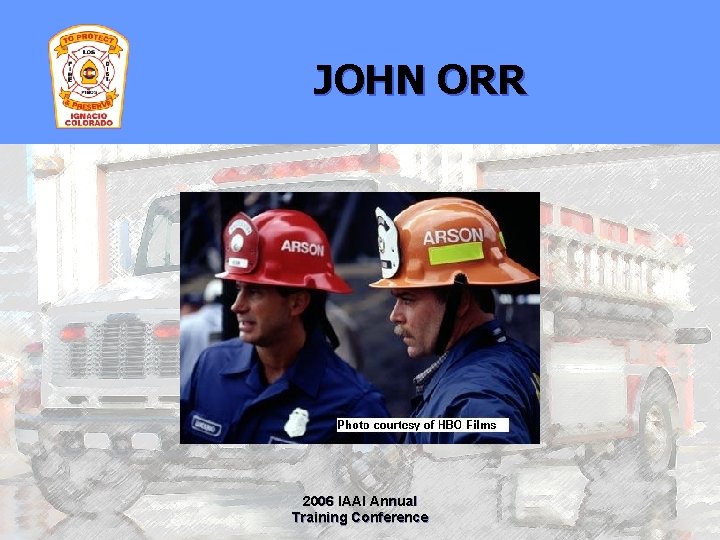
JOHN ORR 2006 IAAI Annual Training Conference
2006 IAAI Annual Training Conference
BASIC PROFILE OF THE FIREFIGHTER ARSONIST • Works In Low Paying Jobs With Low Recognition And Esteem; Therefore Joins Fire Department For Recognition • Fascination With The Fire Service 2006 IAAI Annual Training Conference
LESS OBVIOUS FACTORS • Disruptive, Harsh, Or Unstable Home Environment As A Child • Ineffective Or Absent Father, Poor Relationship With Father • Dominant Or Overprotective Mother • Average Intelligence, But Poor To Average Academic Record 2006 IAAI Annual Training Conference
LESS OBVIOUS FACTORS • Shy Or Ineffective Relationships With Women, Poor Marital Adjustment If Married • May Be Experiencing Unusual Personal Stress (Family, Financial, Legal) • May Use Alcohol To Release Inhibitions When Setting Fires 2006 IAAI Annual Training Conference
ADDITIONAL FACTS AND TRAITS • Firefighters Who Commit Arson May Associate With Other Firefighters Who Have Similar Desire To Be A Hero Or Have A Fascination With Fire • The Fire Departments That Have Experienced This Problem Recently Are Mostly Rural With Normally Low Call Volume 2006 IAAI Annual Training Conference
ADDITIONAL FACTS AND TRAITS • A Sudden Increase In The Number Of Small Fires, False Alarms, Bomb Threats, Or Similar Responses Should Alert The Fire Chief To A Possible Problem • The Increase In The Severity Of Fires Is Also A Sign 2006 IAAI Annual Training Conference
FIRE SERVICE RESPONSIBILITIES IN PREVENTING FIREFIGHTER ARSON • Education & Training Of All Fire Service Personnel • Complete Investigation Into Origin & Cause Of All Fires 2006 IAAI Annual Training Conference
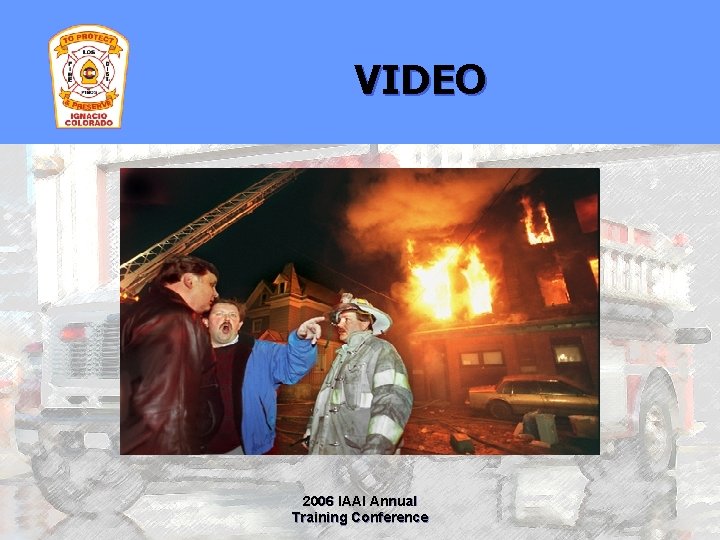
VIDEO 2006 IAAI Annual Training Conference

BACKGROUND CHECKS ON ALL PERSONNEL • All Of The Points Discussed Here May Not Be Possible Due To A Lack Of Resources Or Restrictions Of Law • You Need To Do As Much As You Are Allowed To 2006 IAAI Annual Training Conference
BACKGROUND CHECKS ON ALL PERSONNEL • If the Fire Department takes the time to have an applicant fill out this lengthy application, they should get references and then CALL the references • They should also check with former Fire Departments and former employers 2006 IAAI Annual Training Conference
BACKGROUND CHECKS ON ALL PERSONNEL • The application packet should include a release form for the applicant to sign for the release of information • This background check, if properly conducted, can lead to identification of candidates prone to fire setting 2006 IAAI Annual Training Conference

BACKGROUND CHECKS ON ALL PERSONNEL • • • Criminal History Driving Record Employment History References School Records Medical Records 2006 IAAI Annual Training Conference
BACKGROUND CHECKS ON ALL PERSONNEL • Credit Records • Check With Previous Fire Departments The Individual Has Been Associated With • Psychological Screening 2006 IAAI Annual Training Conference
MONITOR ACTIVITIES OF PERSONNEL • Maintain Adequate Records: – Personnel, Attendance, Training, Etc. – Fire Incident Reports – Investigation Reports 2006 IAAI Annual Training Conference
SUPPORT MANDATORY STATE CERTIFICATIONS FOR FIREFIGHTERS INCLUDING RECRUIT TRAINING ON FIREFIGHTER ARSON 2006 IAAI Annual Training Conference
ACTIONS TO TAKE WHEN A PROBLEM IS SUSPECTED • Immediately Notify The Chief Of The Fire Department Involved • If This Is Not Possible Because The Chief May Be A Suspect Or For Other Reasons, You May: – Confide In Another Fire Service Or Law Enforcement Official That You Know And Trust 2006 IAAI Annual Training Conference
ACTIONS TO TAKE WHEN A PROBLEM IS SUSPECTED • Notify The Local Law Enforcement Agency • Call Your Local “Crime Stoppers” Program • If You Suspect An Individual, But Do Not Have Specific Proof, The Chief May Be Able To Confront The Suspect With Suspicions 2006 IAAI Annual Training Conference
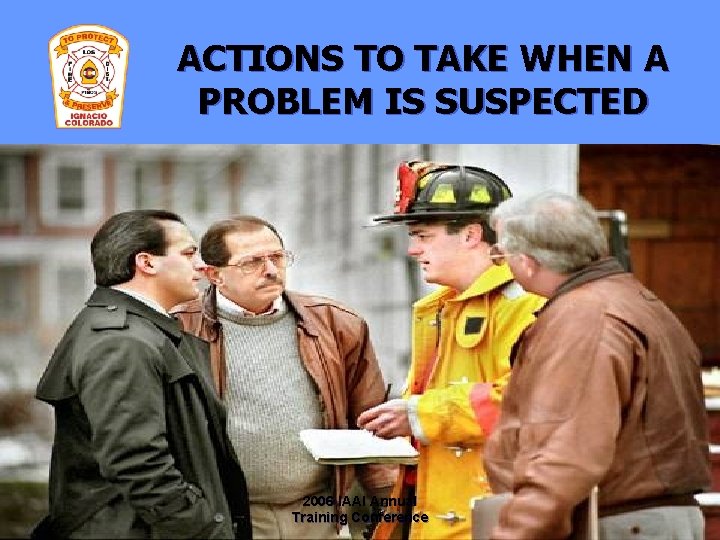
ACTIONS TO TAKE WHEN A PROBLEM IS SUSPECTED 2006 IAAI Annual Training Conference
ACTIONS TO TAKE WHEN A PROBLEM IS SUSPECTED • Observe If There Any Changes In The Trends That Aroused Your Suspicions • If You Do Not Feel Comfortable Confronting The Individual, Or If There Is Hard Evidence, Notify The Local Law Enforcement Agency 2006 IAAI Annual Training Conference
DECIDING TO “BLOW THE WHISTLE” • You Need To Understand The Difference Between A SNITCH And A WHISTLEBLOWER 2006 IAAI Annual Training Conference
DECIDING TO “BLOW THE WHISTLE” • A SNITCH Gets Information That Is Private And/Or Embarrassing On Someone – They Report It To The Supervisor For Personal Gain 2006 IAAI Annual Training Conference
DECIDING TO “BLOW THE WHISTLE” • A WHISTLEBLOWER Is A Valuable, Dedicated Employee Whom Discovers Problems In Work Quality, Safety, Or Legal Compliance And Reports Them To Someone Who Can Correct The Matter 2006 IAAI Annual Training Conference
REASONS TO TAKE ACTION AGAINST FIREFIGHTER ARSONISTS • It Is An Unlawful Act That Violates The Ethical Mission Of The Fire Service • “To Protect Lives And Property Against Unfriendly Fires” 2006 IAAI Annual Training Conference

CASE STUDY 2006 IAAI Annual Training Conference
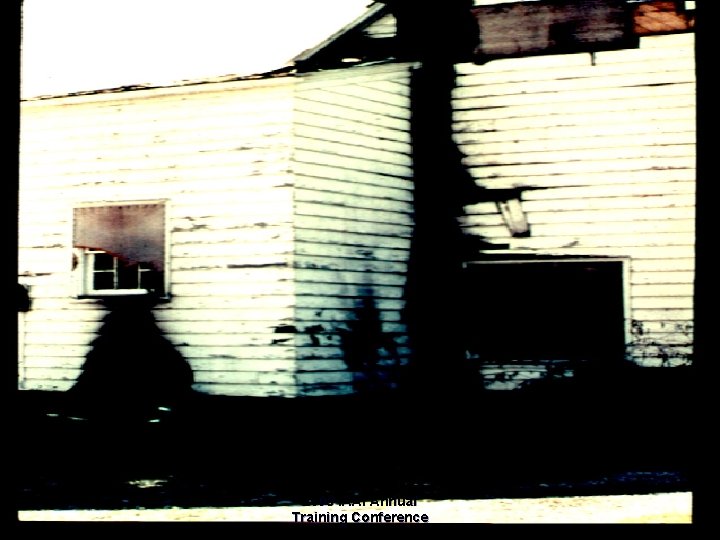
CASE STUDY • You are a member of the County’s fire investigation task force and have been called to the scene of a fire in a vacant house. It appears that a pile of trash on the exterior of the house was burning. 2006 IAAI Annual Training Conference
2006 IAAI Annual Training Conference
CASE STUDY • The fire occurred early on a Saturday morning (0214 hours). Examination of the area of origin indicates that no accidental fire causes were noted and you believe that an open flame was utilized to ignite available combustible materials. 2006 IAAI Annual Training Conference
CASE STUDY • Examination of the fire department’s reports indicate that there have been four other fires within a four block radius of the current incident. Two were trash dumpsters, one was a brush fire, and the other was an abandoned vehicle. All of the fires occurred within the last six months. 2006 IAAI Annual Training Conference
CASE STUDY • Except for the brush fire all of the fires in the area had occurred between 0100 and 0300 hours. None of the fire were investigated. 2006 IAAI Annual Training Conference
CASE STUDY • In interviewing one of the members of the department you discover that on all of the fires, the same three firefighters were the first to arrive at the station. This was unusual since none of the three lived close to the firehouse. 2006 IAAI Annual Training Conference
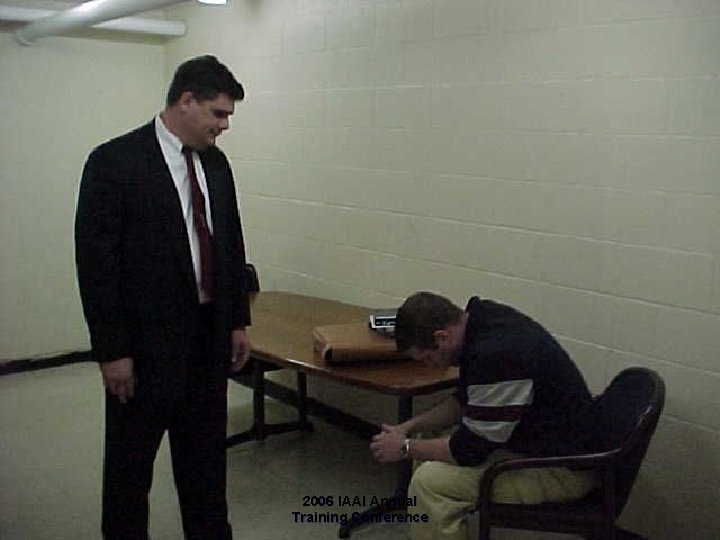
CASE STUDY • After interviewing the three firefighters who were first at the station, the “weakest link” gives it up and confesses to starting the fires. 2006 IAAI Annual Training Conference
2006 IAAI Annual Training Conference
CASE STUDY • What were some of the indicators that would lead someone to believe that this was a case of firefighter arson? 2006 IAAI Annual Training Conference
CASE STUDY • • • Increase In Nuisance Fires Escalating Fires Occurred At Night Hot Sets No Call For Investigation Same Three Faces First At Fire Station 2006 IAAI Annual Training Conference
CLUSTER ANALYSIS • Plot the locations of the fires on the map • As a pattern develops, the offenders will be located at the center • One investigator had a series of three fires in a town where the Firehouse was the center of the cluster 2006 IAAI Annual Training Conference
TIME/DATE ANALYSIS • Plot the time and date of each fire to see if there is a common denominator • Is the fire on a particular night (Fire Department event)? • A particular shift? 2006 IAAI Annual Training Conference
TIME/DATE ANALYSIS • One department had a series of fires that always occurred when the Fire Chief was out of town • They had at least 10 fires • Investigators ended up charging the Assistant Chief with 5 of those fires 2006 IAAI Annual Training Conference
TIME/DATE ANALYSIS • This guy (the Assistant Chief) was also a "Souvenir Hound" • He kept a souvenir from each fire he set • A fire in a restaurant he kept a menu • A fire in a car he kept a piece of the car, etc. 2006 IAAI Annual Training Conference

CASE STUDY 2006 IAAI Annual Training Conference
CASE STUDY • This Hamilton County, Tennessee incident had a far reaching, long term impact on the firefighters involved, the community, and the department. 2006 IAAI Annual Training Conference
CASE STUDY • A former volunteer firefighter was attempting to secure his position back as a firefighter and encountered resistance from the chief. 2006 IAAI Annual Training Conference
CASE STUDY • He and six other volunteer firefighters entered into a conspiracy to burn a vacant house, thereby providing this former firefighter an opportunity to call it in and regain the confidence of the chief. 2006 IAAI Annual Training Conference
CASE STUDY • Unfortunately, when he was in the process of starting the fire, he was trapped inside the house and died. A total of six volunteer firefighters were subsequently convicted for this crime. 2006 IAAI Annual Training Conference
CASE STUDY • The surviving firefighters plead guilty to arson and aggravated burglary. Most of the defendants were sentenced to ten-year prison terms. One pleaded guilty to being an accessory after the fact and was sentenced to one year, suspended, and probation. 2006 IAAI Annual Training Conference
CASE STUDY • The volunteer firefighters were current or former members of a volunteer fire department near Chattanooga. 2006 IAAI Annual Training Conference
CASE STUDY • As a result of the charges, investigation, and subsequent sentencing of the men, the department met with much public scrutiny and community mistrust. 2006 IAAI Annual Training Conference
CASE STUDY • Residents called for an immediate investigation into the fire department, focusing on the way it manages its money and staff, as well as its ability and readiness to respond to fires, “…not just the ones they set themselves. ” 2006 IAAI Annual Training Conference
CASE STUDY • Residents were outraged with the knowledge that the firefighters received hundreds of hours of training and still considered themselves “so bored they had to set fire to a house. ” 2006 IAAI Annual Training Conference
CASE STUDY • The fire chief believed that the incident was an isolated one. 2006 IAAI Annual Training Conference
CASE STUDY • A review of fire reports showed that the department had responded to five suspicious fires in vacant buildings or lots in their jurisdiction over a two year period. • All were located within one mile of the fire station. 2006 IAAI Annual Training Conference
CASE STUDY • Ultimately, a review panel was named to review the practices and standards of the department. 2006 IAAI Annual Training Conference

CASE STUDY • The review panel submitted 23 recommendations, which included requesting criminal background checks on current and future members of the department and establishing progressive disciplinary procedures. 2006 IAAI Annual Training Conference
CASE STUDY • After the results of the review panel were made public, there was still much finger pointing, anger, and animosity towards the fire department. 2006 IAAI Annual Training Conference
CASE STUDY • Several residents felt as if nothing had been accomplished with the panel consisting of only emergency personnel, except for one public citizen, and “taking care of their own” allegations surfaced. 2006 IAAI Annual Training Conference
CASE STUDY • This incident demonstrates that the crime of firefighter-related arson can impact the entire community. • The impact is still felt by some members of this community today. 2006 IAAI Annual Training Conference
TAKING THAT ACTION AGAINST THE PROBLEM IS… • The Only Practical Way To Reveal Illegal Conduct Or Major Abuses Of Public Authority • The Highest Form Of Loyalty To The Fire Service And It’s Mission • Essential To The Public Interest 2006 IAAI Annual Training Conference
TAKING THAT ACTION AGAINST THE PROBLEM IS… • Morally Justified As A Means Of Preventing Or Correcting A Firefighter Arson Problem • Being Proactive In Exposing A Problem Thereby Diluting The Negative Image Of The Fire Service • Taking Responsibility And Showing Courage 2006 IAAI Annual Training Conference
REMEMBER THAT… …NON-ACTION ONLY GIVES VICTORY TO CRIMINAL ACTION, IMPROPER CONDUCT, AND FAILURE TO THE FIRE SERVICE IN SERVING THE PUBLIC! 2006 IAAI Annual Training Conference
2006 IAAI Annual Training Conference

LETS NOT SWEEP THIS DIRTY LITTLE SECRET UNDER THE CARPET! 2006 IAAI Annual Training Conference
2006 IAAI Annual Training Conference
2006 IAAI Annual Training Conference
- Slides: 138