
Fire Safety Fire Extinguisher Use By Tyler Henderson
Fire Safety & Fire Extinguisher Use By Tyler Henderson
Objectives v Understanding the components that make up a fire and different fire classes. v Understanding the proper fire extinguisher types and their operating procedure. v Correct way to apply a fire extinguisher.
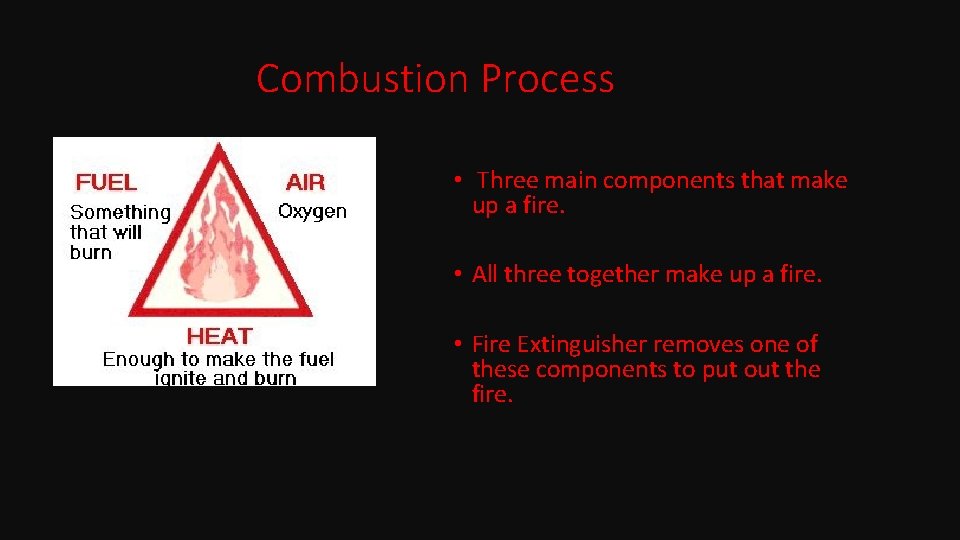
Combustion Process • Three main components that make up a fire. • All three together make up a fire. • Fire Extinguisher removes one of these components to put out the fire.
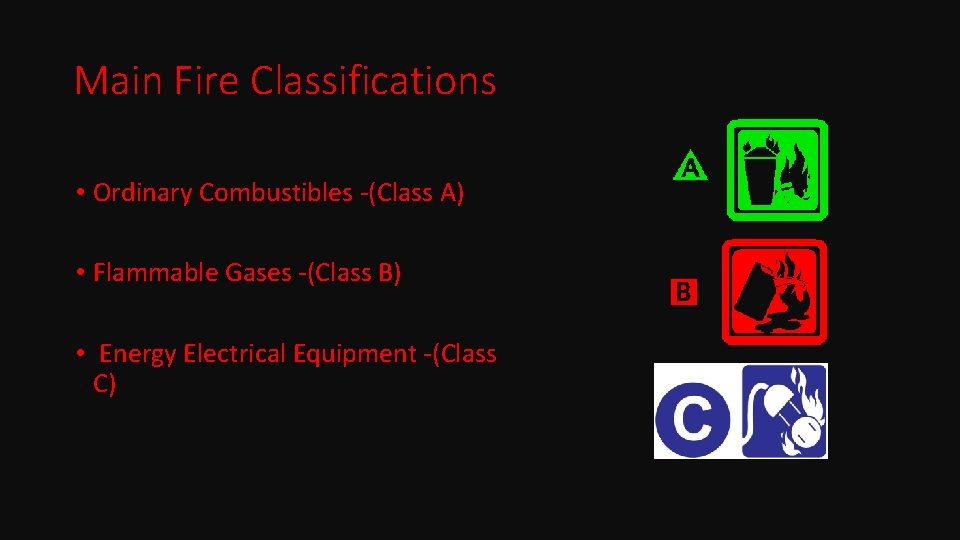
Main Fire Classifications • Ordinary Combustibles -(Class A) • Flammable Gases -(Class B) • Energy Electrical Equipment -(Class C)
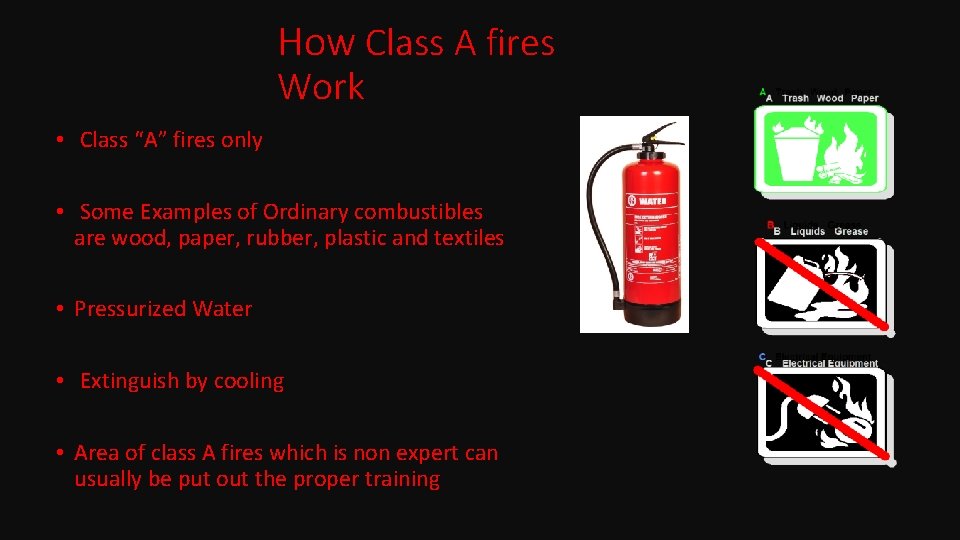
How Class A fires Work • Class “A” fires only • Some Examples of Ordinary combustibles are wood, paper, rubber, plastic and textiles • Pressurized Water • Extinguish by cooling • Area of class A fires which is non expert can usually be put out the proper training
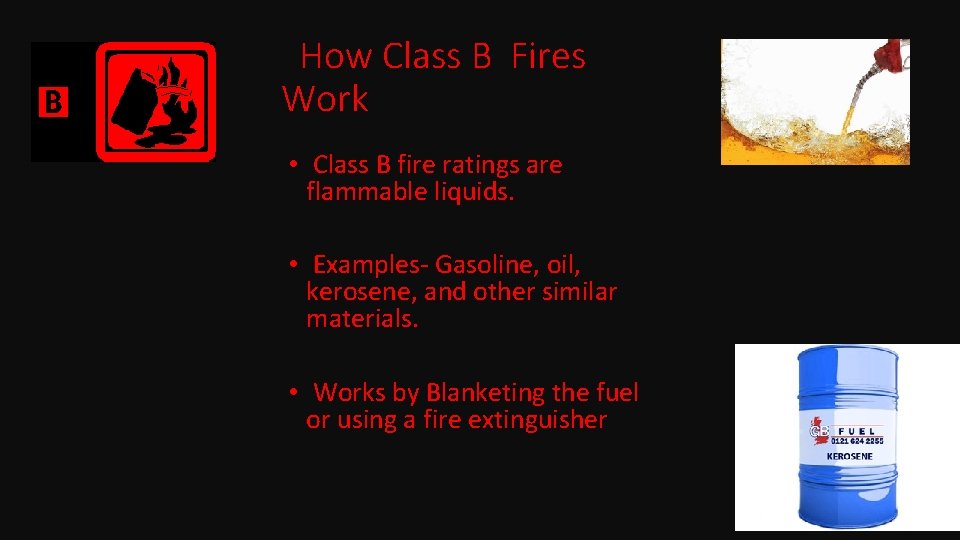
How Class B Fires Work • Class B fire ratings are flammable liquids. • Examples- Gasoline, oil, kerosene, and other similar materials. • Works by Blanketing the fuel or using a fire extinguisher
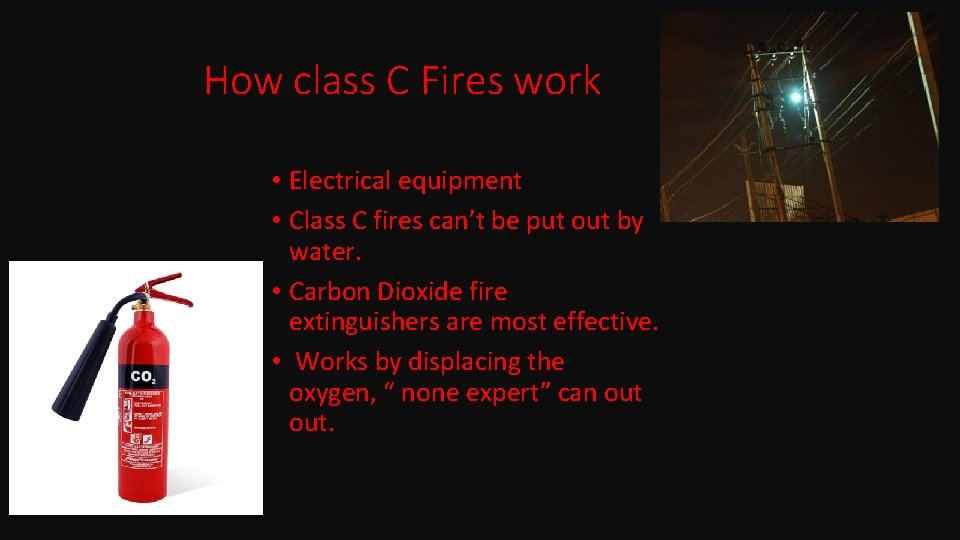
How class C Fires work • Electrical equipment • Class C fires can’t be put out by water. • Carbon Dioxide fire extinguishers are most effective. • Works by displacing the oxygen, “ none expert” can out.
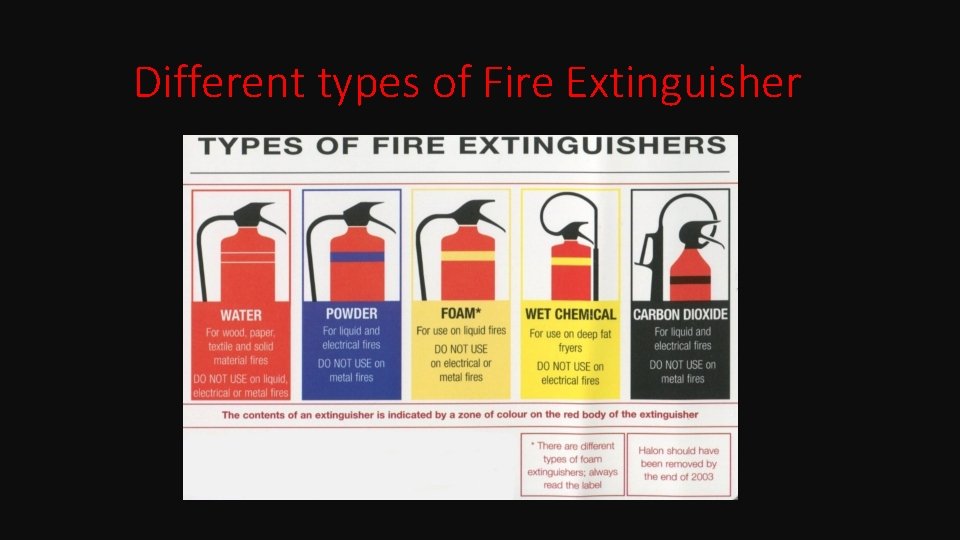
Different types of Fire Extinguisher
How to use a fire extinguisher safely • Always make sure you are standing with your back towards the exit. • Make sure you are a good distances away form the fire. • Aim the fire Extinguisher toward the bottom of the fire and use the sweeping motion back and forth. • Use the method called “P. A. S. S” system.
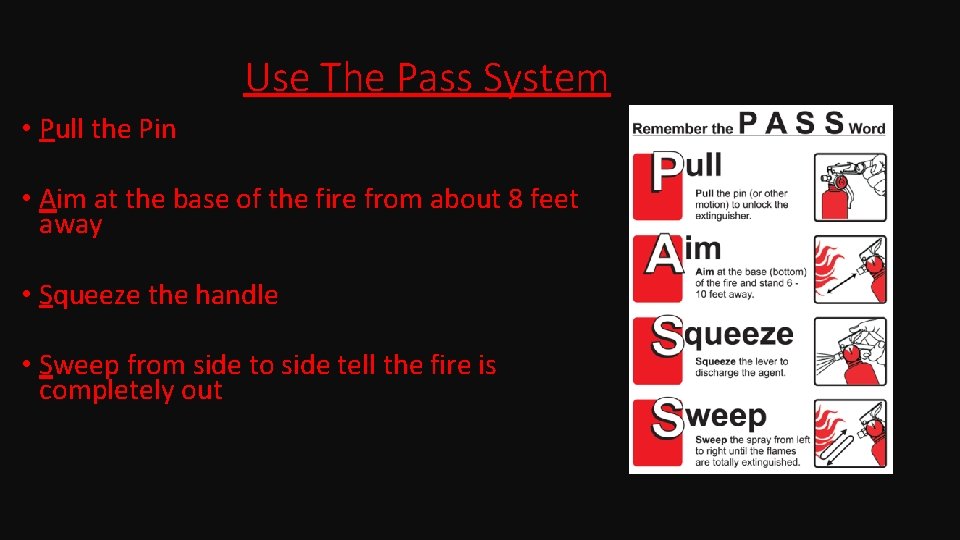
Use The Pass System • Pull the Pin • Aim at the base of the fire from about 8 feet away • Squeeze the handle • Sweep from side to side tell the fire is completely out
- Slides: 10