
Fire Safety and Emergency Procedures Refresher February 2017
Fire Safety and Emergency Procedures Refresher February 2017 Commercial in confidence; without prejudice. © Yooralla 2016
Overview This course will provide you with a refresher on what to do in a fire or emergency situation. Topics Include: 1. Fire Awareness 2. Extinguishing Methods 3. Emergency Evacuation Procedures 4. Fire Orders 5. Person in Charge Considerations 6. Evacuation Drills 7. Resources Commercial in confidence; without prejudice. © Yooralla 2016
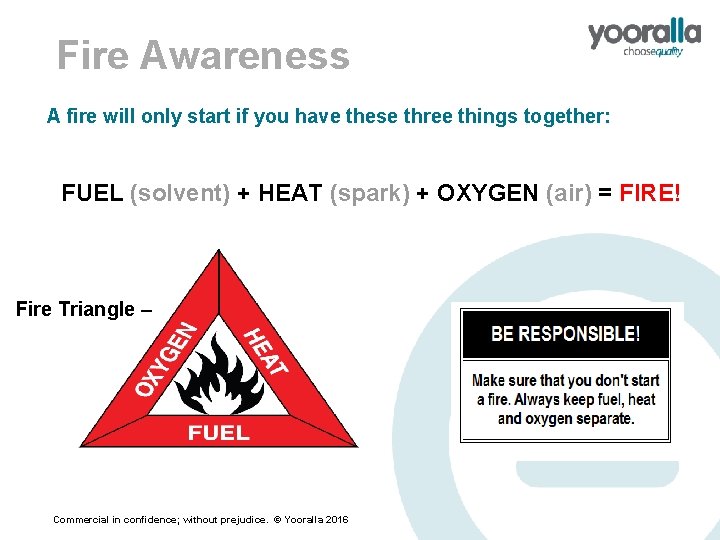
Fire Awareness A fire will only start if you have these three things together: FUEL (solvent) + HEAT (spark) + OXYGEN (air) = FIRE! Fire Triangle – Commercial in confidence; without prejudice. © Yooralla 2016
Extinguishing Methods Removing one or more sides of the Fire Triangle causes combustion to cease and the fire to go out. Only try to extinguish a fire if IT IS SAFE TO DO SO e. g. if the fire is less than the size of a rubbish bin Commercial in confidence; without prejudice. © Yooralla 2016
Extinguishing Methods The three methods to extinguishing a fire are: 1. Cooling 2. Starving 3. Smothering Commercial in confidence; without prejudice. © Yooralla 2016
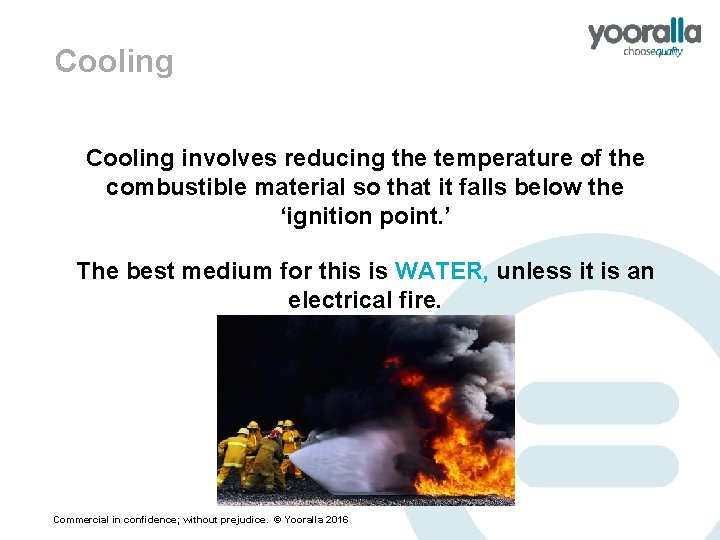
Cooling involves reducing the temperature of the combustible material so that it falls below the ‘ignition point. ’ The best medium for this is WATER, unless it is an electrical fire. Commercial in confidence; without prejudice. © Yooralla 2016
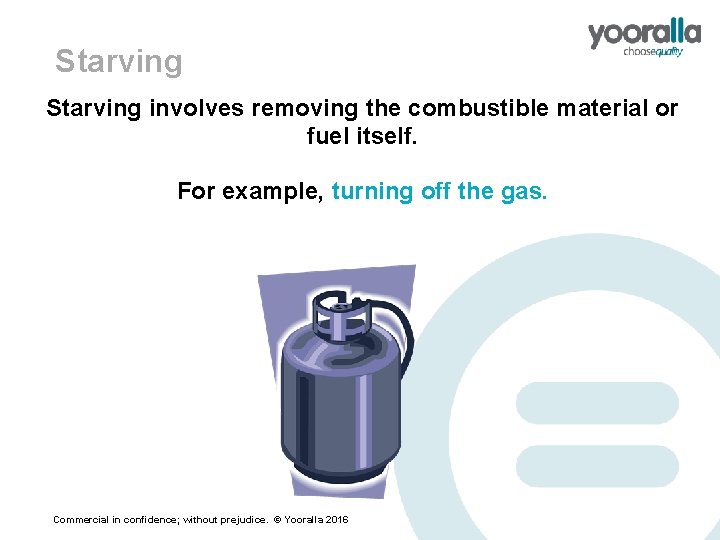
Starving involves removing the combustible material or fuel itself. For example, turning off the gas. Commercial in confidence; without prejudice. © Yooralla 2016
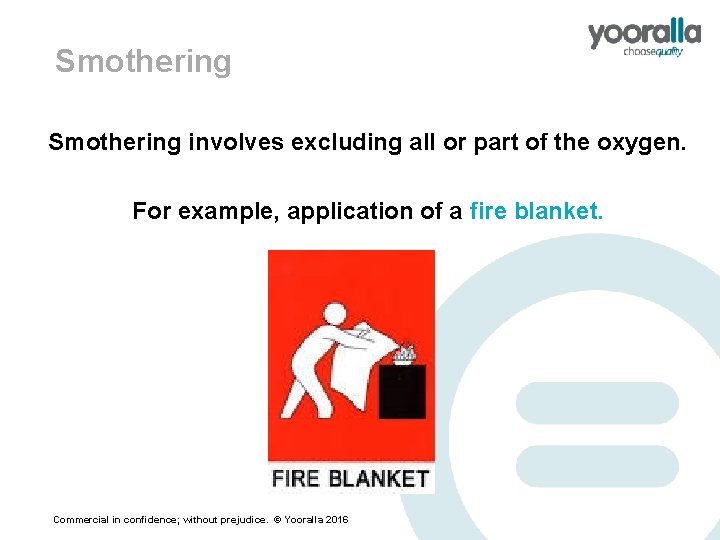
Smothering involves excluding all or part of the oxygen. For example, application of a fire blanket. Commercial in confidence; without prejudice. © Yooralla 2016
Portable Fire Extinguishers Nearly all fires begin as small fires and may be easily extinguished if discovered early enough and the correct extinguishing agent is applied. Commercial in confidence; without prejudice. © Yooralla 2016
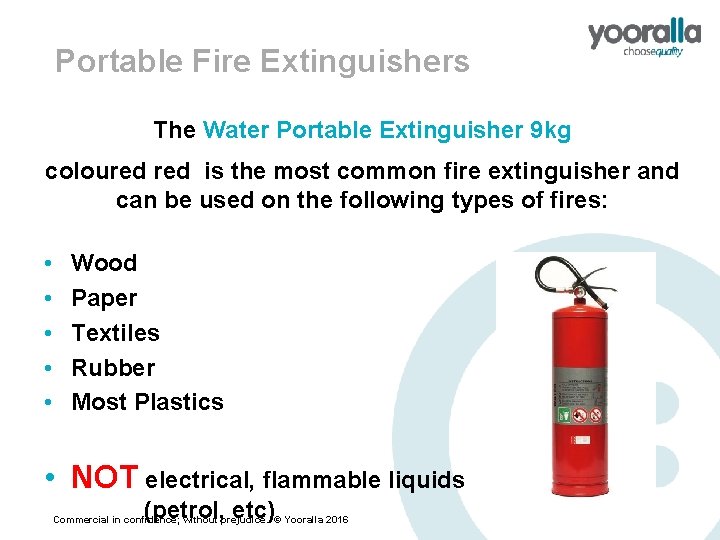
Portable Fire Extinguishers The Water Portable Extinguisher 9 kg coloured is the most common fire extinguisher and can be used on the following types of fires: • • • Wood Paper Textiles Rubber Most Plastics • NOT electrical, flammable liquids (petrol, etc) Commercial in confidence; without prejudice. © Yooralla 2016
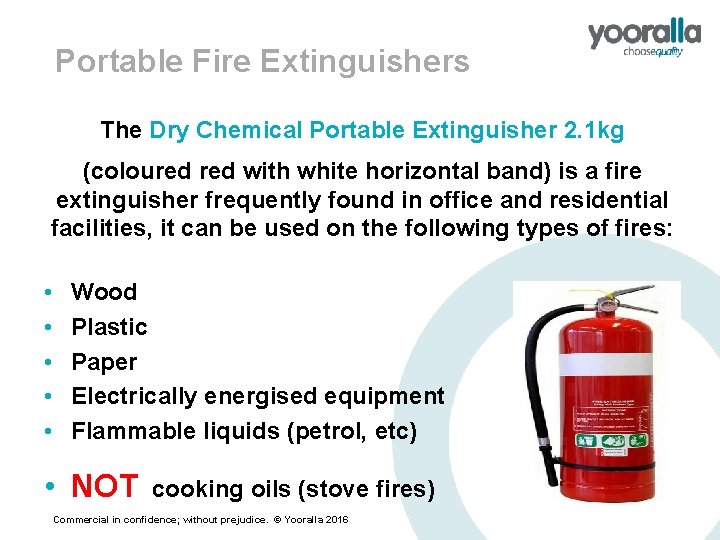
Portable Fire Extinguishers The Dry Chemical Portable Extinguisher 2. 1 kg (coloured with white horizontal band) is a fire extinguisher frequently found in office and residential facilities, it can be used on the following types of fires: • • • Wood Plastic Paper Electrically energised equipment Flammable liquids (petrol, etc) • NOT cooking oils (stove fires) Commercial in confidence; without prejudice. © Yooralla 2016
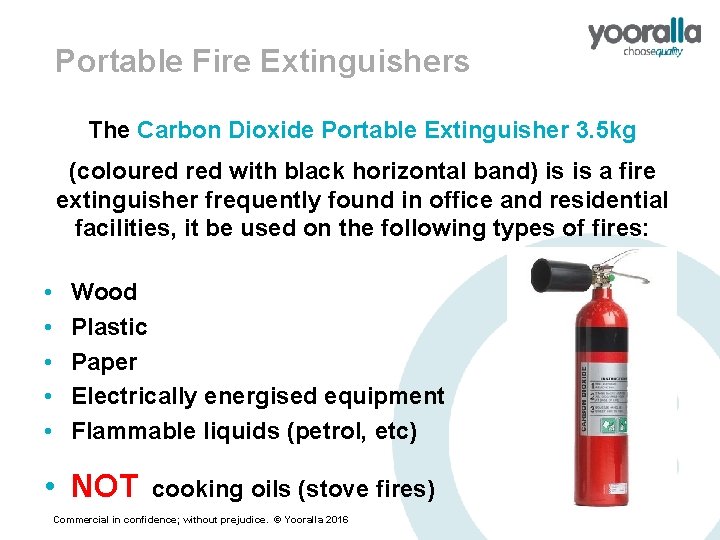
Portable Fire Extinguishers The Carbon Dioxide Portable Extinguisher 3. 5 kg (coloured with black horizontal band) is is a fire extinguisher frequently found in office and residential facilities, it be used on the following types of fires: • • • Wood Plastic Paper Electrically energised equipment Flammable liquids (petrol, etc) • NOT cooking oils (stove fires) Commercial in confidence; without prejudice. © Yooralla 2016
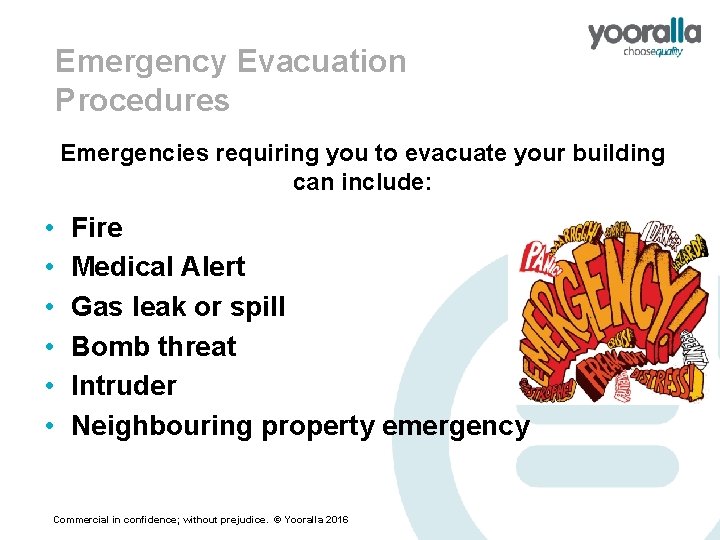
Emergency Evacuation Procedures Emergencies requiring you to evacuate your building can include: • • • Fire Medical Alert Gas leak or spill Bomb threat Intruder Neighbouring property emergency Commercial in confidence; without prejudice. © Yooralla 2016
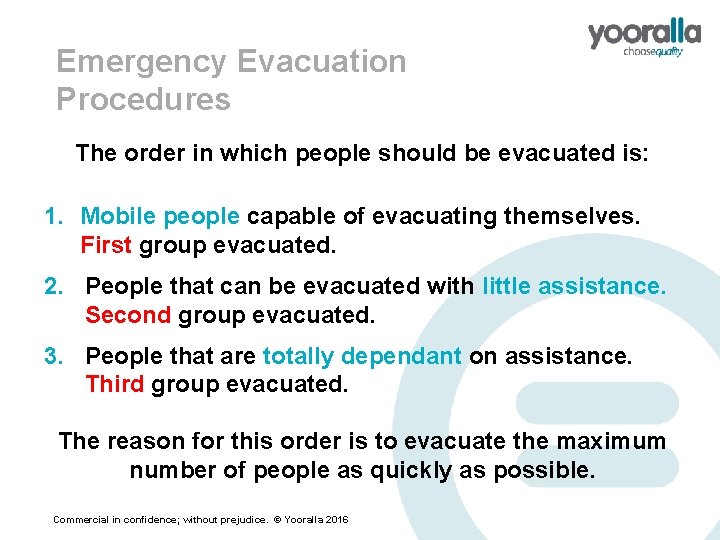
Emergency Evacuation Procedures The order in which people should be evacuated is: 1. Mobile people capable of evacuating themselves. First group evacuated. 2. People that can be evacuated with little assistance. Second group evacuated. 3. People that are totally dependant on assistance. Third group evacuated. The reason for this order is to evacuate the maximum number of people as quickly as possible. Commercial in confidence; without prejudice. © Yooralla 2016
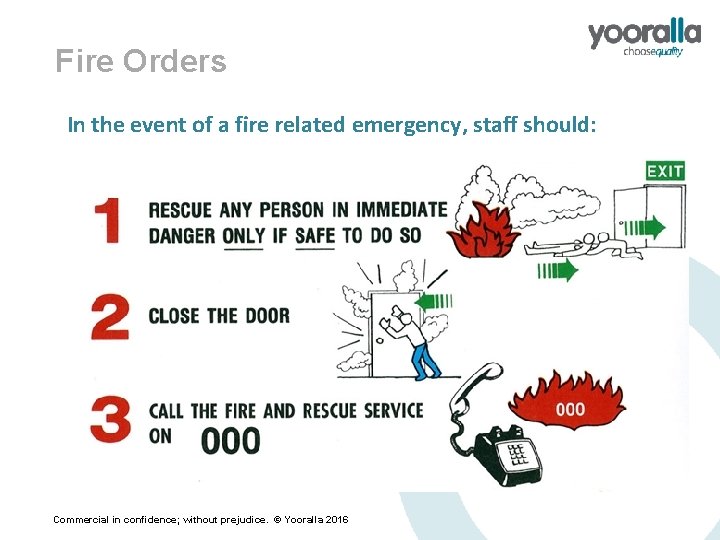
Fire Orders In the event of a fire related emergency, staff should: Commercial in confidence; without prejudice. © Yooralla 2016
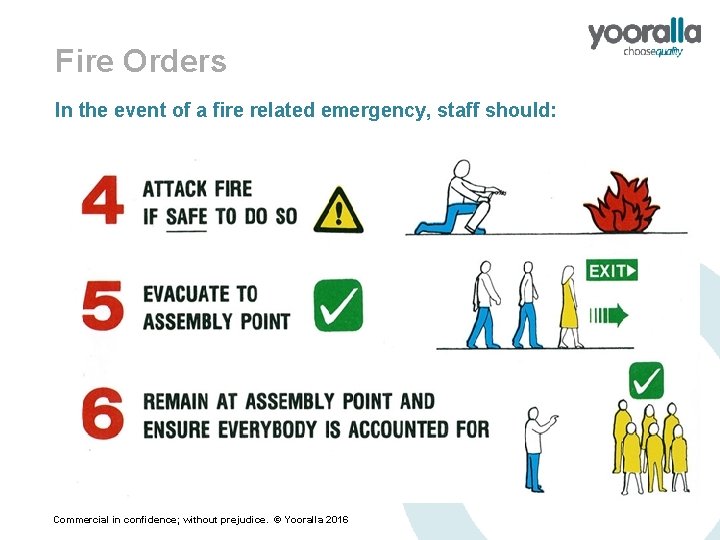
Fire Orders In the event of a fire related emergency, staff should: Commercial in confidence; without prejudice. © Yooralla 2016
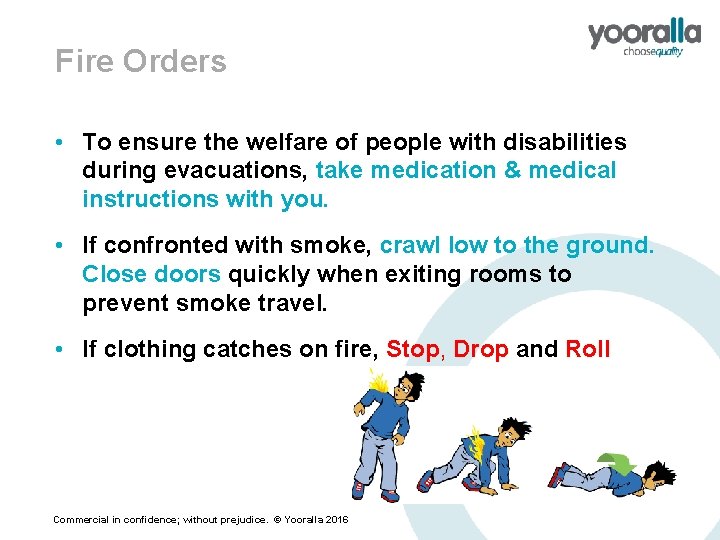
Fire Orders • To ensure the welfare of people with disabilities during evacuations, take medication & medical instructions with you. • If confronted with smoke, crawl low to the ground. Close doors quickly when exiting rooms to prevent smoke travel. • If clothing catches on fire, Stop, Drop and Roll Commercial in confidence; without prejudice. © Yooralla 2016
Fire Orders Under NO circumstances should anyone re-enter the building once it is evacuated. Commercial in confidence; without prejudice. © Yooralla 2016
Person in Charge Considerations: The person in charge should ensure: 1. The Fire Brigade has been called – 000 2. An orderly flow of people from the premises 3. The evacuation pack is taken when you go (where relevant) 4. That all rooms have been checked 5. A reasonable person is left with people at the Assembly Point 6. Nobody re-enters the building until advised by the fire brigade that it is safe to do so Commercial in confidence; without prejudice. © Yooralla 2016
Evacuation Drills A person’s behaviour and response to an emergency situation can be difficult to predict. This is why it is important to PRACTICE, PRACTICE by conducting Evacuation Drills. Each workplace has an evacuation plan and assembly location. Make sure you know your local arrangements or check with your manager if you are unsure. Commercial in confidence; without prejudice. © Yooralla 2016
Resources More information is available here: • • Emergency Procedures Manual OHS Procedures Manual Fire Evacuation Drill Checklist Fire Safety Equipment Checklist – Weekly Site Orientation and Induction Checklist Fire Safety Evacuation Exercise Record Fire Incident Report All available on the Yooralla Intranet under Policies & Procedures Commercial in confidence; without prejudice. © Yooralla 2016
You have now finished reading this e. Learning trackable document. • Please return to your e. Learning dashboard and click on the ‘launch’ button. • You will see the screen below. If you agree that you have read and understood the document, tick ( ) the checkbox. This will complete the module and issue a certificate. Commercial in confidence; without prejudice. © Yooralla 2016
- Slides: 22