
Fire Risk in the Boundary Waters Canoe Area
Fire Risk in the Boundary Waters Canoe Area Presented By: Matthew Roose James Cordon
Introduction l Gunflint Corridor is located in the BWCA – Located in Northern Minnesota – Encompasses 47, 669 acres • 29, 595 National Forest System lands • private lands include: 4 youth camps, 22 resorts, 9 campgrounds, 22 boat landings – July 4 th Storm caused major blowdown of trees • heavy rains, straight line rains exceeding 90 mph • caused damage to 32, 579 acres of land • created fuel pathway of 80 -120 ton/acre
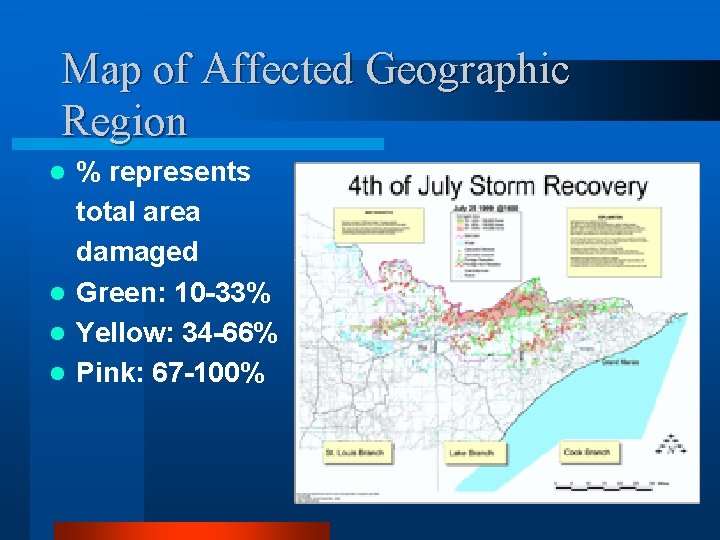
Map of Affected Geographic Region % represents total area damaged l Green: 10 -33% l Yellow: 34 -66% l Pink: 67 -100% l
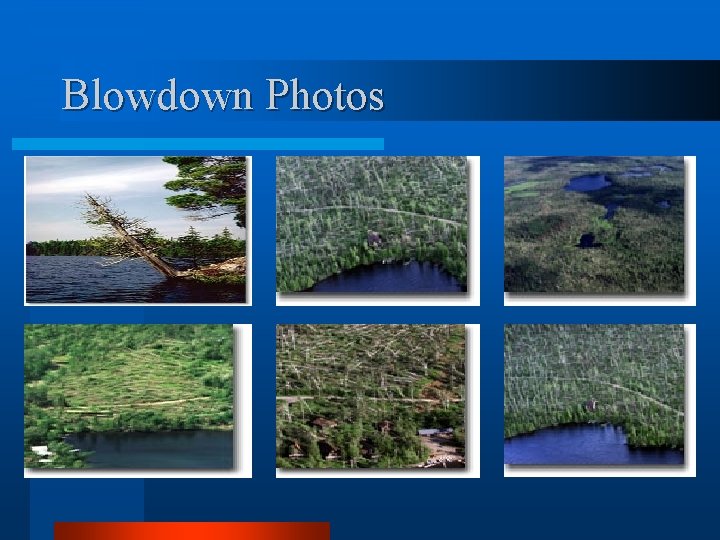
Blowdown Photos
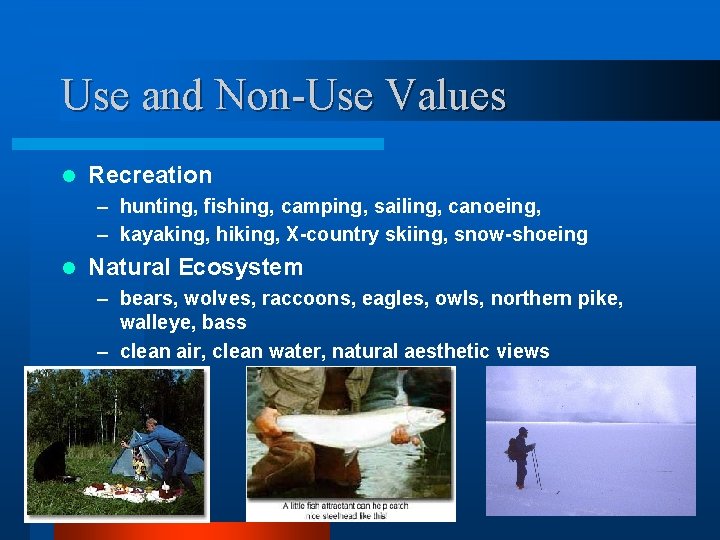
Use and Non-Use Values l Recreation – hunting, fishing, camping, sailing, canoeing, – kayaking, hiking, X-country skiing, snow-shoeing l Natural Ecosystem – bears, wolves, raccoons, eagles, owls, northern pike, walleye, bass – clean air, clean water, natural aesthetic views
Market Failures l Negative Externalities – land issues: affected area has many different owners (federal, state, private) • a fire started on private land would easily travel to government lands, the reverse is also true • private parties do not feel responsible for government lands • boundaries are not well defined
Market Failures, cont. l Public Goods – private parties can access good without cost – private individuals do not understand that their land effects others • proper amount of cleanup is not accomplished – private parties can experience non-use values at no cost • free-riding is present
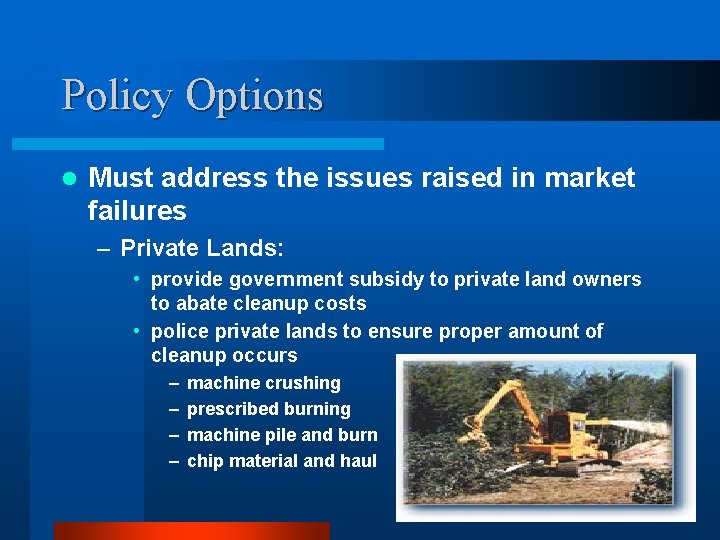
Policy Options l Must address the issues raised in market failures – Private Lands: • provide government subsidy to private land owners to abate cleanup costs • police private lands to ensure proper amount of cleanup occurs – – machine crushing prescribed burning machine pile and burn chip material and haul
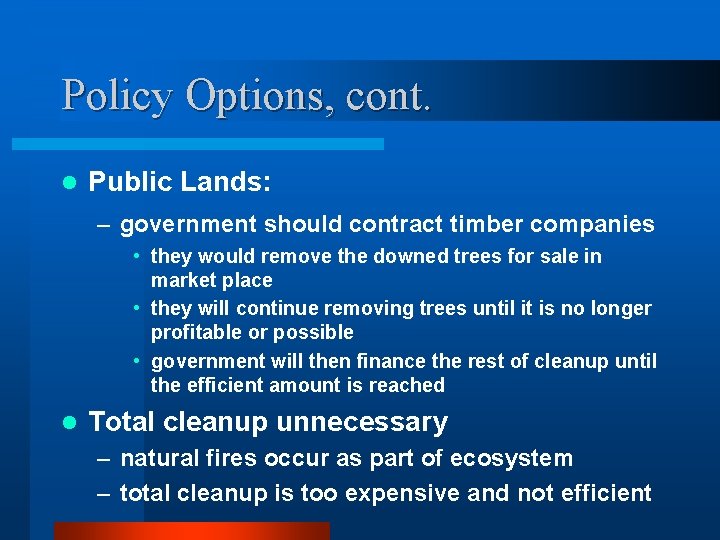
Policy Options, cont. l Public Lands: – government should contract timber companies • they would remove the downed trees for sale in market place • they will continue removing trees until it is no longer profitable or possible • government will then finance the rest of cleanup until the efficient amount is reached l Total cleanup unnecessary – natural fires occur as part of ecosystem – total cleanup is too expensive and not efficient
- Slides: 9