
Fire Prevention and Use of Fire Extinguishers U
- Slides: 22
Fire Prevention and Use of Fire Extinguishers
U. S. Fire Statistics – 2004 NFPA u. A Fire Department Responds to a Fire in the U. S. Every 20 Seconds – 3900 Fatalities (One Every 135 Minutes) – 17, 785 Injuries (One Every 30 Minutes) u Home Fires Account for 82% of the Fatalities u 911 Calls (>2 Million Calls) – 62% Request for Aid (EMS) – 9% False Alarms – 7% Fire-Related
U. S. Fire Statistics – 2004 NFPA u Leading Cause of Non-Home Structured Fires – Intentional Fire Setting u Leading Cause of Fires in Mercantile Properties or Office Buildings: – Lighting or Electrical Distribution Equipment
Potential Fire Hazards at Work u Electrical Wiring/Heat Generating Appliances – Kitchen Area u Storage and Handling of Flammable/Combustible Materials u Open Flames u Vehicle Fires
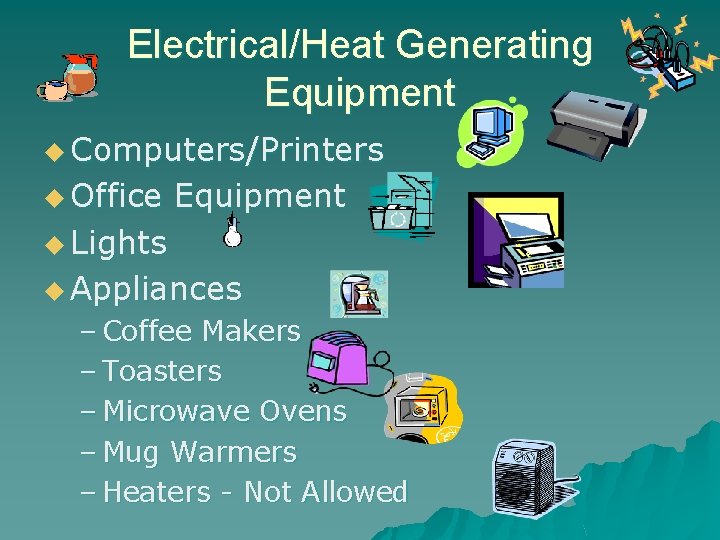
Electrical/Heat Generating Equipment u Computers/Printers u Office Equipment u Lights u Appliances – Coffee Makers – Toasters – Microwave Ovens – Mug Warmers – Heaters - Not Allowed
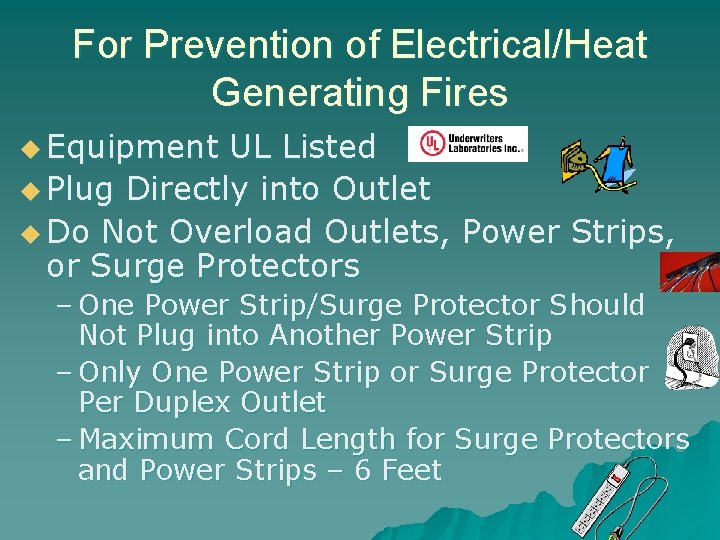
For Prevention of Electrical/Heat Generating Fires u Equipment UL Listed u Plug Directly into Outlet u Do Not Overload Outlets, Power Strips, or Surge Protectors – One Power Strip/Surge Protector Should Not Plug into Another Power Strip – Only One Power Strip or Surge Protector Per Duplex Outlet – Maximum Cord Length for Surge Protectors and Power Strips – 6 Feet
For Prevention of Electrical/Heat Generating Fires u Shut Off Appliances/Equipment u Periodically Inspect Wiring for Wear u Care in Using Microwave – Especially Popcorn
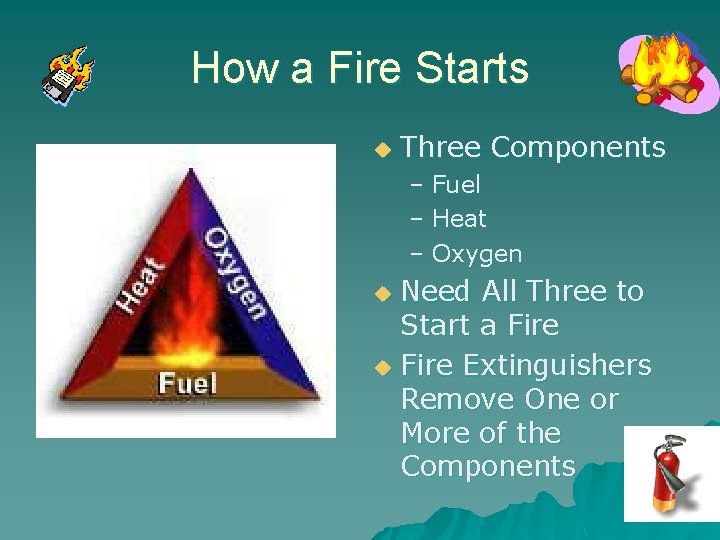
How a Fire Starts u Three Components – Fuel – Heat – Oxygen Need All Three to Start a Fire u Fire Extinguishers Remove One or More of the Components u
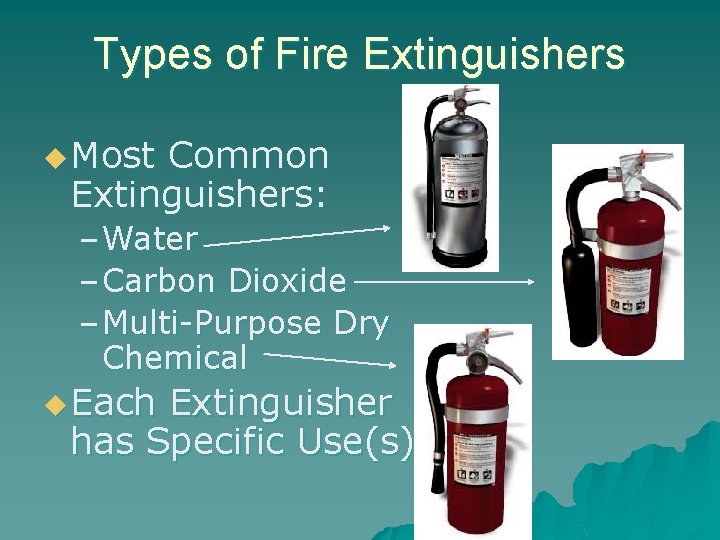
Types of Fire Extinguishers u Most Common Extinguishers: – Water – Carbon Dioxide – Multi-Purpose Dry Chemical u Each Extinguisher has Specific Use(s)
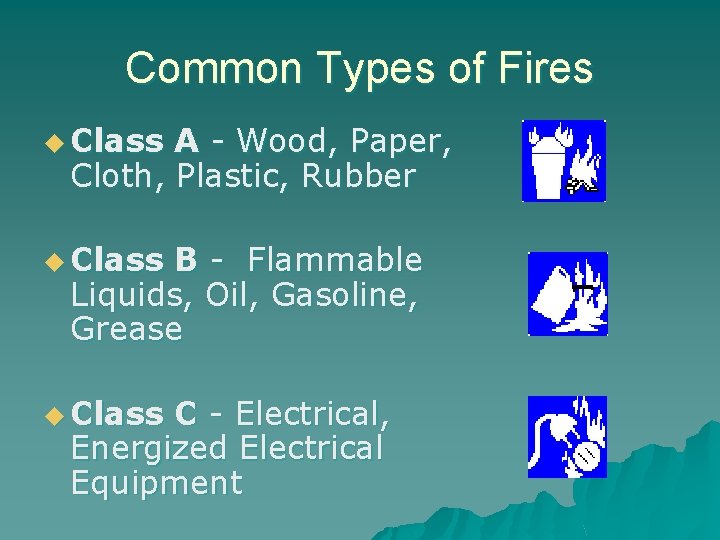
Common Types of Fires u Class A - Wood, Paper, Cloth, Plastic, Rubber u Class B - Flammable Liquids, Oil, Gasoline, Grease u Class C - Electrical, Energized Electrical Equipment
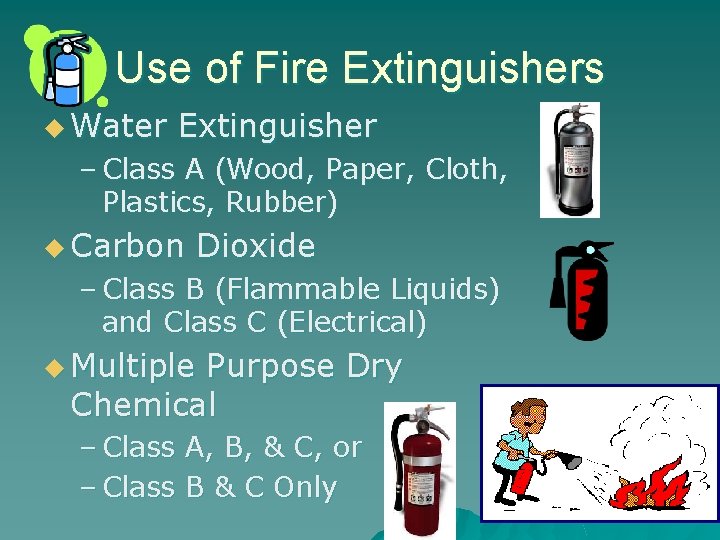
Use of Fire Extinguishers u Water Extinguisher – Class A (Wood, Paper, Cloth, Plastics, Rubber) u Carbon Dioxide – Class B (Flammable Liquids) and Class C (Electrical) u Multiple Purpose Dry Chemical – Class A, B, & C, or – Class B & C Only
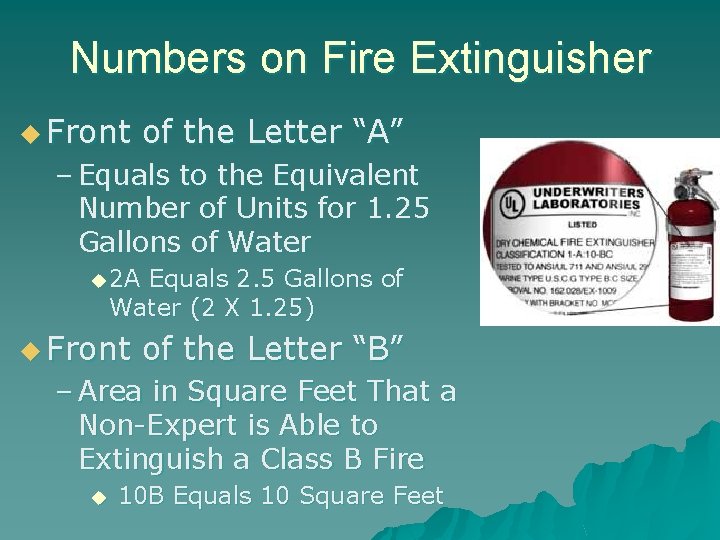
Numbers on Fire Extinguisher u Front of the Letter “A” – Equals to the Equivalent Number of Units for 1. 25 Gallons of Water u 2 A Equals 2. 5 Gallons of Water (2 X 1. 25) u Front of the Letter “B” – Area in Square Feet That a Non-Expert is Able to Extinguish a Class B Fire u 10 B Equals 10 Square Feet
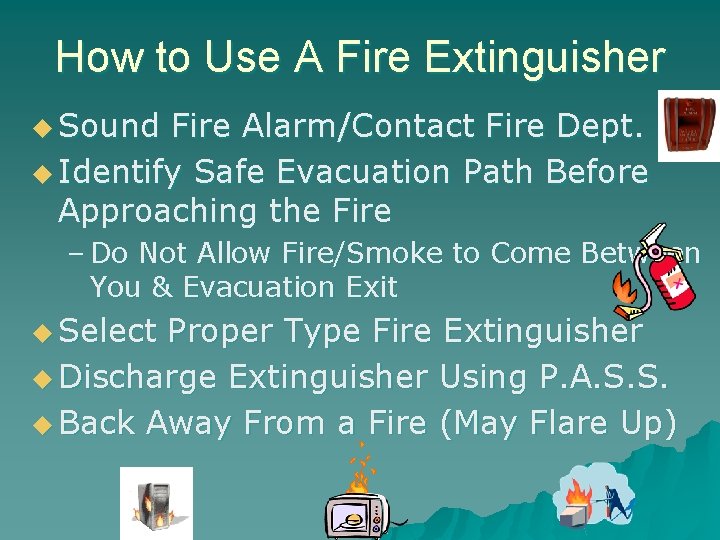
How to Use A Fire Extinguisher u Sound Fire Alarm/Contact Fire Dept. u Identify Safe Evacuation Path Before Approaching the Fire – Do Not Allow Fire/Smoke to Come Between You & Evacuation Exit u Select Proper Type Fire Extinguisher u Discharge Extinguisher Using P. A. S. S. u Back Away From a Fire (May Flare Up)
How to Use A Fire Extinguisher (Continued) u Evacuate Immediately If: – Extinguisher is Empty & Fire Is Not Out; or – Fire is Beyond Incipient Stage
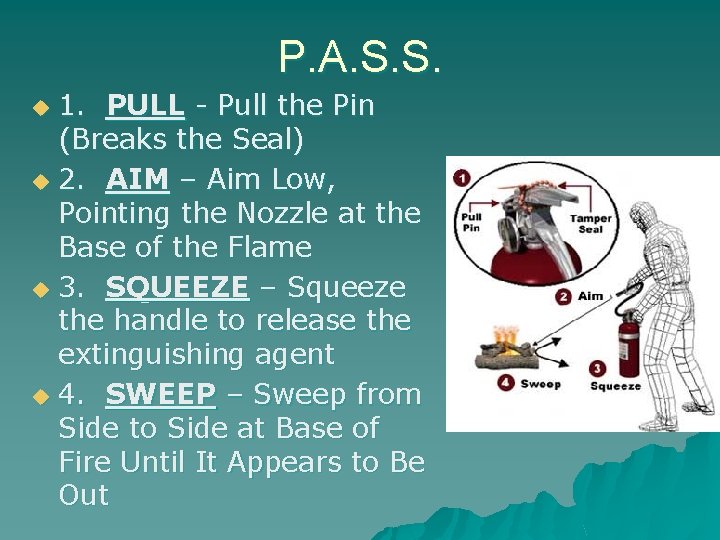
P. A. S. S. 1. PULL - Pull the Pin (Breaks the Seal) u 2. AIM – Aim Low, Pointing the Nozzle at the Base of the Flame u 3. SQUEEZE – Squeeze the handle to release the extinguishing agent u 4. SWEEP – Sweep from Side to Side at Base of Fire Until It Appears to Be Out u
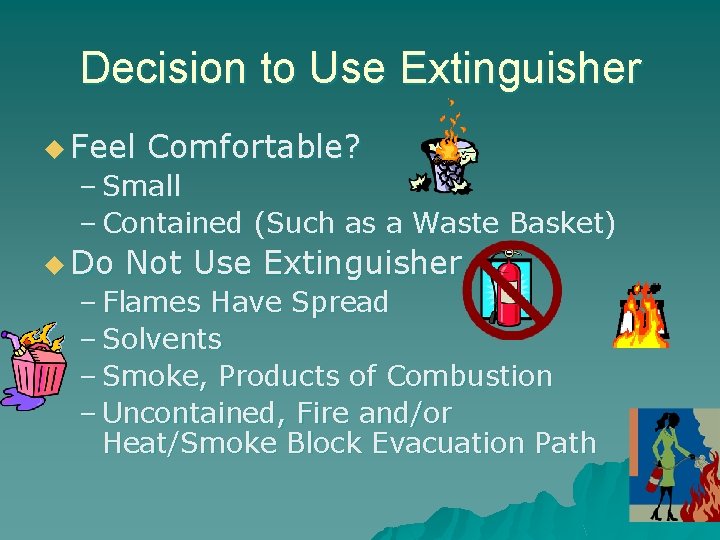
Decision to Use Extinguisher u Feel Comfortable? – Small – Contained (Such as a Waste Basket) u Do Not Use Extinguisher – Flames Have Spread – Solvents – Smoke, Products of Combustion – Uncontained, Fire and/or Heat/Smoke Block Evacuation Path
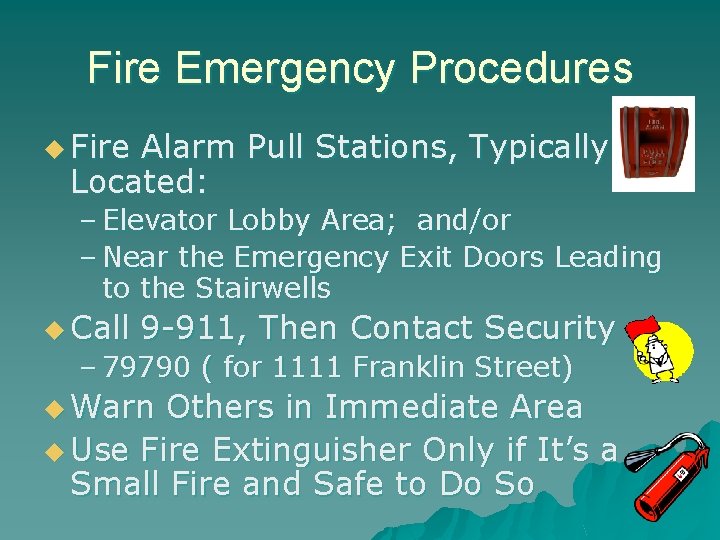
Fire Emergency Procedures u Fire Alarm Pull Stations, Typically Located: – Elevator Lobby Area; and/or – Near the Emergency Exit Doors Leading to the Stairwells u Call 9 -911, Then Contact Security – 79790 ( for 1111 Franklin Street) u Warn Others in Immediate Area u Use Fire Extinguisher Only if It’s a Small Fire and Safe to Do So
Fire Emergency Building Evacuation u Will Cover at Future Safety Meeting – Evacuation Plans: Building Specific – Need Floor Warden Participation
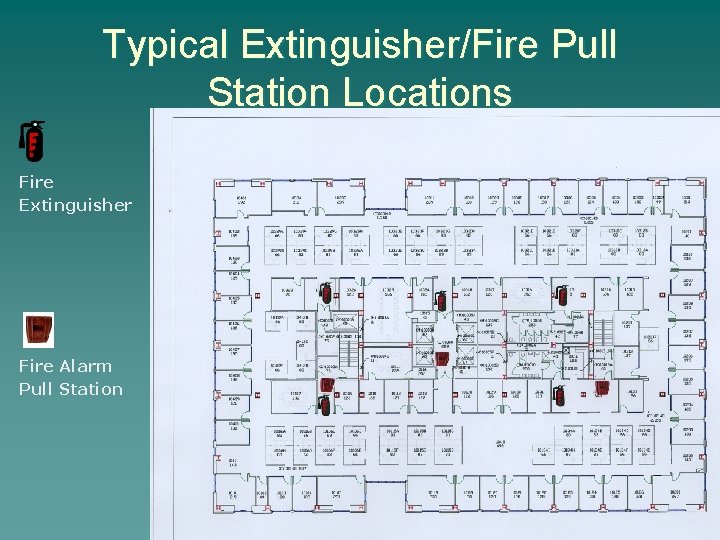
Typical Extinguisher/Fire Pull Station Locations Fire Extinguisher Fire Alarm Pull Station
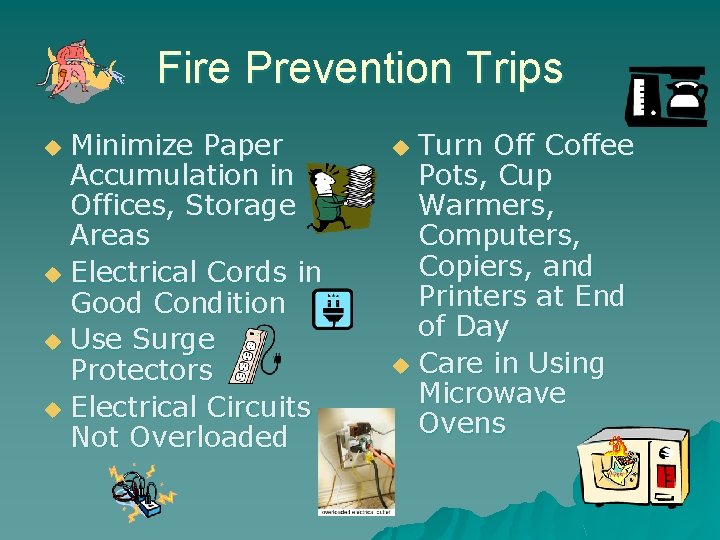
Fire Prevention Trips Minimize Paper Accumulation in Offices, Storage Areas u Electrical Cords in Good Condition u Use Surge Protectors u Electrical Circuits Not Overloaded u Turn Off Coffee Pots, Cup Warmers, Computers, Copiers, and Printers at End of Day u Care in Using Microwave Ovens u
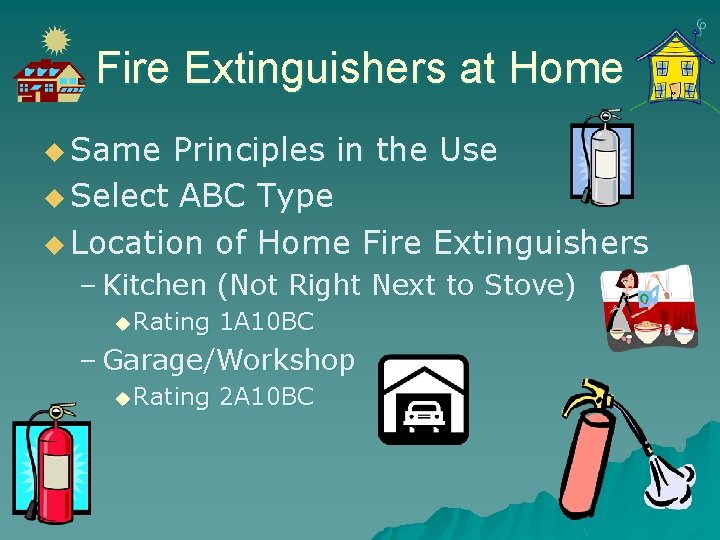
Fire Extinguishers at Home u Same Principles in the Use u Select ABC Type u Location of Home Fire Extinguishers – Kitchen (Not Right Next to Stove) u Rating 1 A 10 BC – Garage/Workshop u Rating 2 A 10 BC
Think Fire Safety Be Smart About Fire Safety