
FIRE PREVENTION AND SAFETY Principles of Health Science
- Slides: 26
FIRE PREVENTION AND SAFETY Principles of Health Science
RATIONALE: Fires may occur at any time, as a result of overloading wiring, smoking, improper chemical storage and various emergencies. Healthcare workers must recognize & respond to fire risk situations to protect clients, families, and workers.
DISCUSSION: Do you have a fire escape plan for your home? Do all your family members know where the fire extinguishers are? Do you have smoke alarms installed, and are they functioning properly?
Does the fire department know where water can be obtained near your home? Does your house have a house number on it or the mailbox, for firefighters to find?
KEY POINTS: Fire safety in health care facilities – hospitals, nursing homes, clinics – requires a specialized response. Many patients have needs that make them especially vulnerable in a fire emergency, thus increasing the risk of casualties.
Health care staff must therefore make every effort to prevent fires from starting and must be prepared to respond if a fire breaks out.
OSHA is a term you will hear often, and it stands for Occupational Safety and Health Administration. It is a regulatory agency for fire safety and all types of safety.
NURSING HOME FIRE https: //www. youtube. com/watch? v=en_0 vf. JHK 5 Q
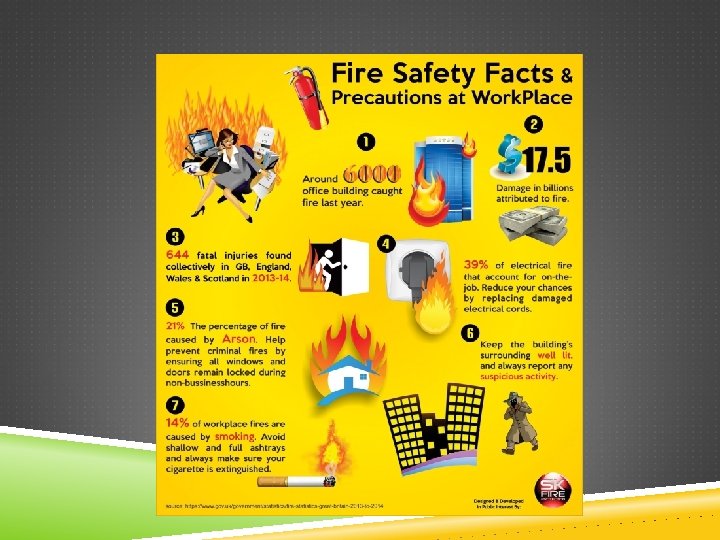
FIRE HAZARDS: A common cause of fire in health care facilities is from smoking. If smoking is allowed, large, deep, non-tip ashtrays should be used, and should be emptied often into metal containers.
Smoking should never be allowed where oxygen is in use. Another common fire hazard is faulty or improperly used equipment. All equipment should be checked on a routine schedule. Pay special attention to the following:
Cracked or split cords or plugs on electrical equipment. Overloaded extension cords or cords placed where they may be stepped on. Dirty or greasy kitchen equipment. Full laundry lint screens. Lights in close proximity to paper or fabric.
CHRISTMAS TREE FIRE https: //www. youtube. com/watch? v=SFp 92 d. Piuq. Y
Any indicated malfunction of an oxygen machine or gas compressor. Improperly lubricated fan motors and worn drive belts. Improperly maintained or malfunctioning heating, ventilating, and cooling equipment. Office equipment left running continuously.
KITCHEN FIRE https: //www. youtube. com/watch? v=X 6 ez. Sxxw. M 3 U
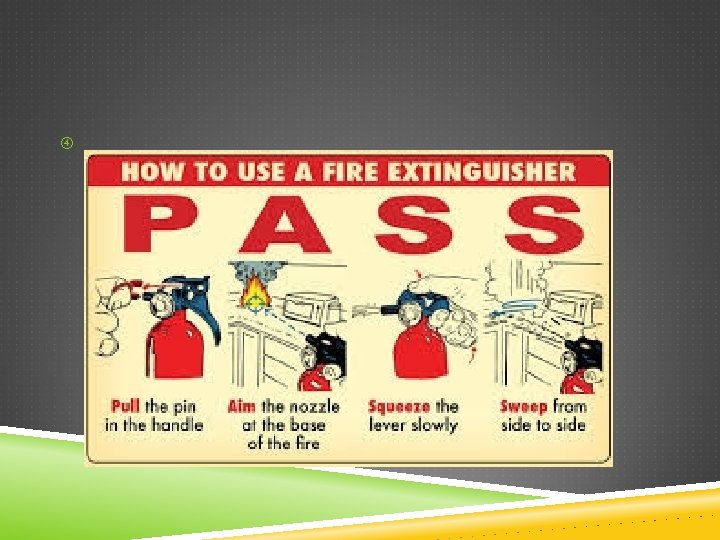
FIRE RESPONSE – KNOW THE FOLLOWING: Facility’s emergency plan Location of fire alarms and how to operate them How to shut off oxygen machines and other compressed gas systems Location of fire extinguishers and how to use them How to move patients safely and quickly if necessary.
REMEMBER THE RACE AGAINST FIRE: RACE = Rescue, Activate (or Alarm), Confine, Extinguish
RESCUE – any individual directly threatened by fire. Patient safety is the primary consideration, so move patients who are in immediate danger away from smoke and flames. Place the patient in a nearby area behind a closed door, or outside.
ORDER OF EVACUATION Walking Wheelchairs Bed Ridden
ACTIVATE the alarm if you discover a fire or respond immediately to the alarm if you hear it sound. CONFINE the fire by closing doors to slow the spread of smoke and flame. Close the doors of patients’ rooms. In general, residents are safer in a closed room than in a smoke-filled hallway.
EXTINGUISH the fire only if the fire is small, and if you know how to operate a fire extinguisher. Be sure the area has been cleared and the fire department called.
http: //grcity. us/fire- department/Documents/4930_Fire. Safety_Nursing. Home. Personnel. pdf https: //www. youtube. com/watch? v=gek. COFrae. OI (sprinklers)
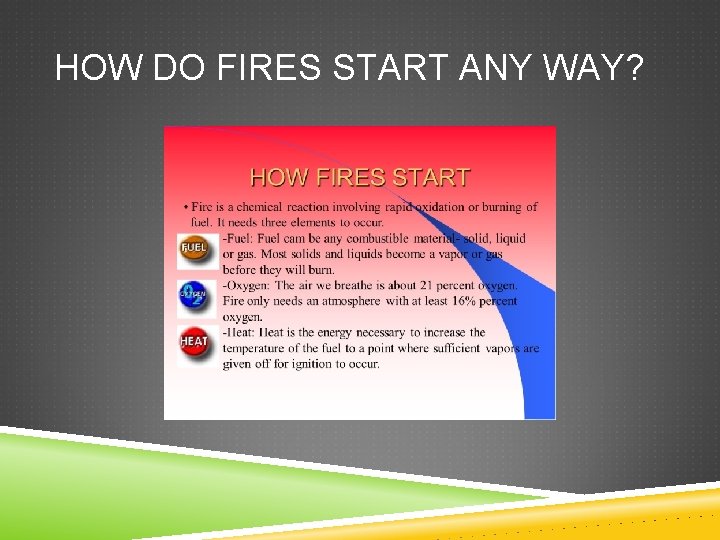
HOW DO FIRES START ANY WAY?
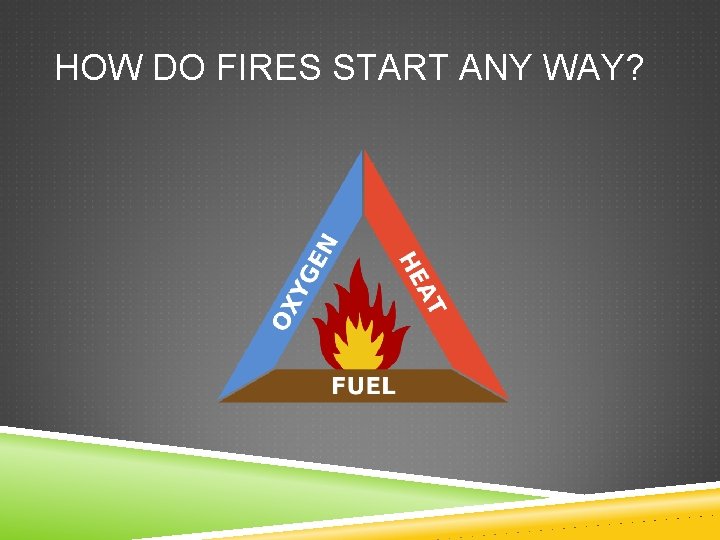
HOW DO FIRES START ANY WAY?
APPROPRIATE GUIDELINES FOR PRACTICING CLIENT AND PERSONAL SAFETY DURING A FIRE: Remain calm. Remove any clients or co-workers who are in immediate danger. Activate the fire alarm to notify proper authority of emergency. Effectively use fire extinguishers.