
Fire Fighting Fire and safety Safety Definition The


- Slides: 35
Fire Fighting Fire and safety
Safety Definition: The health and well being of students and people employed in KSU. To promote the safety of employees, the laws and regulations are enforced by the local and international accredited standards to prevent workplace illnesses, accidents, injuries, and fatalities.
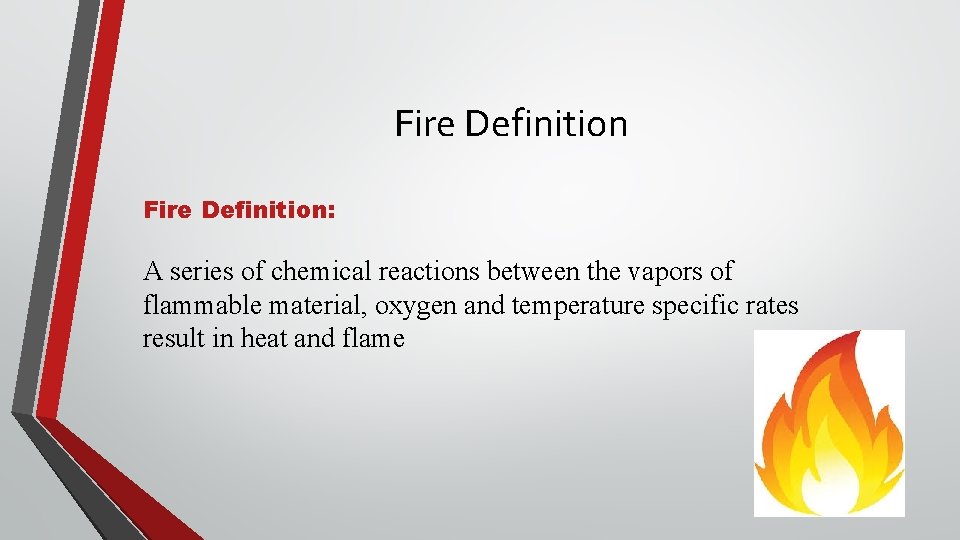
Fire Definition: A series of chemical reactions between the vapors of flammable material, oxygen and temperature specific rates result in heat and flame
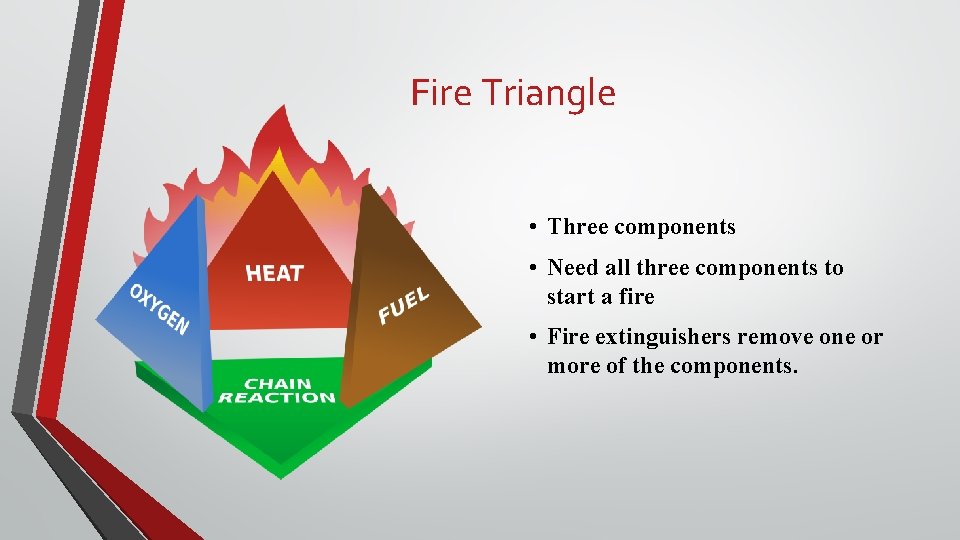
Fire Triangle • Three components • Need all three components to start a fire • Fire extinguishers remove one or more of the components.
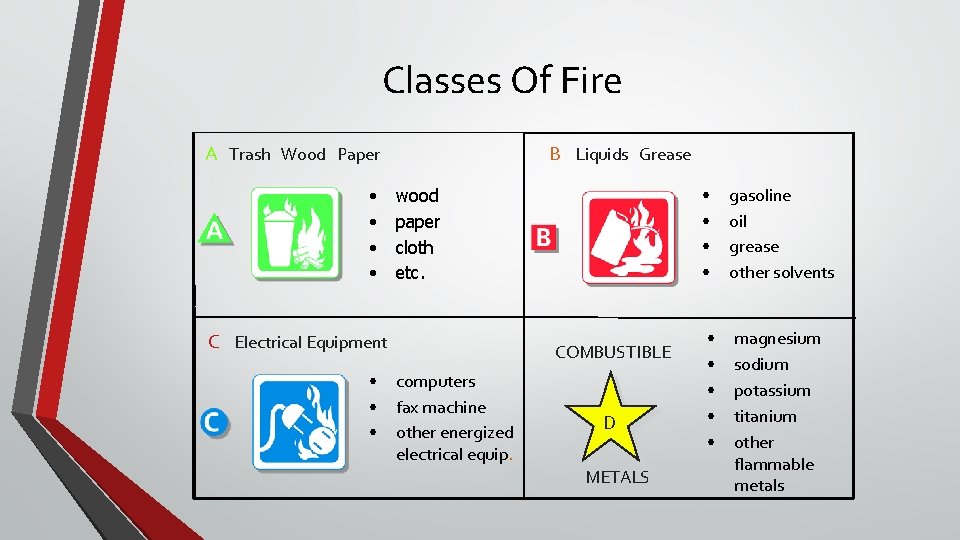
Classes Of Fire A Trash Wood Paper • • B Liquids Grease wood paper cloth etc. C Electrical Equipment • • • COMBUSTIBLE computers fax machine other energized electrical equip. D METALS • • gasoline oil grease other solvents • • • magnesium sodium potassium titanium other flammable metals
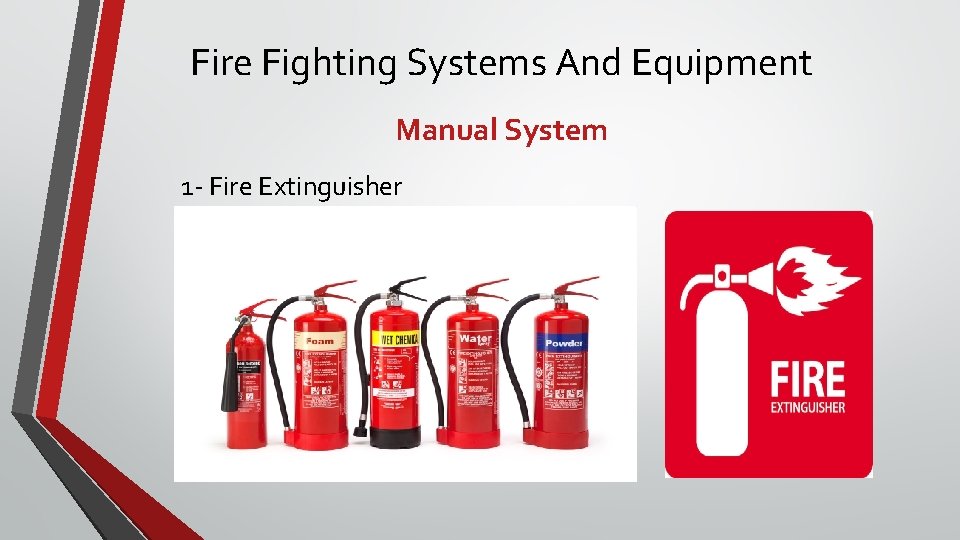
Fire Fighting Systems And Equipment Manual System 1 - Fire Extinguisher
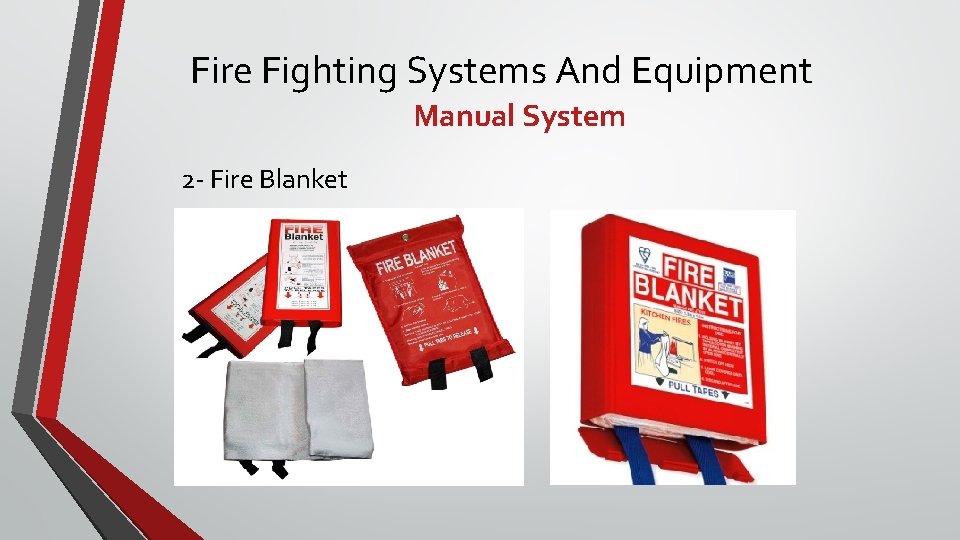
Fire Fighting Systems And Equipment Manual System 2 - Fire Blanket
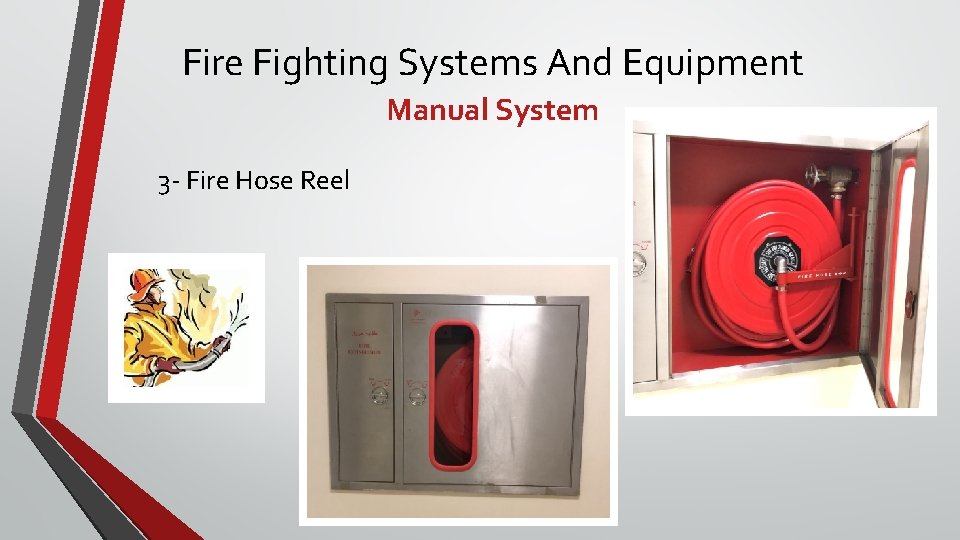
Fire Fighting Systems And Equipment Manual System 3 - Fire Hose Reel
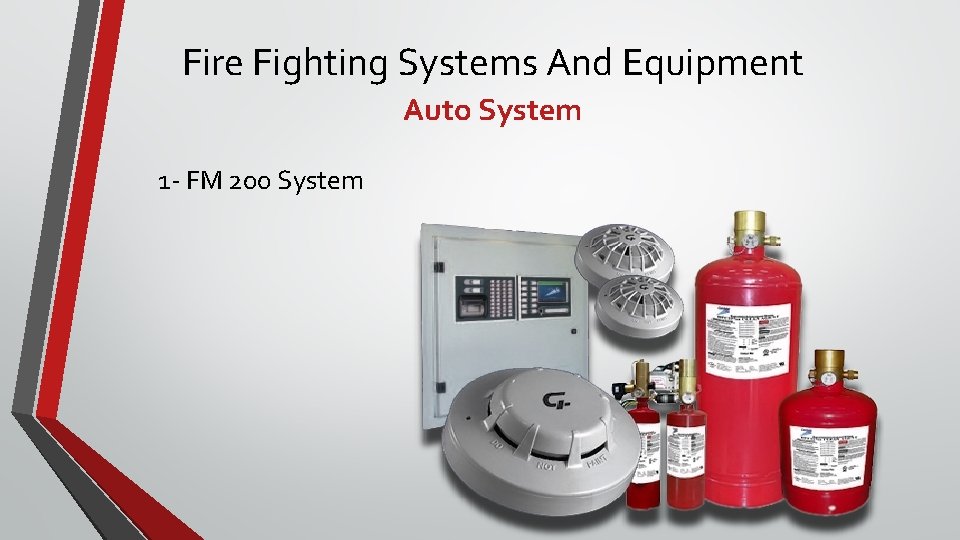
Fire Fighting Systems And Equipment Auto System 1 - FM 200 System
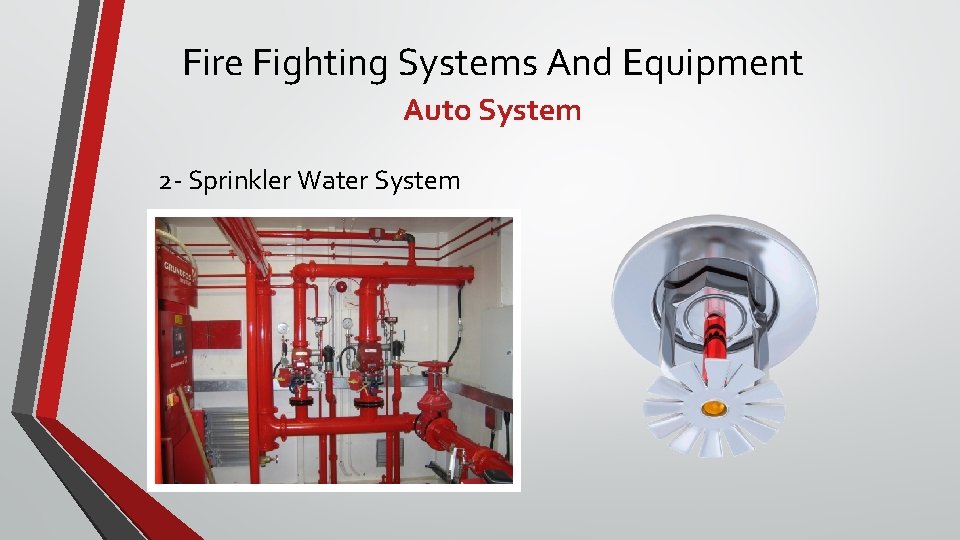
Fire Fighting Systems And Equipment Auto System 2 - Sprinkler Water System
Fire extinguishers
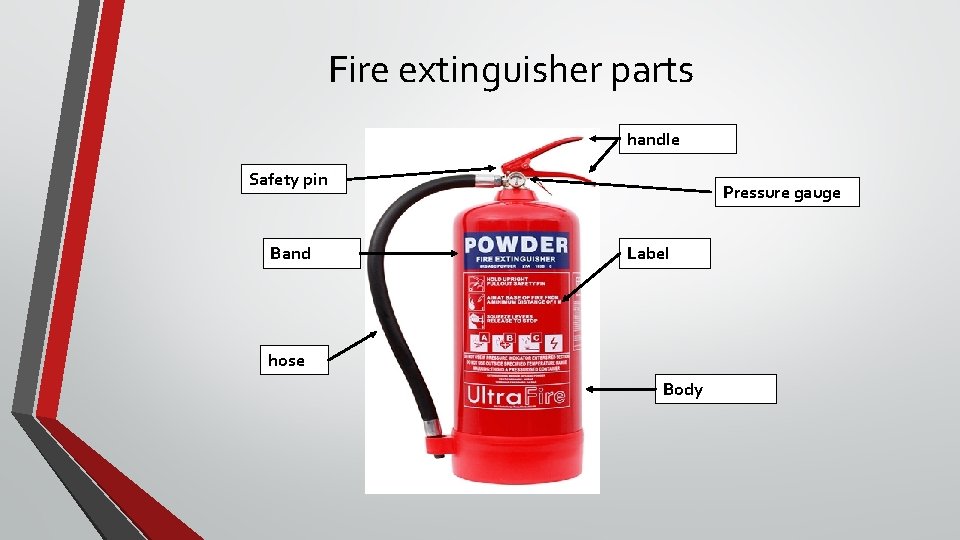
Fire extinguisher parts handle Safety pin Band Pressure gauge Label hose Body
Fire extinguisher definition Fire extinguisher: • A fire extinguisher is an active fire protection device used to extinguish or control small fires, often in emergency situations. It is not intended for use on an out-of-control fire, such as one which has reached the ceiling, endangers the user • The type of fuel that is burning will determine which resources to select to fight a fire.
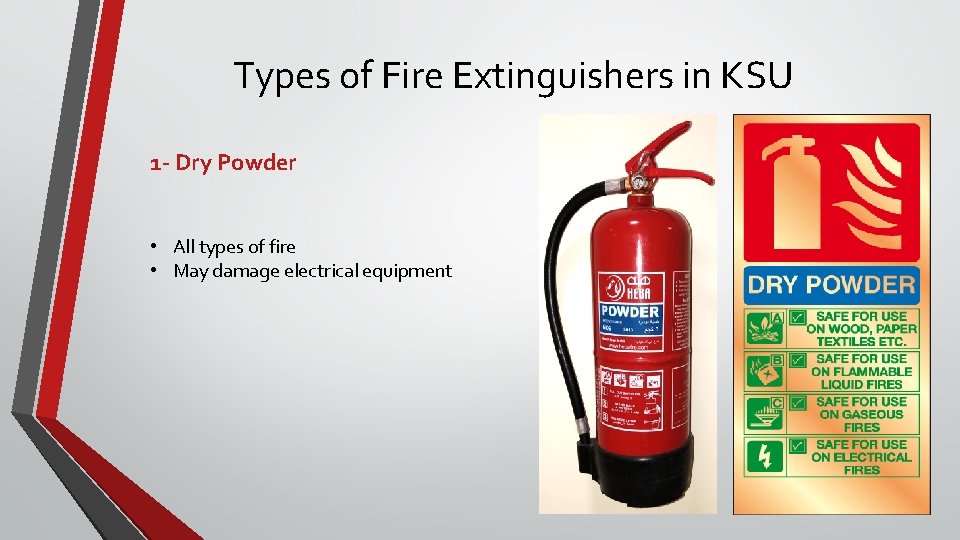
Types of Fire Extinguishers in KSU 1 - Dry Powder • All types of fire • May damage electrical equipment
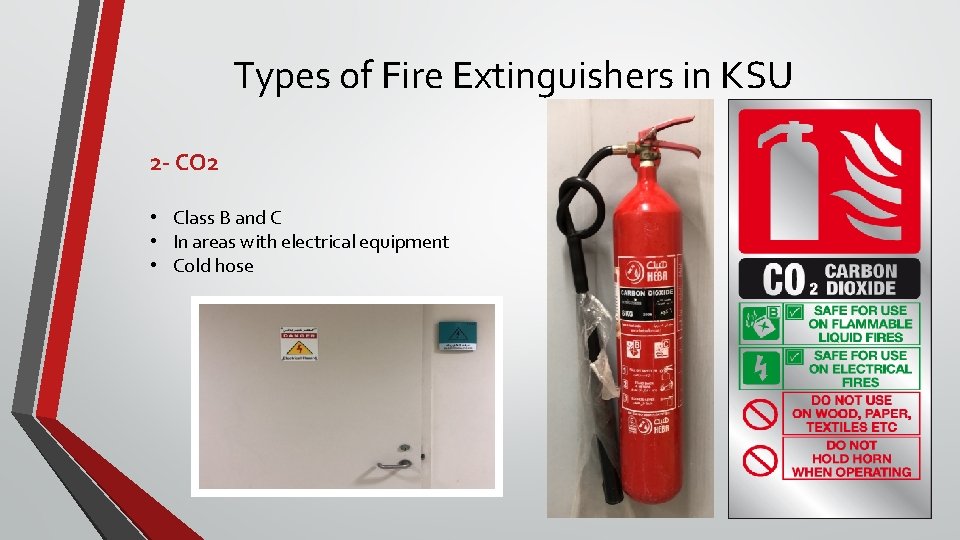
Types of Fire Extinguishers in KSU 2 - CO 2 • Class B and C • In areas with electrical equipment • Cold hose
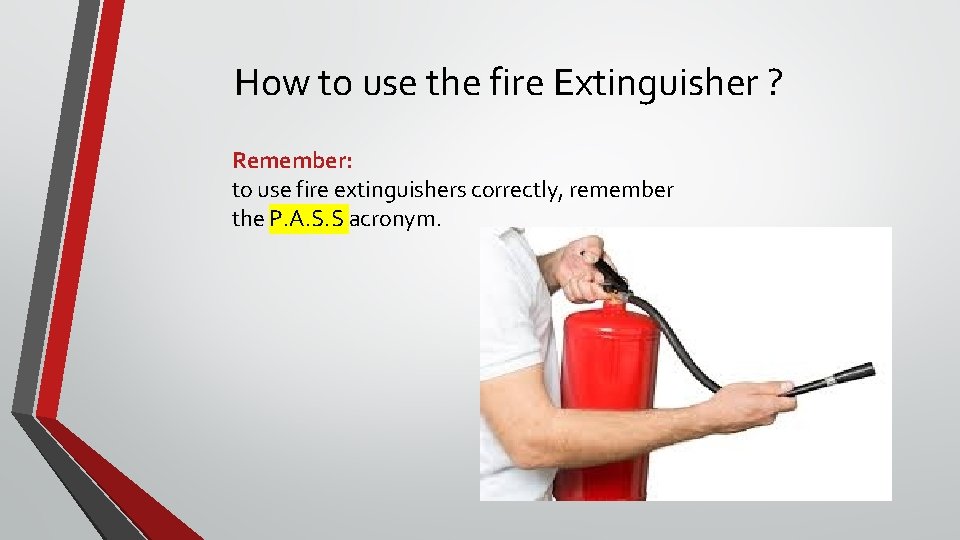
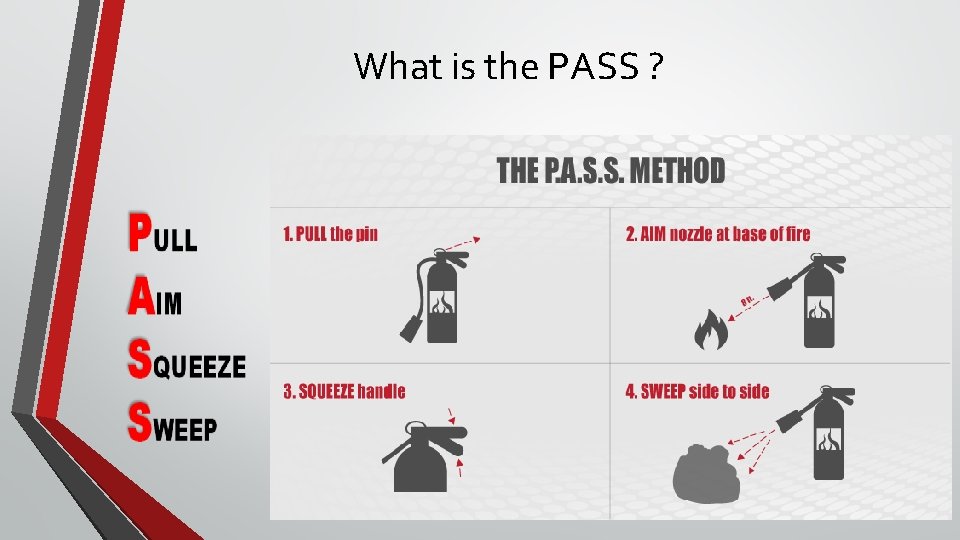
How to use the fire Extinguisher ? Remember: to use fire extinguishers correctly, remember the P. A. S. S acronym.
What is the PASS ?
Deciding to Use a Fire Extinguisher: Before attempting to put out a fire with a portable fire extinguisher, you must quickly answer the following questions: • Has someone called the fire department? • Are there two ways to exit the area quickly and safely if I attempt to extinguish the fire? (The first priority for you is safety. ) • Do I have the right type of extinguisher for the type of fire? • Is the extinguisher large enough for the fire? • Is the fire small and contained (like in a wastepaper basket)? • Is the area free from other dangers, such as hazardous materials or any debris?
• If you answer “YES” to all of the questions but still feel unable to extinguish the fire, you should leave immediately. You should always remember the 5 -second rule. • If you answer “NO” to any of these questions or if you will be unable to put out the fire in 5 seconds using the extinguisher, you should not use a fire extinguisher. Start evacuating
Evacuation
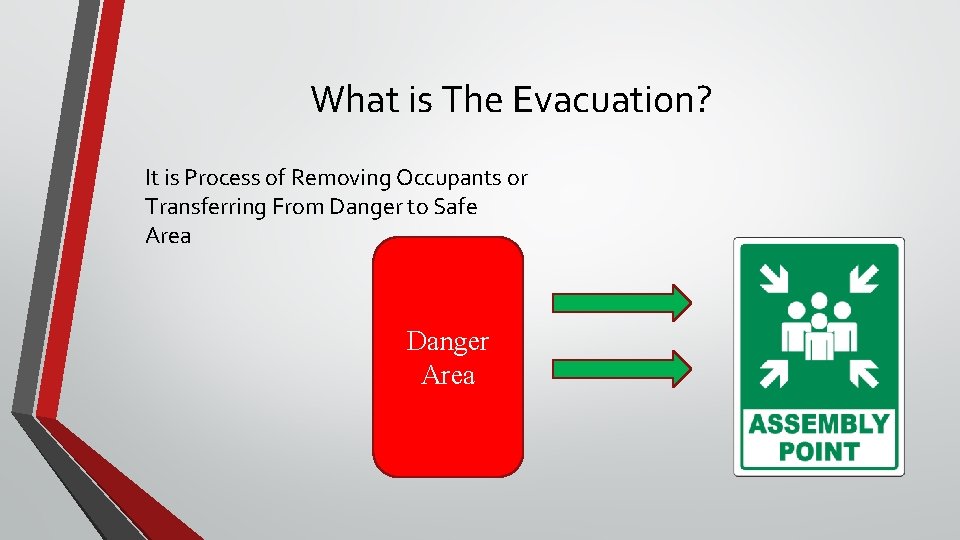
What is The Evacuation? It is Process of Removing Occupants or Transferring From Danger to Safe Area Danger Area
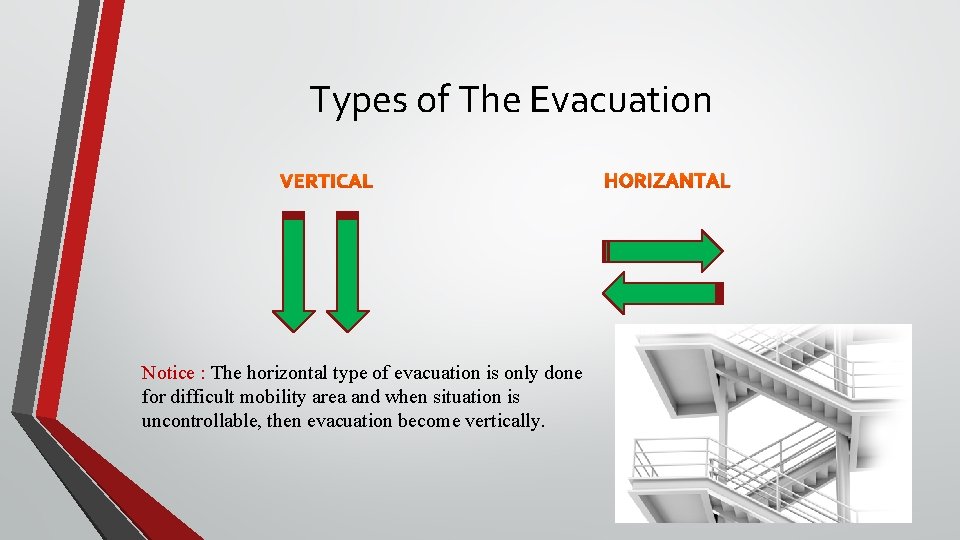
Types of The Evacuation VERTICAL Notice : The horizontal type of evacuation is only done for difficult mobility area and when situation is uncontrollable, then evacuation become vertically. HORIZANTAL
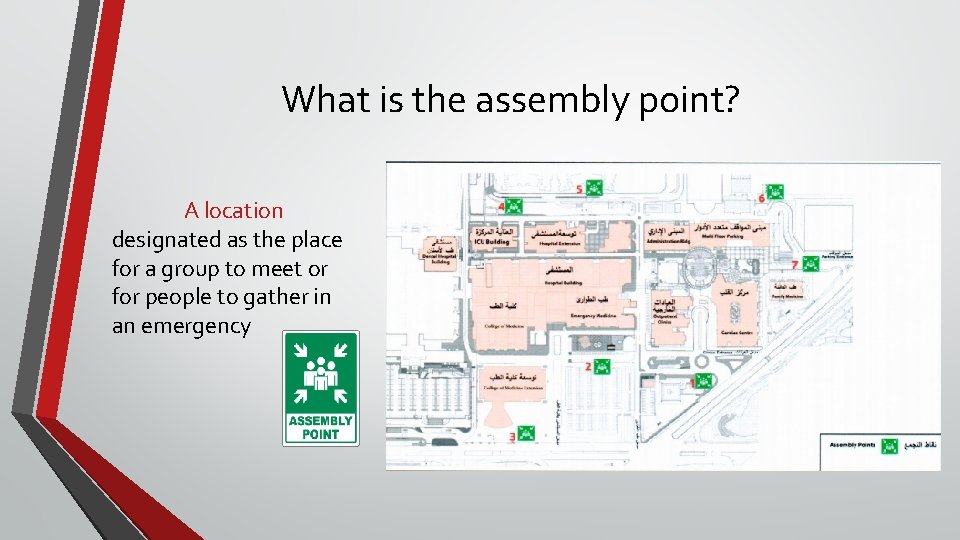
What is the assembly point? A location designated as the place for a group to meet or for people to gather in an emergency
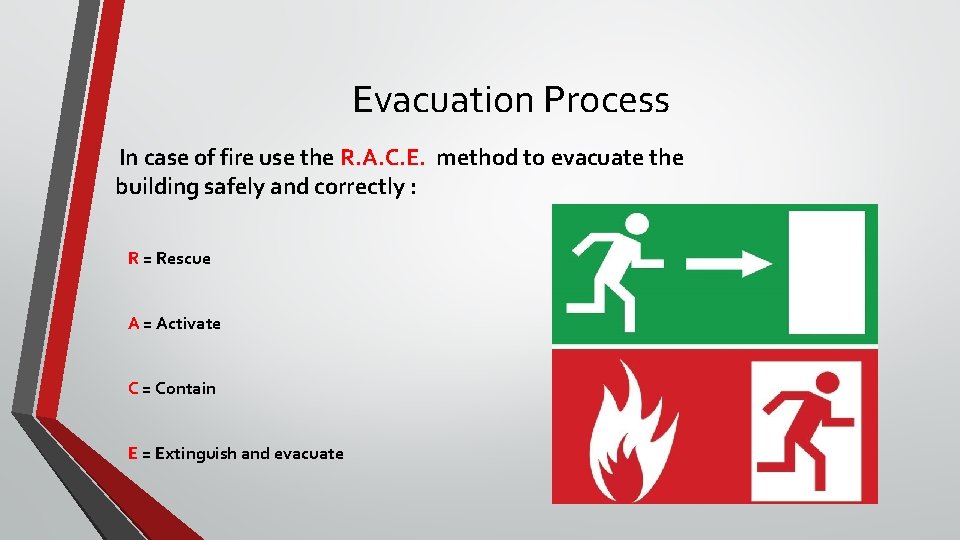
Evacuation Process In case of fire use the R. A. C. E. method to evacuate the building safely and correctly : R = Rescue A = Activate C = Contain E = Extinguish and evacuate
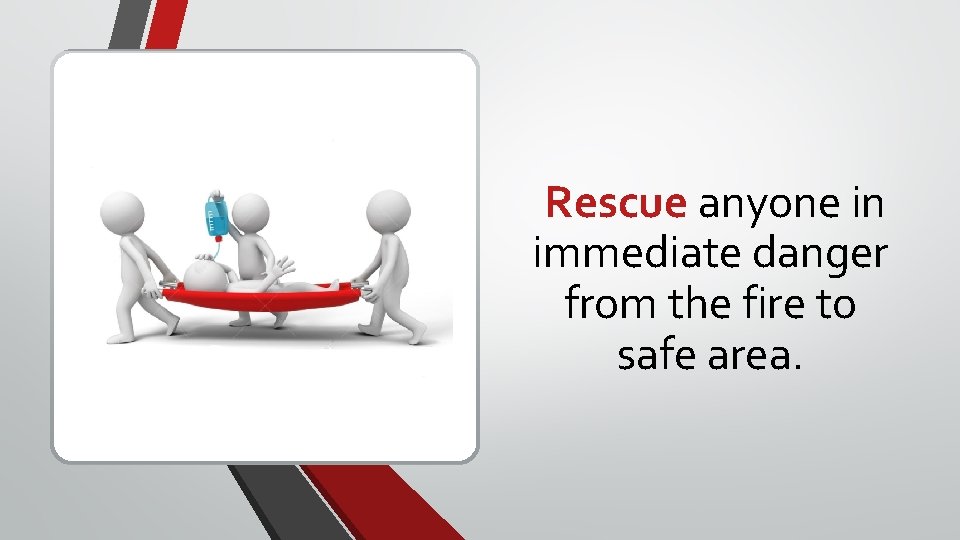
Rescue anyone in immediate danger from the fire to safe area.
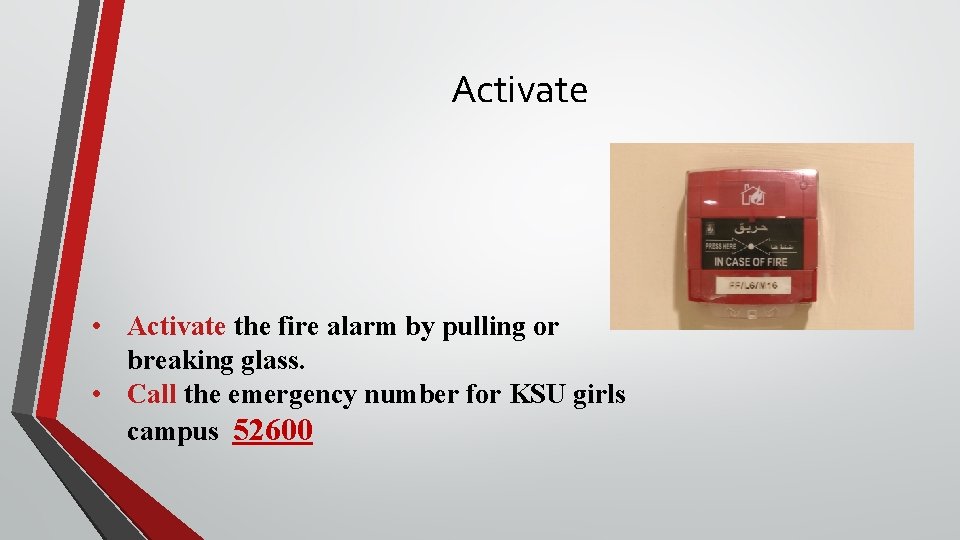
Activate • Activate the fire alarm by pulling or breaking glass. • Call the emergency number for KSU girls campus 52600
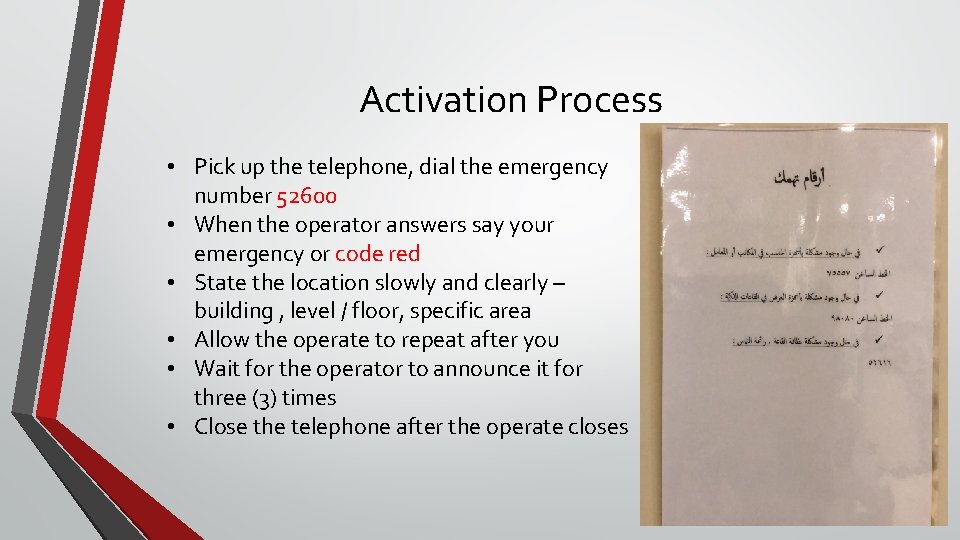
Activation Process • Pick up the telephone, dial the emergency number 52600 • When the operator answers say your emergency or code red • State the location slowly and clearly – building , level / floor, specific area • Allow the operate to repeat after you • Wait for the operator to announce it for three (3) times • Close the telephone after the operate closes
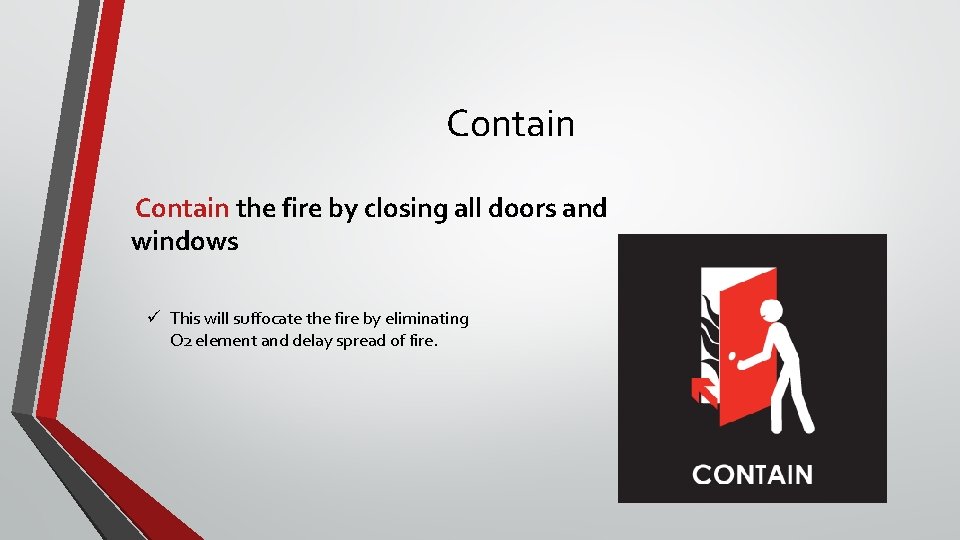
Contain the fire by closing all doors and windows ü This will suffocate the fire by eliminating O 2 element and delay spread of fire.
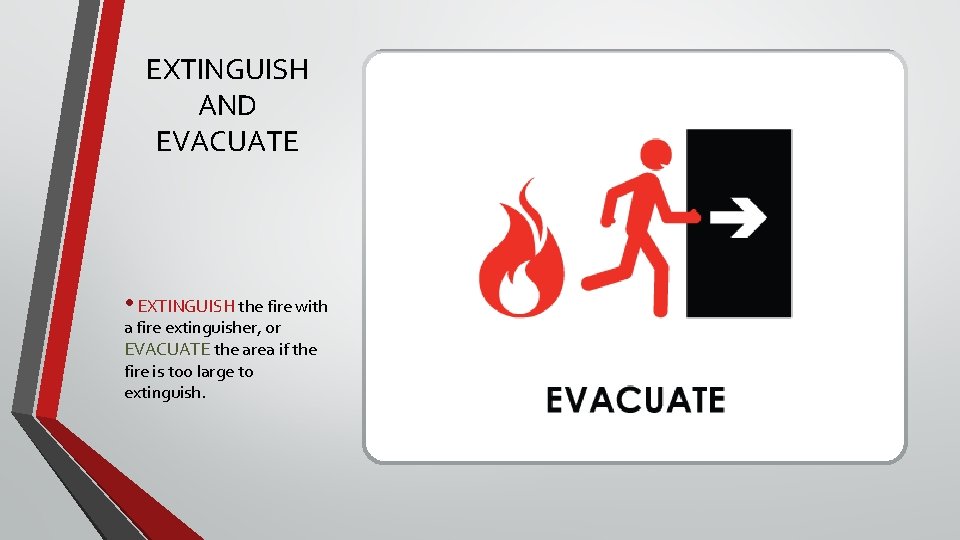
EXTINGUISH AND EVACUATE • EXTINGUISH the fire with a fire extinguisher, or EVACUATE the area if the fire is too large to extinguish.
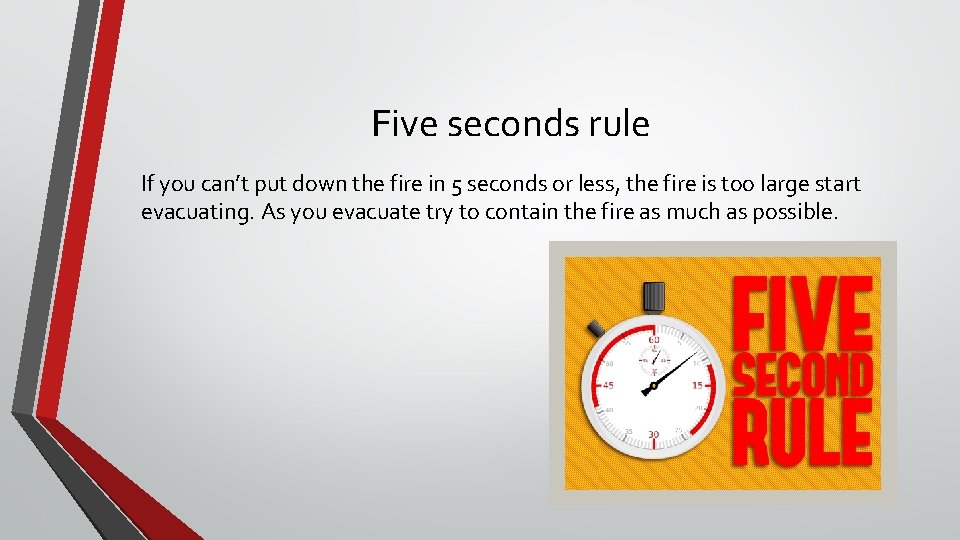
Five seconds rule If you can’t put down the fire in 5 seconds or less, the fire is too large start evacuating. As you evacuate try to contain the fire as much as possible.
YOU MUST LOCATE THE FOLLOWING IN YOUR AREA: 1. Fire alarm ( call point ) 2. Emergency exit doors 3. Fire extinguishers • Never use the elevator in case of fire • Introduce yourself to the evacuation plan located in your area • Always remember the KSU emergency number ( 52600)
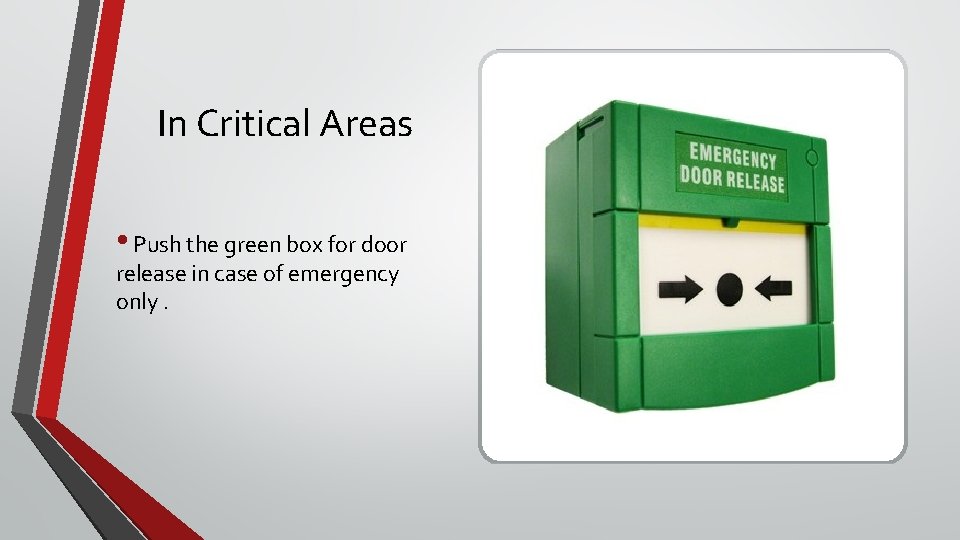
In Critical Areas • Push the green box for door release in case of emergency only.
Thank you Any Questions?
Course was provided by: 1 st half: Alanoud Aldalgan alanoudaldalgan@gmail. com 2 nd half: Atheer Alanazi atheerhanazi@gmail. com Special thanks to Eng. Mohammed A. Alroweilly Chief of Safety KSUMC Chairman, Environmental & Safety Sub-Committee For providing material and approving the course instructors