
Fire Fall Prevention Messages ITS A BIG WORLD
Fire & Fall Prevention Messages IT’S A BIG WORLD. LET’S PROTECT IT TOGETHER. TM NFPA. ORG | © National Fire Protection Association. All rights reserved.
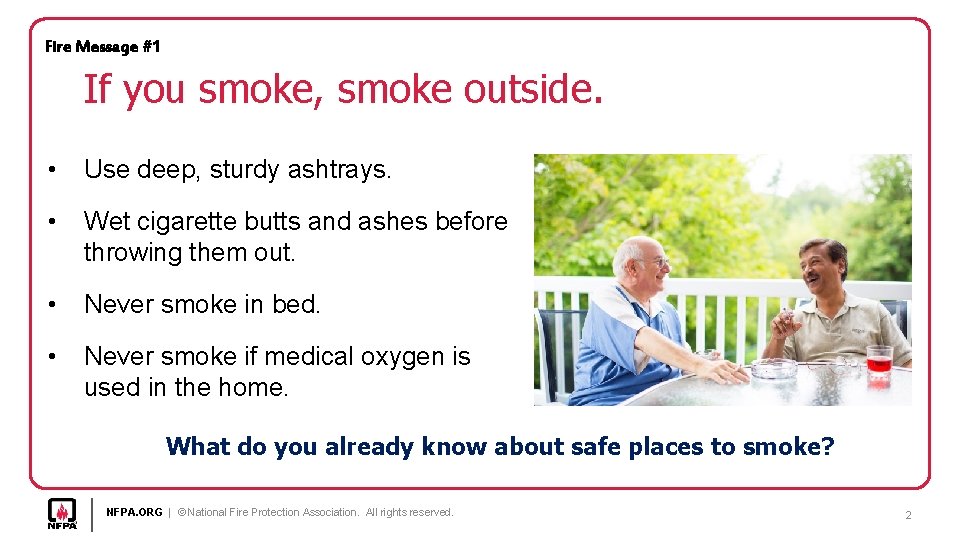
Fire Message #1 If you smoke, smoke outside. • Use deep, sturdy ashtrays. • Wet cigarette butts and ashes before throwing them out. • Never smoke in bed. • Never smoke if medical oxygen is used in the home. What do you already know about safe places to smoke? NFPA. ORG | © National Fire Protection Association. All rights reserved. 2
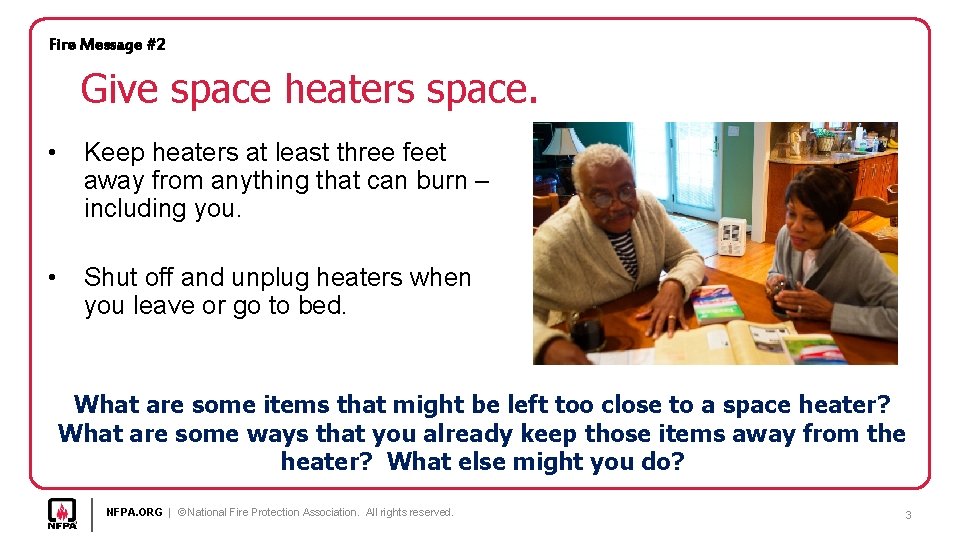
Fire Message #2 Give space heaters space. • Keep heaters at least three feet away from anything that can burn – including you. • Shut off and unplug heaters when you leave or go to bed. What are some items that might be left too close to a space heater? What are some ways that you already keep those items away from the heater? What else might you do? NFPA. ORG | © National Fire Protection Association. All rights reserved. 3
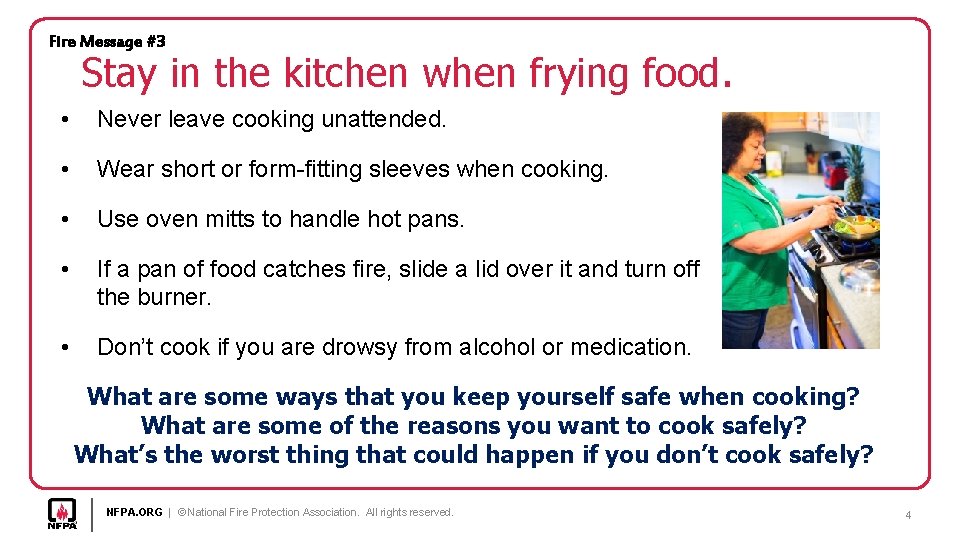
Fire Message #3 Stay in the kitchen when frying food. • Never leave cooking unattended. • Wear short or form-fitting sleeves when cooking. • Use oven mitts to handle hot pans. • If a pan of food catches fire, slide a lid over it and turn off the burner. • Don’t cook if you are drowsy from alcohol or medication. What are some ways that you keep yourself safe when cooking? What are some of the reasons you want to cook safely? What’s the worst thing that could happen if you don’t cook safely? NFPA. ORG | © National Fire Protection Association. All rights reserved. 4
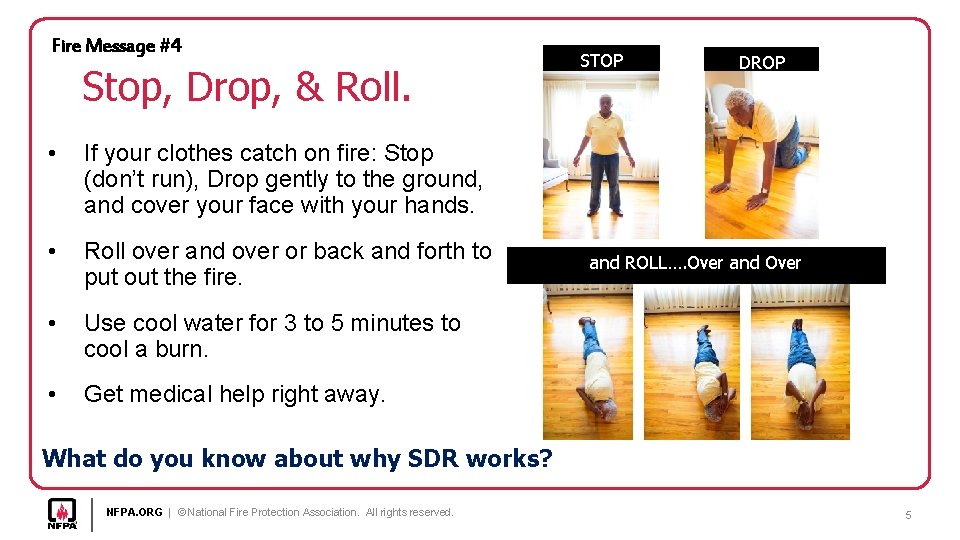
Fire Message #4 Stop, Drop, & Roll. • If your clothes catch on fire: Stop (don’t run), Drop gently to the ground, and cover your face with your hands. • Roll over and over or back and forth to put out the fire. • Use cool water for 3 to 5 minutes to cool a burn. • Get medical help right away. STOP DROP and ROLL…. Over and Over What do you know about why SDR works? NFPA. ORG | © National Fire Protection Association. All rights reserved. 5
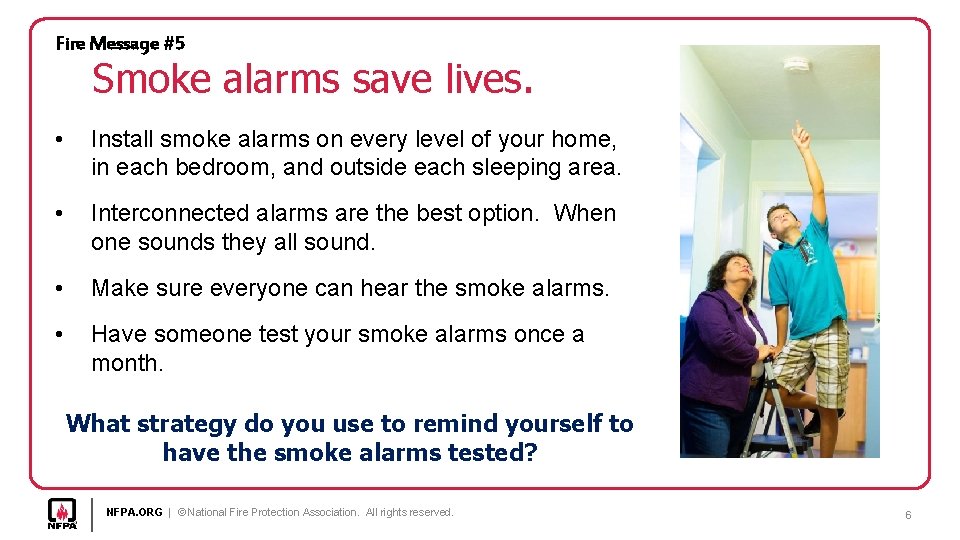
Fire Message #5 Smoke alarms save lives. • Install smoke alarms on every level of your home, in each bedroom, and outside each sleeping area. • Interconnected alarms are the best option. When one sounds they all sound. • Make sure everyone can hear the smoke alarms. • Have someone test your smoke alarms once a month. What strategy do you use to remind yourself to have the smoke alarms tested? NFPA. ORG | © National Fire Protection Association. All rights reserved. 6

Fire Message #6 Plan and practice your escape from fire. • If possible, know two ways out of every room in your home and two ways out of the home. • Make sure windows and doors open easily. • If the alarm sounds, get outside and stay outside. What’s your current home escape plan? What have you heard about these plans and what they are good for? NFPA. ORG | © National Fire Protection Association. All rights reserved. 7

Fire Message #7 Know your local emergency number. • It may be 9 -1 -1 or the fire department’s phone number. • Once you have escaped a fire, call the fire department from a neighbor’s phone or a mobile phone. Why is it important to escape first and then call for help? NFPA. ORG | © National Fire Protection Association. All rights reserved. 8
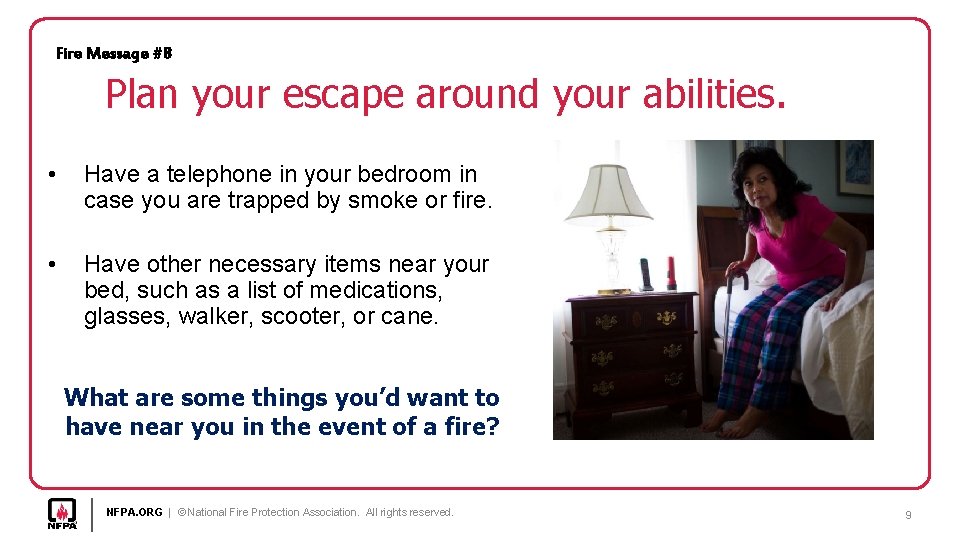
Fire Message #8 Plan your escape around your abilities. • Have a telephone in your bedroom in case you are trapped by smoke or fire. • Have other necessary items near your bed, such as a list of medications, glasses, walker, scooter, or cane. What are some things you’d want to have near you in the event of a fire? NFPA. ORG | © National Fire Protection Association. All rights reserved. 9

Questions about the Fire Messages? Let’s Review: • What is the preferred message about smoking? • Name some items that should be kept near the bedside… • Share a tip you might give to help folks if they need to leave the stove while cooking… NFPA. ORG | © National Fire Protection Association. All rights reserved. 10
Preventable Injuries in Older Adults: Falls • Falls are the most common cause of nonfatal injuries and hospital admissions for trauma. • In 2010, 2. 3 million nonfatal fall injuries among older adults were treated in emergency departments and more than 662, 000 of these patients were hospitalized. A Vicious Cycle: A fall tends to increase an older adult’s fear of falling. This fear can lead to a decrease in activity. This leads to reduced mobility and fitness which, in turn, increases the risk of falling again. NFPA. ORG | © National Fire Protection Association. All rights reserved. 11
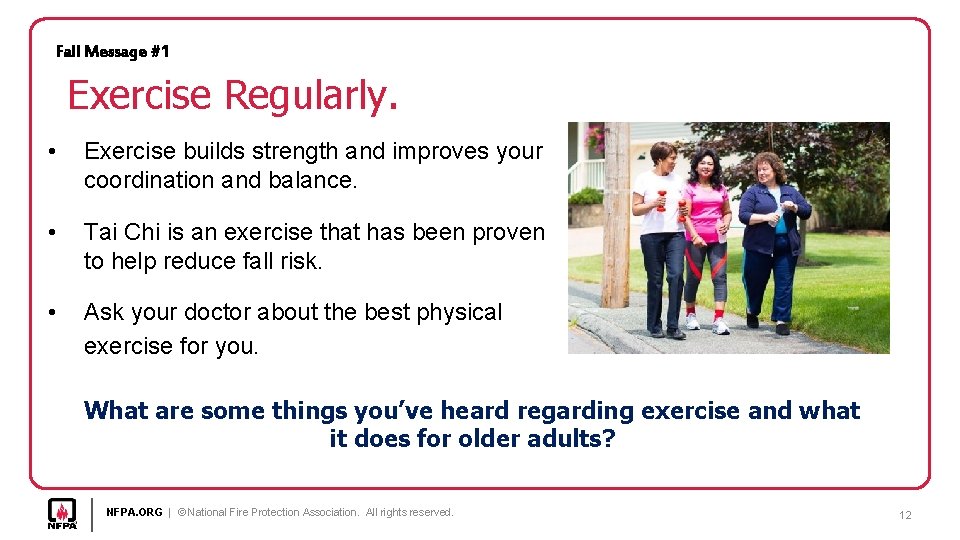
Fall Message #1 Exercise Regularly. • Exercise builds strength and improves your coordination and balance. • Tai Chi is an exercise that has been proven to help reduce fall risk. • Ask your doctor about the best physical exercise for you. What are some things you’ve heard regarding exercise and what it does for older adults? NFPA. ORG | © National Fire Protection Association. All rights reserved. 12
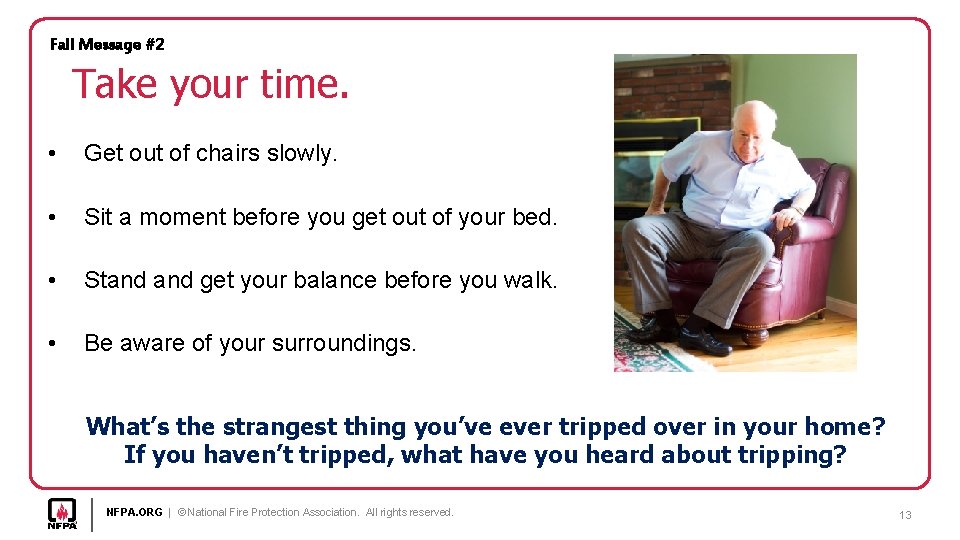
Fall Message #2 Take your time. • Get out of chairs slowly. • Sit a moment before you get out of your bed. • Stand get your balance before you walk. • Be aware of your surroundings. What’s the strangest thing you’ve ever tripped over in your home? If you haven’t tripped, what have you heard about tripping? NFPA. ORG | © National Fire Protection Association. All rights reserved. 13
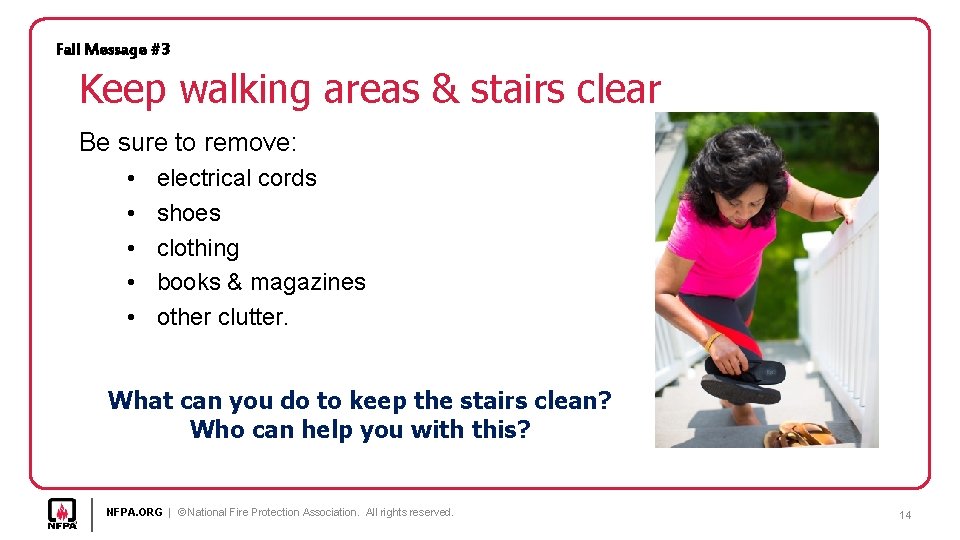
Fall Message #3 Keep walking areas & stairs clear Be sure to remove: • • • electrical cords shoes clothing books & magazines other clutter. What can you do to keep the stairs clean? Who can help you with this? NFPA. ORG | © National Fire Protection Association. All rights reserved. 14
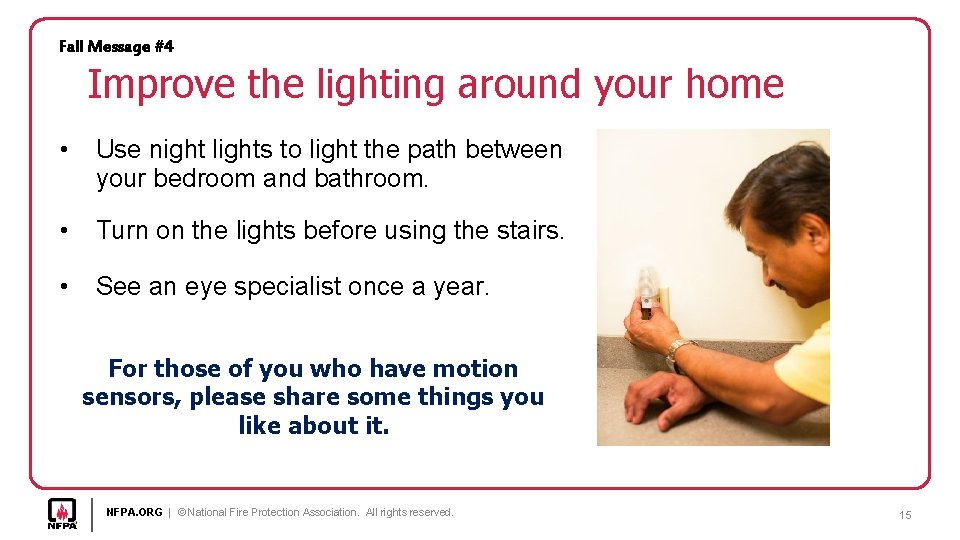
Fall Message #4 Improve the lighting around your home • Use night lights to light the path between your bedroom and bathroom. • Turn on the lights before using the stairs. • See an eye specialist once a year. For those of you who have motion sensors, please share some things you like about it. NFPA. ORG | © National Fire Protection Association. All rights reserved. 15
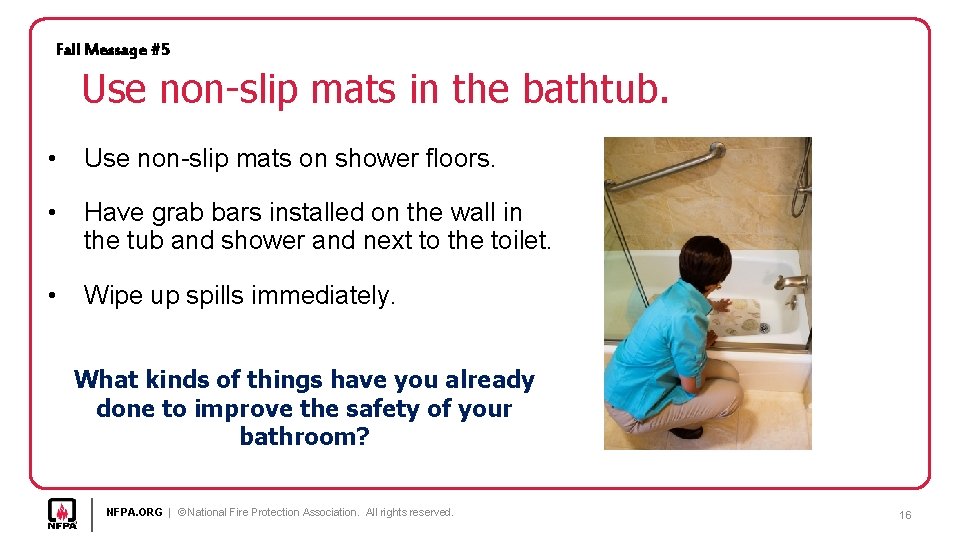
Fall Message #5 Use non-slip mats in the bathtub. • Use non-slip mats on shower floors. • Have grab bars installed on the wall in the tub and shower and next to the toilet. • Wipe up spills immediately. What kinds of things have you already done to improve the safety of your bathroom? NFPA. ORG | © National Fire Protection Association. All rights reserved. 16
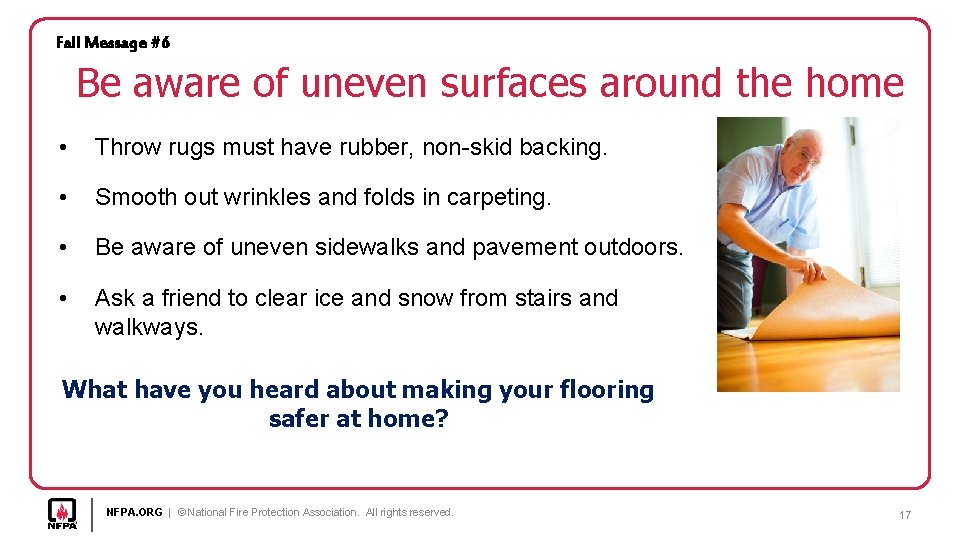
Fall Message #6 Be aware of uneven surfaces around the home • Throw rugs must have rubber, non-skid backing. • Smooth out wrinkles and folds in carpeting. • Be aware of uneven sidewalks and pavement outdoors. • Ask a friend to clear ice and snow from stairs and walkways. What have you heard about making your flooring safer at home? NFPA. ORG | © National Fire Protection Association. All rights reserved. 17
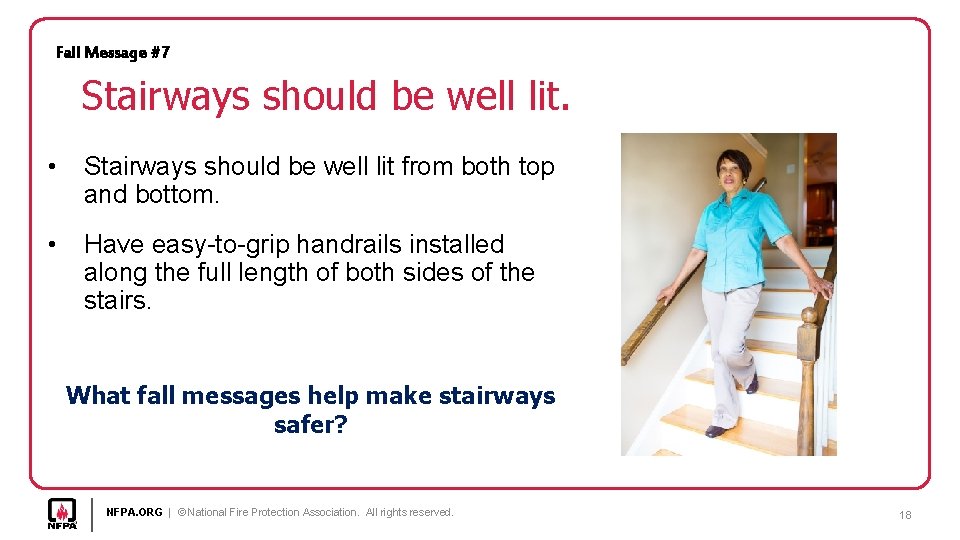
Fall Message #7 Stairways should be well lit. • Stairways should be well lit from both top and bottom. • Have easy-to-grip handrails installed along the full length of both sides of the stairs. What fall messages help make stairways safer? NFPA. ORG | © National Fire Protection Association. All rights reserved. 18
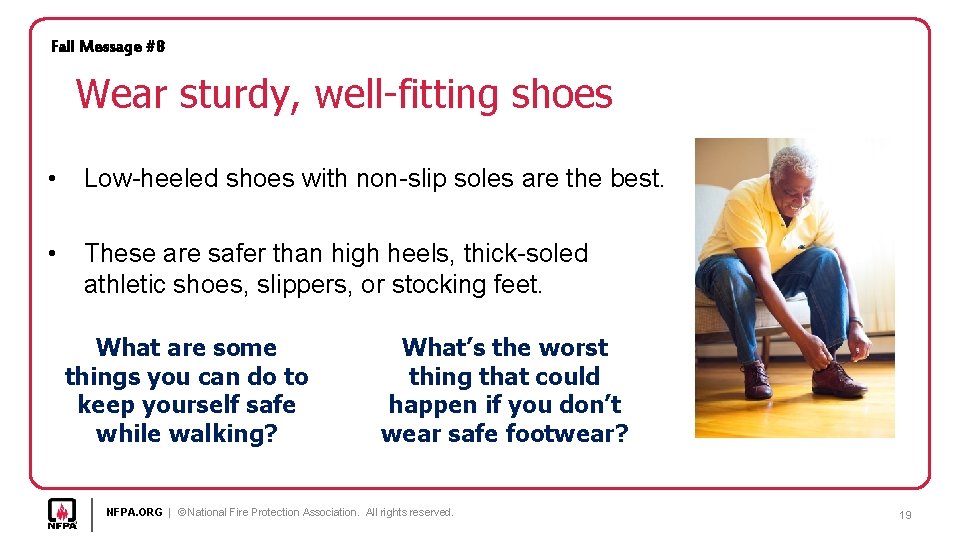
Fall Message #8 Wear sturdy, well-fitting shoes • Low-heeled shoes with non-slip soles are the best. • These are safer than high heels, thick-soled athletic shoes, slippers, or stocking feet. What are some things you can do to keep yourself safe while walking? What’s the worst thing that could happen if you don’t wear safe footwear? NFPA. ORG | © National Fire Protection Association. All rights reserved. 19
Questions about the Falls Messages? Let’s Review: • Name one change you can make in your own home to reduce your risk of falling. • Why does regular exercise reduce one’s risk of being injured in a fall? • Why is our fall prevention program targeted at folks age 65 and over? NFPA. ORG | © National Fire Protection Association. All rights reserved. 20
- Slides: 20