
Fire Extinguisher Inspection Step by Step Approach No

Fire Extinguisher Inspection Step by Step Approach

No obstruction to access or visibility
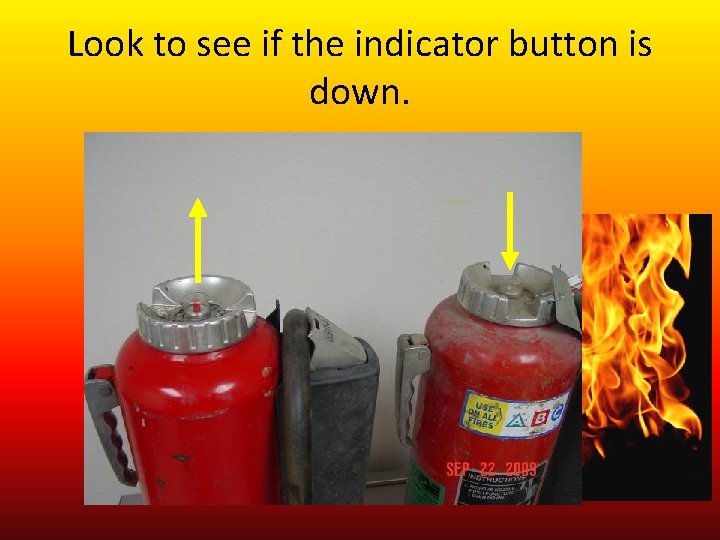
Look to see if the indicator button is down.
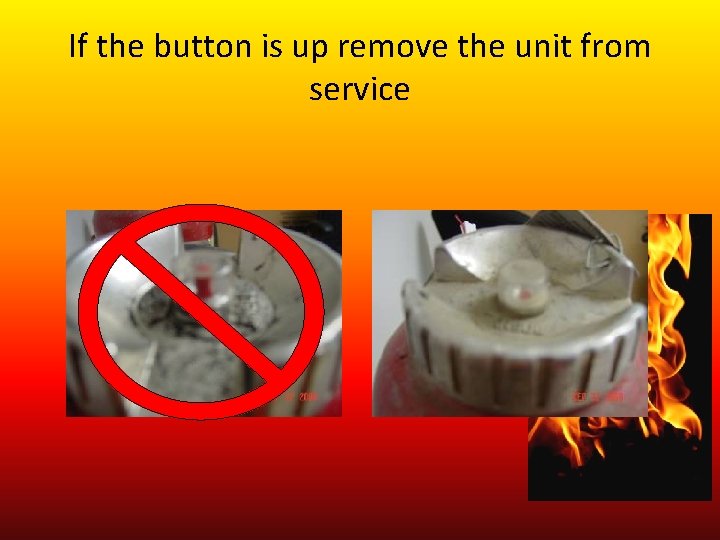
If the button is up remove the unit from service
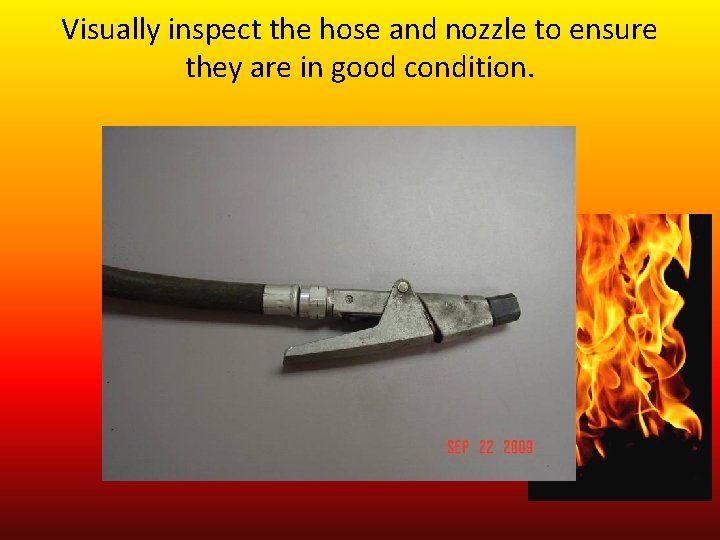
Visually inspect the hose and nozzle to ensure they are in good condition.
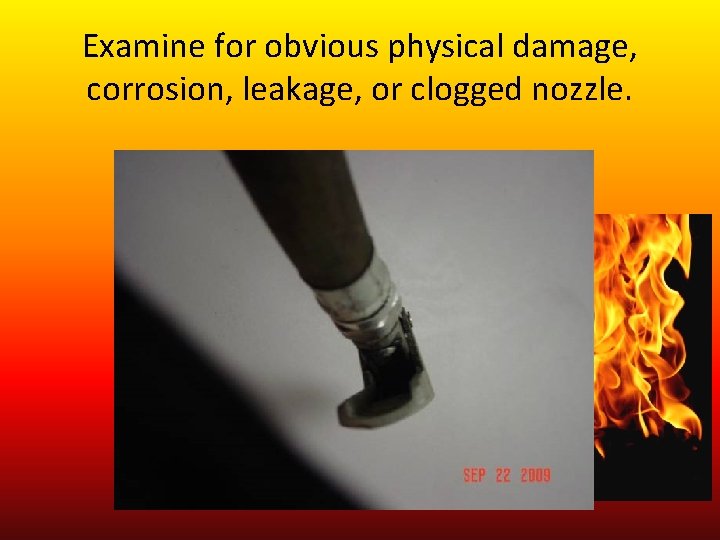
Examine for obvious physical damage, corrosion, leakage, or clogged nozzle.
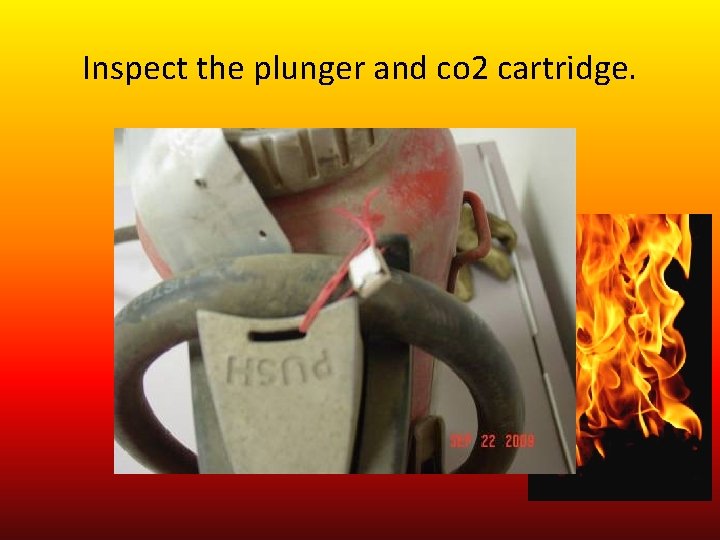
Inspect the plunger and co 2 cartridge.
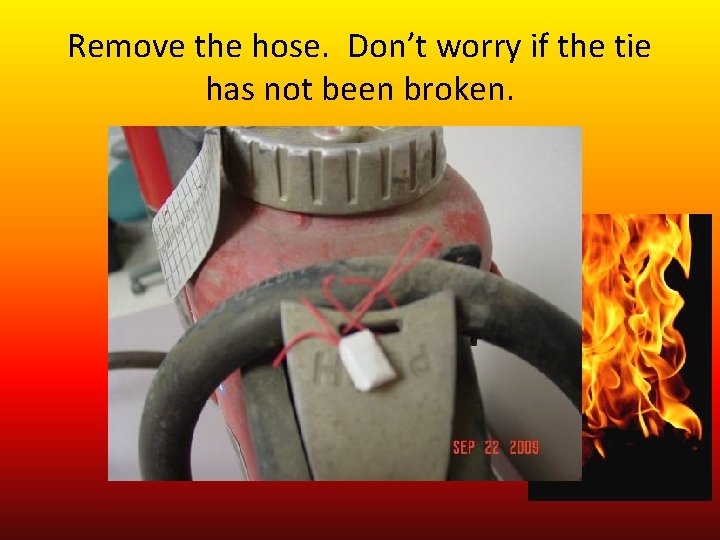
Remove the hose. Don’t worry if the tie has not been broken.
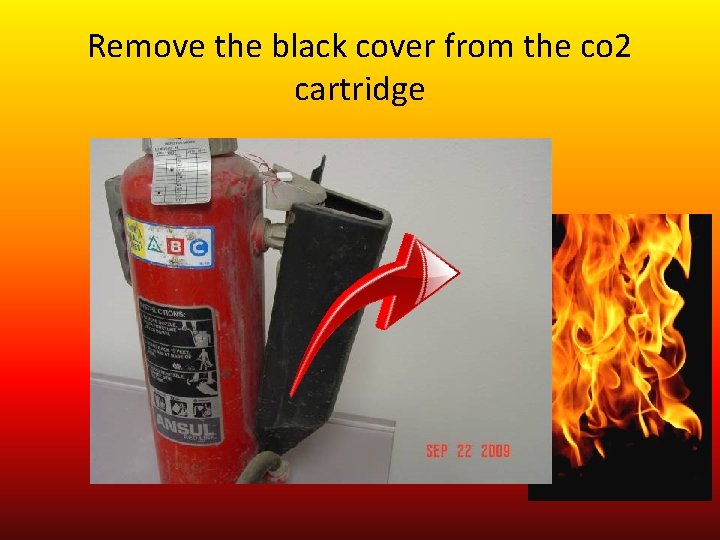
Remove the black cover from the co 2 cartridge
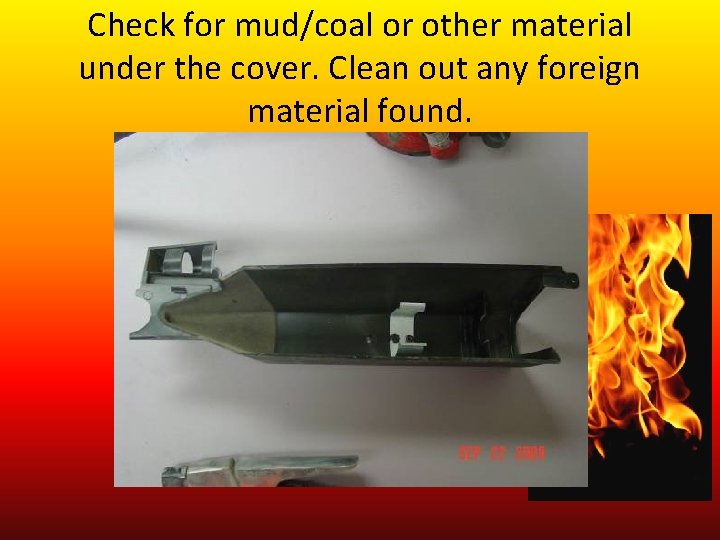
Check for mud/coal or other material under the cover. Clean out any foreign material found.
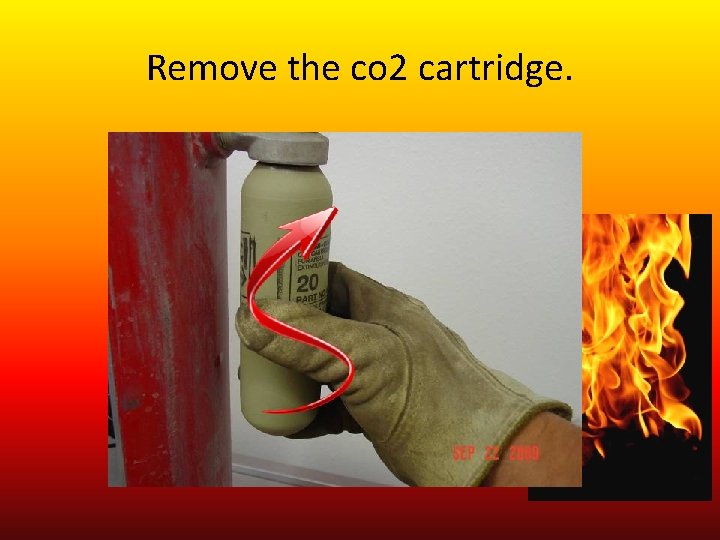
Remove the co 2 cartridge.
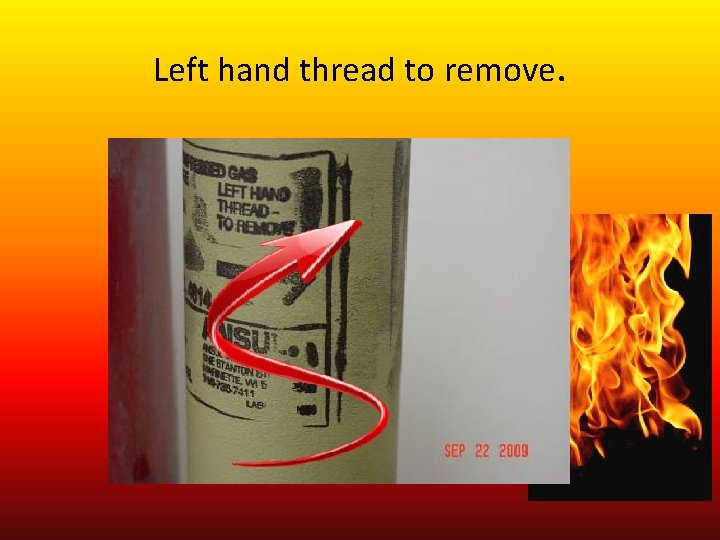
Left hand thread to remove.
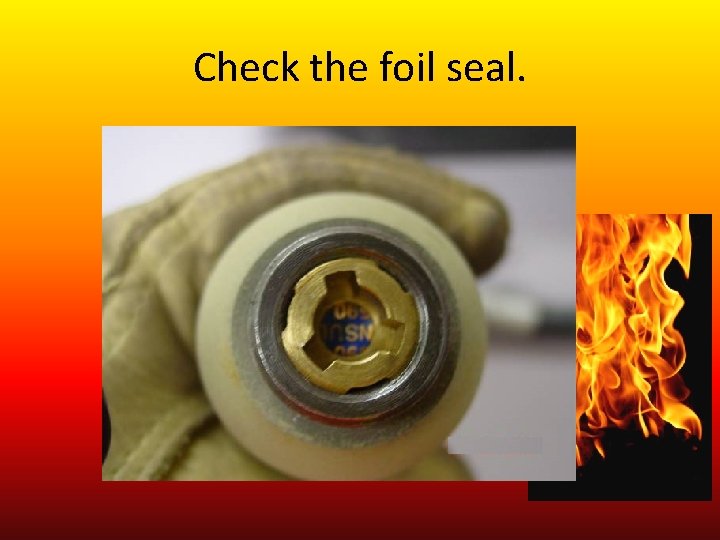
Check the foil seal.
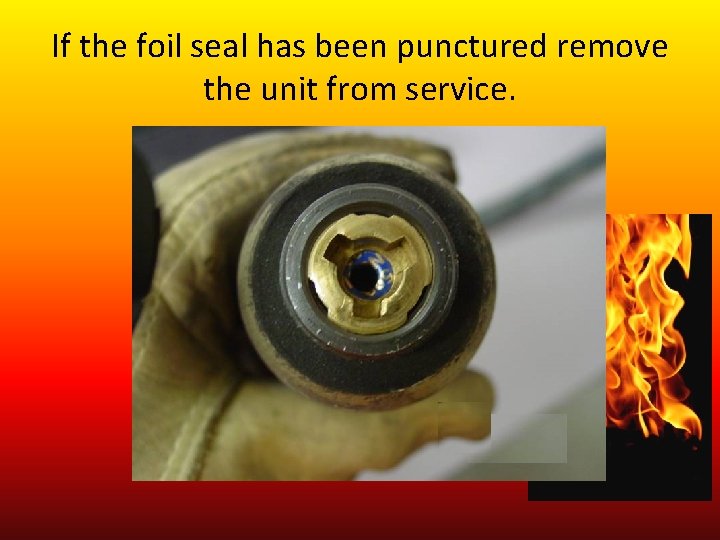
If the foil seal has been punctured remove the unit from service.
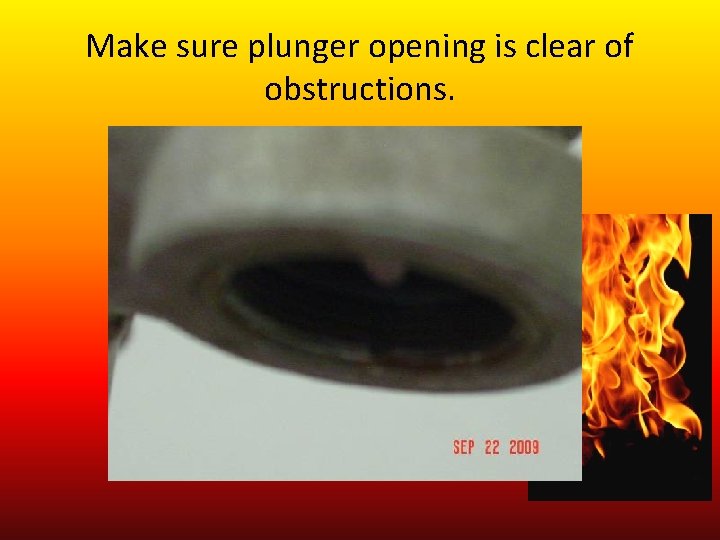
Make sure plunger opening is clear of obstructions.
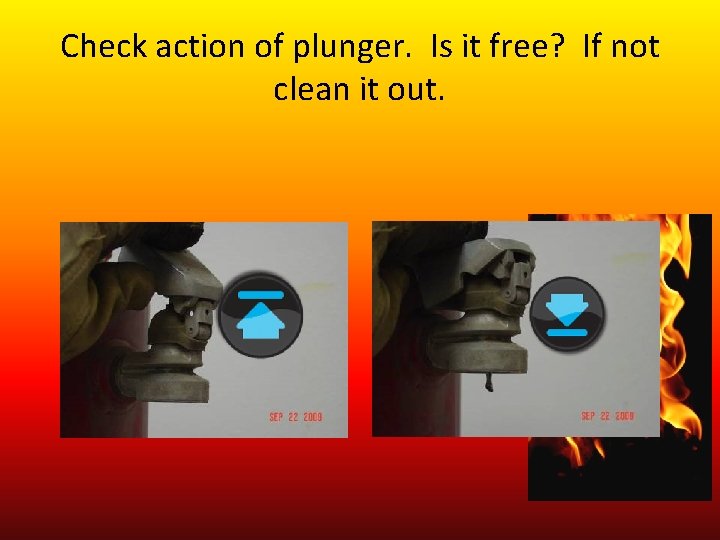
Check action of plunger. Is it free? If not clean it out.
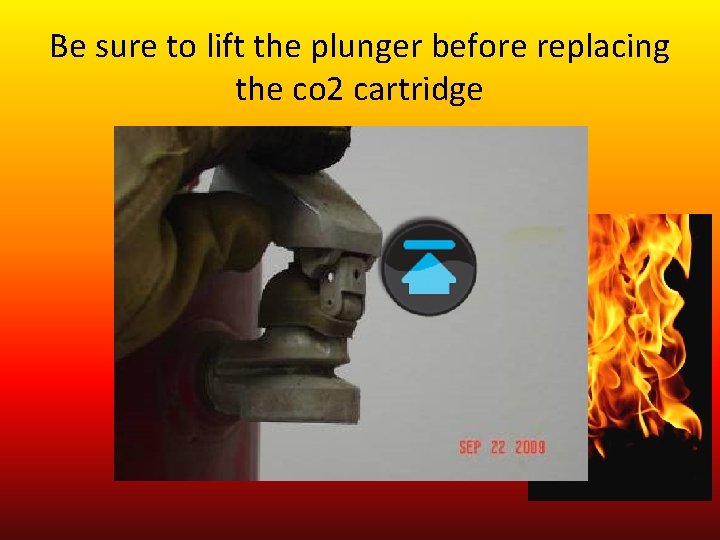
Be sure to lift the plunger before replacing the co 2 cartridge
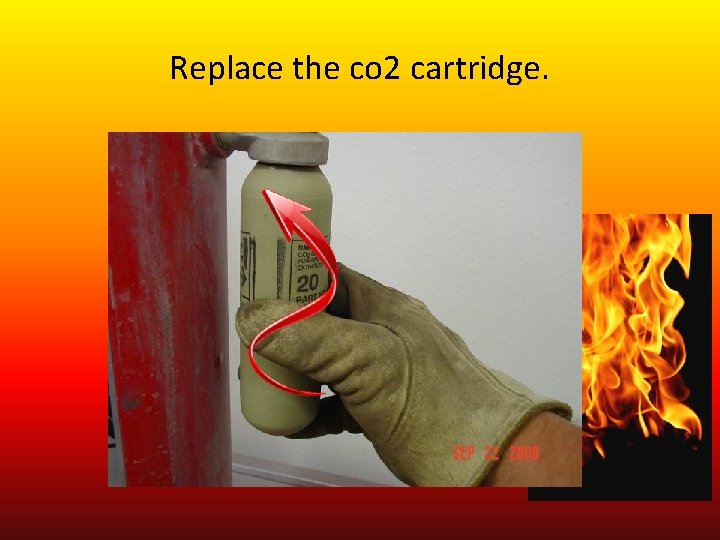
Replace the co 2 cartridge.
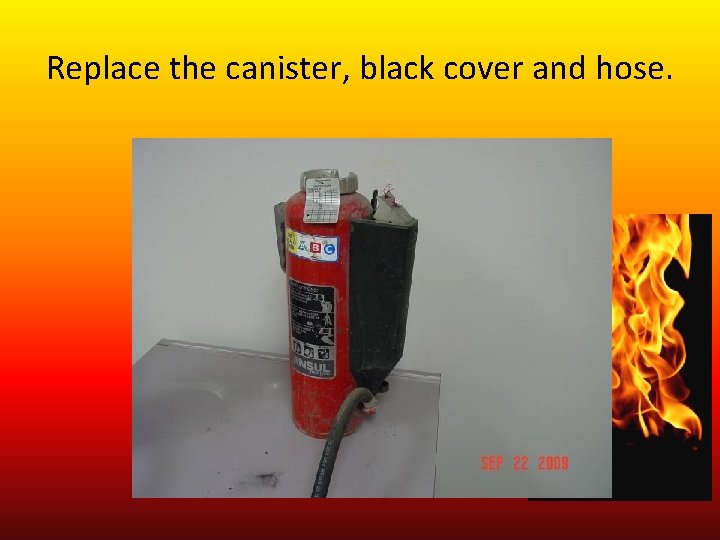
Replace the canister, black cover and hose.
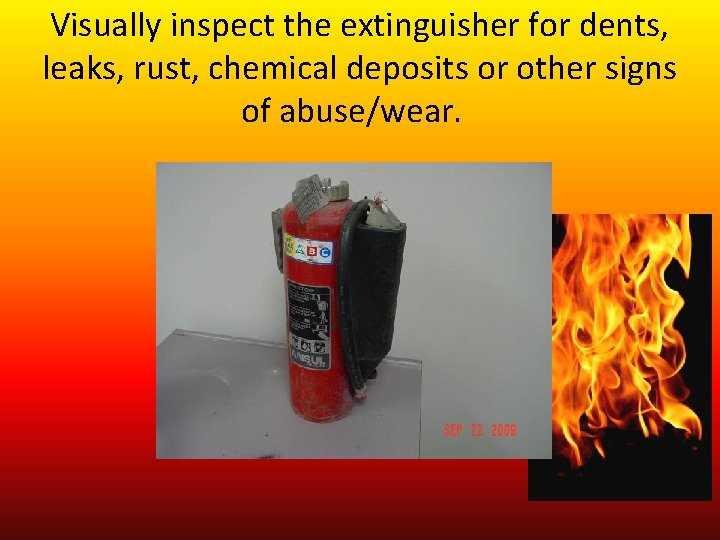
Visually inspect the extinguisher for dents, leaks, rust, chemical deposits or other signs of abuse/wear.
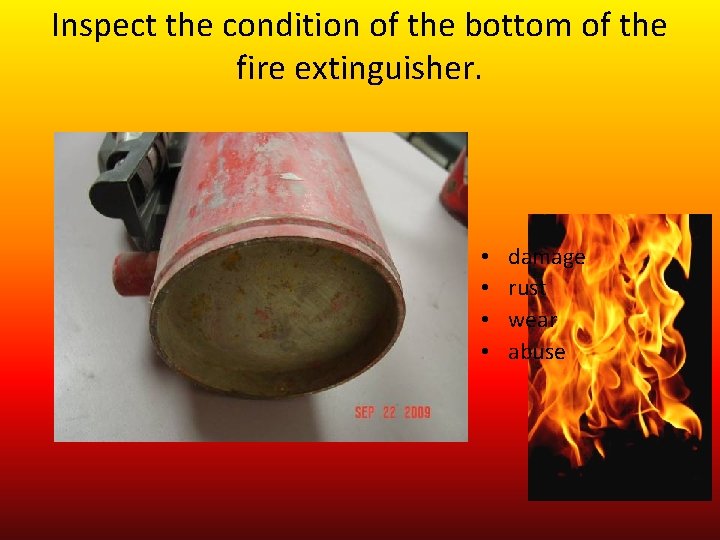
Inspect the condition of the bottom of the fire extinguisher. • • damage rust wear abuse
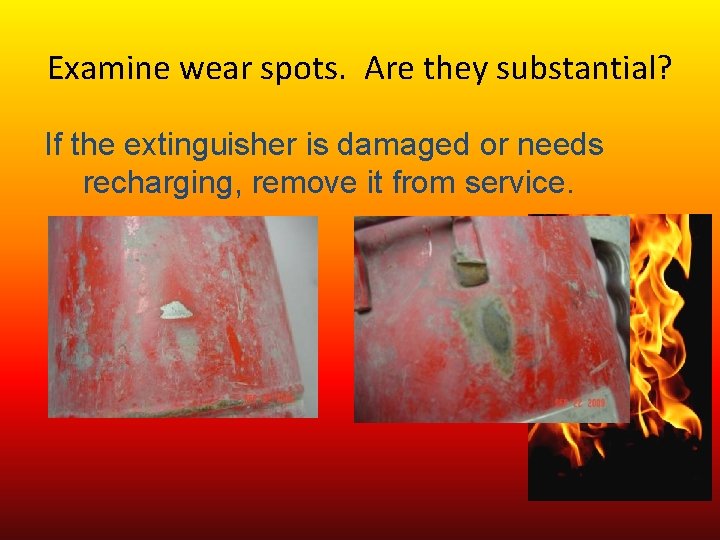
Examine wear spots. Are they substantial? If the extinguisher is damaged or needs recharging, remove it from service.
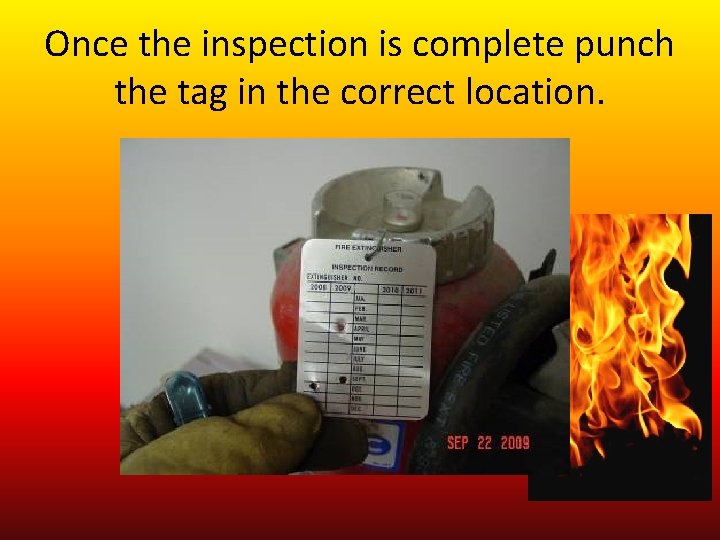
Once the inspection is complete punch the tag in the correct location.
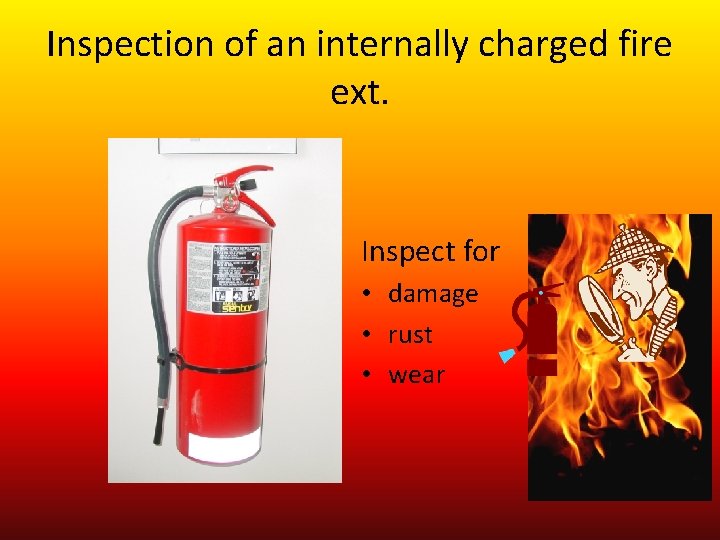
Inspection of an internally charged fire ext. Inspect for • damage • rust • wear
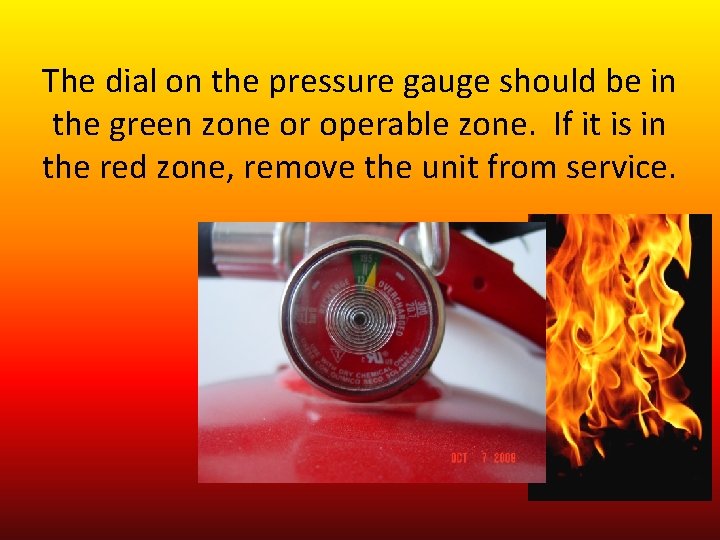
The dial on the pressure gauge should be in the green zone or operable zone. If it is in the red zone, remove the unit from service.
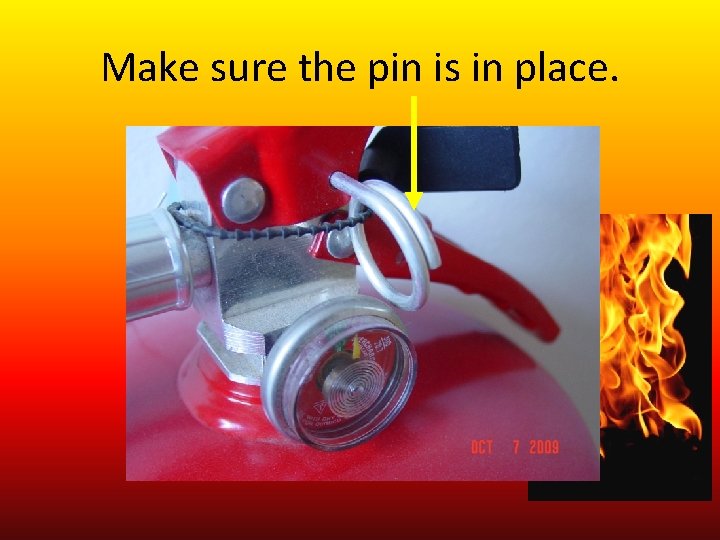
Make sure the pin is in place.
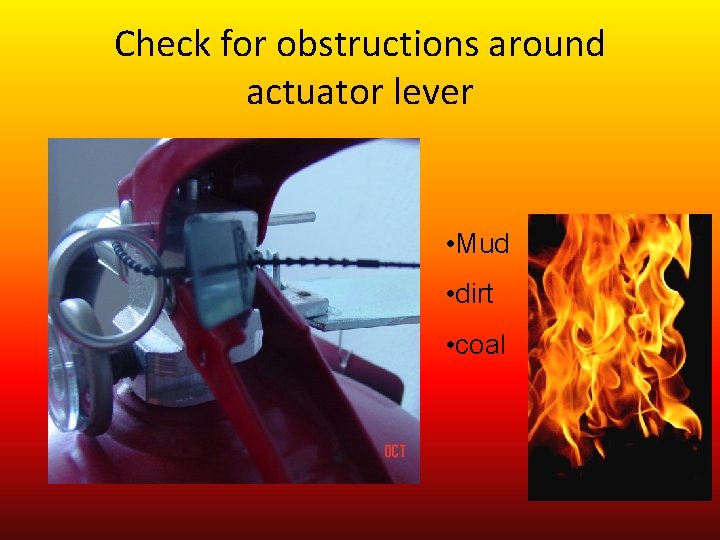
Check for obstructions around actuator lever • Mud • dirt • coal
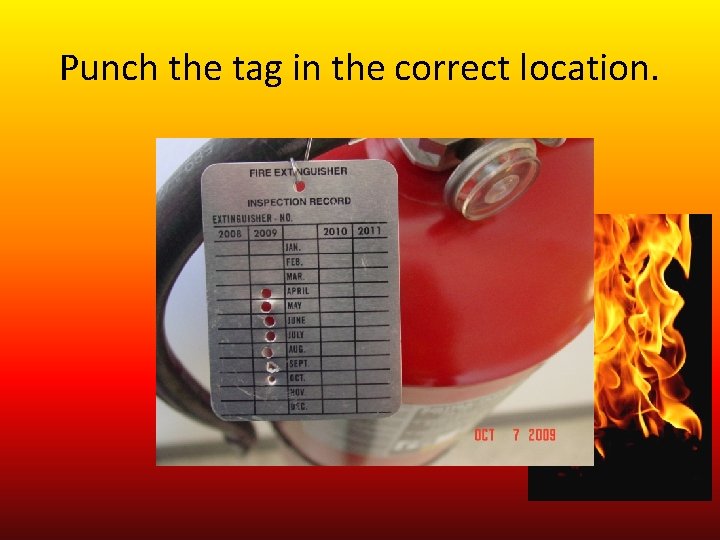
Punch the tag in the correct location.
Summary: • • No obstructions Actuator pin is up/dial is in operable zone Hose, co 2 canister, and housing are OK. The inspection tag has been properly punched. Thank You.
- Slides: 29