
Fire effects on regeneration cycles in northern boreal
Fire effects on regeneration cycles in northern boreal forests Dr. Jill Johnstone Biology, University of Saskatchewan
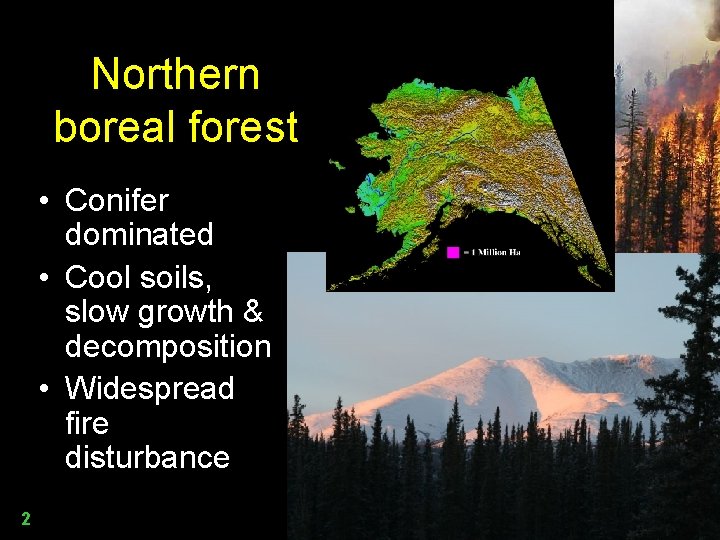
Northern boreal forest • Conifer dominated • Cool soils, slow growth & decomposition • Widespread fire disturbance 2
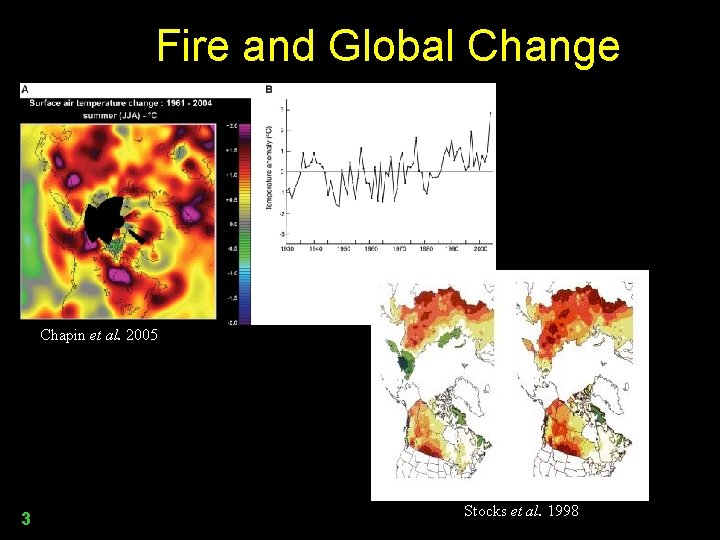
Fire and Global Change Chapin et al. 2005 3 Stocks et al. 1998
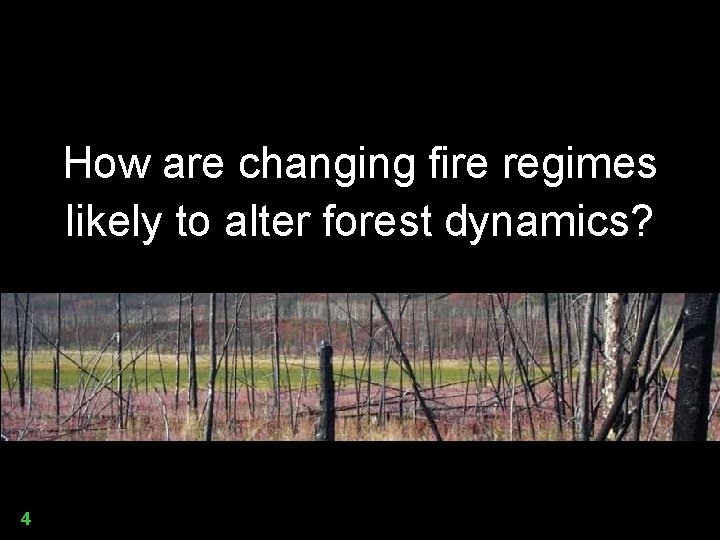
How are changing fire regimes likely to alter forest dynamics? 4
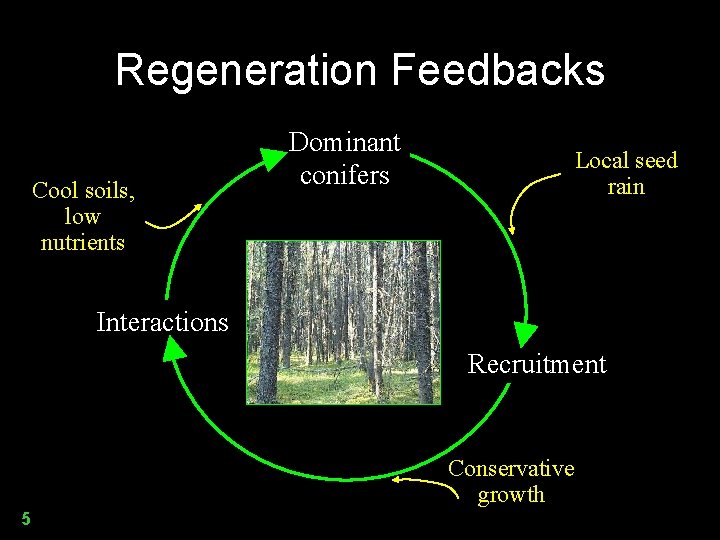
Regeneration Feedbacks Cool soils, low nutrients Dominant conifers Local seed rain Interactions Recruitment Conservative growth 5

Studies of fire frequency using overlapping fires historic fire overlap zones: rapid disturbance return recent fire 6 image courtesy of David Milne, Yukon Gov.
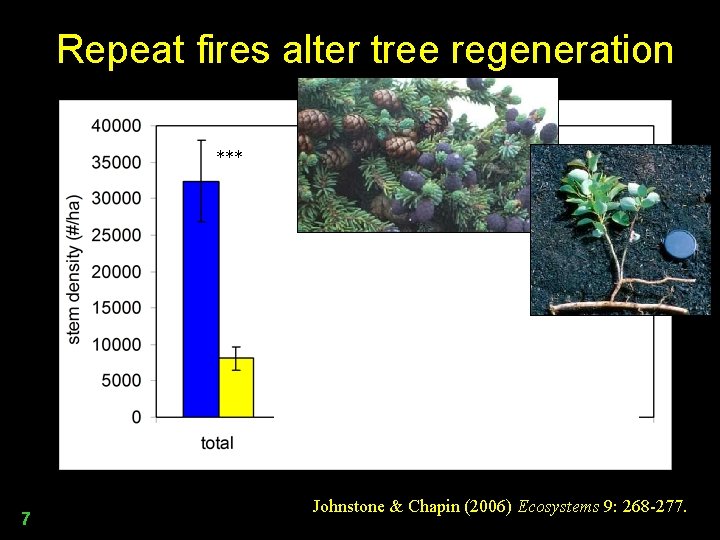
Repeat fires alter tree regeneration *** *** ns 7 Johnstone & Chapin (2006) Ecosystems 9: 268 -277.
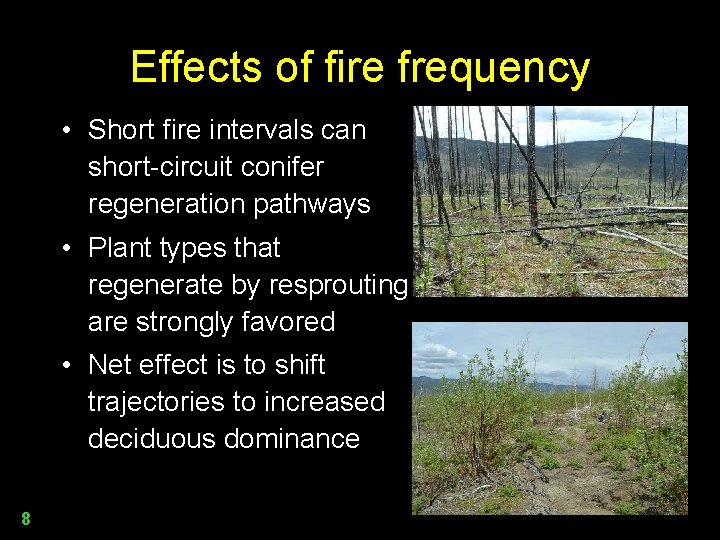
Effects of fire frequency • Short fire intervals can short-circuit conifer regeneration pathways • Plant types that regenerate by resprouting are strongly favored • Net effect is to shift trajectories to increased deciduous dominance 8
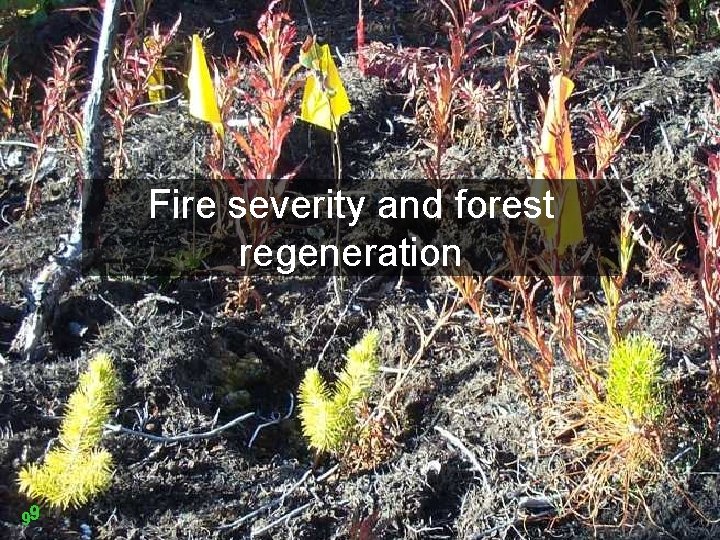
Fire severity and forest regeneration 99

Fire severity affects seedbed quality Burning of organic soils influences patterns of post-fire recruitment 10 10
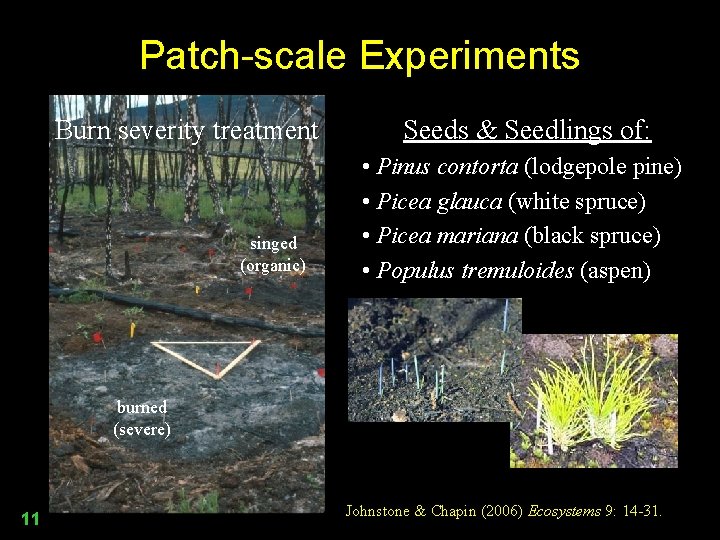
Patch-scale Experiments Burn severity treatment singed (organic) Seeds & Seedlings of: • Pinus contorta (lodgepole pine) • Picea glauca (white spruce) • Picea mariana (black spruce) • Populus tremuloides (aspen) burned (severe) 11 Johnstone & Chapin (2006) Ecosystems 9: 14 -31.
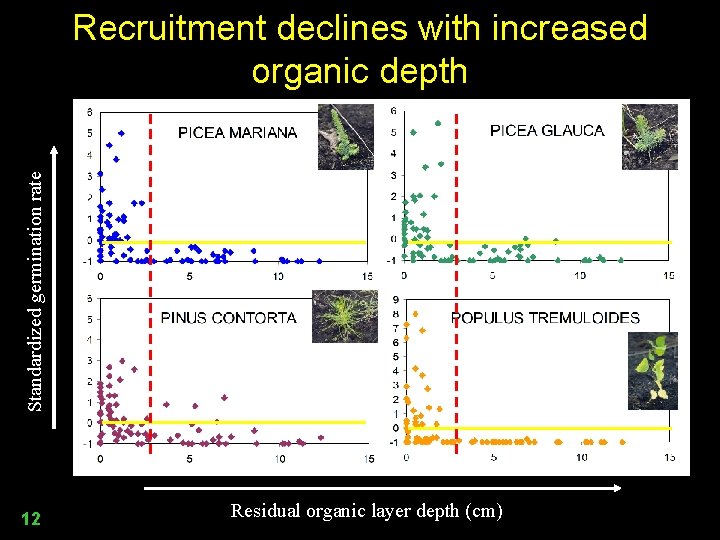
Standardized germination rate Recruitment declines with increased organic depth 12 Residual organic layer depth (cm)
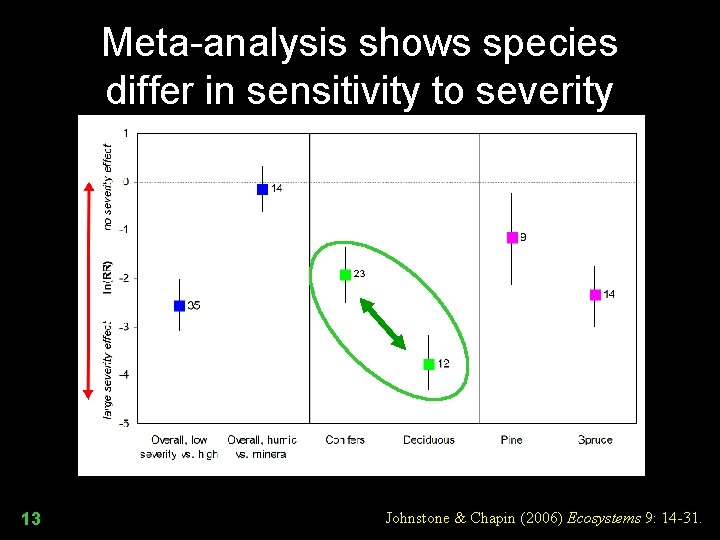
Meta-analysis shows species differ in sensitivity to severity 13 Johnstone & Chapin (2006) Ecosystems 9: 14 -31.
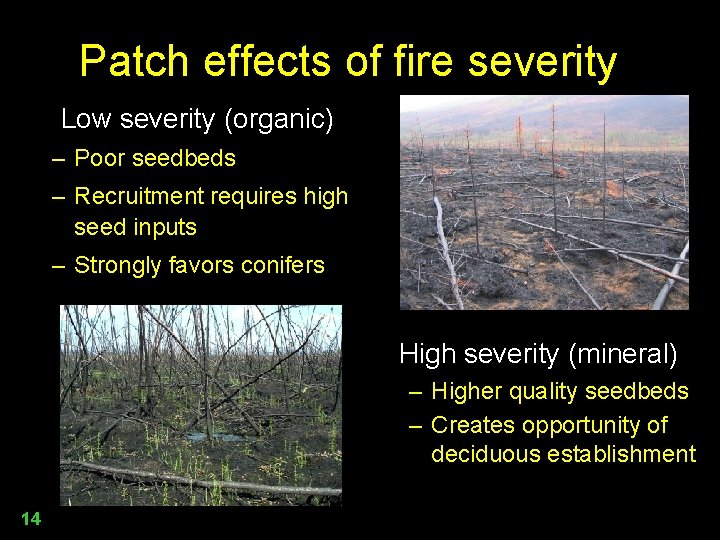
Patch effects of fire severity Low severity (organic) – Poor seedbeds – Recruitment requires high seed inputs – Strongly favors conifers High severity (mineral) – Higher quality seedbeds – Creates opportunity of deciduous establishment 14
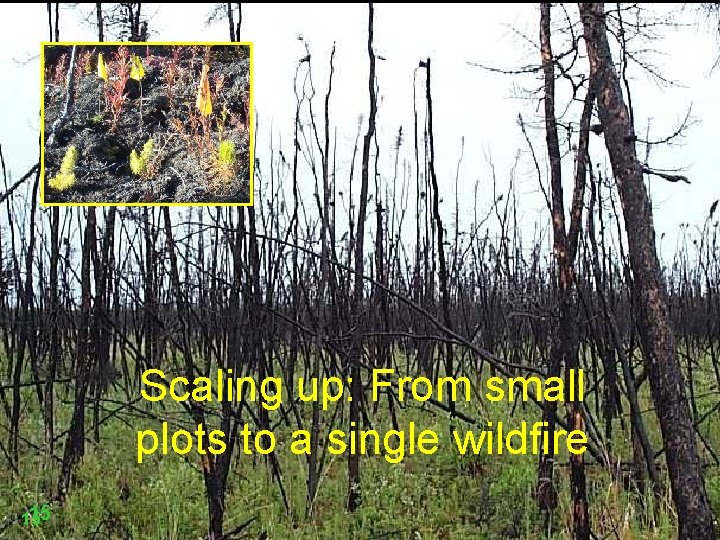
Scaling up: From small plots to a single wildfire 15 15
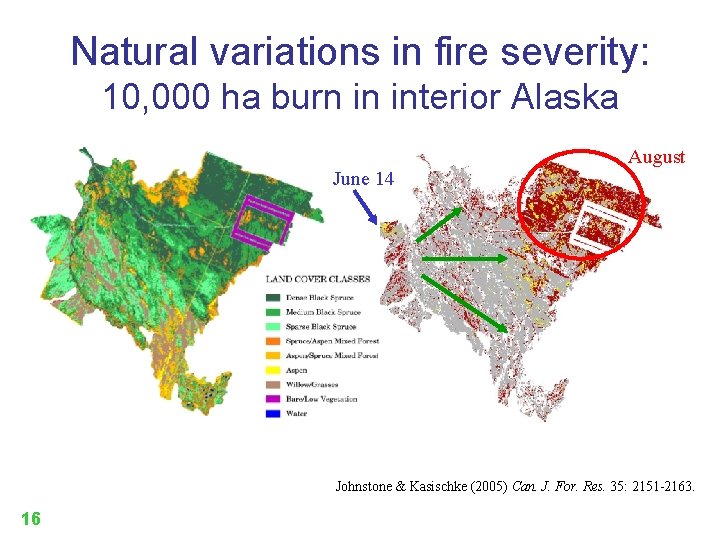
Natural variations in fire severity: 10, 000 ha burn in interior Alaska August June 14 Johnstone & Kasischke (2005) Can. J. For. Res. 35: 2151 -2163. 16
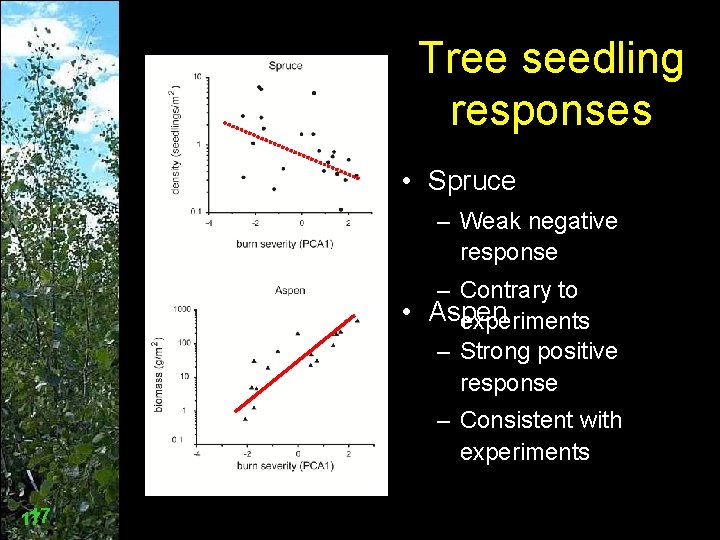
Tree seedling responses • Spruce – Weak negative response – Contrary to • Aspen experiments – Strong positive response – Consistent with experiments 17 17
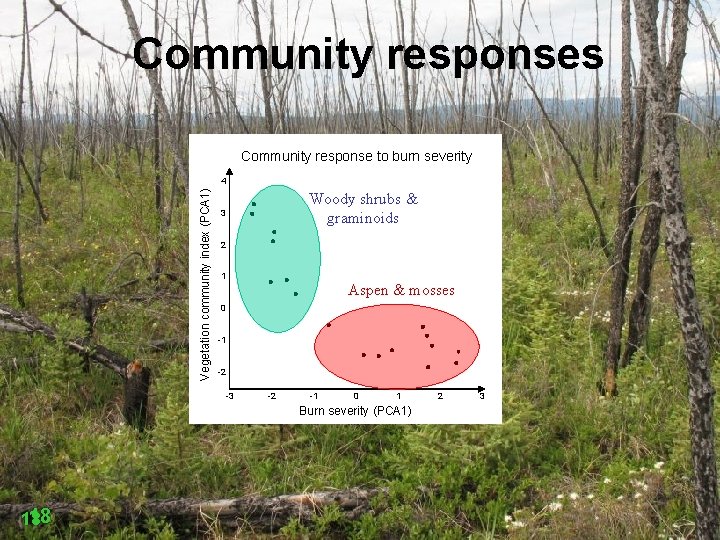
Community responses Community response to burn severity Vegetation community index (PCA 1) 4 Woody shrubs & graminoids 3 2 1 Aspen & mosses 0 -1 -2 -3 -2 -1 0 1 Burn severity (PCA 1) 18 18 2 3
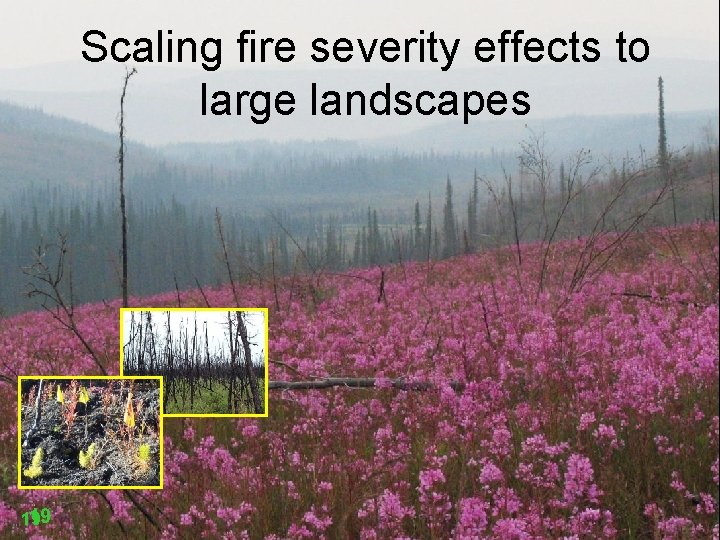
Scaling fire severity effects to large landscapes 19 19
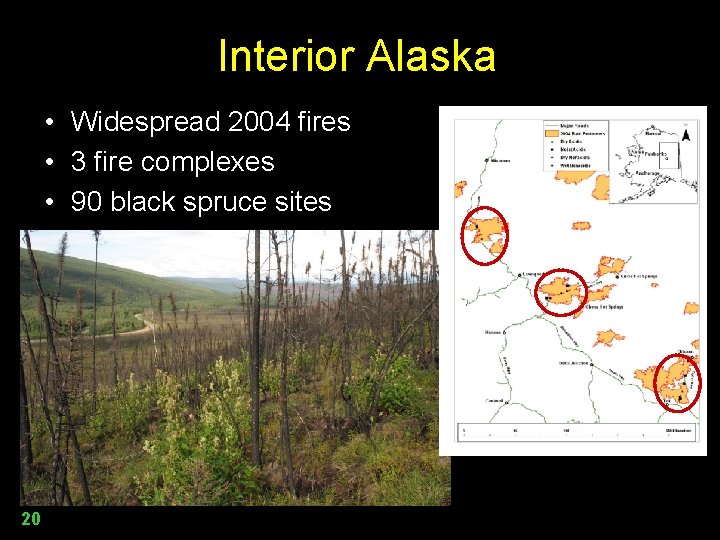
Interior Alaska • Widespread 2004 fires • 3 fire complexes • 90 black spruce sites 20
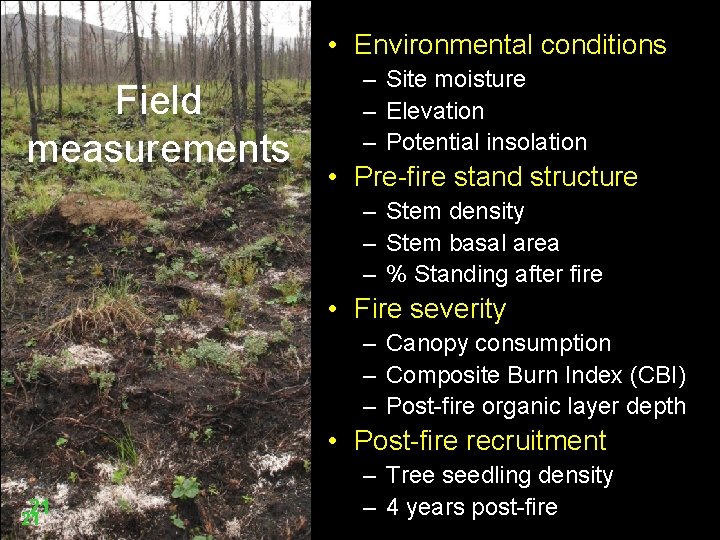
• Environmental conditions Field measurements – Site moisture – Elevation – Potential insolation • Pre-fire stand structure – Stem density – Stem basal area – % Standing after fire • Fire severity – Canopy consumption – Composite Burn Index (CBI) – Post-fire organic layer depth • Post-fire recruitment 21 21 – Tree seedling density – 4 years post-fire
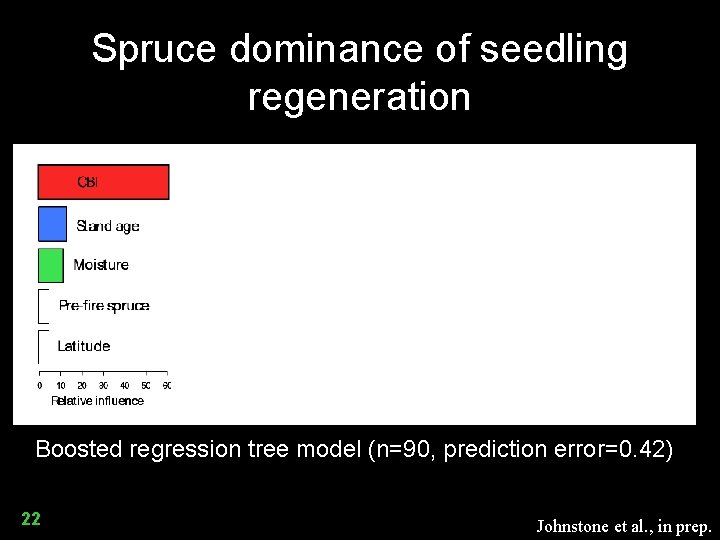
Spruce dominance of seedling regeneration Boosted regression tree model (n=90, prediction error=0. 42) 22 Johnstone et al. , in prep.
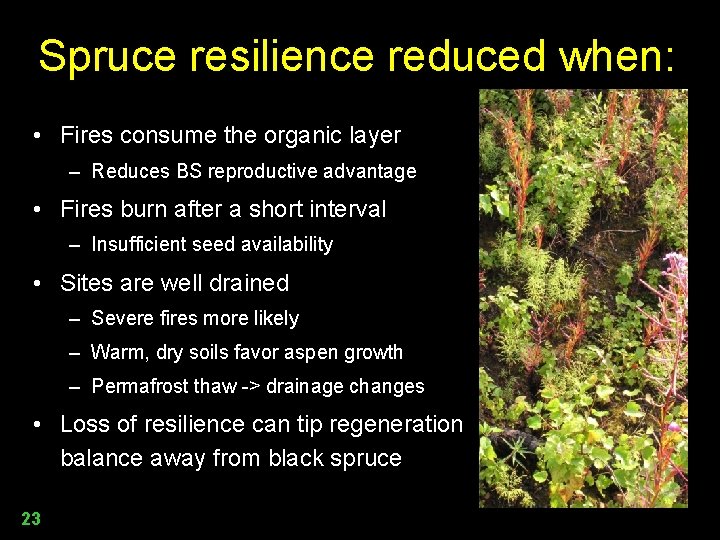
Spruce resilience reduced when: • Fires consume the organic layer – Reduces BS reproductive advantage • Fires burn after a short interval – Insufficient seed availability • Sites are well drained – Severe fires more likely – Warm, dry soils favor aspen growth – Permafrost thaw -> drainage changes • Loss of resilience can tip regeneration balance away from black spruce 23
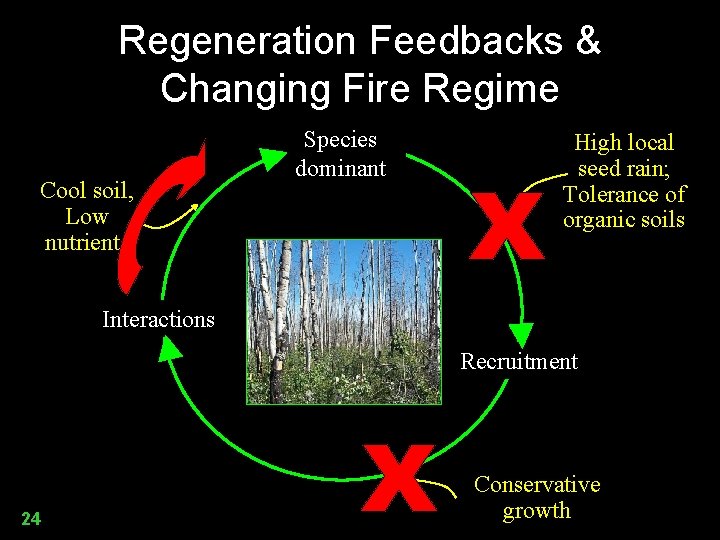
Regeneration Feedbacks & Changing Fire Regime Cool soil, Low nutrients Species dominant High local seed rain; Tolerance of organic soils Interactions Recruitment 24 Conservative growth
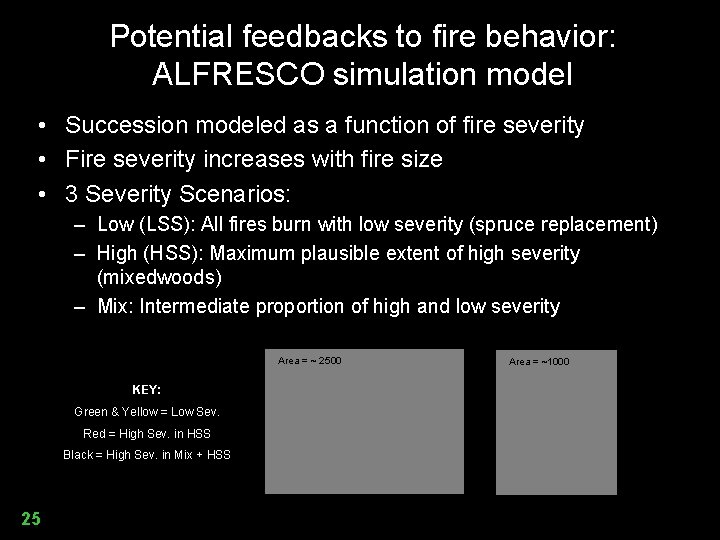
Potential feedbacks to fire behavior: ALFRESCO simulation model • Succession modeled as a function of fire severity • Fire severity increases with fire size • 3 Severity Scenarios: – Low (LSS): All fires burn with low severity (spruce replacement) – High (HSS): Maximum plausible extent of high severity (mixedwoods) – Mix: Intermediate proportion of high and low severity Area = ~ 2500 KEY: Green & Yellow = Low Sev. Red = High Sev. in HSS Black = High Sev. in Mix + HSS 25 Area = ~1000
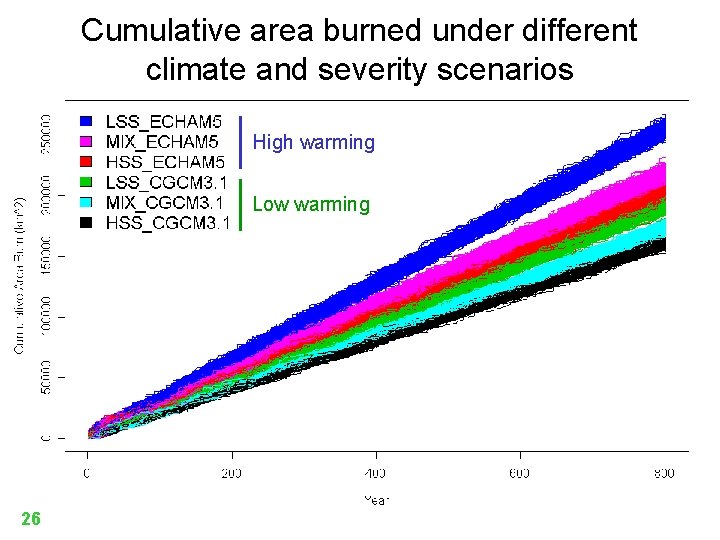
Cumulative area burned under different climate and severity scenarios High warming Low warming 26
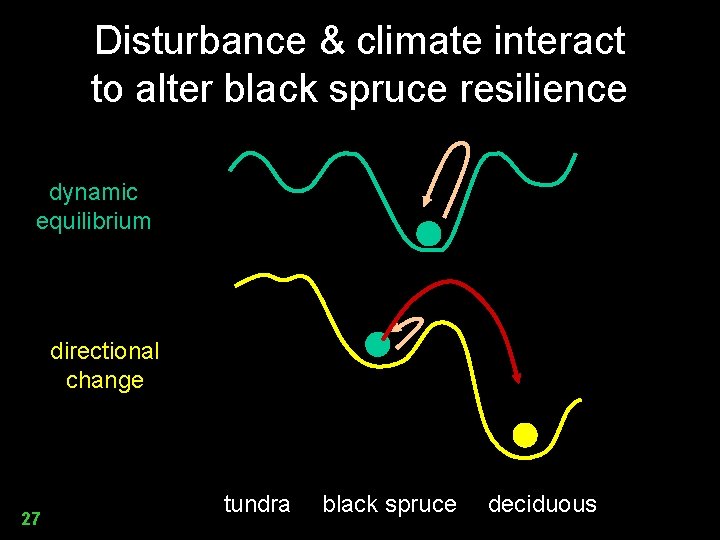
Disturbance & climate interact to alter black spruce resilience dynamic equilibrium directional change 27 tundra black spruce deciduous
Conclusions Ø Fire is both catalyst and driver of change – Critical & sensitive post-fire window – Both frequency and severity have critical effects Ø Landscape context => vulnerability to change – Understanding the drivers of resilience is key to predicting future change 28 28
Thank You! Collaborators: Terry Chapin Teresa Hollingsworth Scott Rupp Eric Kasischke Michelle Mack 29 29 Bonanza Creek
- Slides: 29