
Fire as Evidence Forensic Files Burning Desire https
Fire as Evidence
Forensic Files Burning Desire • https: //www. youtube. com/watch? v=RSYw 7 yk. Giu. I
Securing the Crime Scene • Keep everyone SAFE • Prevent evidence destruction/tampering
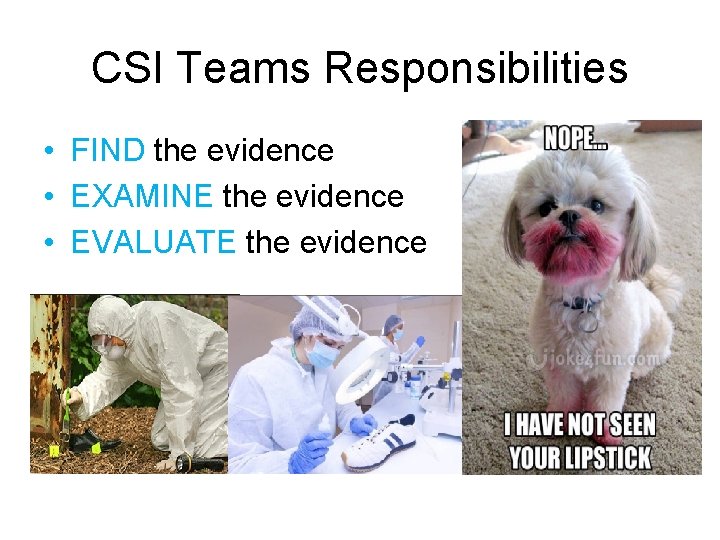
CSI Teams Responsibilities • FIND the evidence • EXAMINE the evidence • EVALUATE the evidence
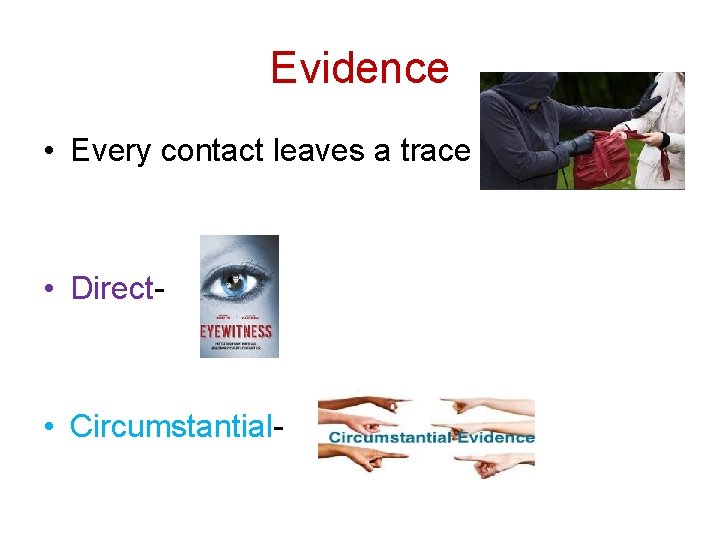
Evidence • Every contact leaves a trace • Direct- • Circumstantial-
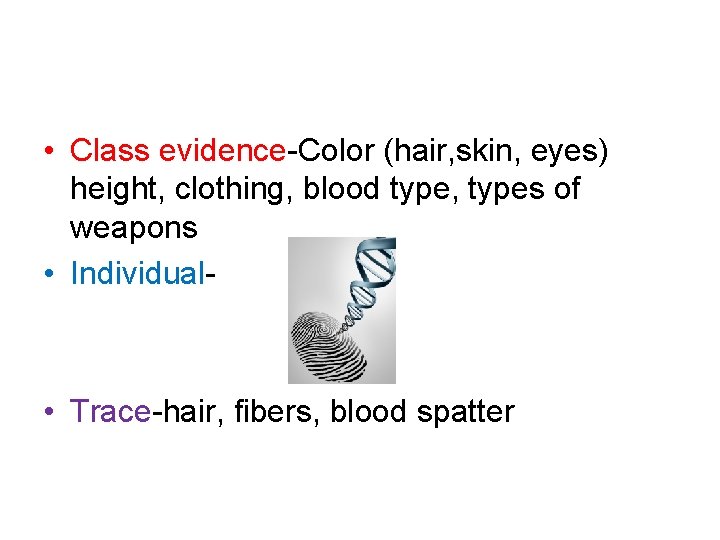
• Class evidence-Color (hair, skin, eyes) height, clothing, blood type, types of weapons • Individual- • Trace-hair, fibers, blood spatter
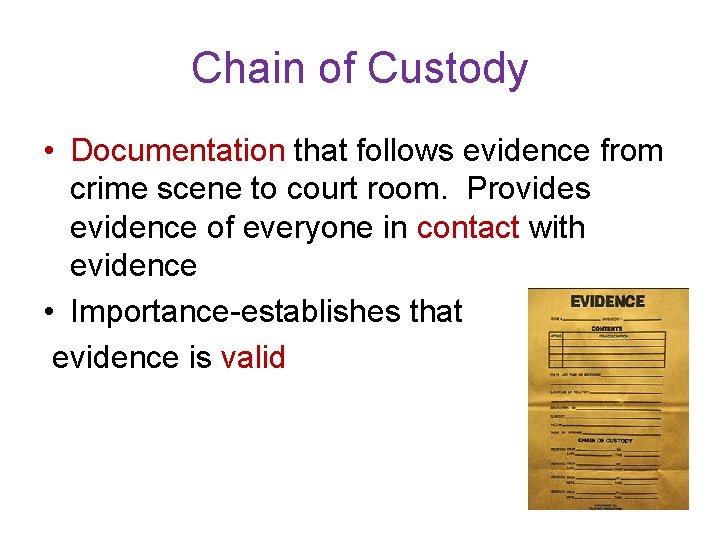
Chain of Custody • Documentation that follows evidence from crime scene to court room. Provides evidence of everyone in contact with evidence • Importance-establishes that evidence is valid
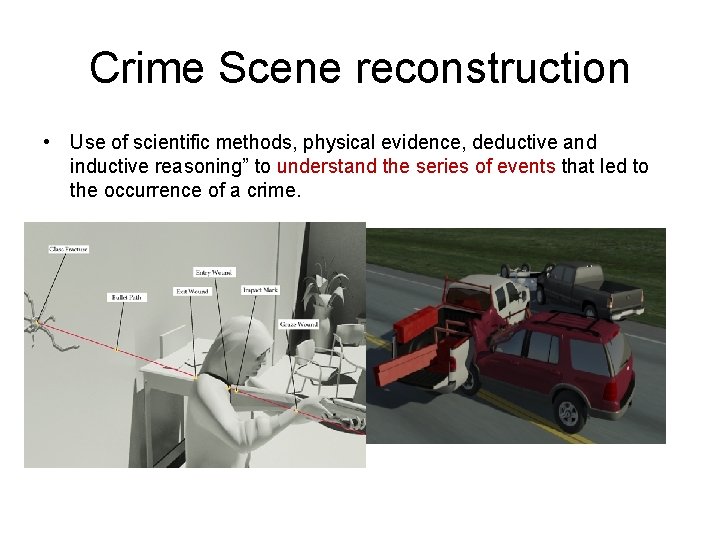
Crime Scene reconstruction • Use of scientific methods, physical evidence, deductive and inductive reasoning” to understand the series of events that led to the occurrence of a crime.
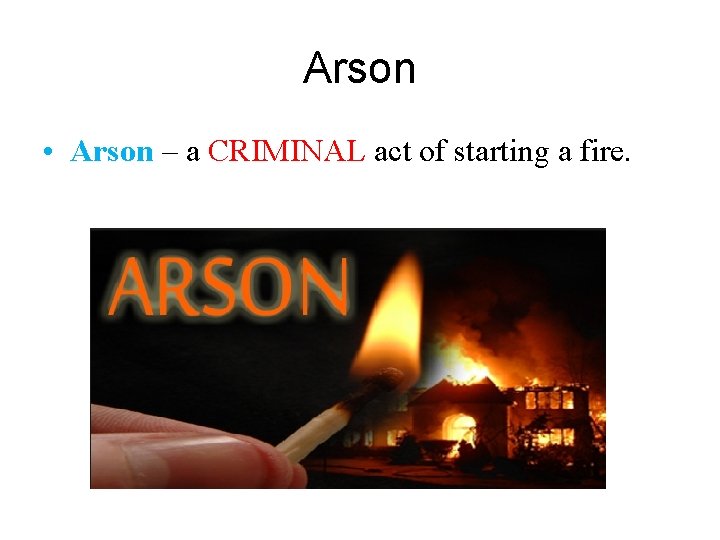
Arson • Arson – a CRIMINAL act of starting a fire.
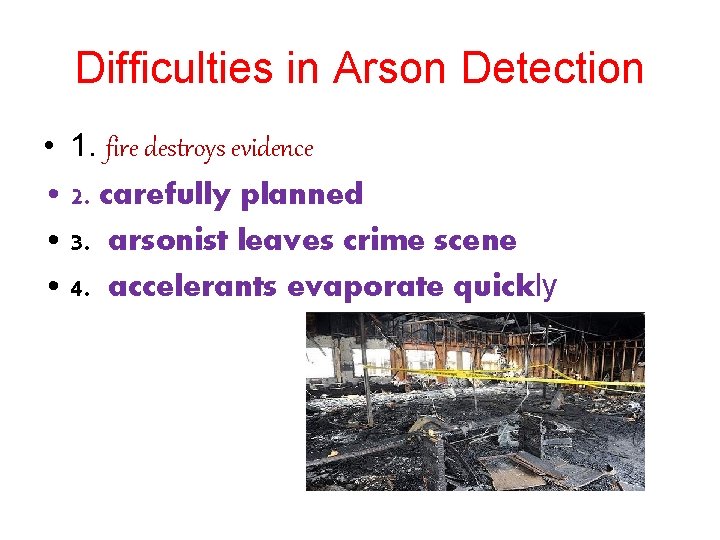
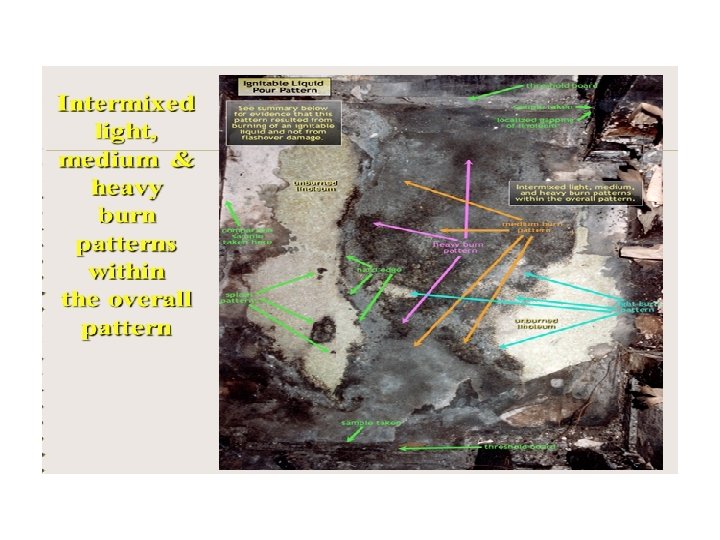
Difficulties in Arson Detection • 1. fire destroys evidence • 2. carefully planned • 3. arsonist leaves crime scene • 4. accelerants evaporate quickly
Signs of arson? • • 1. 2. 3. 4. Multiple points of origin evidence of an accelerant streamers separate , but connected fires
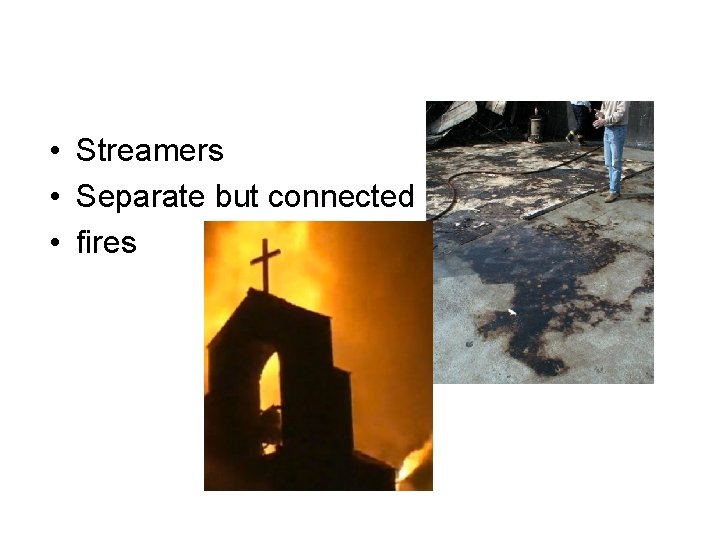
• Streamers • Separate but connected • fires
Fire Investigation Terms • Point of Origin – The location where the fire started. • Burn patterns –Noticeable patterns created by the fire as it burns. • Accelerants – Substances, such as gasoline, paint thinner, and alcohol, that accelerate the burning process. • .
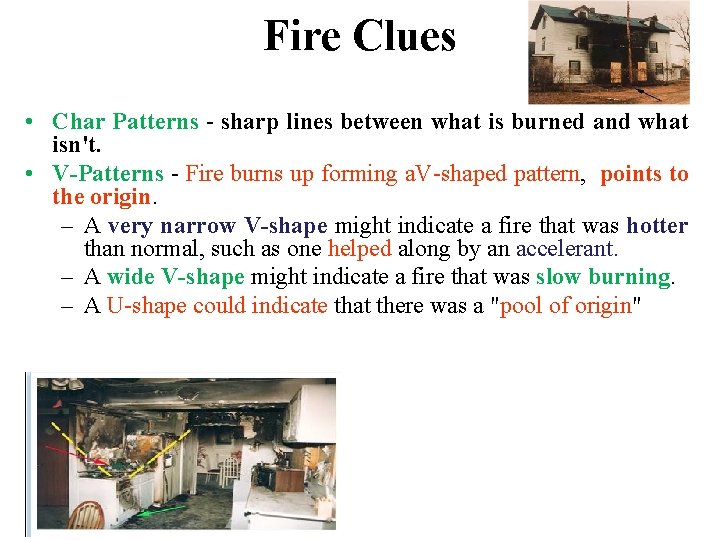
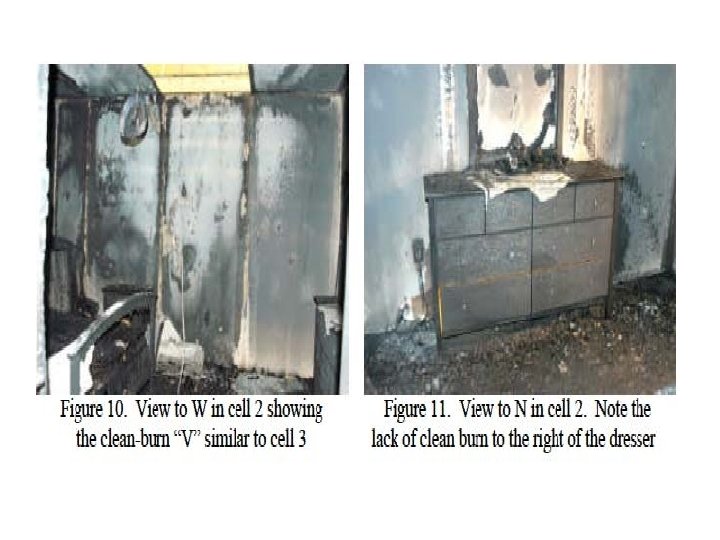
Fire Clues • Char Patterns - sharp lines between what is burned and what isn't. • V-Patterns - Fire burns up forming a. V-shaped pattern, points to the origin. – A very narrow V-shape might indicate a fire that was hotter than normal, such as one helped along by an accelerant. – A wide V-shape might indicate a fire that was slow burning. – A U-shape could indicate that there was a "pool of origin"
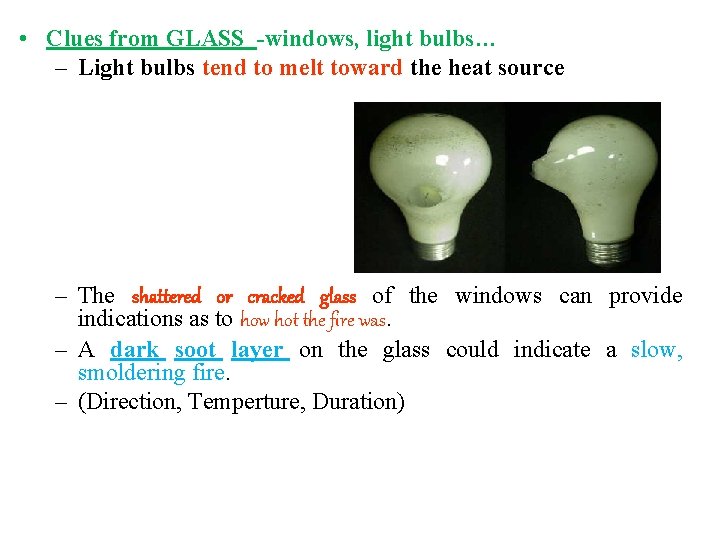
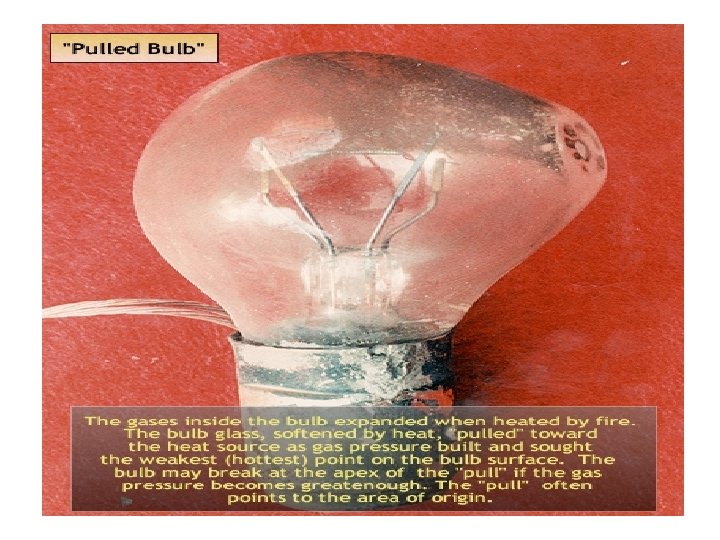
• Clues from GLASS -windows, light bulbs… – Light bulbs tend to melt toward the heat source – The shattered or cracked glass of the windows can provide indications as to how hot the fire was. – A dark soot layer on the glass could indicate a slow, smoldering fire. – (Direction, Temperture, Duration)
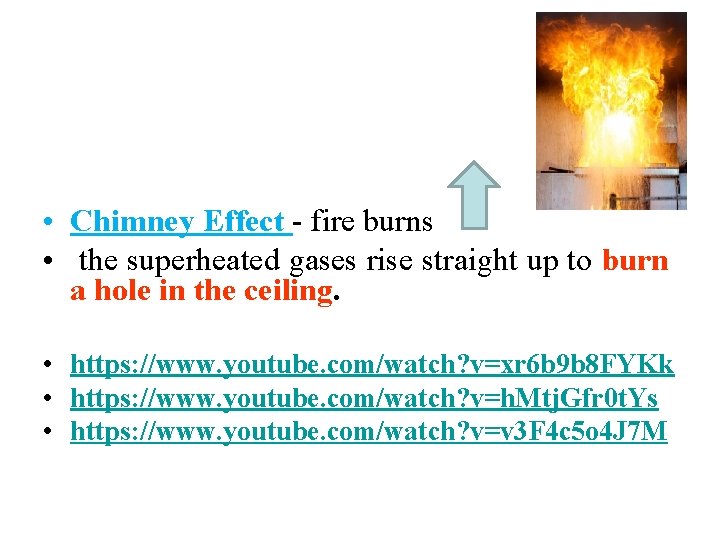
• Chimney Effect - fire burns • the superheated gases rise straight up to burn a hole in the ceiling. • https: //www. youtube. com/watch? v=xr 6 b 9 b 8 FYKk • https: //www. youtube. com/watch? v=h. Mtj. Gfr 0 t. Ys • https: //www. youtube. com/watch? v=v 3 F 4 c 5 o 4 J 7 M

• https: //www. youtube. com/watch? v=Qq. MV m 72 FMRk • https: //www. youtube. com/watch? v=Inr. S 4 F dndr 4
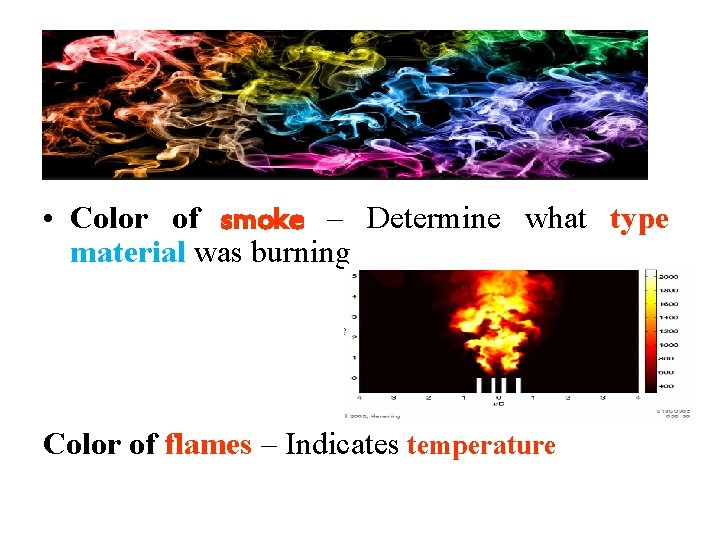
• Color of smoke – Determine what type material was burning Color of flames – Indicates temperature
EXAMPLES OF BURN PATTERNS • • • Alligatoring Depth of char Breaking of glass Spalling Distorted light bulbs Temperature determination 18 -8

Alligatoring
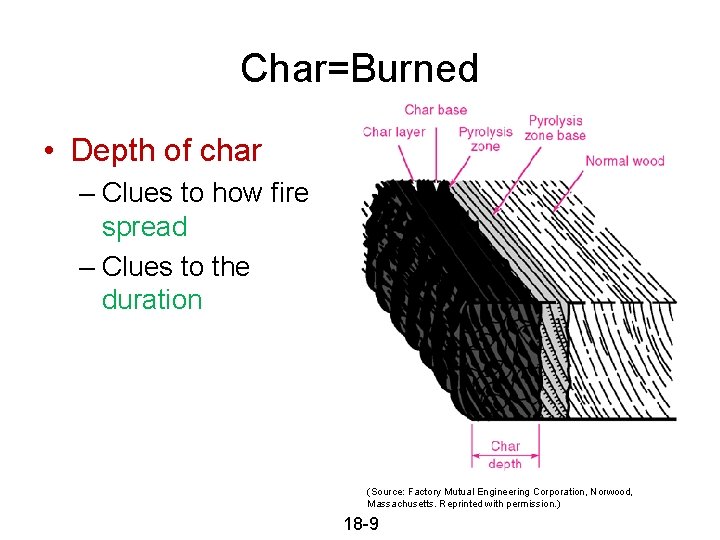
Char=Burned • Depth of char – Clues to how fire spread – Clues to the duration (Source: Factory Mutual Engineering Corporation, Norwood, Massachusetts. Reprinted with permission. ) 18 -9
Fire Investigation Basics • Work from the least to most damaged. FIND POINT OF ORIGIN • Document with notes, photographs, and videos. • Collect evidence (accelerant samples, fire items in AIRTIGHT container) • Interview witnesses • Determine possible cause
Fire Classification Can you give an example? • Accidental • Natural • Intentional -Arson • undetermined
COMMON MOTIVATIONS FOR ARSON • • • $$$-insurance fraud, for profit Revenge, spite, jealousy Vandalism/malicious mischief Racial/religious hostility Crime concealment/diversionary tactics Psychiatric afflictions Vanity, hero fire 18 -15
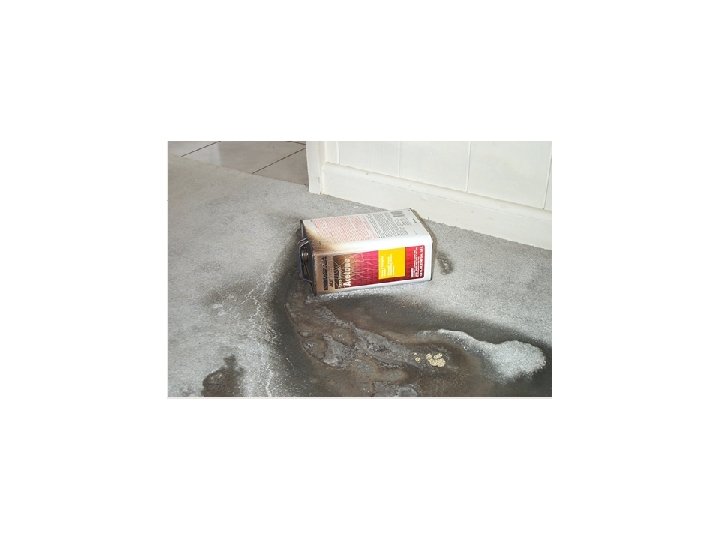
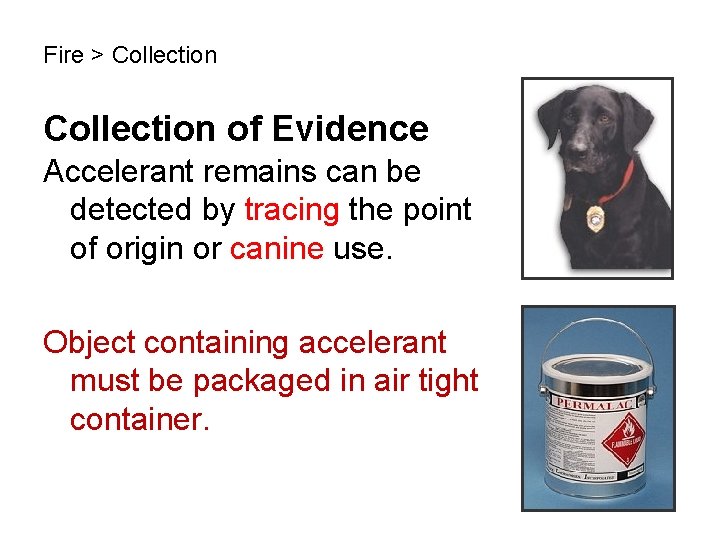
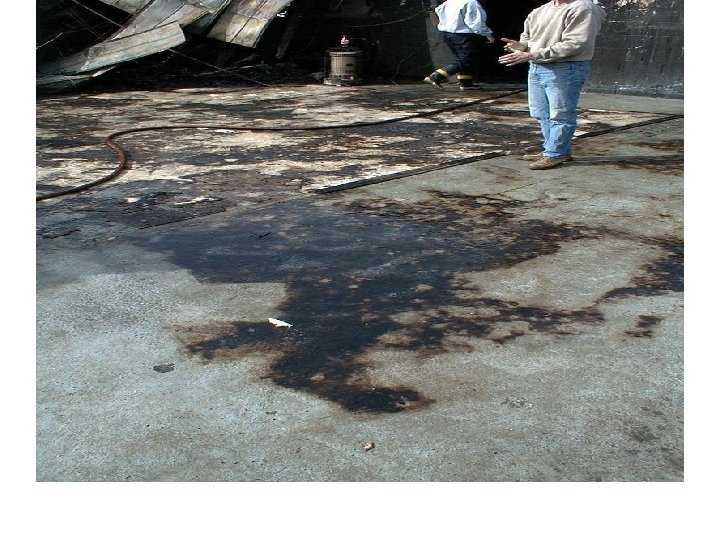
Fire > Collection of Evidence Accelerant remains can be detected by tracing the point of origin or canine use. Object containing accelerant must be packaged in air tight container.
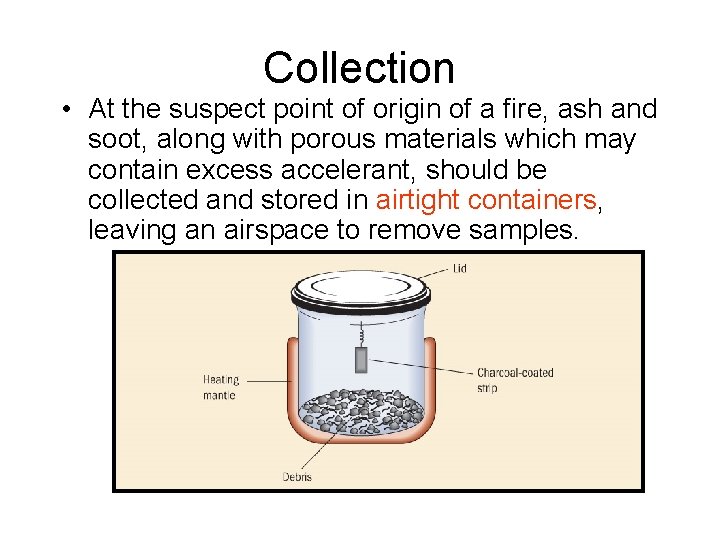
Collection • At the suspect point of origin of a fire, ash and soot, along with porous materials which may contain excess accelerant, should be collected and stored in airtight containers, leaving an airspace to remove samples.
Collection • Traces of flammable liquid residues may be located with a vapor detector (sniffer). • It is important that a sampling of similar but uncontaminated control specimens be collected. • A search for ignitors such as matches, an electrical sparking device, or parts of a “Molotov cocktail” must also be conducted.
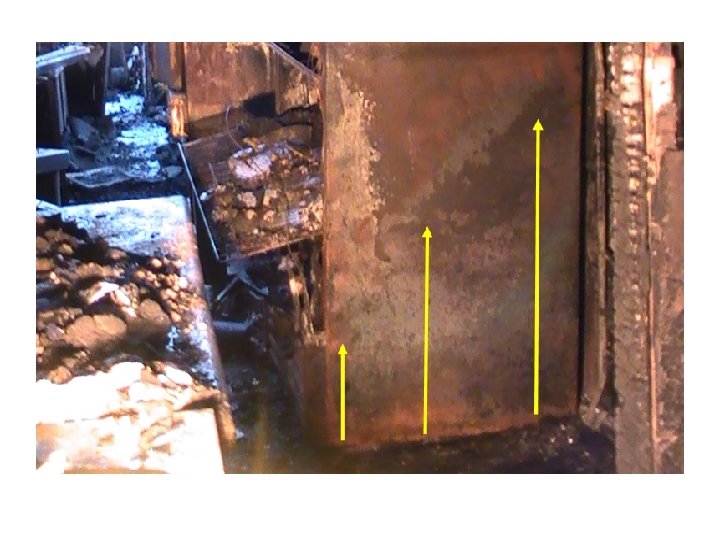
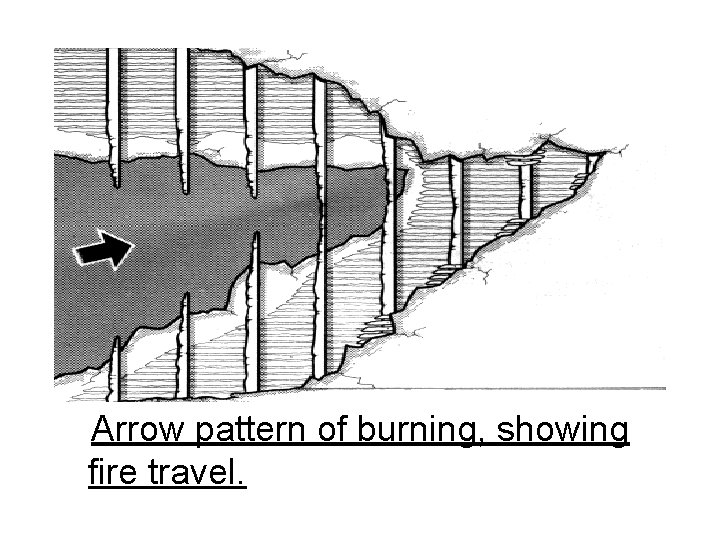
Arrow pattern of burning, showing fire travel.
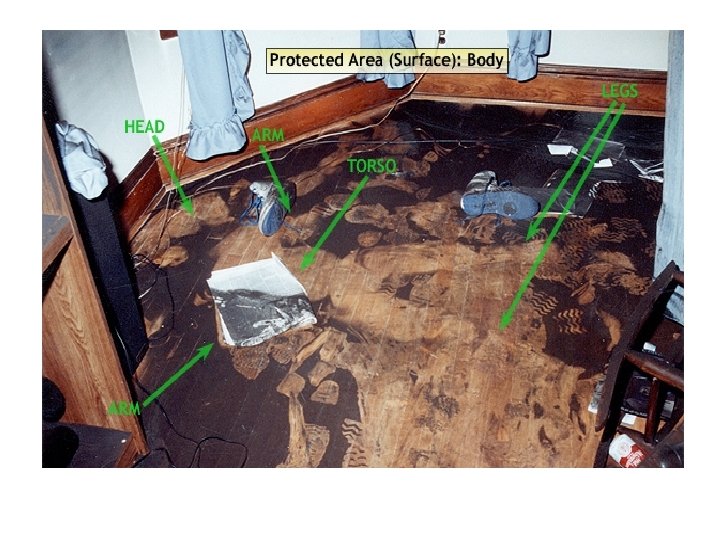
Arson or Nah? • • • • Accidental Nature Heating System Electrical appliances Lightning Children playing with matches Smoking Non-Accident Odors – Gas, kerosene, or other accelerants Furnishing – Removal of personal objects and valuables Clothing – Check debris for buttons, zippers, etc Locked windows, blocked doors Two or more points of origin Look for inverted v-patterns (can be a sign that an accelerant was used) Floors charred –Can indicate use of an accelerant Trailers that lead the fire from one place to another
Arsonist • http: //www. firelineschool. com/student_files /10%20 Famous%20 Arsonists%20 and%20 Why. pdf
- Slides: 38