
Fire ARSON AND EXPLOSIVES The Chemistry of Fire
- Slides: 33
Fire ARSON AND EXPLOSIVES
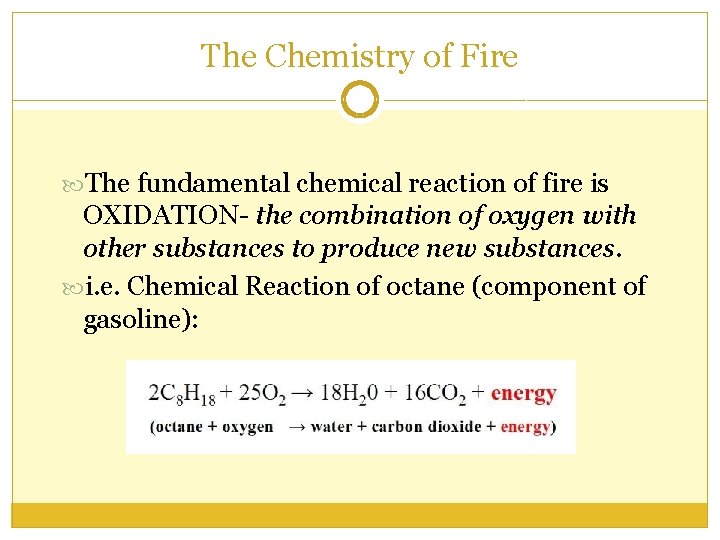
The Chemistry of Fire The fundamental chemical reaction of fire is OXIDATION- the combination of oxygen with other substances to produce new substances. i. e. Chemical Reaction of octane (component of gasoline):
The Chemistry of Fire The quantity of heat from a chemical reaction comes from the breaking and formation of chemical bonds.
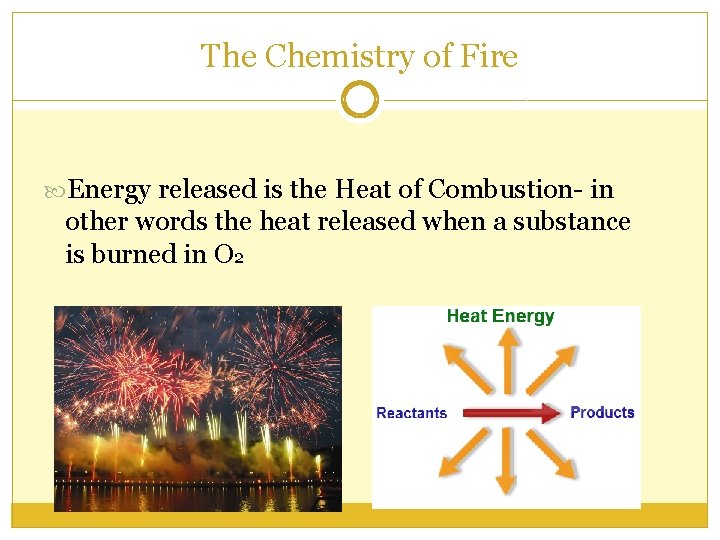
The Chemistry of Fire Energy is needed to break a bond and energy is released when bonds are formed. In Oxidation Reactions (i. e. Combustion) the combination of O 2 with another substance and the production of noticeable heat and light, means that there is more energy released than needed to break the bonds. The reaction is Exothermic (heat energy is released).
The Chemistry of Fire Energy released is the Heat of Combustion- in other words the heat released when a substance is burned in O 2
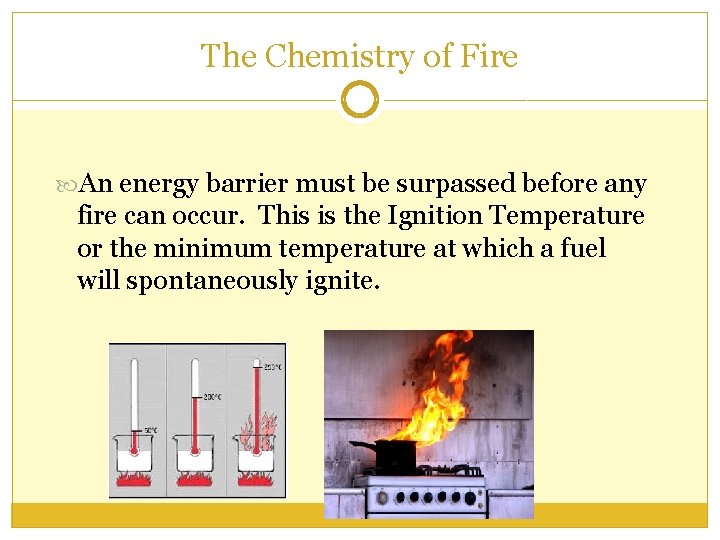
The Chemistry of Fire An energy barrier must be surpassed before any fire can occur. This is the Ignition Temperature or the minimum temperature at which a fuel will spontaneously ignite.
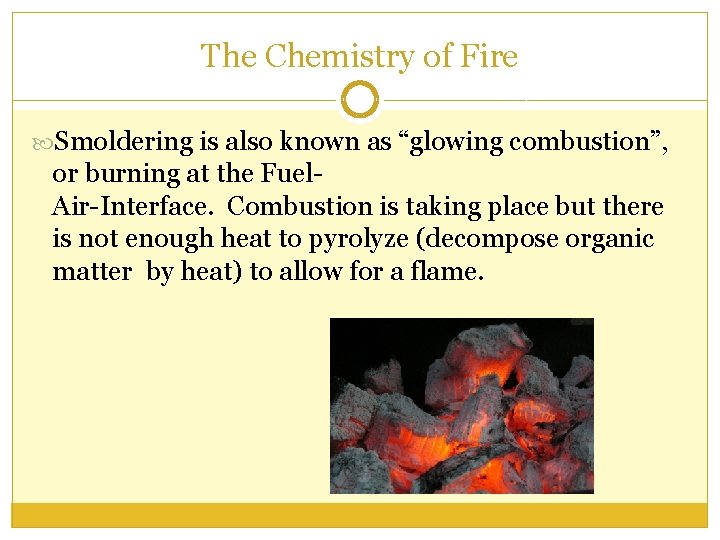
The Chemistry of Fire Smoldering is also known as “glowing combustion”, or burning at the Fuel. Air-Interface. Combustion is taking place but there is not enough heat to pyrolyze (decompose organic matter by heat) to allow for a flame.
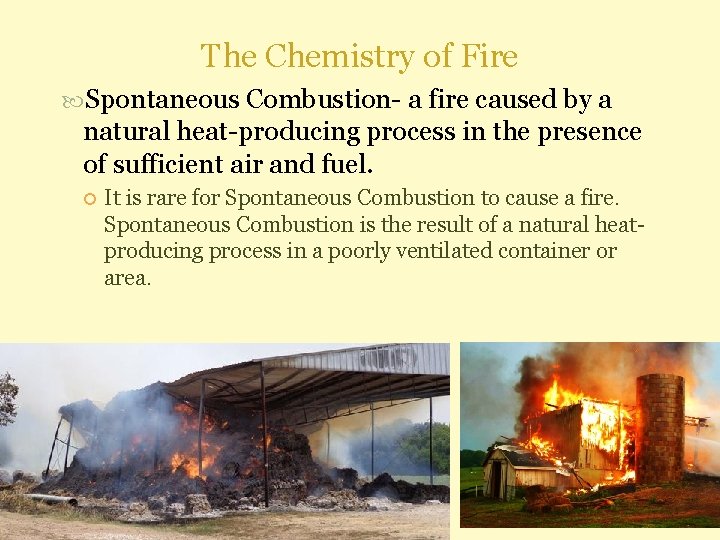
The Chemistry of Fire Spontaneous Combustion- a fire caused by a natural heat-producing process in the presence of sufficient air and fuel. It is rare for Spontaneous Combustion to cause a fire. Spontaneous Combustion is the result of a natural heatproducing process in a poorly ventilated container or area.
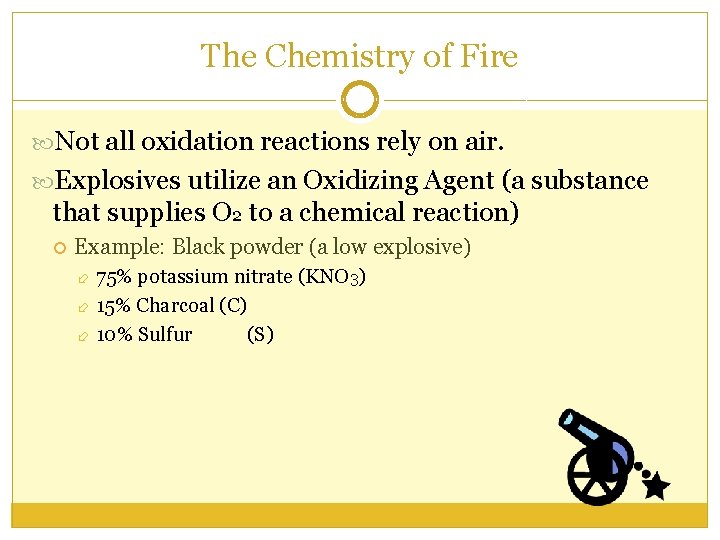
The Chemistry of Fire Not all oxidation reactions rely on air. Explosives utilize an Oxidizing Agent (a substance that supplies O 2 to a chemical reaction) Example: Black powder (a low explosive) 75% potassium nitrate (KNO 3) 15% Charcoal (C) 10% Sulfur (S)
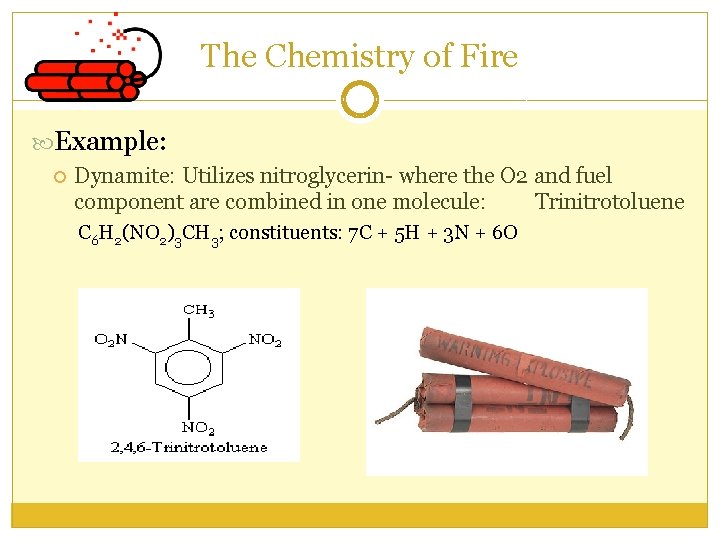
The Chemistry of Fire Example: Dynamite: Utilizes nitroglycerin- where the O 2 and fuel component are combined in one molecule: Trinitrotoluene C 6 H 2(NO 2)3 CH 3; constituents: 7 C + 5 H + 3 N + 6 O
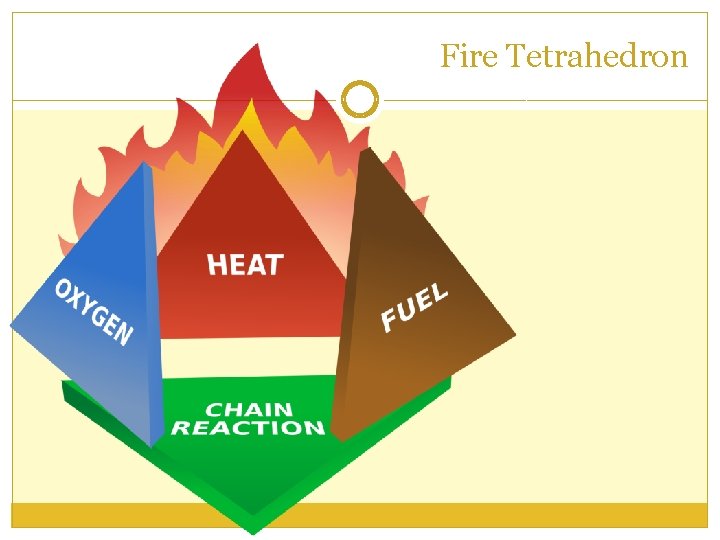
Fire Investigation Terms Fire - Produced when a substance undergoes rapid oxidation involving heat and light. Fire Tetrahedron– Shows the four components needed to produce and sustain a fire. Flash Point – The lowest temperature to which a substance must be heated in order for the substance to give off vapors which will burn when exposed to a flame or ignition source. Point of Origin – The location where the fire started. Burn patterns –Noticeable patterns created by the fire as it burns. Accelerants – Substances, such as gasoline, paint thinner, and alcohol, that accelerate the burning process. Arson – A fire started deliberately.
Fire Tetrahedron
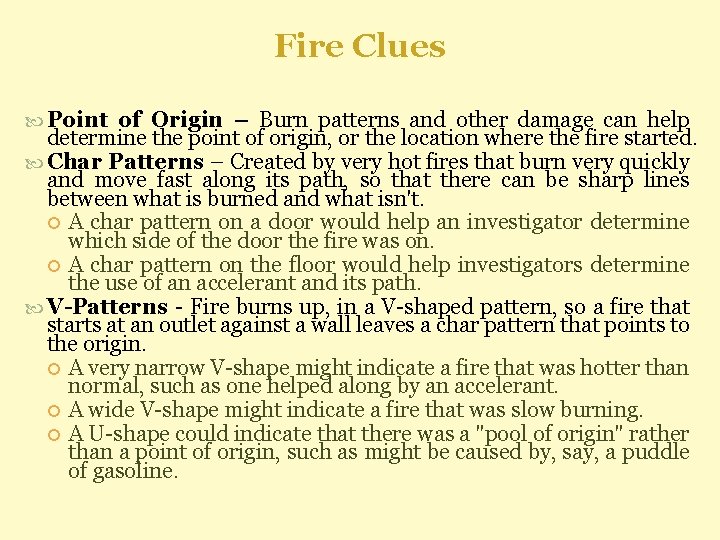
Fire Investigation Basics Work from the least damaged areas to the most heavily damaged areas. Document with notes, photographs, and videos. Collect evidence (accelerant samples, fire items, and other crime scene evidence. ) Interview witnesses Determine the point of origin. Determine the heat source(s). Hypothesize the reasons for the fire.
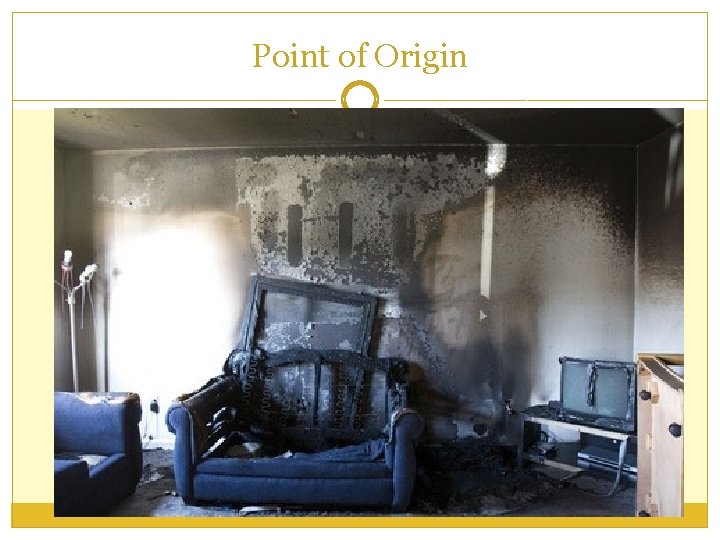
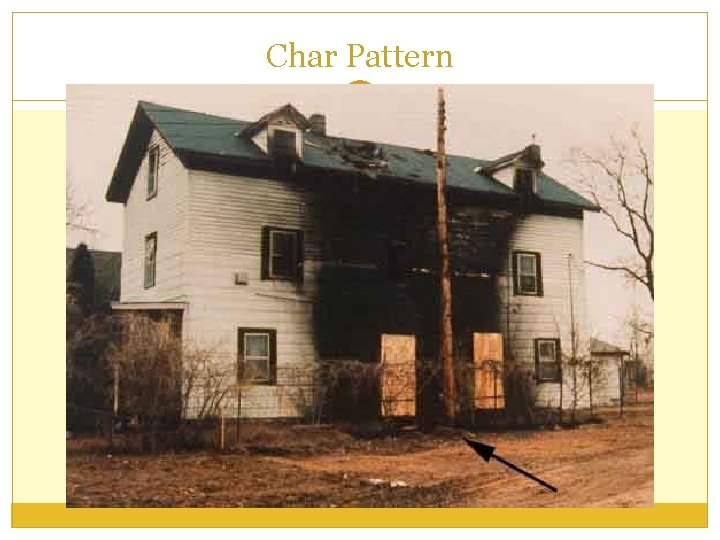
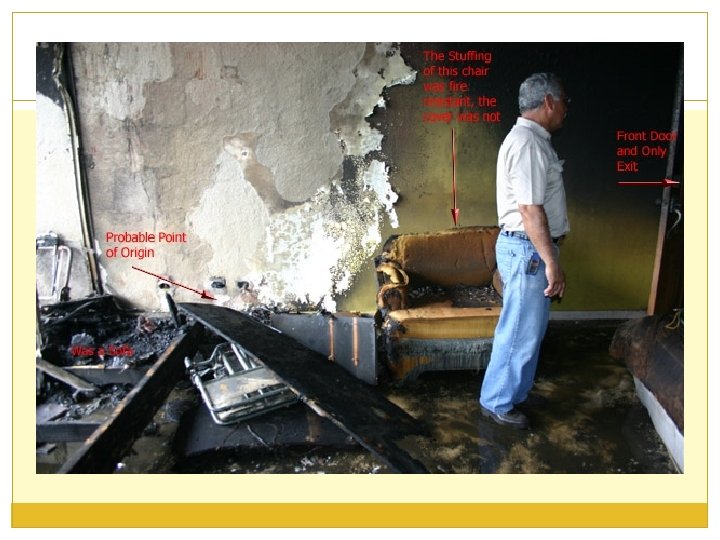
Fire Clues Point of Origin – Burn patterns and other damage can help determine the point of origin, or the location where the fire started. Char Patterns – Created by very hot fires that burn very quickly and move fast along its path, so that there can be sharp lines between what is burned and what isn't. A char pattern on a door would help an investigator determine which side of the door the fire was on. A char pattern on the floor would help investigators determine the use of an accelerant and its path. V-Patterns - Fire burns up, in a V-shaped pattern, so a fire that starts at an outlet against a wall leaves a char pattern that points to the origin. A very narrow V-shape might indicate a fire that was hotter than normal, such as one helped along by an accelerant. A wide V-shape might indicate a fire that was slow burning. A U-shape could indicate that there was a "pool of origin" rather than a point of origin, such as might be caused by, say, a puddle of gasoline.
Point of Origin
Char Pattern
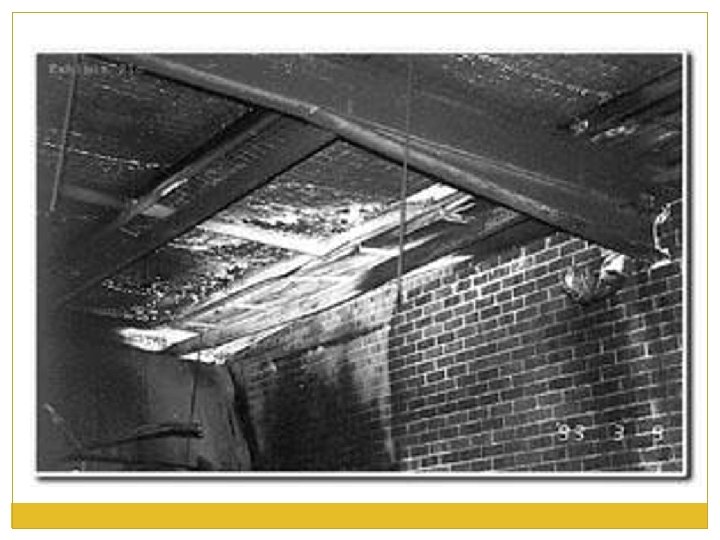
Heat Shadows - Occur when heavy furniture shields part of a wall; can help determine the origin point. Glass - Glass fragments, windows, and light bulbs can provide clues to a fire. Light bulbs tend to melt toward the heat source, so the "direction of melt" can indicate the direction of the fire. The shattered or cracked glass of the windows can provide indications as to how a fire burned. A dark soot layer on the glass could indicate a slow, smoldering fire. Clear glass with an abnormal pattern of cracking could imply a very hot fire, possibly due to an accelerant. Chimney Effect - Since fire burns upwards, there can be a "chimney effect" where the fire ignites at a point, the superheated gases rise upward and form a fireball, which continues straight up to burn a hole in the ceiling. If the roof is not entirely burnt, and the fire investigator finds such a hole, the origin of the fire could be directly underneath. Color of smoke – Determine what type material was burning Color of flames – Indicates at what temperature the fire was burning.
Signs of Arson Most arsons are started with petroleum-based accelerants, such as gasoline or kerosene. The evidence of arson may be from separate or unconnected fires, or from the use of “streamers” to spread the fire from one area to another. Fire investigators look for signs of theft, breaking and entering and for any witnesses to the fire.
Signs of Arson A thorough search of the scene should be completed for the igniter. The most common igniter is a match. The match is usually consumed by the fire, but there have been cases where the match was tossed aside, and later recovered at the scene.
Fire Origin Fires tend to move in an upward direction. The origin of the fire is predominantly located closest to the lowest point, that shows the most intense characteristics of burning.
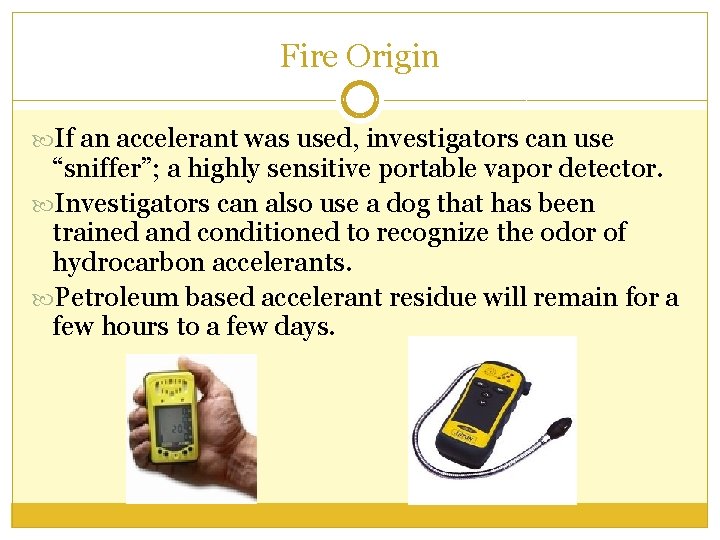
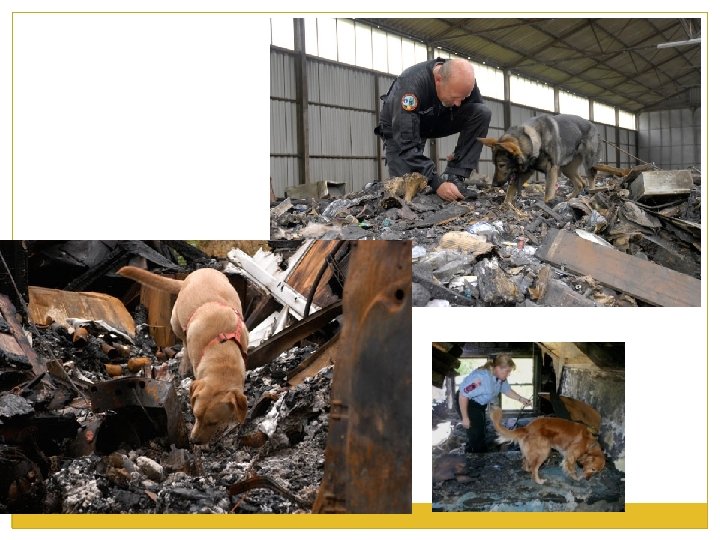
Fire Origin If an accelerant was used, investigators can use “sniffer”; a highly sensitive portable vapor detector. Investigators can also use a dog that has been trained and conditioned to recognize the odor of hydrocarbon accelerants. Petroleum based accelerant residue will remain for a few hours to a few days.
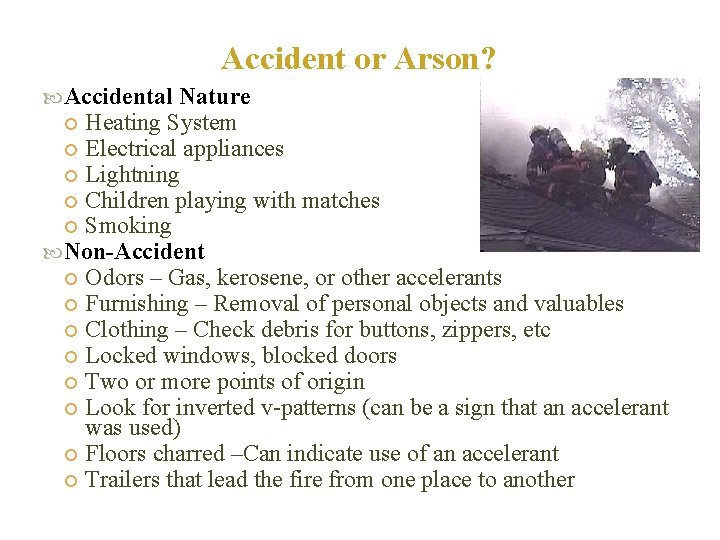
Accident or Arson? Accidental Nature Heating System Electrical appliances Lightning Children playing with matches Smoking Non-Accident Odors – Gas, kerosene, or other accelerants Furnishing – Removal of personal objects and valuables Clothing – Check debris for buttons, zippers, etc Locked windows, blocked doors Two or more points of origin Look for inverted v-patterns (can be a sign that an accelerant was used) Floors charred –Can indicate use of an accelerant Trailers that lead the fire from one place to another
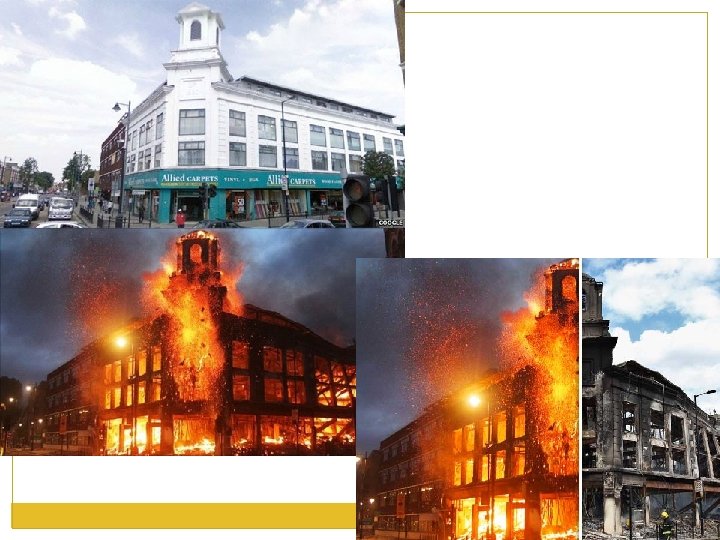
Arson Facts in America According to the FBI Crime Index, juvenile and adult arson cause an annual average of 560, 000 fires, 750 deaths, 3, 700 injuries, and $1. 5 billion in property loss. 55% of all arson arrests in the US are children under 18. What are Common Motives for Arson? • Crime concealment: To conceal another crime such as murder, burglary, or vehicle. • Revenge or spite: To get back at someone for a perceived injustice. • Monetary Gain: Arson-for-Profit fires are set to burn a building, vehicle, or some other object in order to gain profit from the fire. The profit may come in several forms; from insurance coverage on the property, or from putting a competitor out of business. • Malicious Vandalism: Fire set to someone’s property, just to destroy it. Malicious vandalism fires account for the largest percentage of arson fires. These fires are frequently set by juveniles. • Mentally Disturbed: Some persons have been found to have an irresistible impulse to set fires. Source: http: //www. state. il. us/osfm/Arson. Is. AFelony. Crime. htm
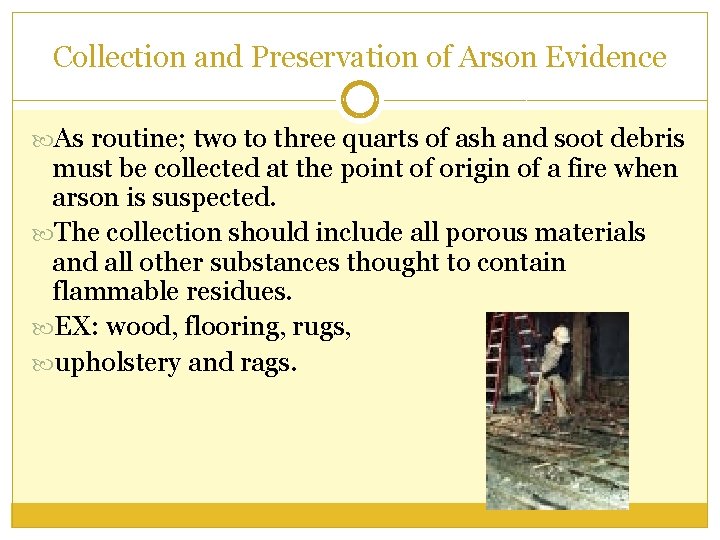
Collection and Preservation of Arson Evidence As routine; two to three quarts of ash and soot debris must be collected at the point of origin of a fire when arson is suspected. The collection should include all porous materials and all other substances thought to contain flammable residues. EX: wood, flooring, rugs, upholstery and rags.
Collection and Preservation of Arson Evidence Specimens are to be packaged immediately in airtight containers so residues do not evaporate. Clothing from the suspect arsonist are also collected and preserved in air tight containers.
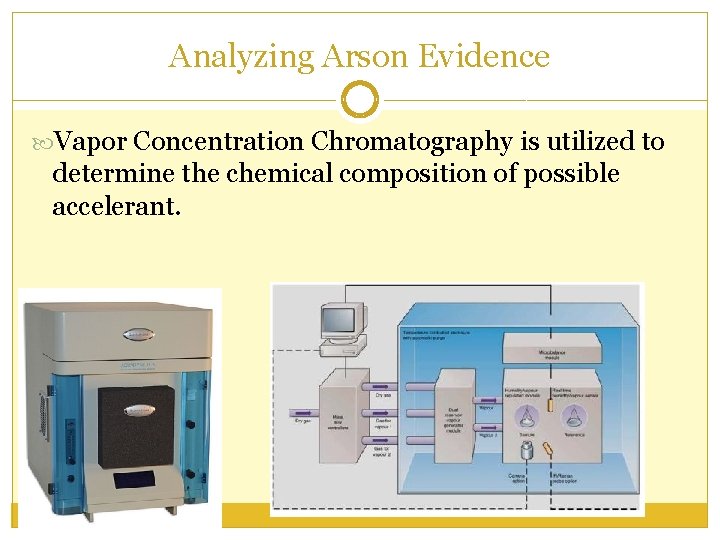
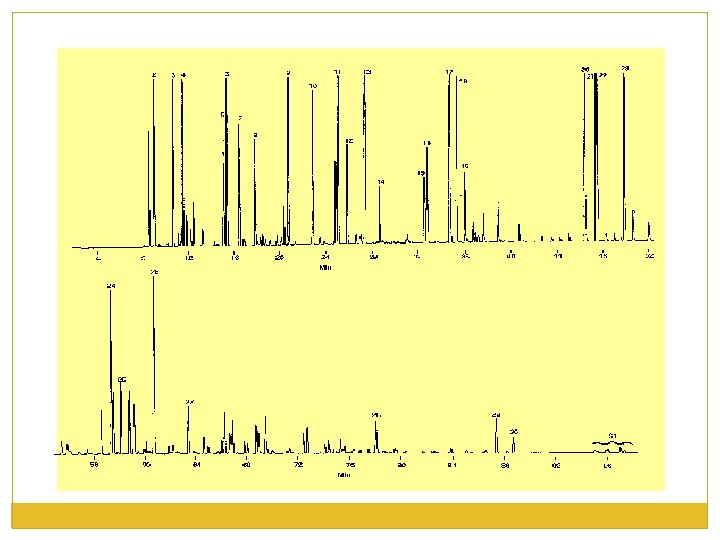
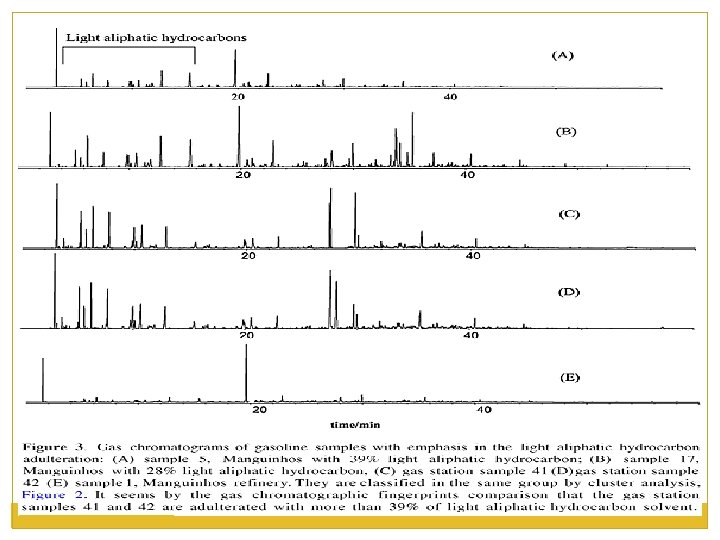
Analyzing Arson Evidence Vapor Concentration Chromatography is utilized to determine the chemical composition of possible accelerant.