
Finite Volume Method Philip Mocz Goals Construct a



- Slides: 13
Finite Volume Method Philip Mocz
Goals Construct a robust, 2 nd order FV method for the Euler equation (Navier-Stokes without the viscous term) Simulate the Kelvin Helmholtz Instability!
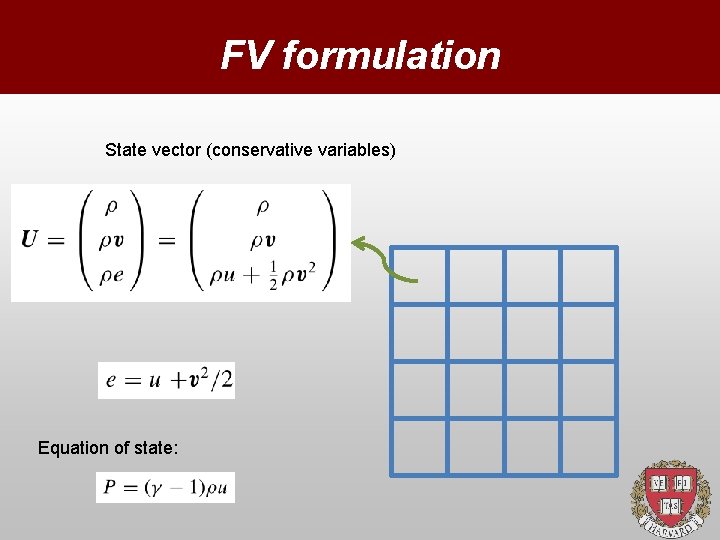
FV formulation State vector (conservative variables) Equation of state:
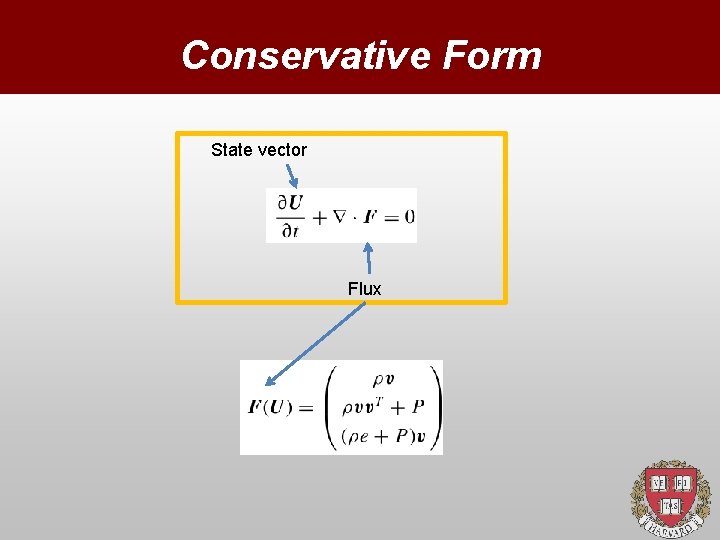
Conservative Form State vector Flux
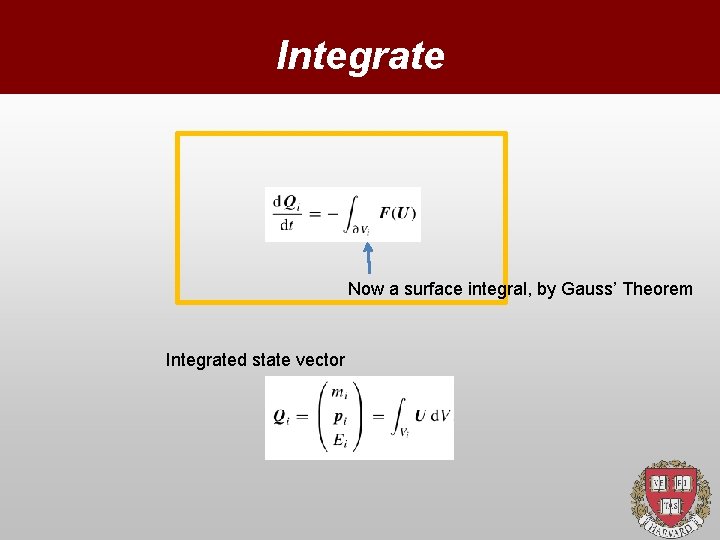
Integrate Now a surface integral, by Gauss’ Theorem Integrated state vector
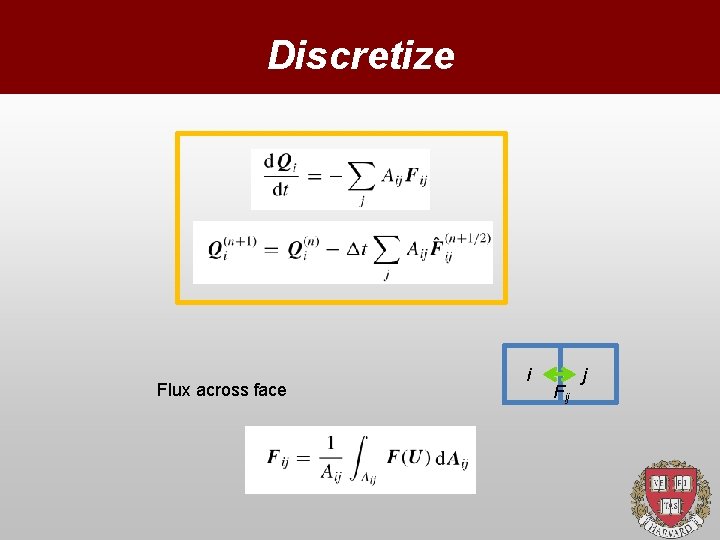
Discretize Flux across face i Fij j
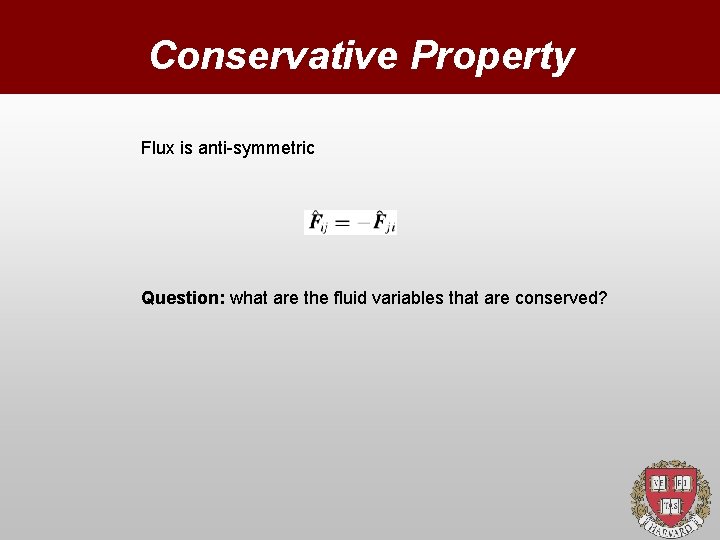
Conservative Property Flux is anti-symmetric Question: what are the fluid variables that are conserved?
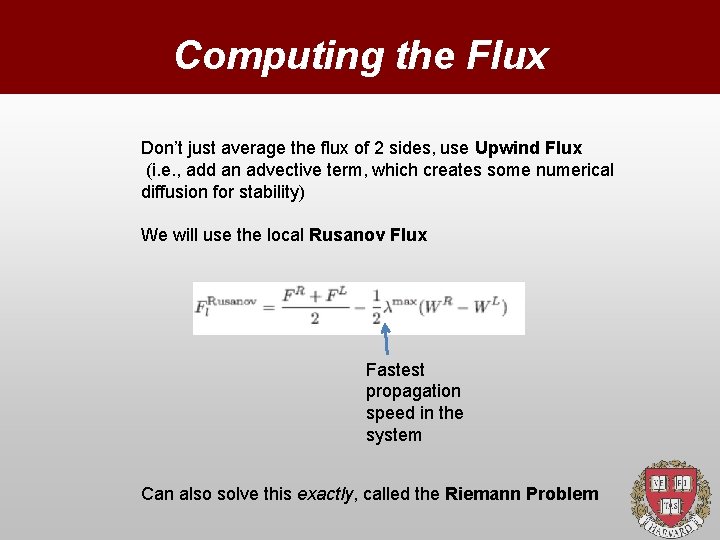
Computing the Flux Don’t just average the flux of 2 sides, use Upwind Flux (i. e. , add an advective term, which creates some numerical diffusion for stability) We will use the local Rusanov Flux Fastest propagation speed in the system Can also solve this exactly, called the Riemann Problem
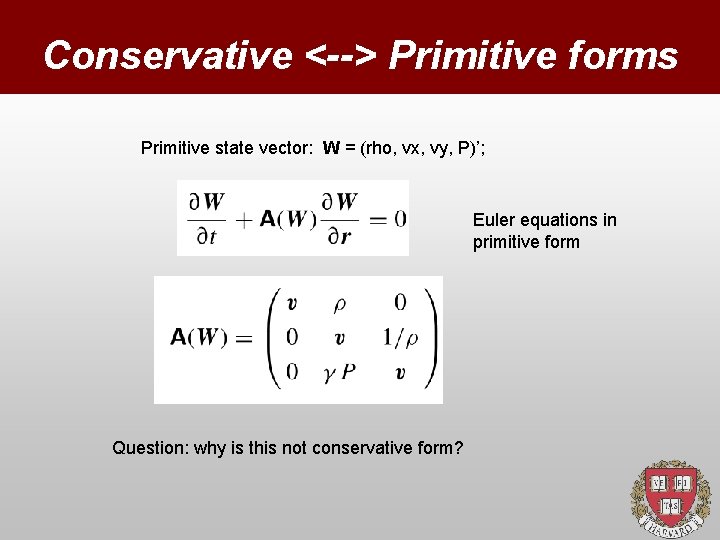
Conservative <--> Primitive forms Primitive state vector: W = (rho, vx, vy, P)’; Euler equations in primitive form Question: why is this not conservative form?
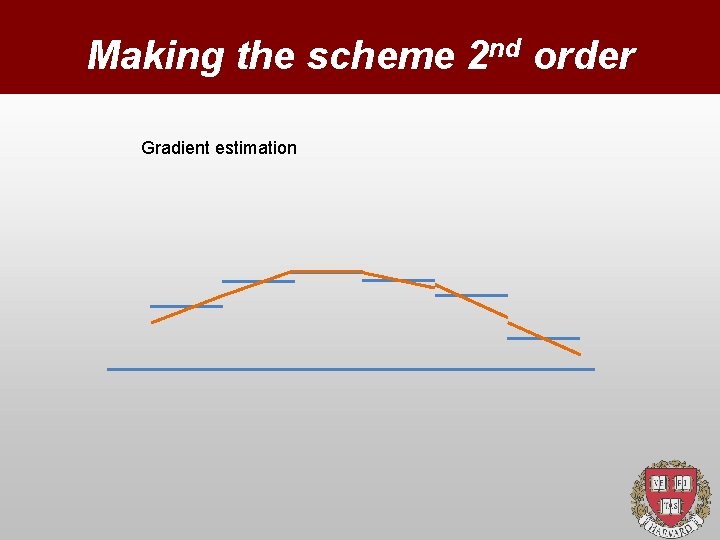
Making the scheme 2 nd order Gradient estimation
Slope limiting Detect local minima and flatten them! Question: are there negative side effects?
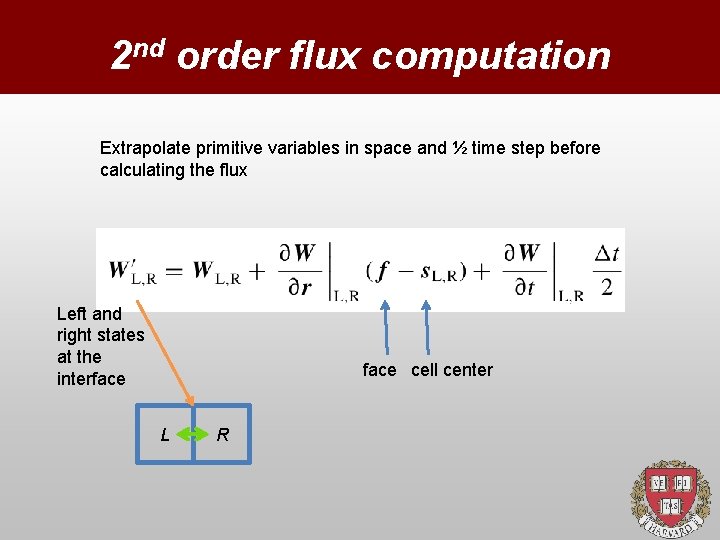
2 nd order flux computation Extrapolate primitive variables in space and ½ time step before calculating the flux Left and right states at the interface cell center L R
That’s it! Now let’s look at some code, the implementation details will take a while to digest