
Finite Risk Reinsurance Yas Suttakulpiboon Agenda History of
Finite Risk (Re)insurance Yas Suttakulpiboon
Agenda • History of finite reinsurance • Functions of reinsurance • Uses of finite reinsurance • Issues in finite reinsurance • Supervisory approaches to finite reinsurance
Agenda • Finite reinsurance • Functions of reinsurance • Uses of finite reinsurance • Issues in finite reinsurance • Supervisory approaches to finite reinsurance
Definition • An entire spectrum of reinsurance arrangements that transfer limited risk relative to aggregate premiums that could be charged under the contract. • More detailed Definition in Appendix 3
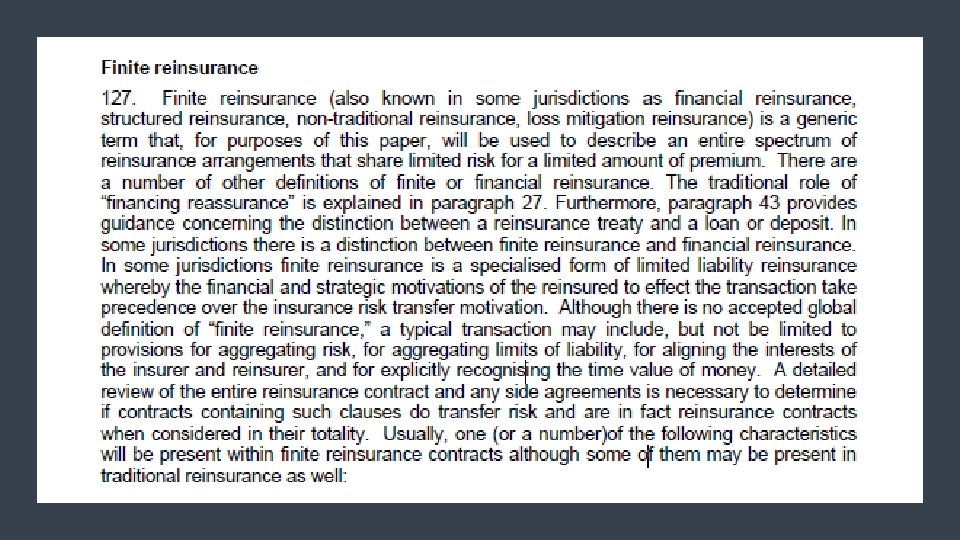
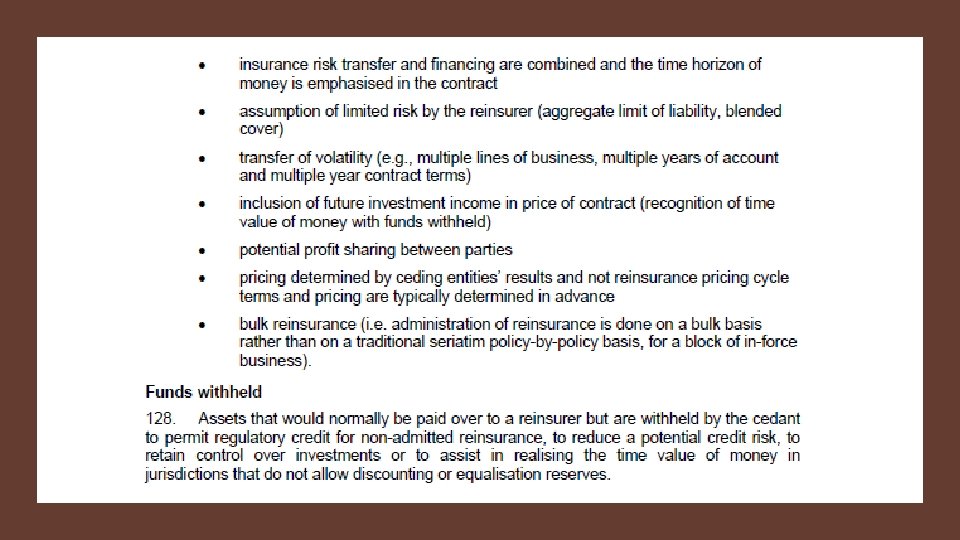

Characteristics of Finite Risk Reinsurance • insurance risk transfer and financing are combined • assumption of limited risk by the reinsurer (e. g. , aggregate limit of liability, blended cover, sliding scale and other adjustable commissions, loss corridors and limits or caps) • transfer of volatility (e. g. , multiple lines of business, multiple years of account and multiple year contract terms) • inclusion of future investment income in price of contract (recognition of time value of money with funds withheld) • potential profit sharing between parties (e. g. profit-sharing formulas, experienceaccounts) • pricing determined by ceding insurers’ results and not reinsurance pricing cycle • terms and pricing are typically determined in advance • bulk reinsurance (i. e. administration of reinsurance is done on a bulk basis rather than on a traditional seriatim policy-by-policy basis, for a block of new or in-force business).
Agenda • Finite reinsurance • Functions of reinsurance • Uses of finite reinsurance • Issues in finite reinsurance • Supervisory approaches to finite reinsurance
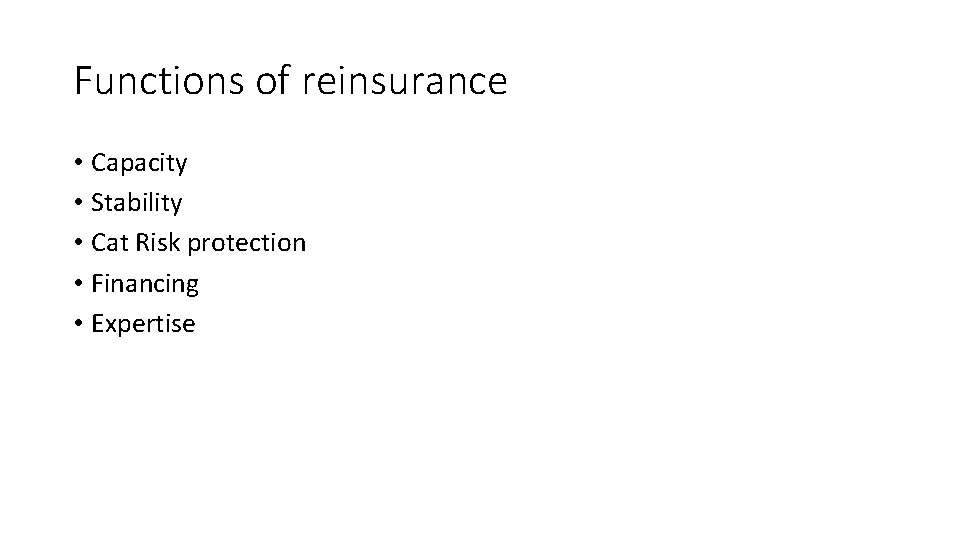
Functions of reinsurance • Capacity • Stability • Cat Risk protection • Financing • Expertise
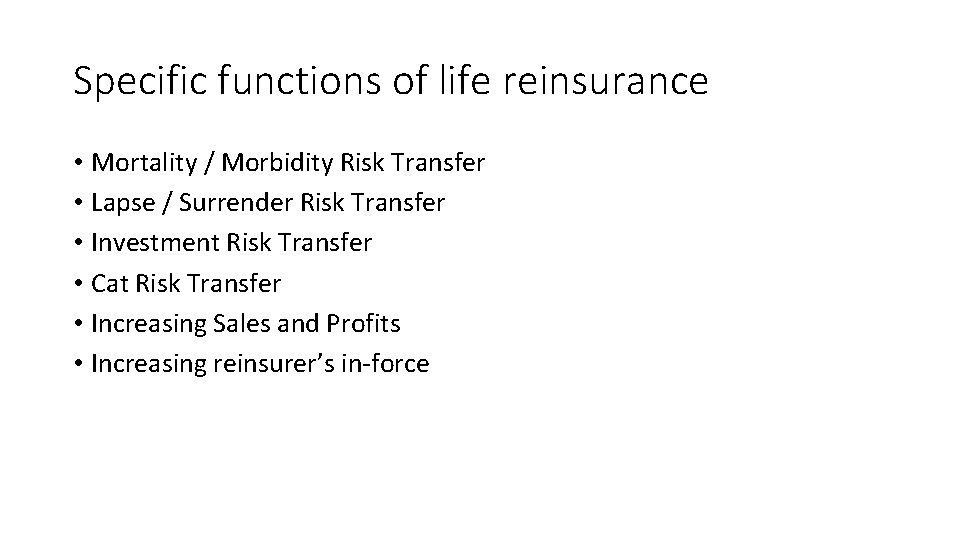
Specific functions of life reinsurance • Mortality / Morbidity Risk Transfer • Lapse / Surrender Risk Transfer • Investment Risk Transfer • Cat Risk Transfer • Increasing Sales and Profits • Increasing reinsurer’s in-force
Agenda • Finite reinsurance • Functions of reinsurance • Uses of finite reinsurance • Issues in finite reinsurance • Supervisory approaches to finite reinsurance
Uses of finite reinsurance • to capitalize on an insurer’s above average underwriting loss experience when traditional reinsurance coverage is too expensive • to increase underwriting capacity, take larger retention in favorable underwriting environments or risks that traditional markets would not cover • to have the ability to purchase reinsurance protection when an insurer’s historic underwriting loss experience is much worse than average, making “reasonably” priced reinsurance unavailable • to provide reinsurance cover when an insurer wants to exit lines of business • to protect against potential adverse loss development, including the acquisition of new blocks of business.
Uses of finite reinsurance • to effect discounting of insurance liabilities in jurisdictions where discounting is not permitted and/or equalization reserves are not used • to reduce volatility (smooth) in reported earnings and enhance the financial position of the insurer over a period of time (e. g. multi-year contracts) • to provide surplus relief or capital enhancement in jurisdictions where acquisition expenses are non-deferrable • to transfer insurer’s profits to another jurisdiction or an affiliate (e. g. , potentially minimizing taxes or engaging in regulatory arbitrage).
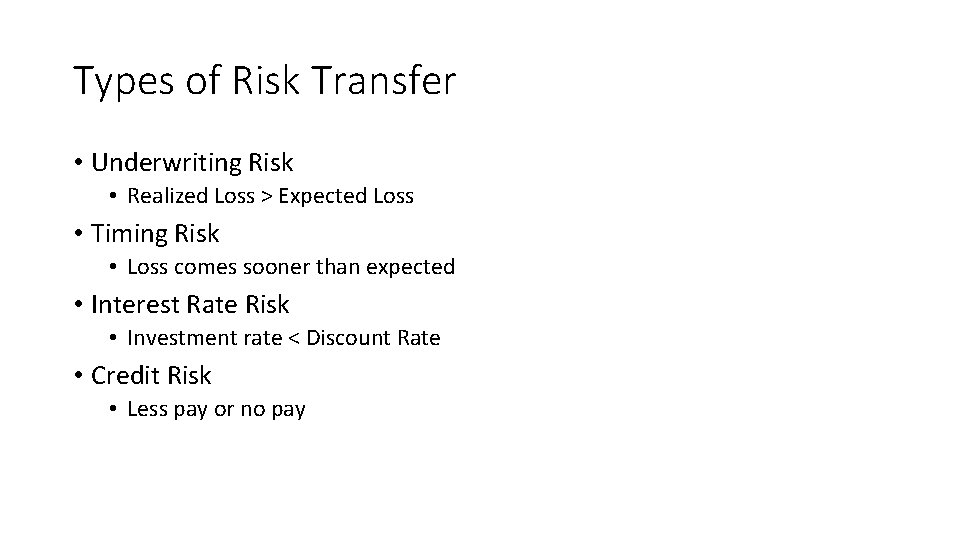
Types of Risk Transfer • Underwriting Risk • Realized Loss > Expected Loss • Timing Risk • Loss comes sooner than expected • Interest Rate Risk • Investment rate < Discount Rate • Credit Risk • Less pay or no pay
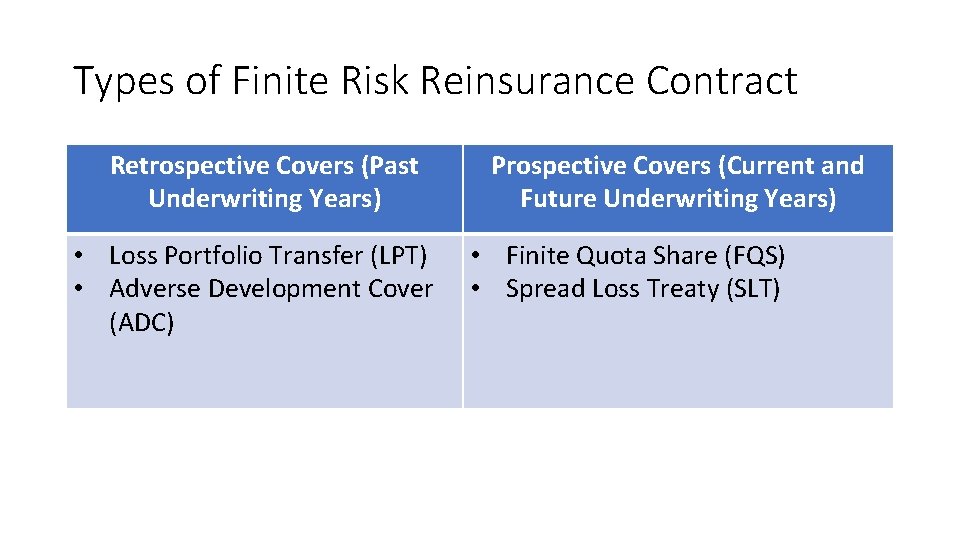
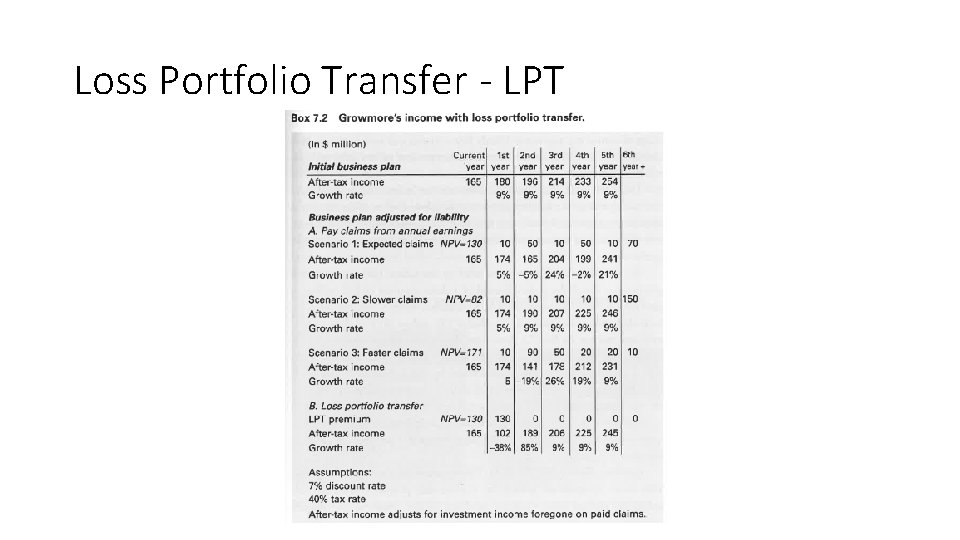
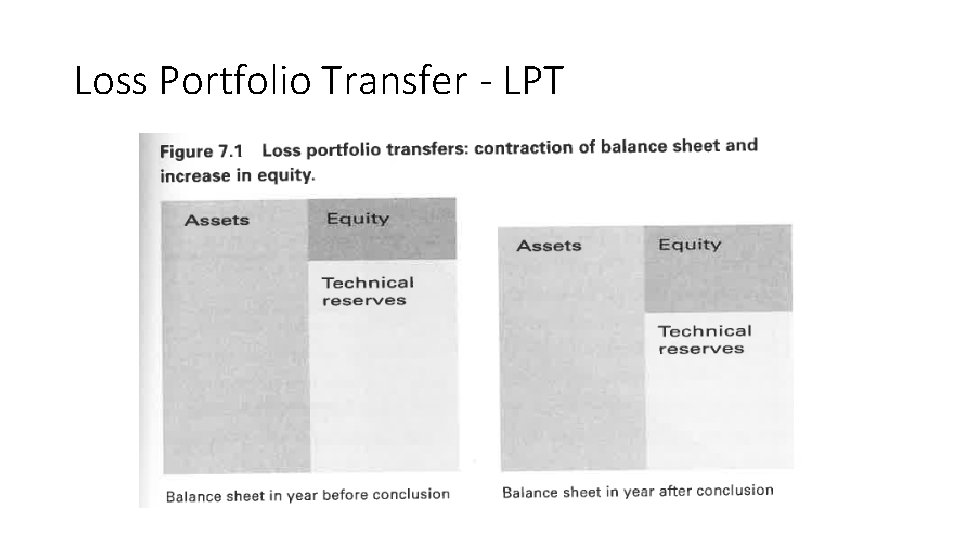
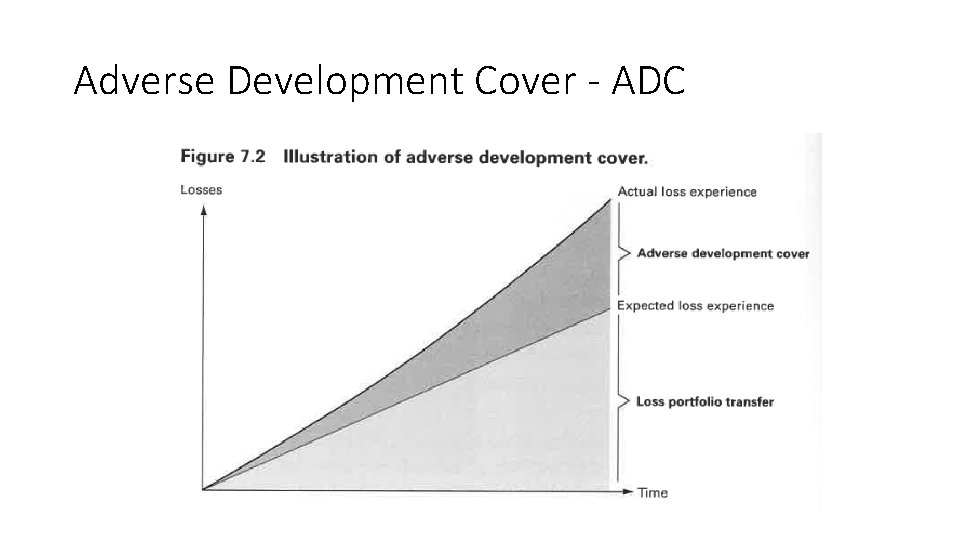
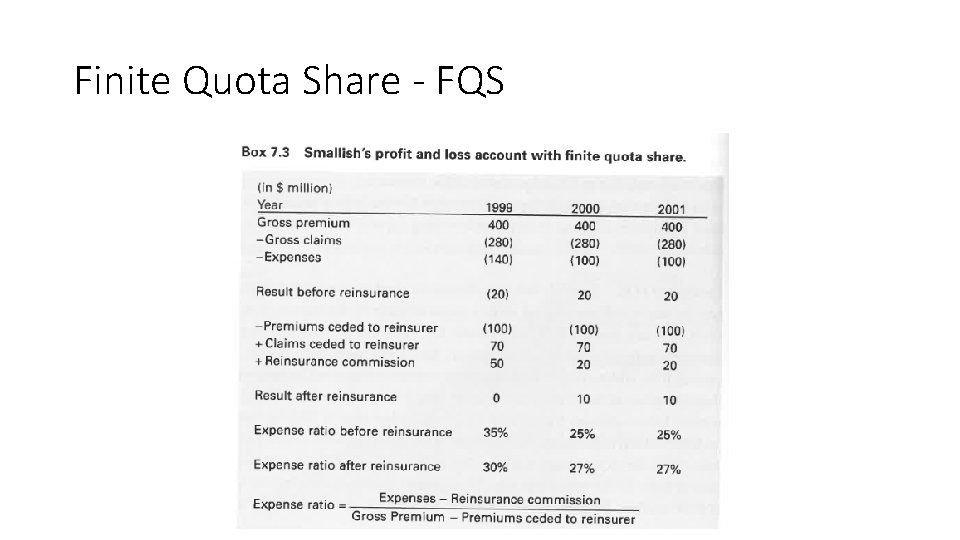
Types of Finite Risk Reinsurance Contract Retrospective Covers (Past Underwriting Years) • Loss Portfolio Transfer (LPT) • Adverse Development Cover (ADC) Prospective Covers (Current and Future Underwriting Years) • Finite Quota Share (FQS) • Spread Loss Treaty (SLT)
Loss Portfolio Transfer - LPT
Loss Portfolio Transfer - LPT
Adverse Development Cover - ADC
Finite Quota Share - FQS
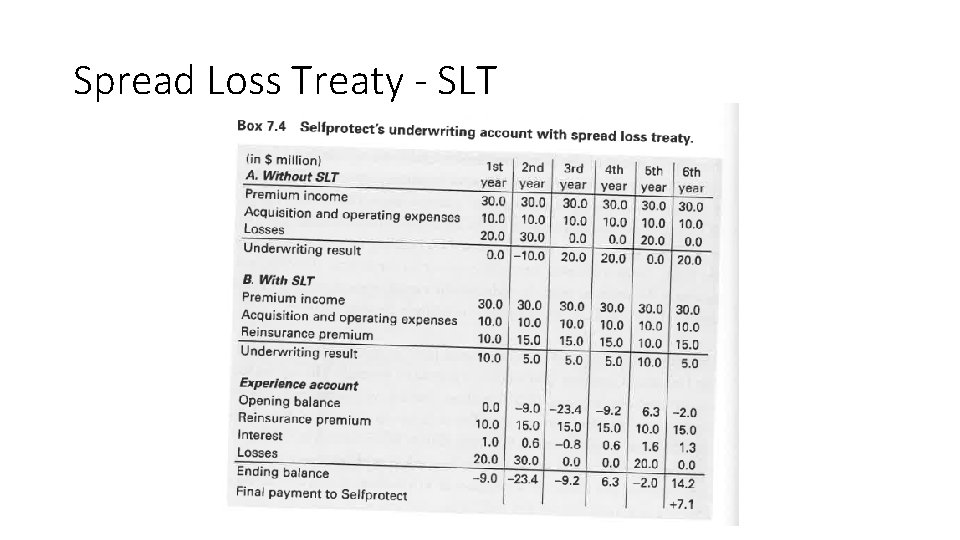
Spread Loss Treaty - SLT
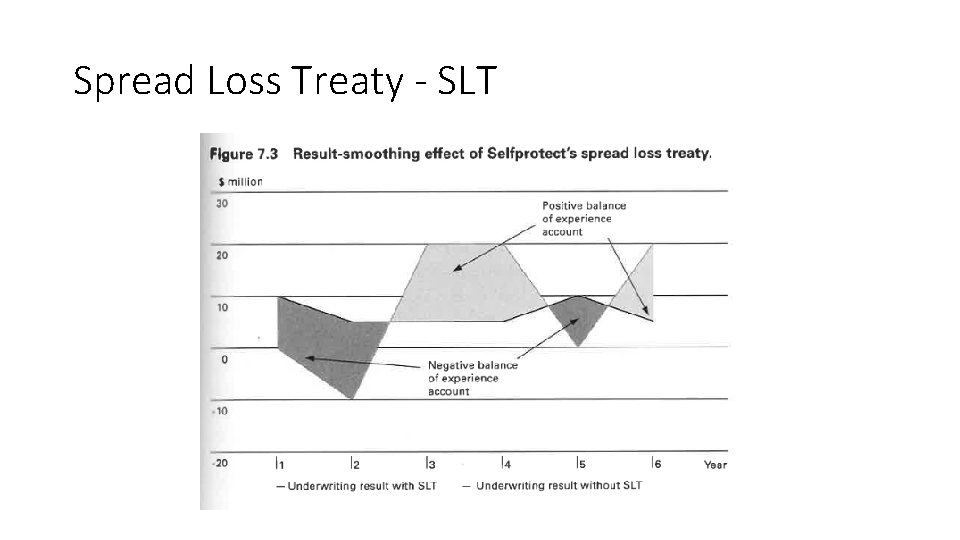
Spread Loss Treaty - SLT
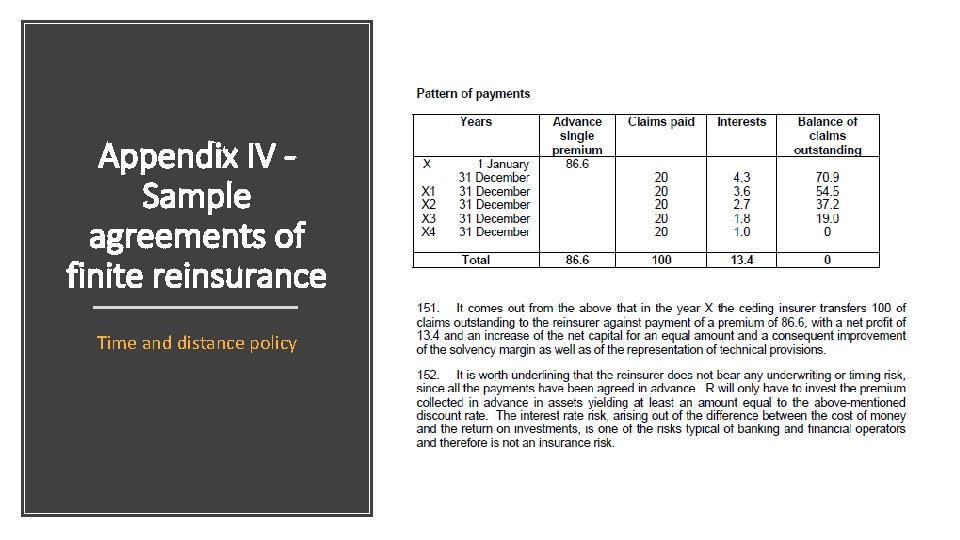
Appendix IV Sample agreements of finite reinsurance Time and distance policy
Sample agreements of finite reinsurance • Non-life retrospective cover - adverse development cover • Non-life retrospective cover - loss portfolio transfer (LPT) • Non-life prospective - finite quota share • Non-life prospective – excess of loss • Non-life prospective cover- aggregate stop loss • Non-life prospective cover – multi-year stop loss
Agenda • Finite reinsurance • Functions of reinsurance • Uses of finite reinsurance • Issues in finite reinsurance • Supervisory approaches to finite reinsurance
Insurance risk transfer • Underwriting risk is the possibility that losses and expenses recoverable by the cedant from the reinsurer will exceed the consideration received by the reinsurer, thus resulting in an underwriting loss to the reinsurer • Timing risk is the risk arising from uncertainties about the timing of the receipt and payments of net cash flows from premiums, commissions, claims, and claim settlement expenses paid under a contract. The reinsurer could have a reduction in the expected investment income as a result of accelerated loss payments.
Insurance risk transfer: Some Jurisdictions • the extent to which actuarial liabilities have been reduced by reinsurance ceded • amounts of significant concentration of reinsurance coverage • a statement that reinsurance does not relieve the insurer of primary obligation to insured.
Accounting treatment of finite reinsurance: GAAP • The accounting for a reinsurance arrangement should aim for a true and fair presentation of the economic value of the transaction by insurers and reinsurers • if the finite reinsurance arrangement does not meet the criteria for significant insurance risk transfer, it should be accounted for as a loan or deposit.
Accounting treatment of finite reinsurance: IAS • Under IFRS 4, a reinsurance contract with only financing characteristics would not be considered an insurance contract and not be given insurance accounting treatment. Some jurisdictions require both underwriting risk and timing risk conditions to be treated as insurance.
Disclosure • The reporting of insurance liabilities both gross and net of reinsurance gives explicit disclosure of counterparty risk by presenting reinsurance recoverables on the insurer’s balance sheet.
Agenda • Finite reinsurance • Functions of reinsurance • Uses of finite reinsurance • Issues in finite reinsurance • Supervisory approaches to finite reinsurance
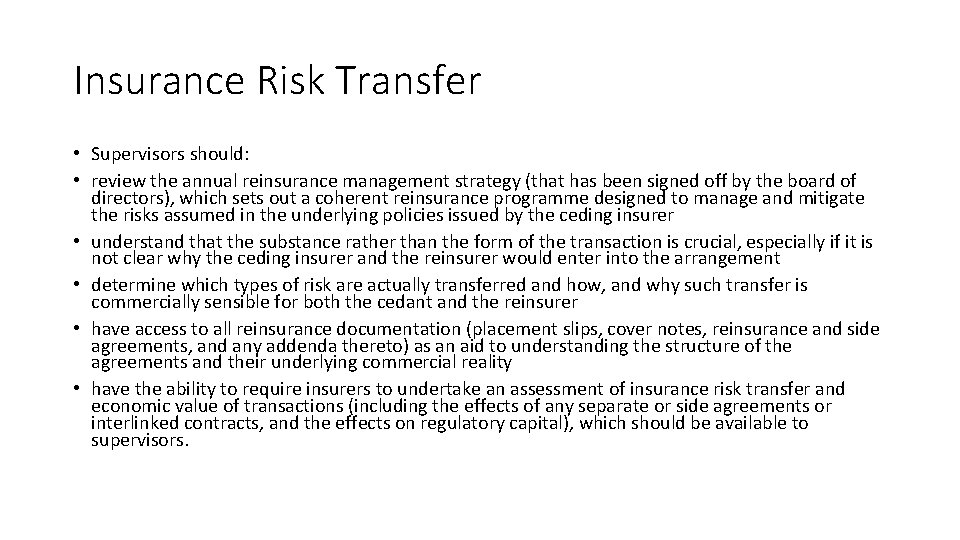
Insurance Risk Transfer • Supervisors should: • review the annual reinsurance management strategy (that has been signed off by the board of directors), which sets out a coherent reinsurance programme designed to manage and mitigate the risks assumed in the underlying policies issued by the ceding insurer • understand that the substance rather than the form of the transaction is crucial, especially if it is not clear why the ceding insurer and the reinsurer would enter into the arrangement • determine which types of risk are actually transferred and how, and why such transfer is commercially sensible for both the cedant and the reinsurer • have access to all reinsurance documentation (placement slips, cover notes, reinsurance and side agreements, and any addenda thereto) as an aid to understanding the structure of the agreements and their underlying commercial reality • have the ability to require insurers to undertake an assessment of insurance risk transfer and economic value of transactions (including the effects of any separate or side agreements or interlinked contracts, and the effects on regulatory capital), which should be available to supervisors.
Accounting, disclosure and information sharing • Supervisors should have the ability to verify that insurers have disclosed and accounted for any separate or side agreements or understandings that exist between the reinsurance agreement parties that would serve to reduce, offset or eliminate the reinsurer’s obligations. • Supervisors should have the power to take corrective action that could include not allowing credit for the transaction as reinsurance and requiring restatement of the financial position where material.
Summary • Finite reinsurance • Functions of reinsurance • Uses of finite reinsurance • Issues in finite reinsurance • Supervisory approaches to finite reinsurance
- Slides: 37