
Finishing of Textiles Insect Resist Finishes Main Points



- Slides: 24
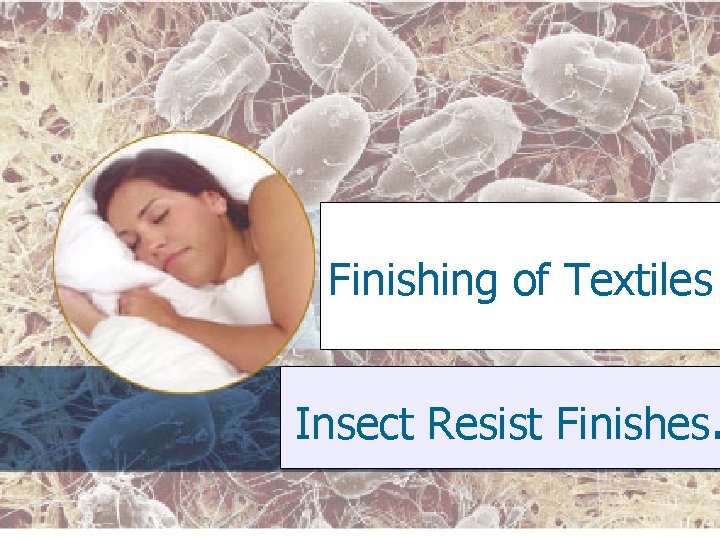
Finishing of Textiles Insect Resist Finishes.
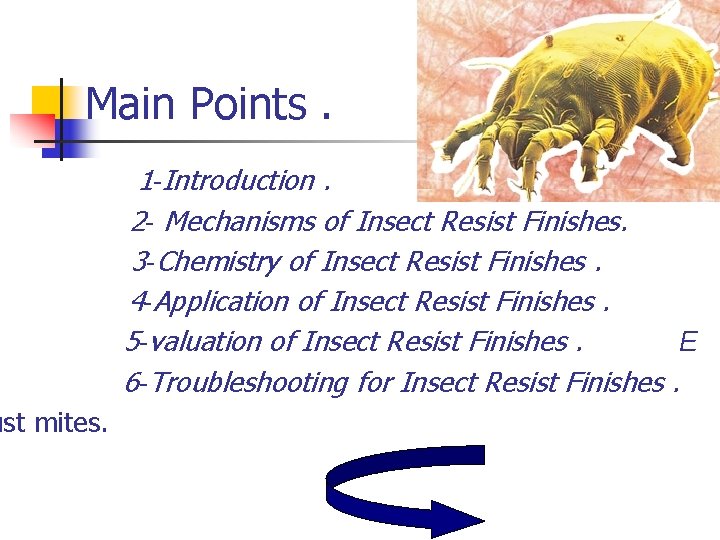
Main Points. ust mites. 1 -Introduction. 2 - Mechanisms of Insect Resist Finishes. 3 -Chemistry of Insect Resist Finishes. 4 -Application of Insect Resist Finishes. 5 -valuation of Insect Resist Finishes. E 6 -Troubleshooting for Insect Resist Finishes.
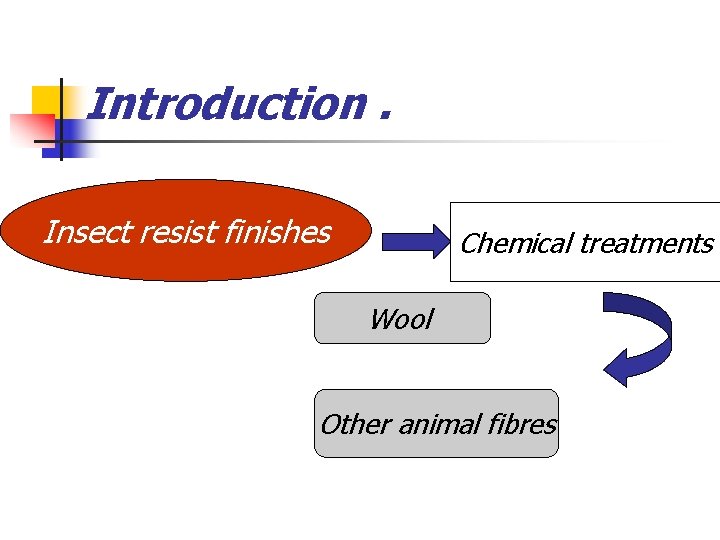
Introduction. Insect resist finishes Chemical treatments Wool Other animal fibres
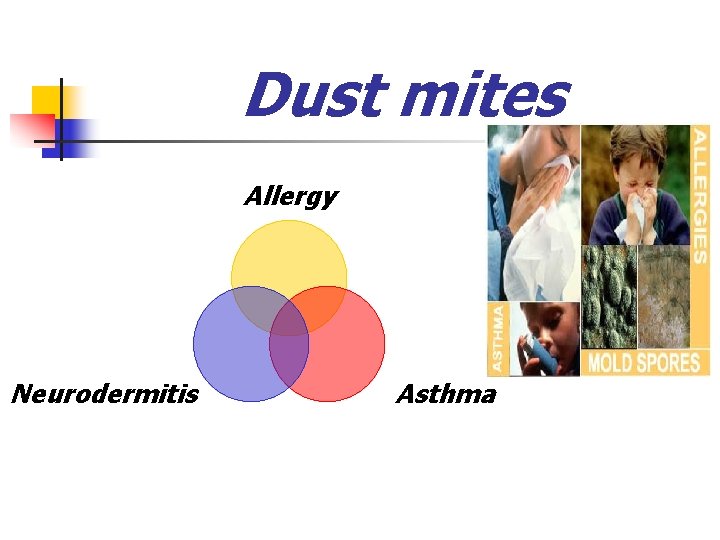
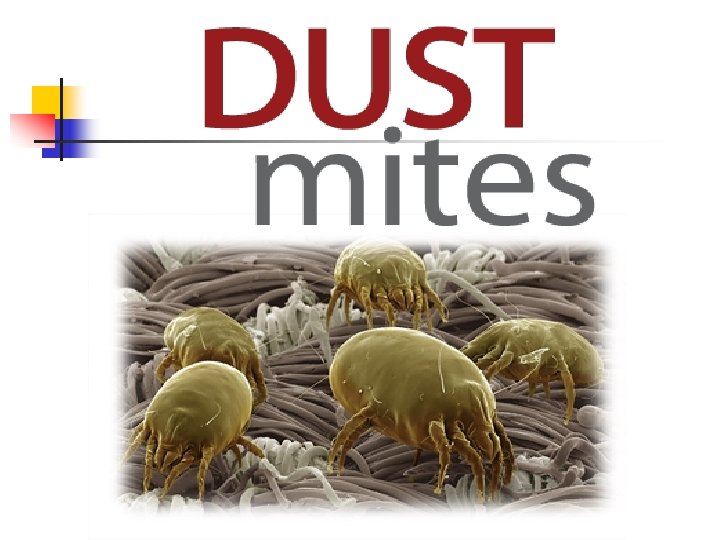
Dust mites Allergy Neurodermitis Asthma
Fur beetle The clothes moth Keratin-digesting pests Carpet beetle Brown house moth Moth populations can increase dramattically in arelatively short time.
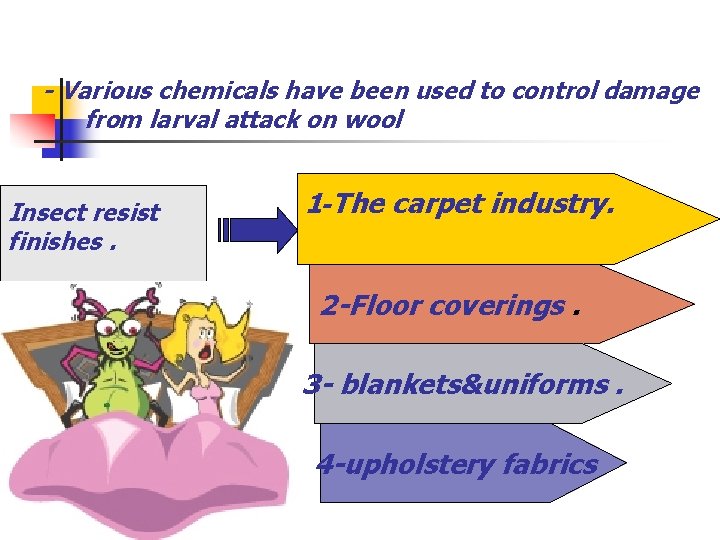
- Various chemicals have been used to control damage from larval attack on wool Insect resist finishes. 1 -The carpet industry. 2 -Floor coverings. 3 - blankets&uniforms. 4 -upholstery fabrics
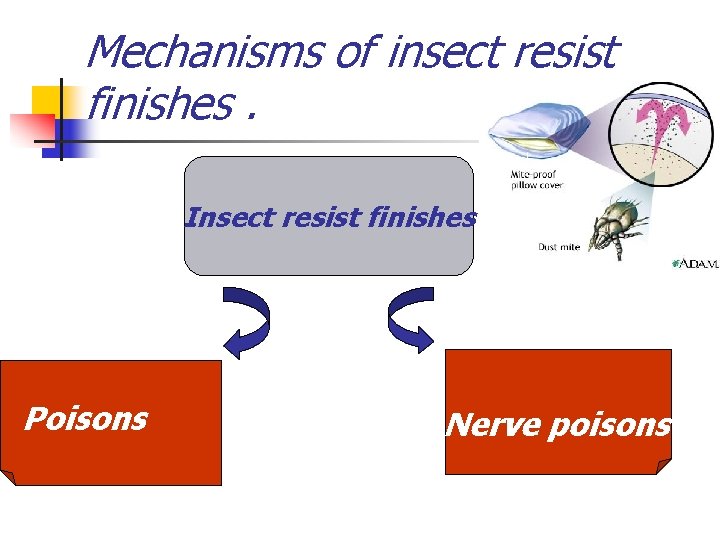
Mechanisms of insect resist finishes. Insect resist finishes Poisons Nerve poisons
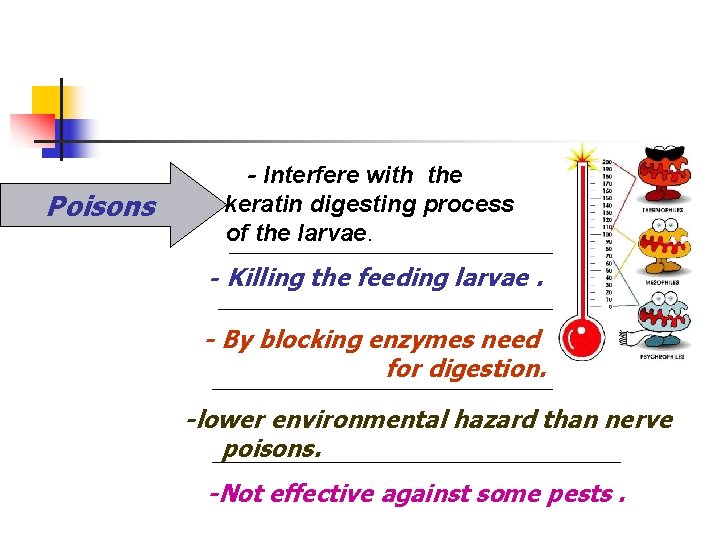
Poisons - Interfere with the keratin digesting process of the larvae. - Killing the feeding larvae. - By blocking enzymes need for digestion. -lower environmental hazard than nerve poisons. -Not effective against some pests.
Nerve Poisons - Control agents. -Affecting a broader range of insects -More rapidly biodegraded than poisons. -Less durabillity.
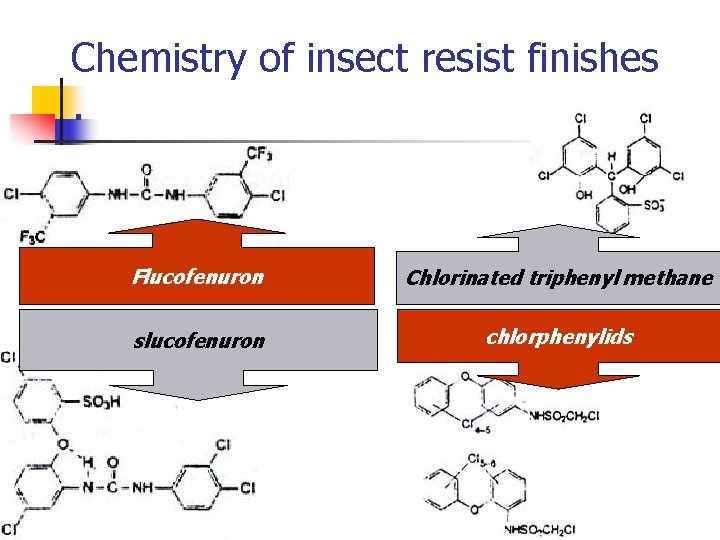
Chemistry of insect resist finishes. Flucofenuron Chlorinated triphenyl methane slucofenuron chlorphenylids
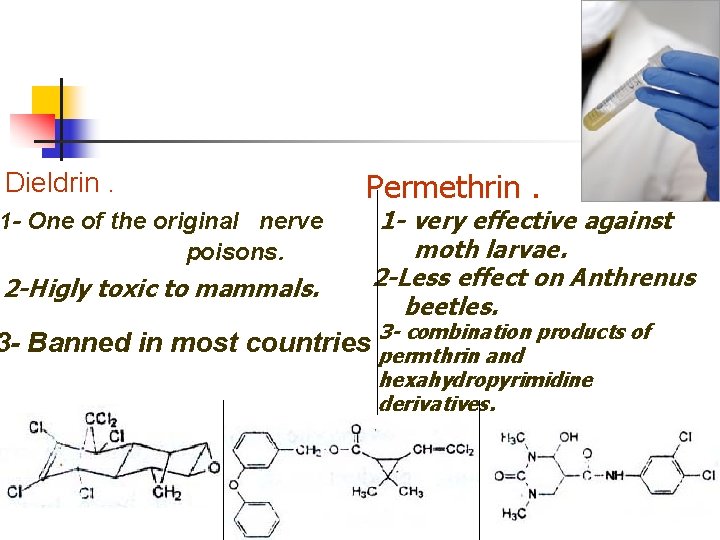
Dieldrin. 1 - One of the original nerve poisons. 2 -Higly toxic to mammals. Permethrin. 1 - very effective against moth larvae. 2 -Less effect on Anthrenus beetles. combination products of 3 - Banned in most countries 3 permthrin and hexahydropyrimidine derivatives.
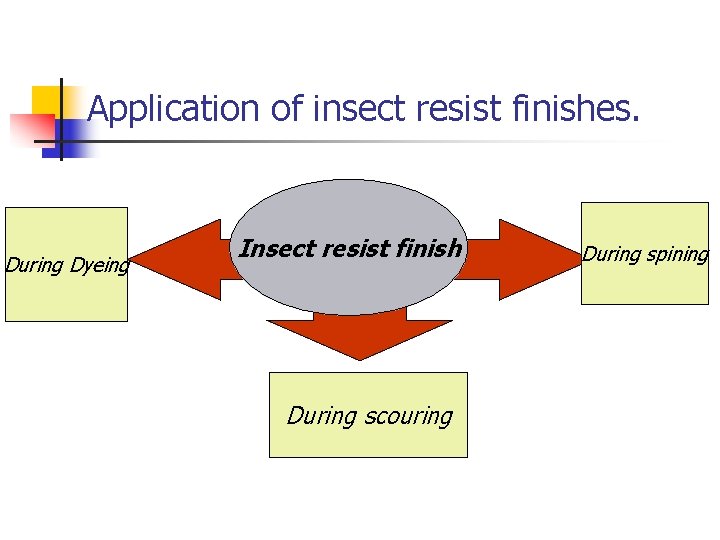
Application of insect resist finishes. During Dyeing Insect resist finish During scouring During spining
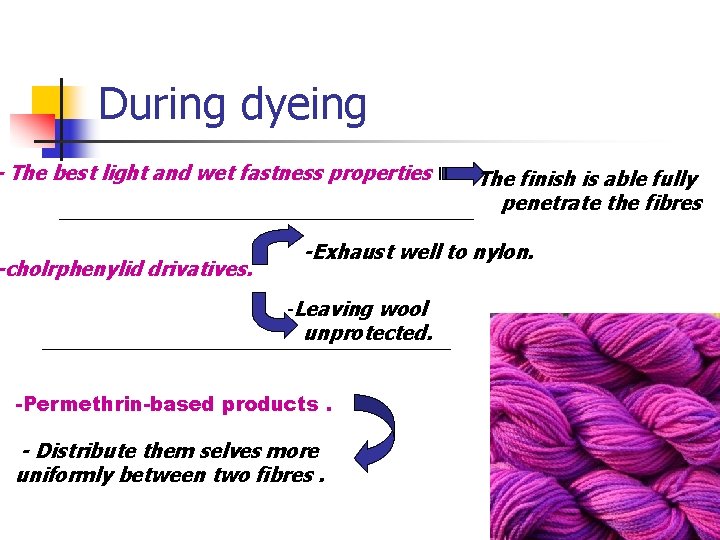
During dyeing - The best light and wet fastness properties -cholrphenylid drivatives. The finish is able fully penetrate the fibres -Exhaust well to nylon. -Leaving wool unprotected. -Permethrin-based products. - Distribute them selves more uniformly between two fibres.
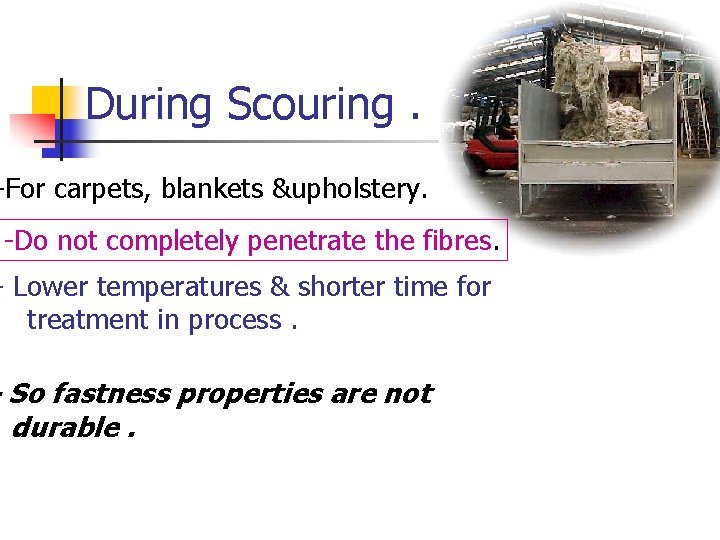
During Scouring. -For carpets, blankets &upholstery. -Do not completely penetrate the fibres. - Lower temperatures & shorter time for treatment in process. So fastness properties are not durable.
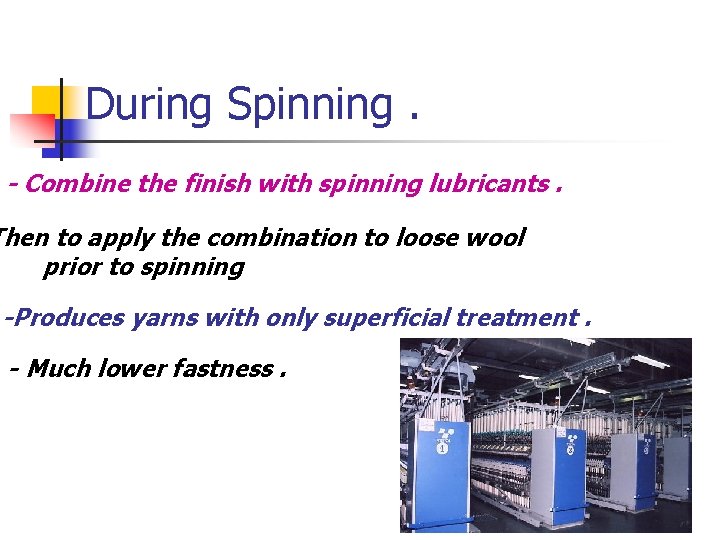
During Spinning. - Combine the finish with spinning lubricants. Then to apply the combination to loose wool prior to spinning -Produces yarns with only superficial treatment. - Much lower fastness.
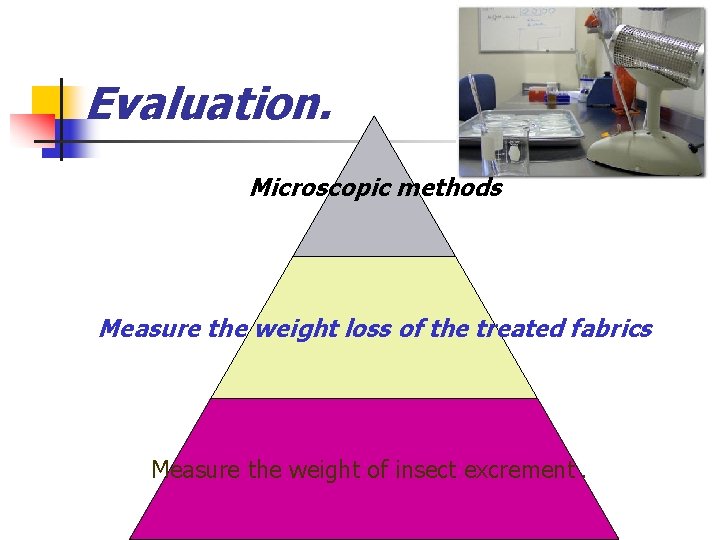
Evaluation. Microscopic methods Measure the weight loss of the treated fabrics Measure the weight of insect excrement.
Troubleshooting. 1 -Exposure to light , dry cleaning and shampooing can reduce the effectiveness of finish. 2 - Finish baths that are not completely depleted of insect finishes. 3 -Special are must be taken to prevent release of these insect poisons to the environment.
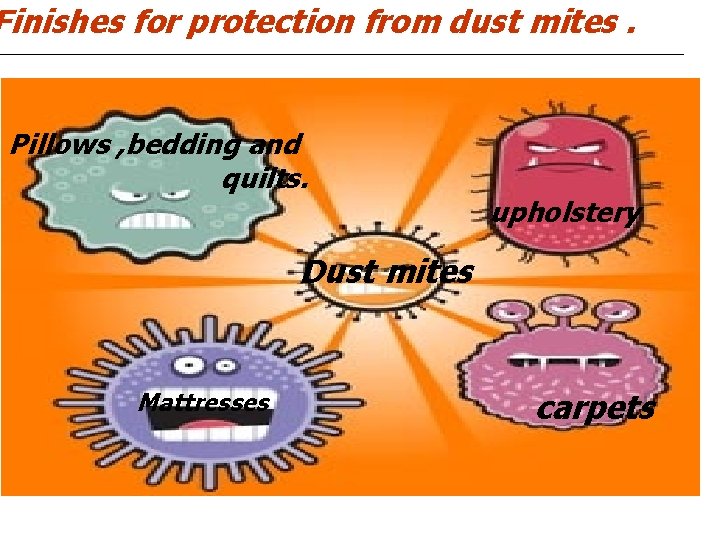
Finishes for protection from dust mites. Pillows , bedding and quilts. upholstery Dust mites Mattresses carpets
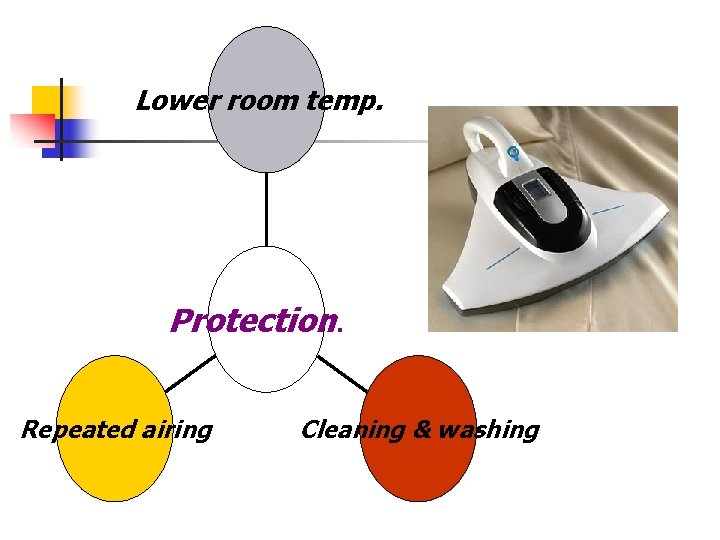
Lower room temp. Protection. Repeated airing Cleaning & washing
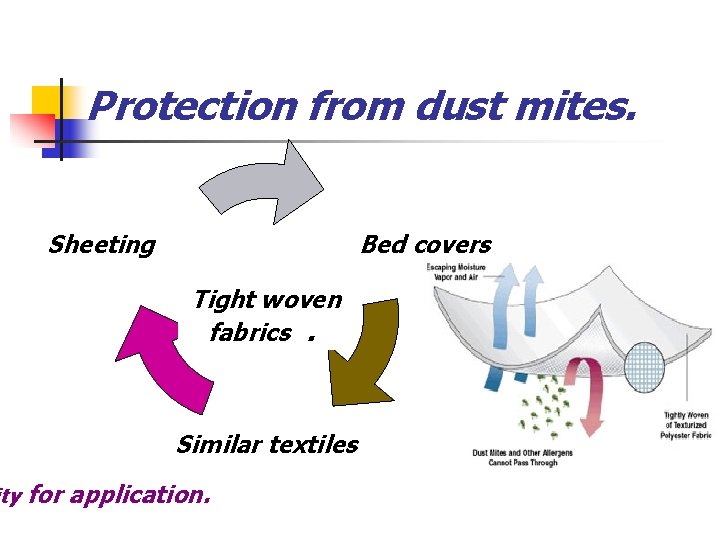
ty Protection from dust mites. Bed covers Sheeting Tight woven fabrics. Similar textiles for application.
Conclusion. Insect resist finish. Mechanisms of insect resist finishes. Chemistry of insect resist finishes. Application of insect resist finishes. Evaluation of insect resist finishes. Troubleshooting of insect resist finishes. Dust mites.
Any questions