
Fingerprints History Replaced anthropometry during early 20 th
- Slides: 22
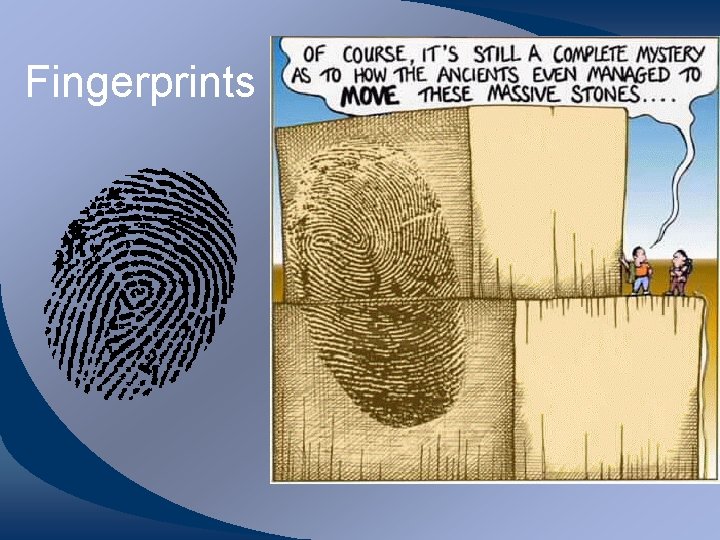
Fingerprints
History • Replaced anthropometry during early 20 th century • 1903: William West incident – Fort Leavenworth prison – Urban legend: prisoner William West couldn’t be distinguised from inmate with same name by anthropometry
Fundamental Principles of Fingerprints 1. No Two Individual will have identical fingerprints 2. Fingerprints stay the same throughout our lives • Attempts at destroying pattern has failed 3. Limited variety in patterns allows systematic classification of an individuals fingerprints
Three Ways to Leave a Fingerprint 1. Invisible (latent) print • Leave the sweat and oils on a surface 2. Visible print • Touch a colored liquid, then leave it on a surface 3. Plastic print – Touch a soft surface that will mold to your ridge characteristics
Latent Prints • Made up of – Oils, picked up from areas that contain hair – Amino acids, also from areas that contain hair – Salt, from sweat – H 2 O, from sweat
Fingerprint Patterns • Loops – Ridge lines enter from one side and curve around to exit from the same side – 60 -65% of population • Whorls – Rounded or circular ridge pattern – 30 -35% of population • Arches – Ridge lines enter from one side of print and exit out the other – 5% of population
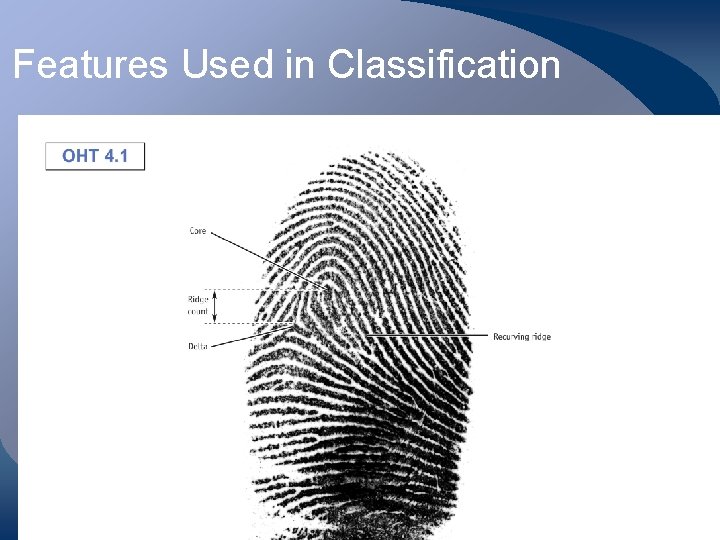
Features Used in Classification
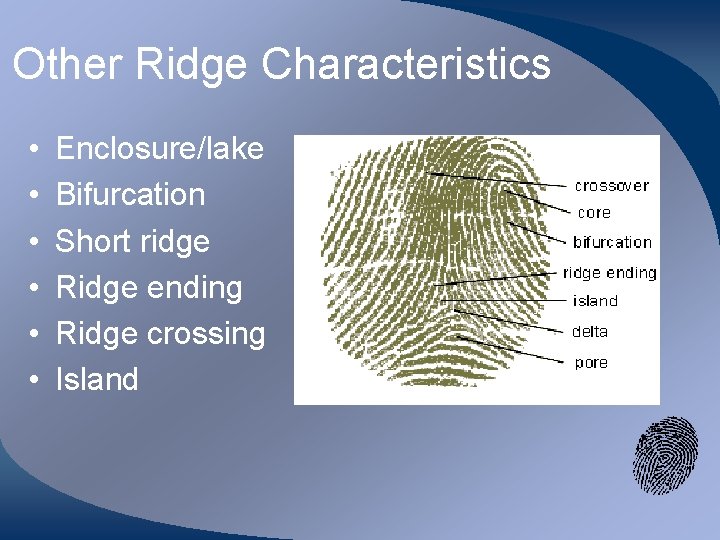
Other Ridge Characteristics • • • Enclosure/lake Bifurcation Short ridge Ridge ending Ridge crossing Island
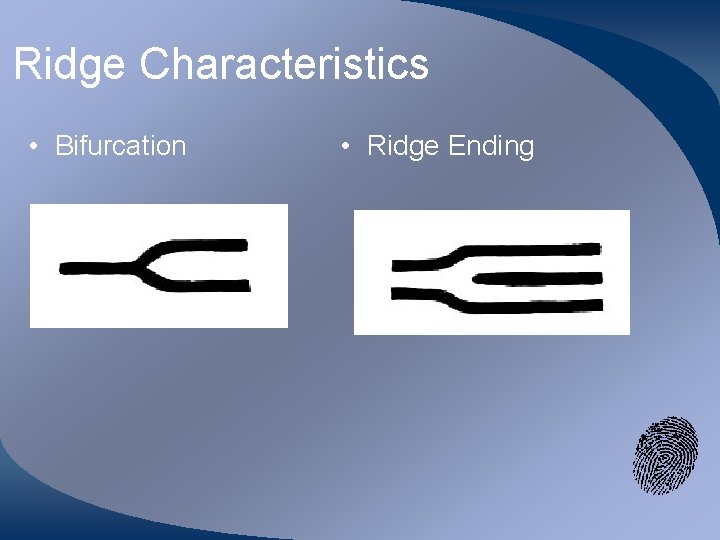
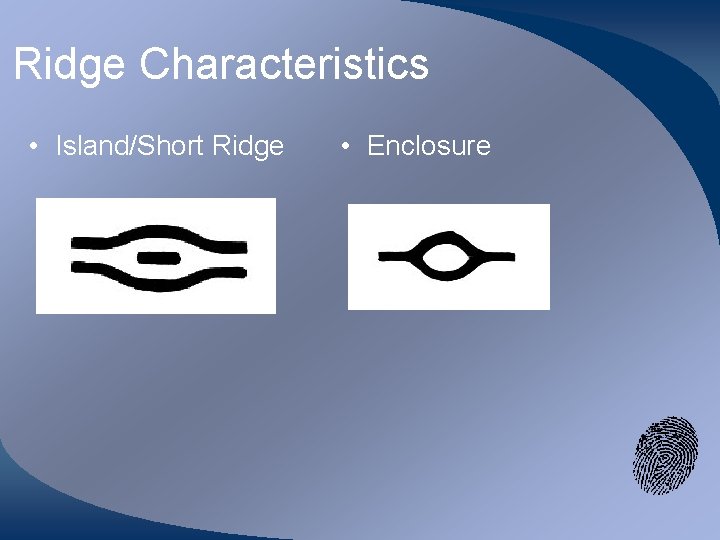
6 Ridge Characteristics • Bifurcation- one ridge splits into two • Enclosure- ridge splits then comes back together • Ridge ending- ridge stops • Island or Dot – ridge that looks like the dot on an i • Ridge crossing- two ridges cross one another • Short Ridge- ridge that is longer than an island but not very long
Ridge Characteristics • Bifurcation • Ridge Ending
Ridge Characteristics • Island/Short Ridge • Enclosure
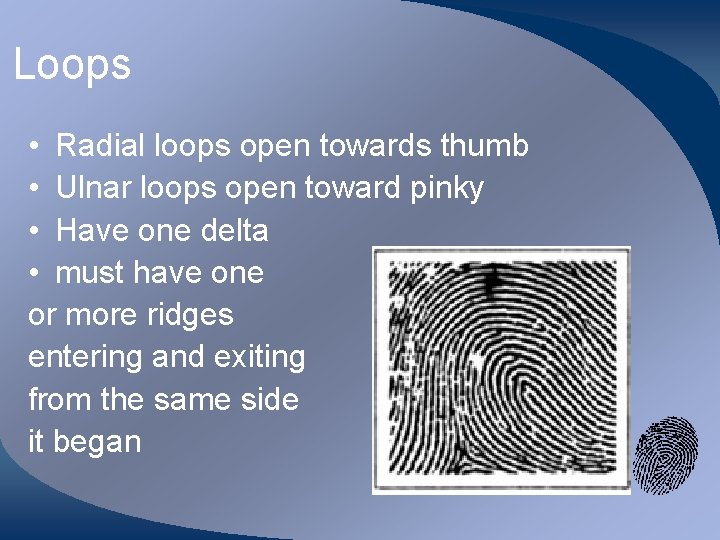
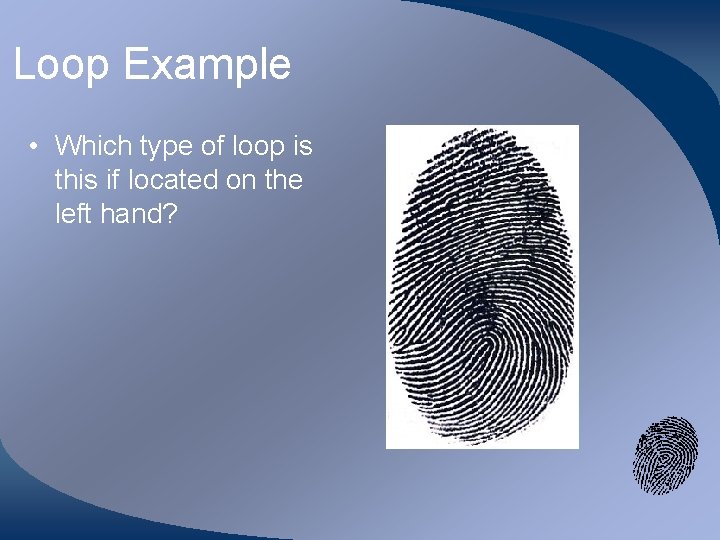
Loops • Radial loops open towards thumb • Ulnar loops open toward pinky • Have one delta • must have one or more ridges entering and exiting from the same side it began
Loop Example • Which type of loop is this if located on the left hand?
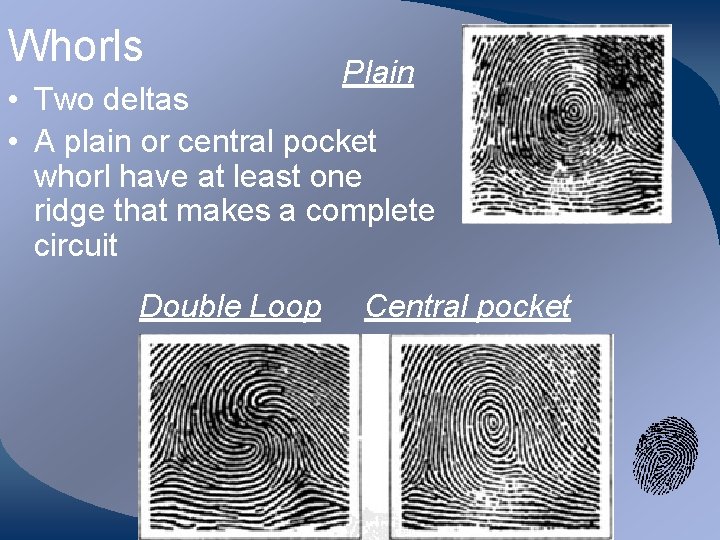
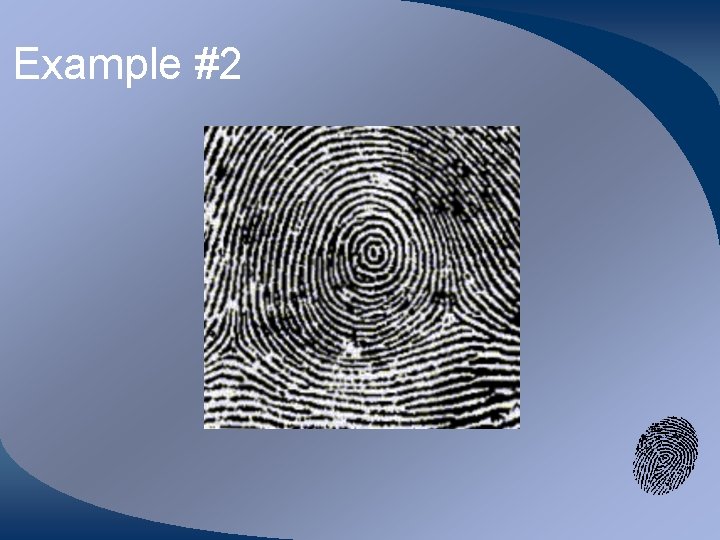
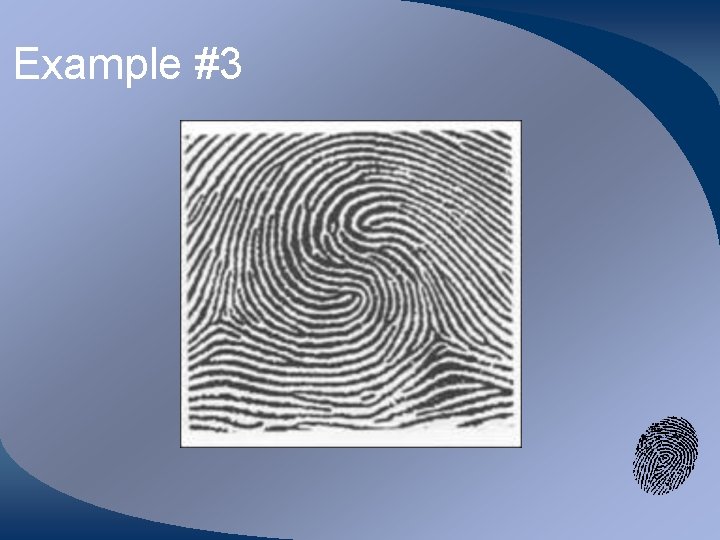
Whorls Plain • Two deltas • A plain or central pocket whorl have at least one ridge that makes a complete circuit Double Loop Central pocket
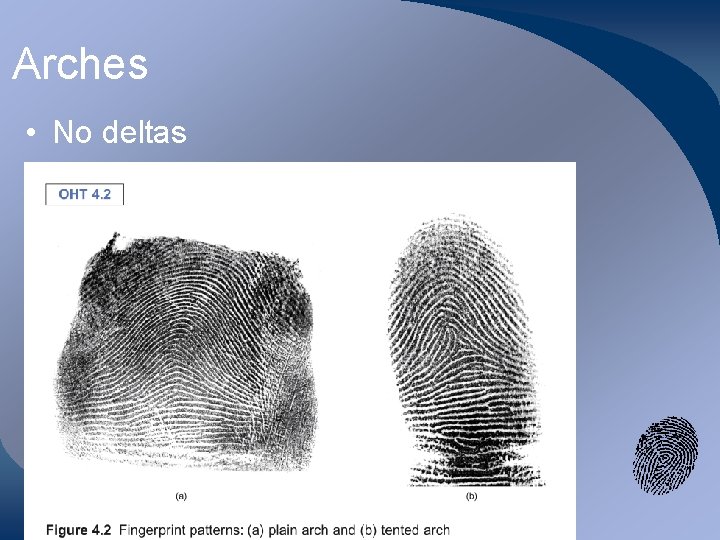
Arches • No deltas
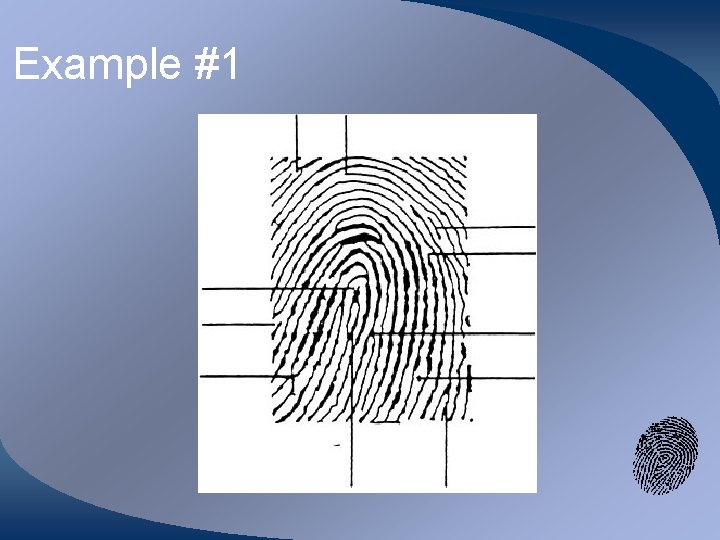
Example #1
Example #2
Example #3
Classification system • Henry used system of assigning values to particular pattern types on each of ten fingers • Called primary classification • 25% are 1/1 • Less useful since digital imaging
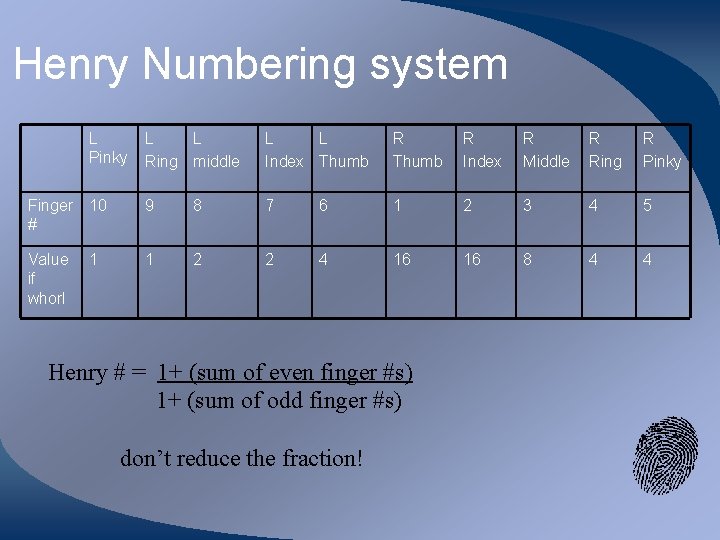
Henry Numbering system L Pinky L L Ring middle L L Index Thumb R Index R Middle R Ring R Pinky Finger 10 # 9 8 7 6 1 2 3 4 5 Value if whorl 1 2 2 4 16 16 8 4 4 1 Henry # = 1+ (sum of even finger #s) 1+ (sum of odd finger #s) don’t reduce the fraction!
AFIS • Automated Fingerprint Identification system • Digitally encodes fingerprints by ridge ending and bifurcations • Allows high-speed computer comparison • Software can subtract out background or enhance image