
Finding value from waste Innovating for a circular

- Slides: 27
Finding value from waste: Innovating for a circular economy Adam Connell James Cook University Environment Manager Estate Directorate
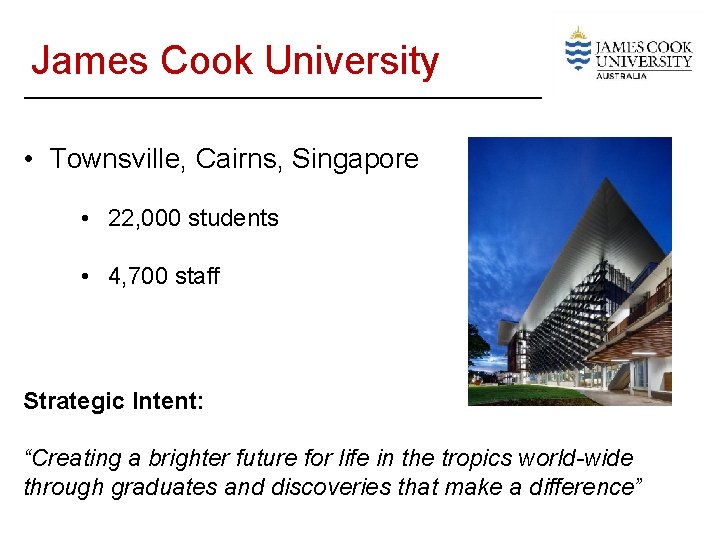
James Cook University • Townsville, Cairns, Singapore • 22, 000 students • 4, 700 staff Strategic Intent: “Creating a brighter future for life in the tropics world-wide through graduates and discoveries that make a difference”
James Cook University
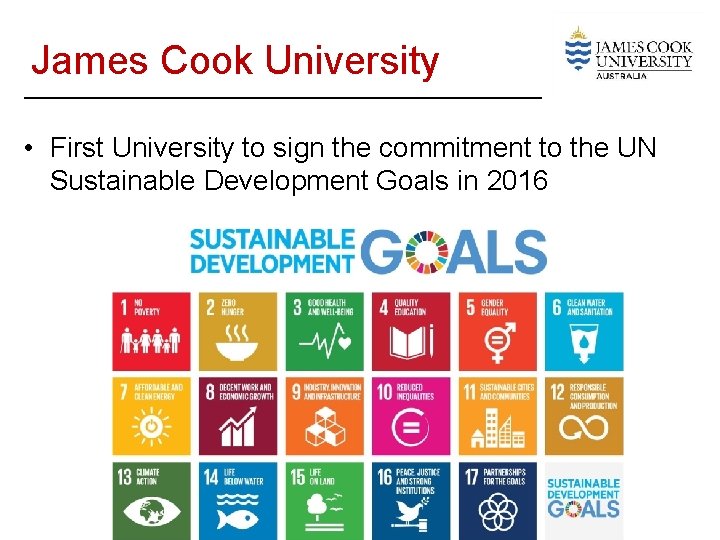
James Cook University • First University to sign the commitment to the UN Sustainable Development Goals in 2016
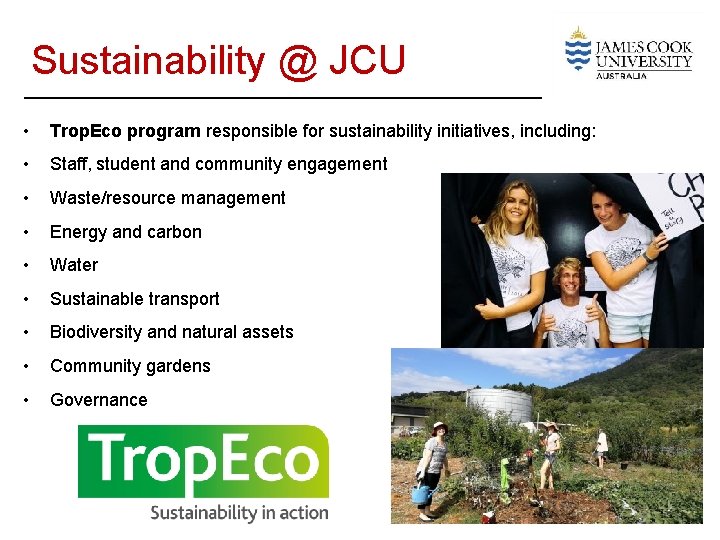
Sustainability @ JCU • Trop. Eco program responsible for sustainability initiatives, including: • Staff, student and community engagement • Waste/resource management • Energy and carbon • Water • Sustainable transport • Biodiversity and natural assets • Community gardens • Governance
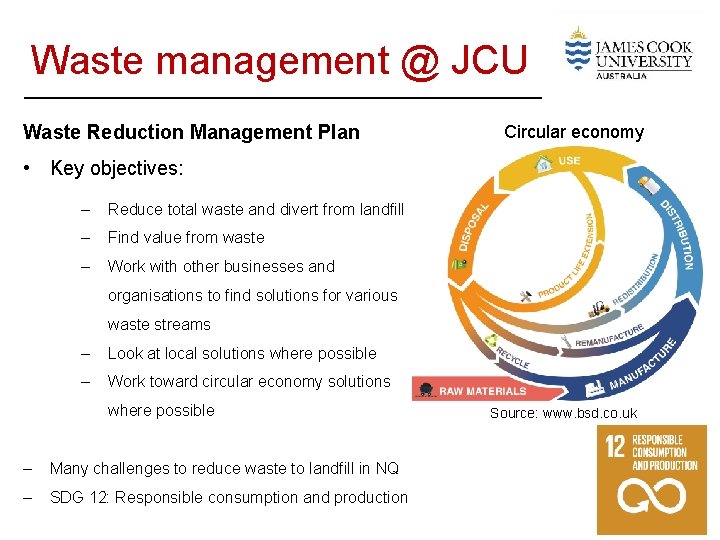
Waste management @ JCU Waste Reduction Management Plan Circular economy • Key objectives: – Reduce total waste and divert from landfill – Find value from waste – Work with other businesses and organisations to find solutions for various waste streams – Look at local solutions where possible – Work toward circular economy solutions where possible – Many challenges to reduce waste to landfill in NQ – SDG 12: Responsible consumption and production Source: www. bsd. co. uk
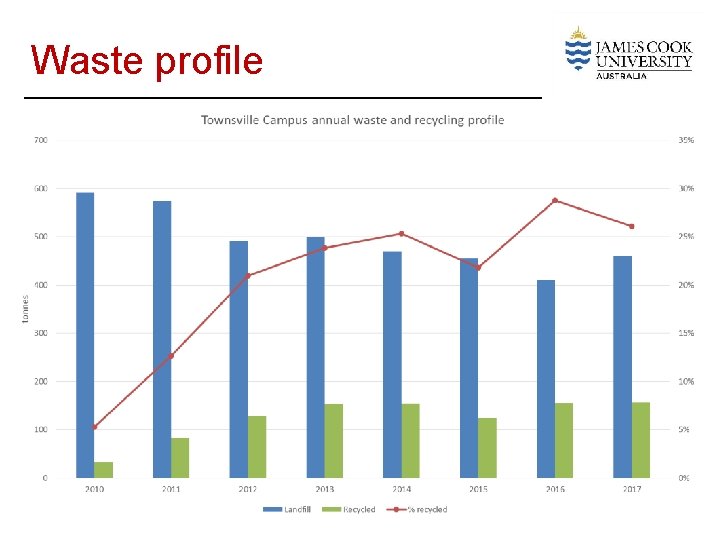
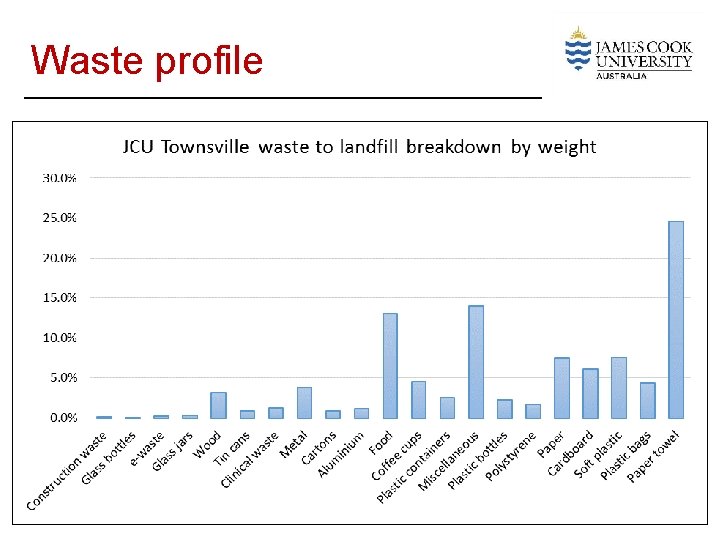
Waste profile
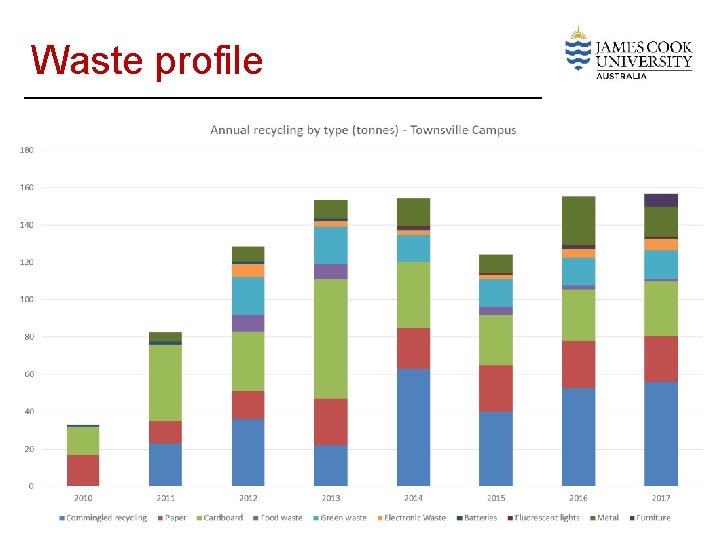
Waste profile
Waste profile
Waste profile
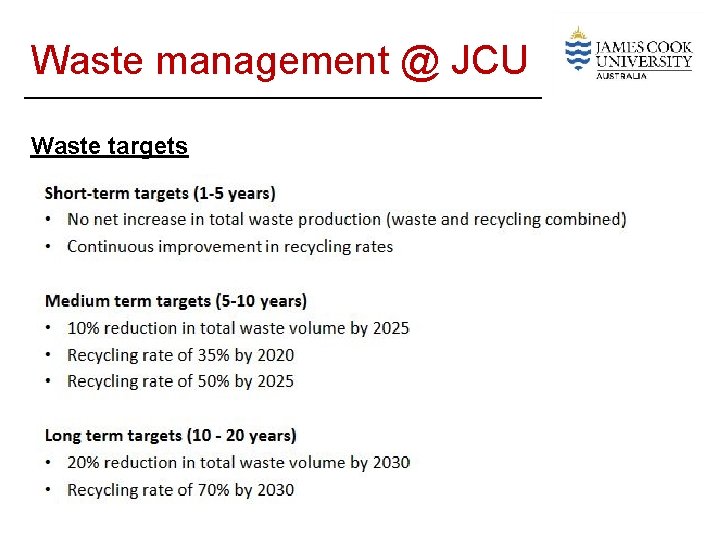
Waste management @ JCU Waste targets
Bio-Regen System - value from food waste
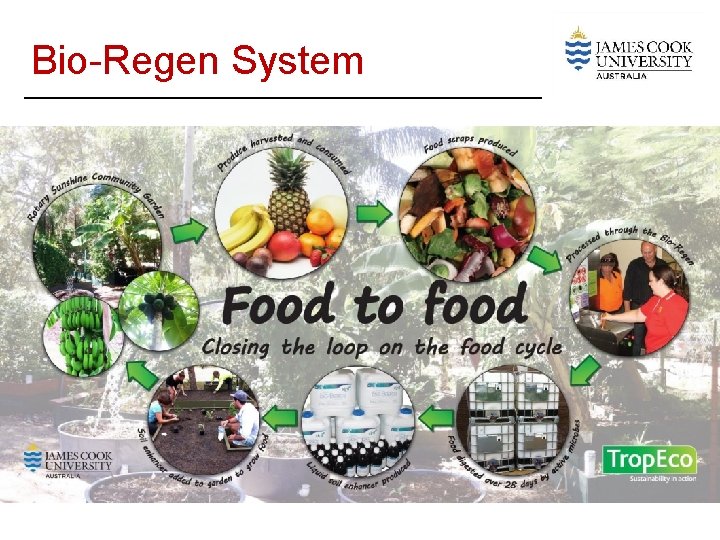
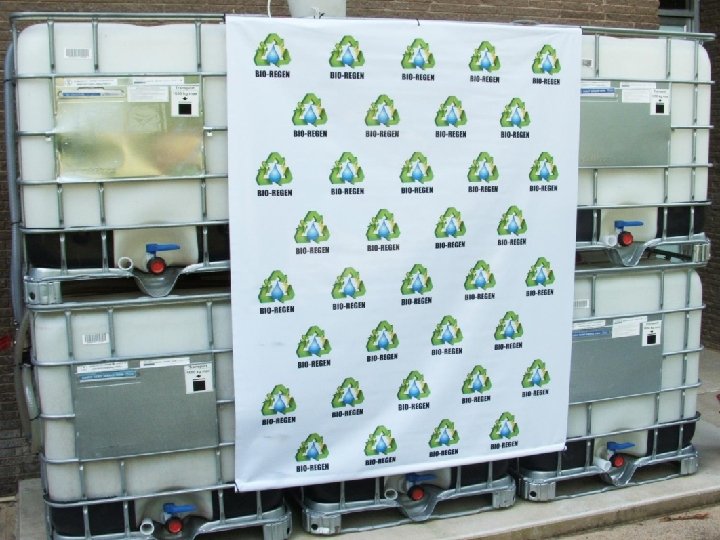
Bio-Regen System
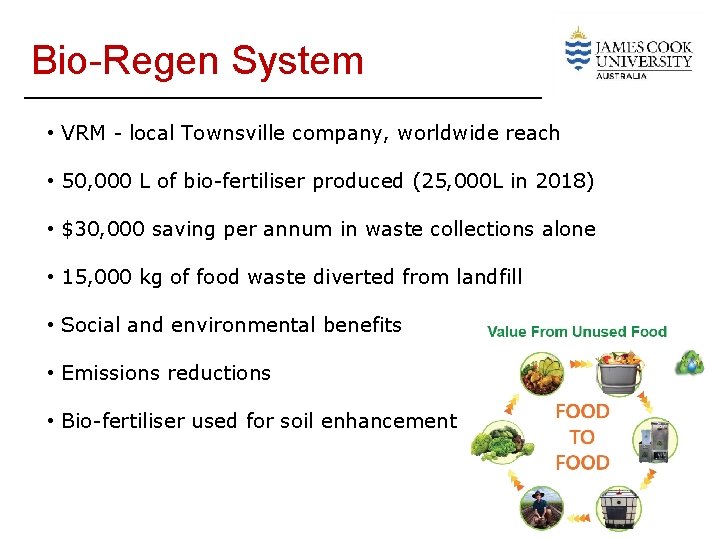
Bio-Regen System • VRM - local Townsville company, worldwide reach • 50, 000 L of bio-fertiliser produced (25, 000 L in 2018) • $30, 000 saving per annum in waste collections alone • 15, 000 kg of food waste diverted from landfill • Social and environmental benefits • Emissions reductions • Bio-fertiliser used for soil enhancement
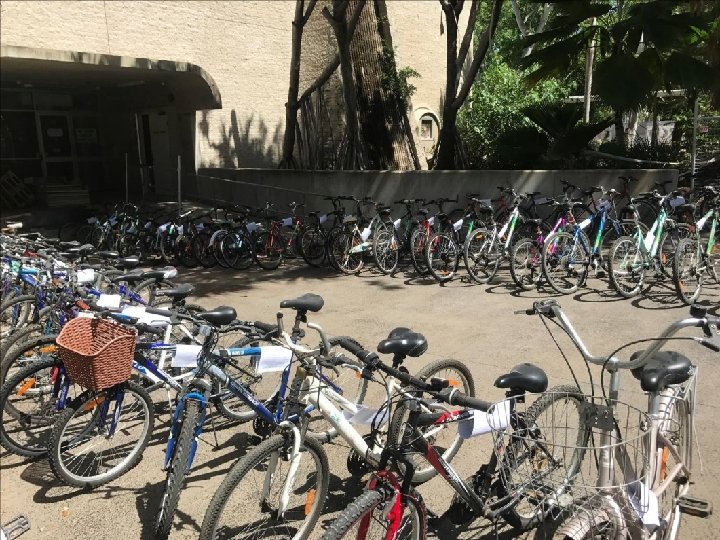
Green Bike Fleet Program
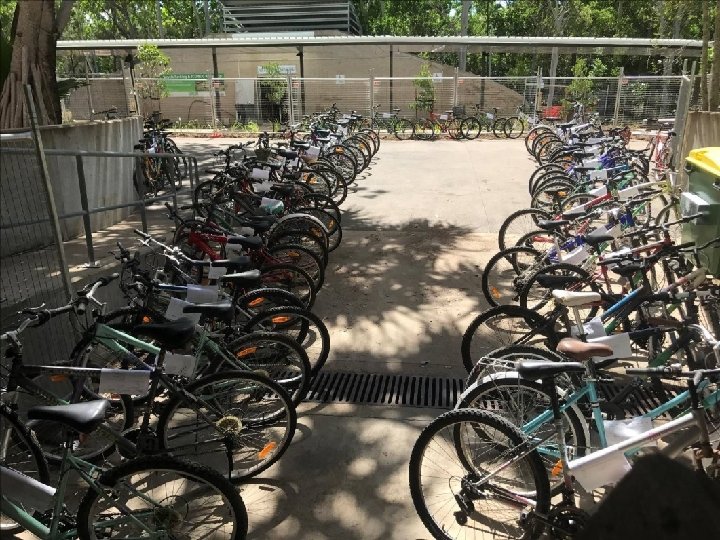
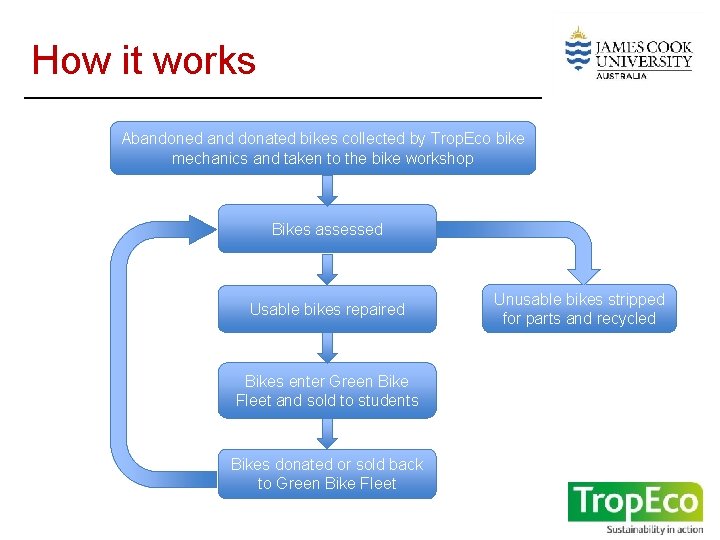
How it works Abandoned and donated bikes collected by Trop. Eco bike mechanics and taken to the bike workshop Bikes assessed Usable bikes repaired Bikes enter Green Bike Fleet and sold to students Bikes donated or sold back to Green Bike Fleet Unusable bikes stripped for parts and recycled
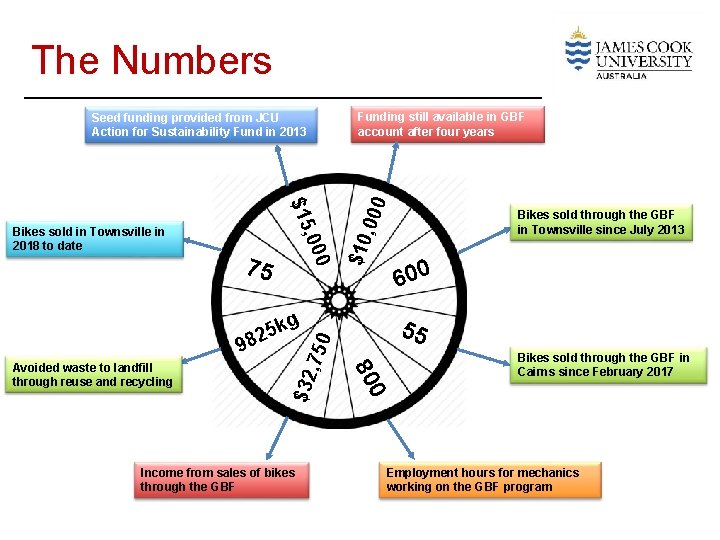
The Numbers Income from sales of bikes through the GBF 55 0 80 Avoided waste to landfill through reuse and recycling Bikes sold through the GBF in Townsville since July 2013 600 g $32 , 750 5 k 2 8 9 $10 0 75 , 00 $15 Bikes sold in Townsville in 2018 to date , 000 Funding still available in GBF account after four years Seed funding provided from JCU Action for Sustainability Fund in 2013 Bikes sold through the GBF in Cairns since February 2017 Employment hours for mechanics working on the GBF program
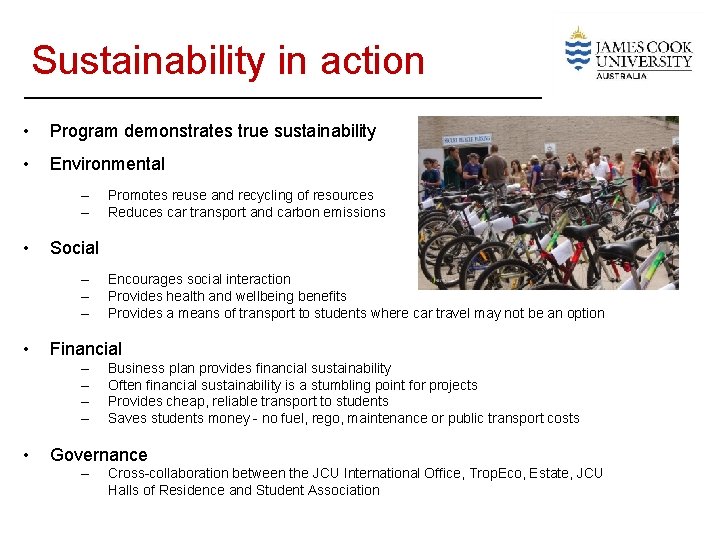
Sustainability in action • Program demonstrates true sustainability • Environmental – – • Social – – – • Encourages social interaction Provides health and wellbeing benefits Provides a means of transport to students where car travel may not be an option Financial – – • Promotes reuse and recycling of resources Reduces car transport and carbon emissions Business plan provides financial sustainability Often financial sustainability is a stumbling point for projects Provides cheap, reliable transport to students Saves students money - no fuel, rego, maintenance or public transport costs Governance – Cross-collaboration between the JCU International Office, Trop. Eco, Estate, JCU Halls of Residence and Student Association
Campus greenhouse and nursery
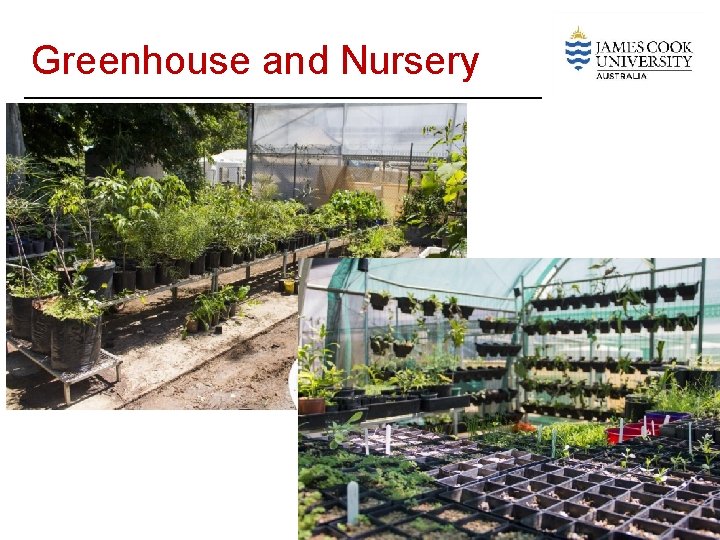
Greenhouse and Nursery
Greenhouse and Nursery • JCU greenhouse and nursery developed to meet needs of campus • Establish local native species and landscaping plants for on-campus use • Excess plants sold to public • Often landscaping projects not suitable for dry tropics and designed in Brisbane • Use local expertise • Demonstrate dry tropics suitable landscaping and feature rare, unique and endangered plants • Reduce costs to JCU and ensure quality of stock • Link to teaching, learning and research • Links with local conservation groups • Utilise on-campus mulch, soil and rock stockpiles for use in landscaping and plant propagation
The Science Place
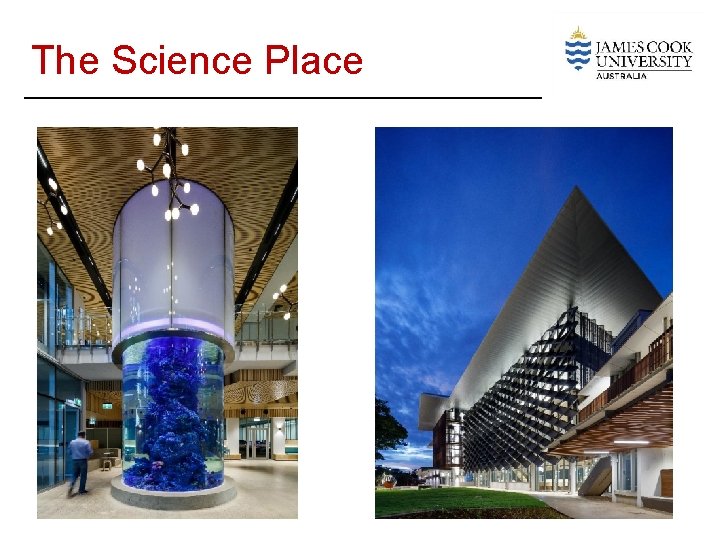
The Science Place LEED Gold rated building • 80% minimum reuse or recycling for building construction and demolition waste required to meet LEED standard • State of the art $80 million, 10, 000 m 2 building • Four buildings demolished ~ 10, 000 m 2 • 96% waste recovery by weight • 13, 270 tonnes recovered/recycled - majority concrete - some reused on site
The Science Place