
Finding the Equator Guidelines for research reporting Introduction
- Slides: 17
Finding the Equator Guidelines for research reporting
Introduction Caitriona Lee, Information Specialist, Health Research Board
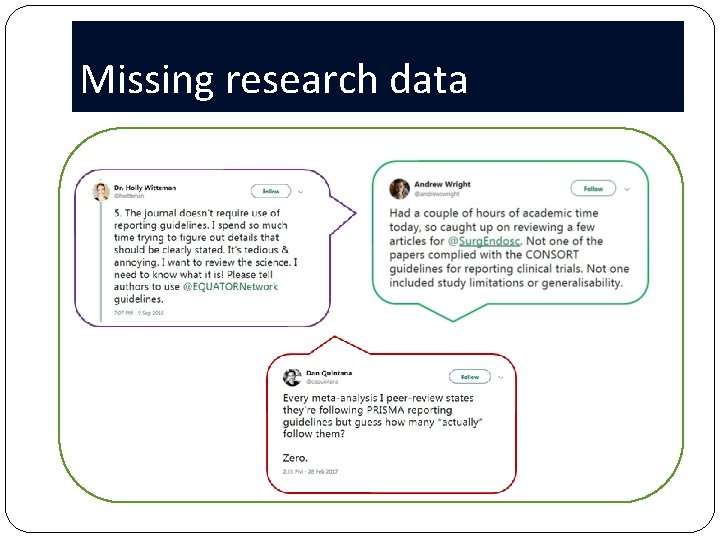
Missing research data
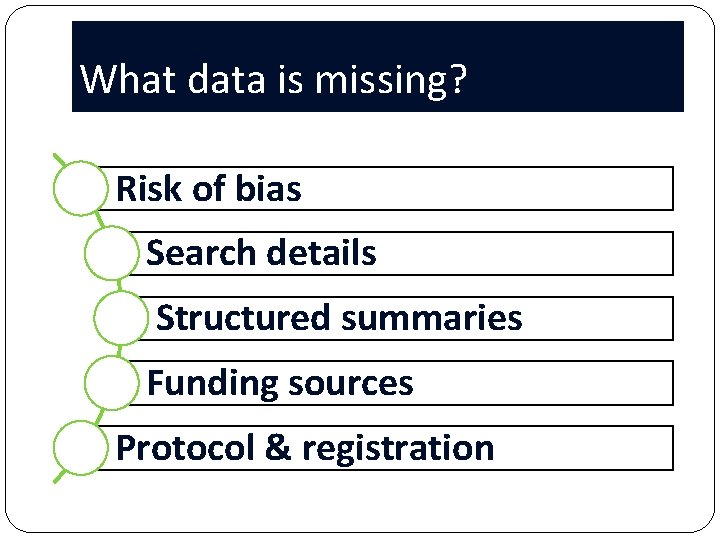
What data is missing? Risk of bias Search details Structured summaries Funding sources Protocol & registration
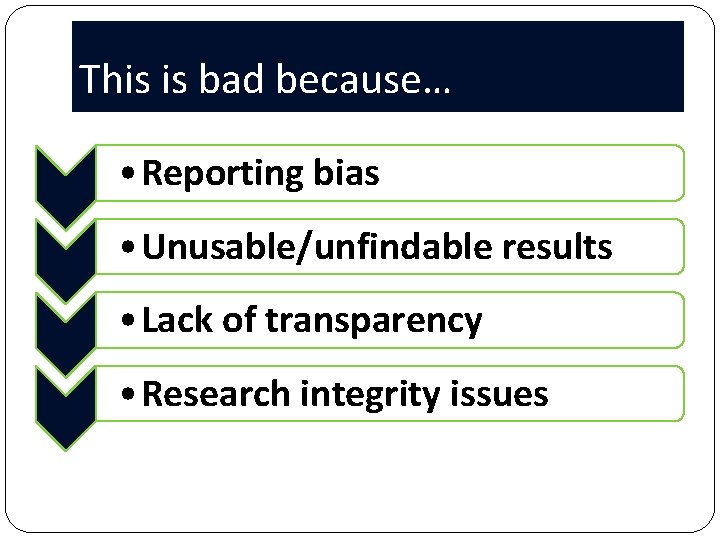
This is bad because… • Reporting bias • Unusable/unfindable results • Lack of transparency • Research integrity issues
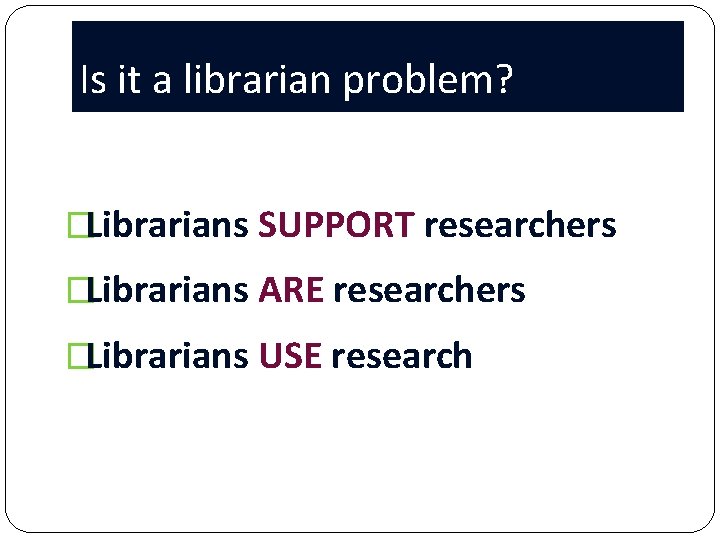
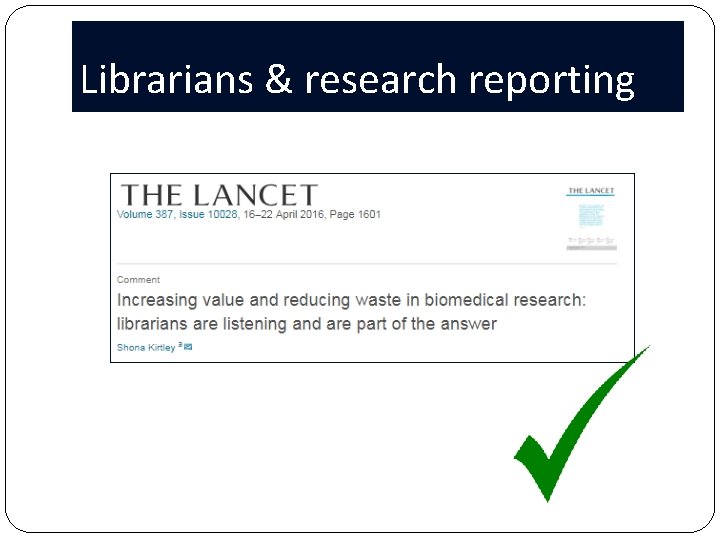
Is it a librarian problem? �Librarians SUPPORT researchers �Librarians ARE researchers �Librarians USE research
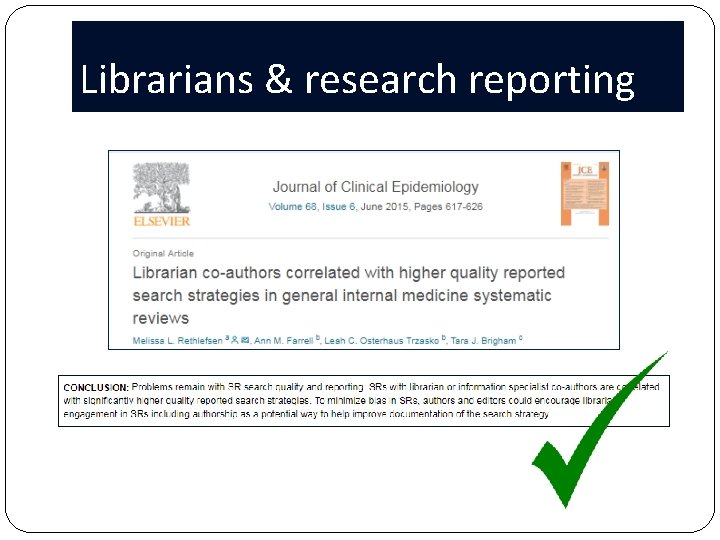
Librarians & research reporting
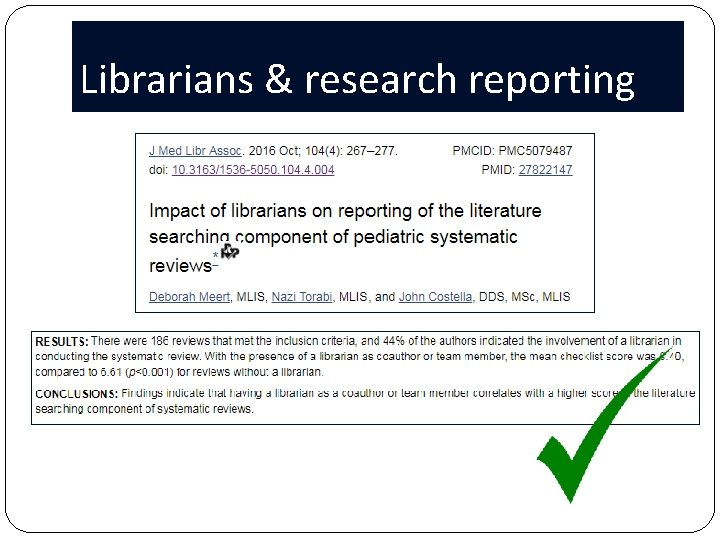
Librarians & research reporting
Librarians & research reporting
Reporting guidelines “Reporting guidelines provide the minimum set of information needed for a particular kind of study to be understood, replicated, critiqued, and used” (Centre for Statistics in Medicine, University of Oxford)
Example: Systematic Reviews Reporting guideline for systematic reviews: PRISMA: Preferred Reporting Items for Systematic Reviews and Meta-Analyses
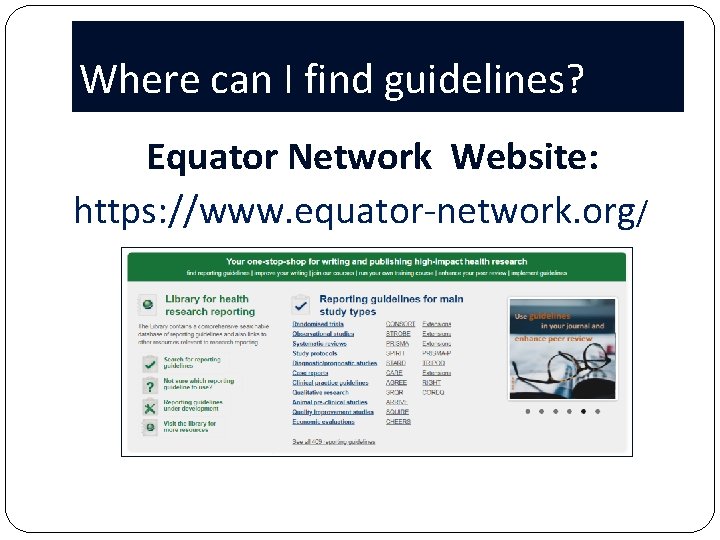
Where can I find guidelines? Equator Network Website: https: //www. equator-network. org/
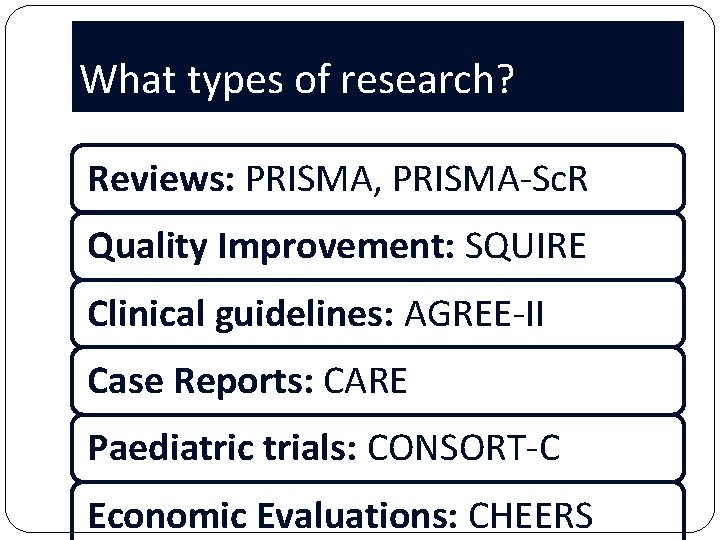
What types of research? Reviews: PRISMA, PRISMA-Sc. R Quality Improvement: SQUIRE Clinical guidelines: AGREE-II Case Reports: CARE Paediatric trials: CONSORT-C Economic Evaluations: CHEERS
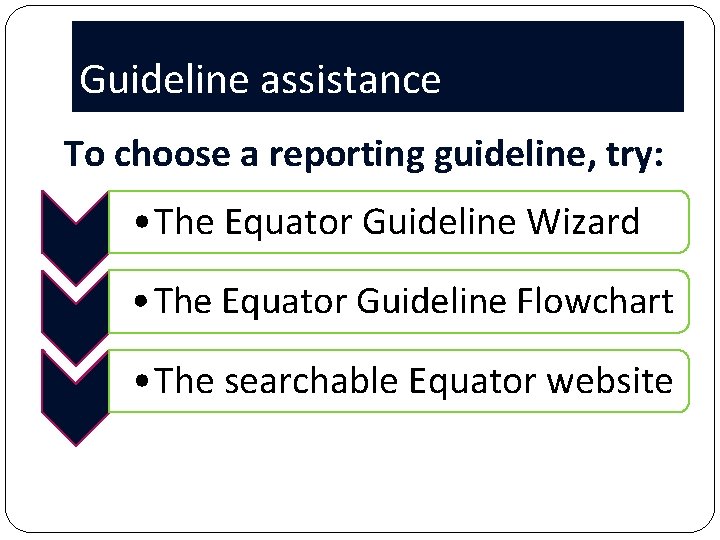
Guideline assistance To choose a reporting guideline, try: • The Equator Guideline Wizard • The Equator Guideline Flowchart • The searchable Equator website
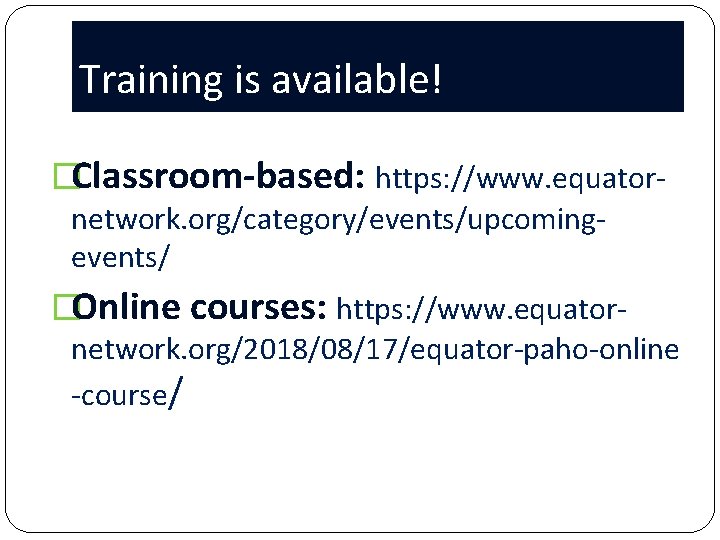
Training is available! �Classroom-based: https: //www. equatornetwork. org/category/events/upcomingevents/ �Online courses: https: //www. equator- network. org/2018/08/17/equator-paho-online -course/
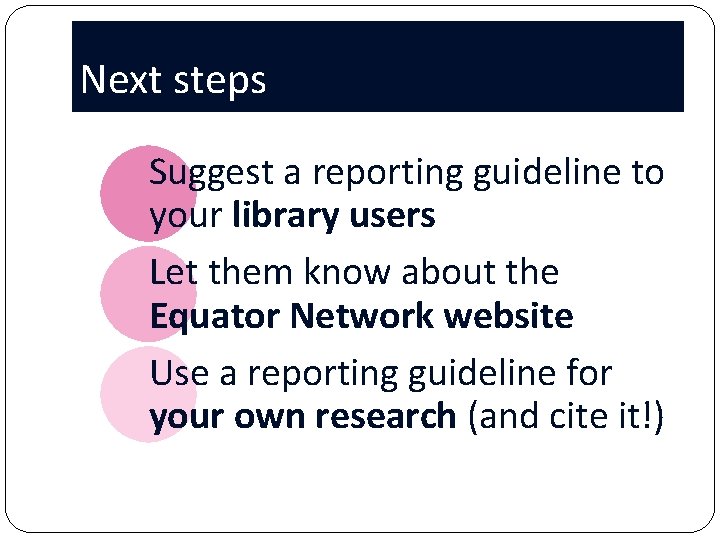
Next steps Suggest a reporting guideline to your library users Let them know about the Equator Network website Use a reporting guideline for your own research (and cite it!)
Conclusion Don’t go to the ends of the earth to find research solutions, when the answer is at the Equator! www. equator-network. org