
FINDING THE CRATER Asteroid impactdifferent types of evidence
- Slides: 15
FINDING THE CRATER
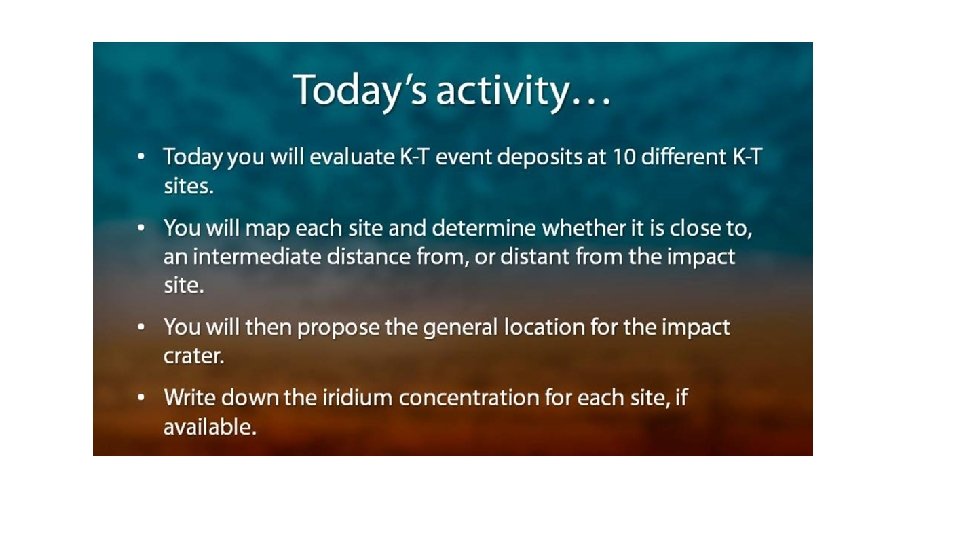
Asteroid impact—different types of evidence • 10 km wide asteroid • Massive crater • Where is it?
Evidence in 65 MYO rocks • Rock boundary between Cretaceous and Tertirary periods (K-T boundary) • Time of asteroid impact
K-T boundary is rich in iridium • Iridium is rare in the Earth’s crust, however, abundant in comets and asteroids • K-T asteroid was vaporized on impact • Fine particles of iridium traveled high into the atmosphere • Distributed all over the Earth
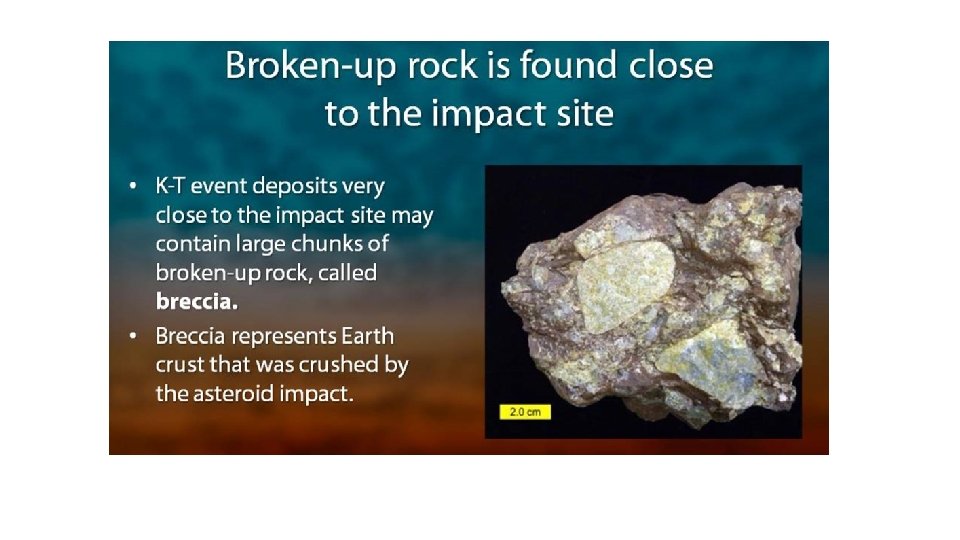
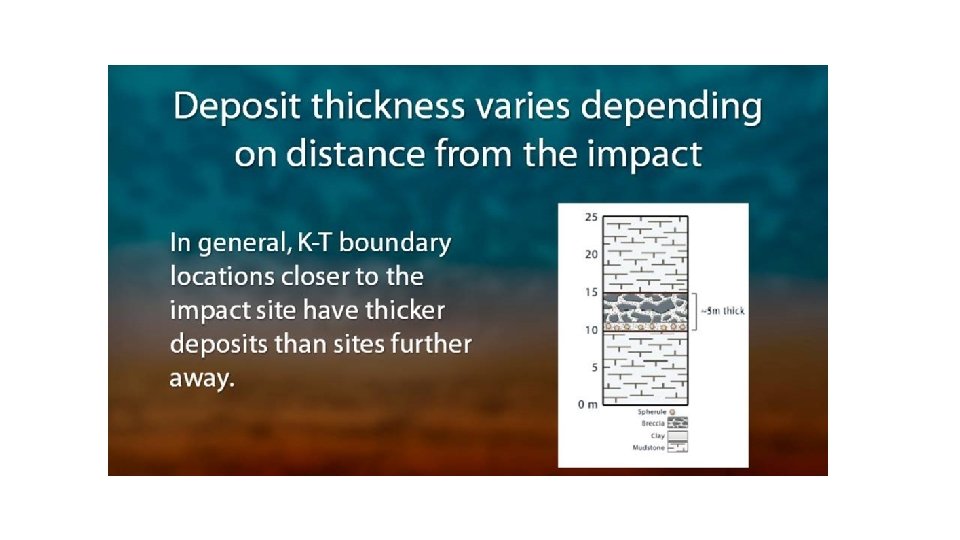
Deposits of the K-T boundary hold clues… • Deposits worldwide contain pieces of melted or crushed rocks blasted from impact site • ejecta
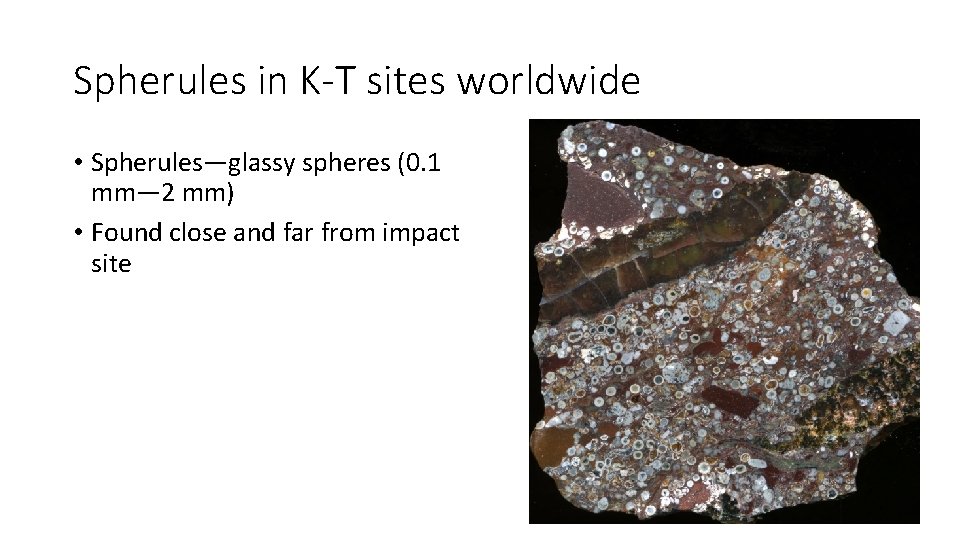
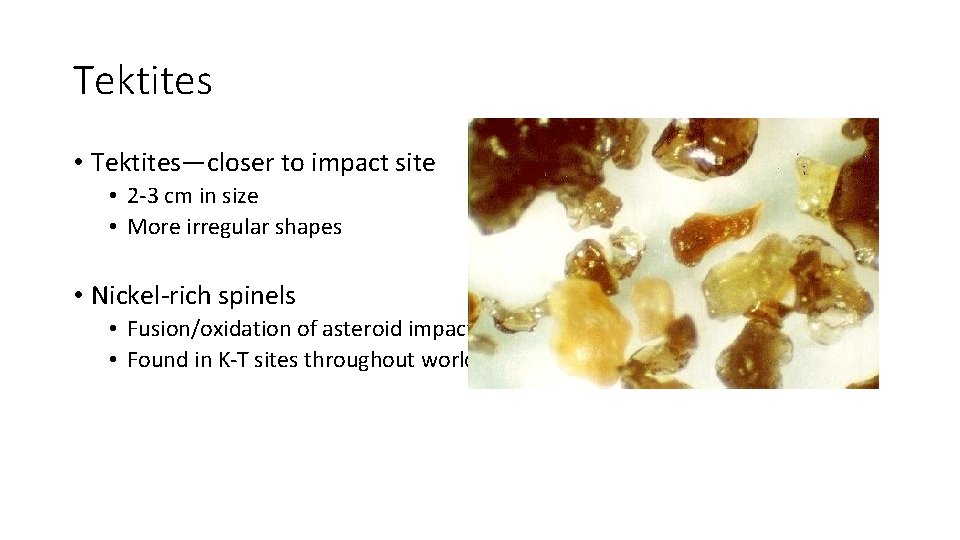
Ejecta – spherules and tektites • On impact, asteroid left some of surrounding rock in Earth’s crust melted is it was ejected from impact site • Melted rock particles fell back on planet and cooled, formed into glass-like objects (sperules and tektites)
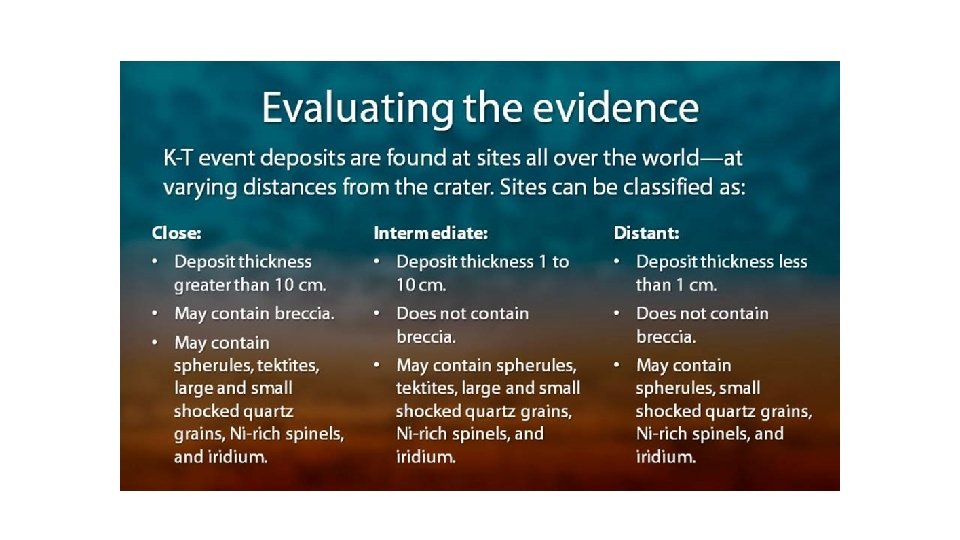
Spherules in K-T sites worldwide • Spherules—glassy spheres (0. 1 mm— 2 mm) • Found close and far from impact site
Tektites • Tektites—closer to impact site • 2 -3 cm in size • More irregular shapes • Nickel-rich spinels • Fusion/oxidation of asteroid impact • Found in K-T sites throughout world
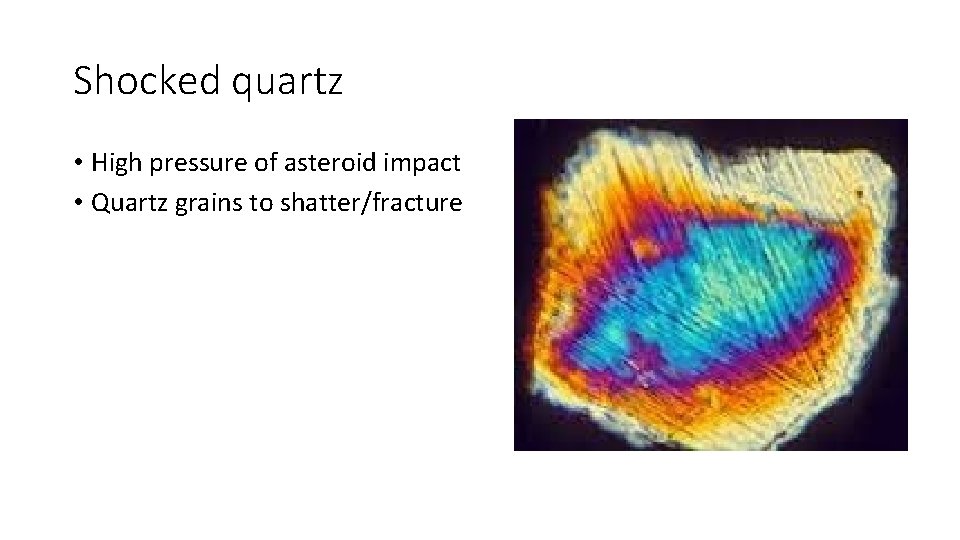
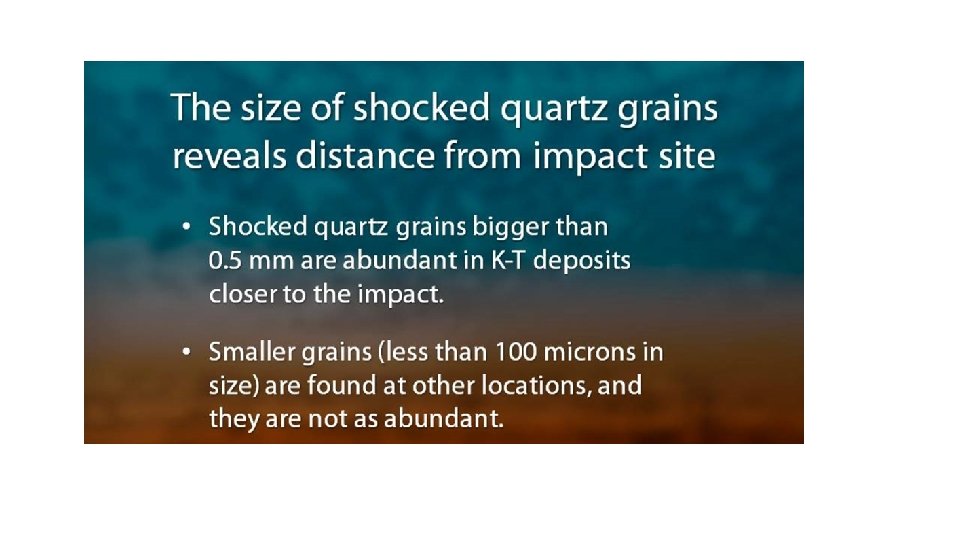
Shocked quartz • High pressure of asteroid impact • Quartz grains to shatter/fracture