
Finding Reading Evaluating and Synthesising Information Notetaking Finding


- Slides: 48
Finding, Reading, Evaluating, and Synthesising Information Note-taking
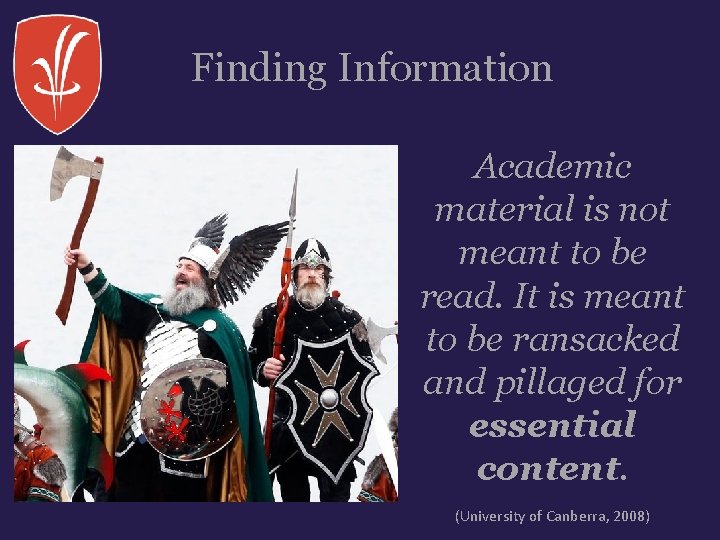
Finding Information Academic material is not meant to be read. It is meant to be ransacked and pillaged for essential content. (University of Canberra, 2008)
Finding Information
Finding Information
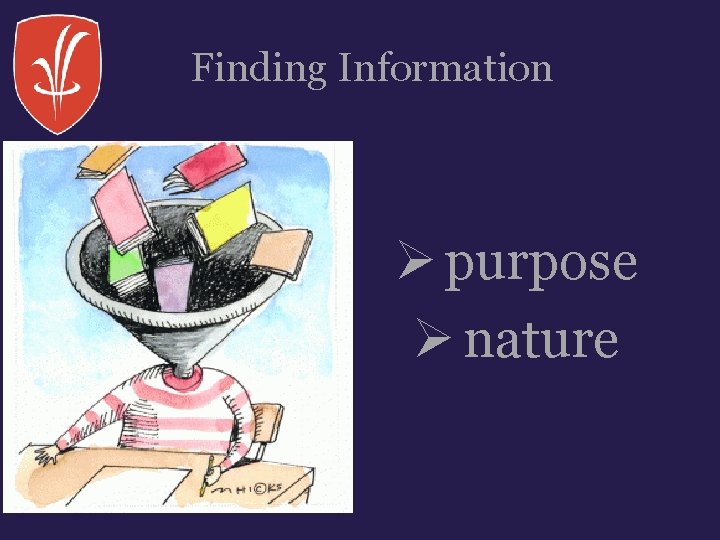
Finding Information Ø purpose Ø nature
Finding Information Where do you start?
Finding Information When you find a good source on an Internet site which you can’t access. Library Librarian Google Scholar World Cat
Activity What are some examples of a search engine? Which one(s) do you prefer? Why?
Finding Information Why do you Google?
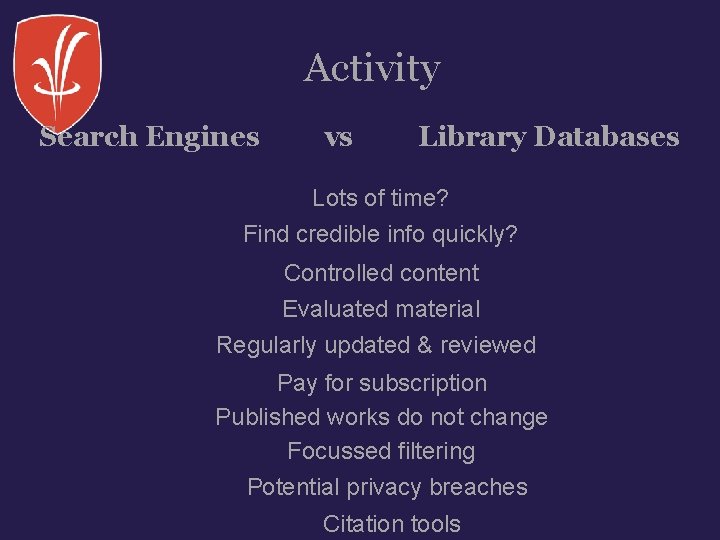
Activity Search Engines vs Library Databases Lots of time? Find credible info quickly? Controlled content Evaluated material Regularly updated & reviewed Pay for subscription Published works do not change Focussed filtering Potential privacy breaches Citation tools
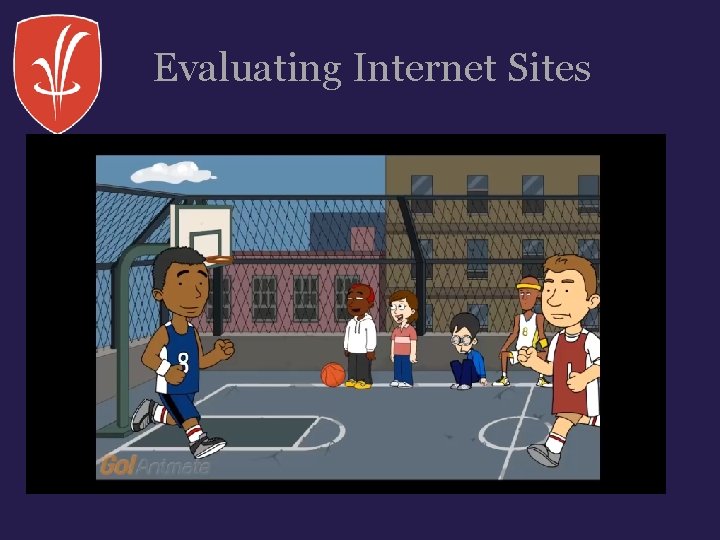
Evaluating Internet Sites
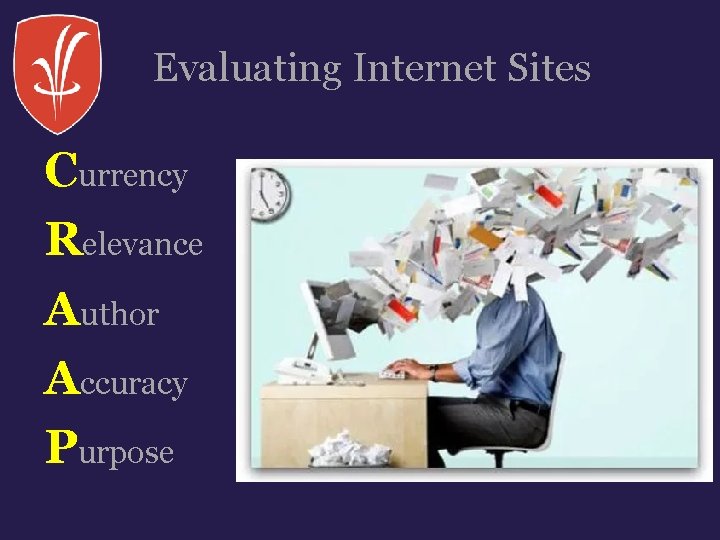
Evaluating Internet Sites Currency Relevance Author Accuracy Purpose
Reading Information
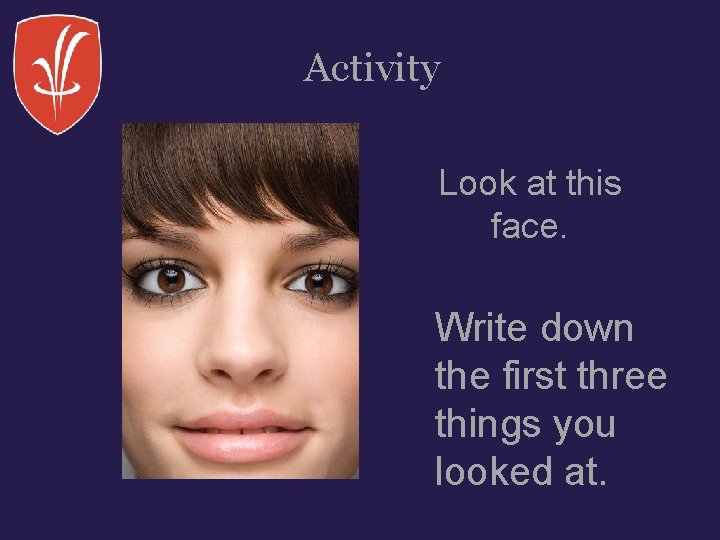
Activity Look at this face. Write down the first three things you looked at.
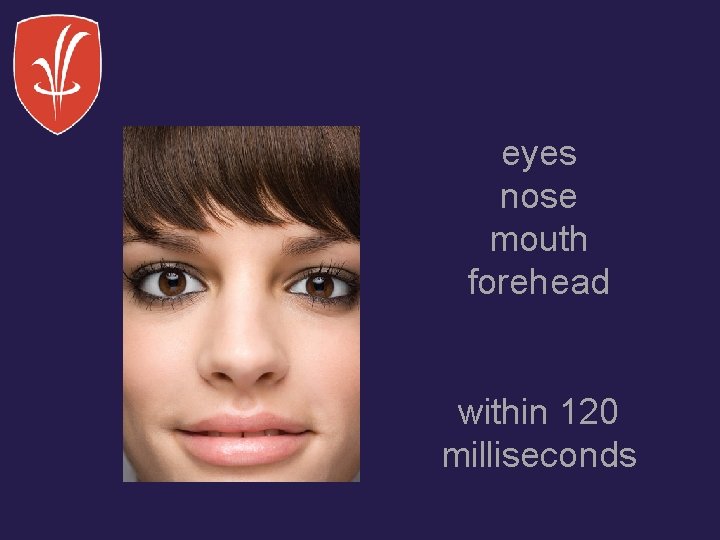
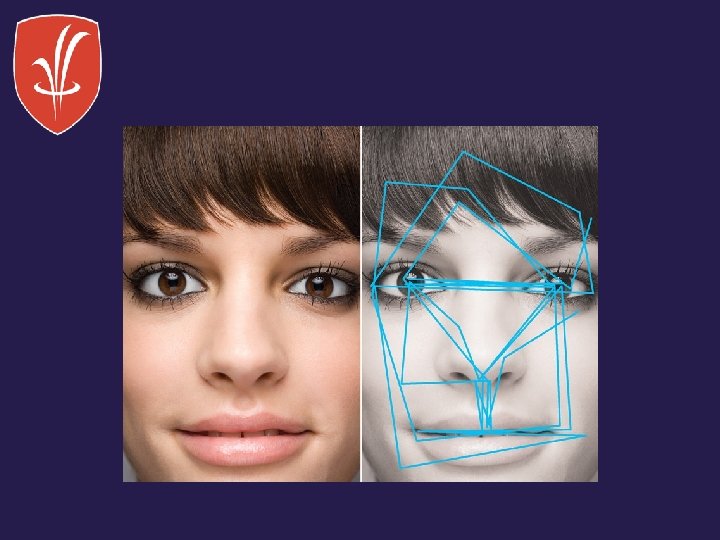
eyes nose mouth forehead within 120 milliseconds
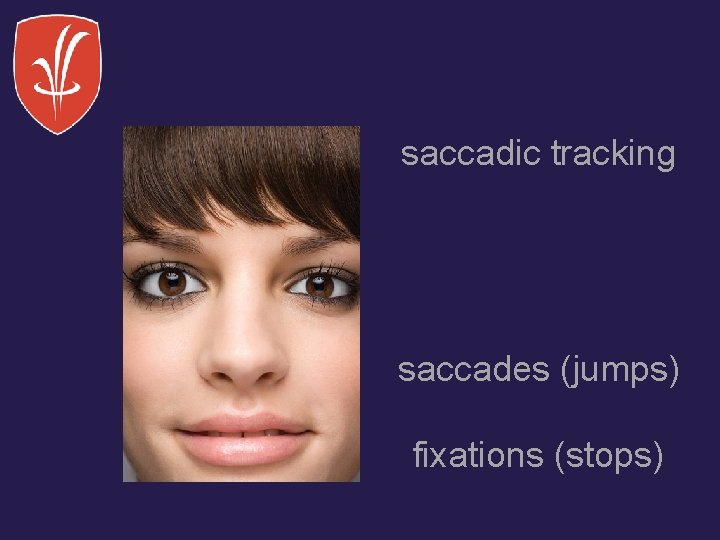
saccadic tracking saccades (jumps) fixations (stops)
usedtracking by proficient readers. Saccadic is instinctive. Skilful…and readers vary their reading rate (saccading and fixating) according to their purpose, and the nature of the material.
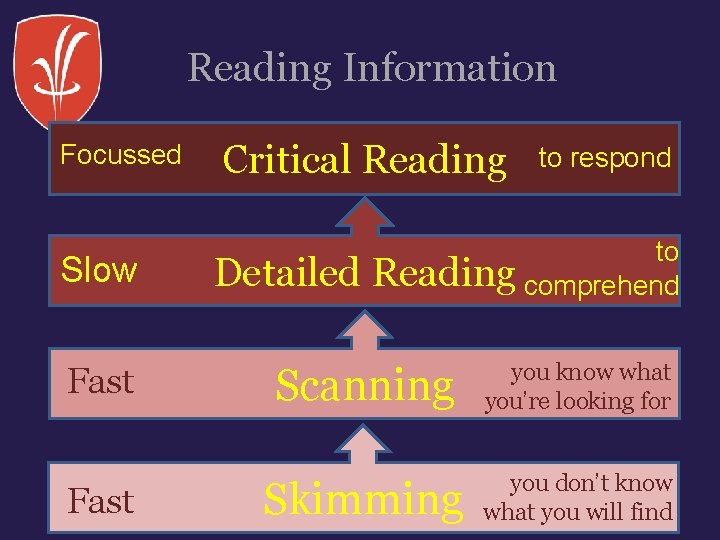
Reading Information Focussed Slow Fast Critical Reading Detailed to respond to Reading comprehend Scanning you know what you’re looking for Skimming you don’t know what you will find
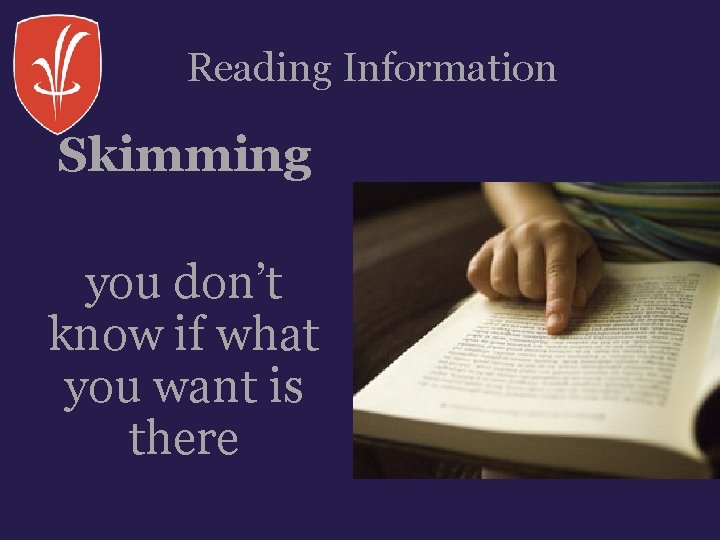
Reading Information Skimming you don’t know if what you want is there
Reading Information Scanning you know what you are looking for
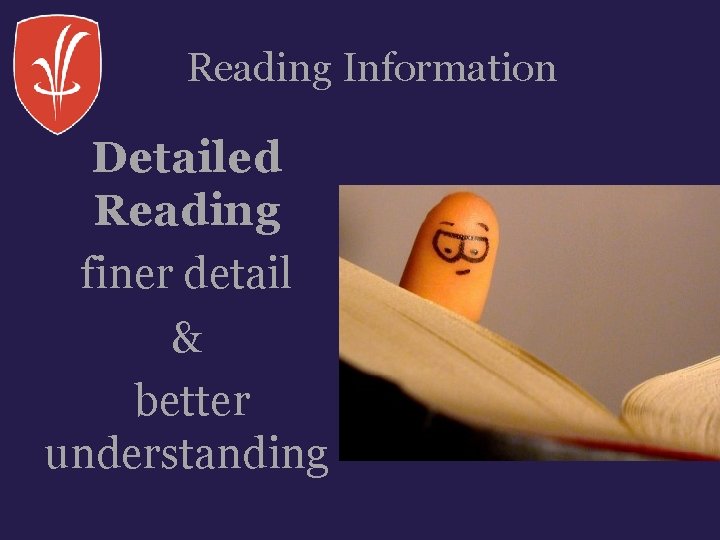
Reading Information Detailed Reading finer detail & better understanding
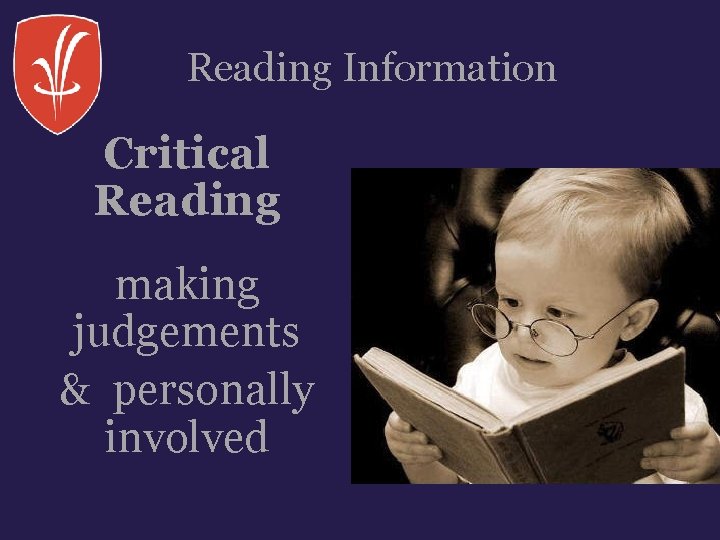
Reading Information Critical Reading making judgements & personally involved
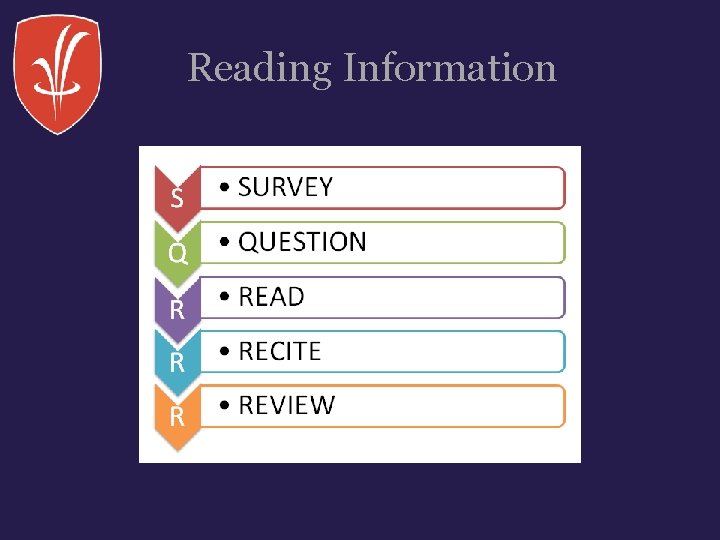
Reading Information
Note-taking
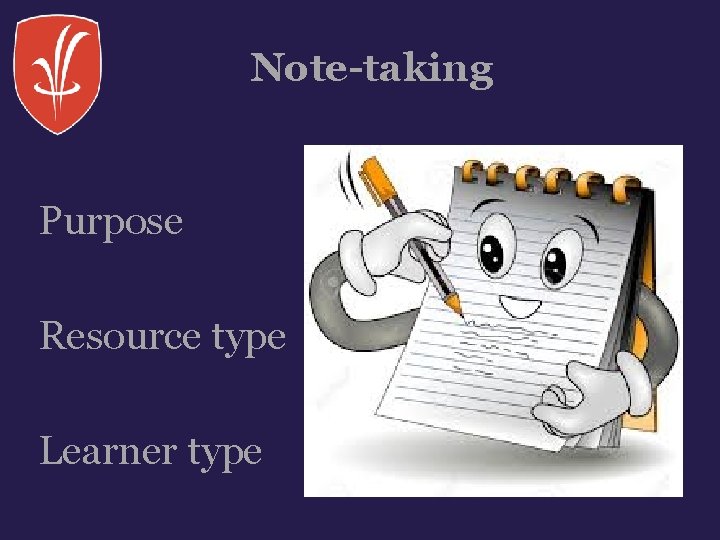
Note-taking Purpose Resource type Learner type
Note-taking
Evaluating Information
Evaluating Infomormation Facts Opinions Assumptions Bias
Evaluating Information
Evaluating Information Text organisation
Evaluating Information Implicit information
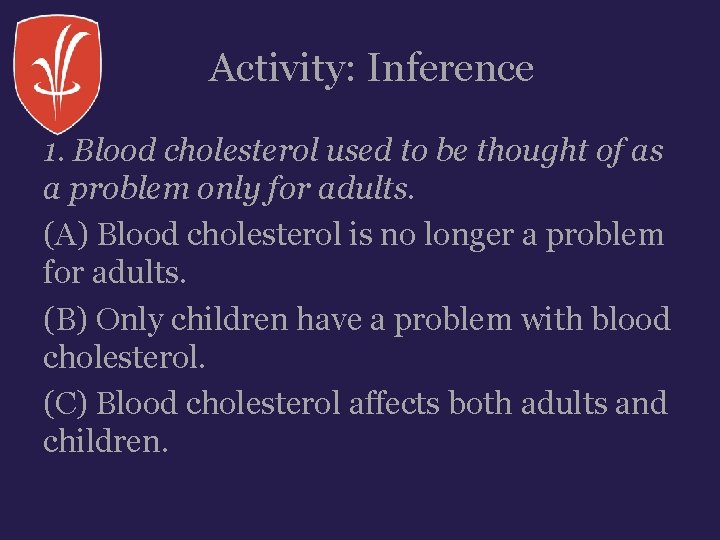
Activity: Inference 1. Blood cholesterol used to be thought of as a problem only for adults. (A) Blood cholesterol is no longer a problem for adults. (B) Only children have a problem with blood cholesterol. (C) Blood cholesterol affects both adults and children.
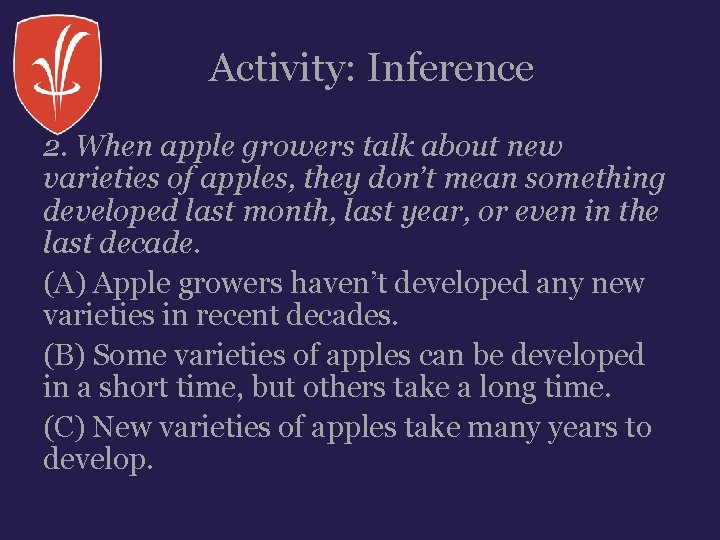
Activity: Inference 2. When apple growers talk about new varieties of apples, they don’t mean something developed last month, last year, or even in the last decade. (A) Apple growers haven’t developed any new varieties in recent decades. (B) Some varieties of apples can be developed in a short time, but others take a long time. (C) New varieties of apples take many years to develop.
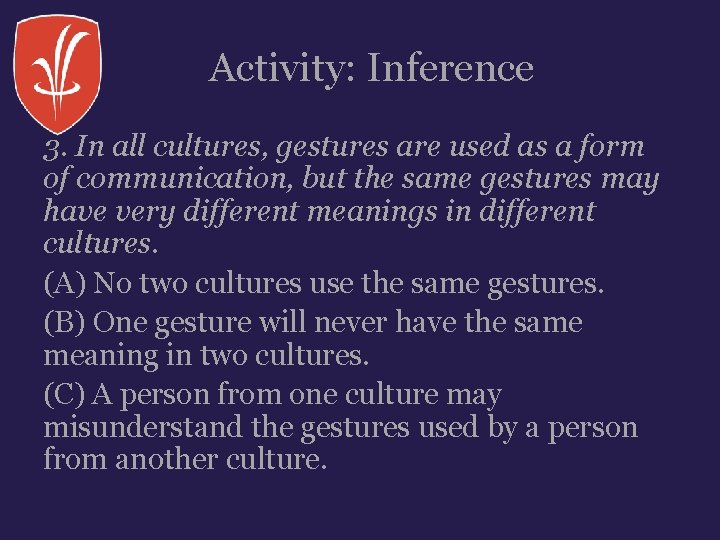
Activity: Inference 3. In all cultures, gestures are used as a form of communication, but the same gestures may have very different meanings in different cultures. (A) No two cultures use the same gestures. (B) One gesture will never have the same meaning in two cultures. (C) A person from one culture may misunderstand the gestures used by a person from another culture.
Evaluating Information Language choices
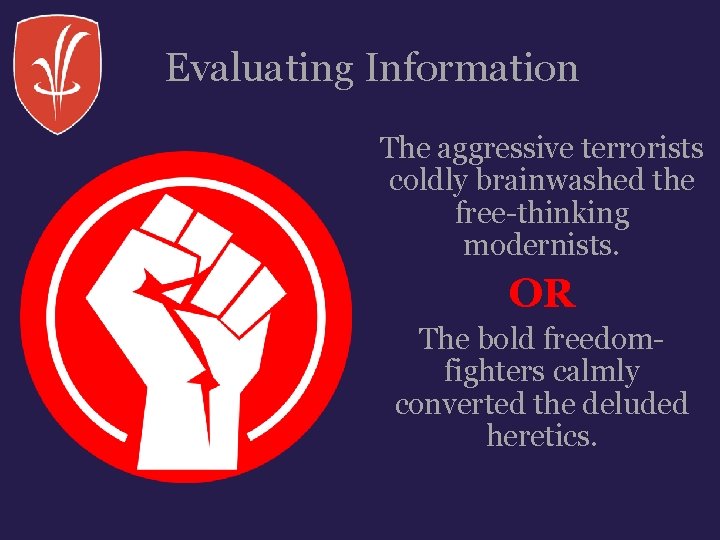
Evaluating Information The aggressive terrorists coldly brainwashed the free-thinking modernists. OR The bold freedomfighters calmly converted the deluded heretics.
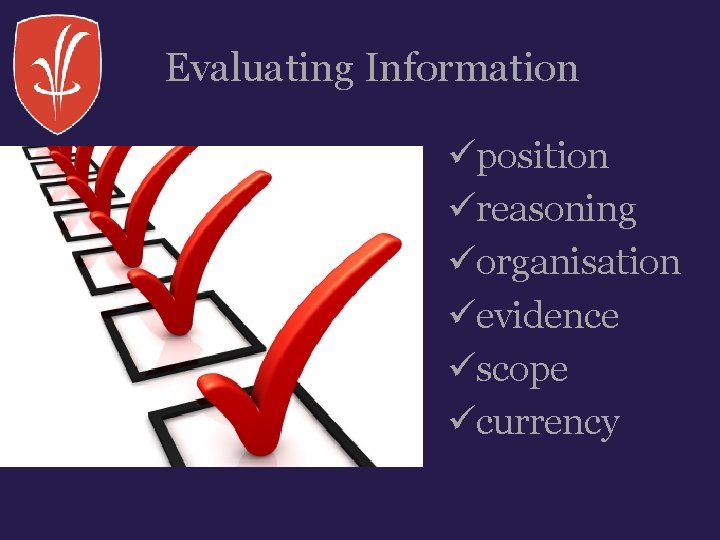
Evaluating Information üposition üreasoning üorganisation üevidence üscope ücurrency
Evaluating Material Assess & Evaluate
Synthesising Information
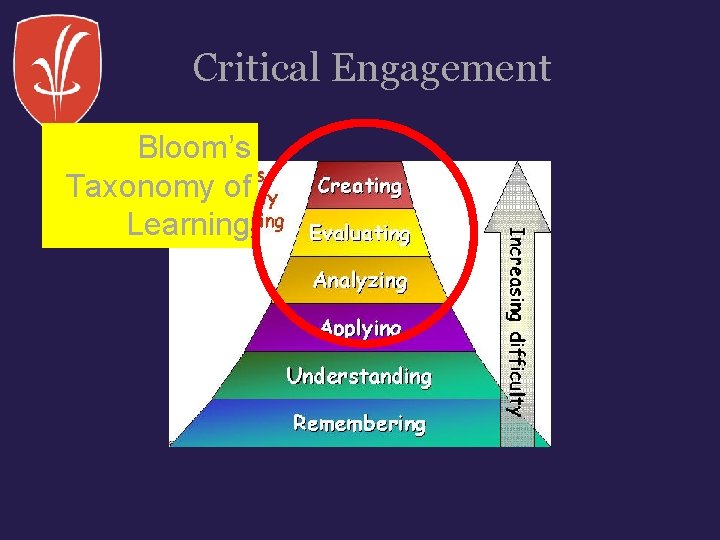
Critical Engagement Bloom’s Taxonomy of Learning
Critical Engagement The purpose and nature of most scholarly assignments is to demonstrate MORE than mere understanding. Critical Engagement
Synthesising Information Critical engagement leads to synthesis üdo more than summarise or describe ü critique üidentify connections ühave own position/argue in response
Synthesising Information ü responding ü your purpose ü different perspectives ü selective ü your own voice ü developing your claims
Synthesising Information üyour response üchanges in your values, beliefs or assumptions üyour position
After this Lecture Check out the resources on Moodle: • Read “ 6 Criteria for Evaluating Websites”. • Read the SQ 3 R Method Info sheet from QUT. • Watch the “CRAAP” video from UQ about evaluating resources. • Follow the link to the Fed Uni Effective Reading Guide • Link to the VARK website
A Final Word… Remember two things: 1. Experts may not know everything. and 2. Information is dynamic.
Images Vikings - http: //www. mirror. co. uk/news Information overload – https: //acculturated. com/daily-scene/informationoverload/ Filter – http: //www. afhill. com/blog Man at computer – https: //www. executiveforums. com Eye tracking – http: //www. adcentre. com. au/insights/eye-tracking-study Girl in library – http: //www. sayidaty. net child reading - http: //angelmendoza 13. blogspot. com. au/ skim reading http: //www. littledrop. net/blog/ SQ 3 R – https: //mkclindia. wordpress. com Assess – http: //www. enspire. com/assess_training_success/ Bloom’s Taxonomy – http: //teachercommons. pbworks. com Brain lifting weights – http: //griggsortho. com/flex-your-mental-muscle-2/