
Finding Domain Terms using Wikipedia Jorge Vivaldi Palatresi
- Slides: 19
Finding Domain Terms using Wikipedia Jorge Vivaldi Palatresi Horacio Rodríguez Hontoria Applied Linguistics Institute TALP Research Center Universitat Pompeu Fabra Universitat Politécnica de Catalunya jorge. vivaldi@upf. edu horacio@lsi. upc. es
Outline • • • Introduction Related approaches Methodology Evaluation Conclusions and future work 2
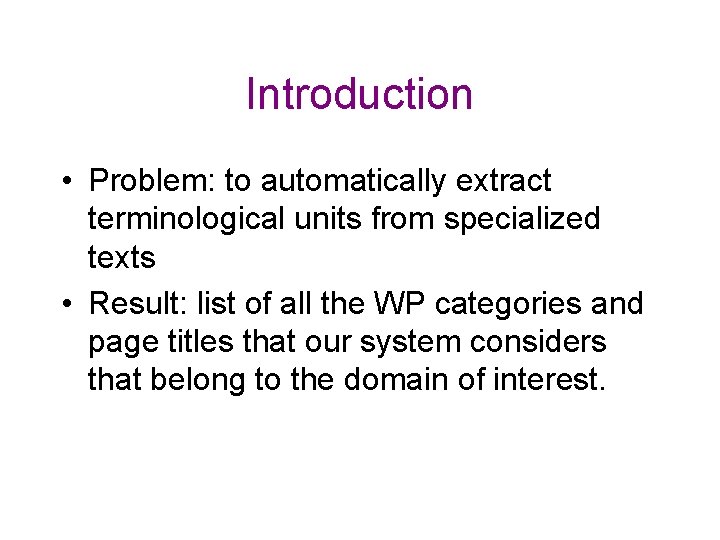
Introduction • Problem: to automatically extract terminological units from specialized texts • Result: list of all the WP categories and page titles that our system considers that belong to the domain of interest.
Related approaches • • Magnini et al. , 2000 Montoyo et al. , 2001 Missikoff et al. , 2002 Vivaldi, Rodríguez, 2004 Bernardini et al. , 2006 Cui et al. , 2008 4
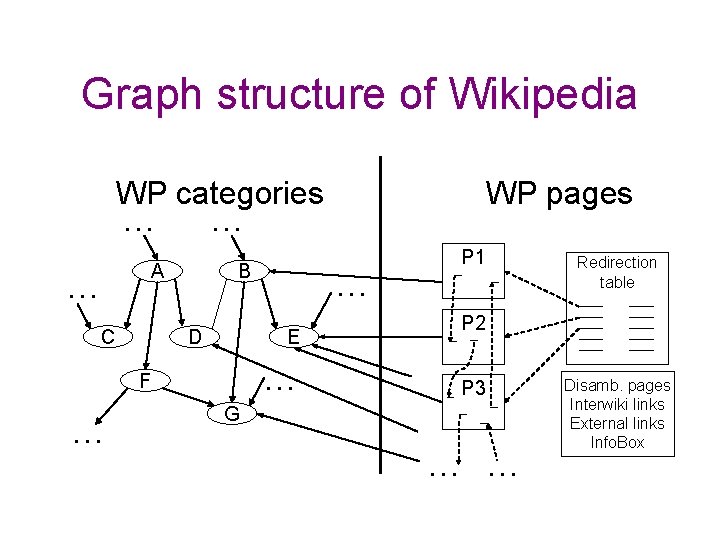
Graph structure of Wikipedia WP categories … … … A C B D … E … F … WP pages P 1 Redirection table P 2 P 3 G … … Disamb. pages Interwiki links External links Info. Box
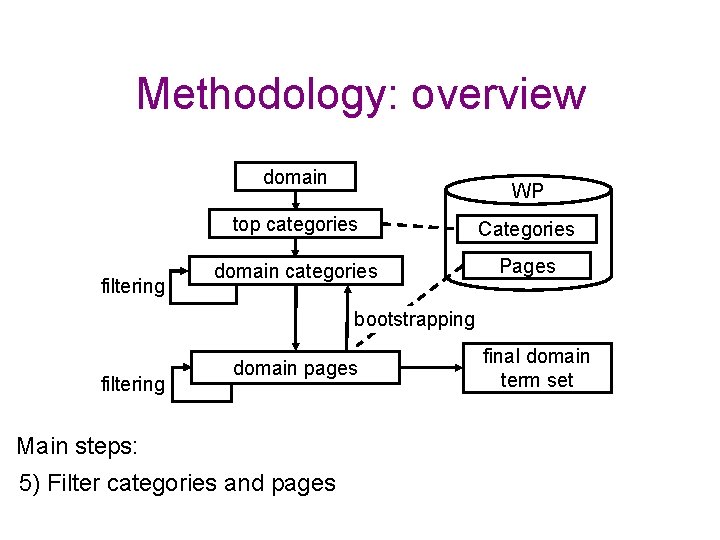
Methodology: overview domain filtering WP top categories Categories domain categories Pages bootstrapping filtering domain pages final domain term set Main steps: 4) Filter 5) Remove categories proper names and pages and service 1) 2) 3) To find Look Extract for in allall WP descendants thethe subcategories/pages domain from name theas domain aclasses related category. name to the avoiding domain loops
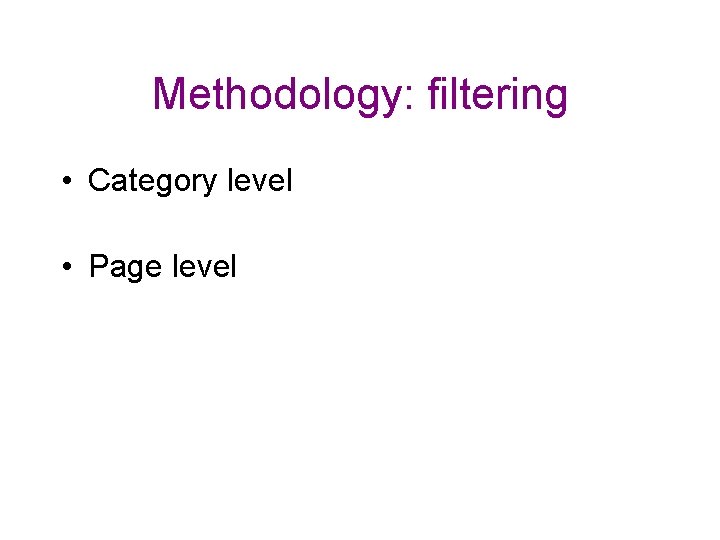
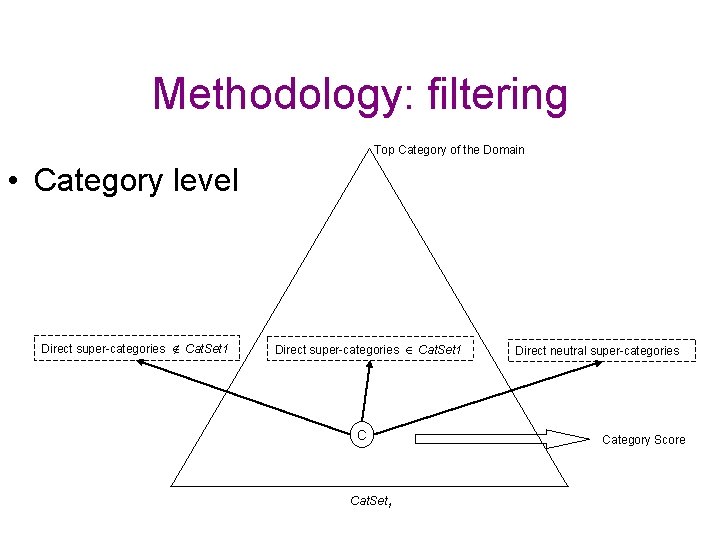
Methodology: filtering • Category level • Page level
Methodology: filtering Top Category of the Domain • Category level Direct super-categories Cat. Set 1 C Cat. Set 1 Direct neutral super-categories Category Score
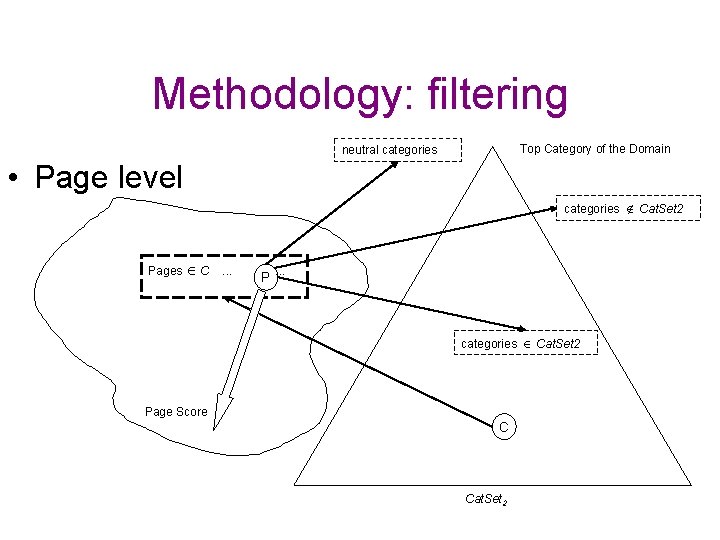
Methodology: filtering Top Category of the Domain neutral categories • Page level categories Cat. Set 2 Pages C . . . P . . . categories Cat. Set 2 Page Score C Cat. Set 2
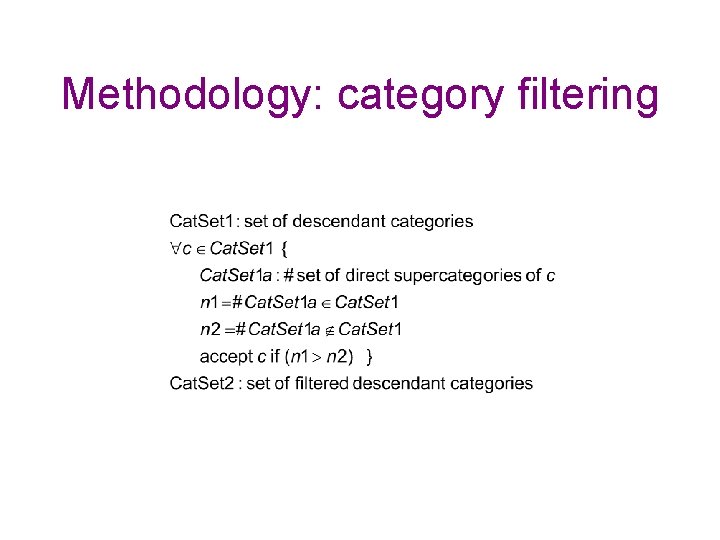
Methodology: category filtering
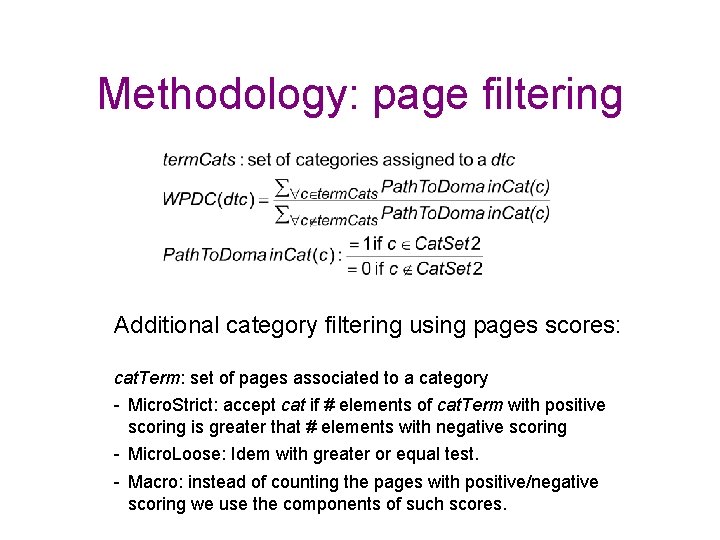
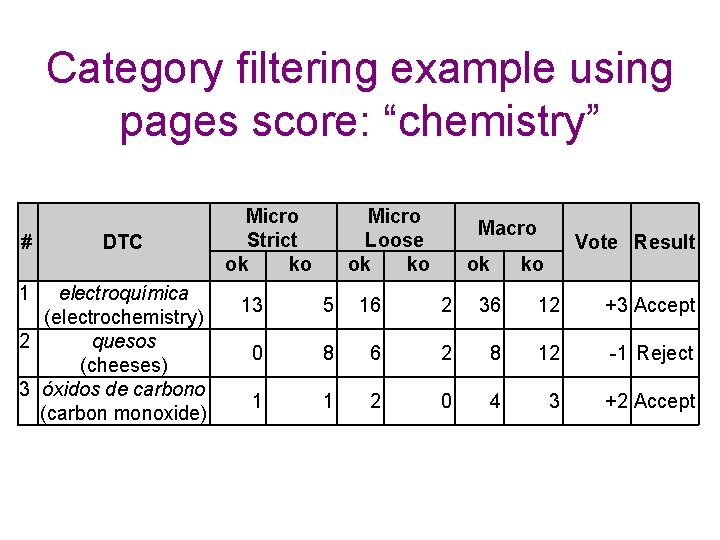
Methodology: page filtering Additional category filtering using pages scores: cat. Term: set of pages associated to a category - Micro. Strict: accept cat if # elements of cat. Term with positive scoring is greater that # elements with negative scoring - Micro. Loose: Idem with greater or equal test. - Macro: instead of counting the pages with positive/negative scoring we use the components of such scores.
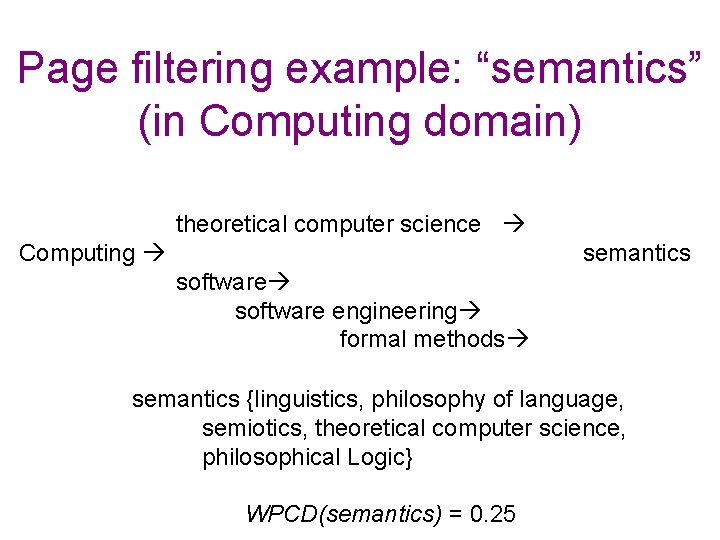
Page filtering example: “semantics” (in Computing domain) theoretical computer science Computing semantics software engineering formal methods semantics {linguistics, philosophy of language, semiotics, theoretical computer science, philosophical Logic} WPCD(semantics) = 0. 25
Category filtering example using pages score: “chemistry” # 1 DTC electroquímica (electrochemistry) 2 quesos (cheeses) 3 óxidos de carbono (carbon monoxide) Micro Strict ok ko Micro Loose ok ko Macro ok Vote Result ko 13 5 16 2 36 12 +3 Accept 0 8 6 2 8 12 -1 Reject 1 1 2 0 4 3 +2 Accept
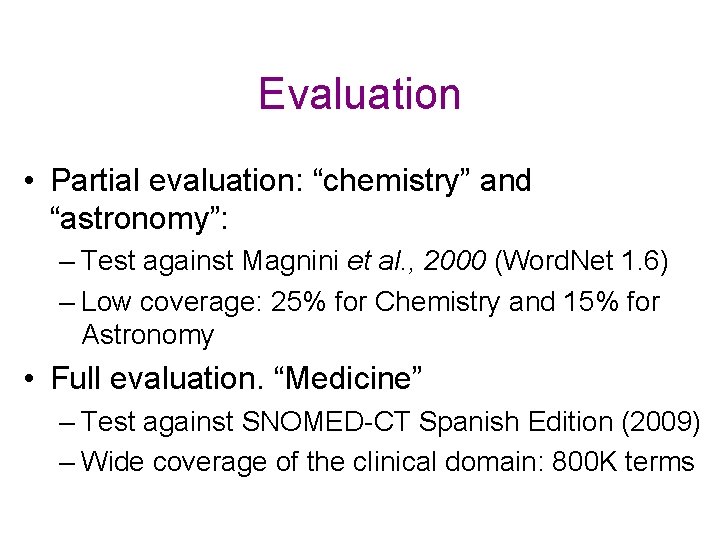
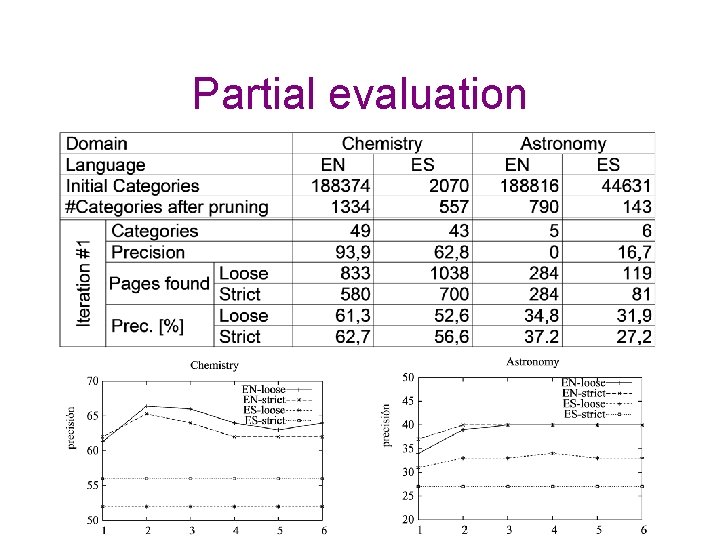
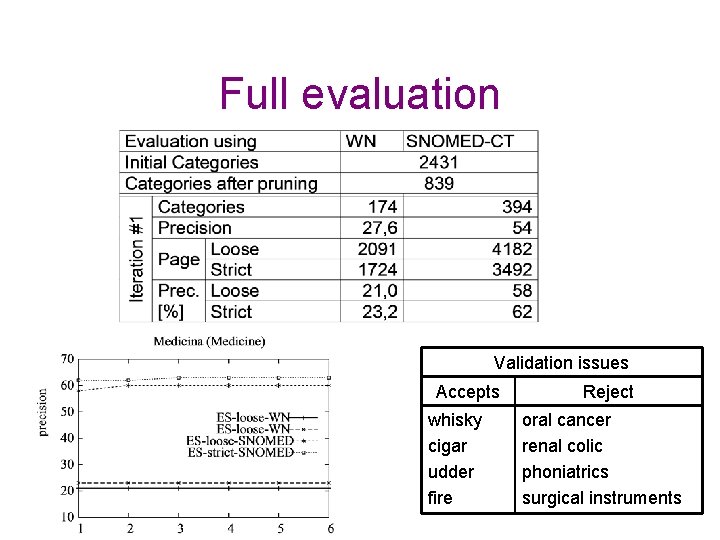
Evaluation • Partial evaluation: “chemistry” and “astronomy”: – Test against Magnini et al. , 2000 (Word. Net 1. 6) – Low coverage: 25% for Chemistry and 15% for Astronomy • Full evaluation. “Medicine” – Test against SNOMED-CT Spanish Edition (2009) – Wide coverage of the clinical domain: 800 K terms
Partial evaluation
Full evaluation Validation issues Accepts whisky cigar udder fire Reject oral cancer renal colic phoniatrics surgical instruments
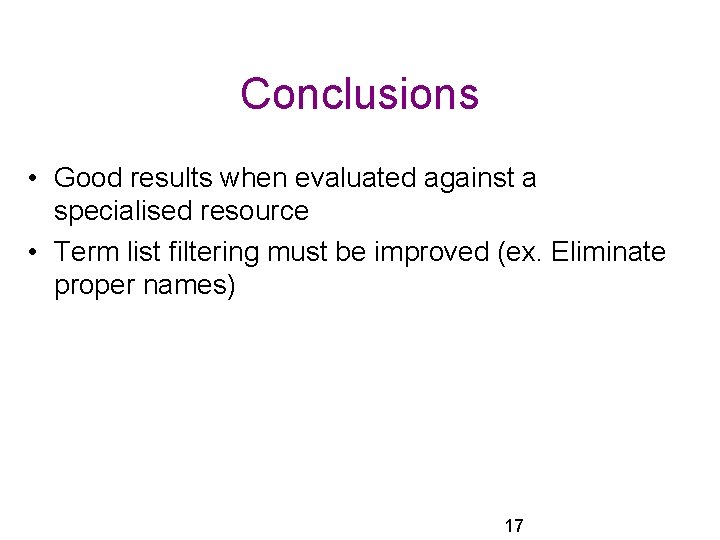
Conclusions • Good results when evaluated against a specialised resource • Term list filtering must be improved (ex. Eliminate proper names) 17
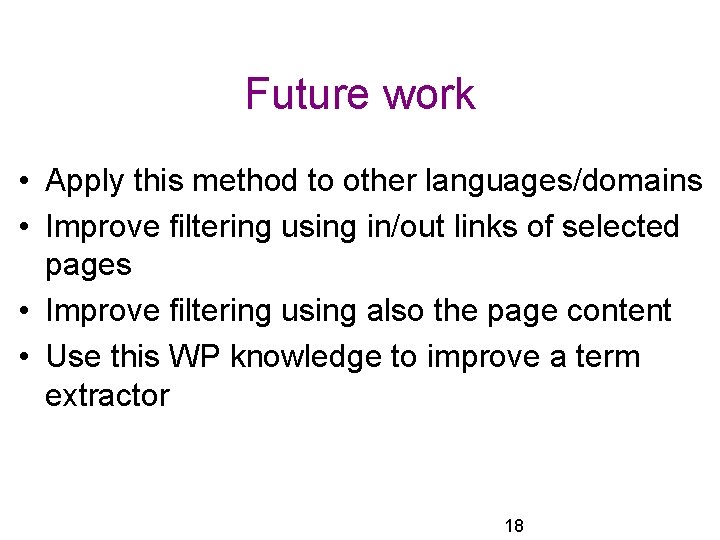
Future work • Apply this method to other languages/domains • Improve filtering using in/out links of selected pages • Improve filtering using also the page content • Use this WP knowledge to improve a term extractor 18
Finding Domain Terms using Wikipedia Jorge Vivaldi Palatresi Horacio Rodríguez Hontoria Applied Linguistics Institute TALP Research Center Universitat Pompeu Fabra Universitat Politécnica de Catalunya jorge. vivaldi@upf. edu horacio@lsi. upc. es 19