
Finding Correlation Coefficient Line of Best Fit Rainfall

Finding Correlation Coefficient & Line of Best Fit
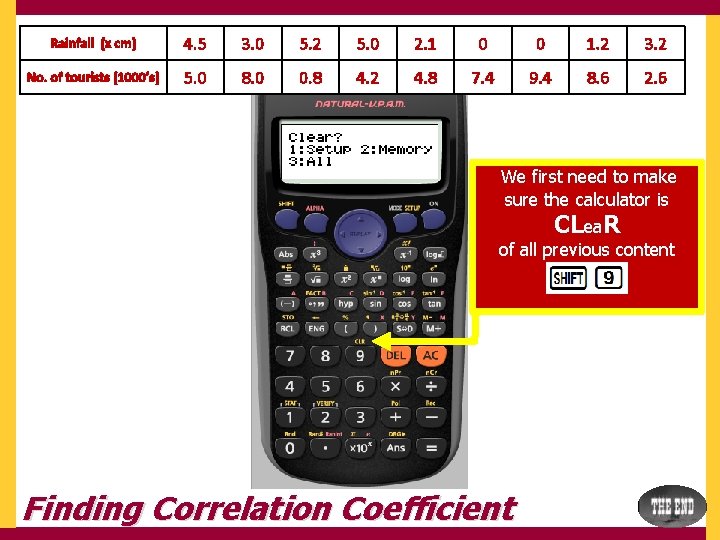
Rainfall (x cm) 4. 5 3. 0 5. 2 5. 0 2. 1 0 0 1. 2 3. 2 No. of tourists (1000’s) 5. 0 8. 0 0. 8 4. 2 4. 8 7. 4 9. 4 8. 6 2. 6 We first need to make sure the calculator is CLea. R of all previous content Finding Correlation Coefficient
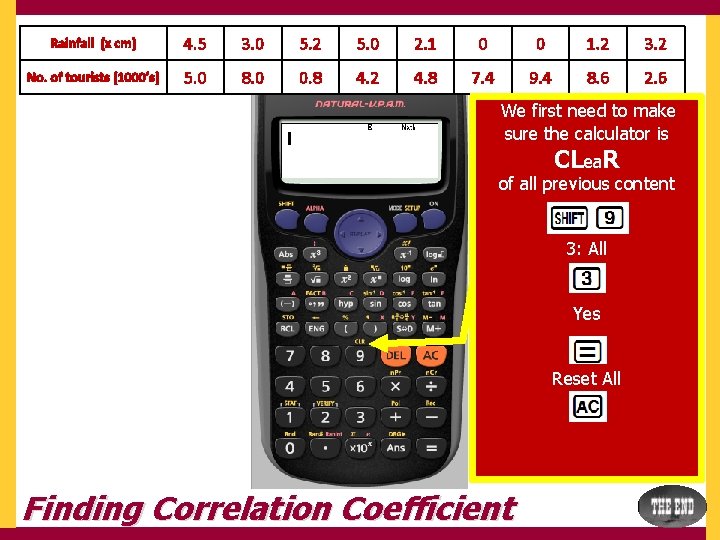
Rainfall (x cm) 4. 5 3. 0 5. 2 5. 0 2. 1 0 0 1. 2 3. 2 No. of tourists (1000’s) 5. 0 8. 0 0. 8 4. 2 4. 8 7. 4 9. 4 8. 6 2. 6 We first need to make sure the calculator is CLea. R of all previous content 3: All Yes Reset All Finding Correlation Coefficient
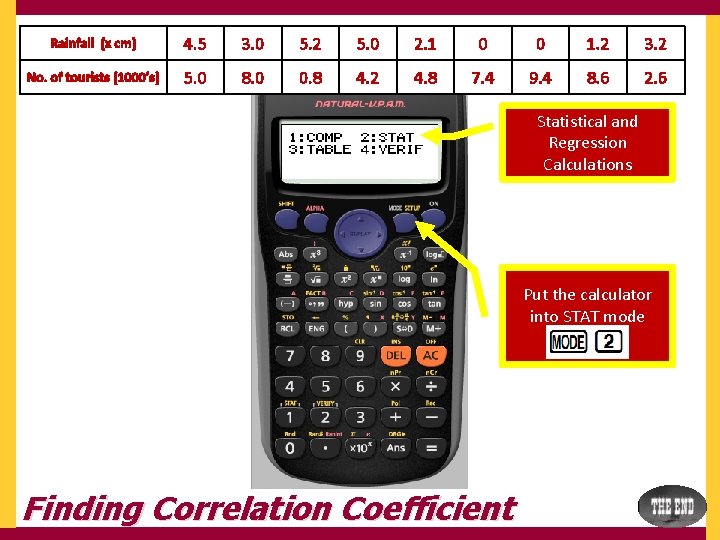
Rainfall (x cm) 4. 5 3. 0 5. 2 5. 0 2. 1 0 0 1. 2 3. 2 No. of tourists (1000’s) 5. 0 8. 0 0. 8 4. 2 4. 8 7. 4 9. 4 8. 6 2. 6 Statistical and Regression Calculations Put the calculator into STAT mode Finding Correlation Coefficient
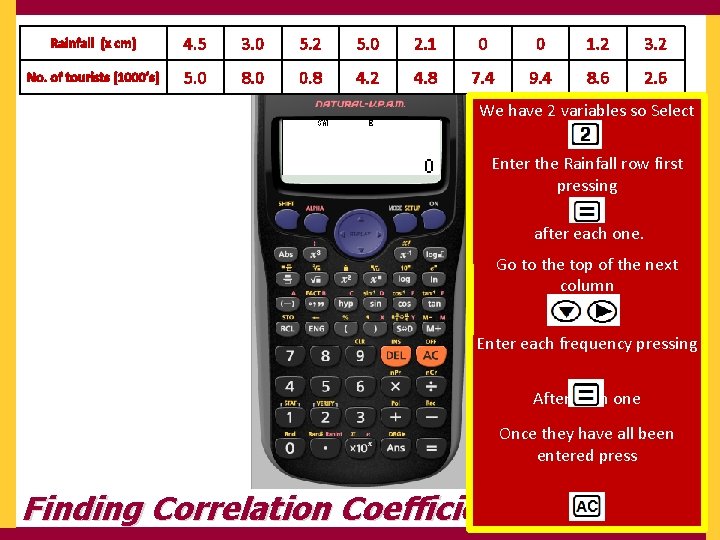
Rainfall (x cm) 4. 5 3. 0 5. 2 5. 0 2. 1 0 0 1. 2 3. 2 No. of tourists (1000’s) 5. 0 8. 0 0. 8 4. 2 4. 8 7. 4 9. 4 8. 6 2. 6 We have 2 variables so Select Enter the Rainfall row first pressing after each one. Go to the top of the next column Enter each frequency pressing After each one Once they have all been entered press Finding Correlation Coefficient
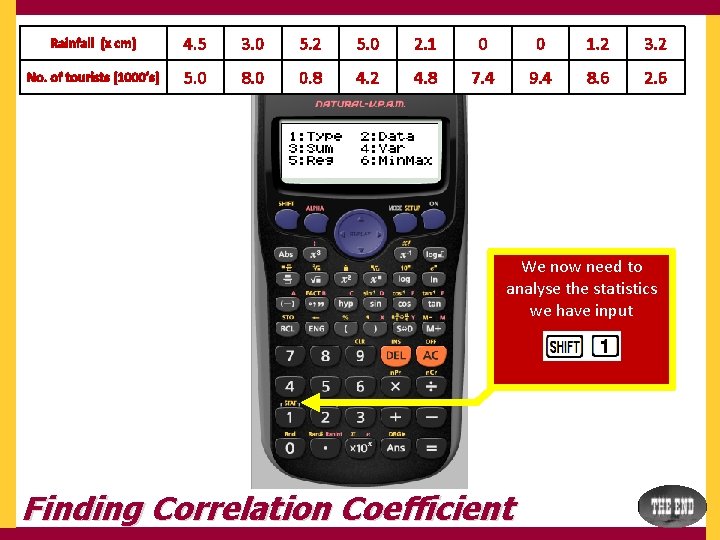
Rainfall (x cm) 4. 5 3. 0 5. 2 5. 0 2. 1 0 0 1. 2 3. 2 No. of tourists (1000’s) 5. 0 8. 0 0. 8 4. 2 4. 8 7. 4 9. 4 8. 6 2. 6 We now need to analyse the statistics we have input Finding Correlation Coefficient
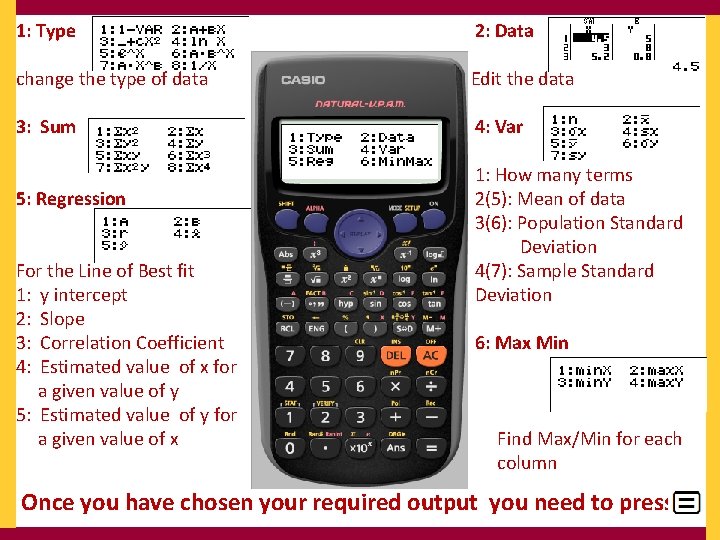
1: Type change the type of data 3: Sum 5: Regression For the Line of Best fit 1: y intercept 2: Slope 3: Correlation Coefficient 4: Estimated value of x for a given value of y 5: Estimated value of y for a given value of x 2: Data Edit the data 4: Var 1: How many terms 2(5): Mean of data 3(6): Population Standard Deviation 4(7): Sample Standard Deviation 6: Max Min Find Max/Min for each column Once you have chosen your required output you need to press
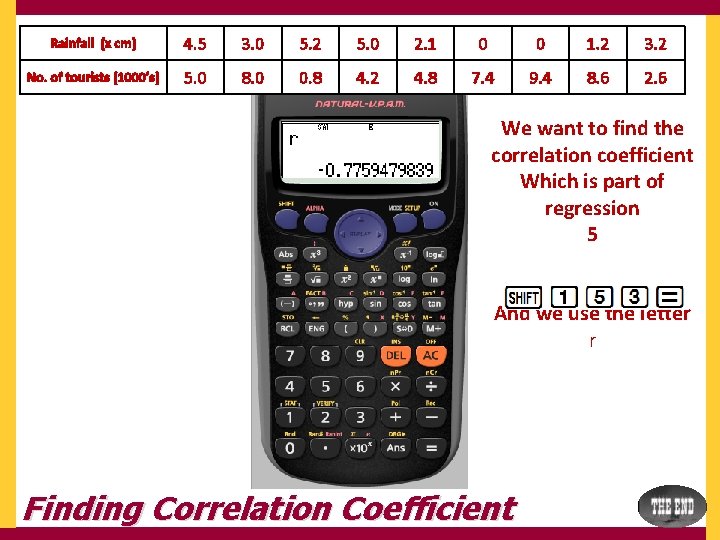
Rainfall (x cm) 4. 5 3. 0 5. 2 5. 0 2. 1 0 0 1. 2 3. 2 No. of tourists (1000’s) 5. 0 8. 0 0. 8 4. 2 4. 8 7. 4 9. 4 8. 6 2. 6 We want to find the correlation coefficient Which is part of regression 5 And we use the letter r Finding Correlation Coefficient
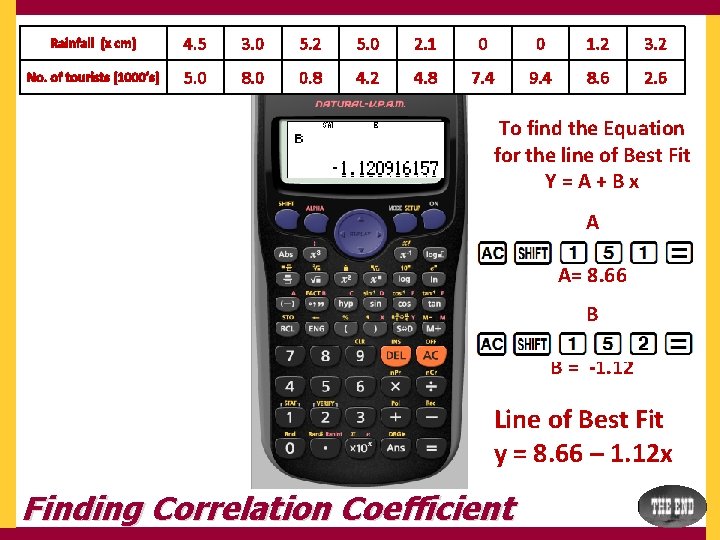
Rainfall (x cm) 4. 5 3. 0 5. 2 5. 0 2. 1 0 0 1. 2 3. 2 No. of tourists (1000’s) 5. 0 8. 0 0. 8 4. 2 4. 8 7. 4 9. 4 8. 6 2. 6 To find the Equation for the line of Best Fit Y=A+Bx A A= 8. 66 B B = -1. 12 Line of Best Fit y = 8. 66 – 1. 12 x Finding Correlation Coefficient
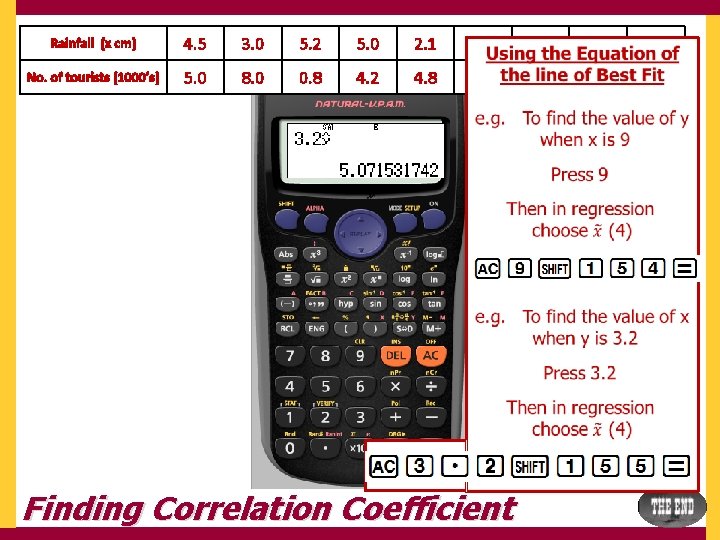
Rainfall (x cm) 4. 5 3. 0 5. 2 5. 0 2. 1 No. of tourists (1000’s) 5. 0 8. 0 0. 8 4. 2 4. 8 0 7. 4 Finding Correlation Coefficient 0 1. 2 3. 2 9. 4 8. 6 2. 6
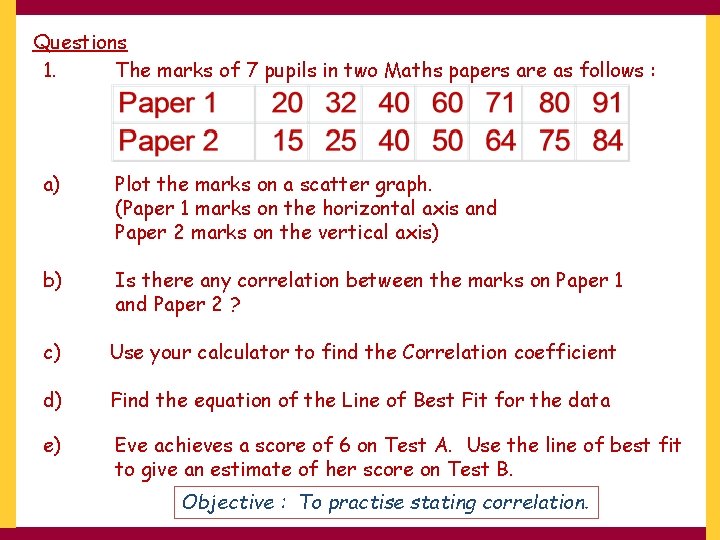
Questions 1. The marks of 7 pupils in two Maths papers are as follows : a) Plot the marks on a scatter graph. (Paper 1 marks on the horizontal axis and Paper 2 marks on the vertical axis) b) Is there any correlation between the marks on Paper 1 and Paper 2 ? c) Use your calculator to find the Correlation coefficient d) Find the equation of the Line of Best Fit for the data e) Eve achieves a score of 6 on Test A. Use the line of best fit to give an estimate of her score on Test B. Objective : To practise stating correlation.
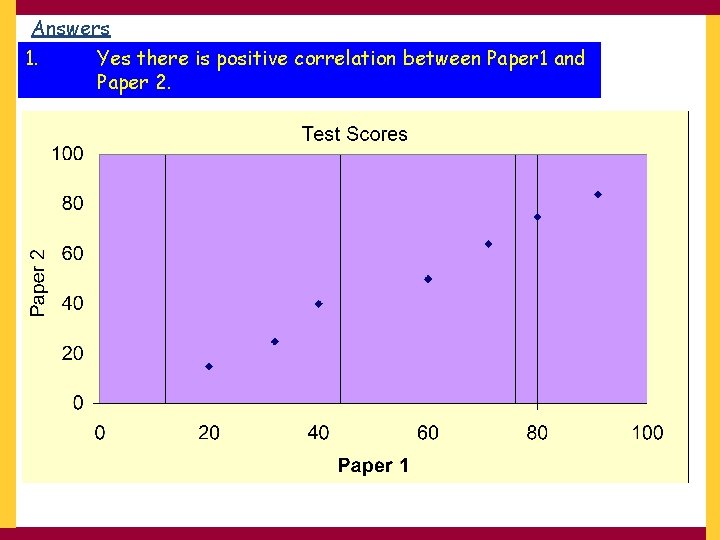
Answers 1. Yes there is positive correlation between Paper 1 and Paper 2.
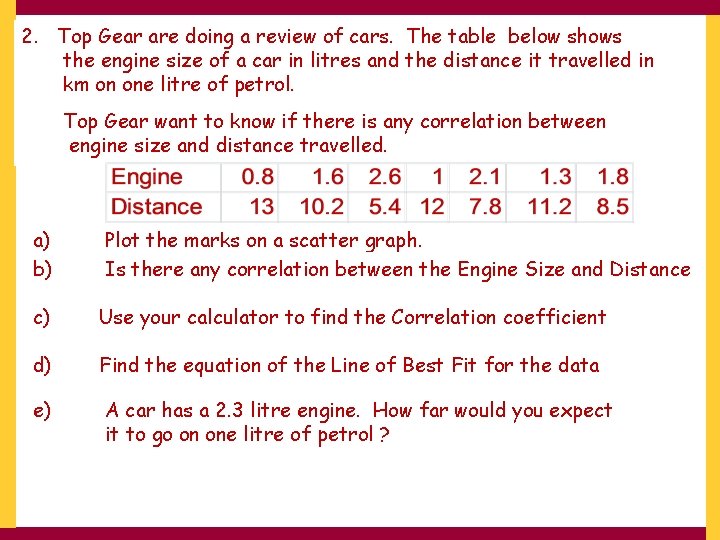
2. Top Gear are doing a review of cars. The table below shows the engine size of a car in litres and the distance it travelled in km on one litre of petrol. Top Gear want to know if there is any correlation between engine size and distance travelled. a) b) Plot the marks on a scatter graph. Is there any correlation between the Engine Size and Distance c) Use your calculator to find the Correlation coefficient d) Find the equation of the Line of Best Fit for the data e) A car has a 2. 3 litre engine. How far would you expect it to go on one litre of petrol ?
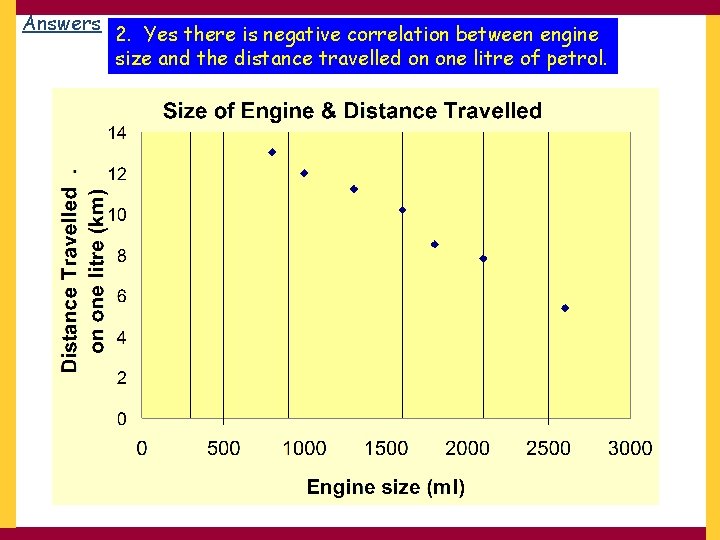
Answers 2. Yes there is negative correlation between engine size and the distance travelled on one litre of petrol.
- Slides: 14