
FINANCIAL STATEMENT AUDIT APPROACH TO FINANCIAL STATEMENTS AUDIT

- Slides: 16
FINANCIAL STATEMENT AUDIT APPROACH TO FINANCIAL STATEMENTS AUDIT CA. SRIPRIYA KUMAR Practical/ Article Training
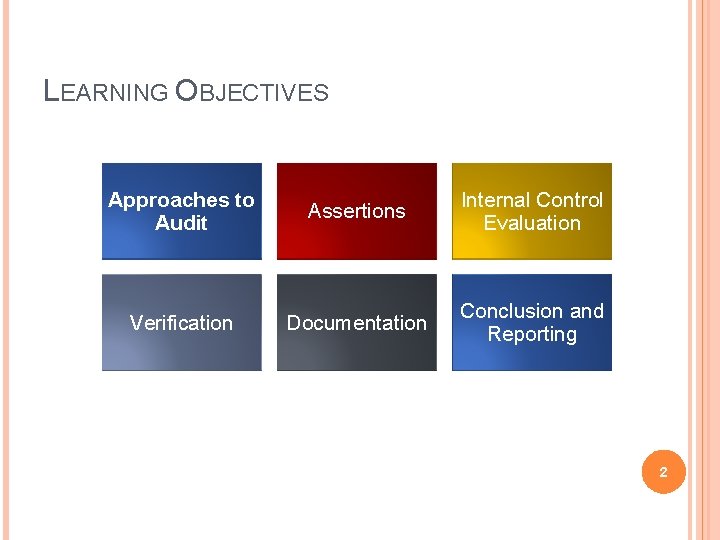
LEARNING OBJECTIVES Approaches to Audit Assertions Internal Control Evaluation Verification Documentation Conclusion and Reporting 2
AUDIT APPROACHES
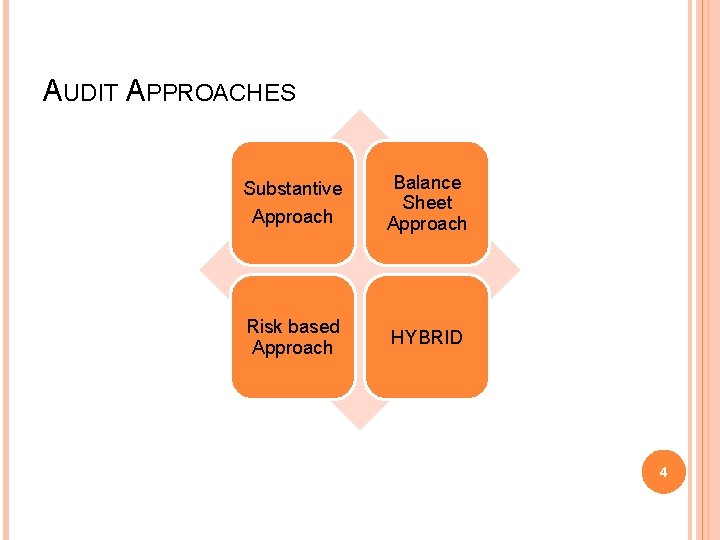
AUDIT APPROACHES Substantive Approach Risk based Approach Balance Sheet Approach HYBRID 4
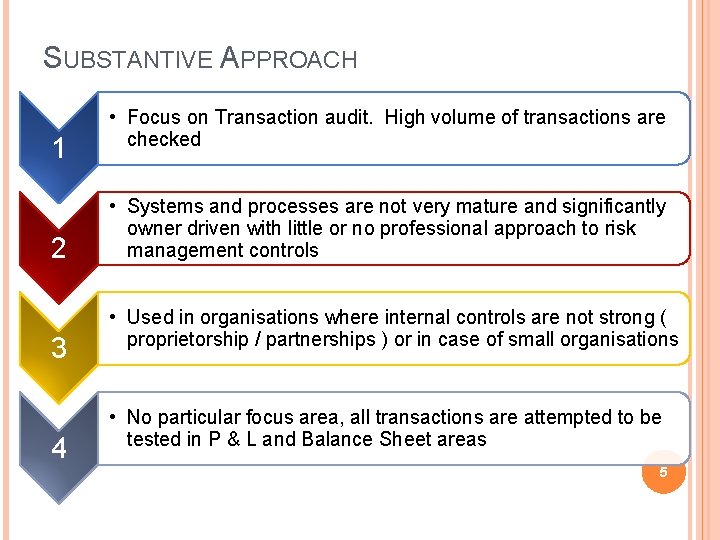
SUBSTANTIVE APPROACH 1 2 3 4 • Focus on Transaction audit. High volume of transactions are checked • Systems and processes are not very mature and significantly owner driven with little or no professional approach to risk management controls • Used in organisations where internal controls are not strong ( proprietorship / partnerships ) or in case of small organisations • No particular focus area, all transactions are attempted to be tested in P & L and Balance Sheet areas 5
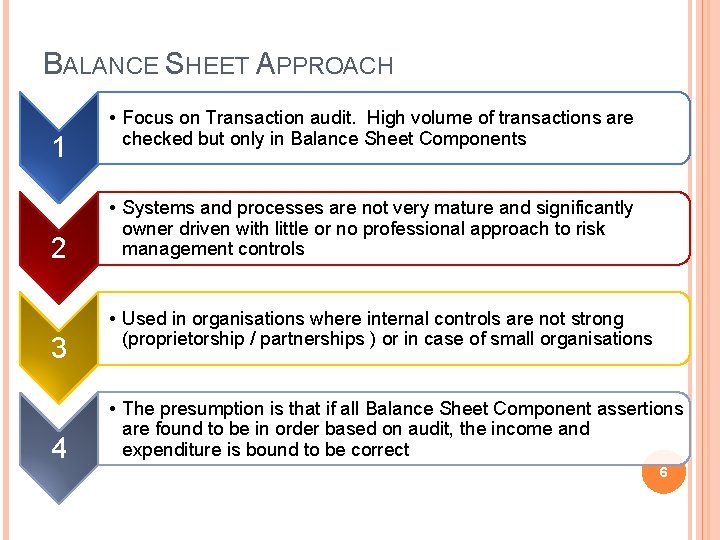
BALANCE SHEET APPROACH 1 2 3 4 • Focus on Transaction audit. High volume of transactions are checked but only in Balance Sheet Components • Systems and processes are not very mature and significantly owner driven with little or no professional approach to risk management controls • Used in organisations where internal controls are not strong (proprietorship / partnerships ) or in case of small organisations • The presumption is that if all Balance Sheet Component assertions are found to be in order based on audit, the income and expenditure is bound to be correct 6
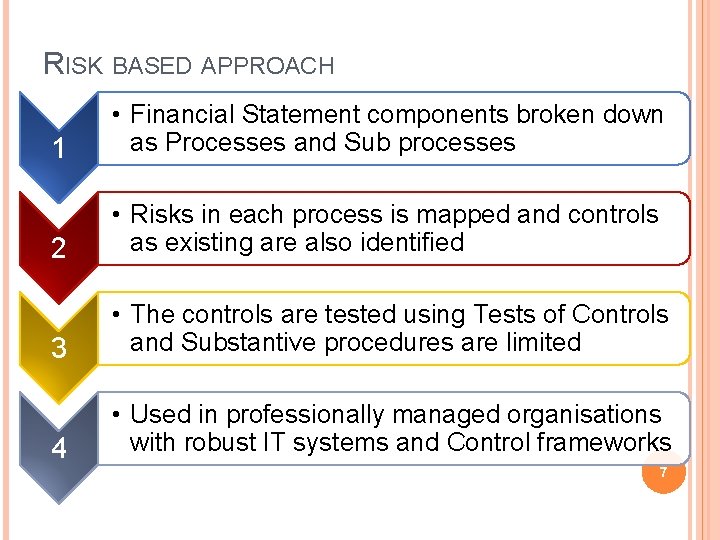
RISK BASED APPROACH 1 • Financial Statement components broken down as Processes and Sub processes 2 • Risks in each process is mapped and controls as existing are also identified 3 • The controls are tested using Tests of Controls and Substantive procedures are limited 4 • Used in professionally managed organisations with robust IT systems and Control frameworks 7
AUDIT PROCESS
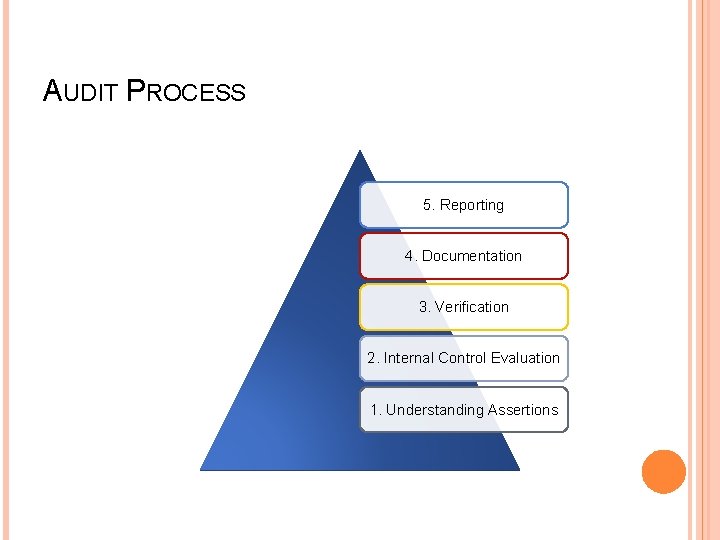
AUDIT PROCESS 5. Reporting 4. Documentation 3. Verification 2. Internal Control Evaluation 1. Understanding Assertions
AUDIT PROCEDURES
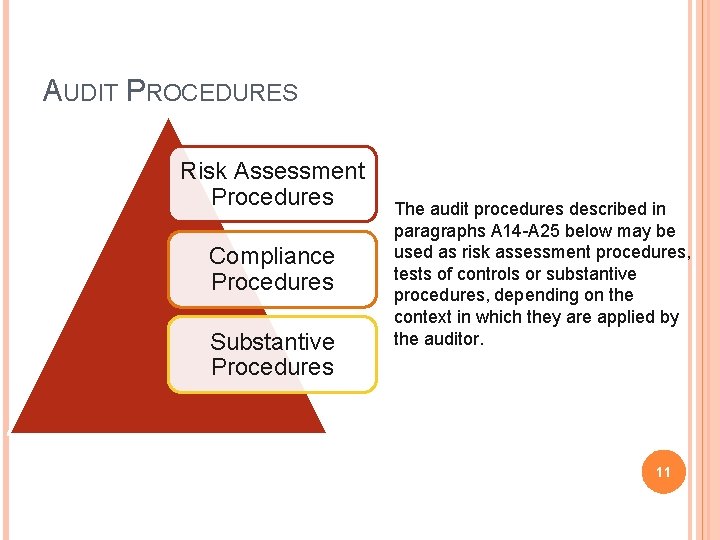
AUDIT PROCEDURES Risk Assessment Procedures Compliance Procedures Substantive Procedures The audit procedures described in paragraphs A 14 -A 25 below may be used as risk assessment procedures, tests of controls or substantive procedures, depending on the context in which they are applied by the auditor. 11
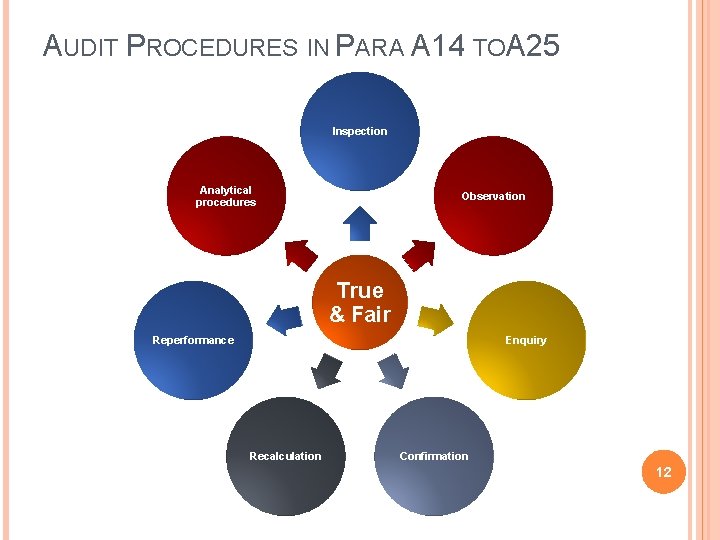
AUDIT PROCEDURES IN PARA A 14 TOA 25 Inspection Analytical procedures Observation True & Fair Reperformance Enquiry Recalculation Confirmation 12
AUDIT EVIDENCE OR DOCUMENTATION
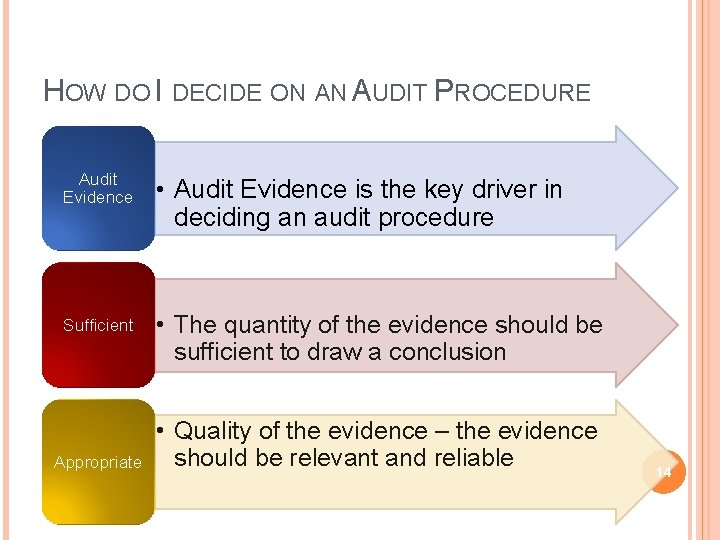
HOW DO I DECIDE ON AN AUDIT PROCEDURE Audit Evidence • Audit Evidence is the key driver in deciding an audit procedure Sufficient • The quantity of the evidence should be sufficient to draw a conclusion Appropriate • Quality of the evidence – the evidence should be relevant and reliable 14
WHAT NEXT? WHAT DO I DO? I understand Audit Risk!
THANK YOU Practical/ Article Training