
FINANCIAL MANAGEMENT Syed Muhammad Majid Shah Lecturer QACC



- Slides: 25
FINANCIAL MANAGEMENT Syed Muhammad Majid Shah – Lecturer QACC
• Financing means the provision of money at the time when it is required • Financial management is: INTRODUCTION • Concerned with the planning & controlling of firm’s financial resources and to find various sources for raising further funds for the firm • The application of the general management principles in the area of financial decision-making • The art of planning; organizing, directing and controlling of the funds and safe disposal of profits • The art and science of managing money
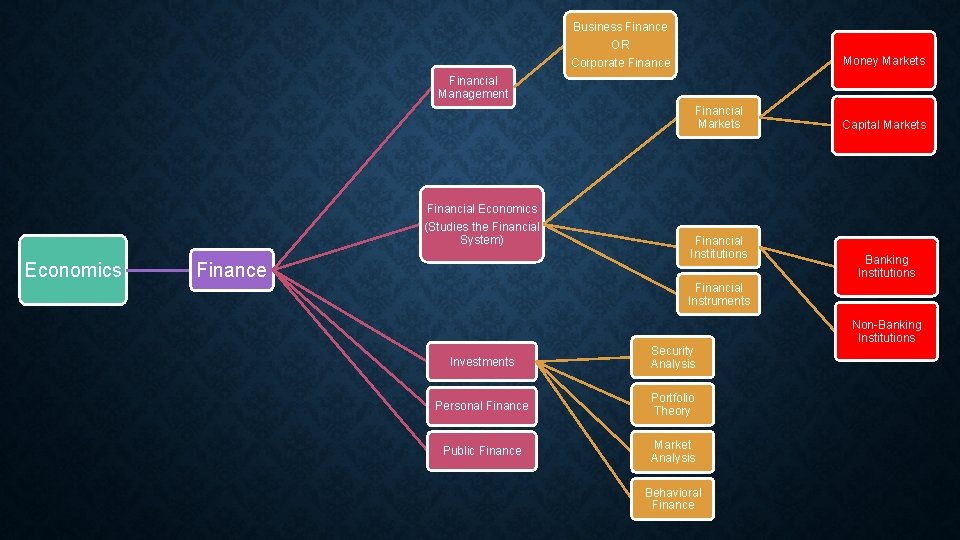
Business Finance OR Corporate Finance Money Markets Financial Management Financial Markets Financial Economics (Studies the Financial System) Economics Finance Financial Institutions Capital Markets Banking Institutions Financial Instruments Investments Security Analysis Personal Finance Portfolio Theory Public Finance Market Analysis Behavioral Finance Non-Banking Institutions
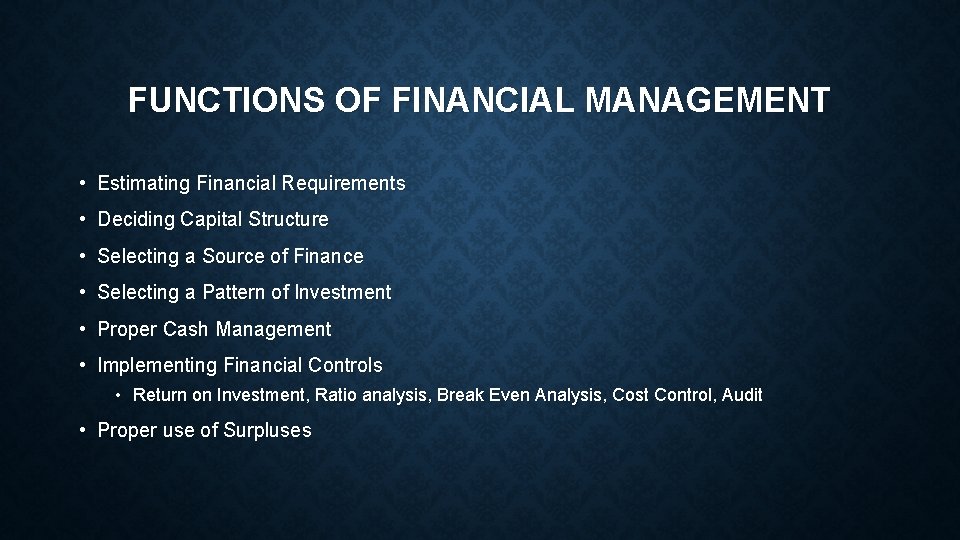
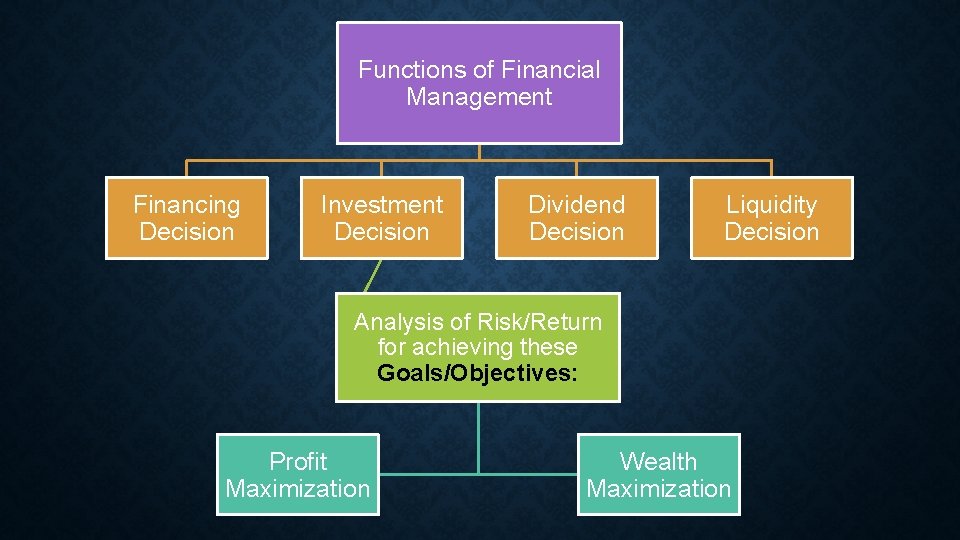
FUNCTIONS OF FINANCIAL MANAGEMENT • Estimating Financial Requirements • Deciding Capital Structure • Selecting a Source of Finance • Selecting a Pattern of Investment • Proper Cash Management • Implementing Financial Controls • Return on Investment, Ratio analysis, Break Even Analysis, Cost Control, Audit • Proper use of Surpluses
Functions of Financial Management Financing Decision Investment Decision Dividend Decision Liquidity Decision Analysis of Risk/Return for achieving these Goals/Objectives: Profit Maximization Wealth Maximization
GOALS/OBJECTIVES OF FINANCIAL MANAGEMENT • The main objective of a business is to maximize the owner’s economic welfare • Financial management of a firm helps maximize economic welfare of is shareholders by providing a framework for selecting a commercial strategy • There are two versions of the main goal of financial management: • Profit maximization • Wealth maximization • The functions of FM are directed toward achieving the above goals
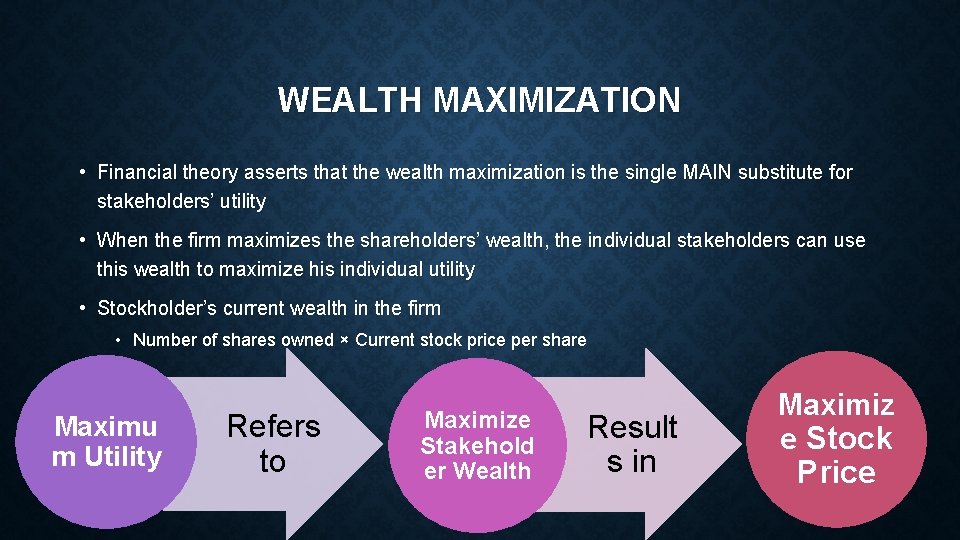
WEALTH MAXIMIZATION • Financial theory asserts that the wealth maximization is the single MAIN substitute for stakeholders’ utility • When the firm maximizes the shareholders’ wealth, the individual stakeholders can use this wealth to maximize his individual utility • Stockholder’s current wealth in the firm • Number of shares owned × Current stock price per share Maximu m Utility Refers to Maximize Stakehold er Wealth Result s in Maximiz e Stock Price
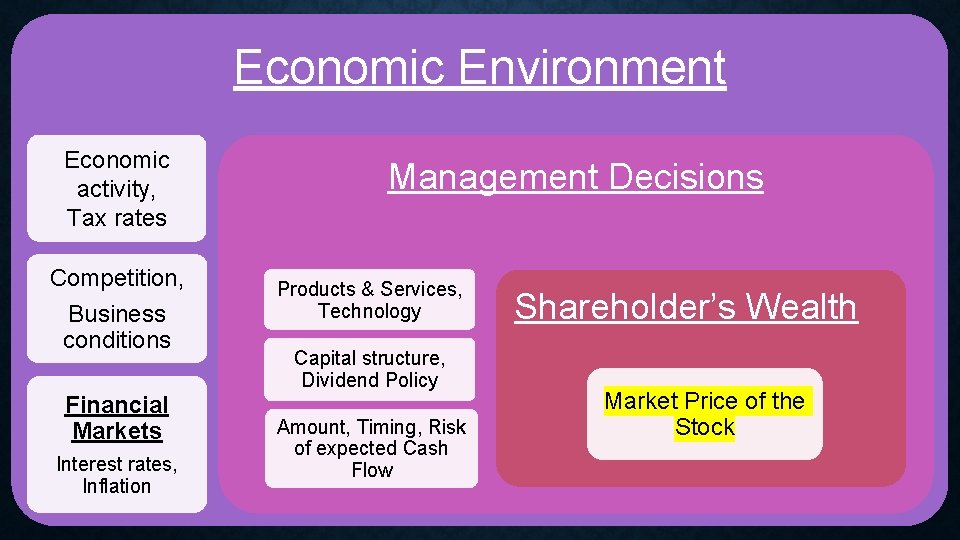
Economic Environment Economic activity, Tax rates Competition, Business conditions Financial Markets Interest rates, Inflation Management Decisions Products & Services, Technology Capital structure, Dividend Policy Amount, Timing, Risk of expected Cash Flow Shareholder’s Wealth Market Price of the Stock
CHIEF FINANCIAL OFFICER • CFOs play an important role in ensuring proper reporting based on substance to the stakeholders of the company. CFO reports to BODs. • Under CFO, normally two senior officers normally operate: Treasurer Controller/Comptroller • Obtaining required finance • Accounting and Auditing • Liaison with term lending and other financial institutions • Management control systems • Managing working capital • Budgeting and performance evaluation • Managing investment in real assets • Maintaining assets intact to ensure higher productivity • Taxation and insurance
FINANCE AND OTHER BUSINESS FUNCTIONS • Finance And Accounting • The purpose of accounting is to report the financial performance of the business for the period under consideration. Financial analysis is carried out on basis of accounting • Accounting is historical in nature, while FM uses this to make future oriented decisions • Finance And Marketing • Channels of distribution, advertisement policy, remunerating the salesmen etc. have financial implications • Marketing cost analysis is a function of finance managers • Credit management and credit terms for increasing sales
FINANCE AND OTHER BUSINESS FUNCTIONS • Finance And Productions (Operations) • Decisions on plant layout, technology selection, productions / operations, process plant size etc. • Capital Budgeting is closely related to productions • Inventory management involves many financial variables • Finance And HR • Attracting and retaining the best man power in the industry cannot be done unless they are paid salary at competitive rates • The better the quality of manpower, the higher the value of the human capital and consequently the higher the productivity of the organization
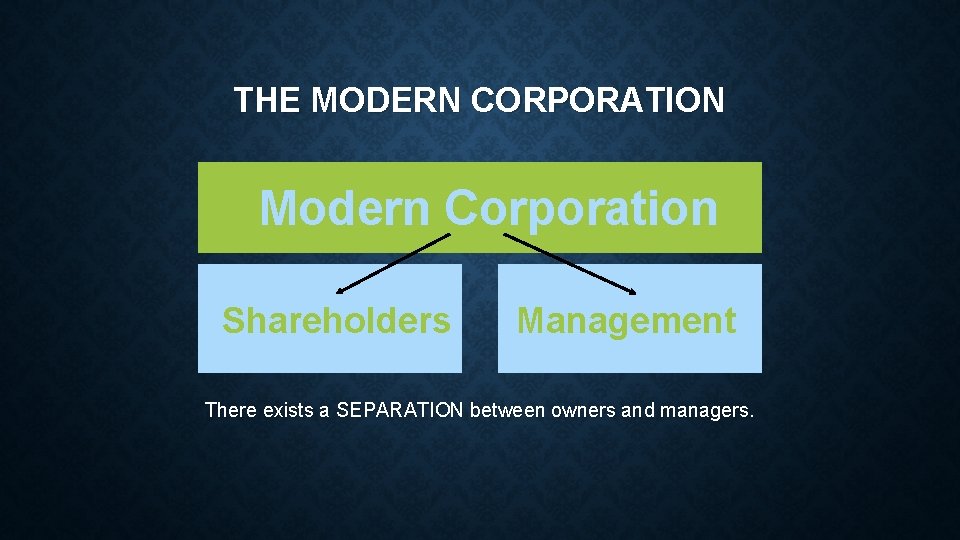
THE MODERN CORPORATION Modern Corporation Shareholders Management There exists a SEPARATION between owners and managers.
ROLE OF MANAGEMENT Management acts as an agent for agent the owners (shareholders) of the firm. • An agent is an individual authorized by another person, called the principal, to act in the latter’s behalf.
AGENCY THEORY • Jensen and Meckling developed a theory of the firm based on agency theory • Agency Theory is a branch of economics relating to the behavior of principals and their agents.
AGENCY THEORY • Principals must provide incentives so that management acts in the principals’ best interests and then monitor results. • Incentives include, stock options, perquisites, and bonuses.
CORPORATE SOCIAL RESPONSIBILITY • Wealth maximization does not prohibit the firm from being socially responsible at the corporate level. • Assume we view the firm as producing both private and social goods. • Then shareholder wealth maximization remains the appropriate goal in governing the firm.
CORPORATE GOVERNANCE • Corporate governance: represents the system by which corporations are managed and controlled. • Includes shareholders, board of directors, and senior management. • Then shareholder wealth maximization remains the appropriate goal in governing the firm.
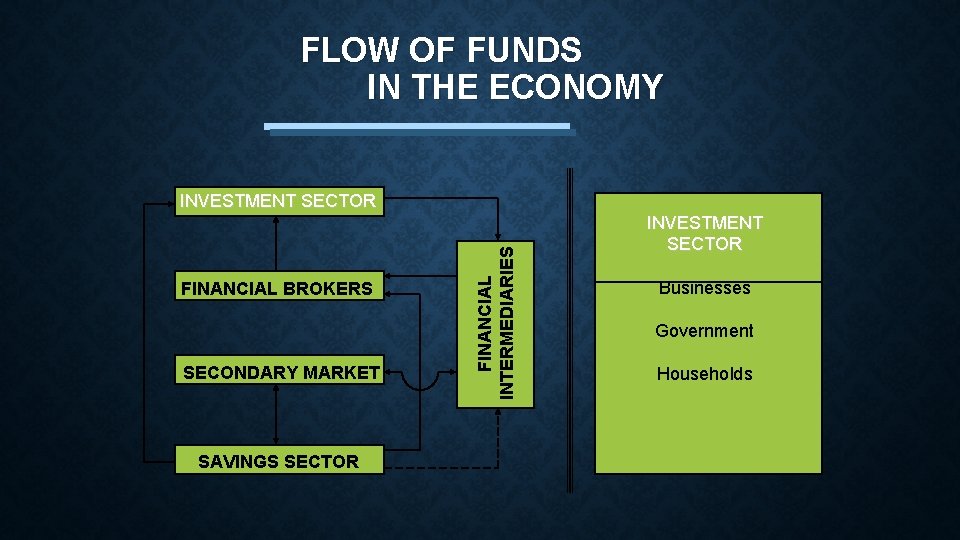
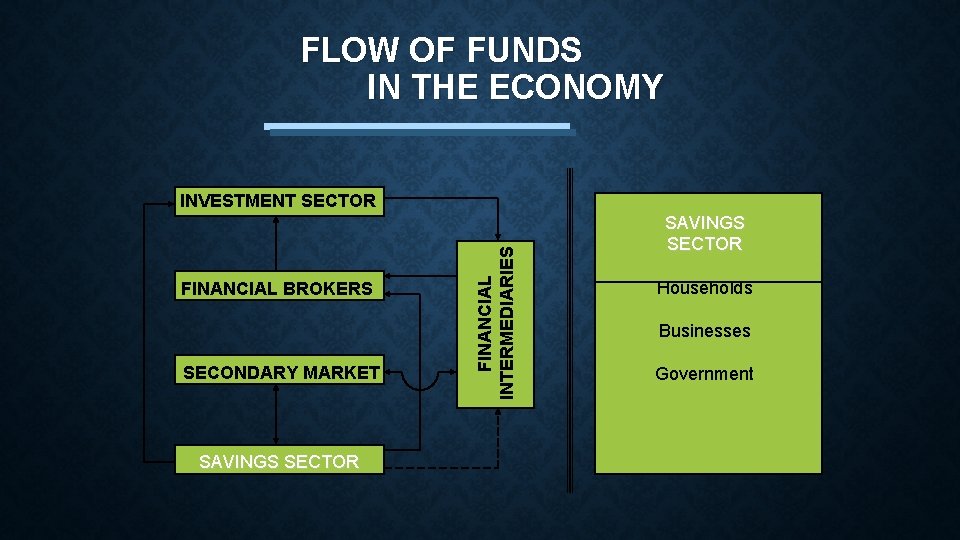
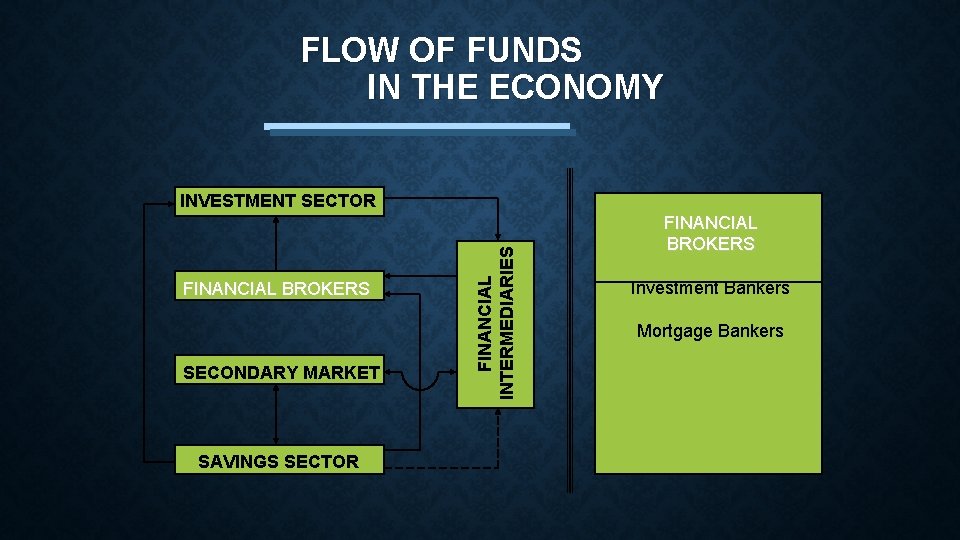
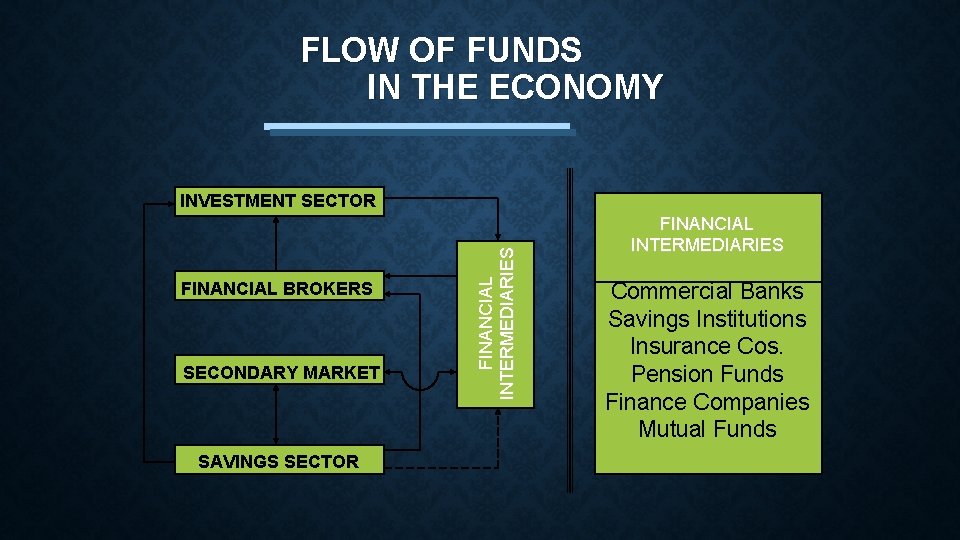
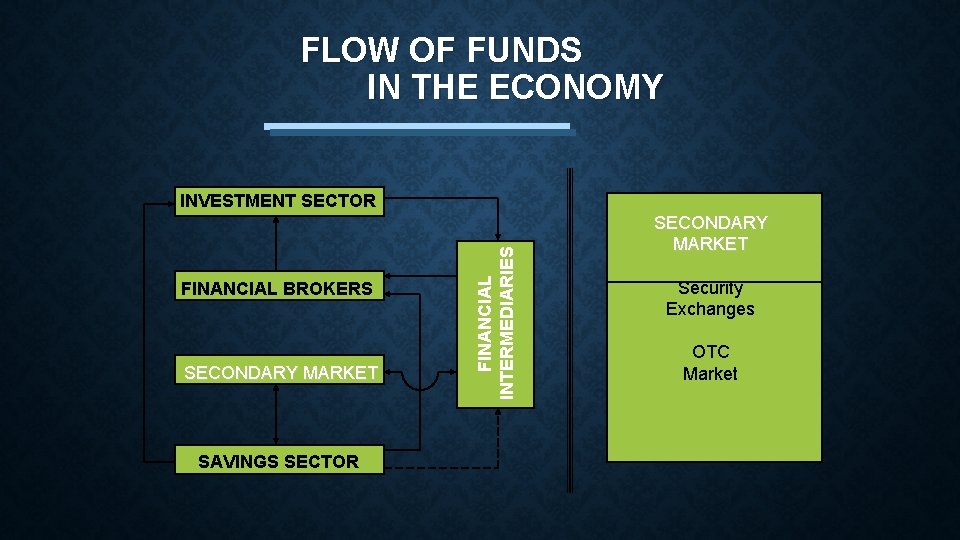
FINANCIAL ENVIRONMENT • Businesses interact continually with the financial markets. • Financial Markets are composed of all institutions and procedures for bringing buyers and sellers of financial instruments together. • The purpose of financial markets is to efficiently allocate savings to ultimate users.
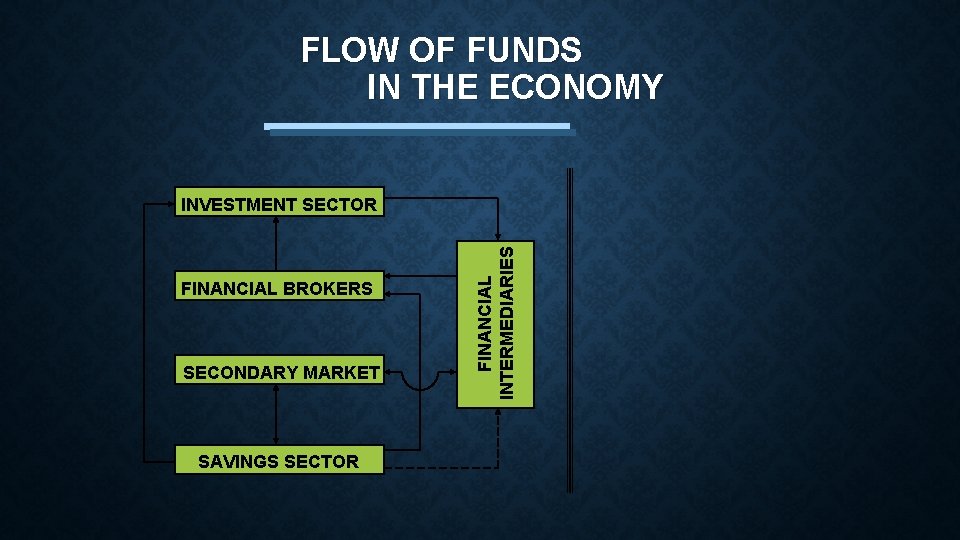
FLOW OF FUNDS IN THE ECONOMY FINANCIAL BROKERS SECONDARY MARKET SAVINGS SECTOR FINANCIAL INTERMEDIARIES INVESTMENT SECTOR
FLOW OF FUNDS IN THE ECONOMY FINANCIAL BROKERS SECONDARY MARKET SAVINGS SECTOR FINANCIAL INTERMEDIARIES INVESTMENT SECTOR Businesses Government Households
FLOW OF FUNDS IN THE ECONOMY FINANCIAL BROKERS SECONDARY MARKET SAVINGS SECTOR FINANCIAL INTERMEDIARIES INVESTMENT SECTOR SAVINGS SECTOR Households Businesses Government
FLOW OF FUNDS IN THE ECONOMY FINANCIAL BROKERS SECONDARY MARKET SAVINGS SECTOR FINANCIAL INTERMEDIARIES INVESTMENT SECTOR FINANCIAL BROKERS Investment Bankers Mortgage Bankers
FLOW OF FUNDS IN THE ECONOMY FINANCIAL BROKERS SECONDARY MARKET SAVINGS SECTOR FINANCIAL INTERMEDIARIES INVESTMENT SECTOR FINANCIAL INTERMEDIARIES Commercial Banks Savings Institutions Insurance Cos. Pension Funds Finance Companies Mutual Funds
FLOW OF FUNDS IN THE ECONOMY FINANCIAL BROKERS SECONDARY MARKET SAVINGS SECTOR FINANCIAL INTERMEDIARIES INVESTMENT SECTOR SECONDARY MARKET Security Exchanges OTC Market
ALLOCATION OF FUNDS u Funds will flow to economic units that are willing to provide the greatest expected return (holding risk constant). • In a rational world, the highest expected returns will be offered only by those economic units with the most promising investment opportunities. • Result: Savings tend to be allocated to the most efficient uses.