
Financial inclusion for women facing IPV What works
- Slides: 50
Financial inclusion for women facing IPV: What works? What doesn’t?
Financial Inclusion and Intimate Partner Violence What does the cross country evidence suggest ? Jeni Klugman Harvard Kennedy School and Georgetown Institute for Women, Peace and Security
Outline • Hypotheses • Existing literature • Updated evidence • Scatter plots • Preliminary regression results • Implications
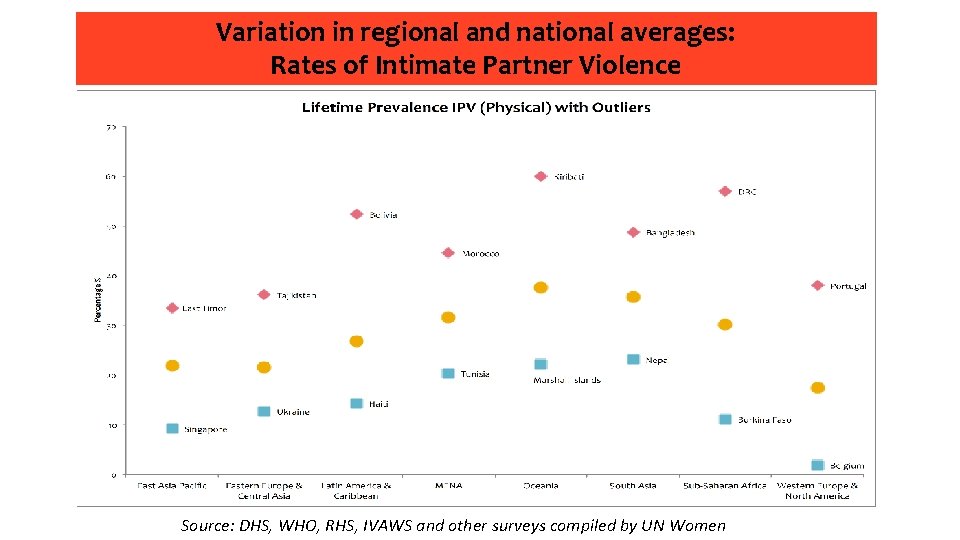
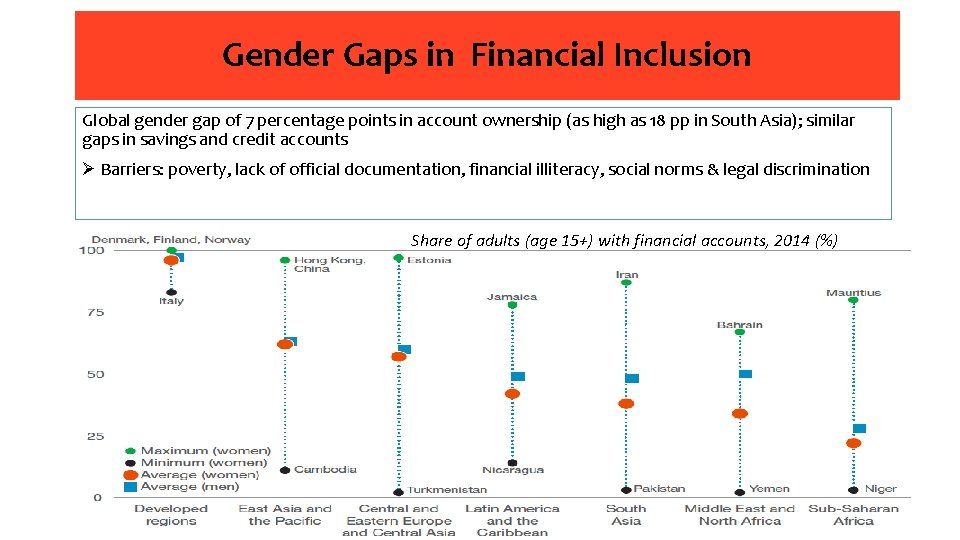
Context • One in three women experience intimate partner violence in their lifetimes – national rates vary enormously. • Estimated 2 billion people are unbanked (World Bank), with major gender gaps in developing countries – average 9 percentage points • Argument that access to finance increases women’s agency, empowering socially, politically and economically
Variation in regional and national averages: Rates of Intimate Partner Violence Source: DHS, WHO, RHS, IVAWS and other surveys compiled by UN Women
Gender Gaps in Financial Inclusion Global gender gap of 7 percentage points in account ownership (as high as 18 pp in South Asia); similar gaps in savings and credit accounts Ø Barriers: poverty, lack of official documentation, financial illiteracy, social norms & legal discrimination Share of adults (age 15+) with financial accounts, 2014 (%)
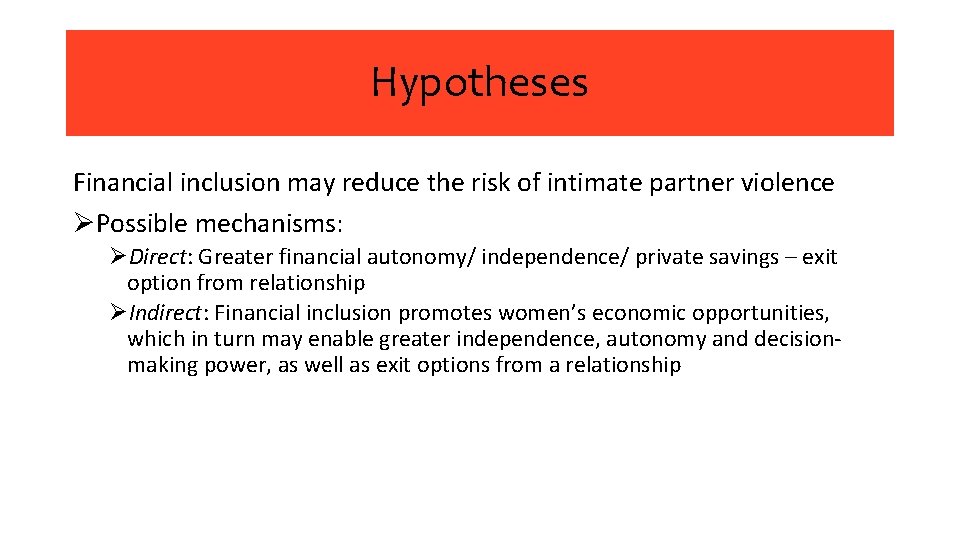
Hypotheses Financial inclusion may reduce the risk of intimate partner violence ØPossible mechanisms: ØDirect: Greater financial autonomy/ independence/ private savings – exit option from relationship ØIndirect: Financial inclusion promotes women’s economic opportunities, which in turn may enable greater independence, autonomy and decisionmaking power, as well as exit options from a relationship
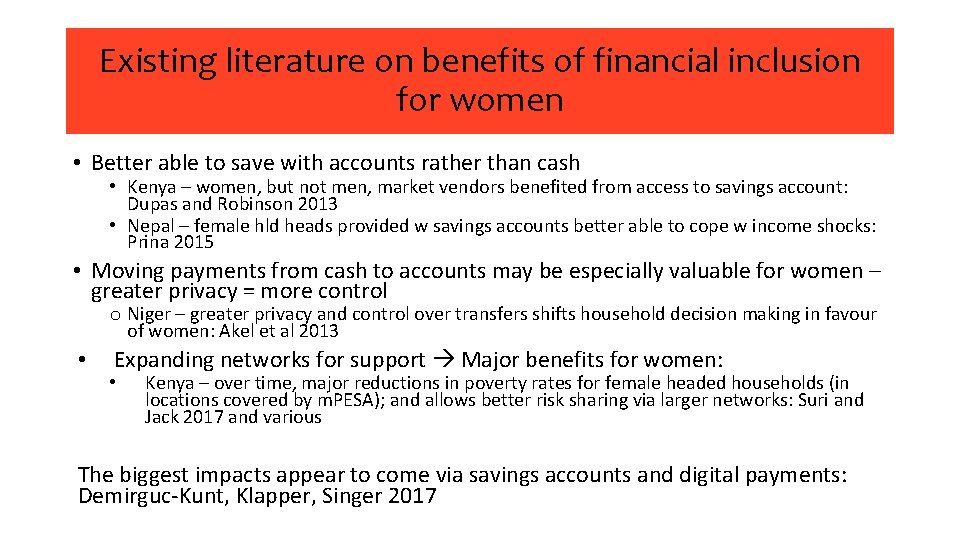
Existing literature on benefits of financial inclusion for women • Better able to save with accounts rather than cash • Kenya – women, but not men, market vendors benefited from access to savings account: Dupas and Robinson 2013 • Nepal – female hld heads provided w savings accounts better able to cope w income shocks: Prina 2015 • Moving payments from cash to accounts may be especially valuable for women – greater privacy = more control o Niger – greater privacy and control over transfers shifts household decision making in favour of women: Akel et al 2013 • Expanding networks for support Major benefits for women: • Kenya – over time, major reductions in poverty rates for female headed households (in locations covered by m. PESA); and allows better risk sharing via larger networks: Suri and Jack 2017 and various The biggest impacts appear to come via savings accounts and digital payments: Demirguc-Kunt, Klapper, Singer 2017
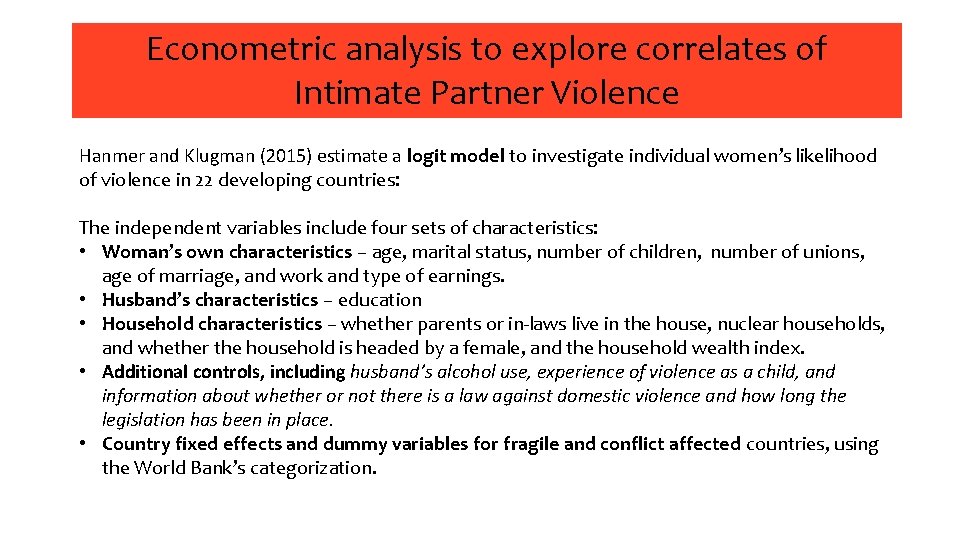
Econometric analysis to explore correlates of Intimate Partner Violence Hanmer and Klugman (2015) estimate a logit model to investigate individual women’s likelihood of violence in 22 developing countries: The independent variables include four sets of characteristics: • Woman’s own characteristics – age, marital status, number of children, number of unions, age of marriage, and work and type of earnings. • Husband’s characteristics – education • Household characteristics – whether parents or in-laws live in the house, nuclear households, and whether the household is headed by a female, and the household wealth index. • Additional controls, including husband’s alcohol use, experience of violence as a child, and information about whether or not there is a law against domestic violence and how long the legislation has been in place. • Country fixed effects and dummy variables for fragile and conflict affected countries, using the World Bank’s categorization.
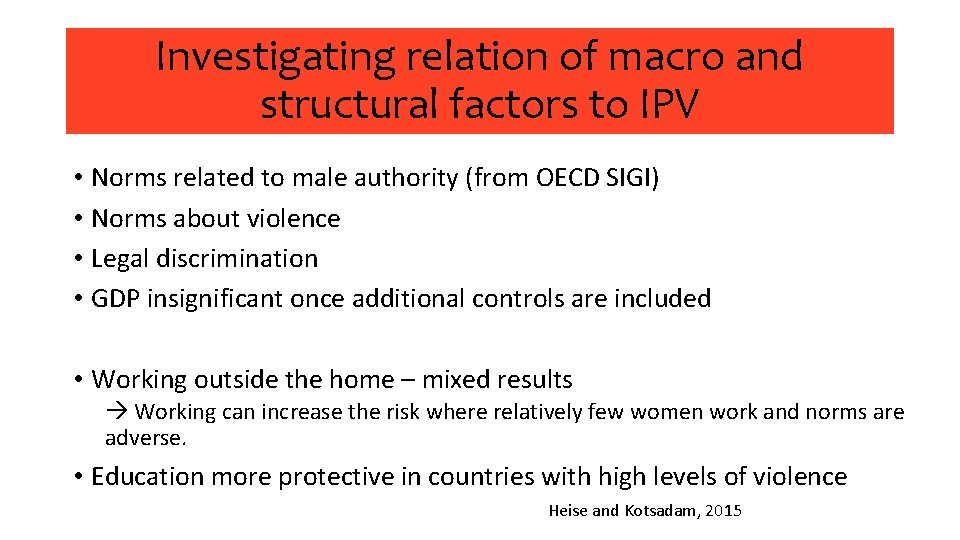
Investigating relation of macro and structural factors to IPV • Norms related to male authority (from OECD SIGI) • Norms about violence • Legal discrimination • GDP insignificant once additional controls are included • Working outside the home – mixed results Working can increase the risk where relatively few women work and norms are adverse. • Education more protective in countries with high levels of violence Heise and Kotsadam, 2015
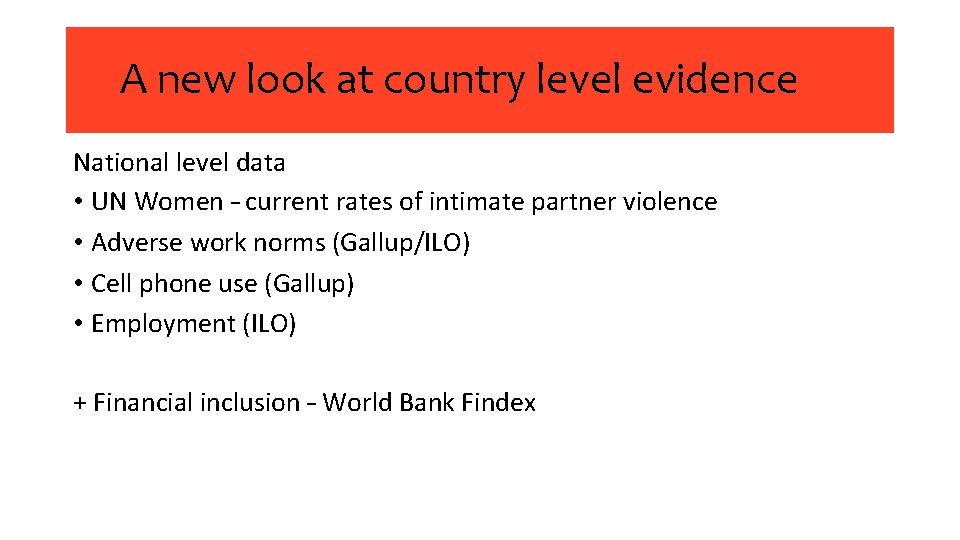
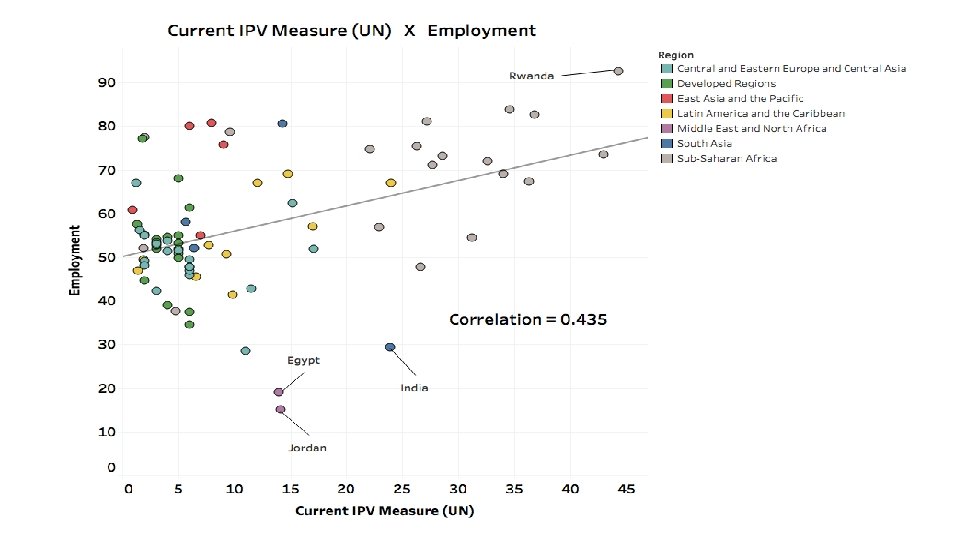
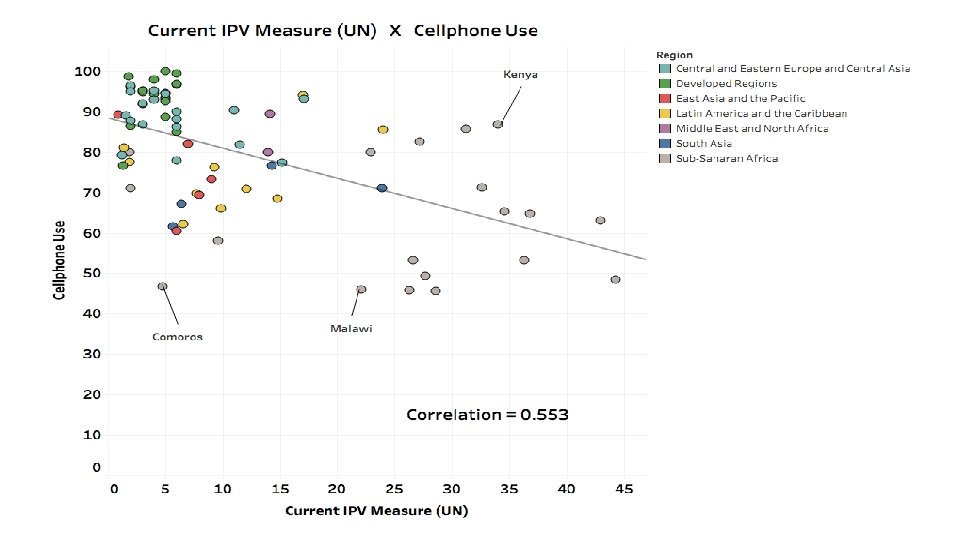
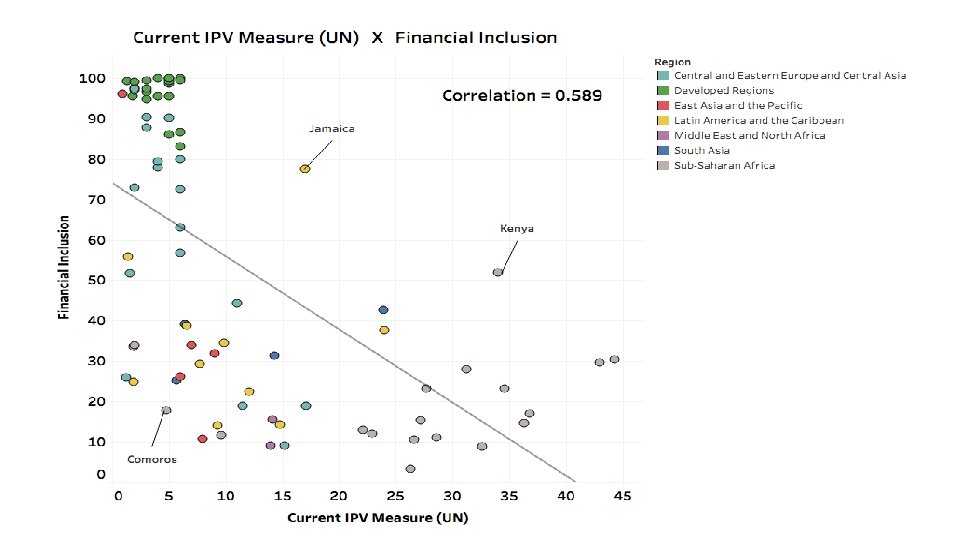
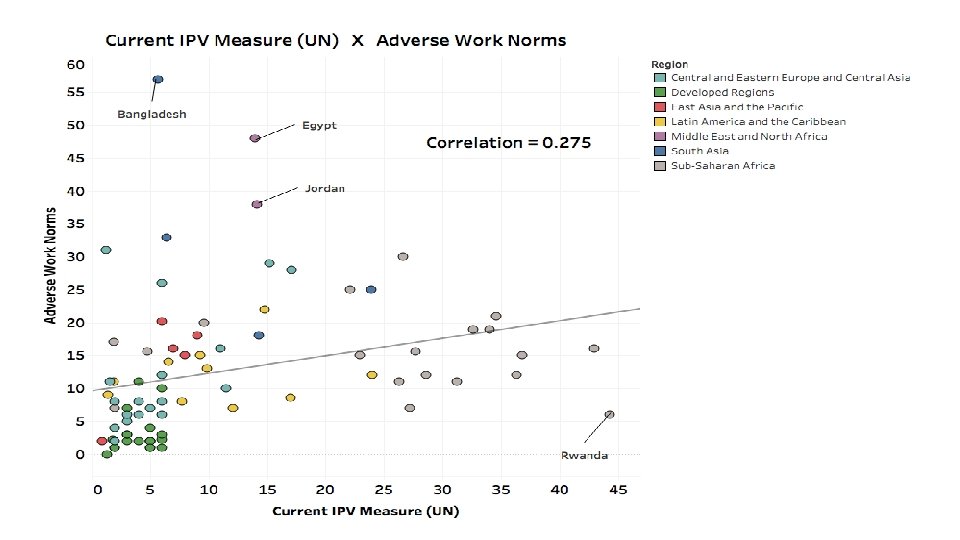
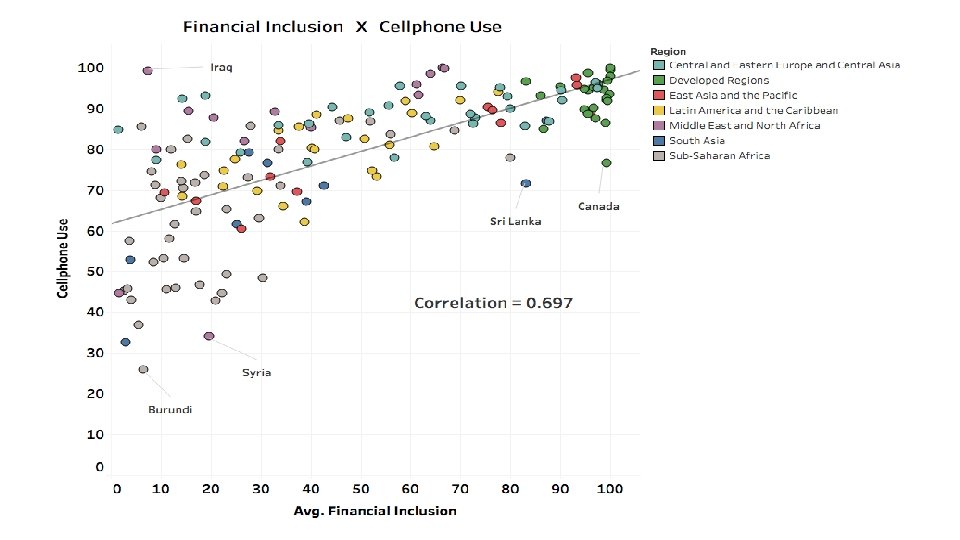
A new look at country level evidence National level data • UN Women – current rates of intimate partner violence • Adverse work norms (Gallup/ILO) • Cell phone use (Gallup) • Employment (ILO) + Financial inclusion – World Bank Findex
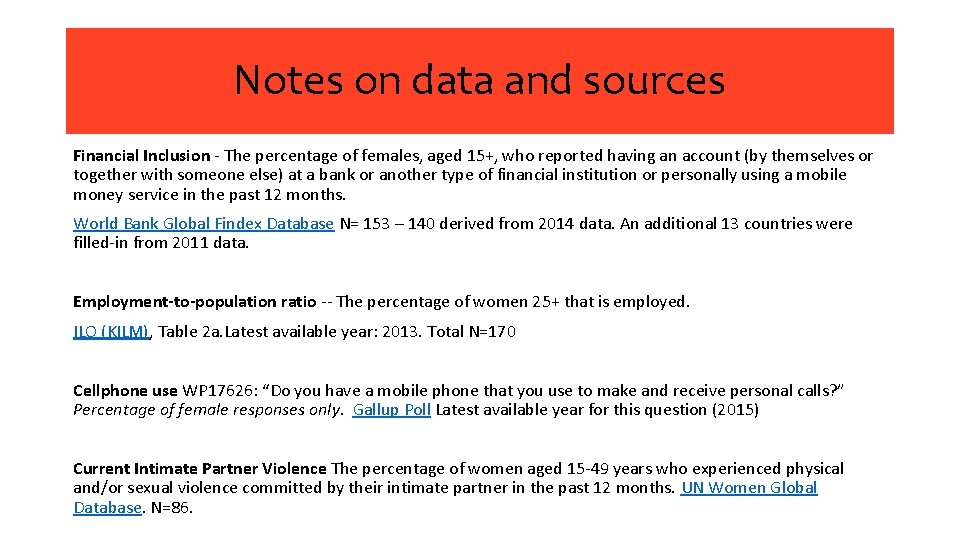
Notes on data and sources Financial Inclusion - The percentage of females, aged 15+, who reported having an account (by themselves or together with someone else) at a bank or another type of financial institution or personally using a mobile money service in the past 12 months. World Bank Global Findex Database N= 153 – 140 derived from 2014 data. An additional 13 countries were filled-in from 2011 data. Employment-to-population ratio -- The percentage of women 25+ that is employed. ILO (KILM), Table 2 a. Latest available year: 2013. Total N=170 Cellphone use WP 17626: “Do you have a mobile phone that you use to make and receive personal calls? ” Percentage of female responses only. Gallup Poll Latest available year for this question (2015) Current Intimate Partner Violence The percentage of women aged 15 -49 years who experienced physical and/or sexual violence committed by their intimate partner in the past 12 months. UN Women Global Database. N=86.
Scatterplots • Map current rates of IPV against • • Women’s employment Cellphone use Adverse work norms Financial inclusion Note: plots show levels of female access, not gender gaps
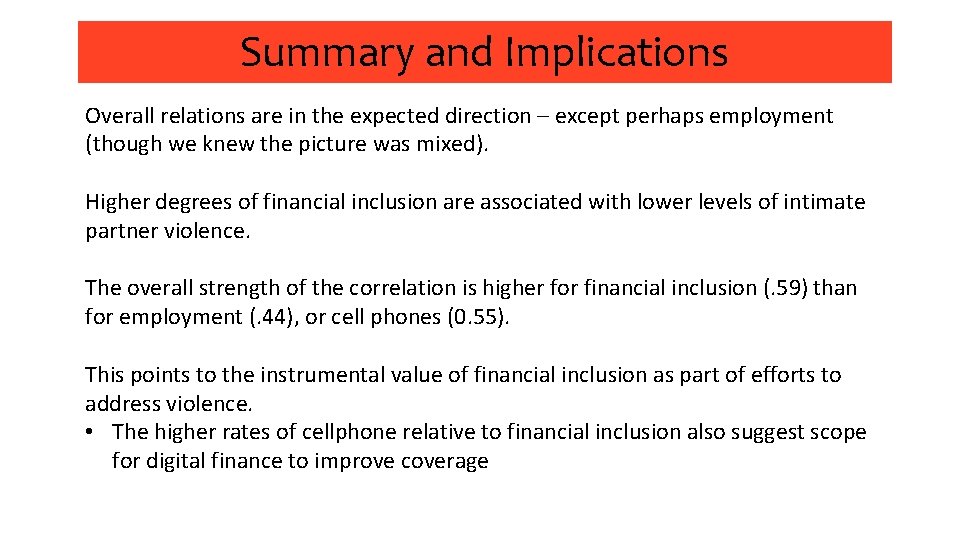
Summary and Implications Overall relations are in the expected direction – except perhaps employment (though we knew the picture was mixed). Higher degrees of financial inclusion are associated with lower levels of intimate partner violence. The overall strength of the correlation is higher for financial inclusion (. 59) than for employment (. 44), or cell phones (0. 55). This points to the instrumental value of financial inclusion as part of efforts to address violence. • The higher rates of cellphone relative to financial inclusion also suggest scope for digital finance to improve coverage
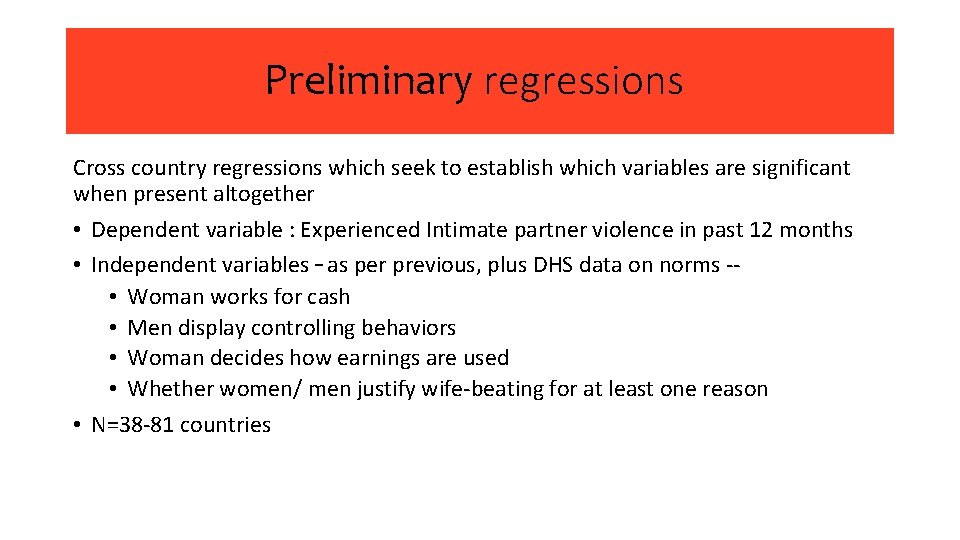
Preliminary regressions Cross country regressions which seek to establish which variables are significant when present altogether • Dependent variable : Experienced Intimate partner violence in past 12 months • Independent variables – as per previous, plus DHS data on norms -- • Woman works for cash • Men display controlling behaviors • Woman decides how earnings are used • Whether women/ men justify wife-beating for at least one reason • N=38 -81 countries
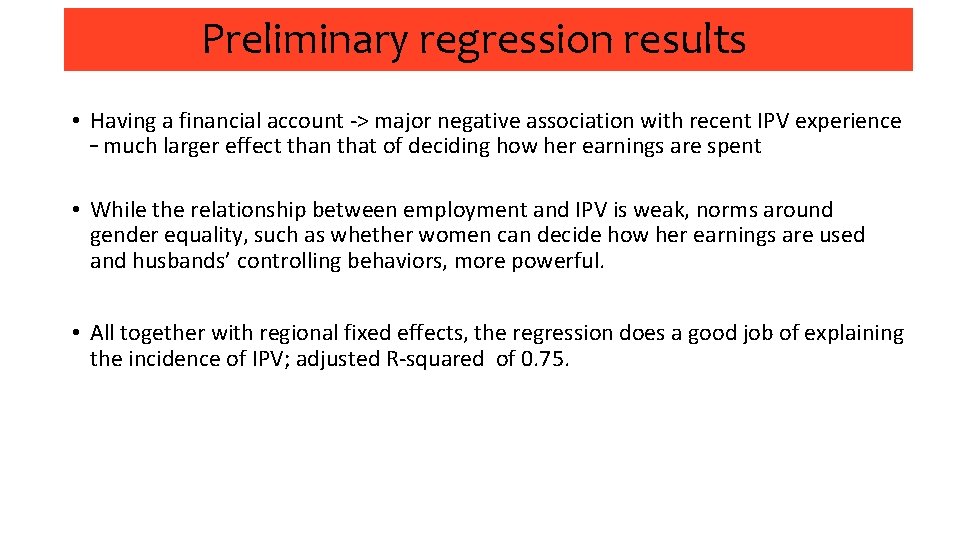
Preliminary regression results • Having a financial account -> major negative association with recent IPV experience – much larger effect than that of deciding how her earnings are spent • While the relationship between employment and IPV is weak, norms around gender equality, such as whether women can decide how her earnings are used and husbands’ controlling behaviors, more powerful. • All together with regional fixed effects, the regression does a good job of explaining the incidence of IPV; adjusted R-squared of 0. 75.
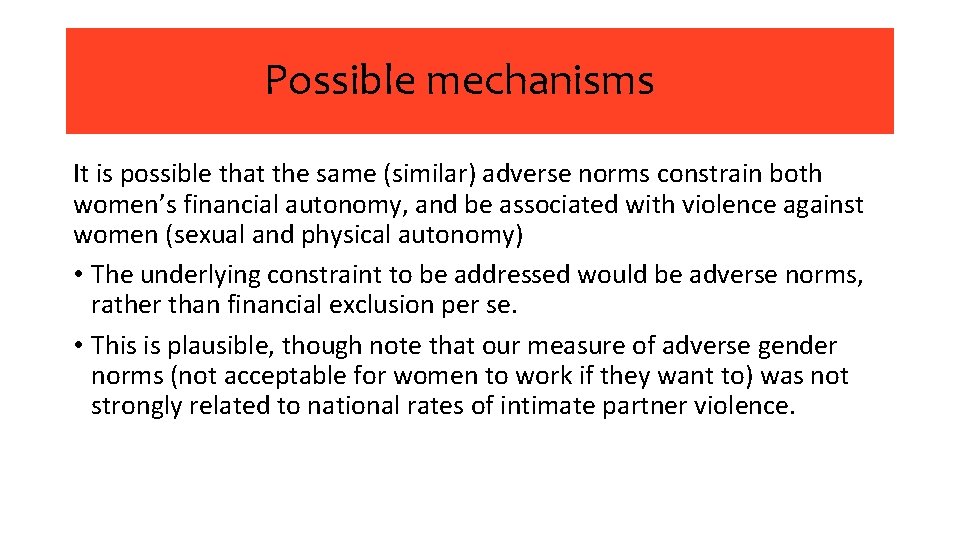
Possible mechanisms It is possible that the same (similar) adverse norms constrain both women’s financial autonomy, and be associated with violence against women (sexual and physical autonomy) • The underlying constraint to be addressed would be adverse norms, rather than financial exclusion per se. • This is plausible, though note that our measure of adverse gender norms (not acceptable for women to work if they want to) was not strongly related to national rates of intimate partner violence.
Financial inclusion for women facing IPV: What works? What doesn’t? Findings from a Longitudinal Study of Women in Rural Maharashtra Anita Raj, Ph. D Professor of Medicine and Global Public Health Director of the Center on Gender Equity and Health (GEH) University of California, San Diego
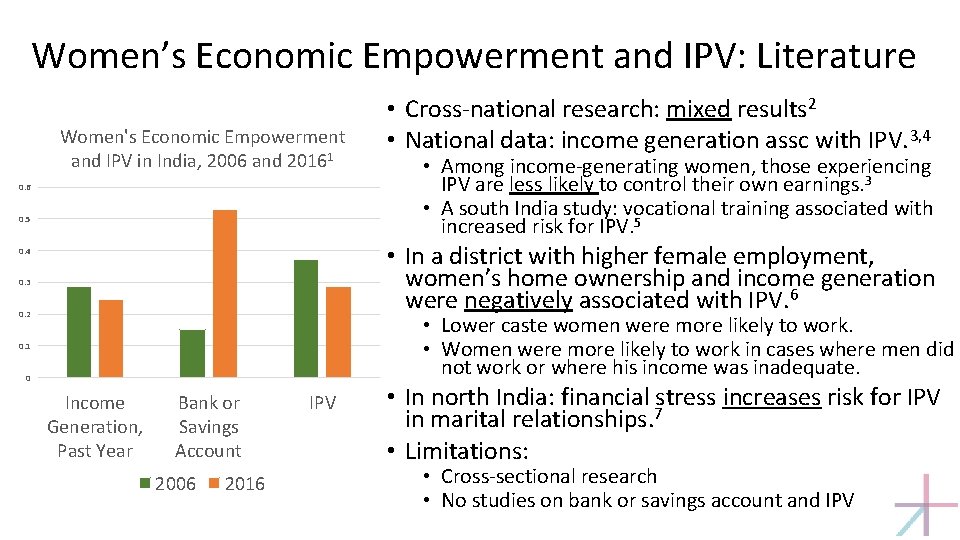
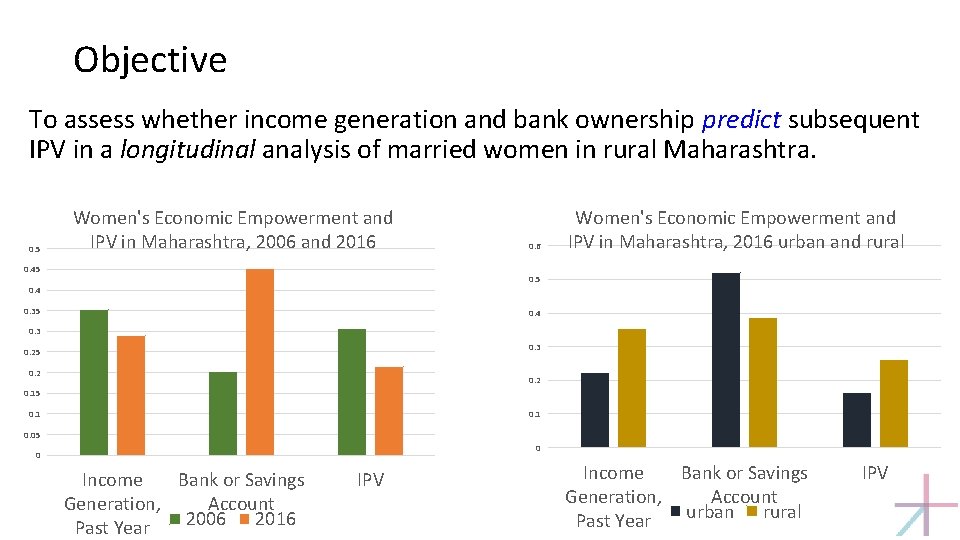
Women’s Economic Empowerment and IPV: Literature Women's Economic Empowerment and IPV in India, 2006 and 20161 0. 6 0. 5 • Cross-national research: mixed results 2 • National data: income generation assc with IPV. 3, 4 • Among income-generating women, those experiencing IPV are less likely to control their own earnings. 3 • A south India study: vocational training associated with increased risk for IPV. 5 • In a district with higher female employment, women’s home ownership and income generation were negatively associated with IPV. 6 0. 4 0. 3 0. 2 • Lower caste women were more likely to work. • Women were more likely to work in cases where men did not work or where his income was inadequate. 0. 1 0 Income Generation, Past Year Bank or Savings Account 2006 2016 IPV • In north India: financial stress increases risk for IPV in marital relationships. 7 • Limitations: • Cross-sectional research • No studies on bank or savings account and IPV
Objective To assess whether income generation and bank ownership predict subsequent IPV in a longitudinal analysis of married women in rural Maharashtra. 0. 5 Women's Economic Empowerment and IPV in Maharashtra, 2006 and 2016 0. 45 0. 6 Women's Economic Empowerment and IPV in Maharashtra, 2016 urban and rural 0. 5 0. 4 0. 3 0. 25 0. 2 0. 15 0. 1 0. 05 0 0 Income Bank or Savings Generation, Account 2006 2016 Past Year IPV Income Bank or Savings Generation, Account urban rural Past Year IPV
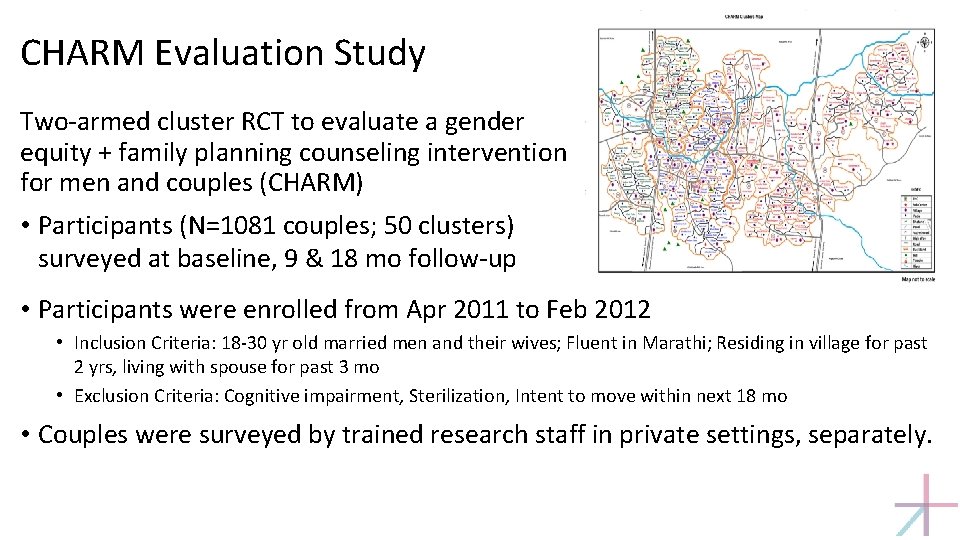
CHARM Evaluation Study Two-armed cluster RCT to evaluate a gender equity + family planning counseling intervention for men and couples (CHARM) • Participants (N=1081 couples; 50 clusters) surveyed at baseline, 9 & 18 mo follow-up • Participants were enrolled from Apr 2011 to Feb 2012 • Inclusion Criteria: 18 -30 yr old married men and their wives; Fluent in Marathi; Residing in village for past 2 yrs, living with spouse for past 3 mo • Exclusion Criteria: Cognitive impairment, Sterilization, Intent to move within next 18 mo • Couples were surveyed by trained research staff in private settings, separately.
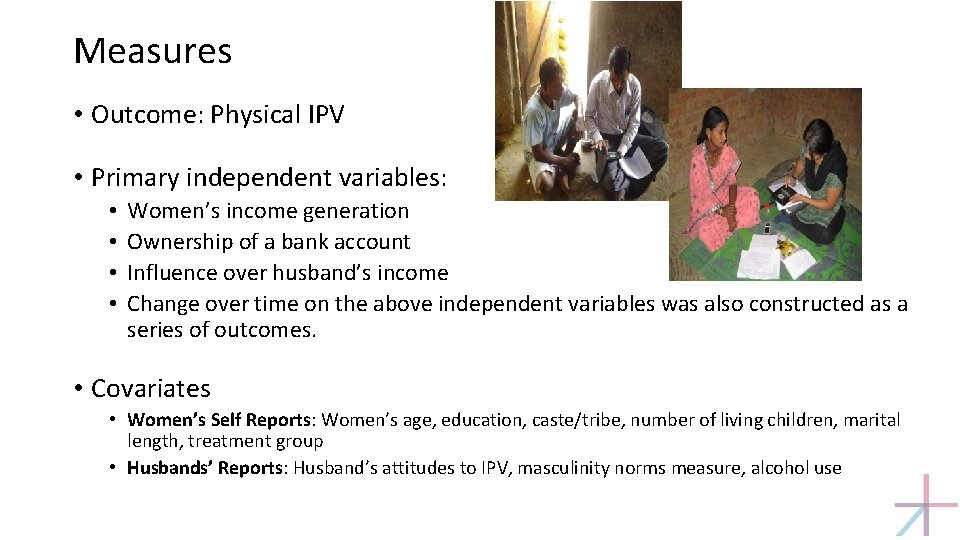
Measures • Outcome: Physical IPV • Primary independent variables: • • Women’s income generation Ownership of a bank account Influence over husband’s income Change over time on the above independent variables was also constructed as a series of outcomes. • Covariates • Women’s Self Reports: Women’s age, education, caste/tribe, number of living children, marital length, treatment group • Husbands’ Reports: Husband’s attitudes to IPV, masculinity norms measure, alcohol use
Data Analyses • Cross-sectional analyses were conducted at each time point to assess association between each independent variable and the outcome. • Longitudinal multivariate logistic regression models: whether change in economic empowerment was associated with later wave IPV. We ran two sets of models: • Model 1: T 1 to T 3 change variables to predict IPV at T 3, controlling for T 1 covariates and T 1 IPV. • Model 2: used a stacked dataset: T 1 to T 2 economic empowerment change measures to predict T 3 IPV and T 2 to T 3 economic empowerment measures to predict T 3 IPV. Each set of models controlled for T 1 IPV and T 1 covariates and time-level fixed effects • Repeating Models 1 and 2 including men’s reports of attitudes toward IPV, masculinity norms, and past 30 day alcohol use as covariates. • A large change in the beta coefficient or p value for observed associations in the original models 1&2 would provide clues for mediation.
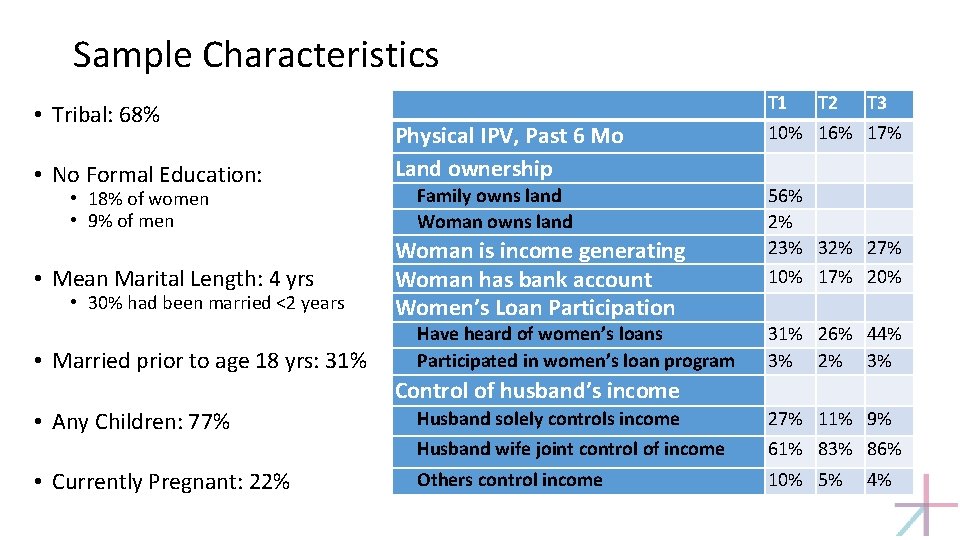
Sample Characteristics • Tribal: 68% • No Formal Education: • 18% of women • 9% of men • Mean Marital Length: 4 yrs • 30% had been married <2 years • Married prior to age 18 yrs: 31% • Any Children: 77% • Currently Pregnant: 22% Physical IPV, Past 6 Mo Land ownership T 1 T 2 T 3 10% 16% 17% Control of husband’s income 56% 2% 23% 10% 31% 3% Husband solely controls income 27% 11% 9% Husband wife joint control of income 61% 83% 86% Others control income 10% 5% Family owns land Woman is income generating Woman has bank account Women’s Loan Participation Have heard of women’s loans Participated in women’s loan program 32% 17% 26% 2% 27% 20% 44% 3% 4%
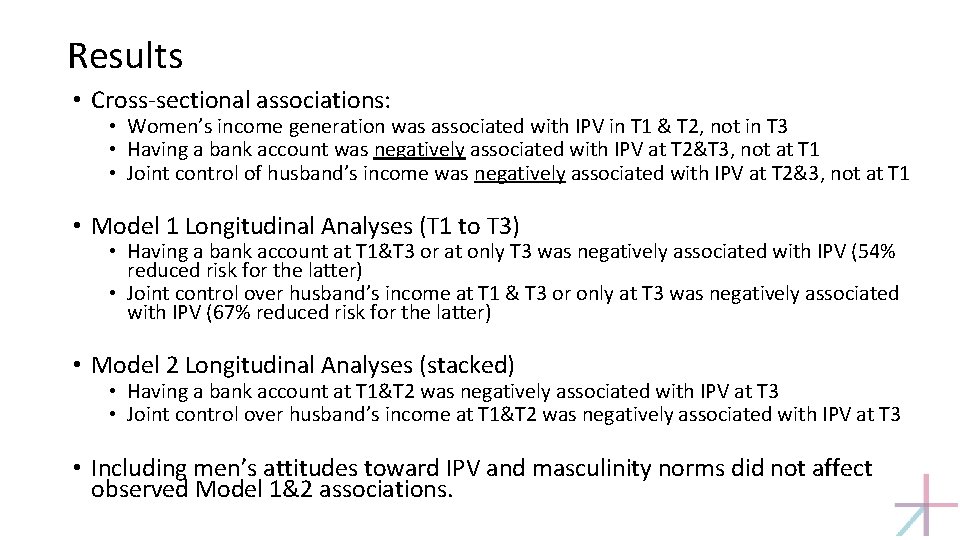
Results • Cross-sectional associations: • Women’s income generation was associated with IPV in T 1 & T 2, not in T 3 • Having a bank account was negatively associated with IPV at T 2&T 3, not at T 1 • Joint control of husband’s income was negatively associated with IPV at T 2&3, not at T 1 • Model 1 Longitudinal Analyses (T 1 to T 3) • Having a bank account at T 1&T 3 or at only T 3 was negatively associated with IPV (54% reduced risk for the latter) • Joint control over husband’s income at T 1 & T 3 or only at T 3 was negatively associated with IPV (67% reduced risk for the latter) • Model 2 Longitudinal Analyses (stacked) • Having a bank account at T 1&T 2 was negatively associated with IPV at T 3 • Joint control over husband’s income at T 1&T 2 was negatively associated with IPV at T 3 • Including men’s attitudes toward IPV and masculinity norms did not affect observed Model 1&2 associations.
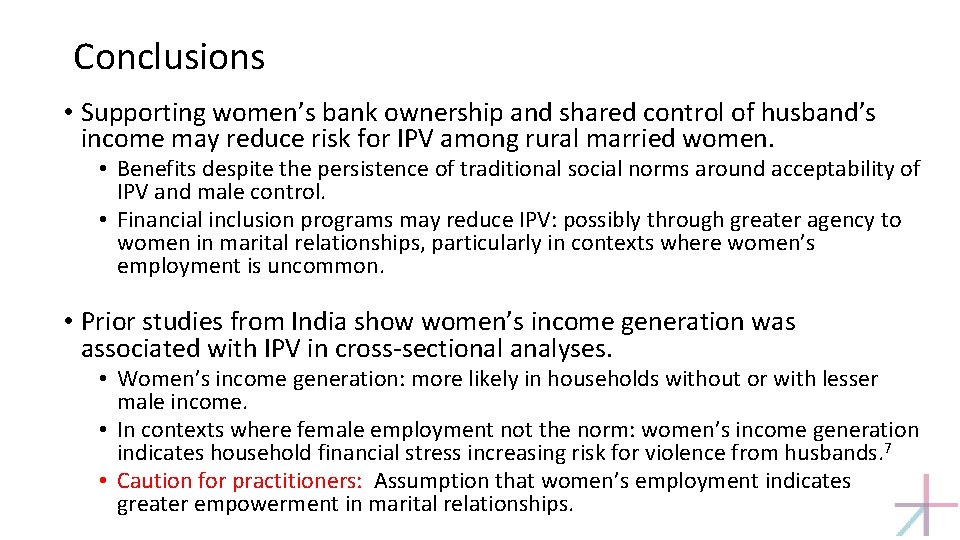
Conclusions • Supporting women’s bank ownership and shared control of husband’s income may reduce risk for IPV among rural married women. • Benefits despite the persistence of traditional social norms around acceptability of IPV and male control. • Financial inclusion programs may reduce IPV: possibly through greater agency to women in marital relationships, particularly in contexts where women’s employment is uncommon. • Prior studies from India show women’s income generation was associated with IPV in cross-sectional analyses. • Women’s income generation: more likely in households without or with lesser male income. • In contexts where female employment not the norm: women’s income generation indicates household financial stress increasing risk for violence from husbands. 7 • Caution for practitioners: Assumption that women’s employment indicates greater empowerment in marital relationships.
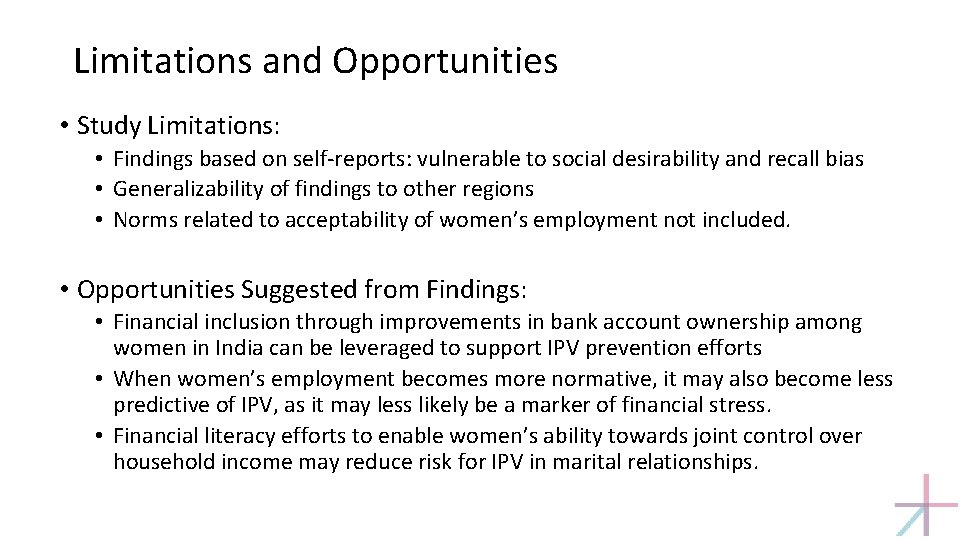
Limitations and Opportunities • Study Limitations: • Findings based on self-reports: vulnerable to social desirability and recall bias • Generalizability of findings to other regions • Norms related to acceptability of women’s employment not included. • Opportunities Suggested from Findings: • Financial inclusion through improvements in bank account ownership among women in India can be leveraged to support IPV prevention efforts • When women’s employment becomes more normative, it may also become less predictive of IPV, as it may less likely be a marker of financial stress. • Financial literacy efforts to enable women’s ability towards joint control over household income may reduce risk for IPV in marital relationships.
References 1. 2. 3. 4. 5. 6. 7. National Family Health Survey- India. http: //rchiips. org/nfhs/factsheet_NFHS-4. shtml Vyas S, Watts C. How does economic empowerment affect women's risk of intimate partner violence in low and middle income countries? A systematic review of published evidence. J. Intl Dev. 2009; 21: 577– 602. doi: 10. 1002/jid. 1500 Bhattacharya H. Spousal Violence and Women’s Employment in India. Feminist Economics. 2015; 21(2): 30 – 52. Dalal K. Does economic empowerment protect women from intimate partner violence? Journal of Injury and Violence Research. 2011; 3(1): 35 -44. doi: 10. 5249/jivr. v 3 i 1. 76. Rocca CH, Rathod S, Falle T, Pande RP, Krishnan S. Challenging assumptions about women’s empowerment: social and economic resources and domestic violence among young married women in urban South India. International Journal of Epidemiology. 2009; 38(2): 577 -585. doi: 10. 1093/ije/dyn 226 Bhattacharya M, Bedi AS, Chhachhi A. Marital Violence and Women’s Employment and Property Status: Evidence from North Indian Villages. World Development. 2011; 39(9): 1676– 89. Koenig MA, Stephenson R, Ahmed S, Jejeebhoy SJ, Campbell J. Individual and Contextual Determinants of Domestic Violence in North India. American Journal of Public Health. 2006; 96(1): 132 -138. doi: 10. 2105/AJPH. 2004. 050872.
Acknowledgements • CHARM study participants • Co-PIs: Dr. Niranjan Saggurti at Population Council and Dr. Donta Balaiah at NIRRH • TN Medical College • Holly Shakya and Elizabeth Reed • NICHD and DBT (funders) • The CHARM Intervention and Research Teams
How can community-based financial inclusion platforms - women’s savings and credit groups impact Intimate Partner Violence?
Priya Nanda, Priya Das, Amrita Das, Anushree Jairath, Kuhika Seth, Alpaxee Kashyap SHGs and IPV: Insights from a Formative Research in Uttar Pradesh, India Presenter : Nandita Bhatla I ICRW | April 2017 Study Team: Priya Nanda, Priya Das, Amrita Das, Anushree Jairath, Kuhika Seth and Alpaxee Kashyap
Background Part of a research grant to synthesize evidence on the potential of different community based platforms , including women’s collectives/groups, in addressing IPV in India Formative research undertaken in two districts of the state of Uttar Pradesh, India
Objectives and Methodology The formative research aimed to - Understand experiences of IPV, its triggers and help seeking behavior - Explore the potential and role of 3 community based platforms (SHGs, PRIs, and health system ) in responding to IPV faced by women Methodology - Qualitative methods used to gather data with women (IDIs- 18, FGD- 12) and from platform- based actors ( KIIs with institution and NGOs - 11)
Presentation Focus : Finance based Women’s Collectives: Self Help Groups SHGs is a term used extensively in India to refer to village level financial intermediary groups of 10 -12 members that are formed with the purpose of savings , giving small loans , and are often linked to banks for credit.
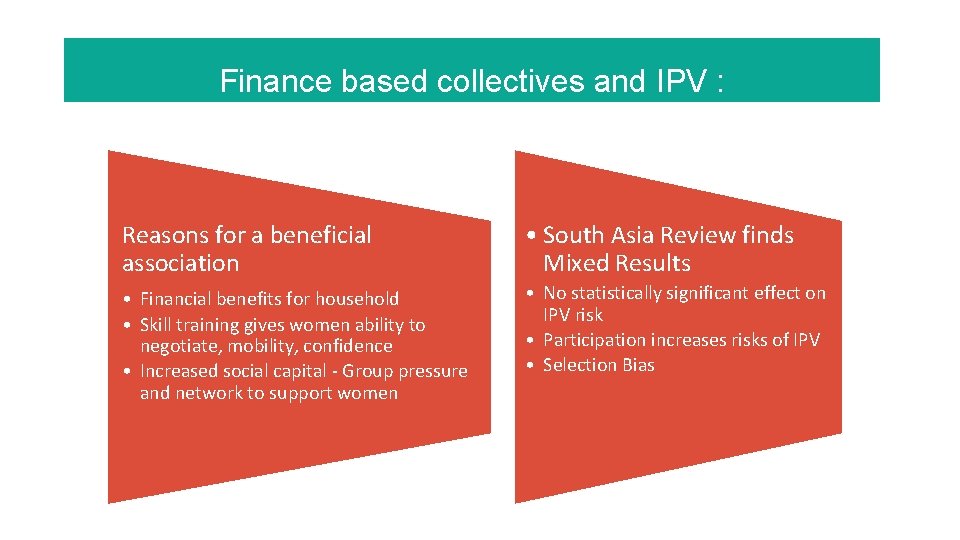
Finance based collectives and IPV : Reasons for a beneficial association • South Asia Review finds Mixed Results • Financial benefits for household • Skill training gives women ability to negotiate, mobility, confidence • Increased social capital - Group pressure and network to support women • No statistically significant effect on IPV risk • Participation increases risks of IPV • Selection Bias
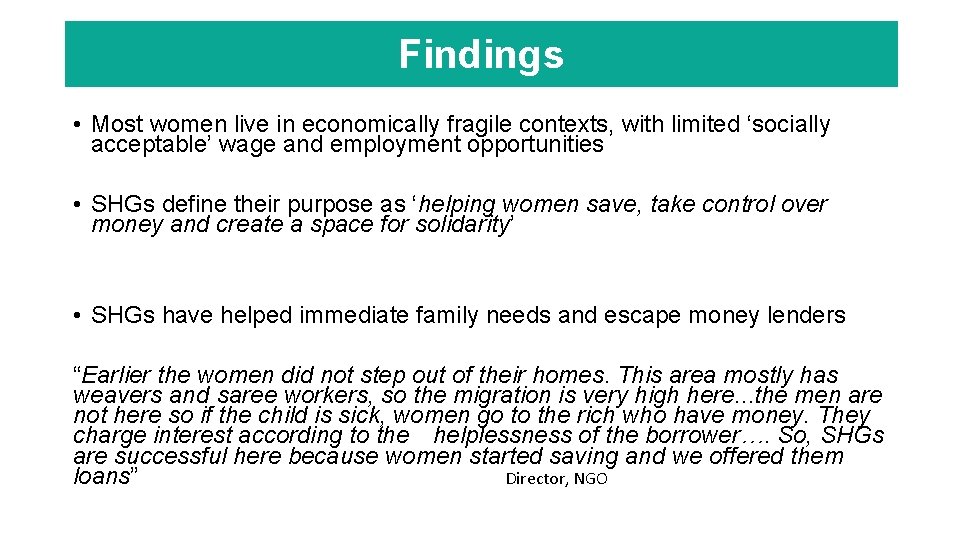
Findings • Most women live in economically fragile contexts, with limited ‘socially acceptable’ wage and employment opportunities • SHGs define their purpose as ‘helping women save, take control over money and create a space for solidarity’ • SHGs have helped immediate family needs and escape money lenders “Earlier the women did not step out of their homes. This area mostly has weavers and saree workers, so the migration is very high here. . . the men are not here so if the child is sick, women go to the rich who have money. They charge interest according to the helplessness of the borrower…. So, SHGs are successful here because women started saving and we offered them loans” Director, NGO
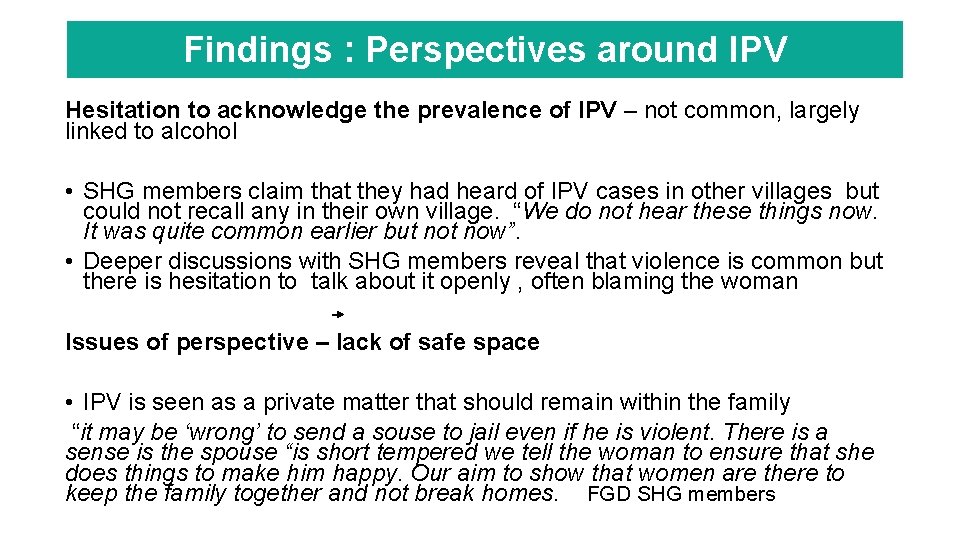
Findings : Perspectives around IPV Hesitation to acknowledge the prevalence of IPV – not common, largely linked to alcohol • SHG members claim that they had heard of IPV cases in other villages but could not recall any in their own village. “We do not hear these things now. It was quite common earlier but now”. • Deeper discussions with SHG members reveal that violence is common but there is hesitation to talk about it openly , often blaming the woman Issues of perspective – lack of safe space • IPV is seen as a private matter that should remain within the family “it may be ‘wrong’ to send a souse to jail even if he is violent. There is a sense is the spouse “is short tempered we tell the woman to ensure that she does things to make him happy. Our aim to show that women are there to keep the family together and not break homes. FGD SHG members
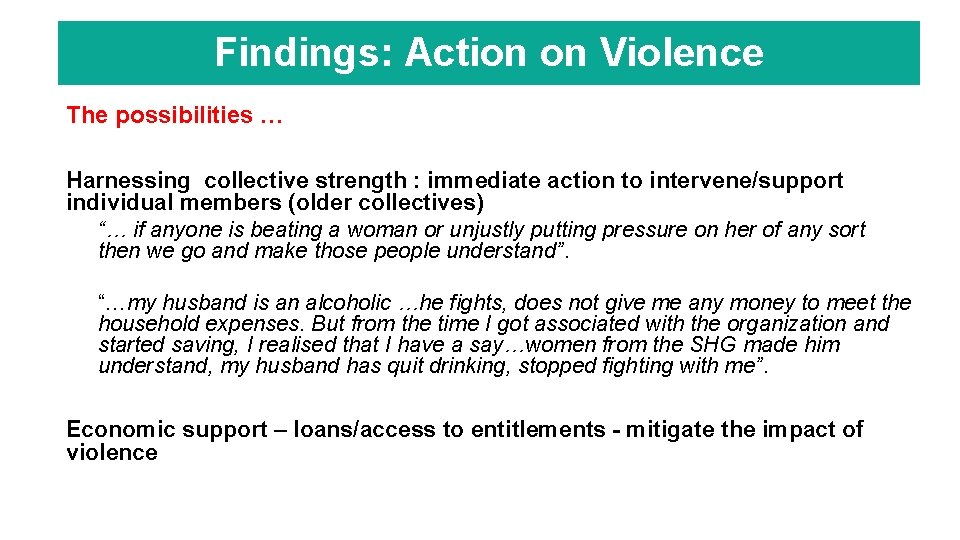
Findings: Action on Violence The possibilities … Harnessing collective strength : immediate action to intervene/support individual members (older collectives) “… if anyone is beating a woman or unjustly putting pressure on her of any sort then we go and make those people understand”. “…my husband is an alcoholic …he fights, does not give me any money to meet the household expenses. But from the time I got associated with the organization and started saving, I realised that I have a say…women from the SHG made him understand, my husband has quit drinking, stopped fighting with me”. Economic support – loans/access to entitlements - mitigate the impact of violence
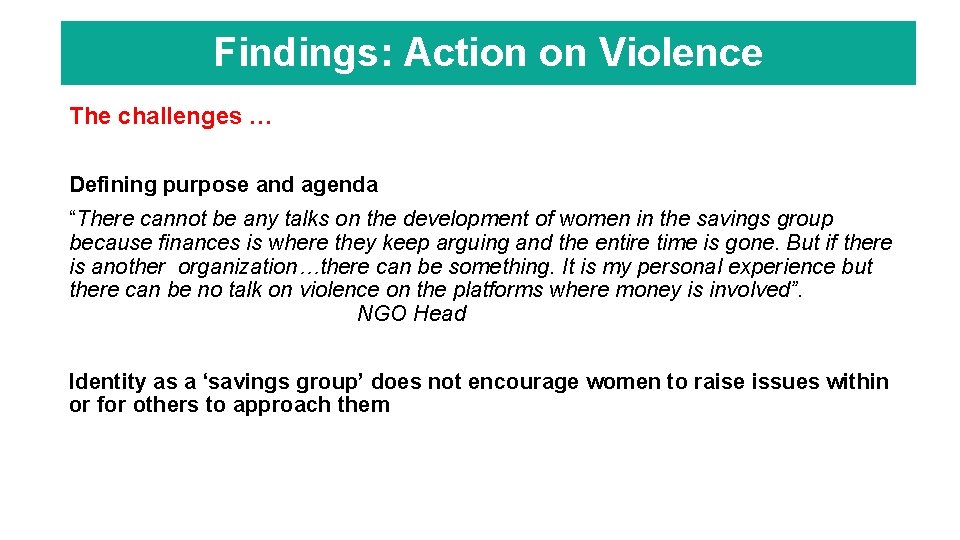
Findings: Action on Violence The challenges … Defining purpose and agenda “There cannot be any talks on the development of women in the savings group because finances is where they keep arguing and the entire time is gone. But if there is another organization…there can be something. It is my personal experience but there can be no talk on violence on the platforms where money is involved”. NGO Head Identity as a ‘savings group’ does not encourage women to raise issues within or for others to approach them
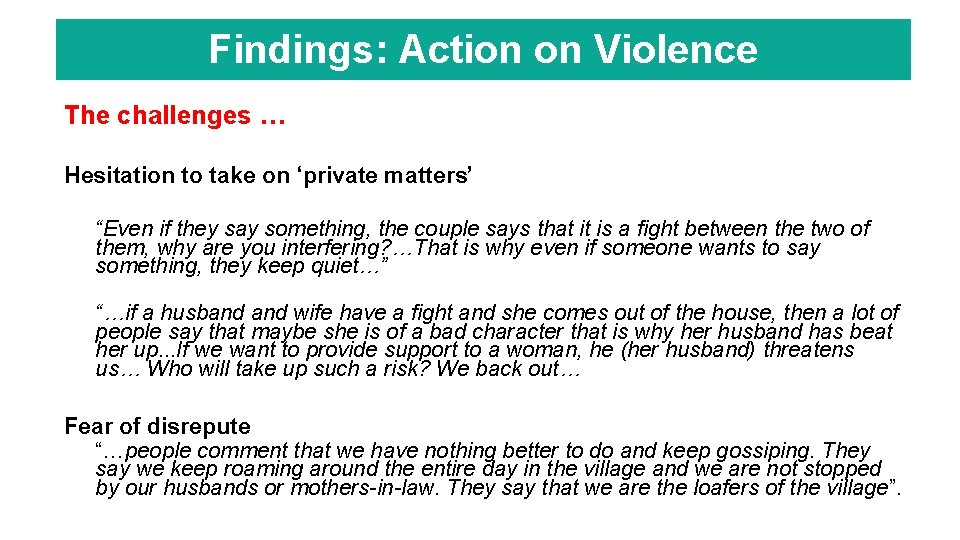
Findings: Action on Violence The challenges … Hesitation to take on ‘private matters’ “Even if they say something, the couple says that it is a fight between the two of them, why are you interfering? …That is why even if someone wants to say something, they keep quiet…” “…if a husband wife have a fight and she comes out of the house, then a lot of people say that maybe she is of a bad character that is why her husband has beat her up. . . If we want to provide support to a woman, he (her husband) threatens us… Who will take up such a risk? We back out… Fear of disrepute “…people comment that we have nothing better to do and keep gossiping. They say we keep roaming around the entire day in the village and we are not stopped by our husbands or mothers-in-law. They say that we are the loafers of the village”.
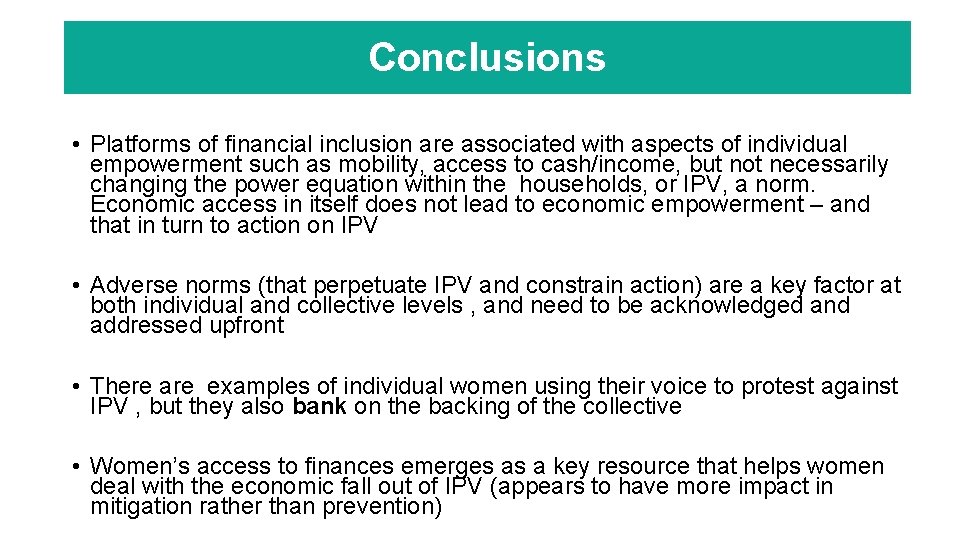
Conclusions • Platforms of financial inclusion are associated with aspects of individual empowerment such as mobility, access to cash/income, but not necessarily changing the power equation within the households, or IPV, a norm. Economic access in itself does not lead to economic empowerment – and that in turn to action on IPV • Adverse norms (that perpetuate IPV and constrain action) are a key factor at both individual and collective levels , and need to be acknowledged and addressed upfront • There are examples of individual women using their voice to protest against IPV , but they also bank on the backing of the collective • Women’s access to finances emerges as a key resource that helps women deal with the economic fall out of IPV (appears to have more impact in mitigation rather than prevention)
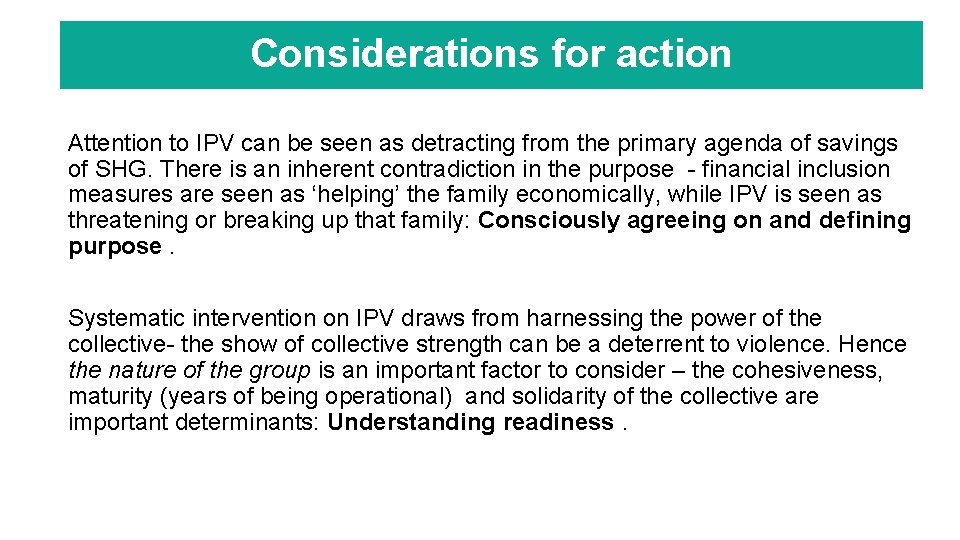
Considerations for action Attention to IPV can be seen as detracting from the primary agenda of savings of SHG. There is an inherent contradiction in the purpose - financial inclusion measures are seen as ‘helping’ the family economically, while IPV is seen as threatening or breaking up that family: Consciously agreeing on and defining purpose. Systematic intervention on IPV draws from harnessing the power of the collective- the show of collective strength can be a deterrent to violence. Hence the nature of the group is an important factor to consider – the cohesiveness, maturity (years of being operational) and solidarity of the collective are important determinants: Understanding readiness.
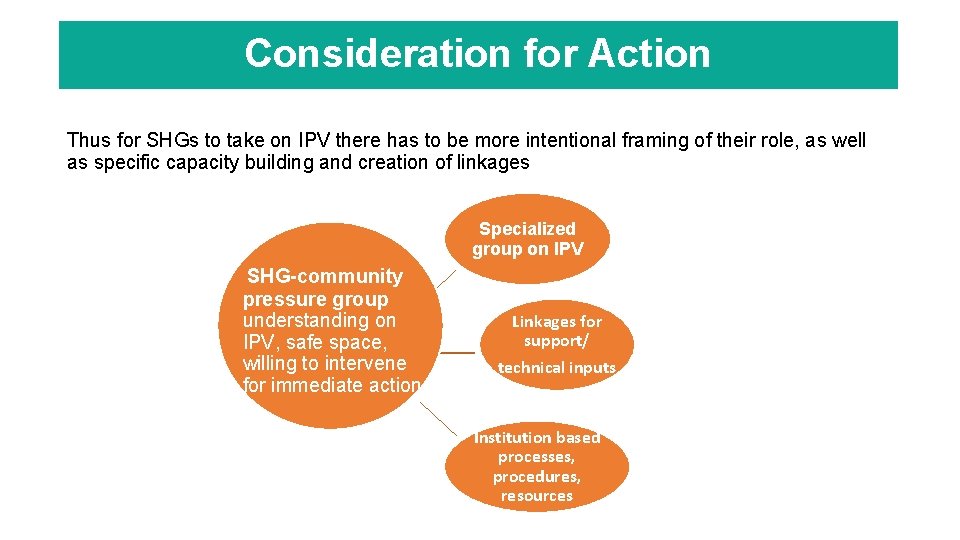
Consideration for Action Thus for SHGs to take on IPV there has to be more intentional framing of their role, as well as specific capacity building and creation of linkages Specialized group on IPV SHG-community pressure group understanding on IPV, safe space, willing to intervene for immediate action Linkages for support/ technical inputs Institution based processes, procedures, resources
Discussion Questions… • Can financial inclusion and labor force participation efforts for women decrease risk for IPV, and are there circumstances under which IPV can increase through such participation? • As all women are not the same, which women are more vulnerable to increased risk for IPV as a consequence of participation in women’s financial inclusion and labor participation efforts? • How can women facing IPV be engaged in financial inclusion programs and supported to participate in the labor force without increasing their risk for violence? • What are successful examples of financial inclusion and labor participation efforts tailored to women experiencing IPV, and what are some of the caveats in terms of adaptation of such efforts across national settings or populations? • Can mobile technologies support women’s economic empowerment and reduce their risk for IPV simultaneously, and what are unique ways that mobile technologies may be particularly beneficial for women experiencing IPV, who may have more limited mobility or may be required to hire their engagement with these programmatic efforts?
Discussion Questions… • What does this means for practitioners and donors in terms of programming and investment or further research. How do the research findings challenge previous notions of FI, employment and IPV? • Should FI interventions seek to ensure that bank accounts in the woman’s name are part of any access to finance interventions in order to reduce rather than exacerbate IPV? • What implications does this have for the delivery of microcredit where there is not necessarily a connected bank account, when we know that income generation and vocational training is associated with IPV in certain contexts? • What are the implications of joint control of men’s income with women and lower rates of IPV? Is financial literacy around joint control of household income the answer or should we be thinking about joint household loans for family businesses where men and women are both liable for the debt but also benefit from the income? • Do women benefit from loans that are in their name if they end up going to support men’s businesses, the income over which they have no control?