
Financial Ethics Module What is ethics A system


- Slides: 12
Financial Ethics Module
What is ethics? • A system of moral principles. • Rules of conduct recognized in respect to a particular class of human actions. • Ethics is also called the determination of right or wrong; the standards of appropriate conduct or behaviour for members of a profession; what those members may or may not be.
Why are ethics important? • The finance industry has become increasingly stigmatized and stereotyped. People have suggested that the finance industry is very cynical and unethical. With these established and common beliefs, financial professionals and finance classes have begun to incorporate ethics into their learning strategies. • FIN 401 and 502 both have specific classes designated solely towards ethical behaviour in the industry. • BMO Nesbitt Burns is one example of a company that provides mandatory ethical training once a year for every employee to maintain well rounded moral principles.
The Seven Principles • According to the CFP Board there are 7 principles that represent the Code of Ethics and Professional Responsibility: • Integrity • Objectivity • Competence • Fairness • Confidentiality • Professionalism • Diligence
Principle #1: Integrity • “Integrity demands honesty and candor which must not be subordinated to personal gain and advantage. Certificants are placed in positions of trust by clients, and the ultimate source of that trust is the certificant’s personal integrity. Allowance can be made for innocent error and legitimate differences of opinion, but integrity cannot co-exist with deceit or subordination of one’s principles. ”
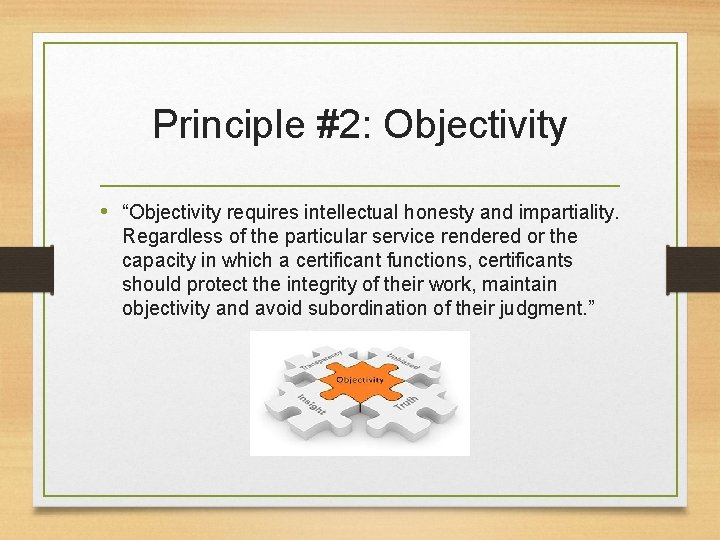
Principle #2: Objectivity • “Objectivity requires intellectual honesty and impartiality. Regardless of the particular service rendered or the capacity in which a certificant functions, certificants should protect the integrity of their work, maintain objectivity and avoid subordination of their judgment. ”
Principle #3: Competence • “Competence means attaining and maintaining an adequate level of knowledge and skill, and application of that knowledge and skill in providing services to clients. Competence also includes the wisdom to recognize the limitations of that knowledge and when consultation with other professionals is appropriate or referral to other professionals necessary. Certificants make a continuing commitment to learning and professional improvement. ”
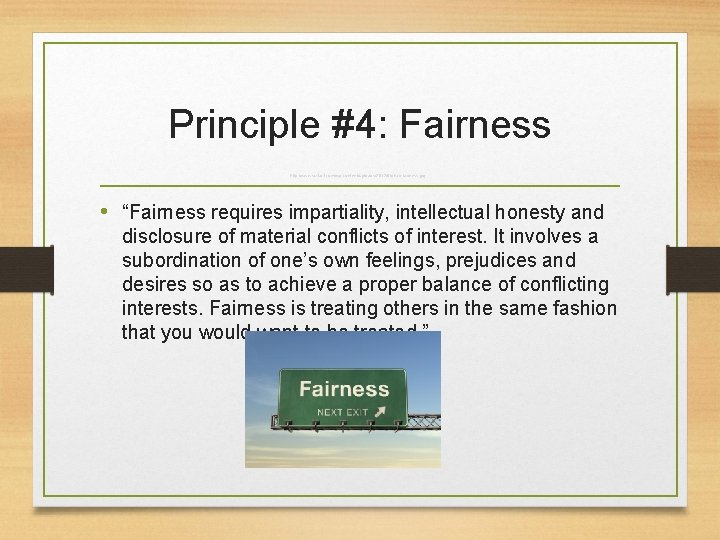
Principle #4: Fairness http: //www. vizfact. com/wp-content/uploads/2012/06/Fair-fairness. jpg • “Fairness requires impartiality, intellectual honesty and disclosure of material conflicts of interest. It involves a subordination of one’s own feelings, prejudices and desires so as to achieve a proper balance of conflicting interests. Fairness is treating others in the same fashion that you would want to be treated. ”
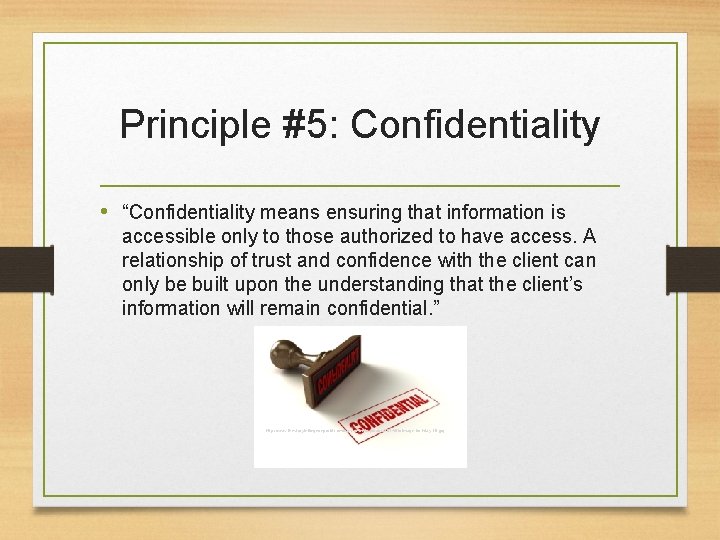
Principle #5: Confidentiality • “Confidentiality means ensuring that information is accessible only to those authorized to have access. A relationship of trust and confidence with the client can only be built upon the understanding that the client’s information will remain confidential. ” http: //www. thestorytellingnonprofit. com/wp-content/uploads/2014/05/Image-for-May-19. jpg
Principle #6: Professionalism • “Professionalism requires behaving with dignity and courtesy to clients, fellow professionals, and others in business-related activities. • Certificants cooperate with fellow certificants to enhance and maintain the profession’s public image and improve the quality of services. ”
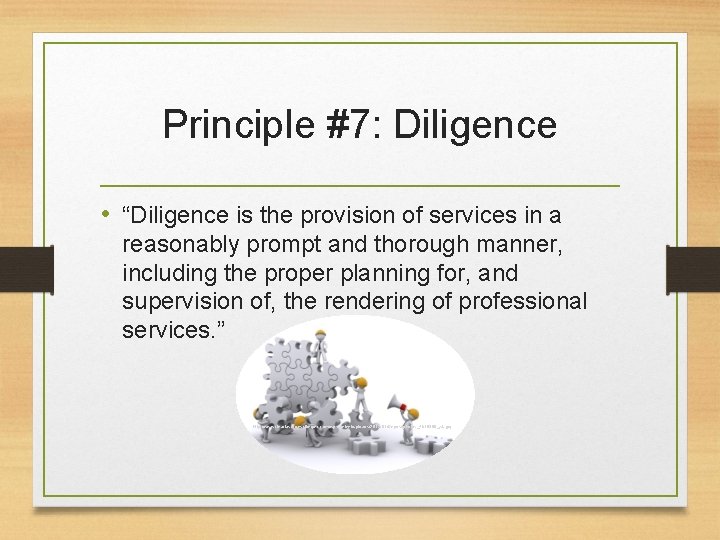
Principle #7: Diligence • “Diligence is the provision of services in a reasonably prompt and thorough manner, including the proper planning for, and supervision of, the rendering of professional services. ” http: //www. clearlakeconsultinginc. com/wp-content/uploads/2012/01/Depositphotos_4519309_XL. jpg
Business Ethics • Watch this video of Chuck Gallagher on Business Ethics: https: //www. youtube. com/watch? v=g. UJ 00 v. NGCPE