
Financial Documents Tariff Systems DEFINITIONS What is a

- Slides: 26
Financial Documents & Tariff Systems
DEFINITIONS: What is a bill? A bill is a document that a company will send to the owner of a household to outline what the owner must pay for a particular service that the company provides for the household.
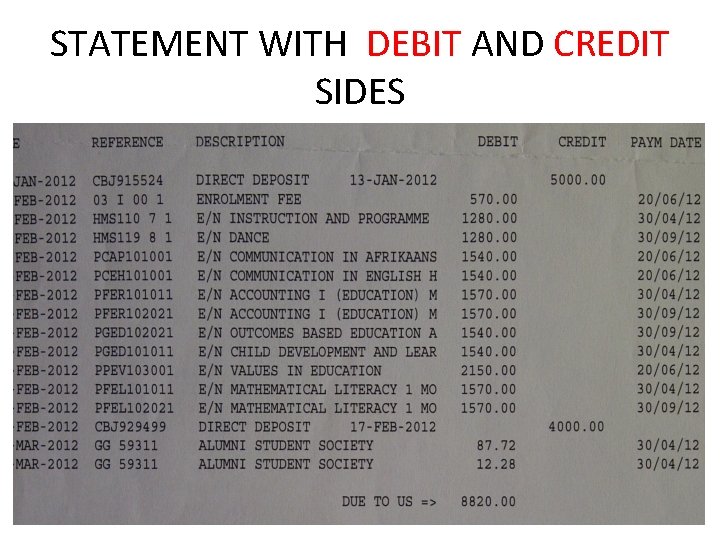
DEFINITIONS: What is a statement? A statement provides a summary of the transactions (amount of money paid, or a description of items bought) for a purchase or service over a period of time. • The DEBIT side shows money that the person owes or has to pay to the stores. • The CREDIT side shows money that the person has paid, or money (refunds) that the store has paid back to her.
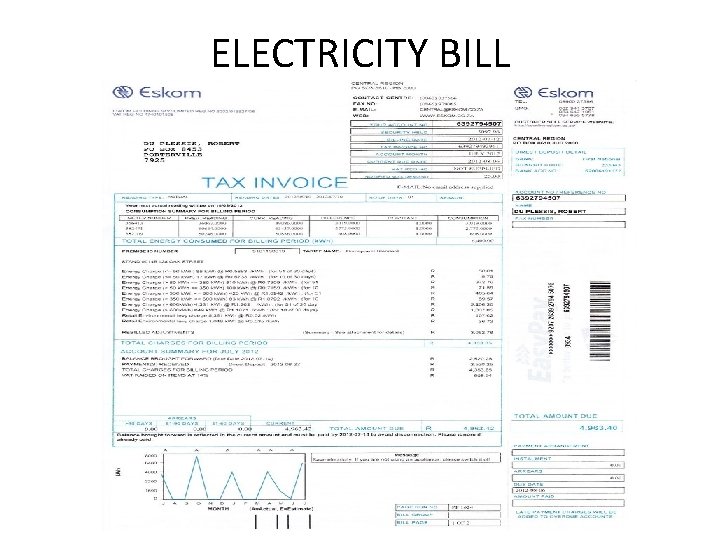
ELECTRICITY BILL
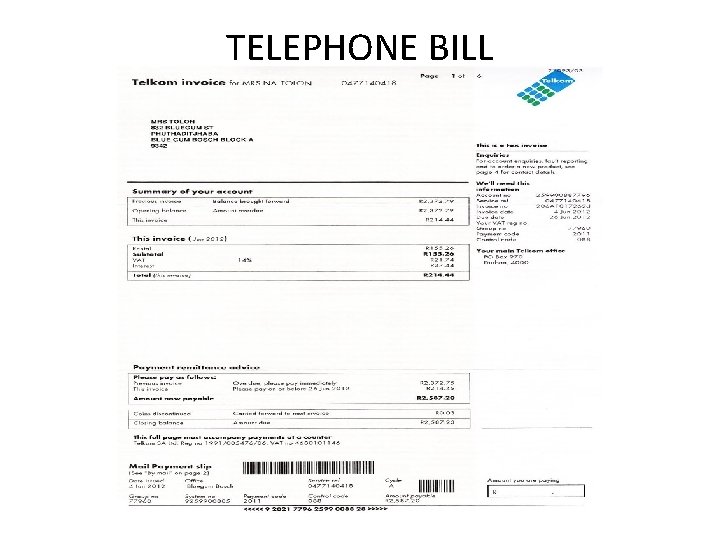
TELEPHONE BILL
STATEMENT WITH DEBIT AND CREDIT SIDES
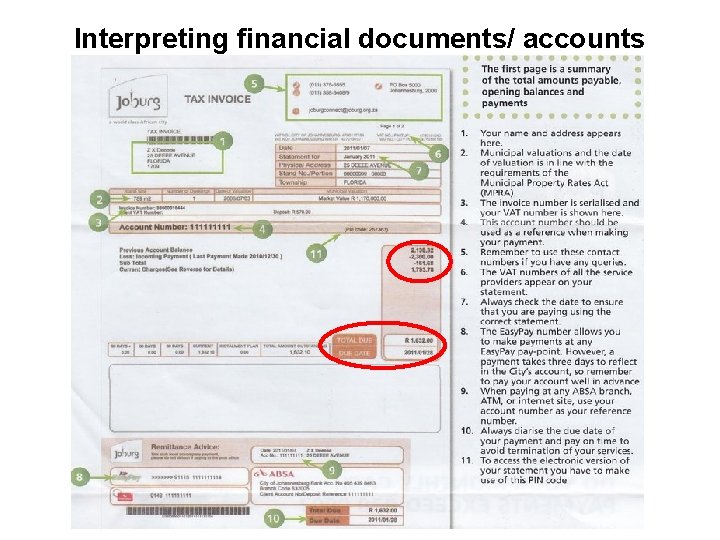
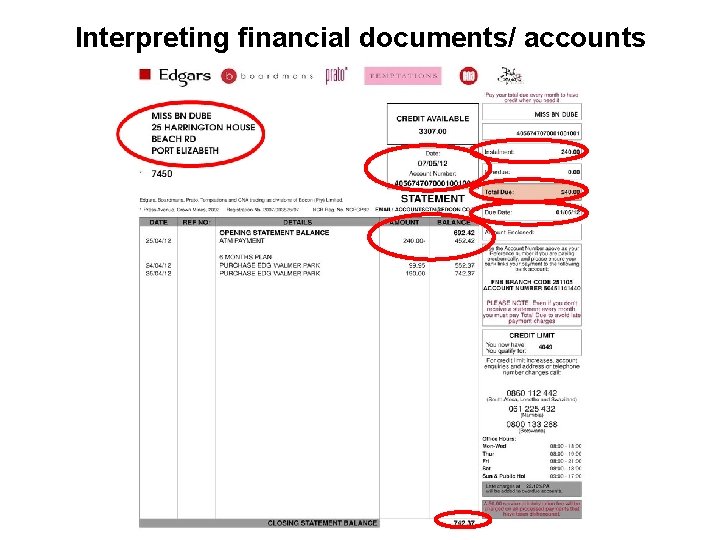
Interpreting financial documents/ accounts What to look for: • Date statement was issued • Statement period • Amount owing • Amount due/ monthly installment/ installment amount • Values including and excluding VAT • Installment/ payment due date
Interpreting financial documents/ accounts
Interpreting financial documents/ accounts
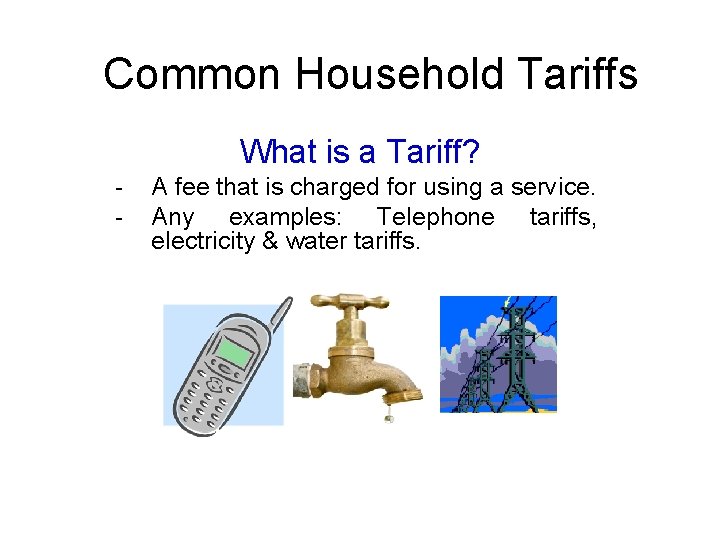
Common Household Tariffs What is a Tariff? - A fee that is charged for using a service. Any examples: Telephone tariffs, electricity & water tariffs.
Making sense of Tariffs: How? By looking at the structure: Lets compare cellphone tariffs: - Prepaid: with prepaid you buy the phone once off. Following that the only cost is airtime. - the negative is that it is a large amount once off. After the initial payment it is generally cheaper to maintain.
Making sense of Tariffs: - Contract: with contract you pay monthly instalments on the phone and receive a certain amount of airtime depending on your contract. This can be both positive and negative. - e. g. A R 229 contract will give you a phone, R 100 airtime, 25 sms’s and 150 mb data.
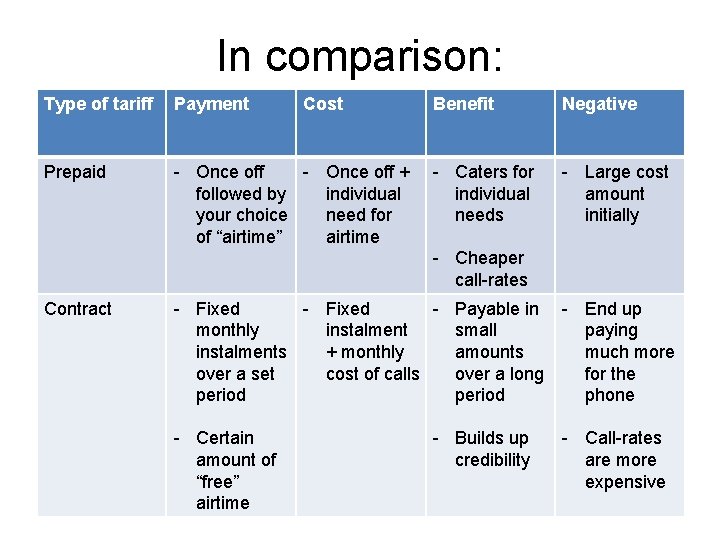
In comparison: Type of tariff Payment Cost Prepaid - Once off + followed by individual your choice need for of “airtime” airtime Benefit Negative - Caters for individual needs - Large cost amount initially - Cheaper call-rates Contract - Fixed - Payable in - End up monthly instalment small paying instalments + monthly amounts much more over a set cost of calls over a long for the period phone - Certain amount of “free” airtime - Builds up credibility - Call-rates are more expensive
Calculating Cost on Prepaid Tariff system (only looking at the cost of the call, and not the cost of the phone or starter pack. )
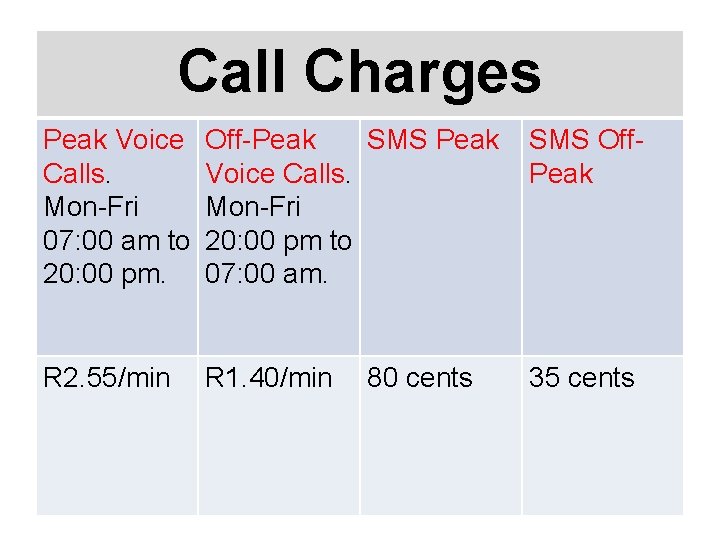
Call Charges Peak Voice Calls. Mon-Fri 07: 00 am to 20: 00 pm. Off-Peak SMS Peak Voice Calls. Mon-Fri 20: 00 pm to 07: 00 am. SMS Off. Peak R 2. 55/min R 1. 40/min 35 cents 80 cents
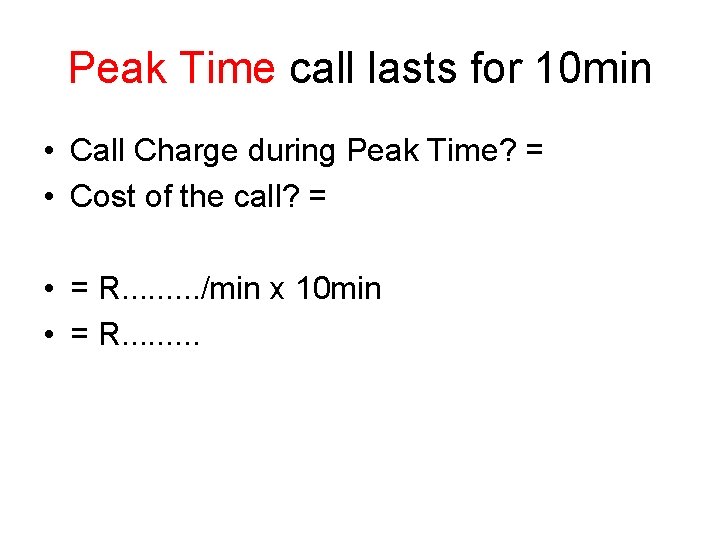
Peak Time call lasts for 10 min • Call Charge during Peak Time? = • Cost of the call? = • = R. . /min x 10 min • = R. .
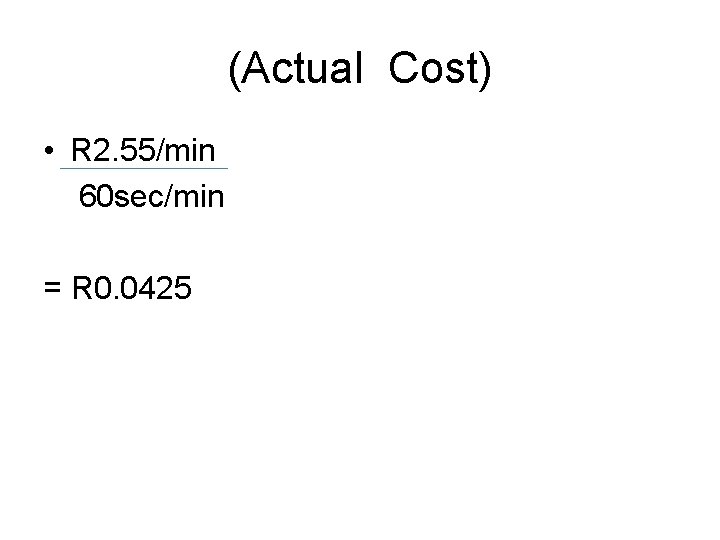
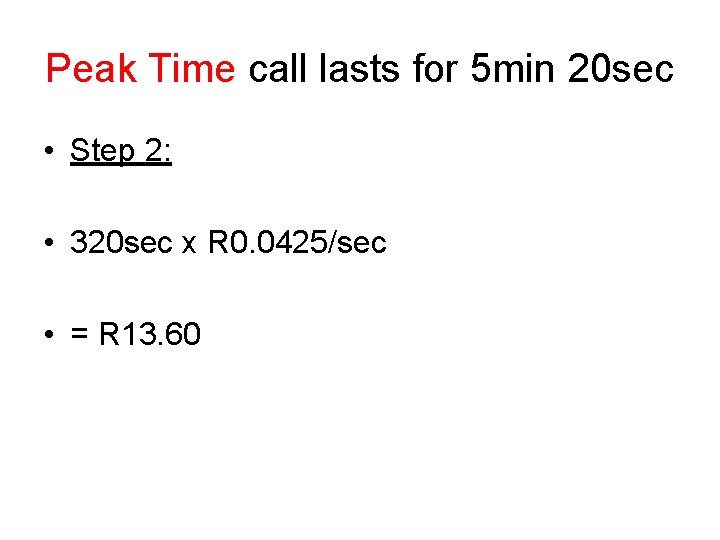
(Actual Cost) • R 2. 55/min 60 sec/min = R 0. 0425
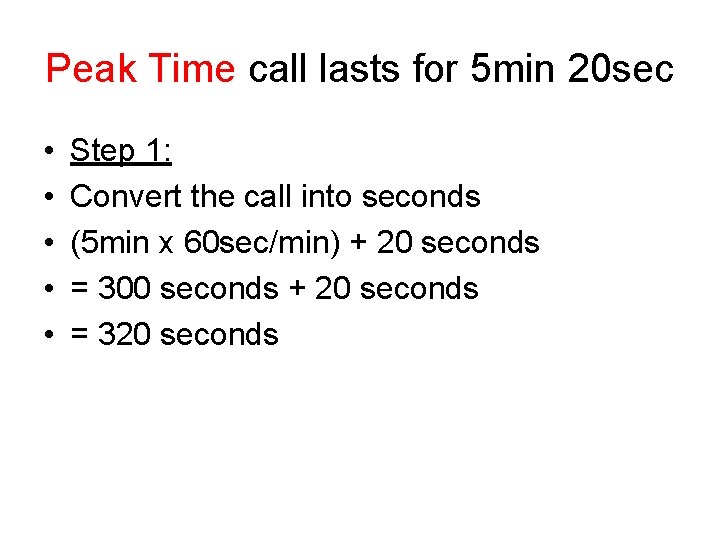
Peak Time call lasts for 5 min 20 sec • • • Step 1: Convert the call into seconds (5 min x 60 sec/min) + 20 seconds = 300 seconds + 20 seconds = 320 seconds
Peak Time call lasts for 5 min 20 sec • Step 2: • 320 sec x R 0. 0425/sec • = R 13. 60
Calculating Cost on Contract Tariff system
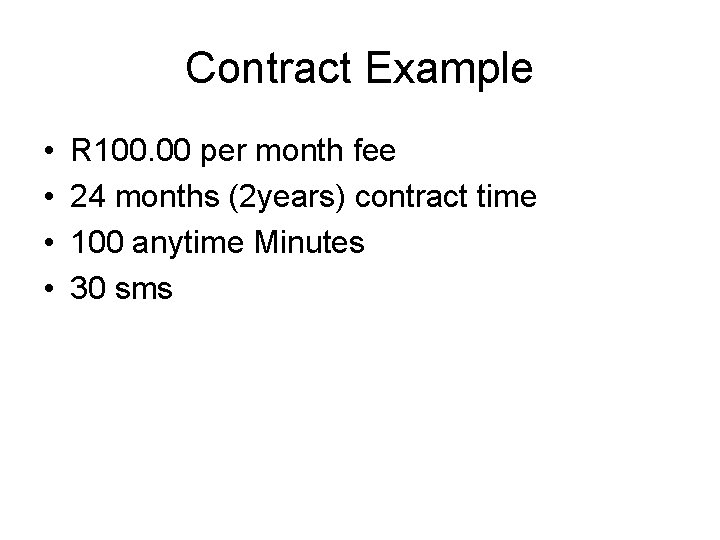
Contract Example • • R 100. 00 per month fee 24 months (2 years) contract time 100 anytime Minutes 30 sms
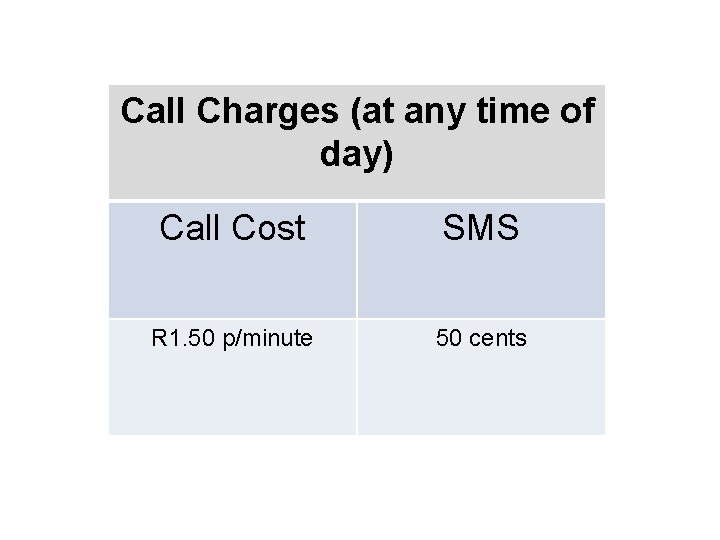
Call Charges (at any time of day) Call Cost SMS R 1. 50 p/minute 50 cents
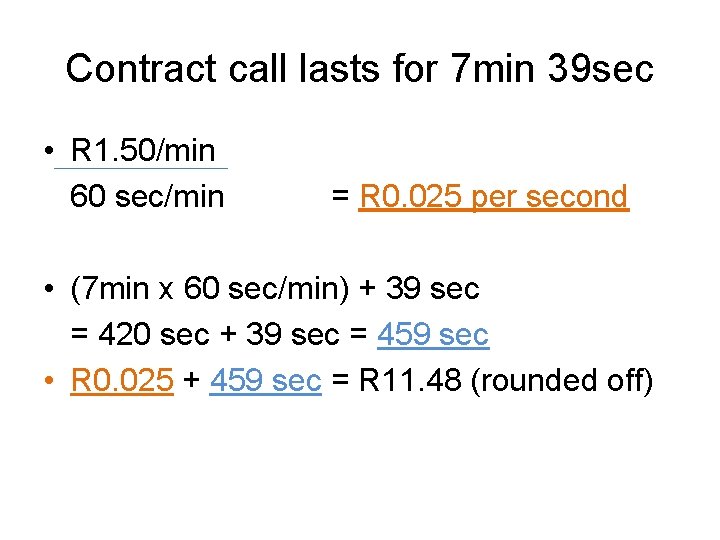
Contract call lasts for 7 min 39 sec • R 1. 50/min 60 sec/min = R 0. 025 per second • (7 min x 60 sec/min) + 39 sec = 420 sec + 39 sec = 459 sec • R 0. 025 + 459 sec = R 11. 48 (rounded off)
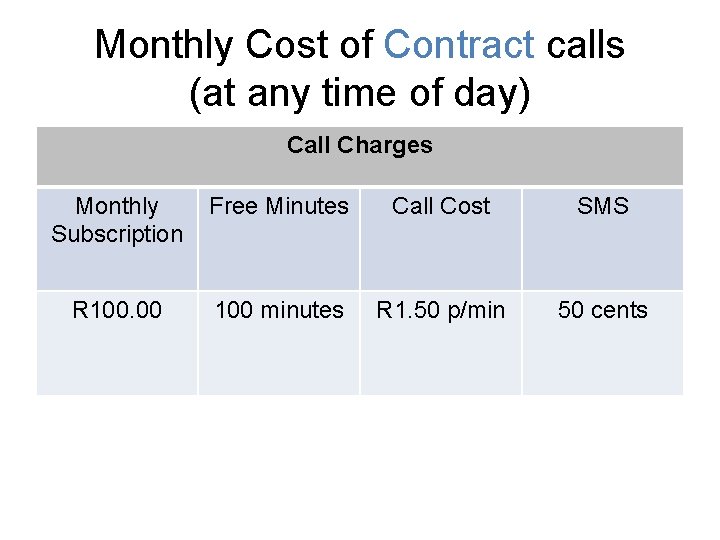
Monthly Cost of Contract calls (at any time of day) Call Charges Monthly Subscription Free Minutes Call Cost SMS R 100. 00 100 minutes R 1. 50 p/min 50 cents
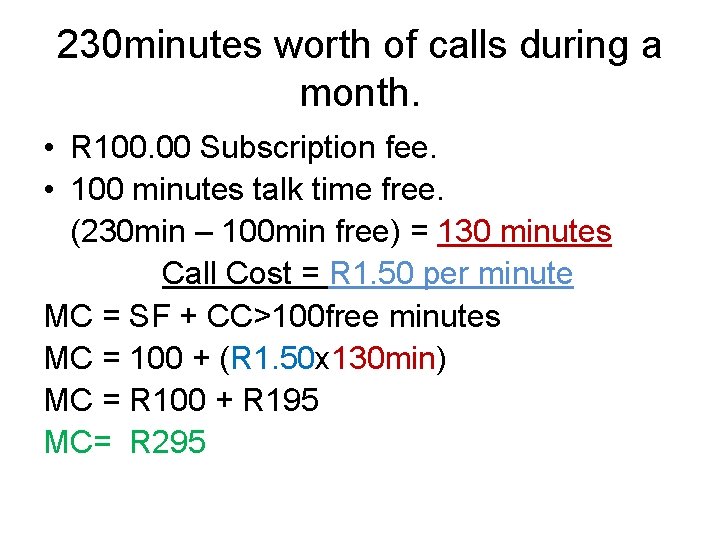
230 minutes worth of calls during a month. • R 100. 00 Subscription fee. • 100 minutes talk time free. (230 min – 100 min free) = 130 minutes Call Cost = R 1. 50 per minute MC = SF + CC>100 free minutes MC = 100 + (R 1. 50 x 130 min) MC = R 100 + R 195 MC= R 295
RECAP… • Definitions – bill, statement, tariff. • Different types of accounts/ documents (interpret). • How to calculate call costs on different tariff systems. • Interpretation = financially aware individual.