
Financial Accounting John J Wild Seventh Edition Copyright

- Slides: 43
Financial Accounting John J. Wild Seventh Edition Copyright © 2015 Mc. Graw-Hill Education. All rights reserved. No reproduction or distribution without the prior written consent of Mc. Graw-Hill Education.
Chapter 4 Reporting and Analyzing Merchandising Operations
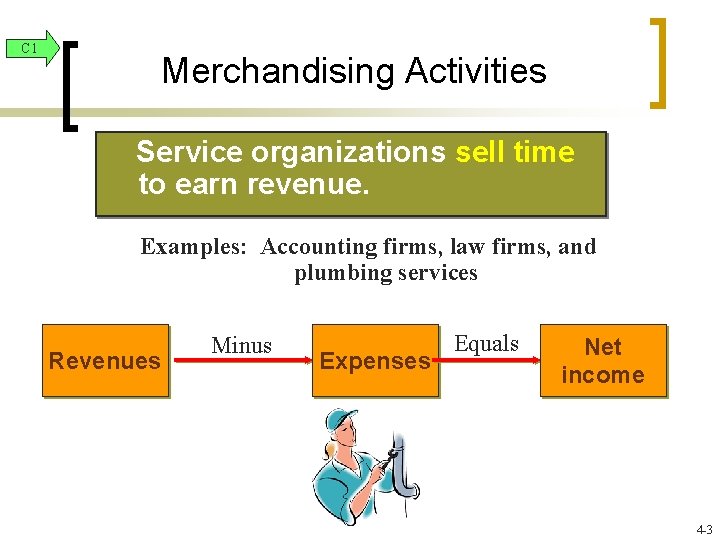
C 1 Merchandising Activities Service organizations sell time to earn revenue. Examples: Accounting firms, law firms, and plumbing services Revenues Minus Expenses Equals Net income 4 -3
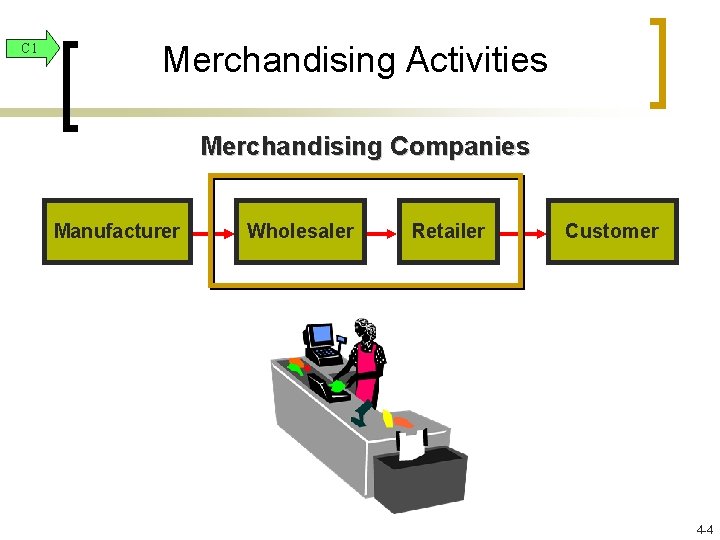
C 1 Merchandising Activities Merchandising Companies Manufacturer Wholesaler Retailer Customer 4 -4
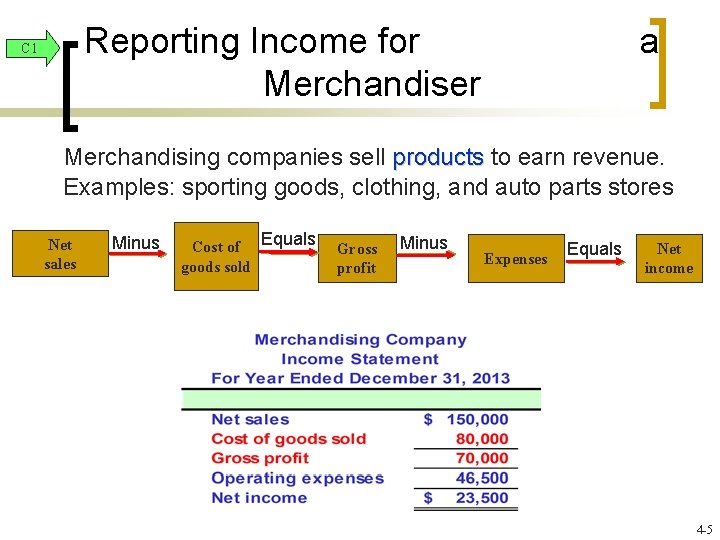
Reporting Income for Merchandiser C 1 a Merchandising companies sell products to earn revenue. Examples: sporting goods, clothing, and auto parts stores Net sales Minus Cost of Equals goods sold Gross profit Minus Expenses Equals Net income 4 -5
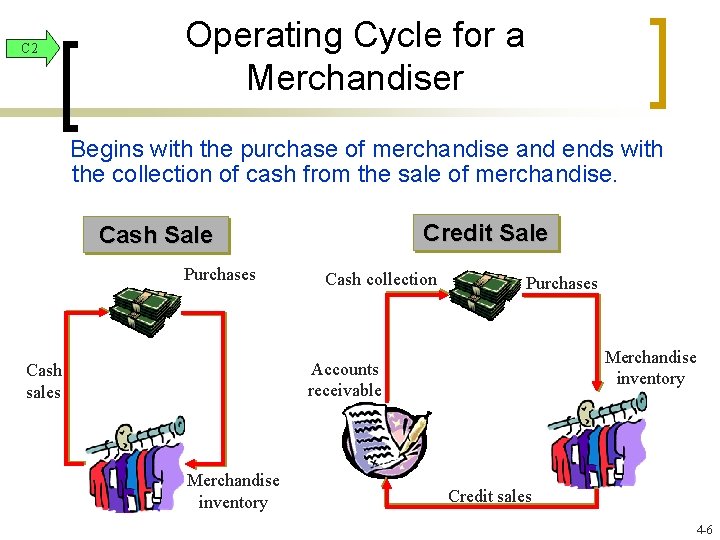
C 2 Operating Cycle for a Merchandiser Begins with the purchase of merchandise and ends with the collection of cash from the sale of merchandise. Credit Sale Cash Sale Purchases Cash collection Purchases Merchandise inventory Accounts receivable Cash sales Merchandise inventory Credit sales 4 -6
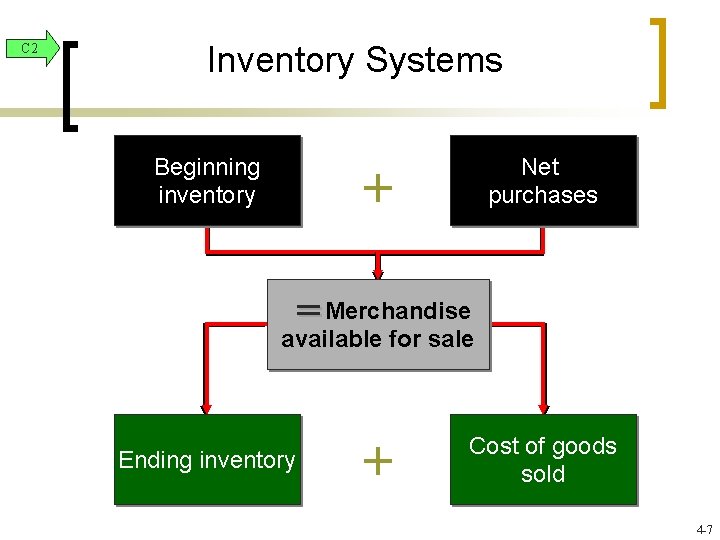
C 2 Inventory Systems Beginning inventory Net purchases + = Merchandise available for sale Ending inventory + Cost of goods sold 4 -7
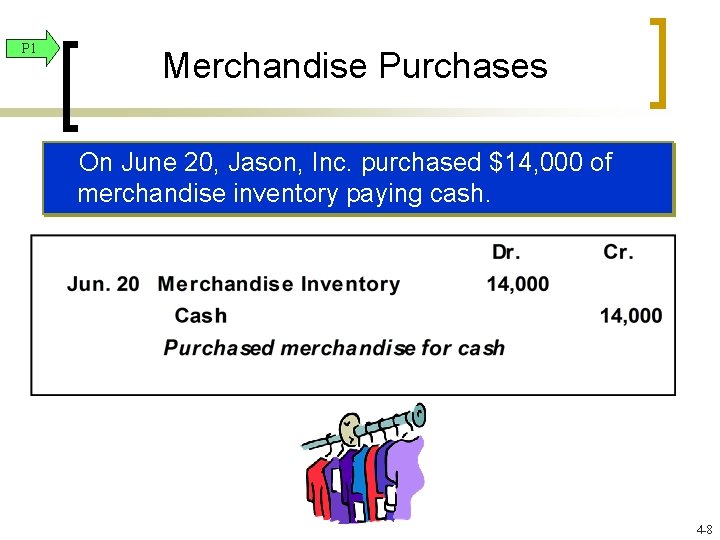
P 1 Merchandise Purchases On June 20, Jason, Inc. purchased $14, 000 of merchandise inventory paying cash. 4 -8
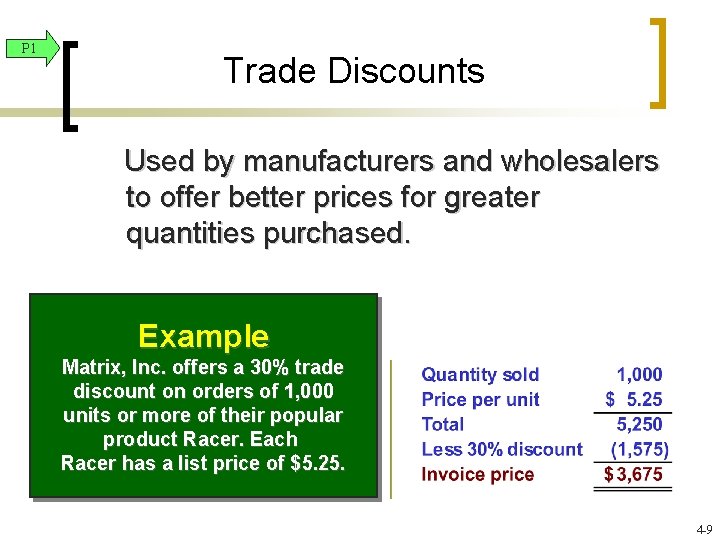
P 1 Trade Discounts Used by manufacturers and wholesalers to offer better prices for greater quantities purchased. Example Matrix, Inc. offers a 30% trade discount on orders of 1, 000 units or more of their popular product Racer. Each Racer has a list price of $5. 25. 4 -9
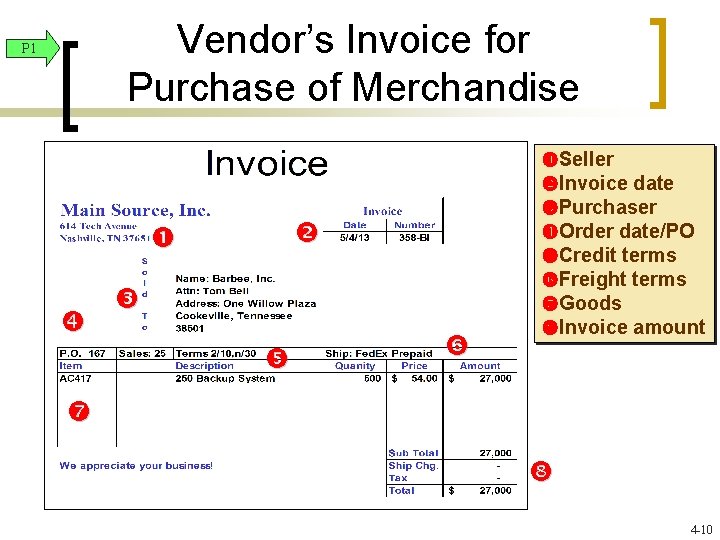
Vendor’s Invoice for Purchase of Merchandise P 1 Seller Invoice date Purchaser Order date/PO Credit terms Freight terms Goods Invoice amount 4 -10
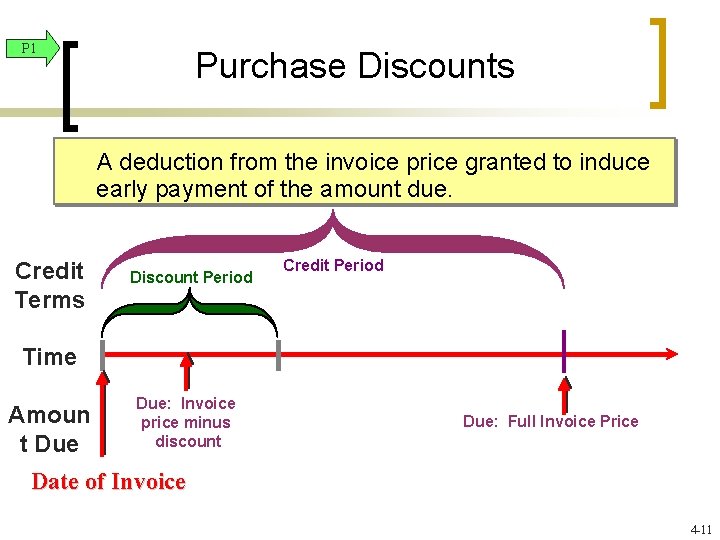
P 1 Purchase Discounts A deduction from the invoice price granted to induce early payment of the amount due. Credit Terms Discount Period Credit Period Time Amoun t Due: Invoice price minus discount Due: Full Invoice Price Date of Invoice 4 -11
Purchase Discounts P 1 2/10, n/30 Discount percent Number of days discount Is available Otherwise, net (or all) is due in 30 days Credit period 4 -12
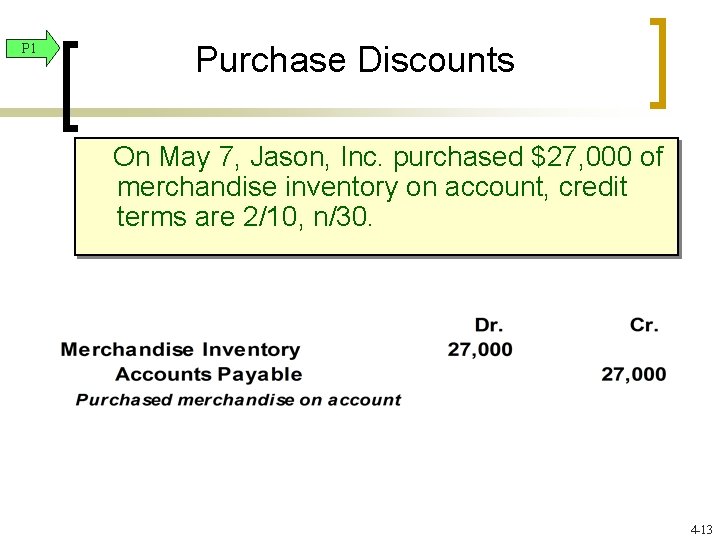
P 1 Purchase Discounts On May 7, Jason, Inc. purchased $27, 000 of merchandise inventory on account, credit terms are 2/10, n/30. 4 -13
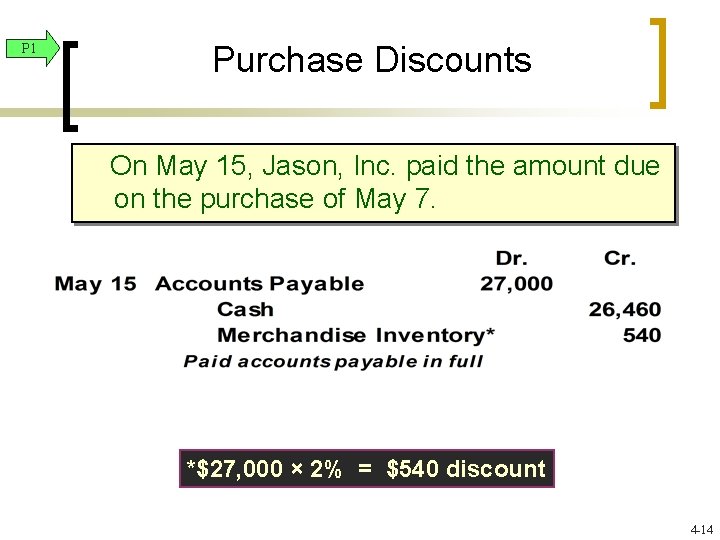
P 1 Purchase Discounts On May 15, Jason, Inc. paid the amount due on the purchase of May 7. *$27, 000 × 2% = $540 discount 4 -14
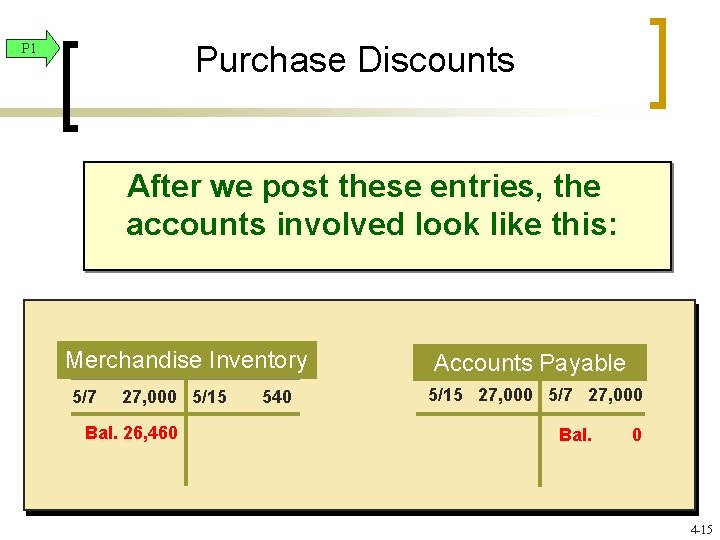
Purchase Discounts P 1 After we post these entries, the accounts involved look like this: Merchandise Inventory 5/7 27, 000 5/15 Bal. 26, 460 540 Accounts Payable 5/15 27, 000 5/7 27, 000 Bal. 0 4 -15
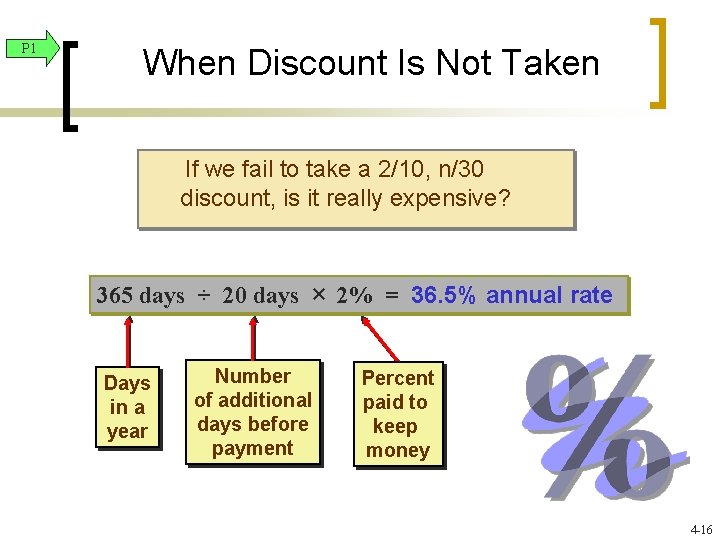
P 1 When Discount Is Not Taken If we fail to take a 2/10, n/30 discount, is it really expensive? 365 days ÷ 20 days × 2% = 36. 5% annual rate Days in a year Number of additional days before payment Percent paid to keep money 4 -16
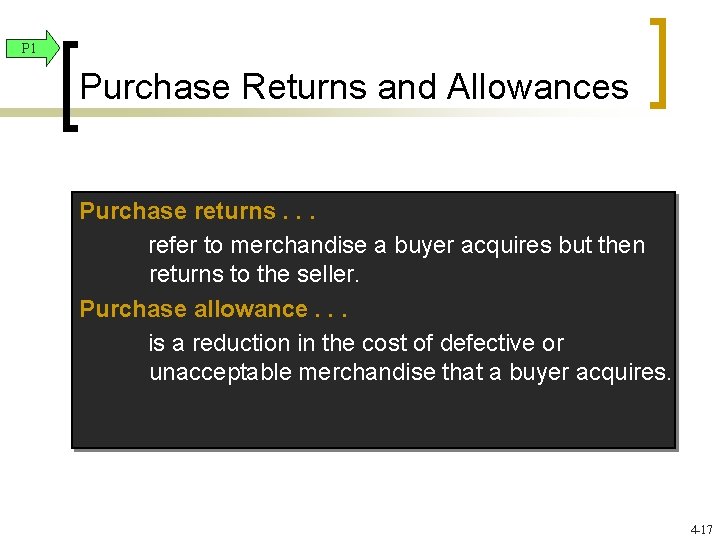
P 1 Purchase Returns and Allowances Purchase returns. . . refer to merchandise a buyer acquires but then returns to the seller. Purchase allowance. . . is a reduction in the cost of defective or unacceptable merchandise that a buyer acquires. 4 -17
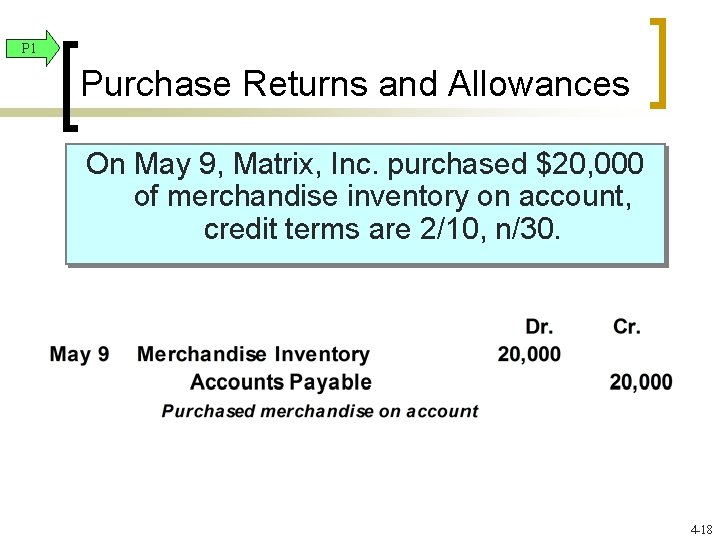
P 1 Purchase Returns and Allowances On May 9, Matrix, Inc. purchased $20, 000 of merchandise inventory on account, credit terms are 2/10, n/30. 4 -18
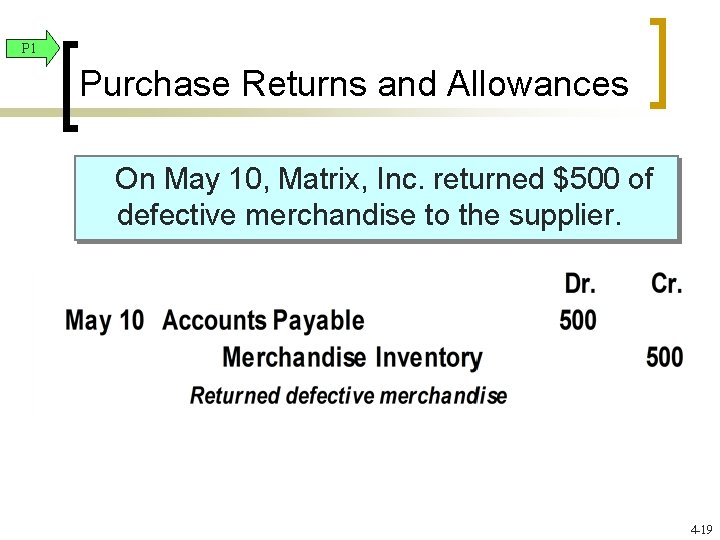
P 1 Purchase Returns and Allowances On May 10, Matrix, Inc. returned $500 of defective merchandise to the supplier. 4 -19
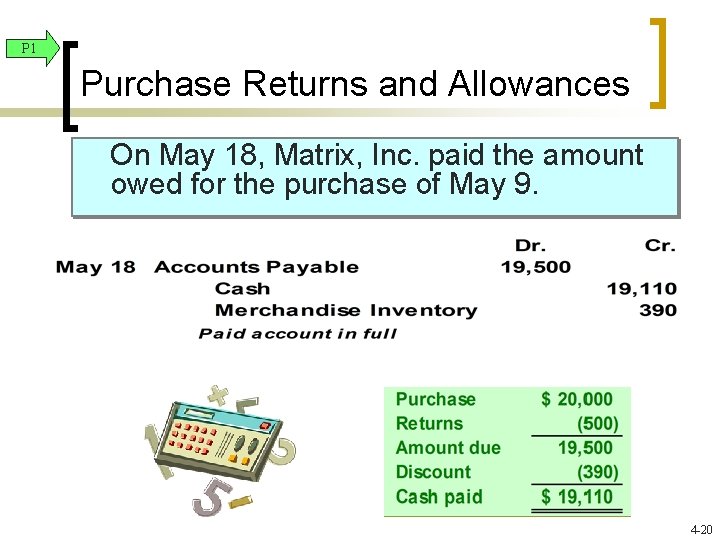
P 1 Purchase Returns and Allowances On May 18, Matrix, Inc. paid the amount owed for the purchase of May 9. 4 -20
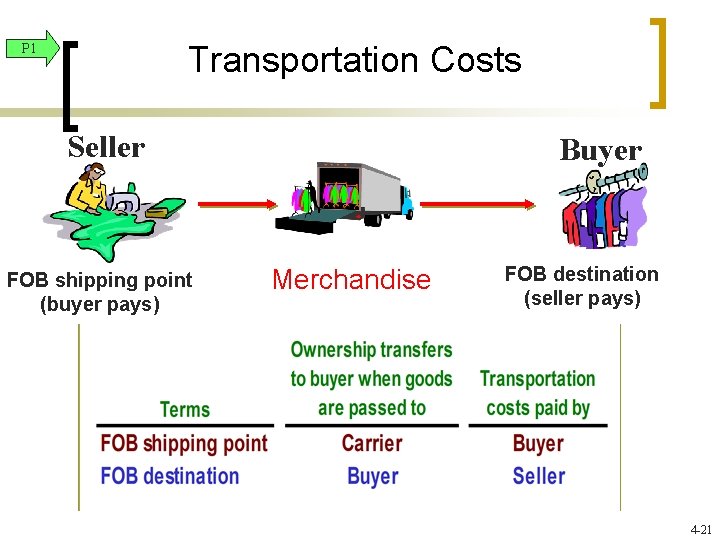
Transportation Costs P 1 Seller FOB shipping point (buyer pays) Buyer Merchandise FOB destination (seller pays) 4 -21
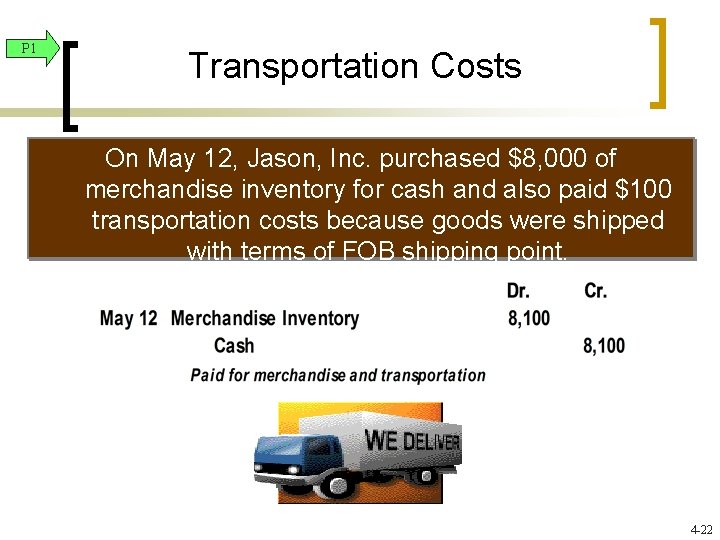
P 1 Transportation Costs On May 12, Jason, Inc. purchased $8, 000 of merchandise inventory for cash and also paid $100 transportation costs because goods were shipped with terms of FOB shipping point. 4 -22
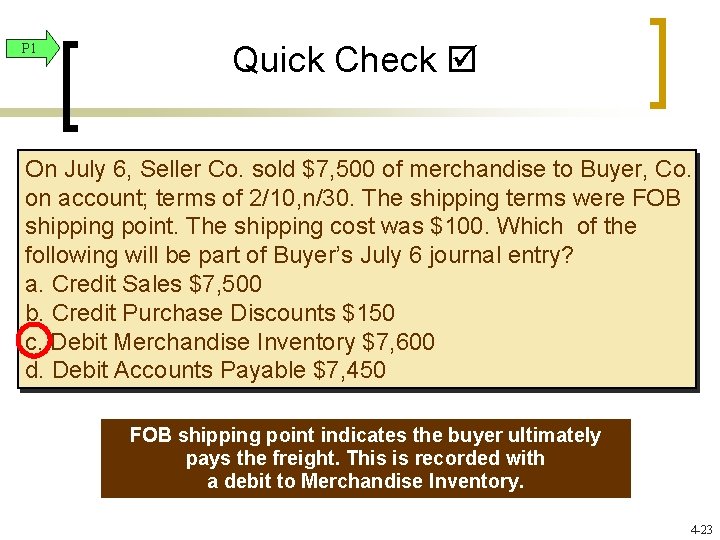
P 1 Quick Check On July 6, Seller Co. sold $7, 500 of merchandise to Buyer, Co. on account; terms of 2/10, n/30. The shipping terms were FOB shipping point. The shipping cost was $100. Which of the following will be part of Buyer’s July 6 journal entry? a. Credit Sales $7, 500 b. Credit Purchase Discounts $150 c. Debit Merchandise Inventory $7, 600 d. Debit Accounts Payable $7, 450 FOB shipping point indicates the buyer ultimately pays the freight. This is recorded with a debit to Merchandise Inventory. 4 -23
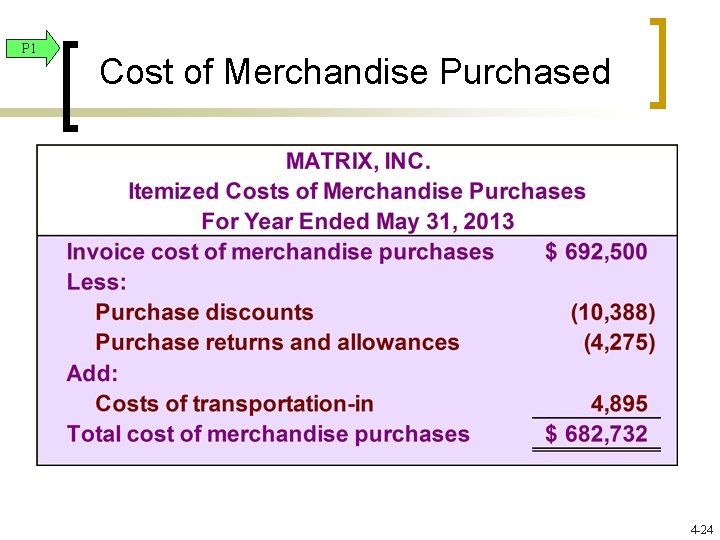
P 1 Cost of Merchandise Purchased 4 -24
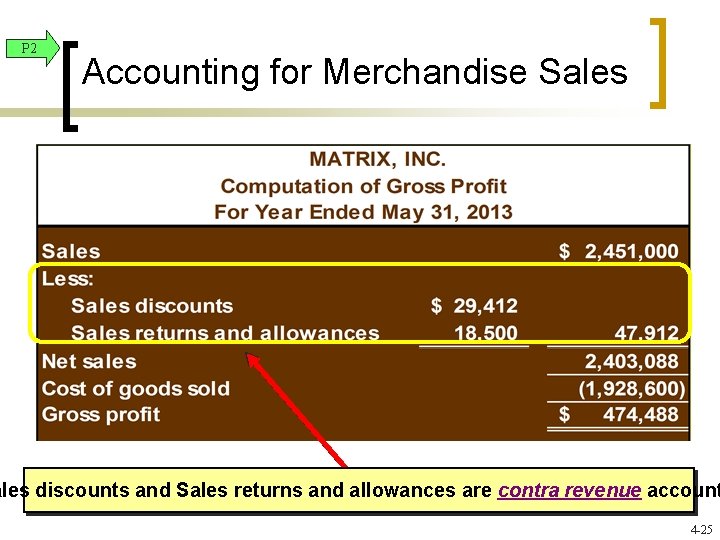
P 2 Accounting for Merchandise Sales discounts and Sales returns and allowances are contra revenue account 4 -25
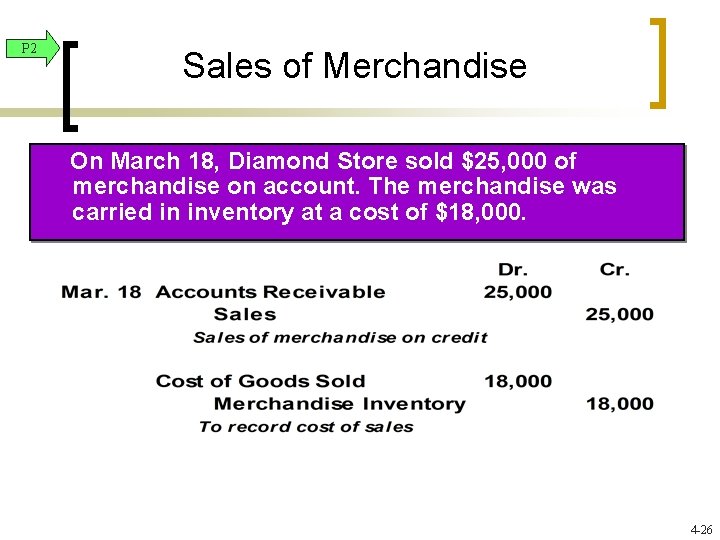
P 2 Sales of Merchandise On March 18, Diamond Store sold $25, 000 of merchandise on account. The merchandise was carried in inventory at a cost of $18, 000. 4 -26
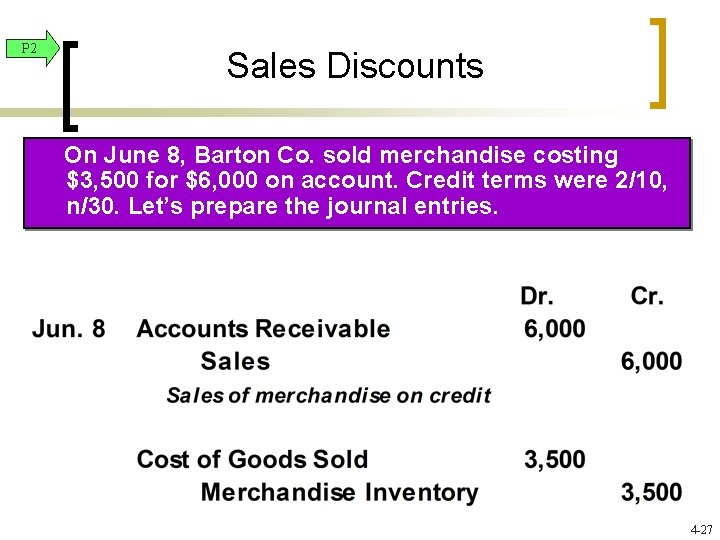
P 2 Sales Discounts On June 8, Barton Co. sold merchandise costing $3, 500 for $6, 000 on account. Credit terms were 2/10, n/30. Let’s prepare the journal entries. 4 -27
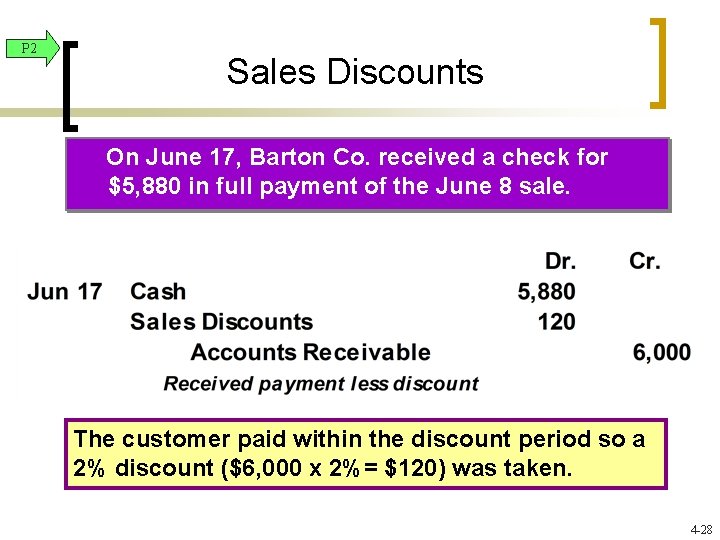
P 2 Sales Discounts On June 17, Barton Co. received a check for $5, 880 in full payment of the June 8 sale. The customer paid within the discount period so a 2% discount ($6, 000 x 2%= $120) was taken. 4 -28
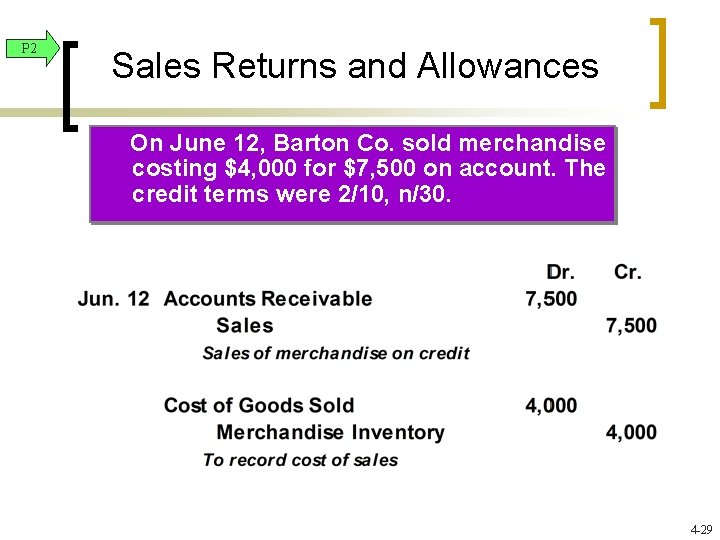
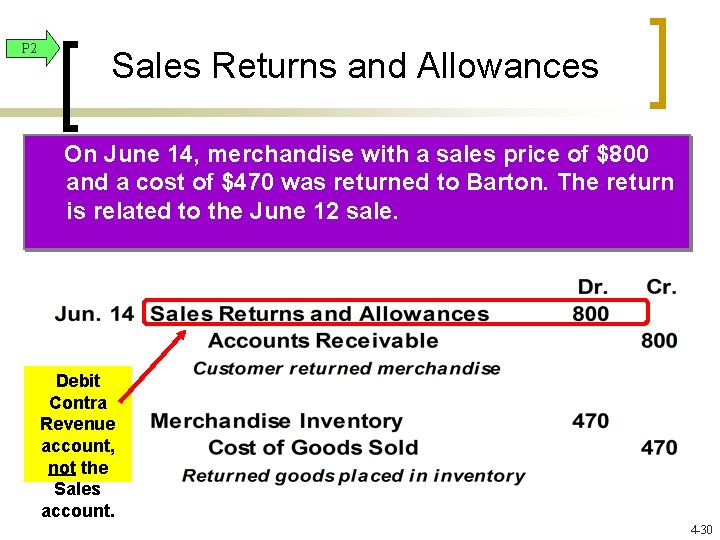
P 2 Sales Returns and Allowances On June 12, Barton Co. sold merchandise costing $4, 000 for $7, 500 on account. The credit terms were 2/10, n/30. 4 -29
P 2 Sales Returns and Allowances On June 14, merchandise with a sales price of $800 and a cost of $470 was returned to Barton. The return is related to the June 12 sale. Debit Contra Revenue account, not the Sales account. 4 -30
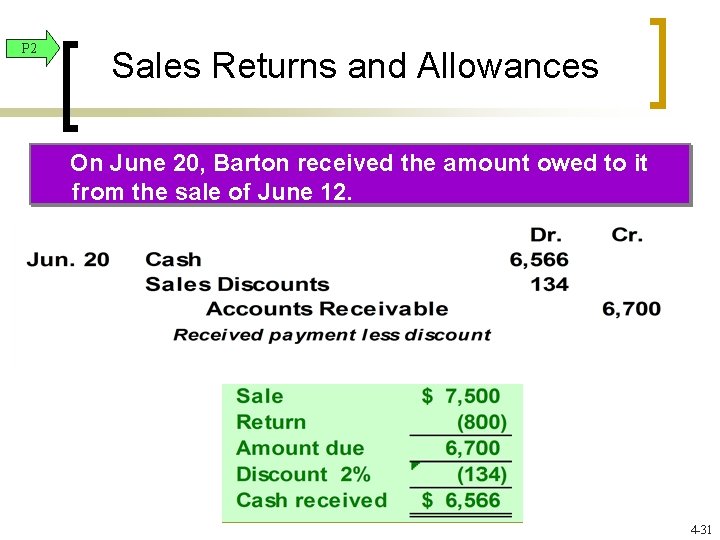
P 2 Sales Returns and Allowances On June 20, Barton received the amount owed to it from the sale of June 12. 4 -31
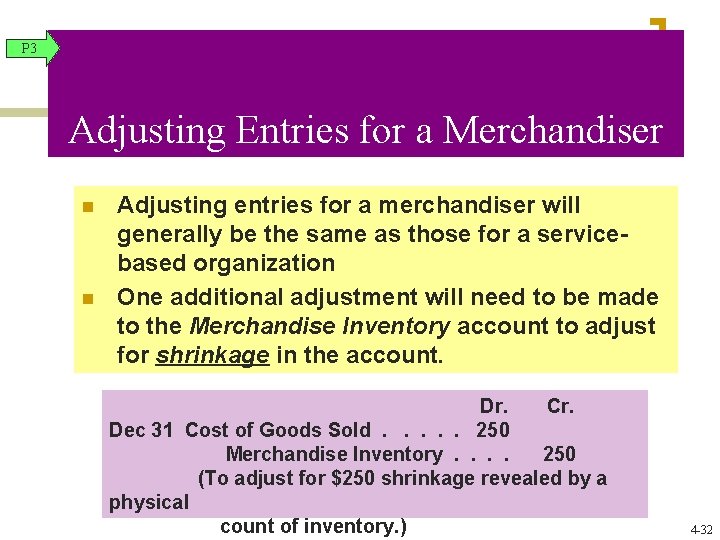
P 3 Adjusting Entries for a Merchandiser n n Adjusting entries for a merchandiser will generally be the same as those for a servicebased organization One additional adjustment will need to be made to the Merchandise Inventory account to adjust for shrinkage in the account. Dr. Cr. Dec 31 Cost of Goods Sold. . . 250 Merchandise Inventory. . 250 (To adjust for $250 shrinkage revealed by a physical count of inventory. ) 4 -32
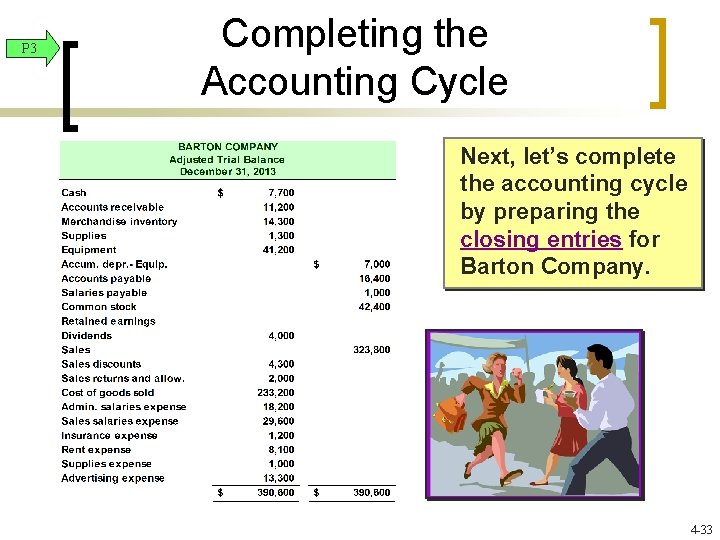
P 3 Completing the Accounting Cycle Next, let’s complete the accounting cycle by preparing the closing entries for Barton Company. 4 -33
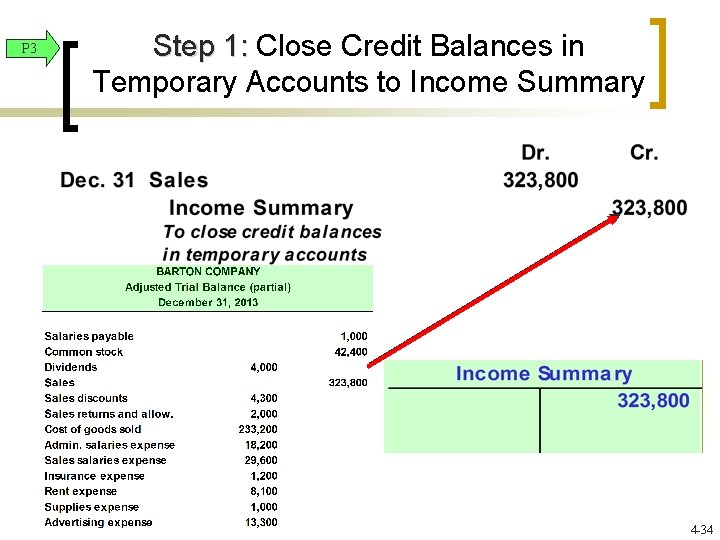
P 3 Step 1: Close Credit Balances in Temporary Accounts to Income Summary 4 -34
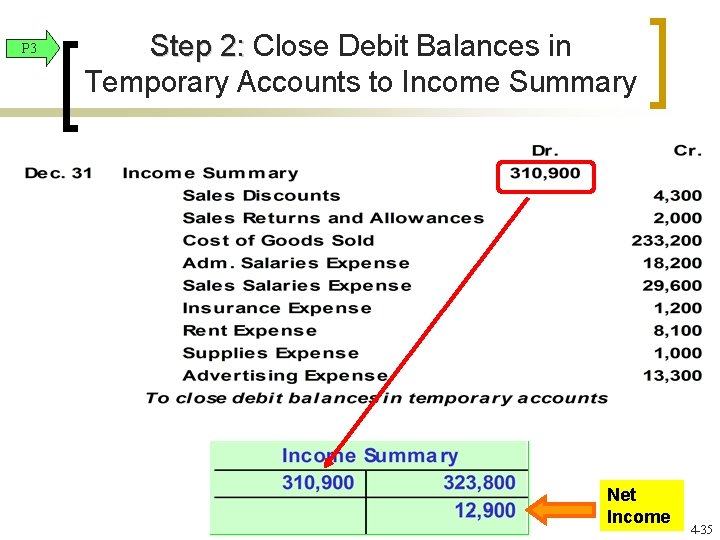
P 3 Step 2: Close Debit Balances in Temporary Accounts to Income Summary Net Income 4 -35
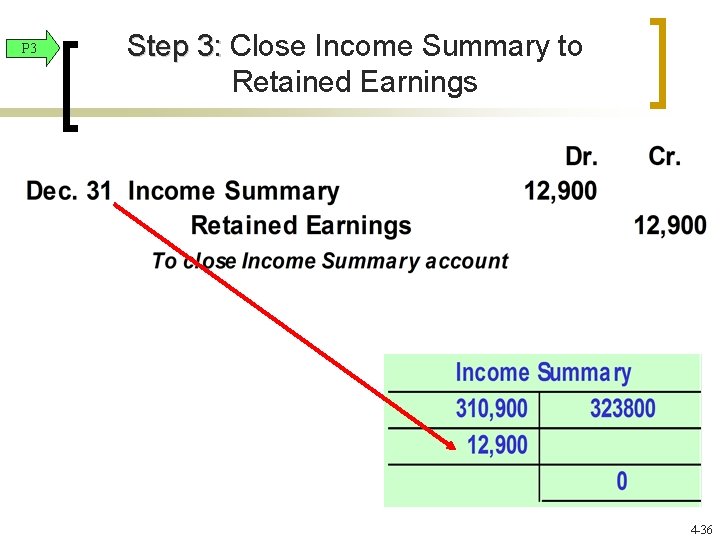
P 3 Step 3: Close Income Summary to Retained Earnings 4 -36
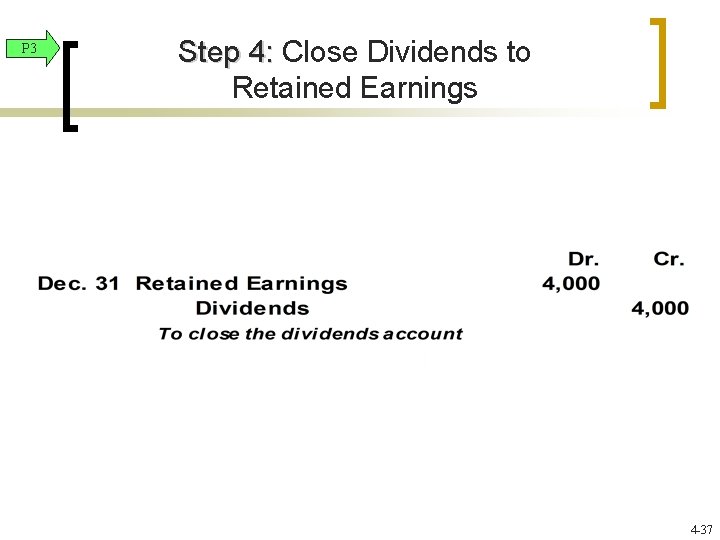
P 3 Step 4: Close Dividends to Retained Earnings 4 -37
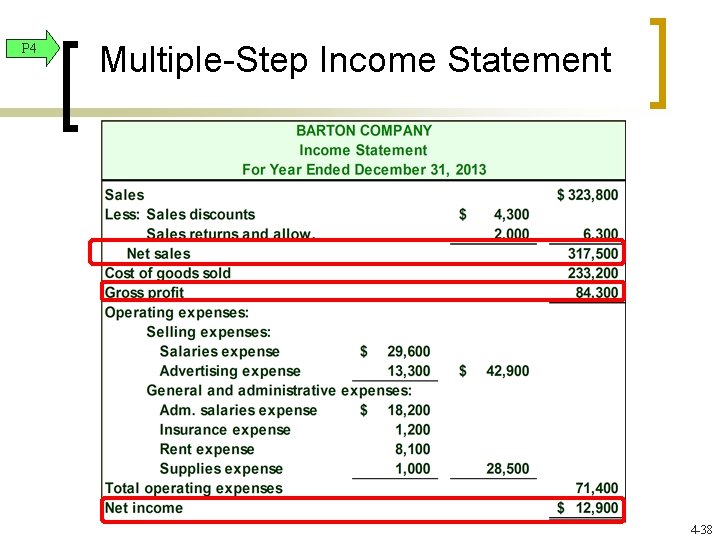
P 4 Multiple-Step Income Statement 4 -38
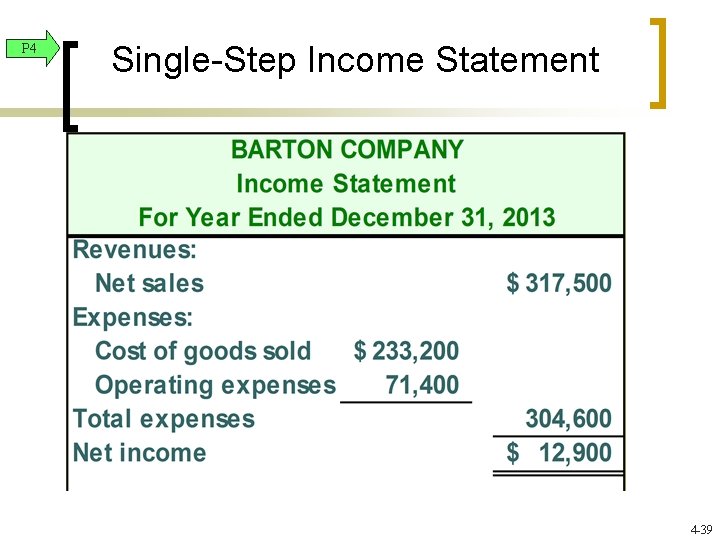
P 4 Single-Step Income Statement 4 -39
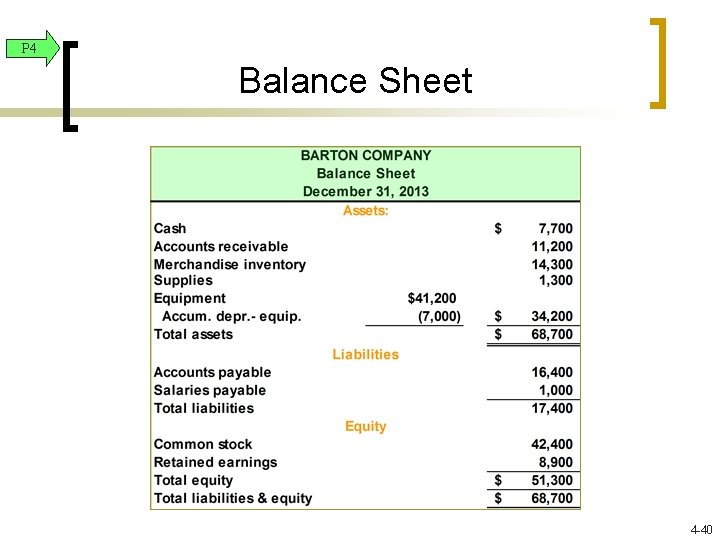
P 4 Balance Sheet 4 -40
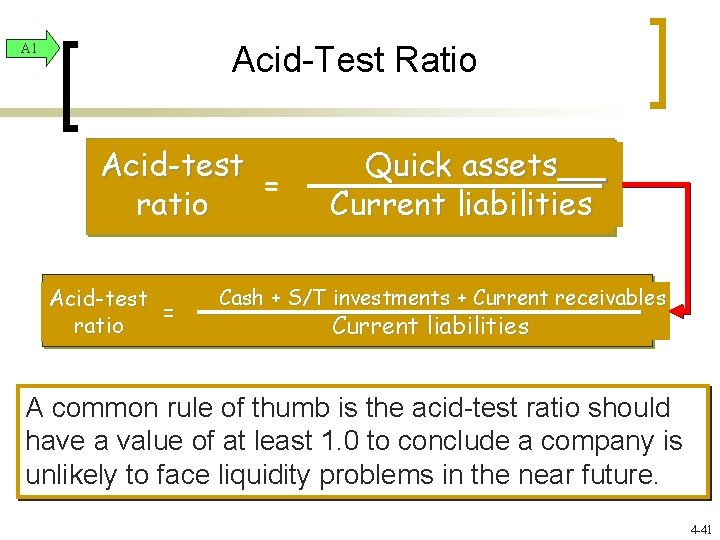
A 1 Acid-Test Ratio Acid-test = ratio Quick assets Current liabilities Cash + S/T investments + Current receivables Acid-test = ratio Current liabilities A common rule of thumb is the acid-test ratio should have a value of at least 1. 0 to conclude a company is unlikely to face liquidity problems in the near future. 4 -41
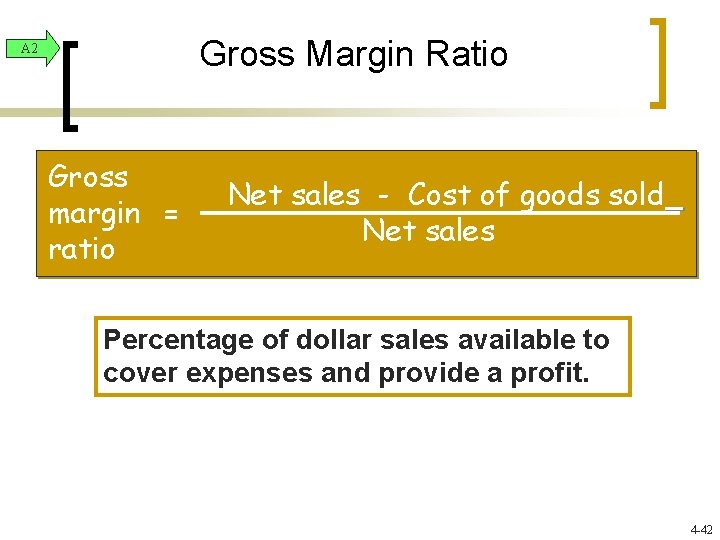
Gross Margin Ratio A 2 Gross margin = ratio Net sales - Cost of goods sold Net sales Percentage of dollar sales available to cover expenses and provide a profit. 4 -42
End of Chapter 4 4 -43