
Final Year Project Final Report Presentation Cheung Tsz
- Slides: 22
Final Year Project Final Report Presentation Cheung Tsz Kin 14074756 D FYP_19
A magnetic levitated train based on permanent magnet repulsive force Supervisor: Dr. Norbert Cheung
Content Introduction Objective Methodology Results and Discussion Conclusion
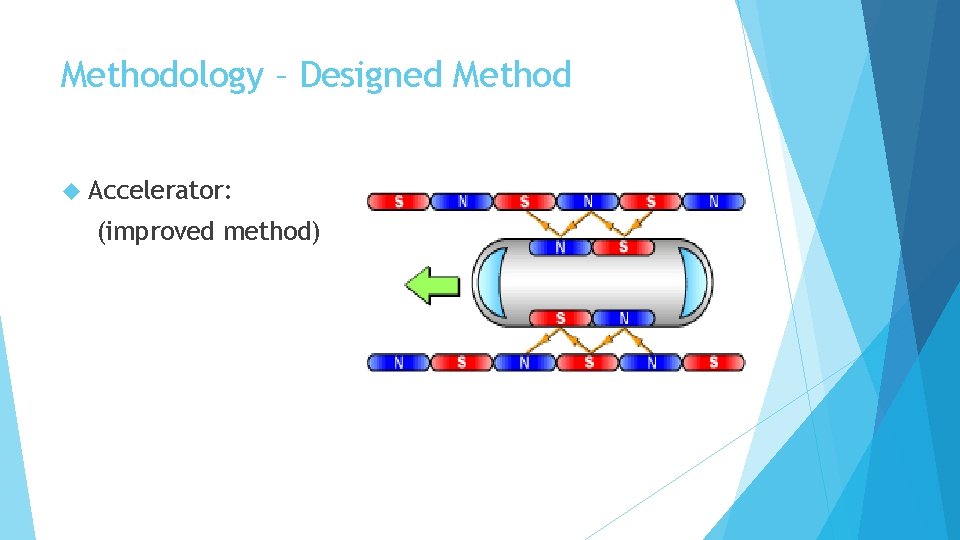
Introduction A system of train transportation Use 2 sets of magnets : 1 set is to repel and make the train floating 1 set is to accelerate the train
Introduction Advantage: ü No friction → increase efficiency ü Very high speed → up to 603 km/h (world record from Japan) ü Environmental friendly → absence of wheels and combustion
Introduction Disadvantage: • High cost on initial setup
Objective Build To a magnetic levitated train model demonstrate and investigate the basic principle of magnetic levitated train
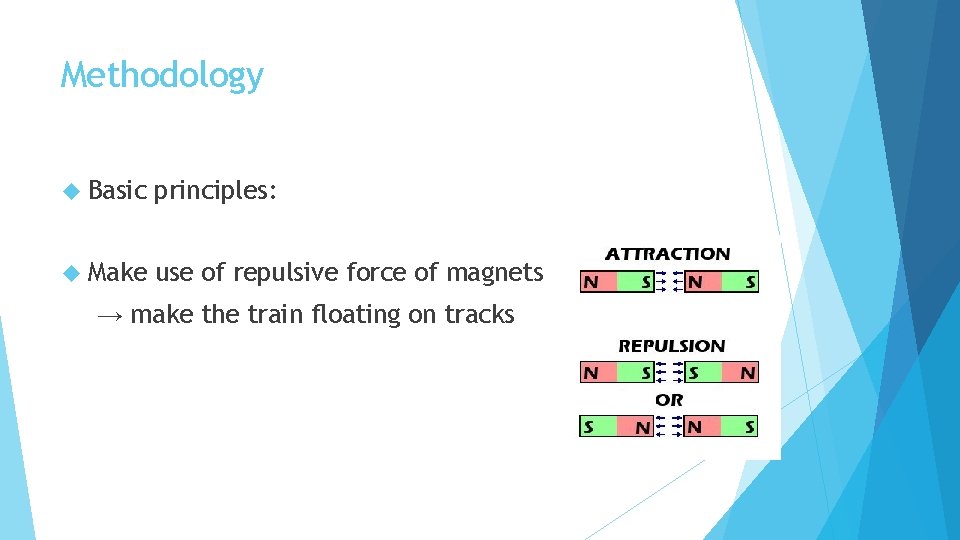
Methodology Basic principles: Make use of repulsive force of magnets → make the train floating on tracks
Methodology Divided into 3 components: • Track • Train • Accelerator
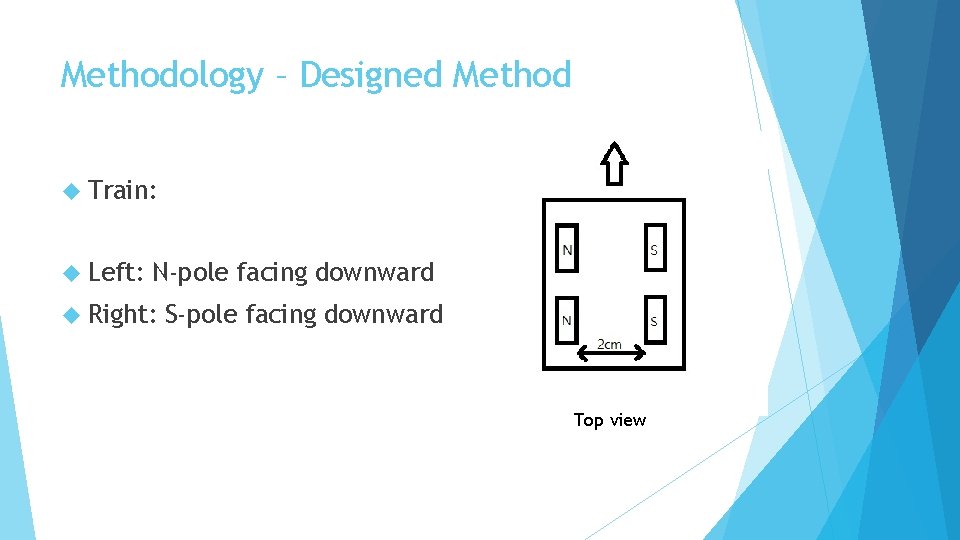
Methodology – Designed Method Train: Left: N-pole facing downward Right: S-pole facing downward Top view
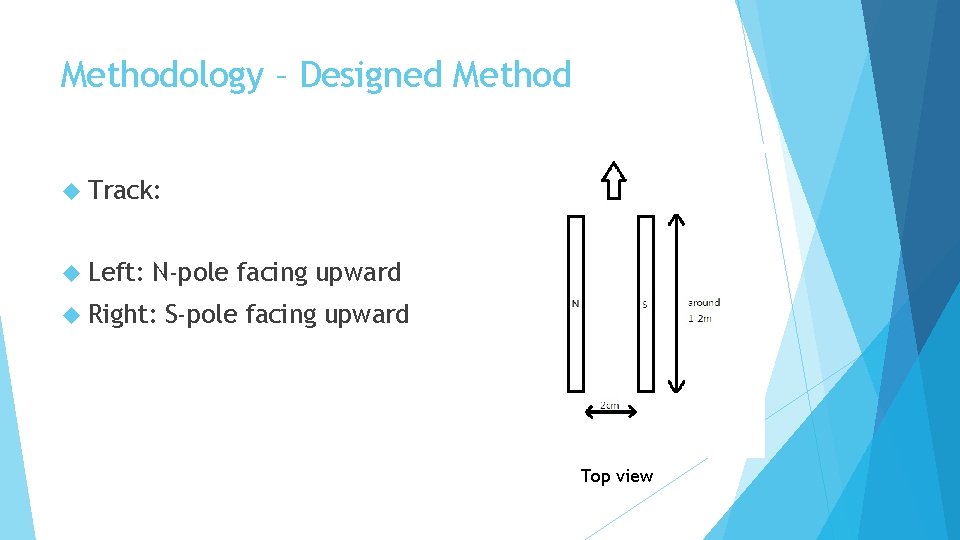
Methodology – Designed Method Track: Left: N-pole facing upward Right: S-pole facing upward Top view
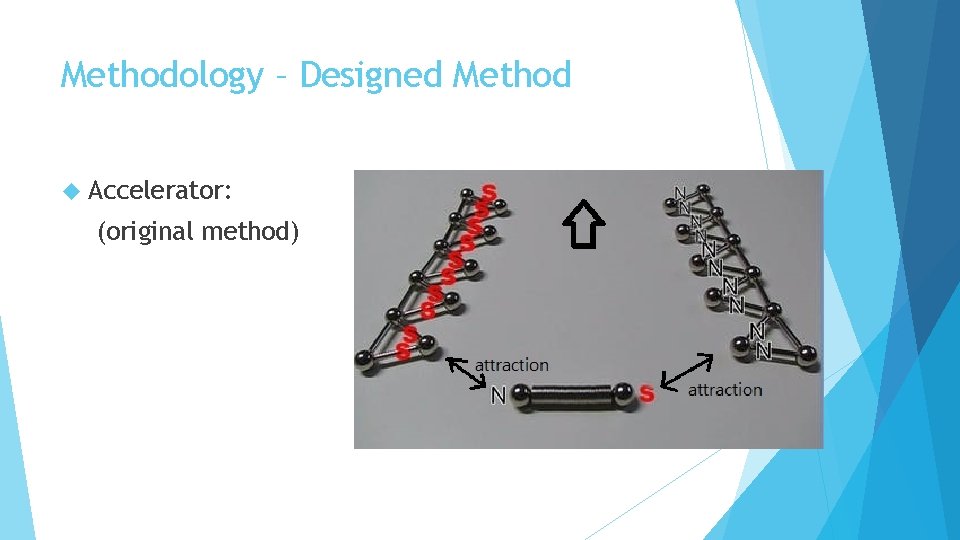
Methodology – Designed Method Accelerator: (original method)
Methodology – Designed Method Accelerator: (improved method)
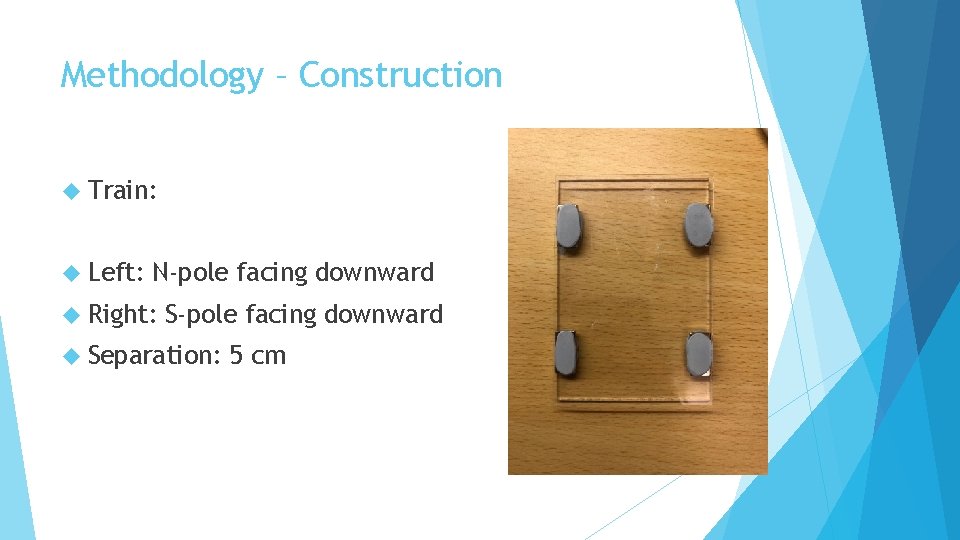
Methodology – Construction Train: Left: N-pole facing downward Right: S-pole facing downward Separation: 5 cm
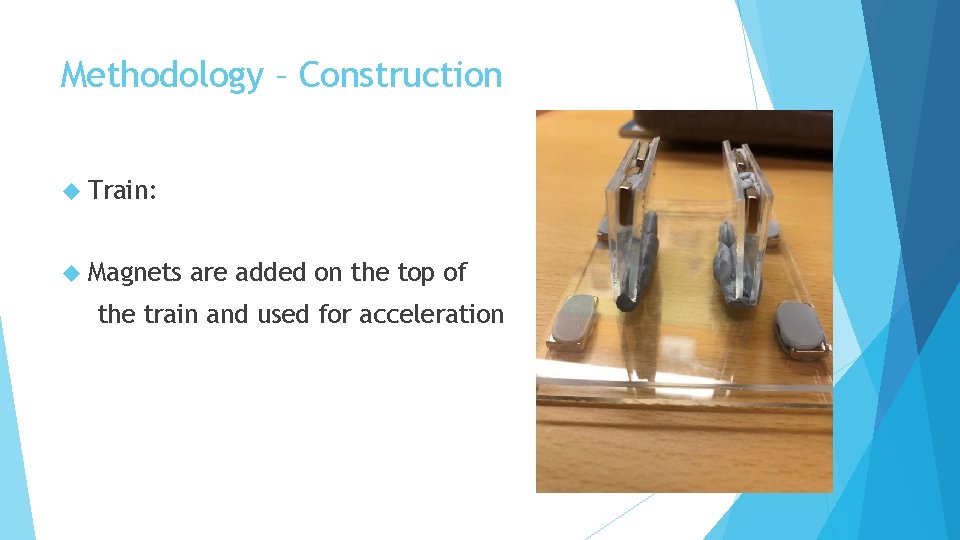
Methodology – Construction Train: Magnets are added on the top of the train and used for acceleration
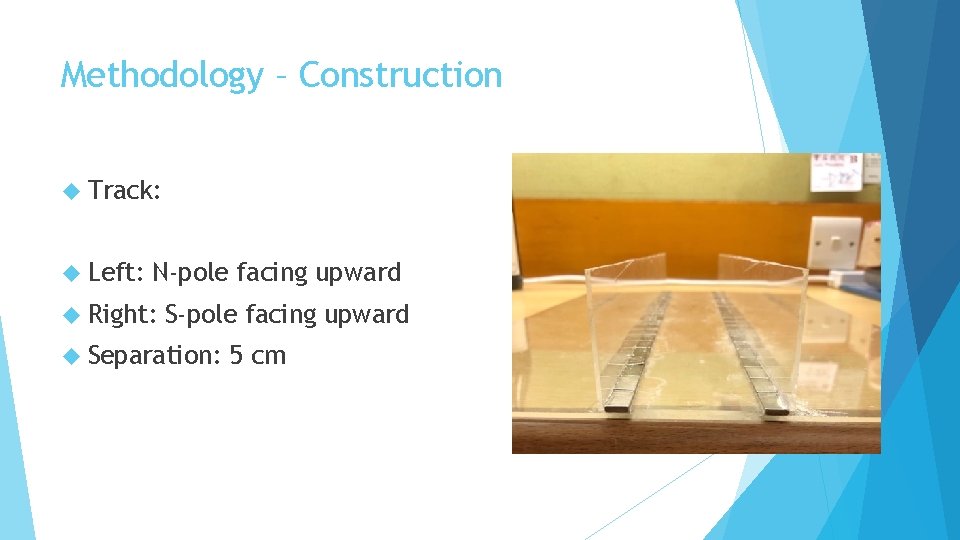
Methodology – Construction Track: Left: N-pole facing upward Right: S-pole facing upward Separation: 5 cm
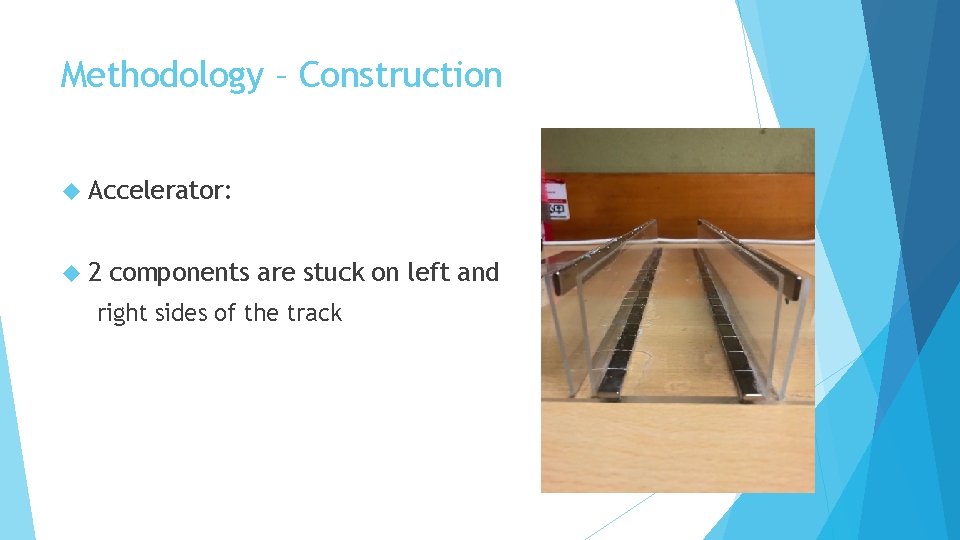
Methodology – Construction Accelerator: 2 components are stuck on left and right sides of the track
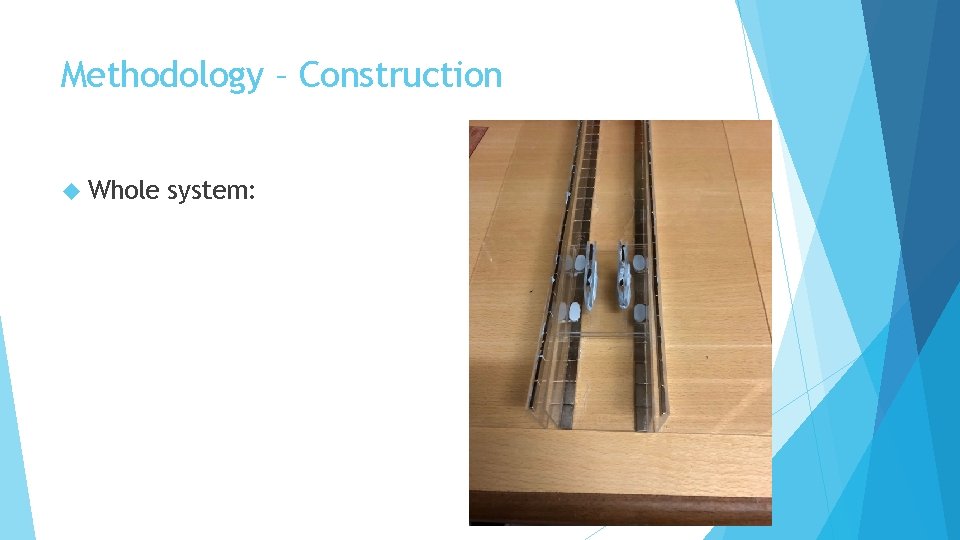
Methodology – Construction Whole system:
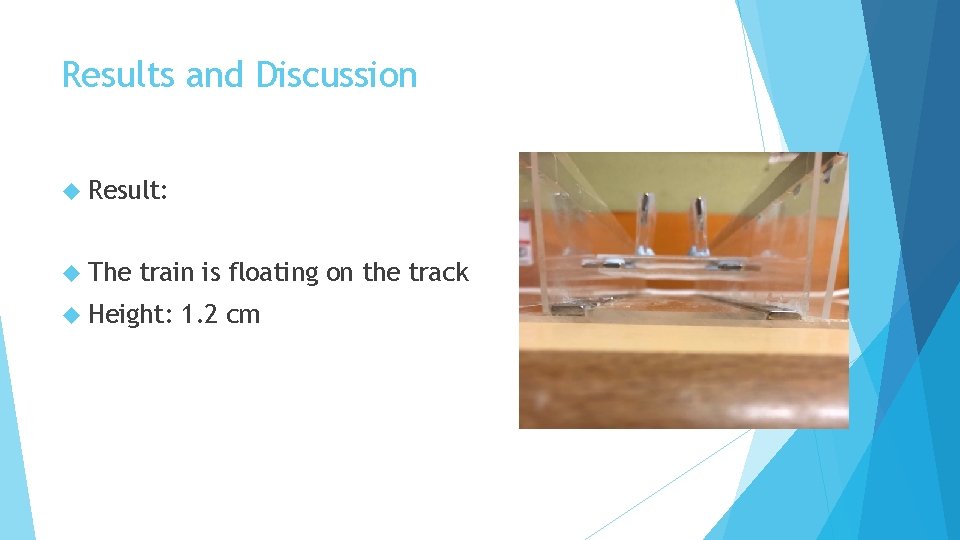
Results and Discussion Result: The train is floating on the track Height: 1. 2 cm
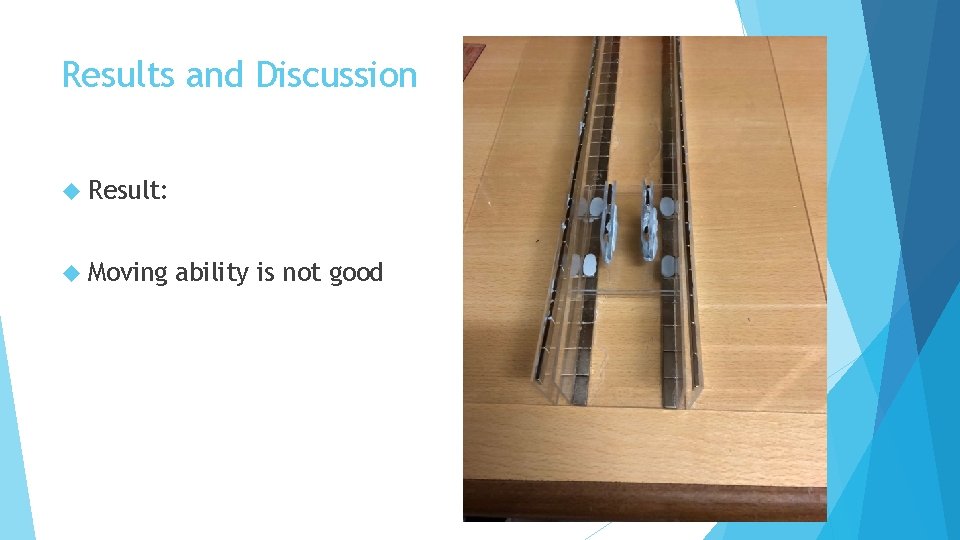
Results and Discussion Result: Moving ability is not good
Conclusion Learnt a lot through building the maglev model Limitation: strength of magnets cannot be modified Recommendation: choose a suitable strength or kind of magnets
The End Thank you for listening