
Final Effluent Monitoring Application Product Data Tel 44



- Slides: 26
Final Effluent Monitoring Application & Product Data Tel: +44 (0) 1726 879800 www. partech. co. uk
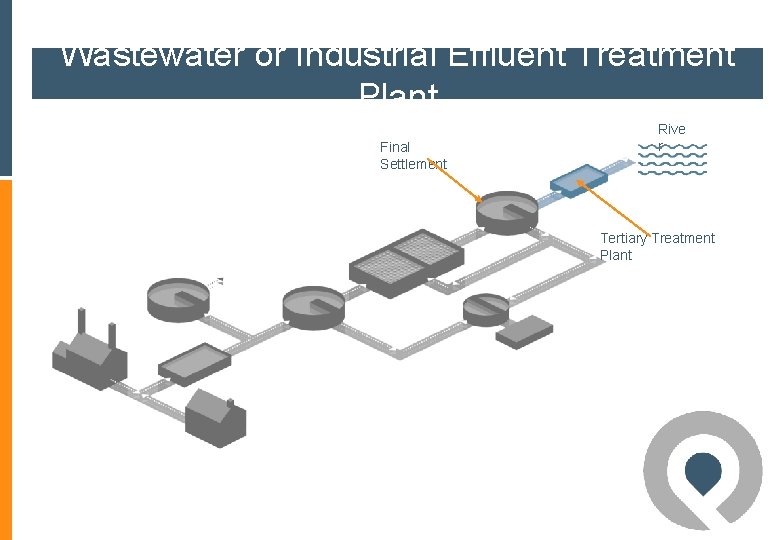
Wastewater or Industrial Effluent Treatment Plant Final Settlement Rive r Tertiary Treatment Plant
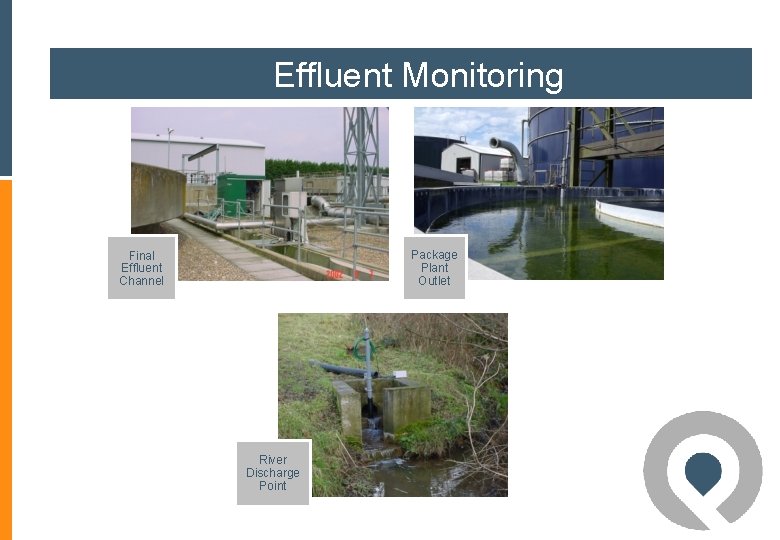
Effluent Monitoring Package Plant Outlet Final Effluent Channel River Discharge Point
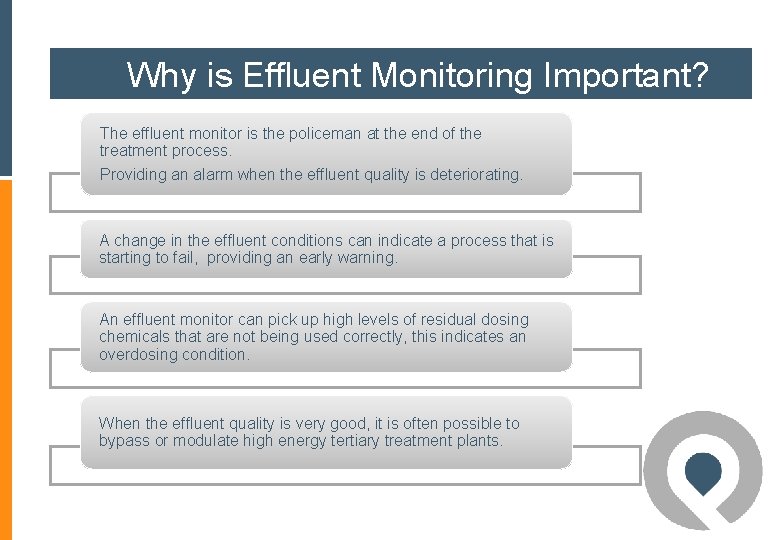
Why is Effluent Monitoring Important? The effluent monitor is the policeman at the end of the treatment process. Providing an alarm when the effluent quality is deteriorating. A change in the effluent conditions can indicate a process that is starting to fail, providing an early warning. An effluent monitor can pick up high levels of residual dosing chemicals that are not being used correctly, this indicates an overdosing condition. When the effluent quality is very good, it is often possible to bypass or modulate high energy tertiary treatment plants.
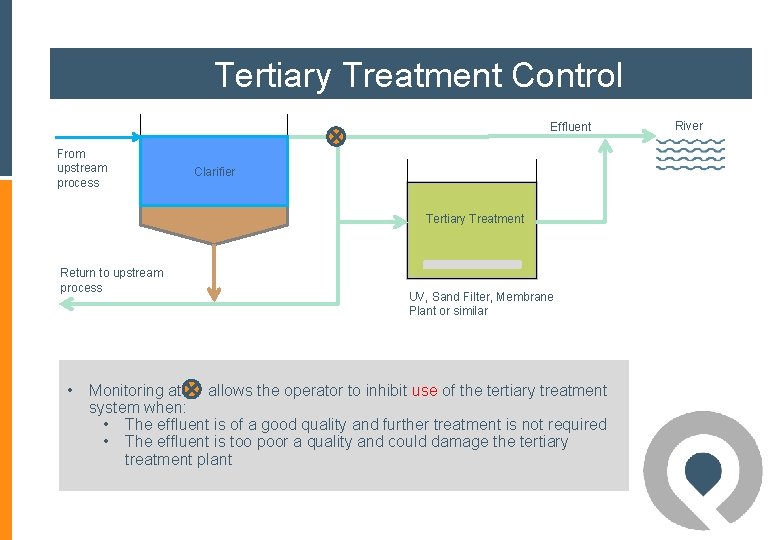
Tertiary Treatment Control Effluent From upstream process Clarifier Tertiary Treatment Return to upstream process • UV, Sand Filter, Membrane Plant or similar Monitoring at allows the operator to inhibit use of the tertiary treatment system when: • The effluent is of a good quality and further treatment is not required • The effluent is too poor a quality and could damage the tertiary treatment plant River
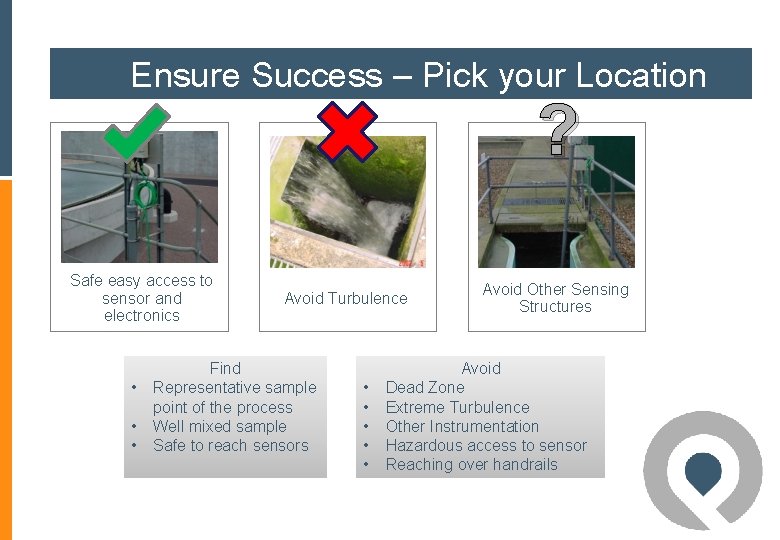
Ensure Success – Pick your Location ? Safe easy access to sensor and electronics • • • Avoid Turbulence Find Representative sample point of the process Well mixed sample Safe to reach sensors • • • Avoid Other Sensing Structures Avoid Dead Zone Extreme Turbulence Other Instrumentation Hazardous access to sensor Reaching over handrails
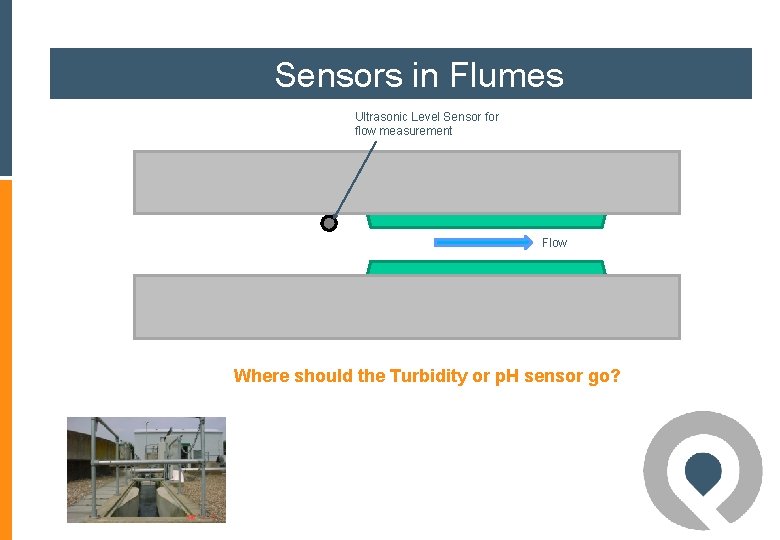
Sensors in Flumes Ultrasonic Level Sensor flow measurement Flow Where should the Turbidity or p. H sensor go?
Sensor in Flumes Not here – to turbulent and can’t guarantee level Ultrasonic Level Sensor flow measurement Flow Upstream of ultrasonic sensor, in controlled flow area Not here – it would interfere with level measurement
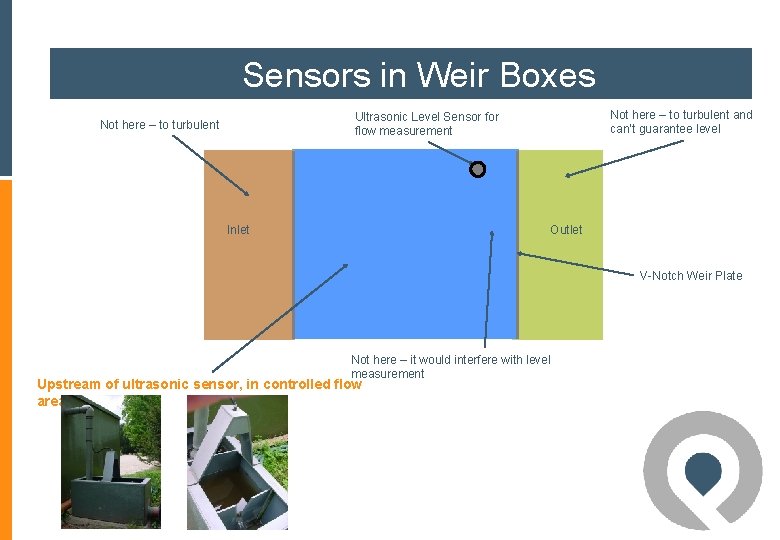
Sensors in Weir Boxes Not here – to turbulent and can’t guarantee level Ultrasonic Level Sensor flow measurement Not here – to turbulent Inlet Outlet Flow V-Notch Weir Plate Not here – it would interfere with level measurement Upstream of ultrasonic sensor, in controlled flow area
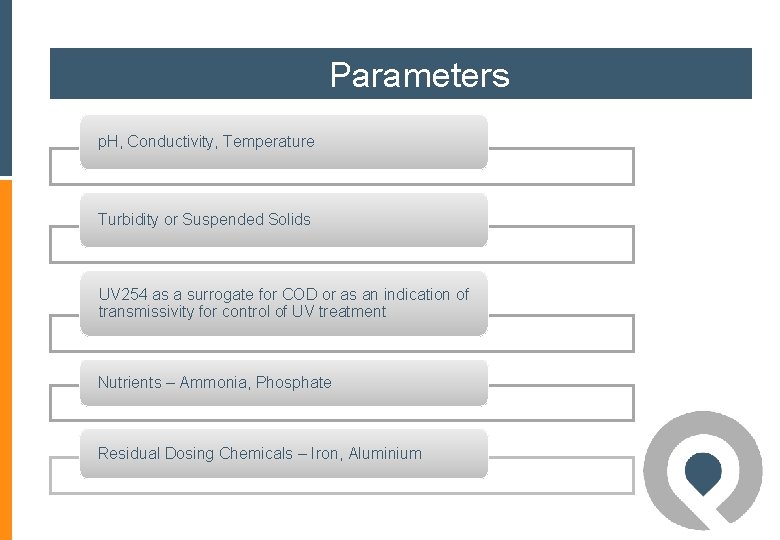
Parameters p. H, Conductivity, Temperature Turbidity or Suspended Solids UV 254 as a surrogate for COD or as an indication of transmissivity for control of UV treatment Nutrients – Ammonia, Phosphate Residual Dosing Chemicals – Iron, Aluminium
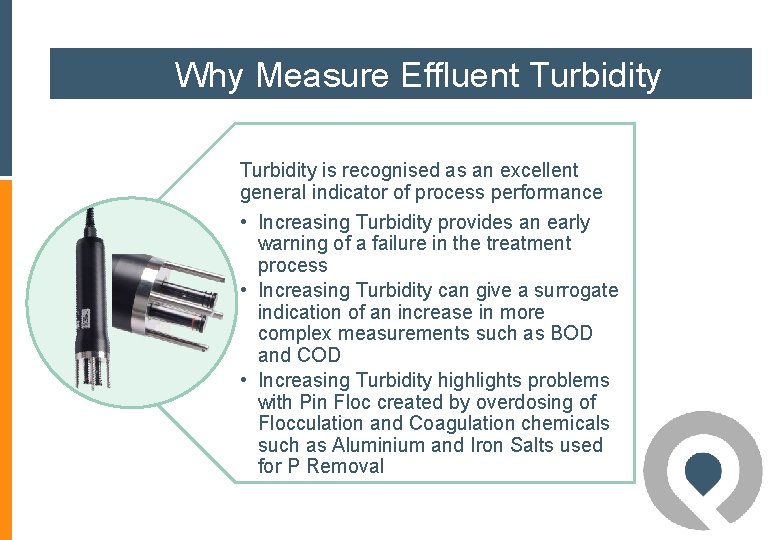
Why Measure Effluent Turbidity is recognised as an excellent general indicator of process performance • Increasing Turbidity provides an early warning of a failure in the treatment process • Increasing Turbidity can give a surrogate indication of an increase in more complex measurements such as BOD and COD • Increasing Turbidity highlights problems with Pin Floc created by overdosing of Flocculation and Coagulation chemicals such as Aluminium and Iron Salts used for P Removal
Suspended Solids or Turbidity Suspended Solids - Definition • The mass of dry solid material in a sample, the only true measurement is taken using a laboratory method involving manual filtration and drying of the sample (Standard Method: 2540 D) • Abbreviated as TSS or SS • Online sensors use inferential methods, relying on a calibration based on the laboratory method above Turbidity - Definition • Optical parameter indicating the clarity or cloudiness of a liquid • Wikipedia - Turbidity is the cloudiness or haziness of a fluid caused by individual particles (suspended solids) that are generally invisible to the naked eye, similar to smoke in air. The measurement of turbidity is a key test of water quality. • Typically units of FTU and NTU are used with calibration against a ? ? ? standard
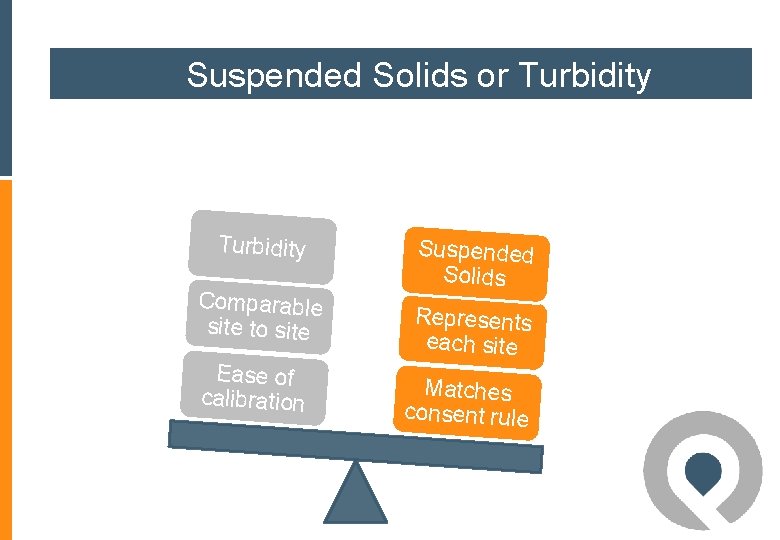
Suspended Solids or Turbidity Comparable site to site Ease of calibration Suspended Solids Represents each site Matches consent rule
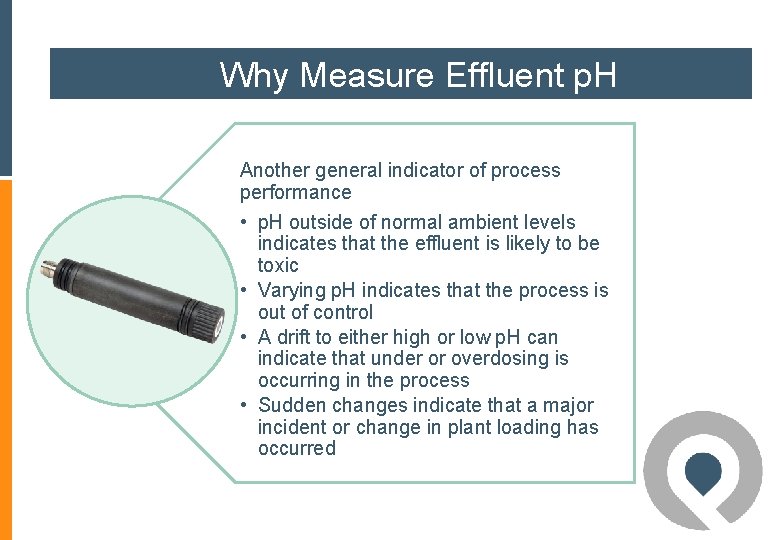
Why Measure Effluent p. H Another general indicator of process performance • p. H outside of normal ambient levels indicates that the effluent is likely to be toxic • Varying p. H indicates that the process is out of control • A drift to either high or low p. H can indicate that under or overdosing is occurring in the process • Sudden changes indicate that a major incident or change in plant loading has occurred
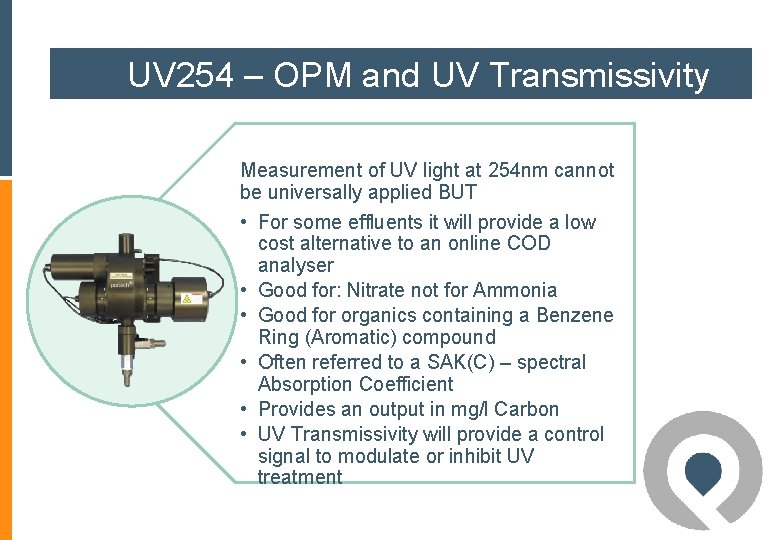
UV 254 – OPM and UV Transmissivity Measurement of UV light at 254 nm cannot be universally applied BUT • For some effluents it will provide a low cost alternative to an online COD analyser • Good for: Nitrate not for Ammonia • Good for organics containing a Benzene Ring (Aromatic) compound • Often referred to a SAK(C) – spectral Absorption Coefficient • Provides an output in mg/l Carbon • UV Transmissivity will provide a control signal to modulate or inhibit UV treatment
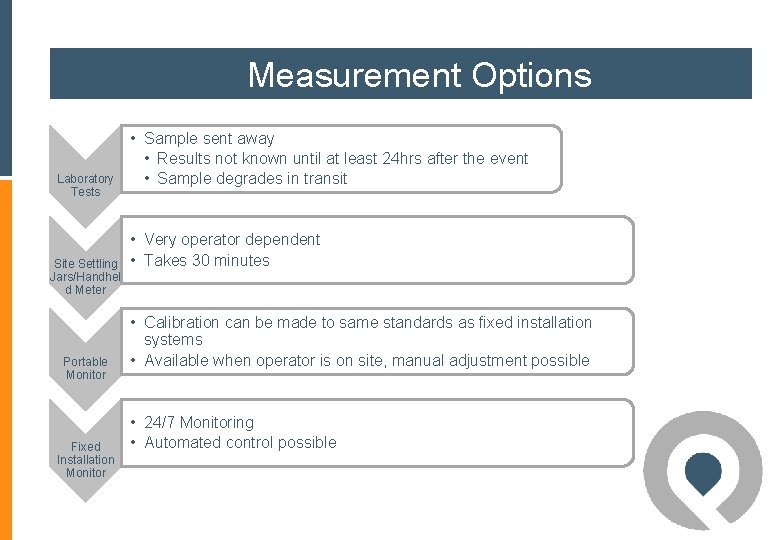
Measurement Options Laboratory Tests Site Settling Jars/Handhel d Meter Portable Monitor Fixed Installation Monitor • Sample sent away • Results not known until at least 24 hrs after the event • Sample degrades in transit • Very operator dependent • Takes 30 minutes • Calibration can be made to same standards as fixed installation systems • Available when operator is on site, manual adjustment possible • 24/7 Monitoring • Automated control possible
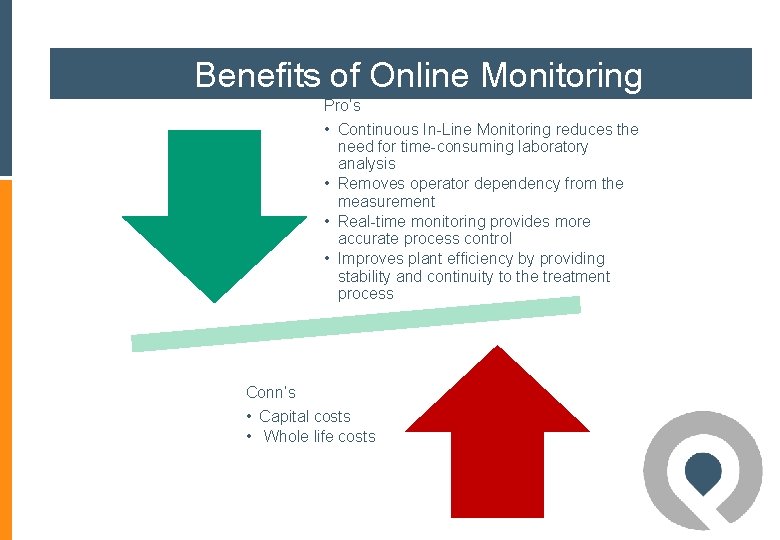
Benefits of Online Monitoring Pro’s • Continuous In-Line Monitoring reduces the need for time-consuming laboratory analysis • Removes operator dependency from the measurement • Real-time monitoring provides more accurate process control • Improves plant efficiency by providing stability and continuity to the treatment process Conn’s • Capital costs • Whole life costs
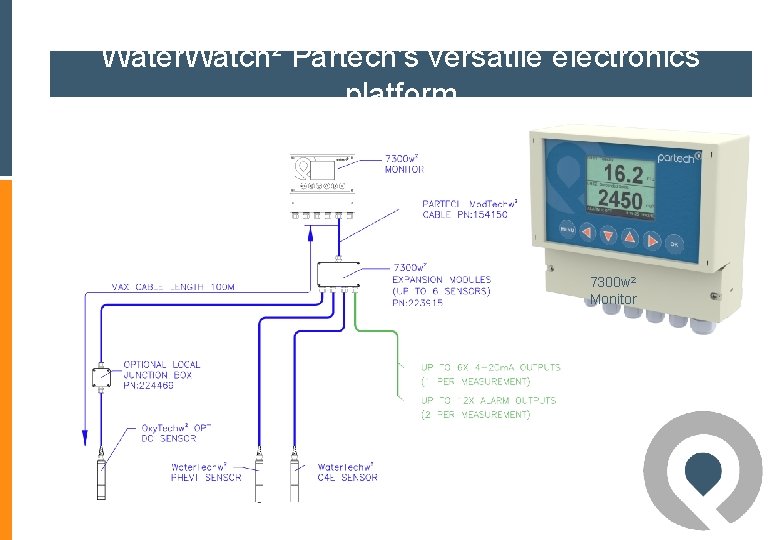
Water. Watch² Partech’s versatile electronics platform 7300 w 2 Monitor
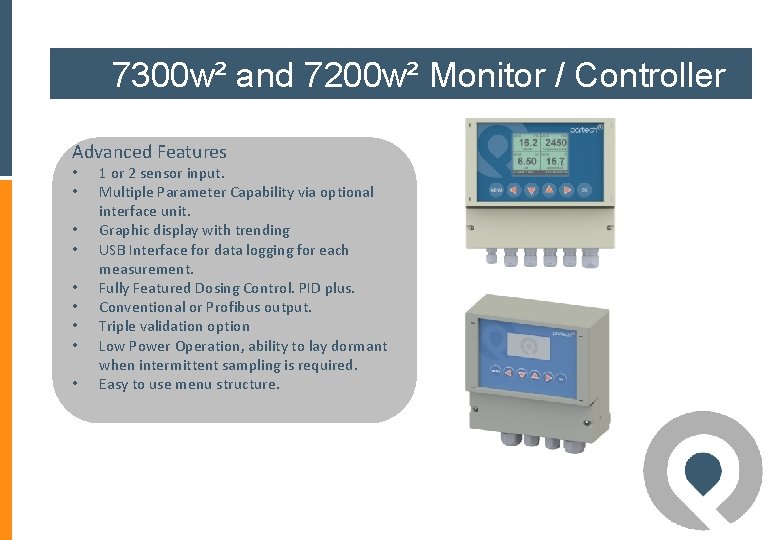
7300 w² and 7200 w² Monitor / Controller Advanced Features • • • 1 or 2 sensor input. Multiple Parameter Capability via optional interface unit. Graphic display with trending USB Interface for data logging for each measurement. Fully Featured Dosing Control. PID plus. Conventional or Profibus output. Triple validation option Low Power Operation, ability to lay dormant when intermittent sampling is required. Easy to use menu structure.
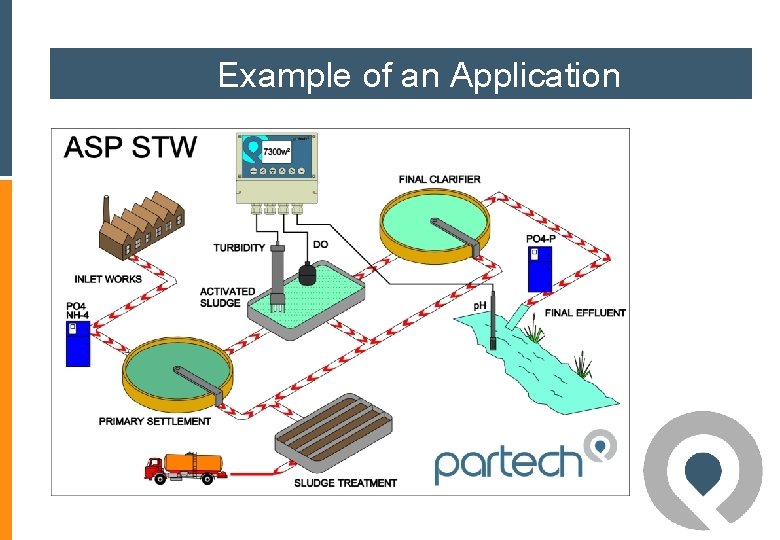
Example of an Application
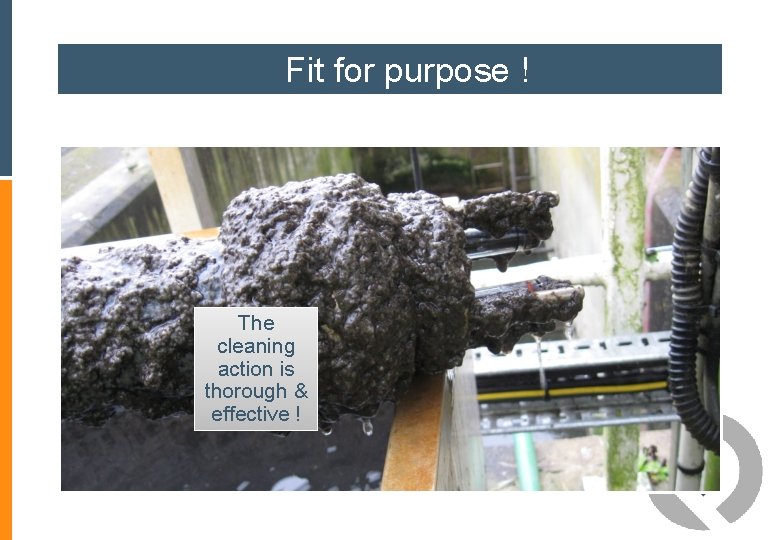
Fit for purpose ! The cleaning action is thorough & effective !
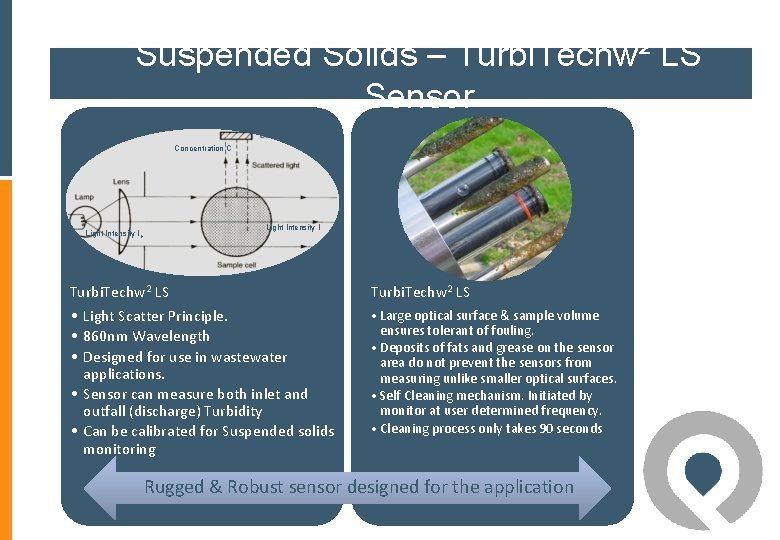
Suspended Solids – Turbi. Techw² LS Sensor Concentration C Light Intensity I o Light Intensity I Turbi. Techw 2 LS • Light Scatter Principle. • 860 nm Wavelength • Designed for use in wastewater applications. • Sensor can measure both inlet and outfall (discharge) Turbidity • Can be calibrated for Suspended solids monitoring Turbi. Techw 2 LS • Large optical surface & sample volume ensures tolerant of fouling. • Deposits of fats and grease on the sensor area do not prevent the sensors from measuring unlike smaller optical surfaces. • Self Cleaning mechanism. Initiated by monitor at user determined frequency. • Cleaning process only takes 90 seconds Rugged & Robust sensor designed for the application
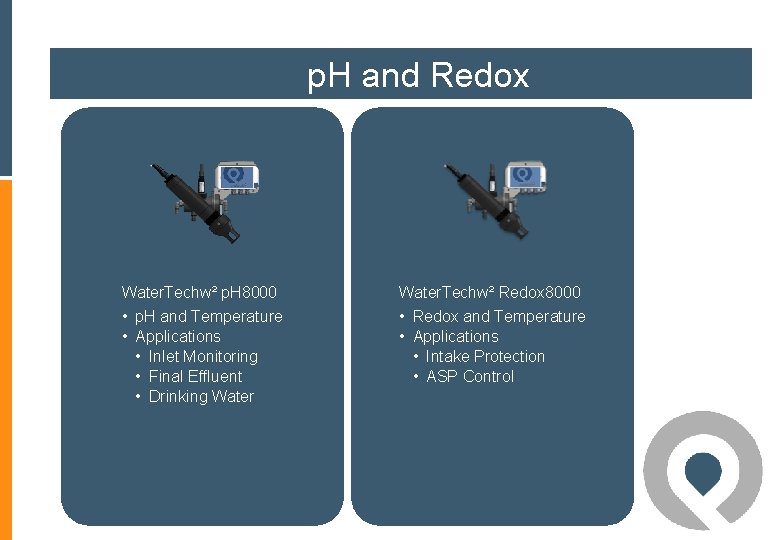
p. H and Redox Water. Techw² p. H 8000 Water. Techw² Redox 8000 • p. H and Temperature • Applications • Inlet Monitoring • Final Effluent • Drinking Water • Redox and Temperature • Applications • Intake Protection • ASP Control
Installation Consideration Sensor Fouling - The Turbi. Tech sensors have an integral automatic self cleaning system. - Optional. Sensors can be retracted and then extended when required for readings. Air Bubbles - Good Installation practise reduces problems, high damping on the reading reduces the problem Varying Sampling Characteristics - Not a problem in activated sludge process
Summary Avoid Prosecution Save money Good Effluent Monitoring will help: Improve response to process changes Remove operator error from process adjustment
Angus Fosten Sales and Marketing Director Mobile: +44 (0) 776 846 5581 Email: angus@partech. co. uk David Wilson. Export Sales Manager Mobile: +44 (0) 7968 603155 Email: david. wilson@partech. co. uk Andrew Wallace Field Sales Engineer Mobile: 0777 815 0118 Email: andrew@partech. co. uk Jan Johnson Sales Administrator Email: jan@partech. co. uk Clive Teobald Sales Engineer Mobile: 0796 601 3446 Email: clive@partech. co. uk Tel: +44 (0) 1726 879800 www. partech. co. uk