
FILTRATION CE 326 Principles of Environmental Engineering Iowa

- Slides: 46
FILTRATION CE 326 Principles of Environmental Engineering Iowa State University Department of Civil, Construction, and Environmental Engineering Tim Ellis, Associate Professor March 7, 2008
Definitions Ø Filtration: A process for separating s_______ and c _______ impurities from water by passage through a porous medium, usually a bed of sand. Most particles removed in filtration are much smaller than the pore size between the sand grains, and therefore, adequate particle d_______ (coagulation) is extremely important.
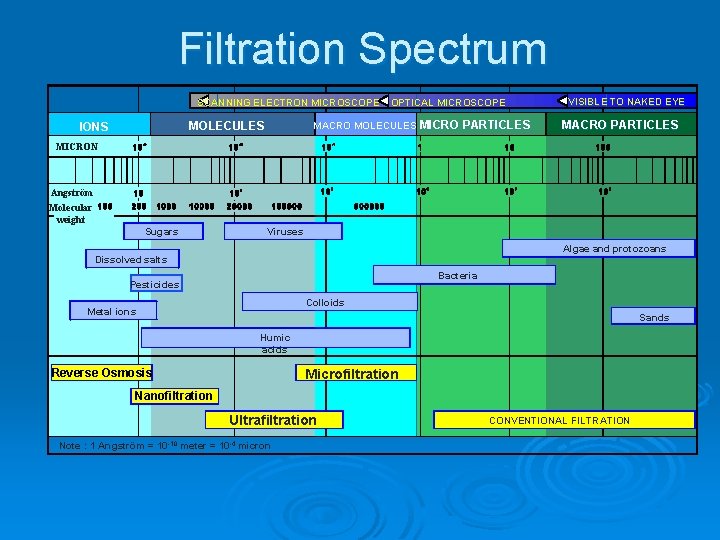
Filtration Spectrum SCANNING ELECTRON MICROSCOPE MACRO MOLECULES MICRO PARTICLES MOLECULES IONS OPTICAL MICROSCOPE VISIBLE TO NAKED EYE MACRO PARTICLES MICRON Angström Molecular weight Sugars Viruses Algae and protozoans Dissolved salts Bacteria Pesticides Colloids Metal ions Sands Humic acids Reverse Osmosis Microfiltration Nanofiltration Ultrafiltration Note : 1 Angström = 10 -10 meter = 10 -4 micron CONVENTIONAL FILTRATION
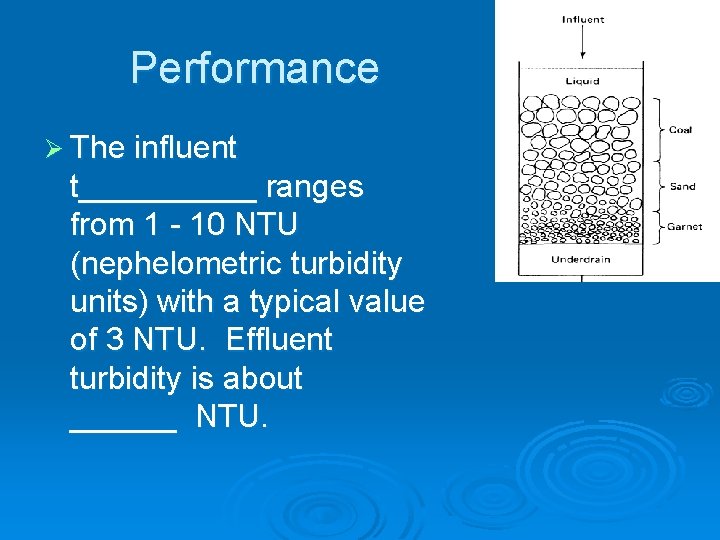
Performance Ø The influent t_____ ranges from 1 - 10 NTU (nephelometric turbidity units) with a typical value of 3 NTU. Effluent turbidity is about ______ NTU.
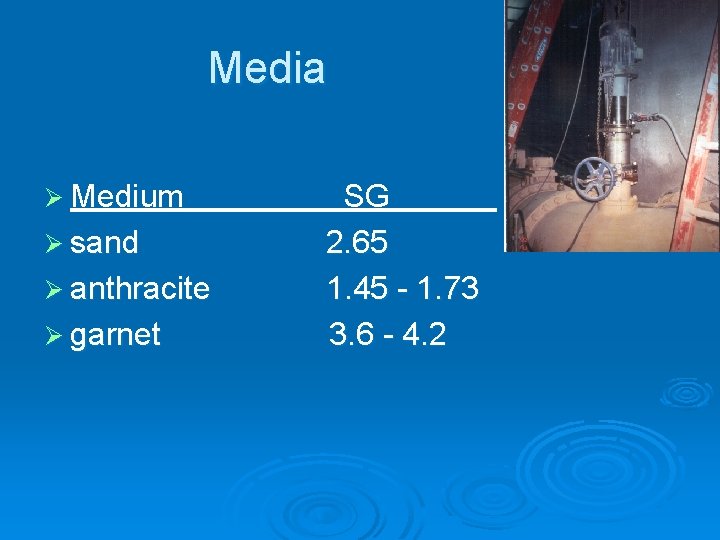
Media Ø Medium Ø sand Ø anthracite Ø garnet SG 2. 65 1. 45 - 1. 73 3. 6 - 4. 2
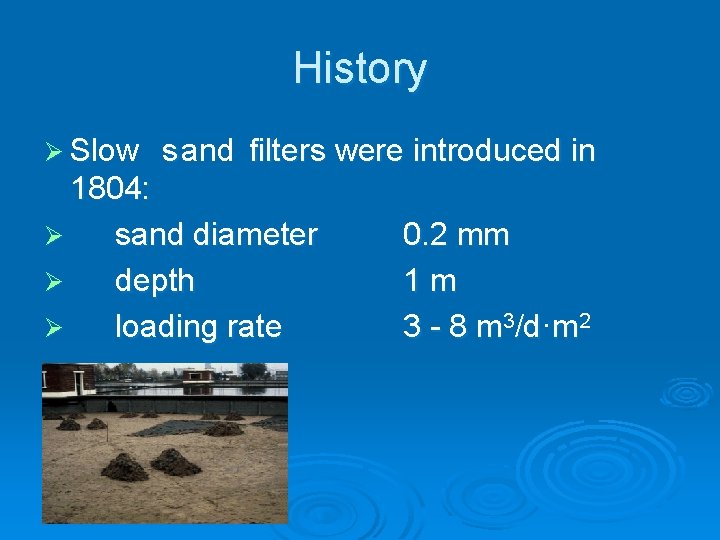
History Ø Slow s and filters were introduced in 1804: Ø sand diameter Ø depth Ø loading rate 0. 2 mm 1 m 3 - 8 m 3/d· /d m 2
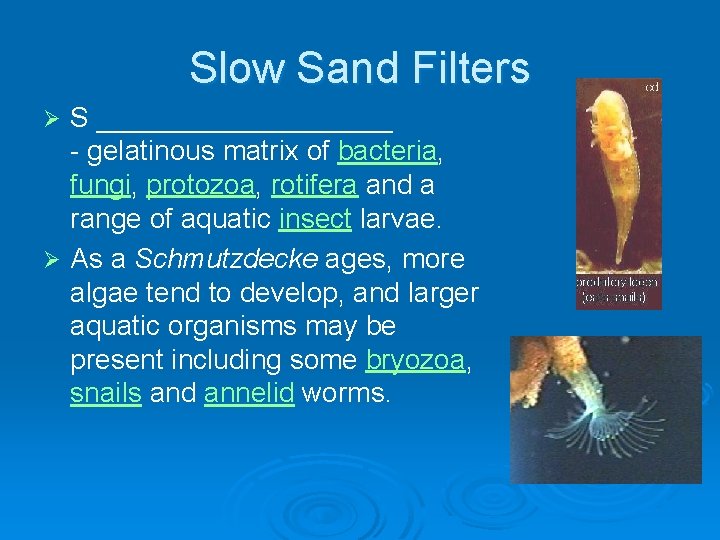
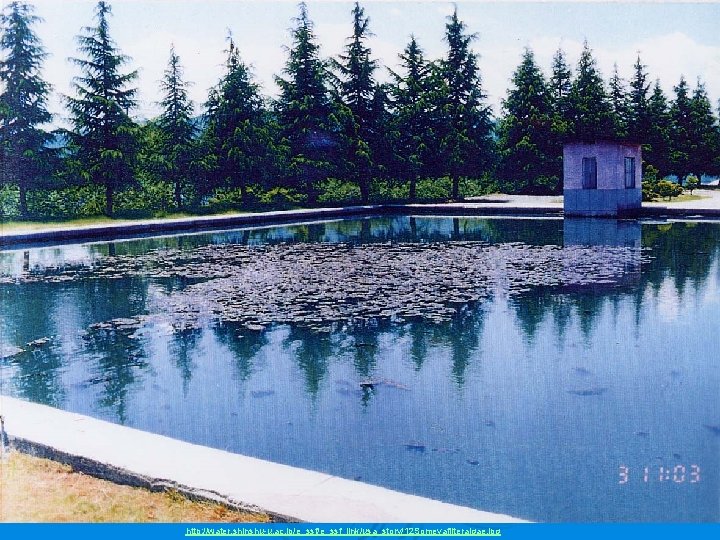
Slow Sand Filters S __________ - gelatinous matrix of bacteria, fungi, protozoa, rotifera and a range of aquatic insect larvae. Ø As a Schmutzdecke ages, more algae tend to develop, and larger aquatic organisms may be present including some bryozoa, snails and annelid worms. Ø
http: //water. shinshu-u. ac. jp/e_ssf_link/usa_story/12 Someyafilteralgae. jpg
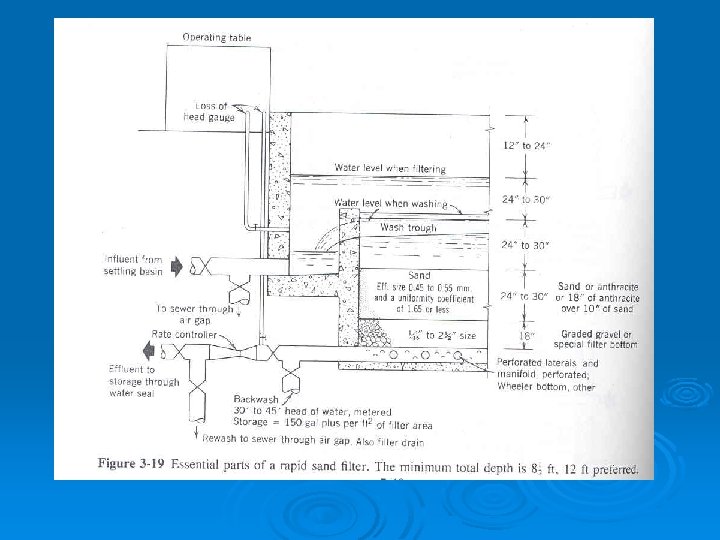
Ø Rapid sand filters were introduced about 1890: Ø effective size Ø uniformity coef. Ø depth Ø loading rate 0. 35 - 0. 55 mm 1. 3 - 1. 7 0. 3 - 0. 75 m 120 - 240 m 3/d· /d m 2
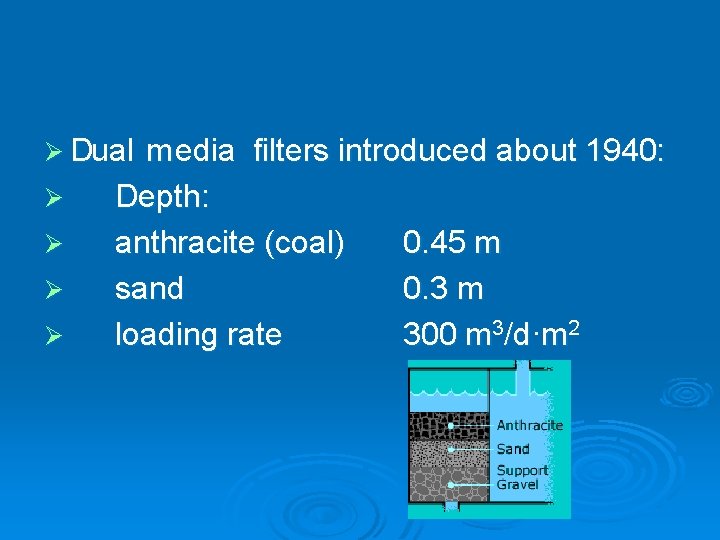
Ø Dual Ø Ø m edia filters introduced about 1940: Depth: anthracite (coal) 0. 45 m sand 0. 3 m loading rate 300 m 3/d· /d m 2
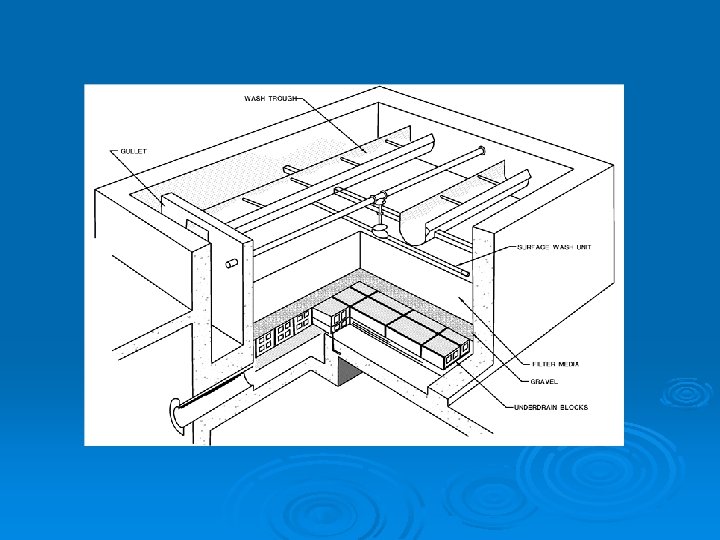
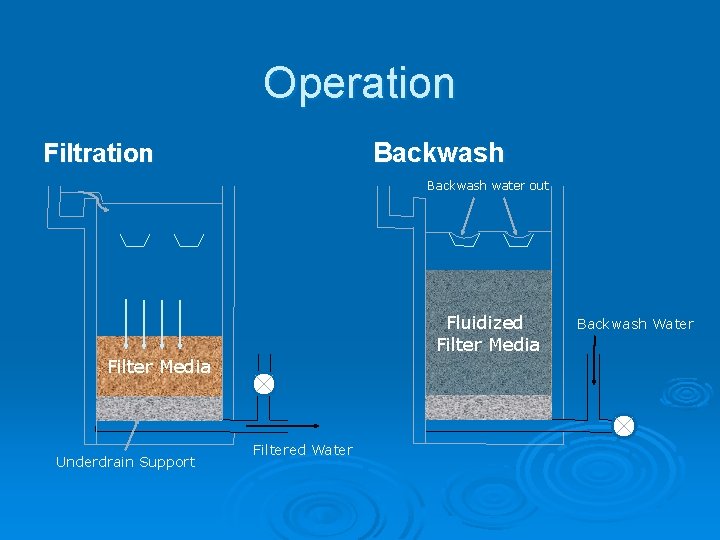
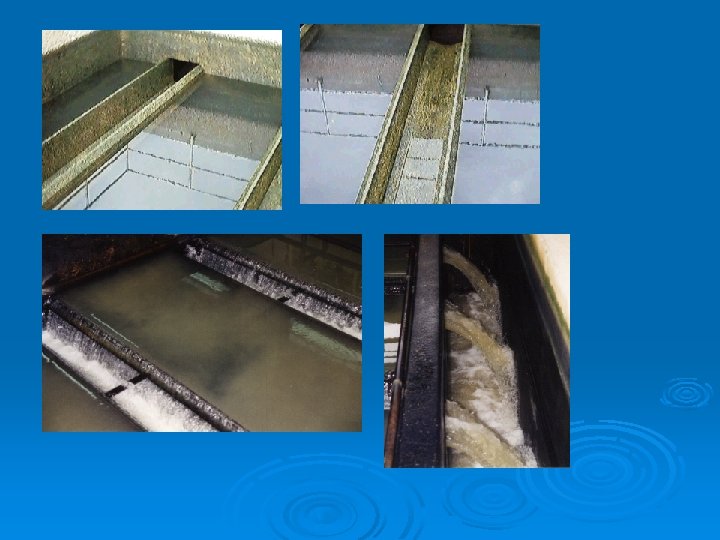
Operation Backwash Filtration Backwash water out Fluidized Filter Media Underdrain Support Filtered Water Backwash Water
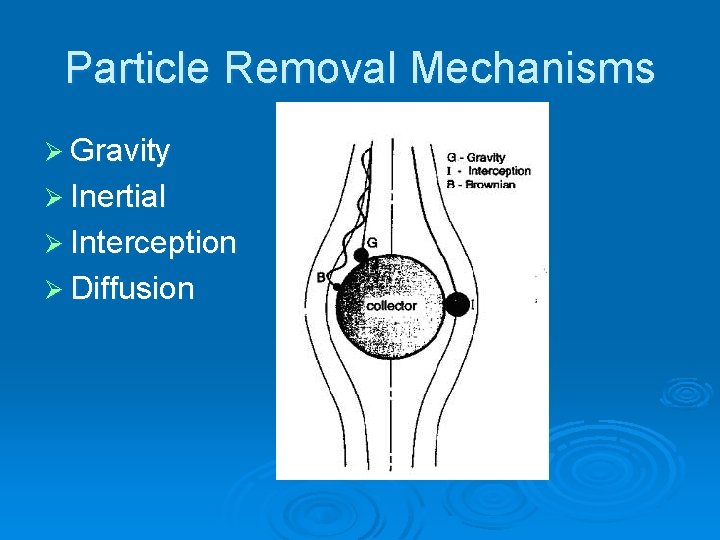
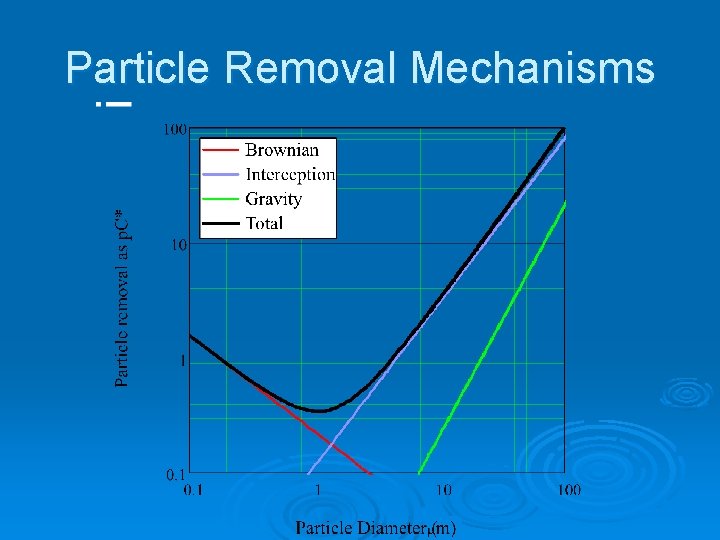
Particle Removal Mechanisms Ø Gravity Ø Inertial Ø Interception Ø Diffusion
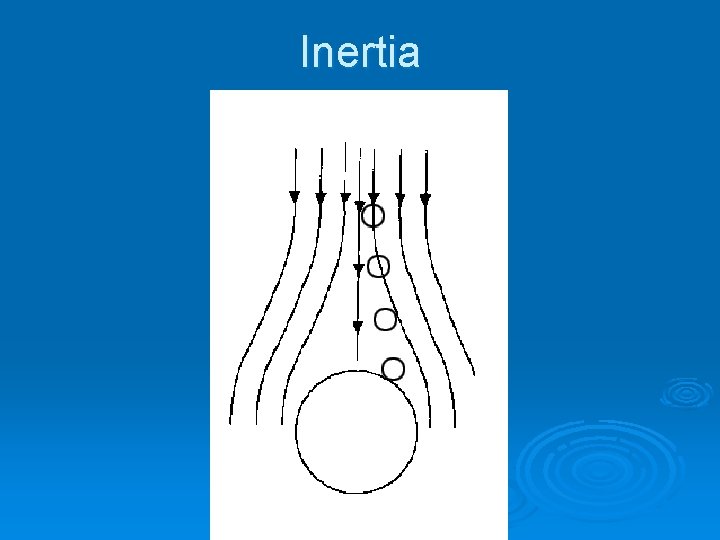
Inertia
Particle Removal Mechanisms
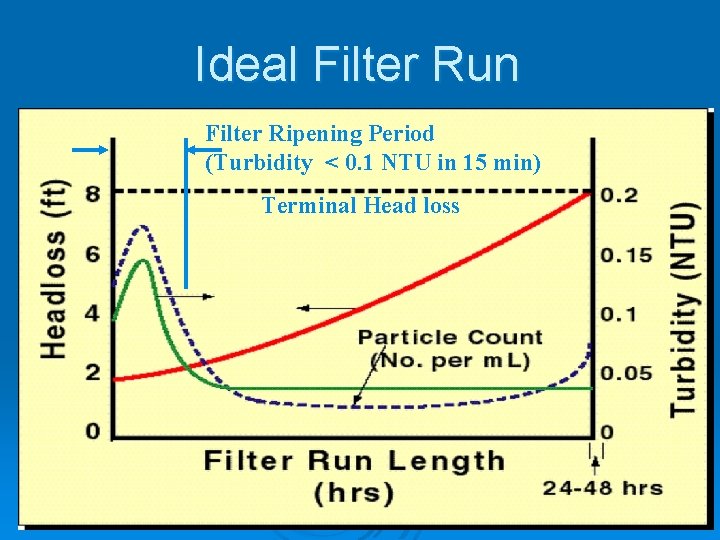
Ideal Filter Run Filter Ripening Period (Turbidity < 0. 1 NTU in 15 min) Terminal Head loss
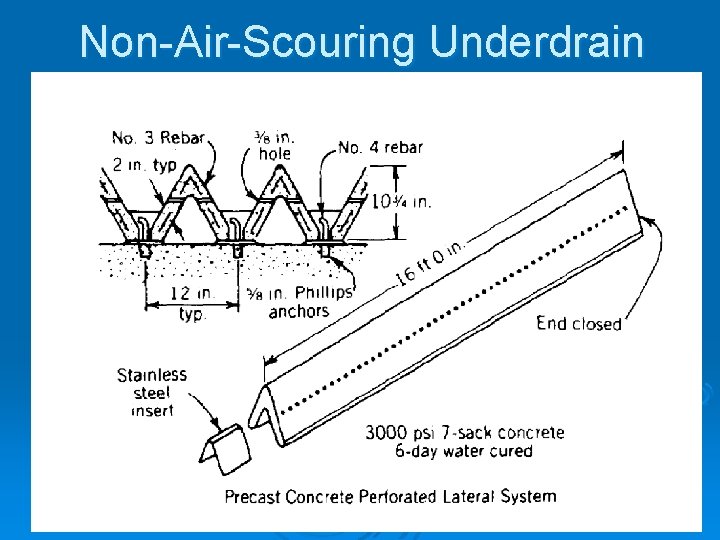
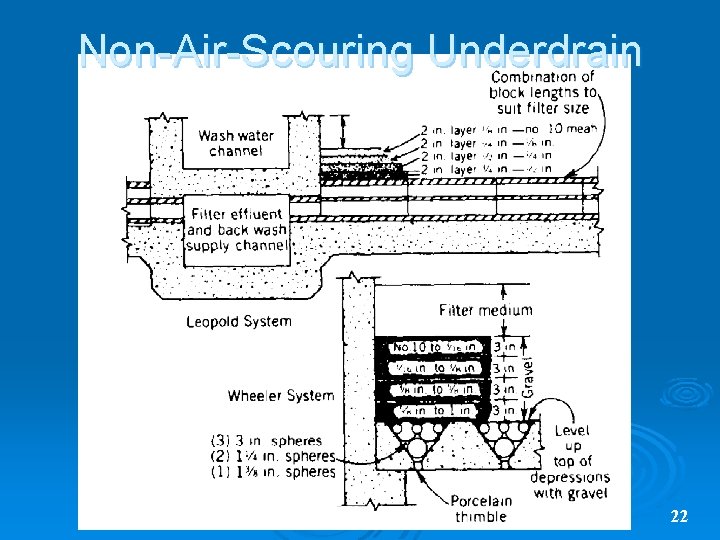
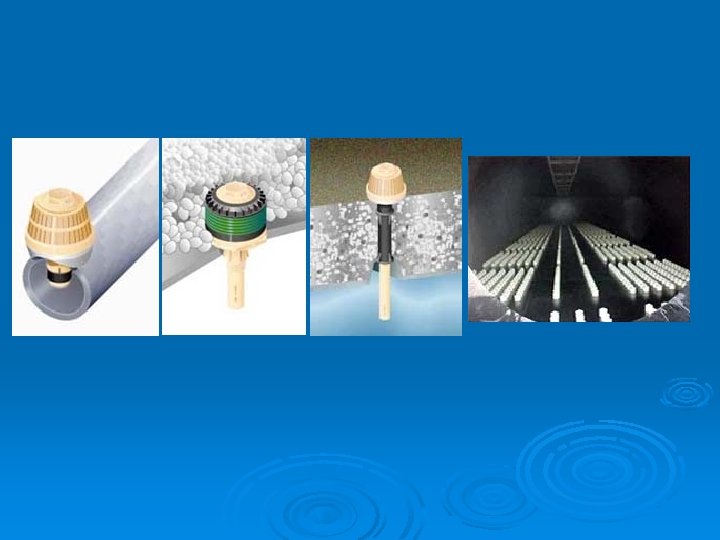
Non-Air-Scouring Underdrain 20
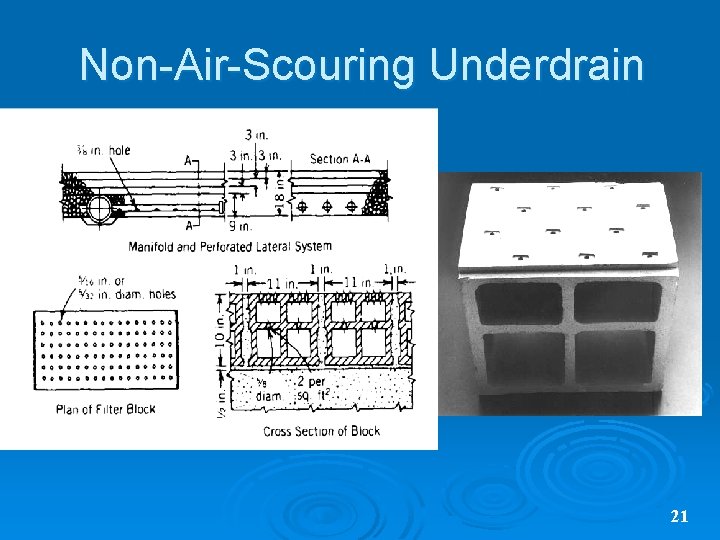
Non-Air-Scouring Underdrain 21
Non-Air-Scouring Underdrain 22
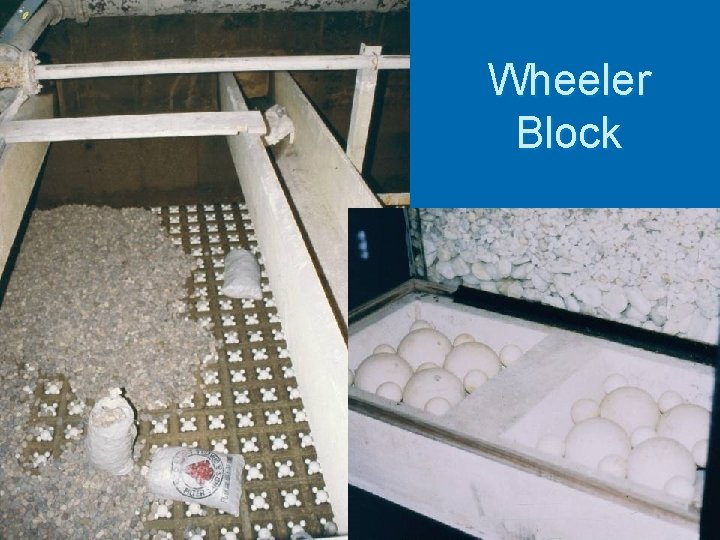
Wheeler Block
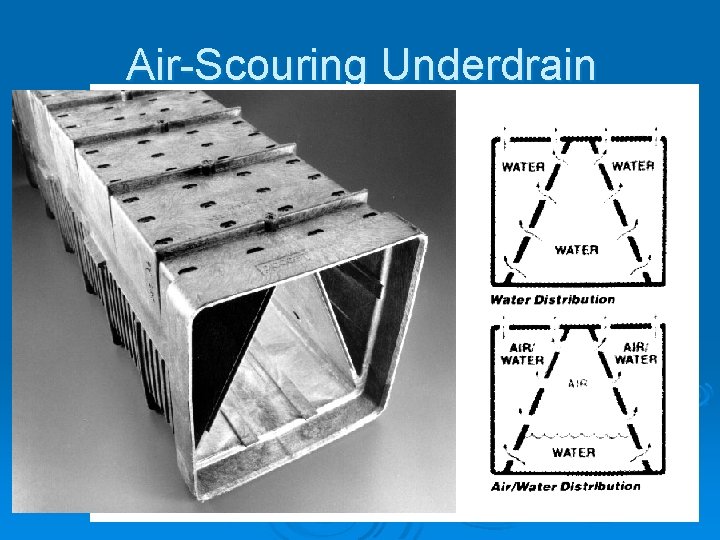
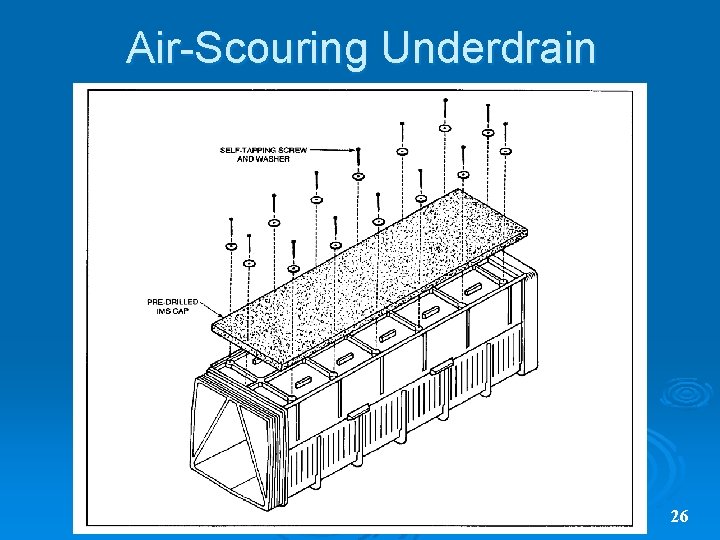
Air-Scouring Underdrain 24
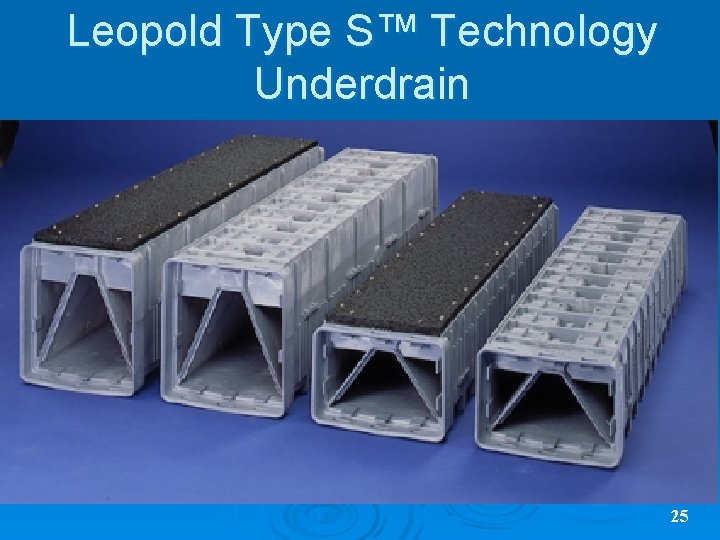
Leopold Type S™ Technology Underdrain 25
Air-Scouring Underdrain 26
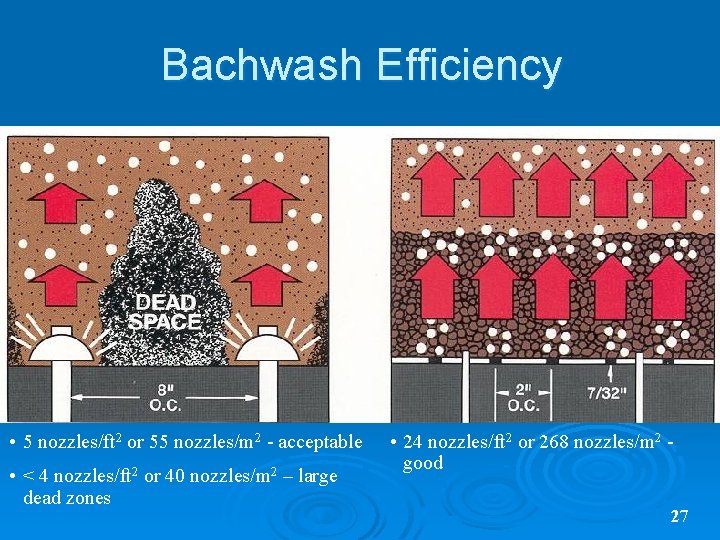
Bachwash Efficiency • 5 nozzles/ft 2 or 55 nozzles/m 2 - acceptable • < 4 nozzles/ft 2 or 40 nozzles/m 2 – large dead zones • 24 nozzles/ft 2 or 268 nozzles/m 2 good 27
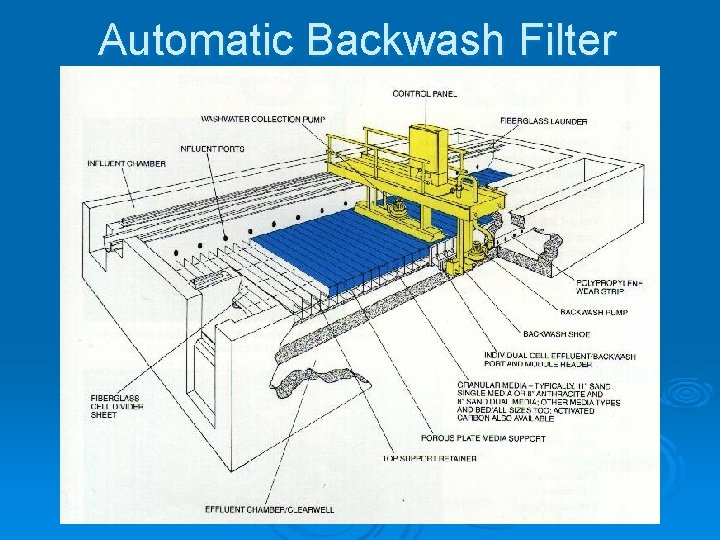
Automatic Backwash Filter
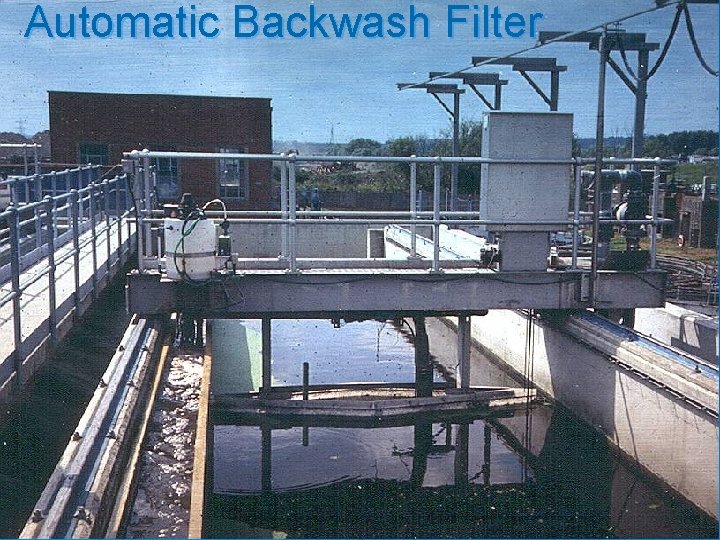
Automatic Backwash Filter
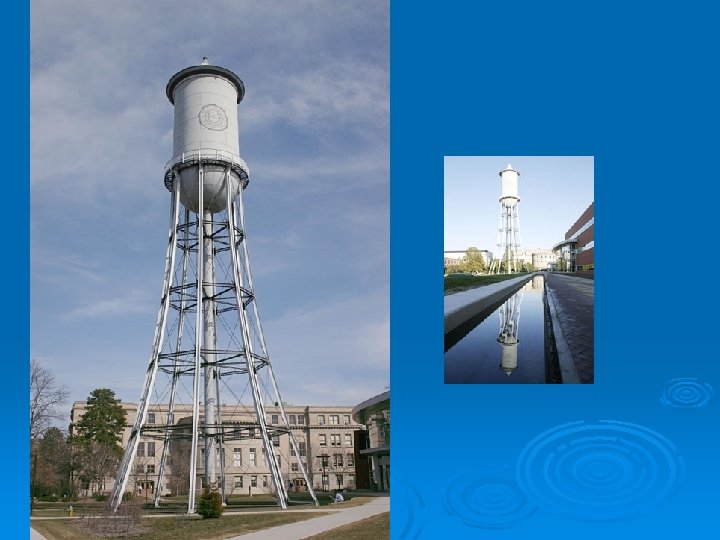
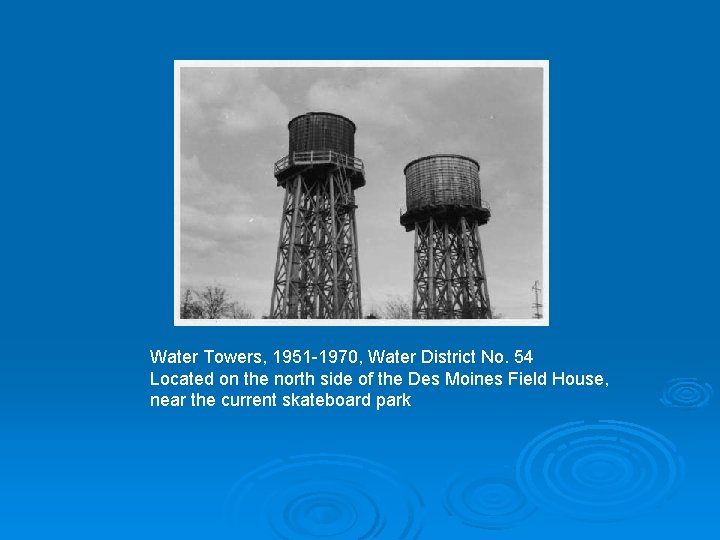
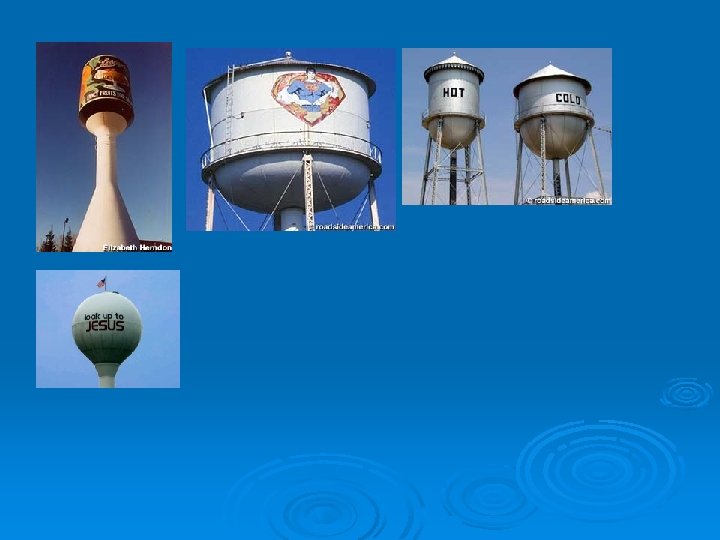
Water Towers, 1951 -1970, Water District No. 54 Located on the north side of the Des Moines Field House, near the current skateboard park
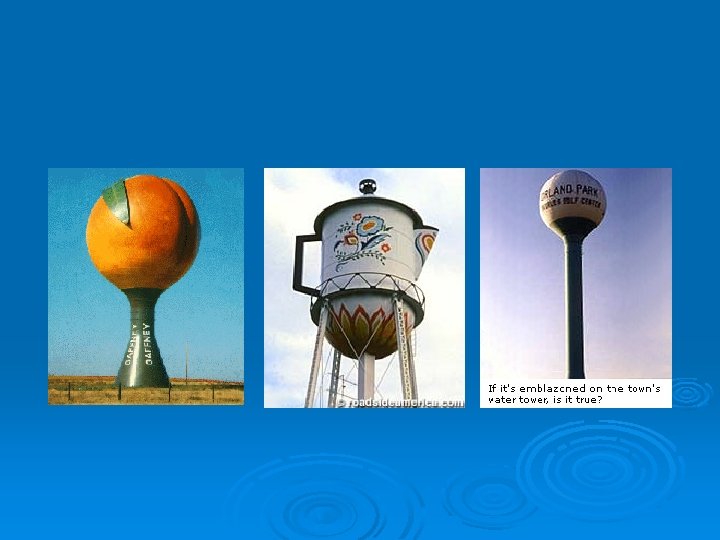
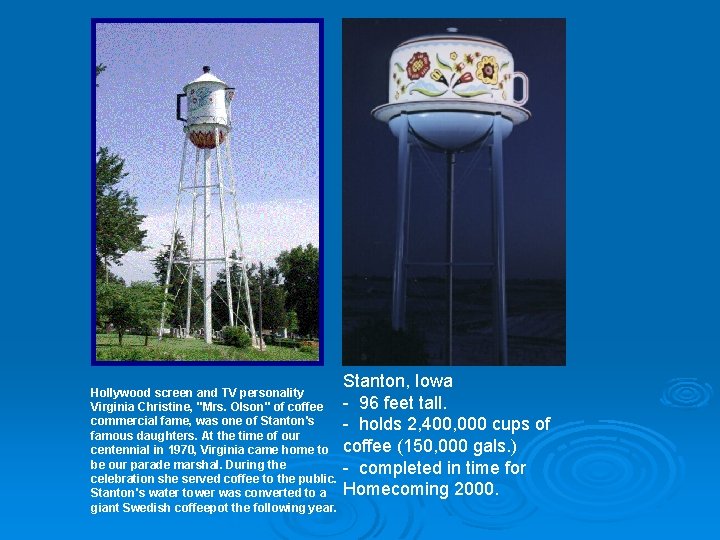
Hollywood screen and TV personality Virginia Christine, "Mrs. Olson" of coffee commercial fame, was one of Stanton's famous daughters. At the time of our centennial in 1970, Virginia came home to be our parade marshal. During the celebration she served coffee to the public. Stanton's water tower was converted to a giant Swedish coffeepot the following year. Stanton, Iowa - 96 feet tall. - holds 2, 400, 000 cups of coffee (150, 000 gals. ) - completed in time for Homecoming 2000.
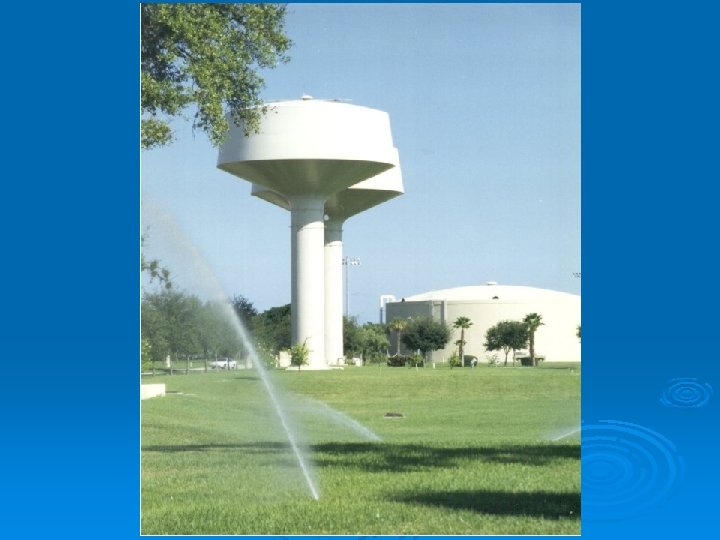
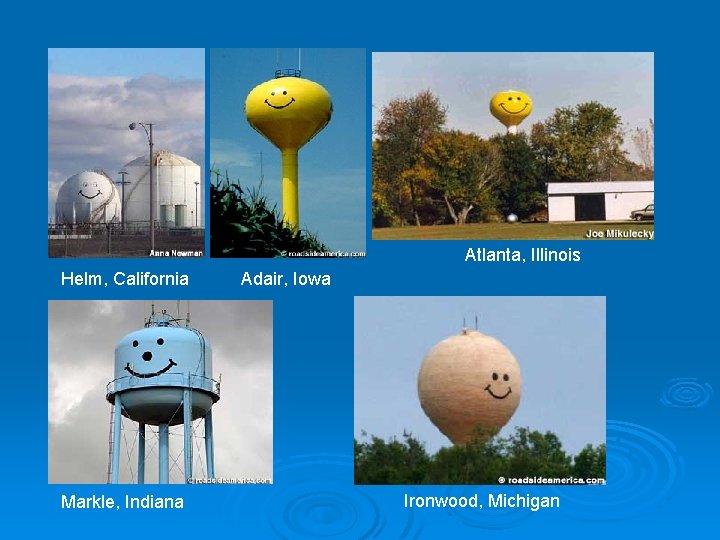
Atlanta, Illinois Helm, California Markle, Indiana Adair, Iowa Ironwood, Michigan