
Film Terminology FramingShots 1 Long Shot a shot
- Slides: 12
Film Terminology
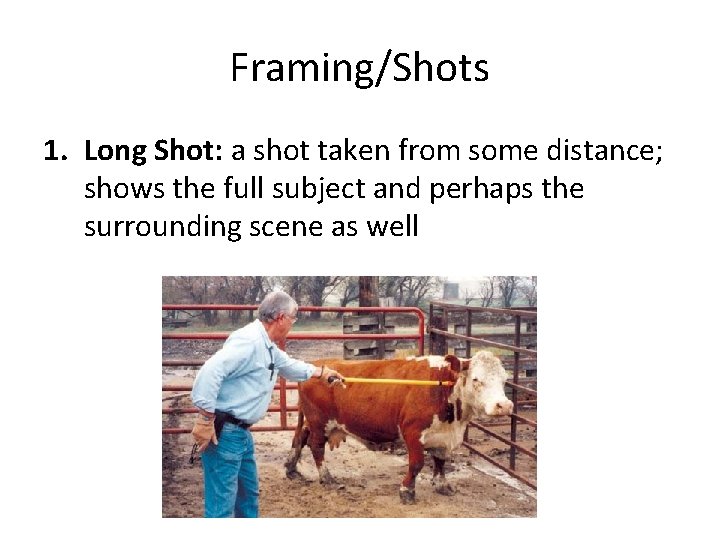
Framing/Shots 1. Long Shot: a shot taken from some distance; shows the full subject and perhaps the surrounding scene as well
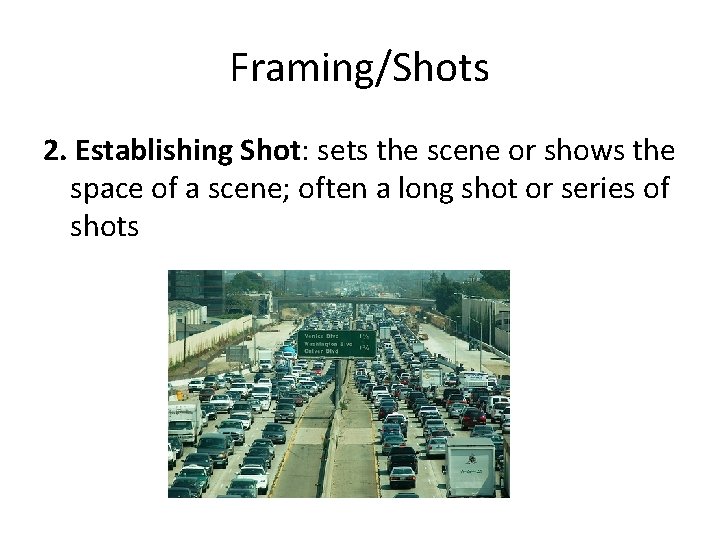
Framing/Shots 2. Establishing Shot: sets the scene or shows the space of a scene; often a long shot or series of shots
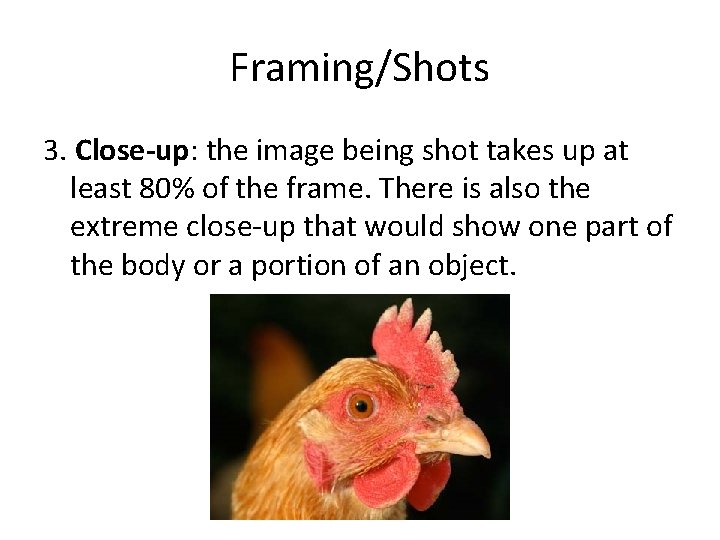
Framing/Shots 3. Close-up: the image being shot takes up at least 80% of the frame. There is also the extreme close-up that would show one part of the body or a portion of an object.
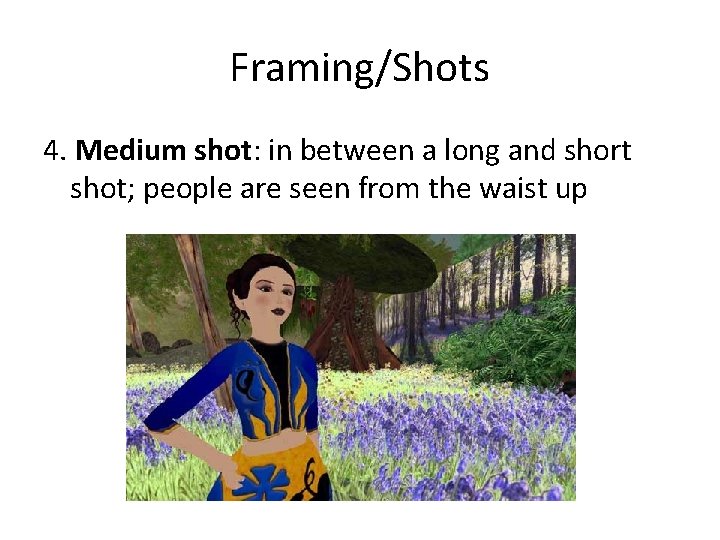
Framing/Shots 4. Medium shot: in between a long and short shot; people are seen from the waist up
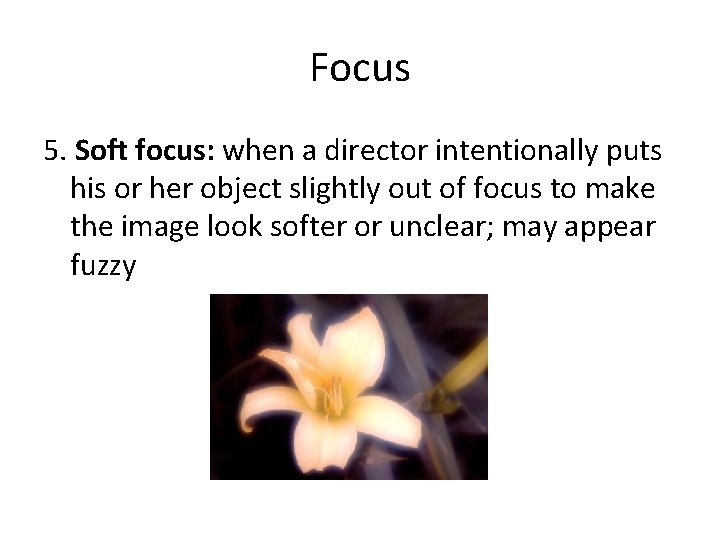
Focus 5. Soft focus: when a director intentionally puts his or her object slightly out of focus to make the image look softer or unclear; may appear fuzzy
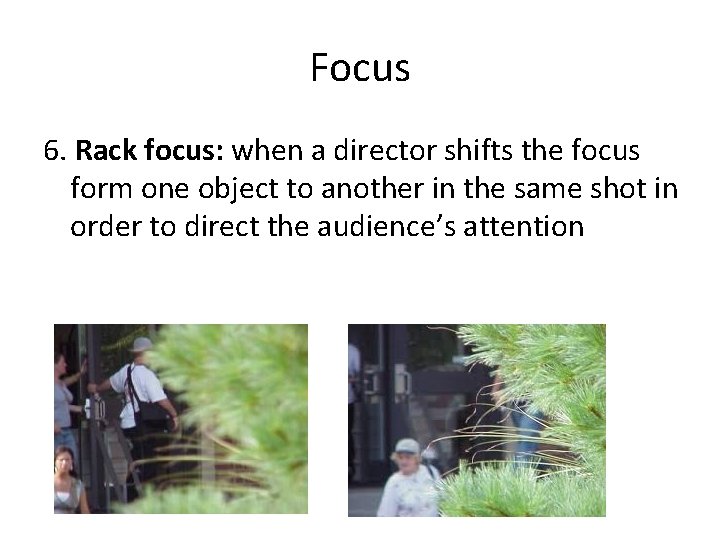
Focus 6. Rack focus: when a director shifts the focus form one object to another in the same shot in order to direct the audience’s attention
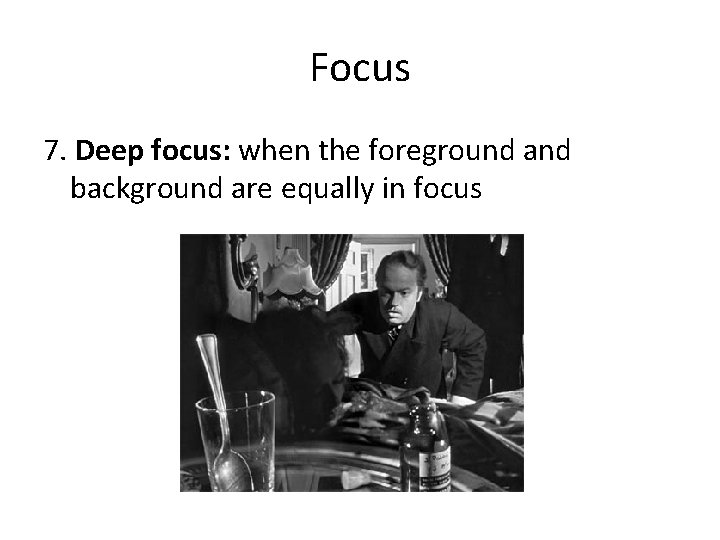
Focus 7. Deep focus: when the foreground and background are equally in focus
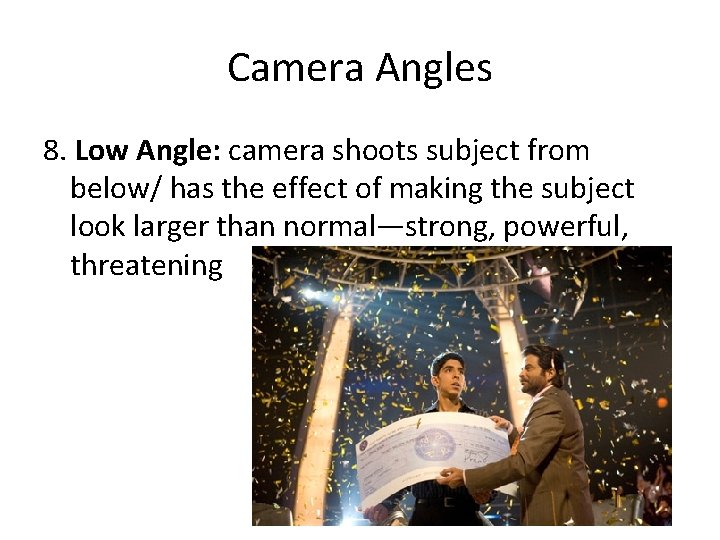
Camera Angles 8. Low Angle: camera shoots subject from below/ has the effect of making the subject look larger than normal—strong, powerful, threatening
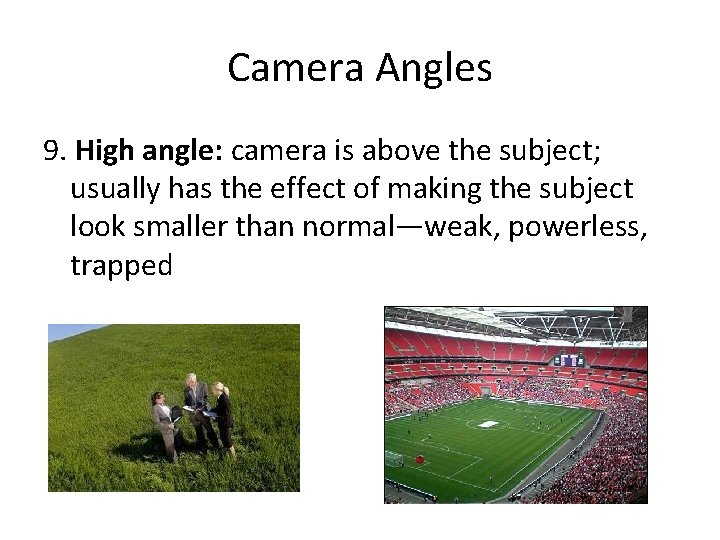
Camera Angles 9. High angle: camera is above the subject; usually has the effect of making the subject look smaller than normal—weak, powerless, trapped
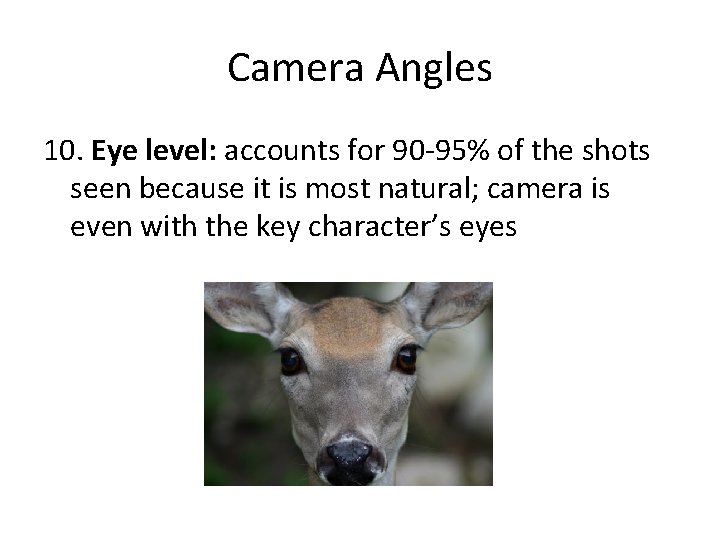
Camera Angles 10. Eye level: accounts for 90 -95% of the shots seen because it is most natural; camera is even with the key character’s eyes
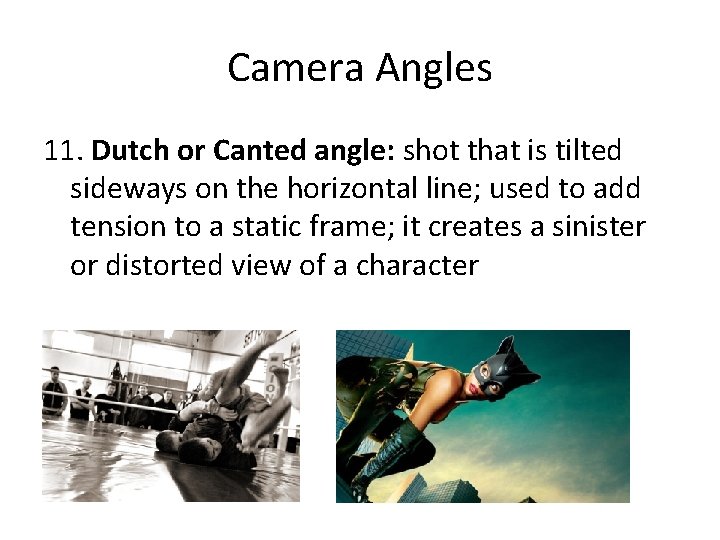
Camera Angles 11. Dutch or Canted angle: shot that is tilted sideways on the horizontal line; used to add tension to a static frame; it creates a sinister or distorted view of a character